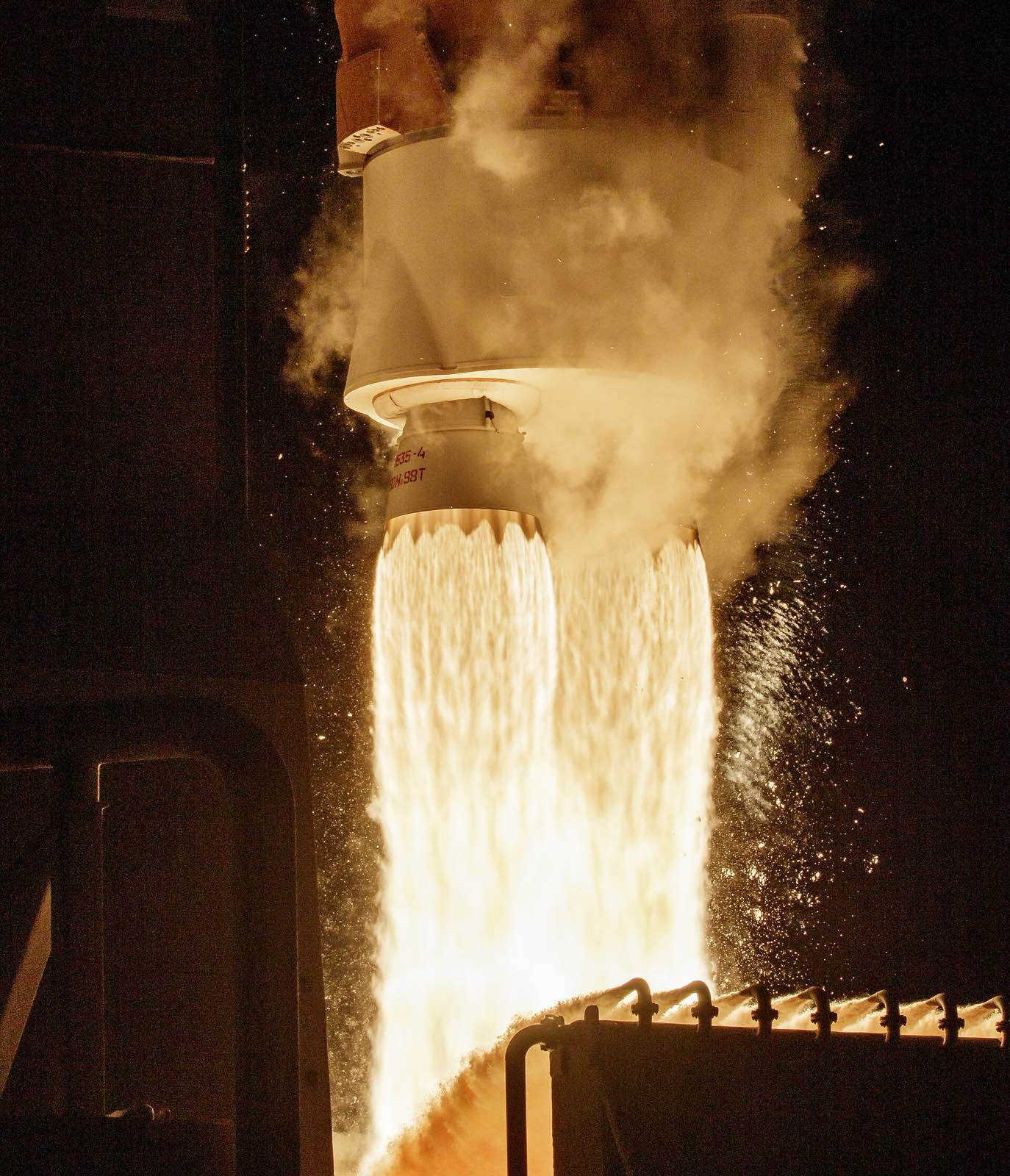
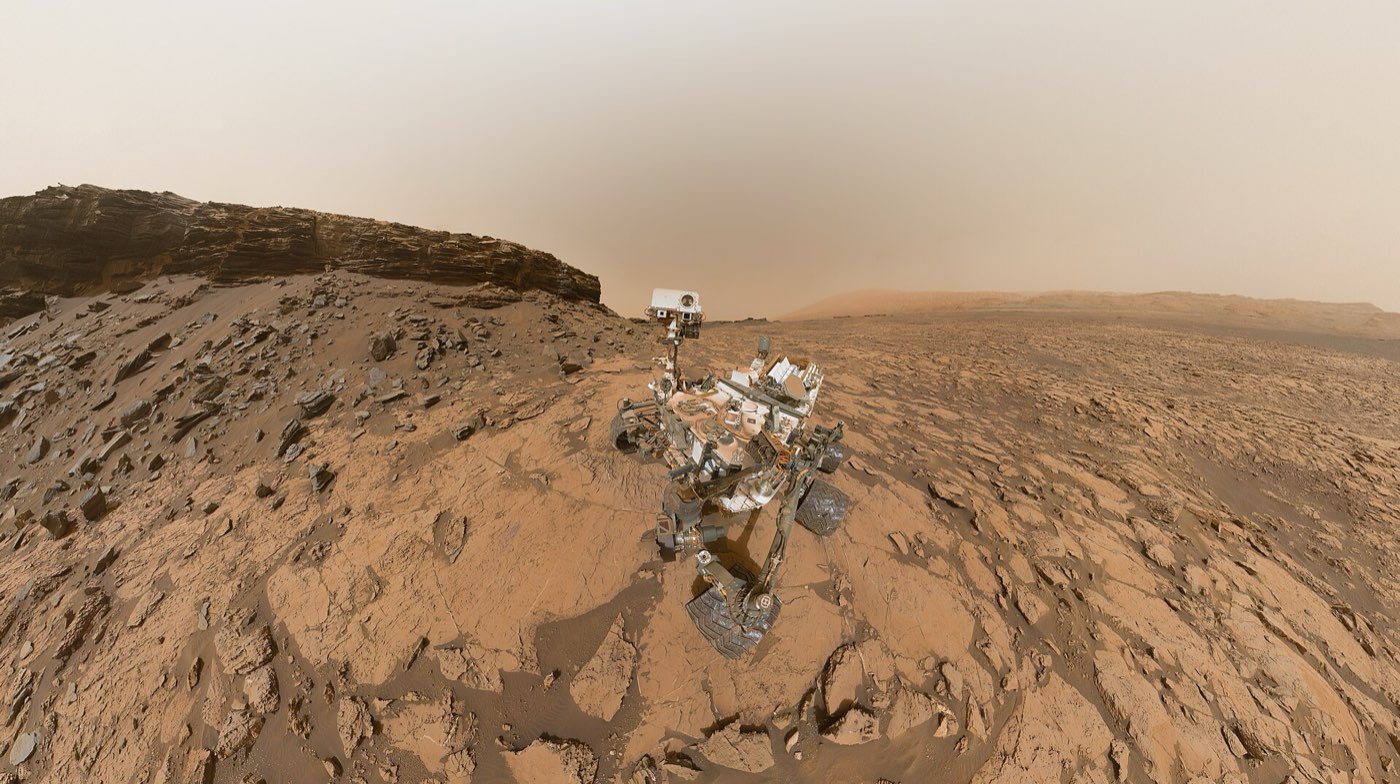
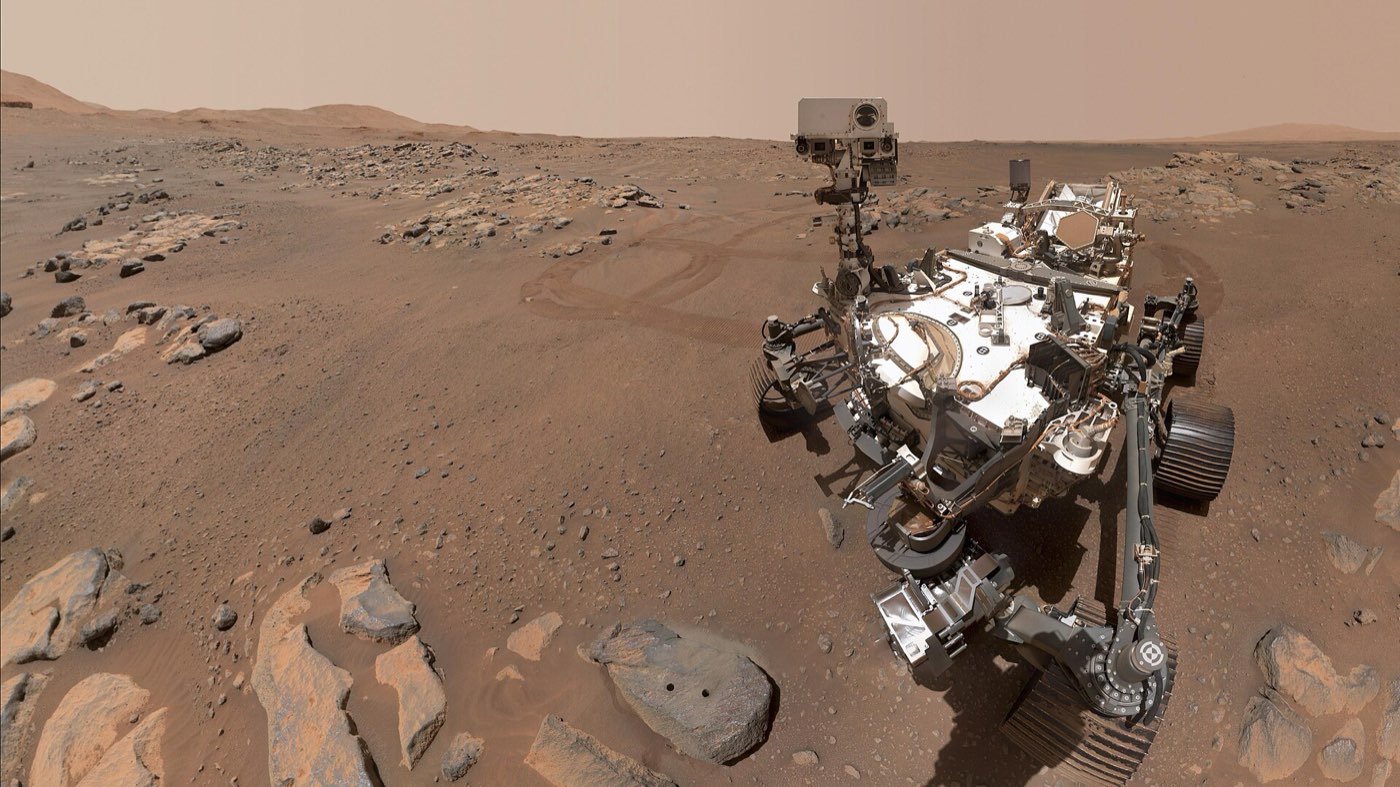
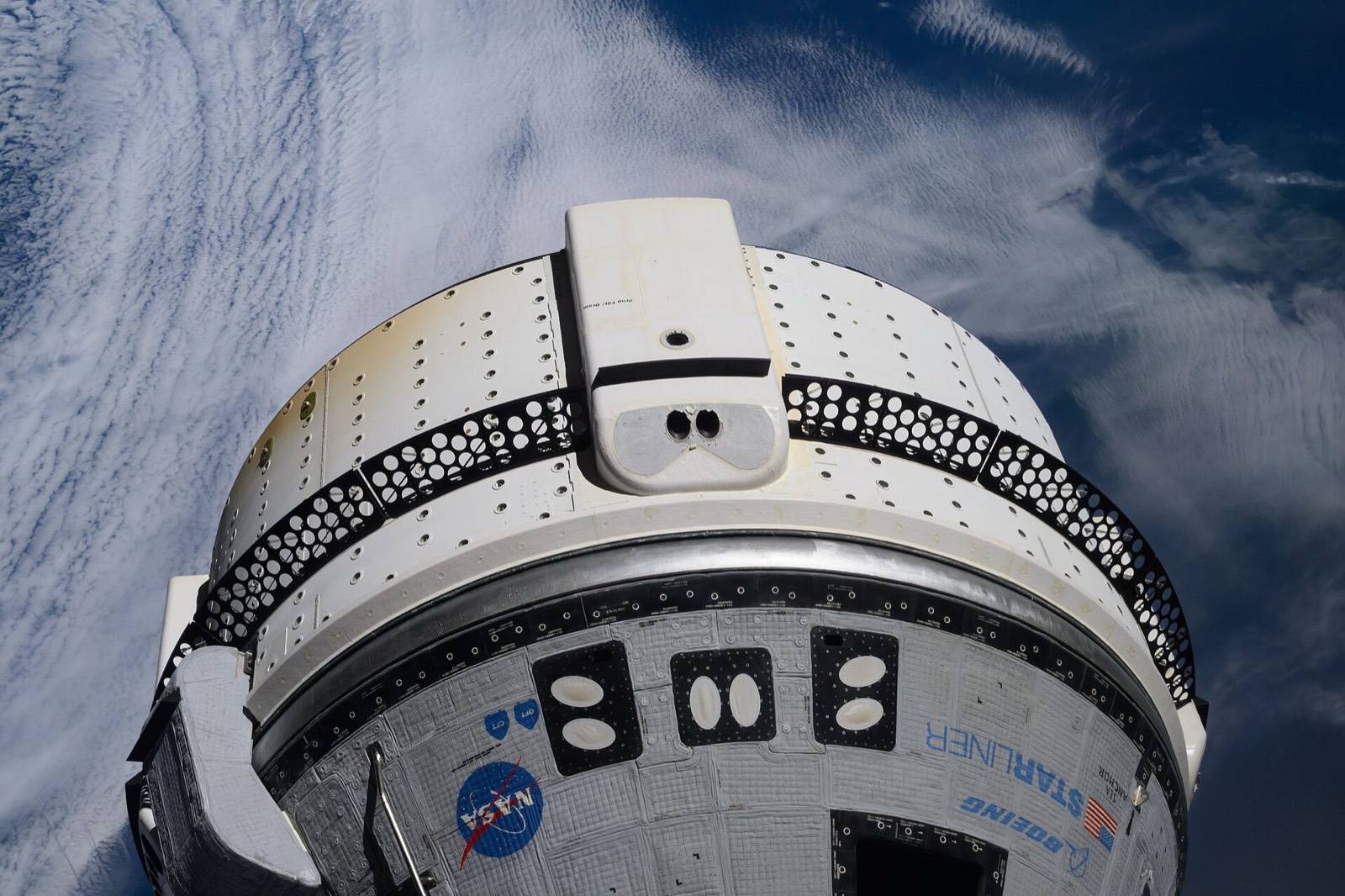
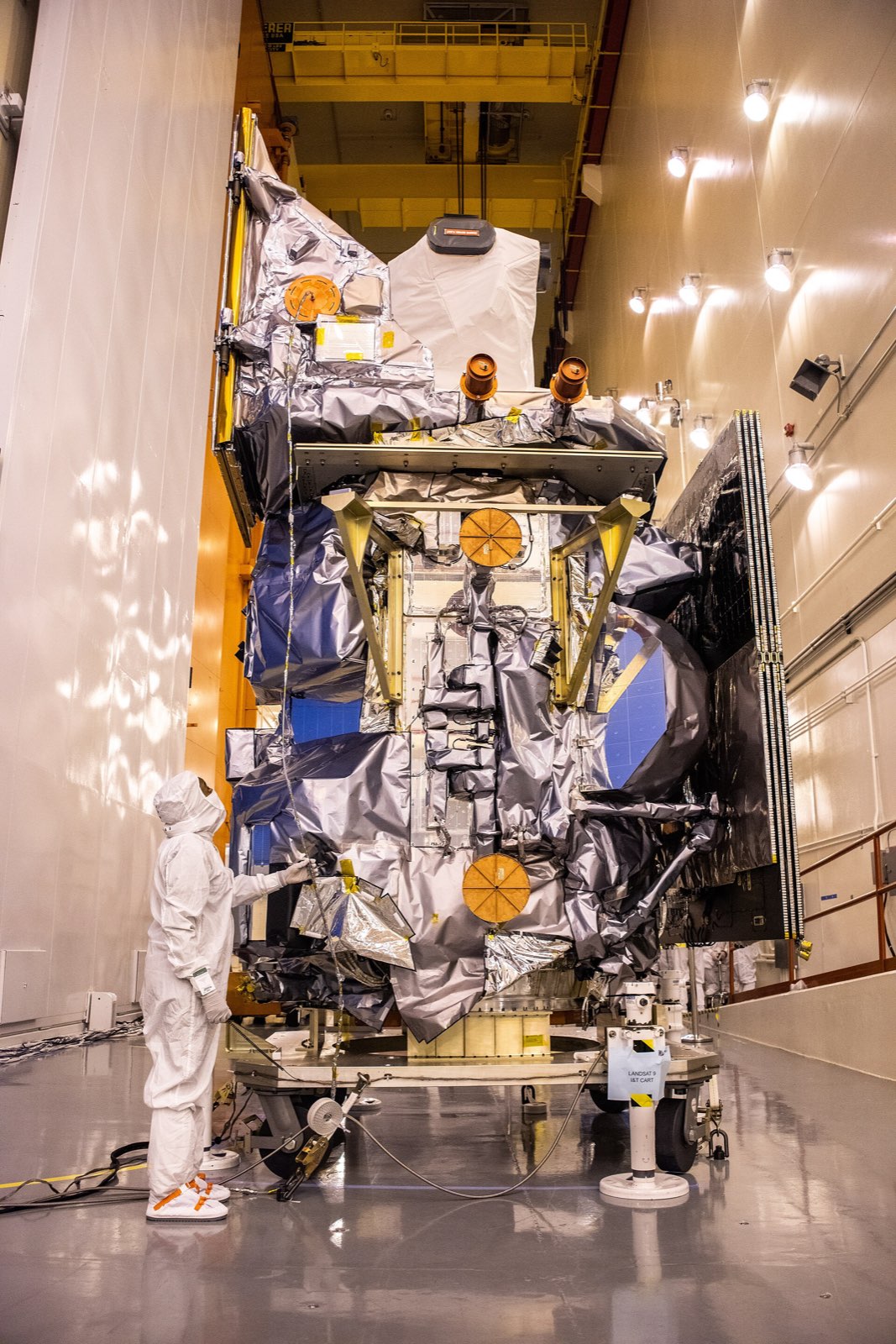
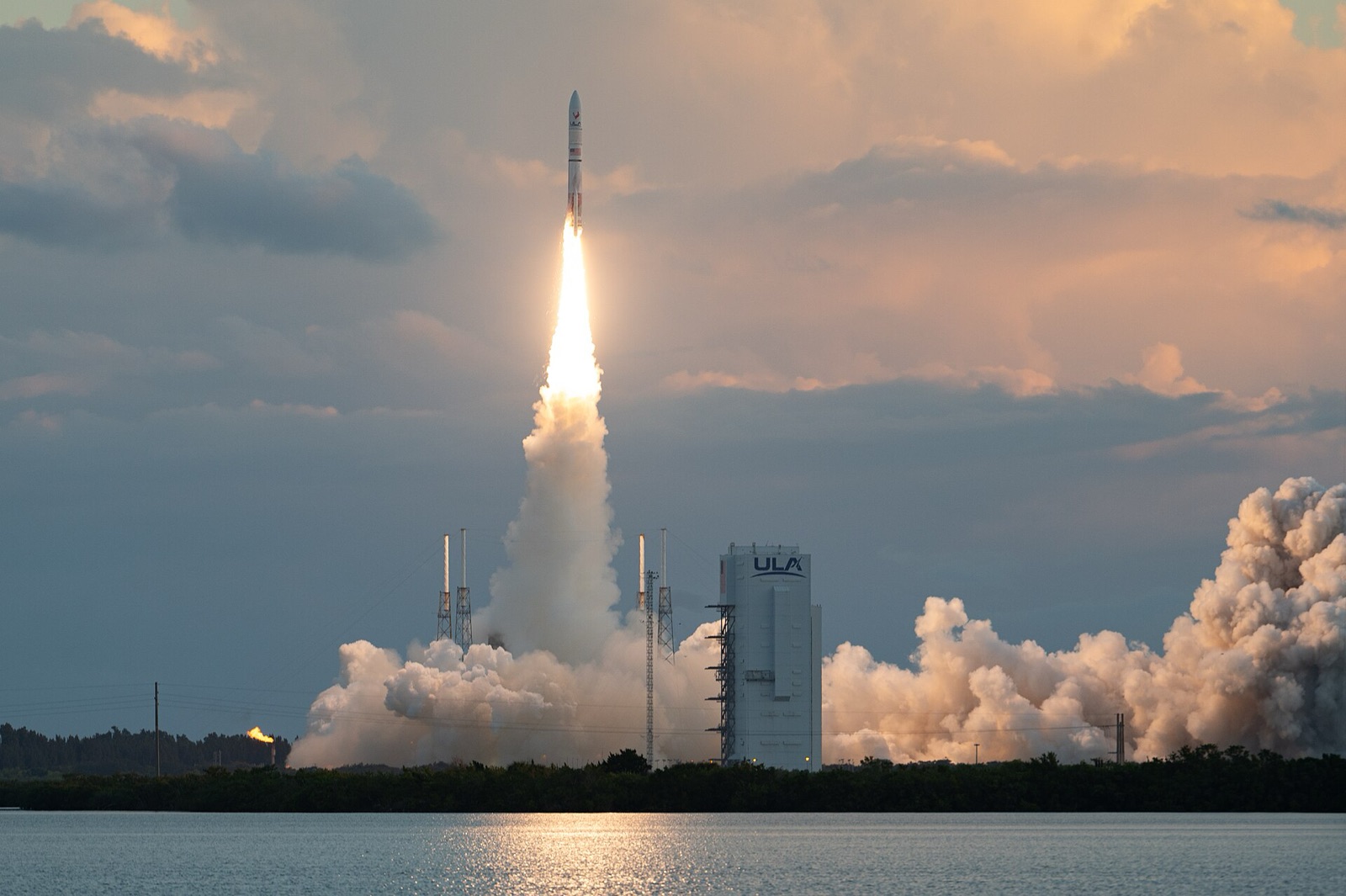
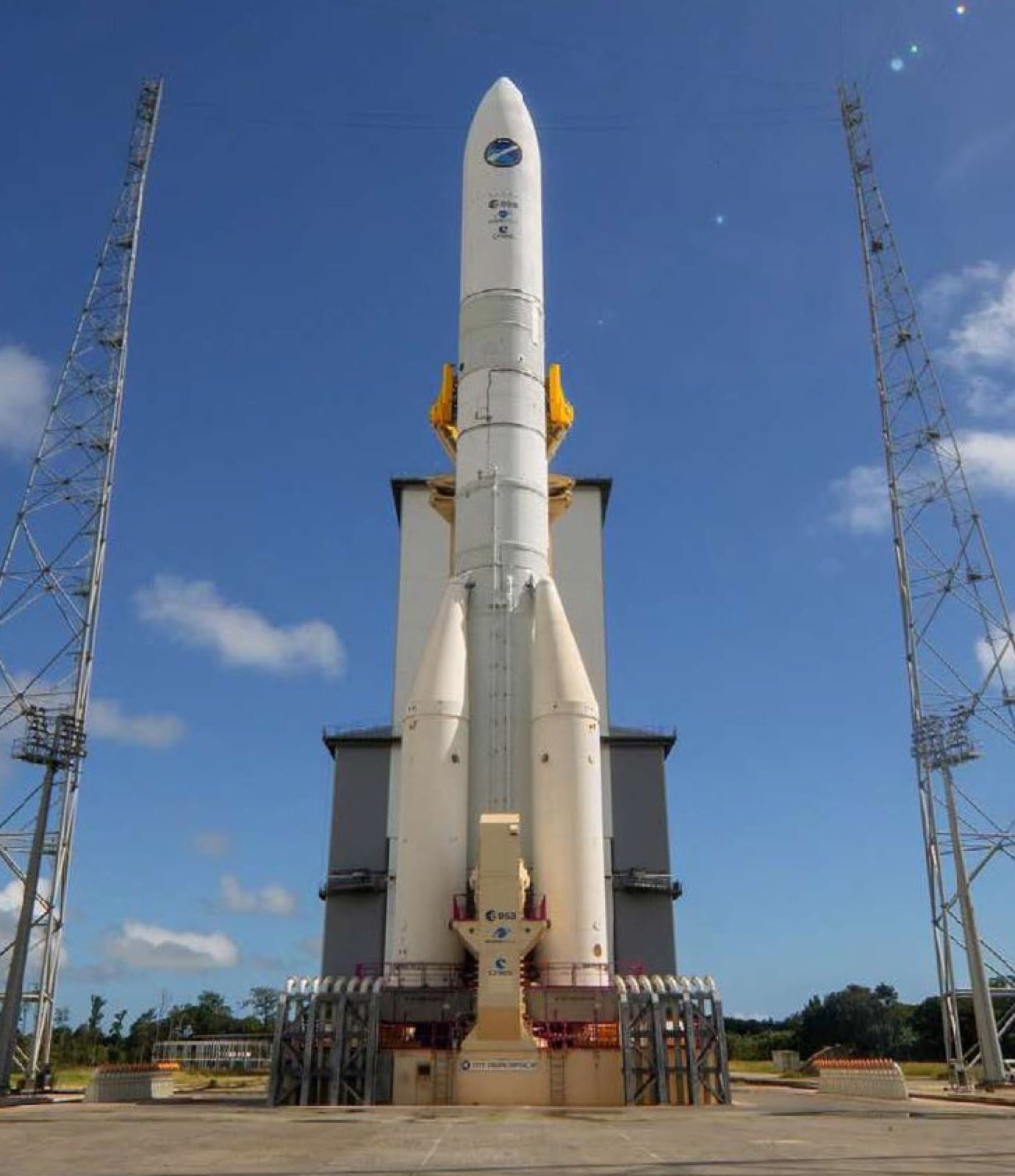
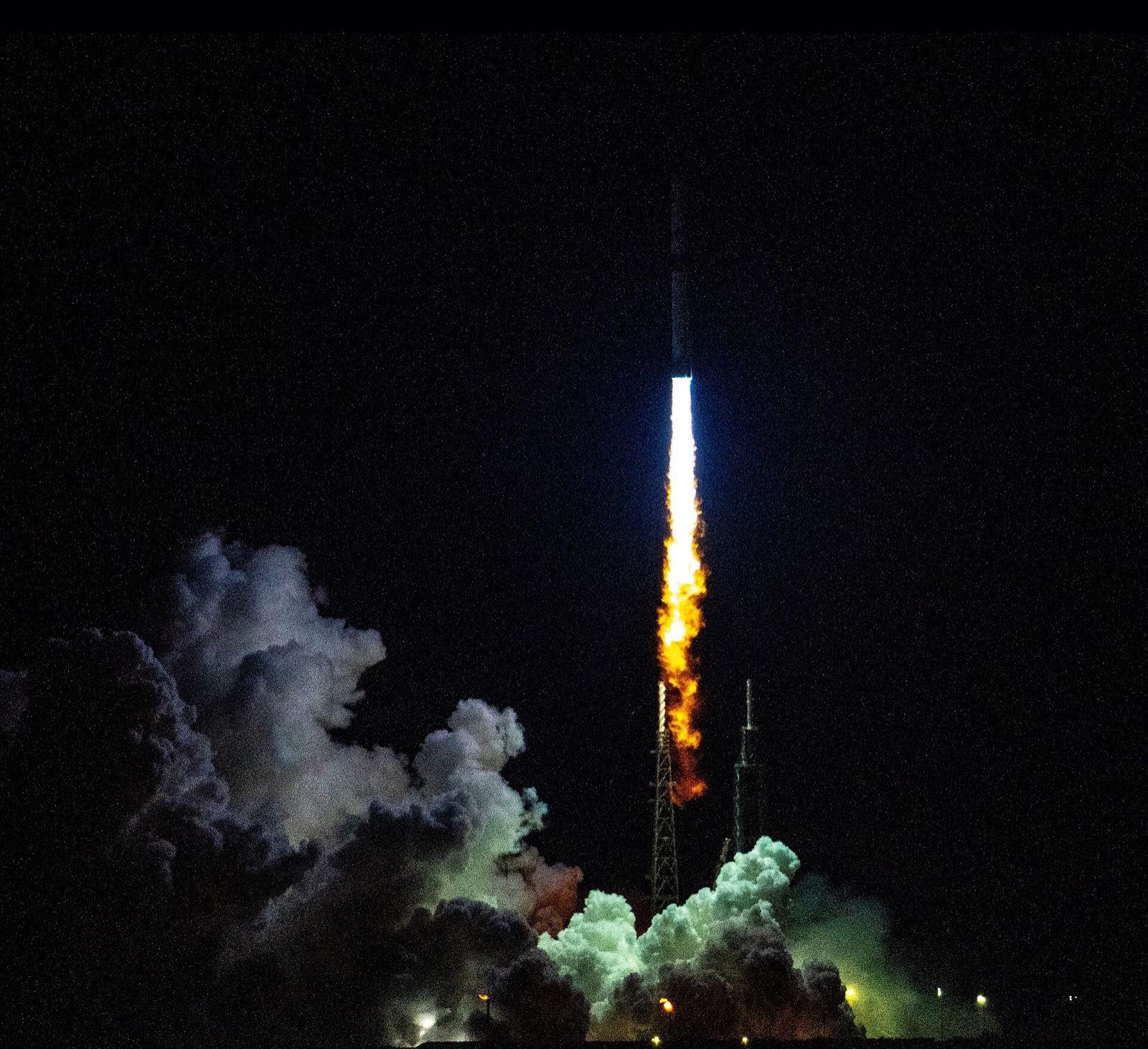
Atlas V is a rocket from United Launch Alliance, known as ULA. It launches national security payloads, NASA missions, commercial payloads and Boeing's Starliner crew capsule. NASA used it for the Curiosity and Perseverance Mars rovers. The first Atlas V flew in 2002, and the Atlas family has more than 600 launches behind it.
The booster's tanks are isogrid aluminium, walls with a grid of stiffening ribs. The Centaur upper stage has balloon-style stainless steel tanks that keep their shape from the pressure inside them. The 5-metre fairing is graphite-epoxy, a carbon composite, over aluminium honeycomb.
Application
Atlas V launches national security, NASA and commercial payloads and the Starliner crew capsule. Its isogrid aluminum booster and balloon-style stainless steel Centaur tanks are historic examples of tank design.
Photos
How it is built
Booster tanks
The booster's oxygen and kerosene tanks are welded aluminium isogrid, closed by spun-formed domes. Skirts join the tanks, some in 2014 alloy with aluminium ring frames. The whole booster structure is only eight simple subassemblies, where the earlier Atlas IIAS used more than 100.
Booster LO2 and RP tanks
Spun-formed tank domes (forward and aft, with manhole cover and sump)
LO2 and RP intertank skirts
Forward adapter skirt and RP adapter skirt
The RD-180 engine
One RD-180 engine, made by RD AMROSS, a joint venture of Pratt & Whitney and NPO Energomash, powers the booster. It has two chambers fed by a common turbopump and produces 3826 kilonewtons at sea level. It descends from the four-chamber RD-170 and RD-171 of the Russian Energia boosters.
RD-180 engine (x1)
Centaur upper stage
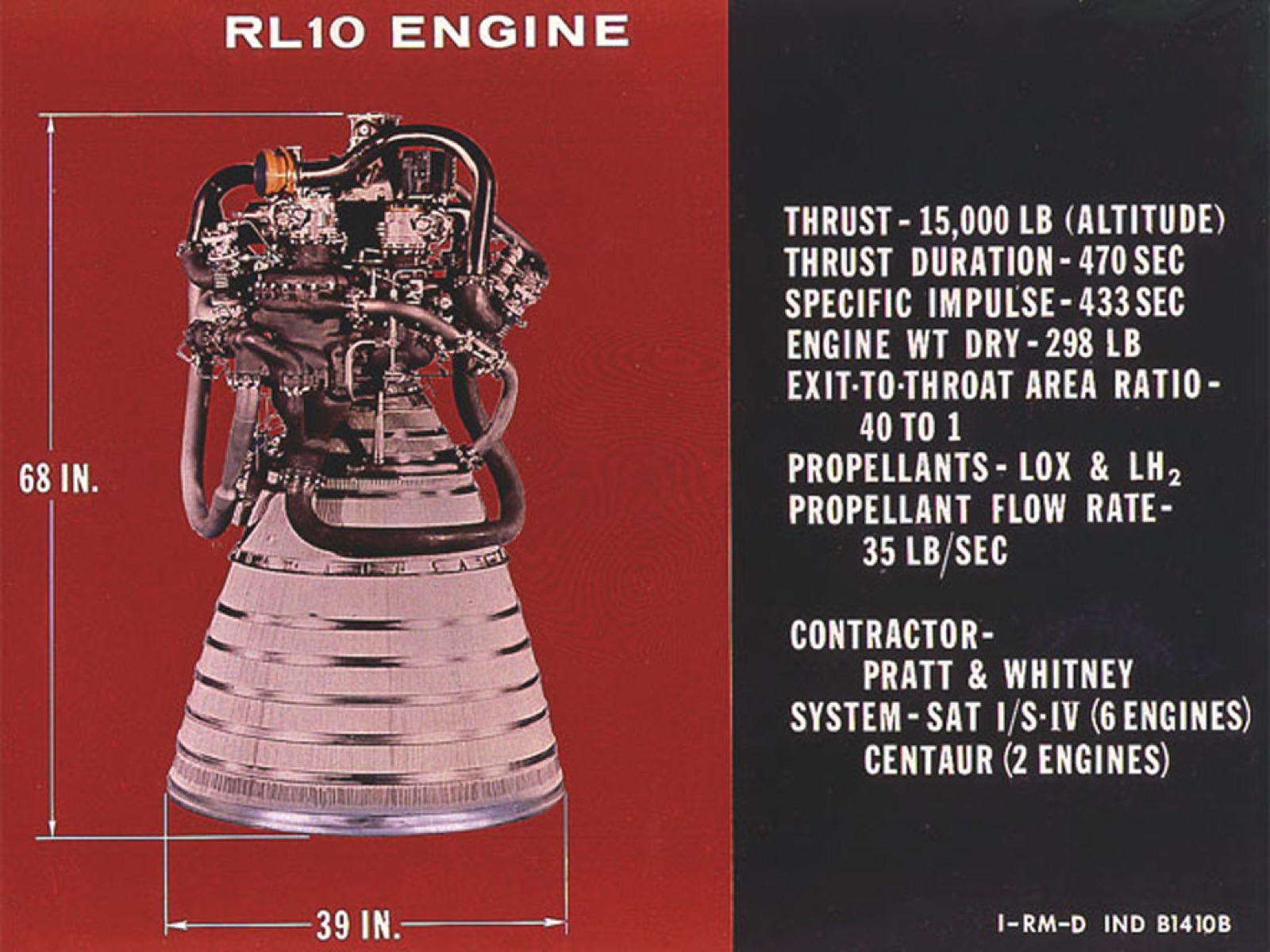
Centaur's stainless steel tanks are pressure stabilised, so they keep their shape from the pressure inside. A double-wall, vacuum-insulated bulkhead separates the liquid hydrogen from the liquid oxygen, and foam insulation is bonded to the outside of both tanks. One or two RL10 engines power it.
Centaur propellant tanks
Intermediate bulkhead
Propellant tank foam insulation
RL10A-4-2 engine (x1 or x2)
Fairings and adapters
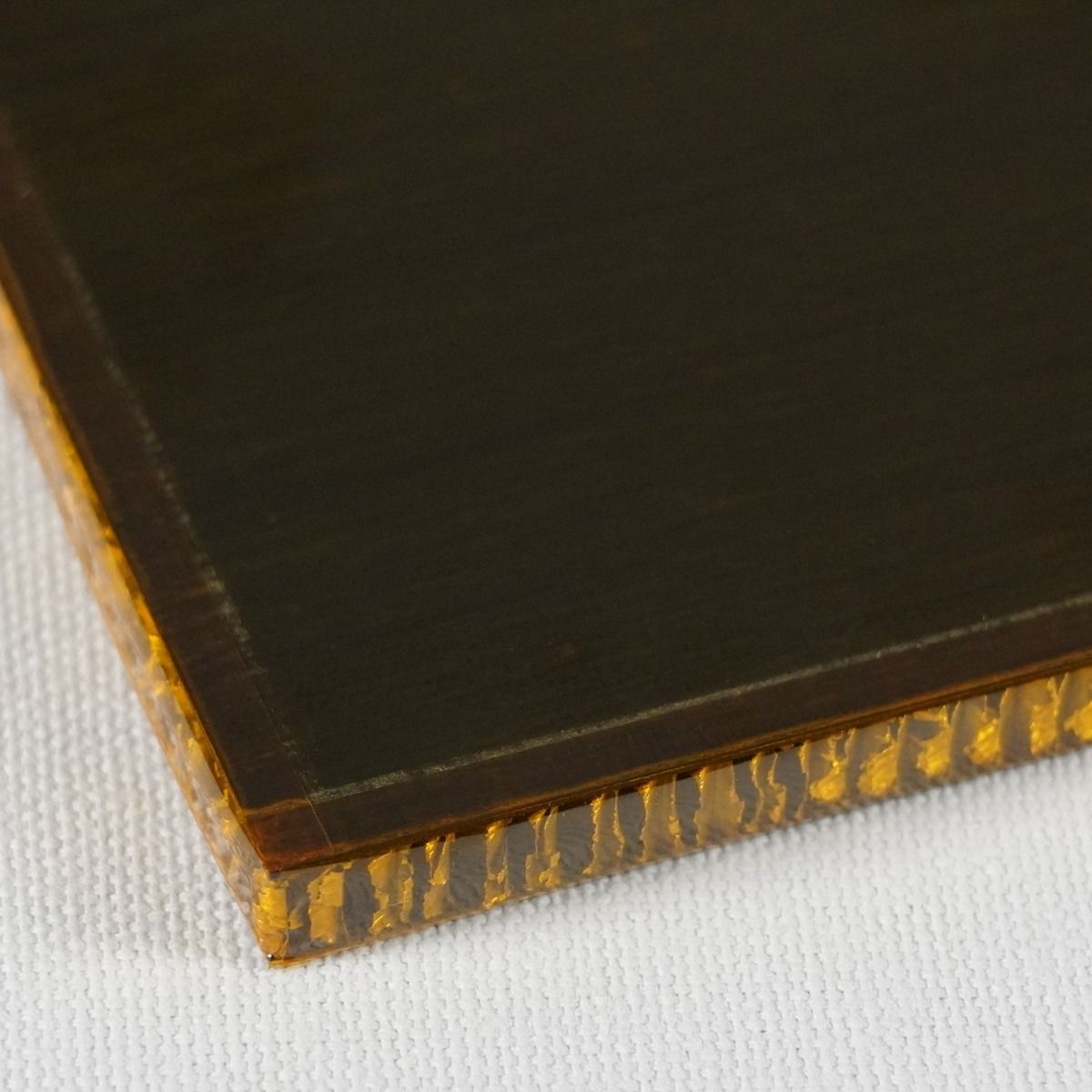
The 4-metre fairing is an aluminium skin, stringer and frame clamshell. The 5-metre fairing is a sandwich of graphite-epoxy sheets over an aluminium honeycomb core. The interstage adapter on the 400 series is graphite-epoxy composite with an aluminium ring, and the 500 series uses a machined aluminium ring forging.
The 400 series takes up to three strap-on solid boosters, and the 500 series up to five. The Aerojet boosters in ULA's 2010 guide have one-piece graphite-epoxy cases, carbon phenolic nozzles and HTPB propellant. Northrop Grumman's GEM 63 boosters first flew on Atlas V in November 2020.
Strap-on solid rocket boosters (0 to 3 on the 400 series, 0 to 5 on the 500 series)
SRB case
SRB nozzle
SRB propellant
Where the parts areNumber of parts we have listed in each group
The core of the 5-metre fairing and its boattail, the booster heat shield and the 3.8-metre Centaur interstage adapter.
Carbon phenolic
The fixed nozzles of the Aerojet solid boosters.
The materials by familyHow many of the parts that name a material use each one
Aluminium16
Other3
Carbon fibre2
Stainless steel1
Polymers and foams1
How it connects to other things
One RD-180 engine powers the booster, the same engine that flew on Atlas III, and one or two RL10 engines power the Centaur. Atlas V launched the Curiosity and Perseverance rovers, the Lunar Reconnaissance Orbiter and Landsat 9, and it carries Starliner. Aerojet Rocketdyne and later Northrop Grumman supplied the solid boosters, and Honeywell the navigation unit. RUAG Space built the 5-metre fairing for the Curiosity launch.
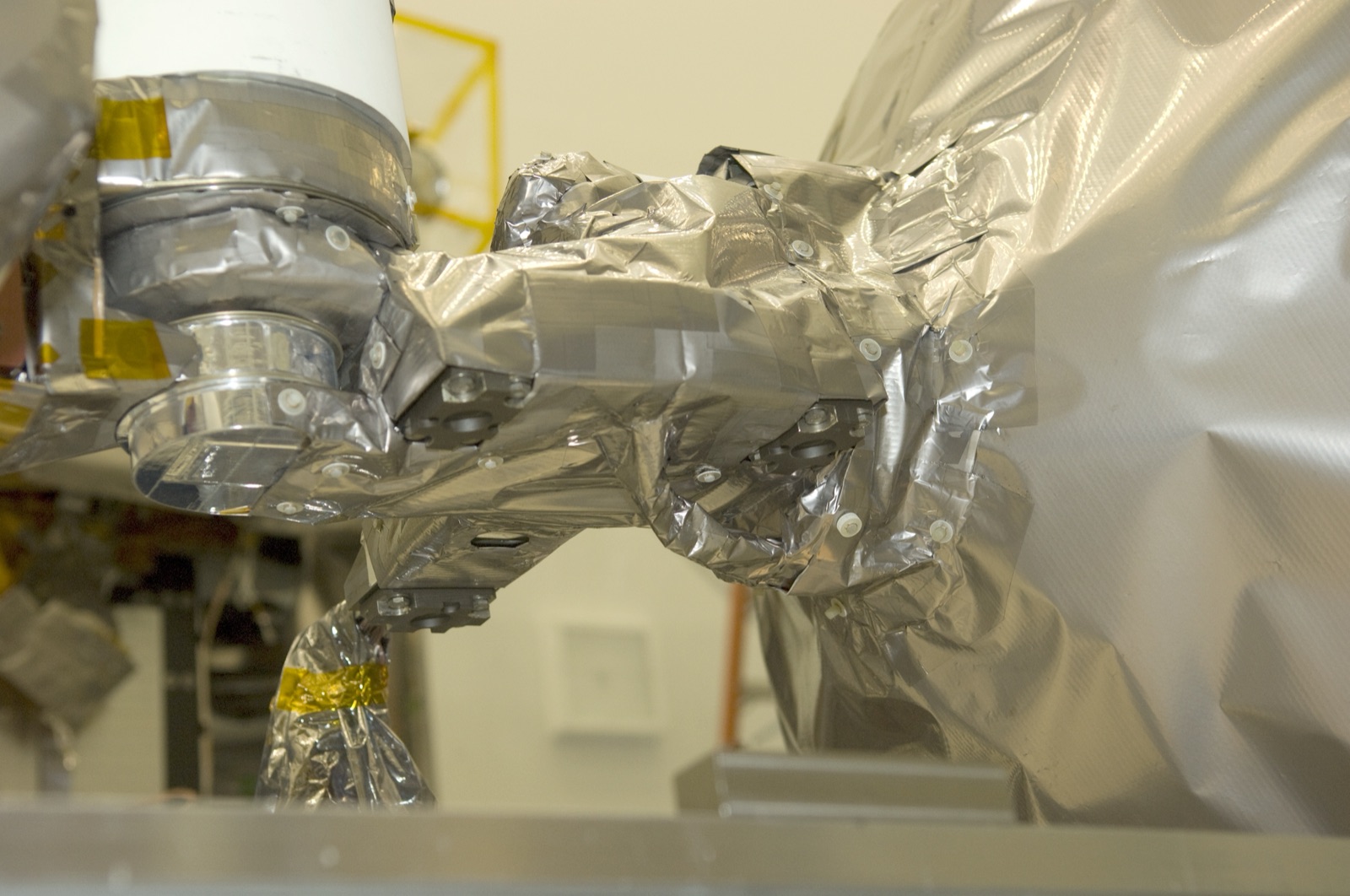
RL10 engine. Here: Common Centaur: one engine (SEC) or two (DEC); RL10A-4-2 in the 2010 guide, RL10C-1 now. There: ICPS: one RL10B-2 engine (24,750 lbf).
RL10 engine. Here: Common Centaur: one engine (SEC) or two (DEC); RL10A-4-2 in the 2010 guide, RL10C-1 now. There: Centaur V: two RL10C-1-1A engines, 23,825 lbf each.
AluminiumAluminium honeycomb corealuminum 2014 isogrid panels with aluminum ring framesAluminium alloy 7075-T6
Where each one is used
Aluminium. Here: Booster LO2 and RP tanks; Propellant feedlines and more. There: S-IVB forward skirt, aft skirt, thrust structure and aft interstage.
Aluminium honeycomb core. Here: Booster heat shield; 5-m payload fairing and more. There: IU ring structure.
aluminum 2014 isogrid panels with aluminum ring frames. Here: Forward adapter skirt and RP adapter skirt. There: Common bulkhead facing sheets; Propellant tanks.
Aluminium alloy 7075-T6. Here: Aft transition structure ring frames and skins. There: Thrust structure skin panels; Intertank and more.
Aluminium. Here: Booster LO2 and RP tanks; Propellant feedlines and more. There: Structure, three major assemblies; Through-hole spacers, aluminium, 15.24 mm x 6.0 mm OD (x16) and more.
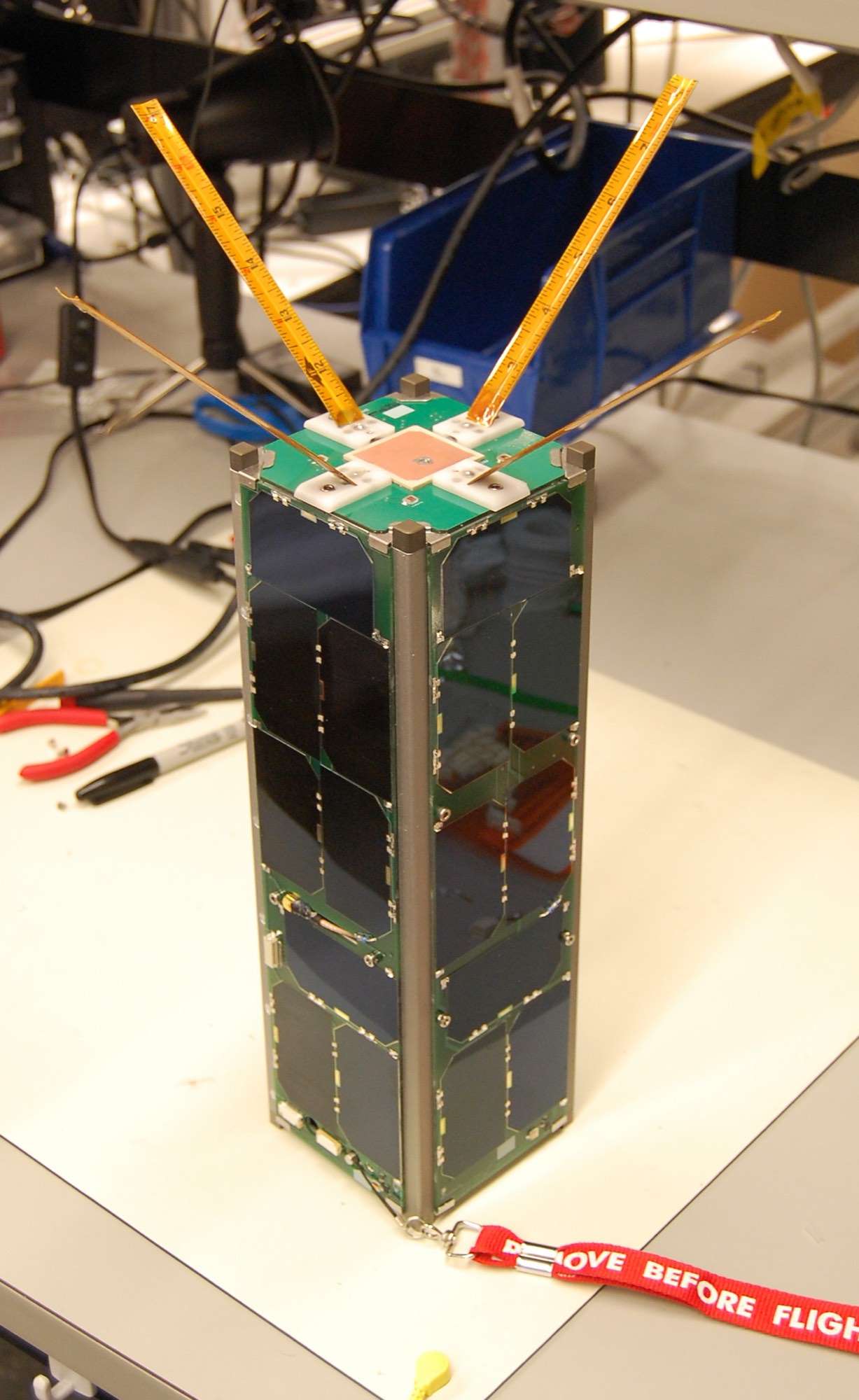
Aluminium alloy 7075-T6. Here: Aft transition structure ring frames and skins. There: Machined chassis components (CubeSat Kit Pro); Feet and more.
stainless steel. Here: Centaur propellant tanks. There: Chassis screws (ten per structure, M3x5mm flathead); Threaded rods, M3 stainless (x4) and more.
Aluminium. Here: Booster LO2 and RP tanks; Propellant feedlines and more. There: TPMU/DSLP housing.
Aluminium honeycomb core. Here: Booster heat shield; 5-m payload fairing and more. There: H-configuration inner panels (3); Outer panels without cells and more.
Aluminium. Here: Booster LO2 and RP tanks; Propellant feedlines and more. There: Aluminium inserts, in-plane and out-of-plane (DiskSat build).
Aluminium honeycomb core. Here: Booster heat shield; 5-m payload fairing and more. There: Core.
Carbon fibre. Here: 400 series interstage adapter; SRB case. There: Face skin carbon fibre; HR40 / NB321 unidirectional prepreg and more.
What we do not know
ULA's detailed structure guide dates from 2010, before the GEM 63 boosters and the RL10C-1 engine arrived, so it does not cover them. It does not name the aluminium alloys of the booster tanks, the stainless steel grade of the Centaur, the foam insulation, or the maker of the Centaur tanks and valves.
The detailed data
What is written above is built from these numbers and quotes. Each row links to the page it was taken from. Get all of it as JSON, or ask our MCP server.
Features
Zero to three ground-lit solid boosters on 400 series
Common Centaur is a restartable cryogenic upper stage
Specifications
What
Value
Booster size
3.81 m diameter x 32.46 m length
Centaur size
3.05 m diameter x 12.68 m length with extended nozzle
Centaur propellant
20,830 kg LH2 and LO2
Booster propellant
284,089 kg LO2 and RP-1
SRB thrust
1688.4 kN each (zero to five on 500 series)
5-m fairing diameter
5.4 m
RD-180 flight record at 2010 guide
25 Atlas V flights, over 41,400 seconds in 221 firings
Atlas V 541 height
197 ft (Mars 2020 vehicle with 5-m fairing)
Booster structure
eight simple subassemblies (Atlas IIAS used over 100 parts and subassemblies)
Booster first flight year
2002
Atlas family launches
more than 600 Atlas program launches
GEM 63 first flight
Atlas V NROL-101, November 2020
GEM 63 data
total mass 108,600 lb, propellant 97,500 lb, burn time 97.6 s, max thrust 370,835 lbf, length 791 in
Centaur propellant tanks stretch
1.7 m (5.5 ft) longer than the Atlas IIAS Centaur
Materials in detail
Each material named in the sources: where it is used here, which other products use it, and its key numbers when its material page exists.
The 2010 Atlas V User's Guide gives structure materials for the booster, Centaur, fairings, adapters and SRBs. Alloys are named only for a few skirts and frames; no parts lists exist. Components, suppliers and links were added from public sources. A material is left blank where no source states it.
Guide is the 2010 revision: later boosters (GEM 63 from 2020) and current Centaur details are not covered; Centaur stainless grade, fairing alloys, engine materials, first flight date not sourced. More detail: Structure and avionics come from the March 2010 user guide, so details of the GEM 63 era (from 2020) and the RL10C-1 Centaur are limited to ULA pages. Not stated in the sources read: aluminium alloys of the booster tanks and the Centaur stainless grade, the foam insulation chemistry, makers of the Centaur tank, valves, batteries and the RD-180 internals (see the RD-180 plain-name target), the 4-m fairing maker, and an exact first flight date (only the year 2002 is sourced). The fairing maker RUAG Space is sourced for the Atlas V 541 used for Curiosity; the 2010 guide also notes the 5-m fairing is a derivative of a RUAG Space design. More detail: Structure and avionics come from the March 2010 user guide, so details of the GEM 63 era (from 2020) and the RL10C-1 Centaur are limited to ULA pages. Not stated in the sources read: aluminium alloys of the booster tanks and the Centaur stainless grade, the foam insulation chemistry, makers of the Centaur tank, valves, batteries and the RD-180 internals (see the RD-180 plain-name target), the 4-m fairing maker, and an exact first flight date (only the year 2002 is sourced). The fairing maker RUAG Space is sourced for the Atlas V 541 used for Curiosity; the 2010 guide also notes the 5-m fairing is a derivative of a RUAG Space design.