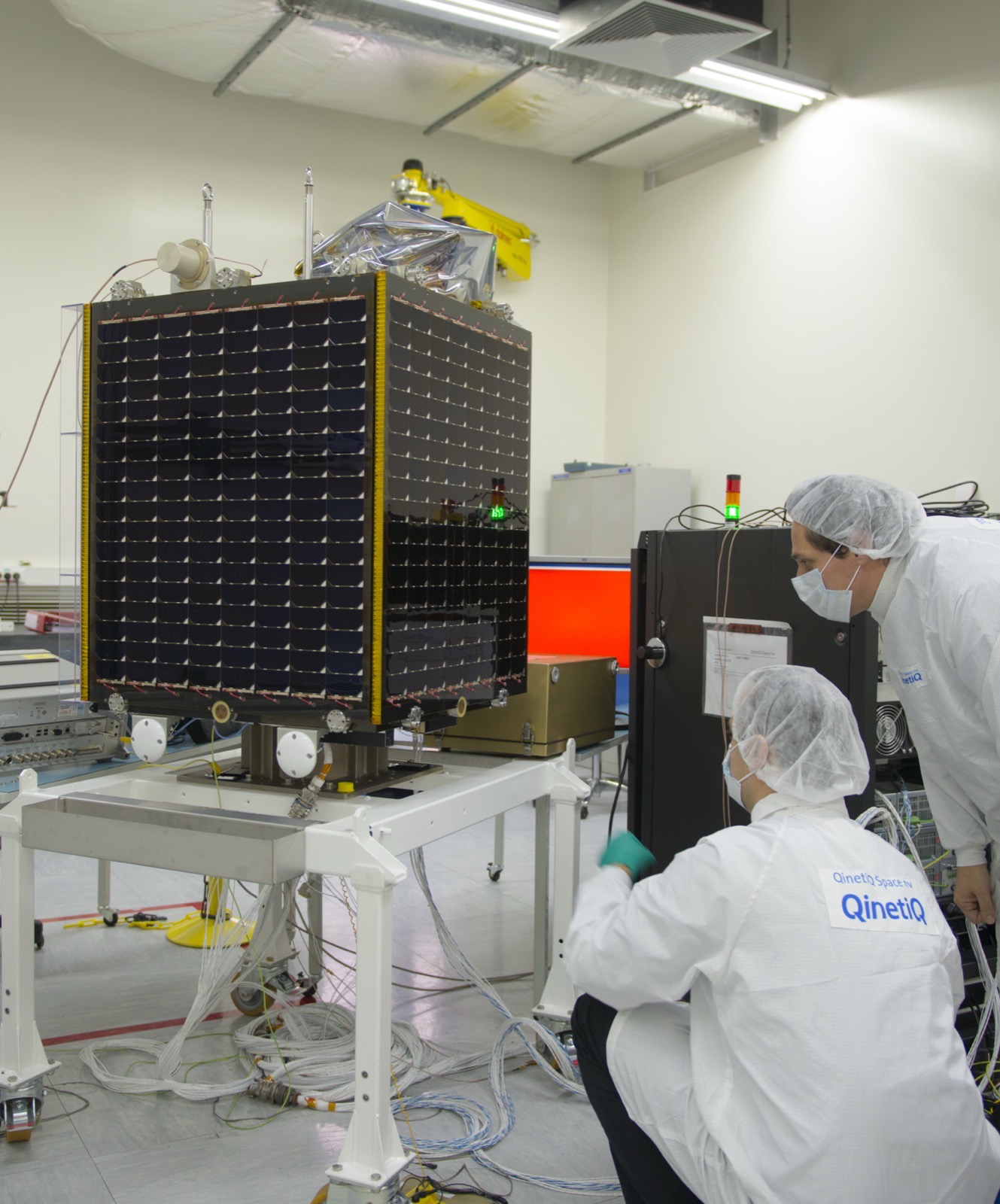
The Lunar Reconnaissance Orbiter, or LRO, has mapped the Moon from orbit since 2009. NASA's Goddard Space Flight Center built it, and its seven instruments also look for places where ice may lie near the poles. The maps supported site selection for Artemis.
The main structure is aluminium. The instruments are mounted in a module made of graphite composite, a material that barely expands or shrinks as the temperature changes. Heat pipes carry heat from the electronics to radiators, and a hydrazine propulsion system holds 894 kg of fuel in two titanium tanks.
Application
NASA orbiter that has mapped the Moon from lunar orbit since 2009, imaging landing sites, measuring topography and finding polar ice candidates. It carries seven instruments and supported site selection for Artemis.
Photos
How it is built
Structure
The main structure is aluminium, built up from a heating and cooling panel, edge members, fittings and brackets. The instruments sit in a module known as the Wine Box, made from sheets of graphite and cyanate ester. Its optical bench is graphite composite, and flexible titanium mounts hold the instruments.
Two titanium tanks hold 894 kg of hydrazine. Four 80-newton insertion thrusters are for entering lunar orbit, and eight 20-newton thrusters control attitude and keep the orbit steady. A composite-wrapped helium tank supplies the pressure.
Propellant tanks (2)
Propellant
Insertion thrusters (x4, 80 N class)
Attitude-control thrusters (x8, 20 N class)
Helium pressurant tank (composite overwrapped)
Solar array and battery
The solar array is one wing of three graphite composite panels, 10.7 square metres in all, rated at 1,850 W at the end of its life. The wing turns about two axes. An 80 amp-hour lithium-ion battery is built from Sony cells, each a steel can holding rolled electrodes.
Solar array wing (three panels, 10.7 m2)
Solar array gimbal actuators (2 axes)
Battery cells
Battery cell can
Keeping cool
Most of the electronics are coupled to an aluminium honeycomb panel with heat pipes built in. Header heat pipes link that panel to a radiator mounted separately on the spacecraft. The high-gain antenna has multilayer insulation and heaters, and two instruments have radiators of their own.
Iso-thermal panel with embedded heat pipes
Zenith CCHP radiator and header heat pipes
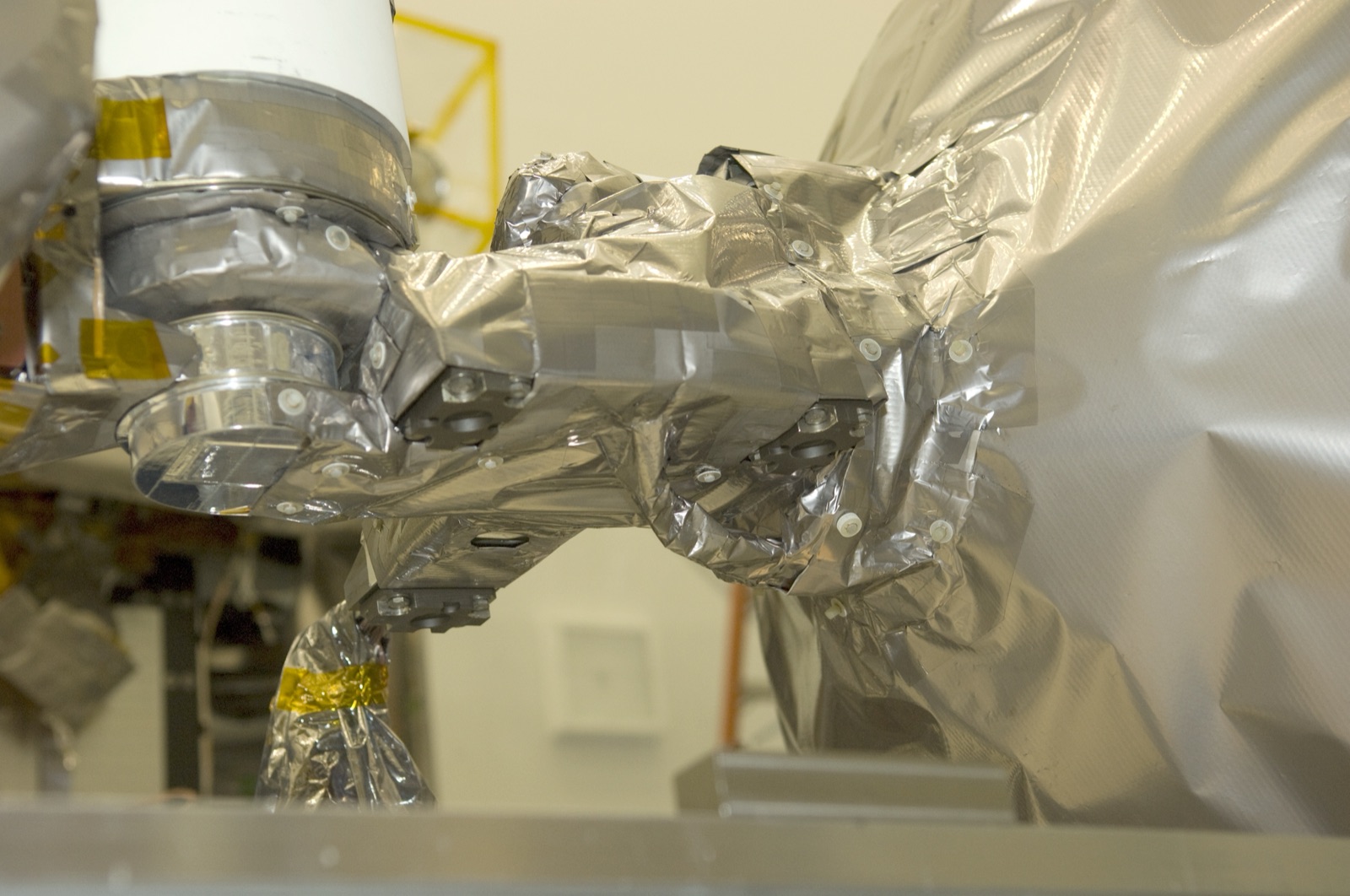
High Gain Antenna multi-layer insulation and heaters
CRaTER and LEND individual radiators
Where the parts areNumber of parts we have listed in each group
The two propellant tanks and the flexures that mount the instruments.
Hydrazine
The propellant, 894 kg of it, carried in two tanks.
Graphite composite
The instrument optical bench and the three panels of the solar array.
Graphite and cyanate ester sheets
The instrument module, known as the Wine Box. It changes size very little with temperature.
Lithium-ion cells
The 80 amp-hour battery, built from Sony cells.
The materials by familyHow many of the parts that name a material use each one
Other6
Aluminium4
Titanium3
Carbon fibre3
Stainless steel1
How it connects to other things
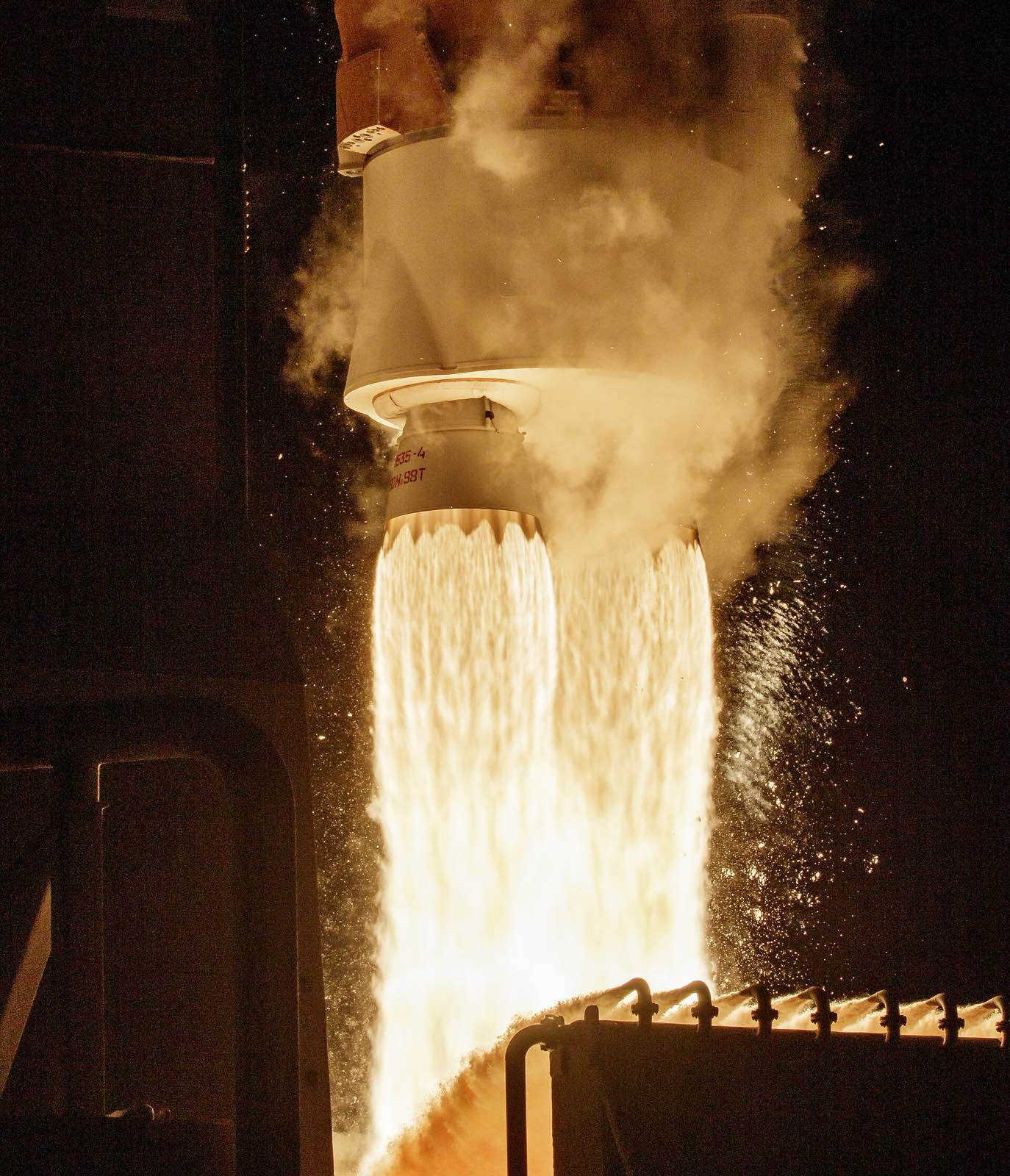
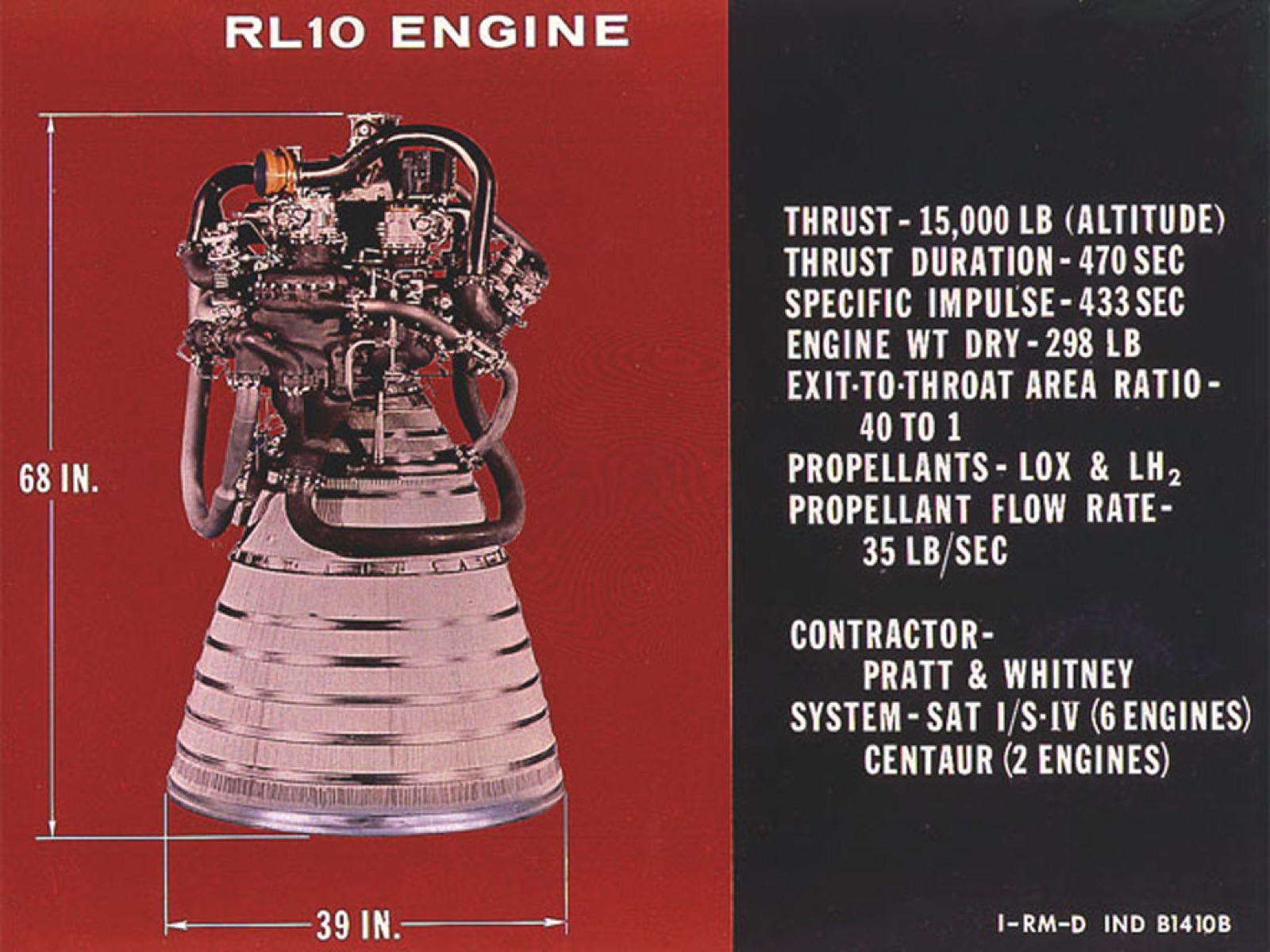
An Atlas V 401 launched LRO on 18 June 2009, sharing the ride with a companion spacecraft, LCROSS. The Atlas has a single RD-180 engine in its first stage and a single RL10A-4-2 in its Centaur upper stage. Goddard built the orbiter in-house, using star trackers from SELEX Galileo, gyros from Honeywell, a computer from BAE Systems and cells from Sony. Its power electronics follow the design of an earlier spacecraft, the Microwave Anisotropy Probe.
Aluminium. Here: Primary structure (heating/cooling panel, edge members, fittings, brackets); Optical-bench heater aluminum tape and more. There: Main structure tube; Equipment box (EQB) and more.
Titanium. Here: Propellant tanks (2); Instrument mounting flexures. There: OBA unit attachment fittings; Instrument support bipods (3).
lithium-ion. Here: Battery cells. There: Batteries and solar cells.
Multilayer insulation. Here: High Gain Antenna multi-layer insulation and heaters. There: Outer thermal blanket (both spacecraft).
aluminum honeycomb with embedded heat pipes. Here: Iso-thermal panel with embedded heat pipes. There: CFRP sandwich panel core.
Multilayer insulation. Here: High Gain Antenna multi-layer insulation and heaters. There: Passive thermal control: multilayer insulation blankets (incl. high-temperature blankets at thrusters and nozzle) and heaters.
AluminiumTitaniumaluminum honeycomb with embedded heat pipes
Where each one is used
Aluminium. Here: Primary structure (heating/cooling panel, edge members, fittings, brackets); Optical-bench heater aluminum tape and more. There: Cabin front-face, RCS cluster trusses, decks and bulkheads; Micrometeoroid shield and more.
Titanium. Here: Propellant tanks (2); Instrument mounting flexures. There: Some brackets and fasteners (lunar module); Descent-stage hot-area structure and more.
aluminum honeycomb with embedded heat pipes. Here: Iso-thermal panel with embedded heat pipes. There: Primary struts with crushable aluminum-honeycomb cartridge; Footpads (x4, aluminum honeycomb).
What we do not know
The published figures for the orbiter's total mass do not agree. The makers do not say which aluminium alloy forms the main structure, who built the tanks and thrusters, or what solar cells the array uses. The antenna dish, the insulation films and the optics inside the seven instruments are also not described.
The detailed data
What is written above is built from these numbers and quotes. Each row links to the page it was taken from. Get all of it as JSON, or ask our MCP server.
Features
Monopropellant hydrazine system for lunar capture and station keeping
Heat pipes carry heat to zenith-facing radiators
Specifications
What
Value
Launch
18 June 2009
Launch vehicle
Atlas V 401, with LCROSS as companion
Mass
Less than 949 kg dry, 1846 kg fully fueled
Solar array
10.7 m2, 1850 W end-of-life
Battery
80 A-hr lithium-ion
Propellant load
894 kg hydrazine
Reaction wheel momentum storage
130 Nms (assembly)
Attitude control accuracy
60 arcsec control; 30 arcsec knowledge
Recorder capacity
two 100 Gbyte recorders
Downlink
Ka-band 25 to 100 Mbps; S-band return 125 bps to 256 kbps; S-band forward 4 kbps
Data volume
461 Gb per day
Battery pack size
700 x 300 x 180 mm maximum
Delta-V capability
over 1300 m/s
Thermal design stack
heat pipes carry heat to zenith-facing radiators
Observatory mass
less than 949 kg dry and 1846 kg fully fueled
Atlas V 401 first-stage thrust
RD-180 delivers 860,200 lb at sea level
Laser ranging
532 nm pulses from Greenbelt, Maryland
Materials in detail
Each material named in the sources: where it is used here, which other products use it, and its key numbers when its material page exists.
Structure, tanks, propellant and battery chemistry are named in NASA catalog text; radiator, array and optics materials are not. Components, suppliers and links were added from public sources. A material is left blank where no source states it.
Aluminum alloy, solar cell type, heat pipe working fluid, OSR and blanket materials, antenna and instrument optics materials are not stated on the NASA pages read. Structure composites, if any, were not confirmed. Mass figures differ between NAIF (1846 kg fueled) and a NASA paper (about 1850 kg). More detail: Not published on the pages read: who built the propellant tanks, helium tank and the 80 N and 20 N thrusters (the paper says a Goddard in-house propulsion system); the solar cell type and maker; the high-gain antenna dish material; the builders of the seven instruments (only principal investigators are named; the press kit lists PIs in the same order as the instrument list, which is how they are matched here); instrument optics and detector materials; the TWT and transponder makers; MLI film types. Mass in the NASA page (about 1000 kg) differs from the PDS catalog (1846 kg fuelled). The 4-by-20-lb and 8-by-5-lb thruster sizes in the thermal paper are the same thrusters as the 80 N and 20 N classes in the PDS text. Atlas V engines are linked as launch-vehicle engines, not spacecraft engines. More detail: Not published on the pages read: who built the propellant tanks, helium tank and the 80 N and 20 N thrusters (the paper says a Goddard in-house propulsion system); the solar cell type and maker; the high-gain antenna dish material; the builders of the seven instruments (only principal investigators are named; the press kit lists PIs in the same order as the instrument list, which is how they are matched here); instrument optics and detector materials; the TWT and transponder makers; MLI film types. Mass in the NASA page (about 1000 kg) differs from the PDS catalog (1846 kg fuelled). The 4-by-20-lb and 8-by-5-lb thruster sizes in the thermal paper are the same thrusters as the 80 N and 20 N classes in the PDS text. Atlas V engines are linked as launch-vehicle engines, not spacecraft engines.