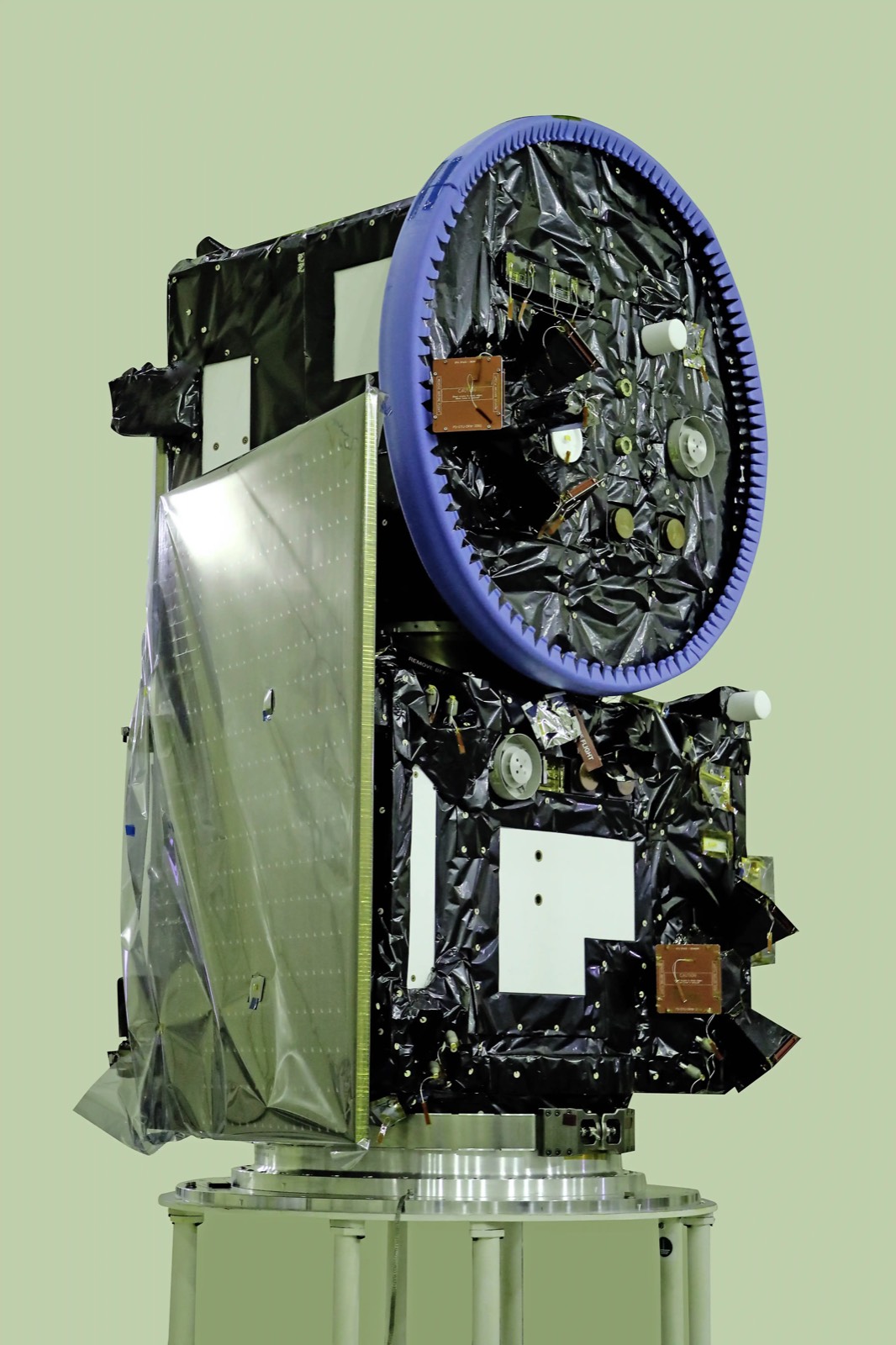
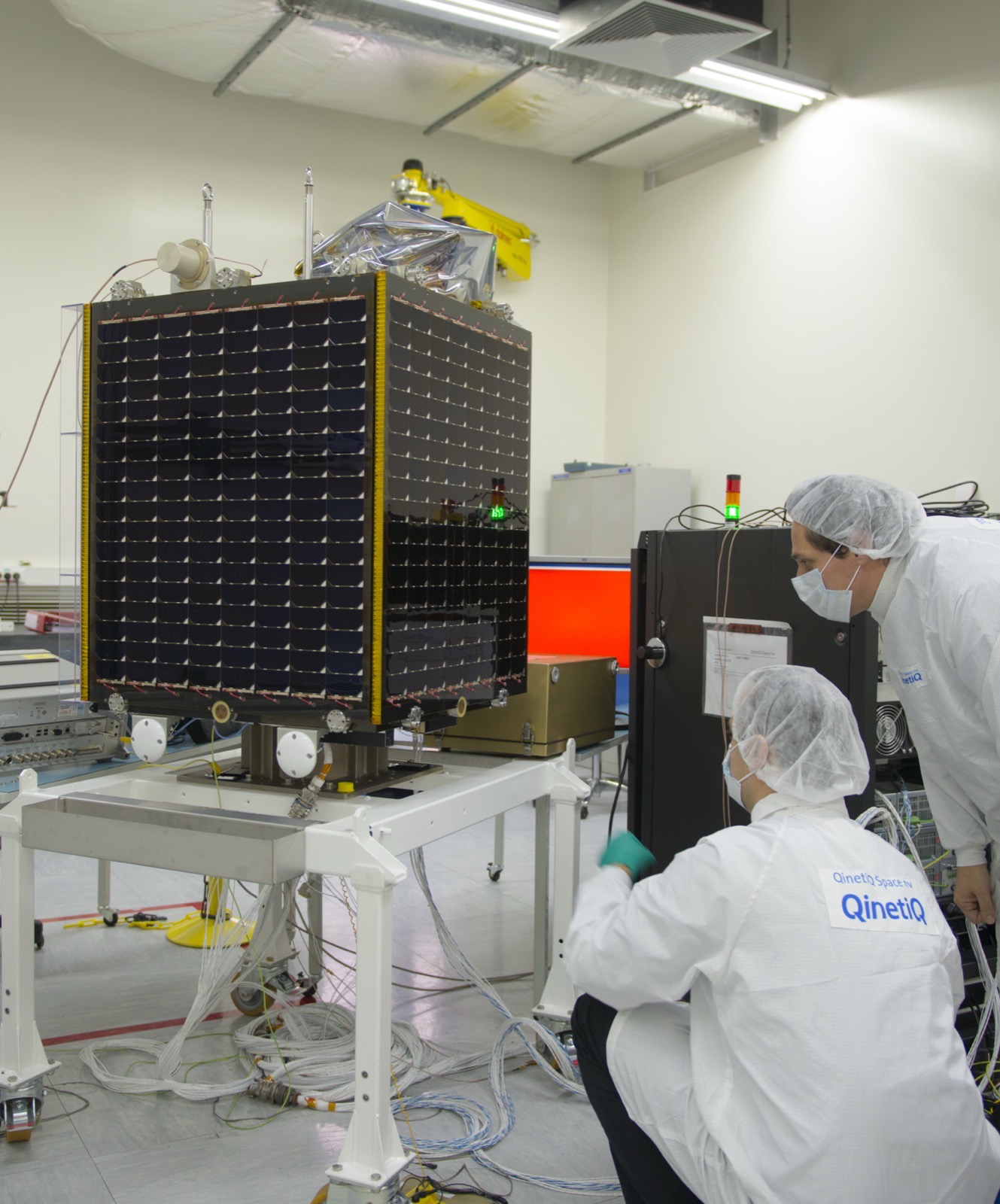
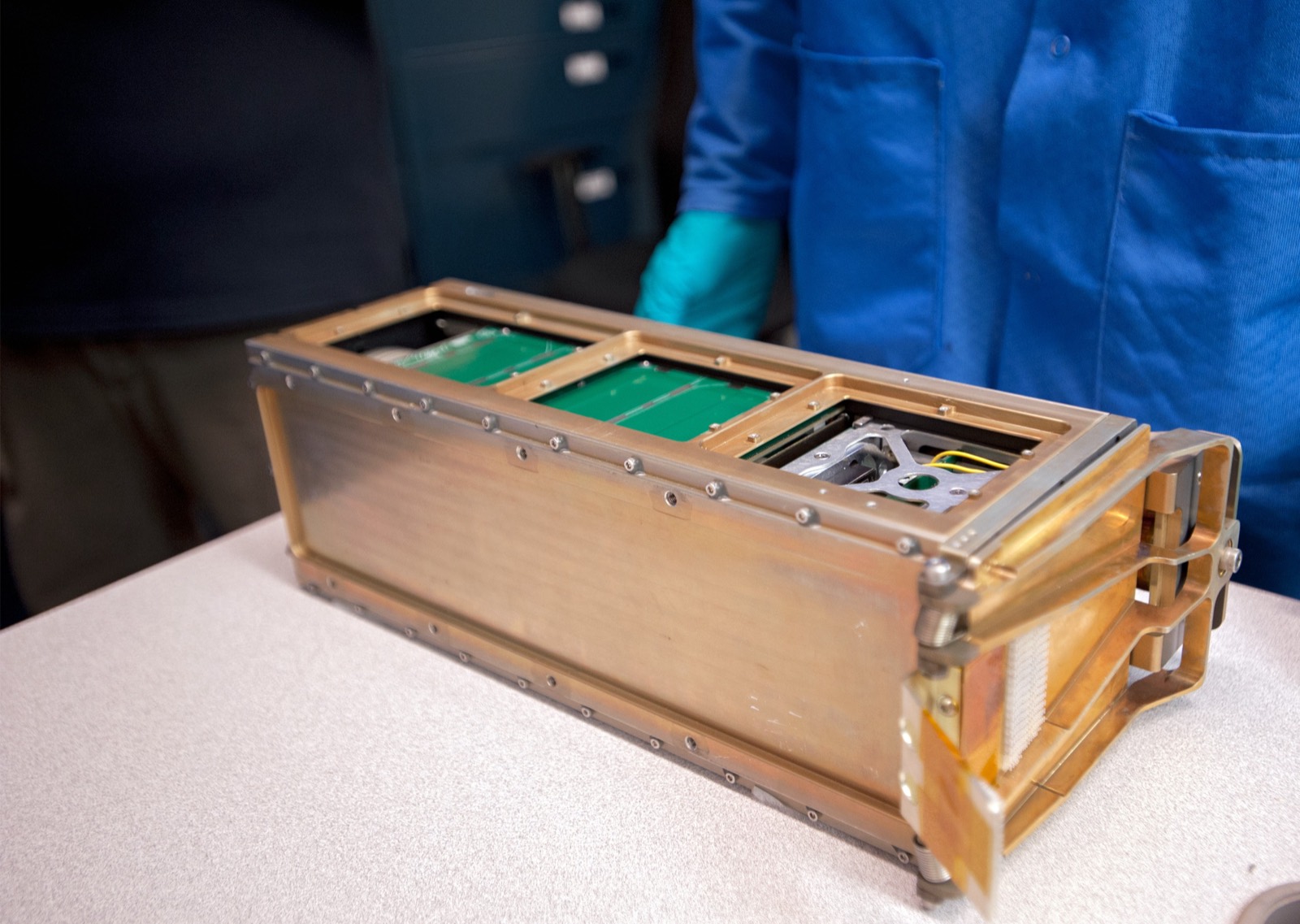
Proba-3 is a pair of spacecraft, made by the European Space Agency (ESA) and Airbus, that fly in precise formation. Together they form a solar coronagraph about 150 m long. The Occulter carries a disc 1400 mm across that blocks the Sun, and the Coronagraph spacecraft images the corona, the Sun's outer atmosphere.
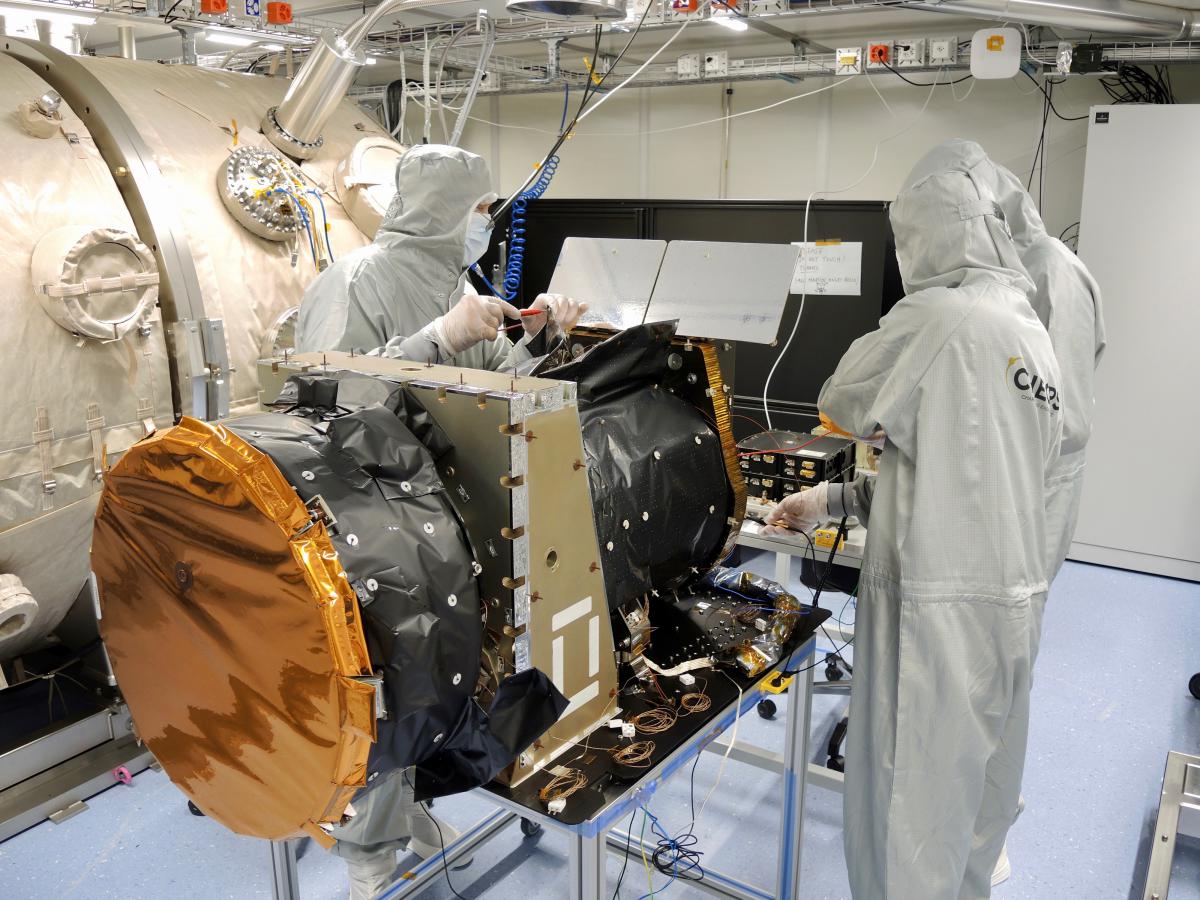
Both craft are wrapped in black multi-layer insulation, a layered thermal blanket. The colour is deliberate: LEDs on board show up against it with maximum contrast. The coronagraph instrument rests on a carbon-fibre optical bench, and an antenna was 3D printed in aluminium.
Application
One of a pair of ESA spacecraft that fly in precise formation, one blocking the Sun so the other can image the corona. The black multi-layer insulation on both spacecraft is part of how the formation is tracked and kept thermally stable.
Photos
How it is built
Black thermal blankets
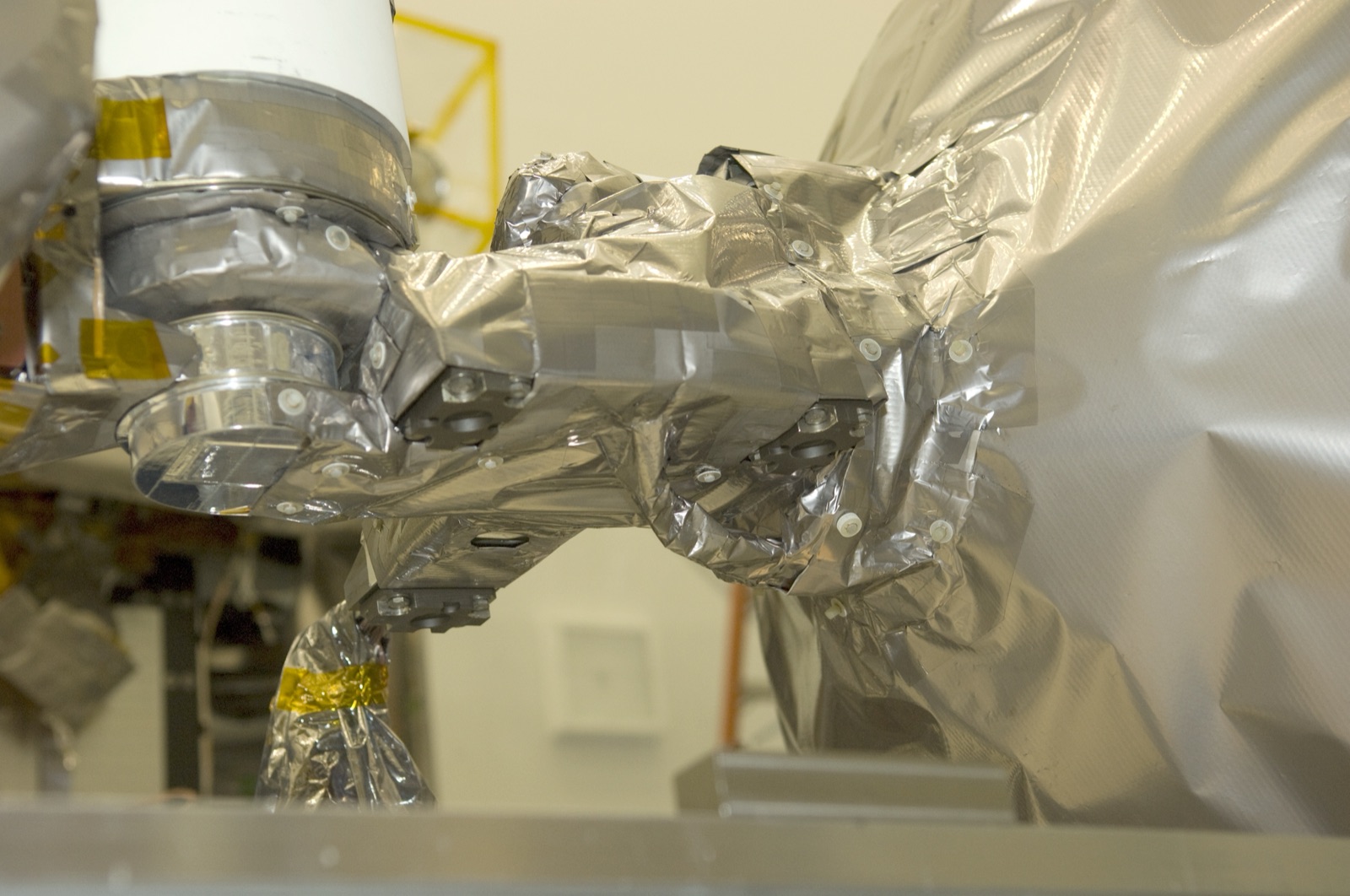
Both spacecraft wear the same black blanket. Technicians from Aviotec wrapped the Coronagraph spacecraft in it. Thermal control also uses thermistors, which sense temperature, plus heaters and radiators.
Outer thermal blanket (both spacecraft)
Thermal control items
The optical bench
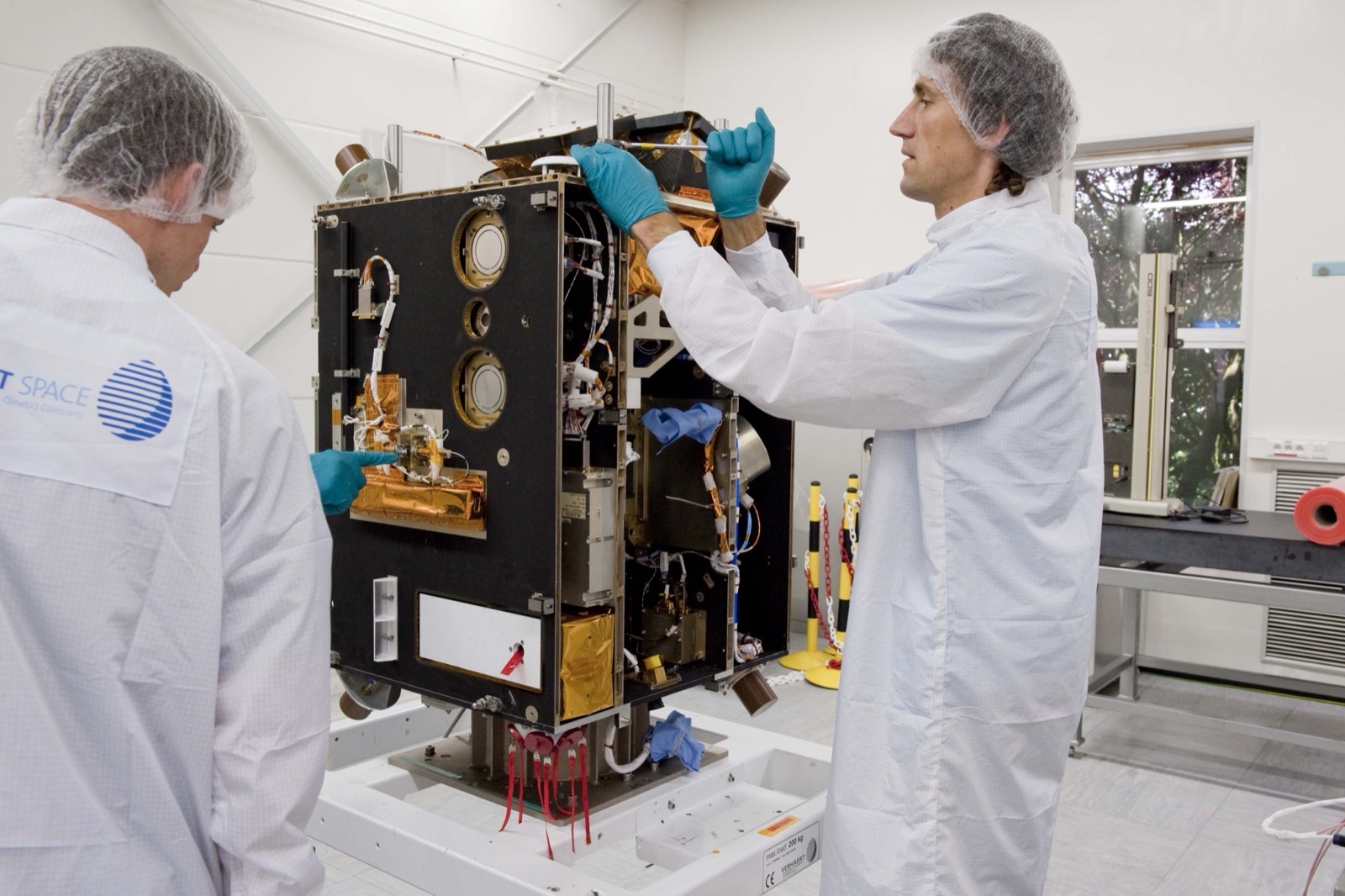
An optical bench is the stable base that holds a telescope's optics. This one is made of high-stability sandwich panels, carbon-fibre plastic over an aluminium core, with titanium fittings to attach the instrument units.
OBA sandwich panels
OBA unit attachment fittings
The coronagraph instrument
The coronagraph instrument, ASPIICS, has a main tube and an equipment box, both in aluminium alloy. Three titanium bipods, two-legged struts, support it. Its main lens is split in two, one piece of BK7G18 glass and one of SF6G05, both glasses that resist radiation.
Main structure tube
Equipment box (EQB)
Instrument support bipods (3)
Primary objective lenses
Antenna and power
A coil-shaped helical antenna was 3D printed in an aluminium alloy by SENER Aeroespacial with CATEC. Power comes from gallium arsenide solar cells and lithium-ion batteries, feeding a battery-regulated 28 V power bus, the main electrical supply line.
Helical antenna
Batteries and solar cells
Where the parts areNumber of parts we have listed in each group
Fittings on the optical bench and the three instrument support bipods.
Radiation-hard glass
The two lenses of the main objective, BK7G18 and SF6G05.
Lithium-ion cells
The batteries that feed the regulated 28 V power bus.
The materials by familyHow many of the parts that name a material use each one
Aluminium4
Other3
Titanium2
Glass fibre1
How it connects to other things
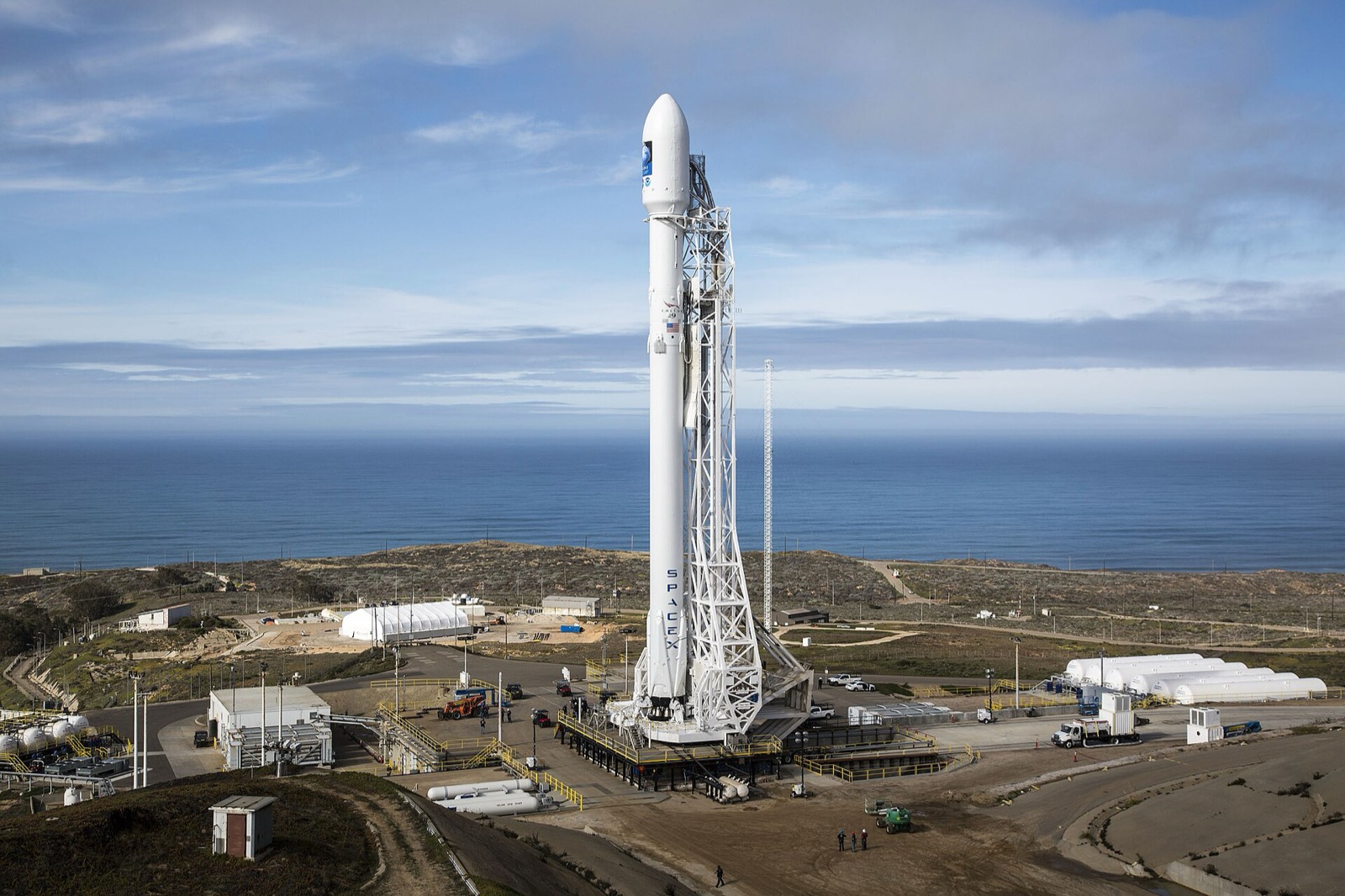
Proba-3 is one of ESA's Proba missions. A PSLV-C59 rocket launched it on 5 December 2024. Aviotec did the insulation wrapping on the Coronagraph spacecraft, and SENER Aeroespacial worked with CATEC on the printed antenna.
AluminiumTitaniumMultilayer insulationCarbon fibre+1 more
Where each one is used
Aluminium. Here: Main structure tube; Equipment box (EQB) and more. There: Telescope (structure and mirrors, 3 telescopes).
Titanium. Here: OBA unit attachment fittings; Instrument support bipods (3). There: Focal plane interconnecting structure; Instrument mounting feet / flexures and more.
Aluminium. Here: Main structure tube; Equipment box (EQB) and more. There: Primary structure (heating/cooling panel, edge members, fittings, brackets); Optical-bench heater aluminum tape and more.
Titanium. Here: OBA unit attachment fittings; Instrument support bipods (3). There: Propellant tanks (2); Instrument mounting flexures.
Multilayer insulation. Here: Outer thermal blanket (both spacecraft). There: High Gain Antenna multi-layer insulation and heaters.
Li-Ion batteries. Here: Batteries and solar cells. There: Battery cells.
Aluminium. Here: Main structure tube; Equipment box (EQB) and more. There: Pressure vessel (seven large pieces, friction-stir welded); Backbone assembly (floor structure) and more.
Titanium. Here: OBA unit attachment fittings; Instrument support bipods (3). There: Heat shield skeleton.
Multilayer insulation. Here: Outer thermal blanket (both spacecraft). There: Passive thermal control: multilayer insulation blankets (incl. high-temperature blankets at thrusters and nozzle) and heaters.
Carbon fibre. Here: OBA sandwich panels. There: Core panels (webs, tank bulkhead, lower platform); Solar array wings (x4, X-wing, three panels each) with wing-tip cameras.
Li-Ion batteries. Here: Batteries and solar cells. There: Battery.
What we do not know
The makers do not name the film layers in the insulation, the materials of the two spacecraft bodies, or what the Occulter's disc is made of. Fasteners, coatings, adhesives and the make of the solar cells are missing too. ESA's own documents give two different sets of masses for the pair.
The detailed data
What is written above is built from these numbers and quotes. Each row links to the page it was taken from. Get all of it as JSON, or ask our MCP server.
Features
Both spacecraft covered in black MLI for LED/camera contrast
Precise formation flying to observe the corona
Attitude control by reaction wheels (Coronagraph)
Specifications
What
Value
Coronagraph mass
340 kg
Occulter mass
200 kg
Coronagraph volume
1100 x 1800 x 1700 mm
Occulter volume
900 x 1400 x 900 mm
Occulting disk
1400 mm diameter
Orbit
High Earth orbit, 19.7 h period
Formation length
approx. 150 m
Launch date
5 December 2024
Instrument
External coronagraph
Propulsion
mono-propellant thrusters (Coronagraph)
Power
deployable solar array (Coronagraph)
Materials in detail
Each material named in the sources: where it is used here, which other products use it, and its key numbers when its material page exists.
The ESA page names only black MLI; eoPortal adds optical-bench sandwich panels, coronagraph structure alloy class, titanium bipods and an additively built antenna, but gives no alloys or part numbers.
Li-Ion batteries; triple-junction GaAs solar cellslithium-ion-cell
—
—
What the sources leave out
No structure panel materials for the two spacecraft bodies, no occulter disc material, no MLI film types, no fasteners or finishes, and no standards are given on the pages read.