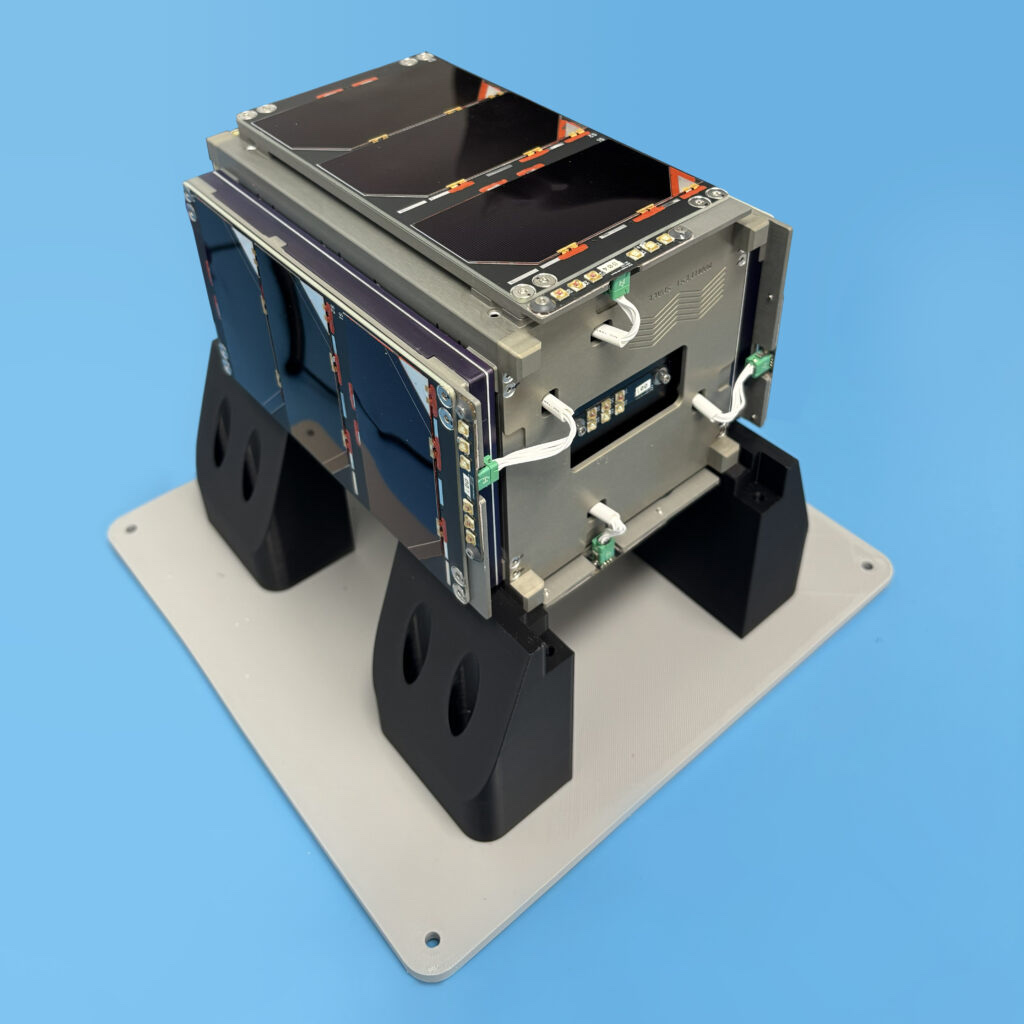
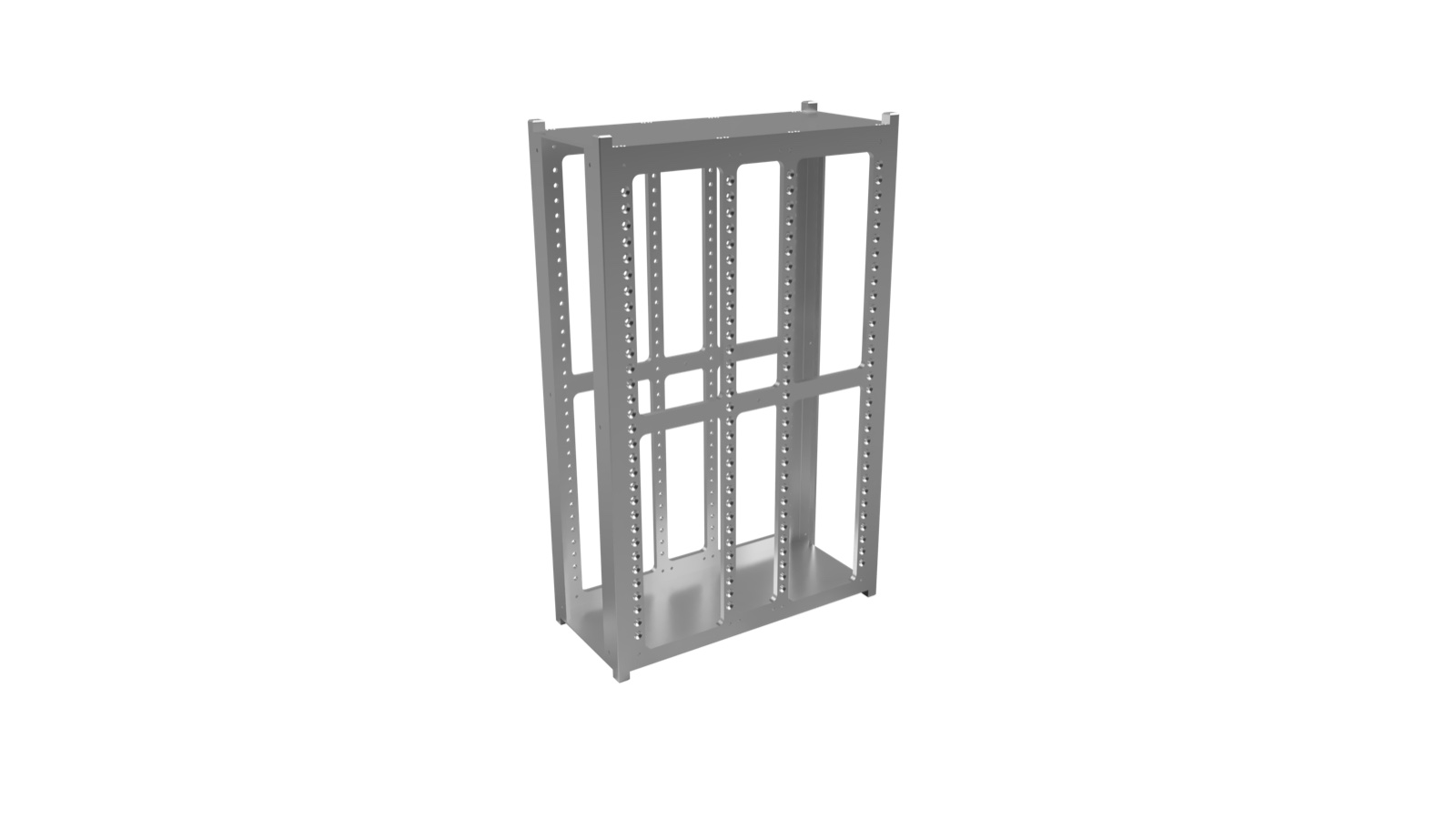
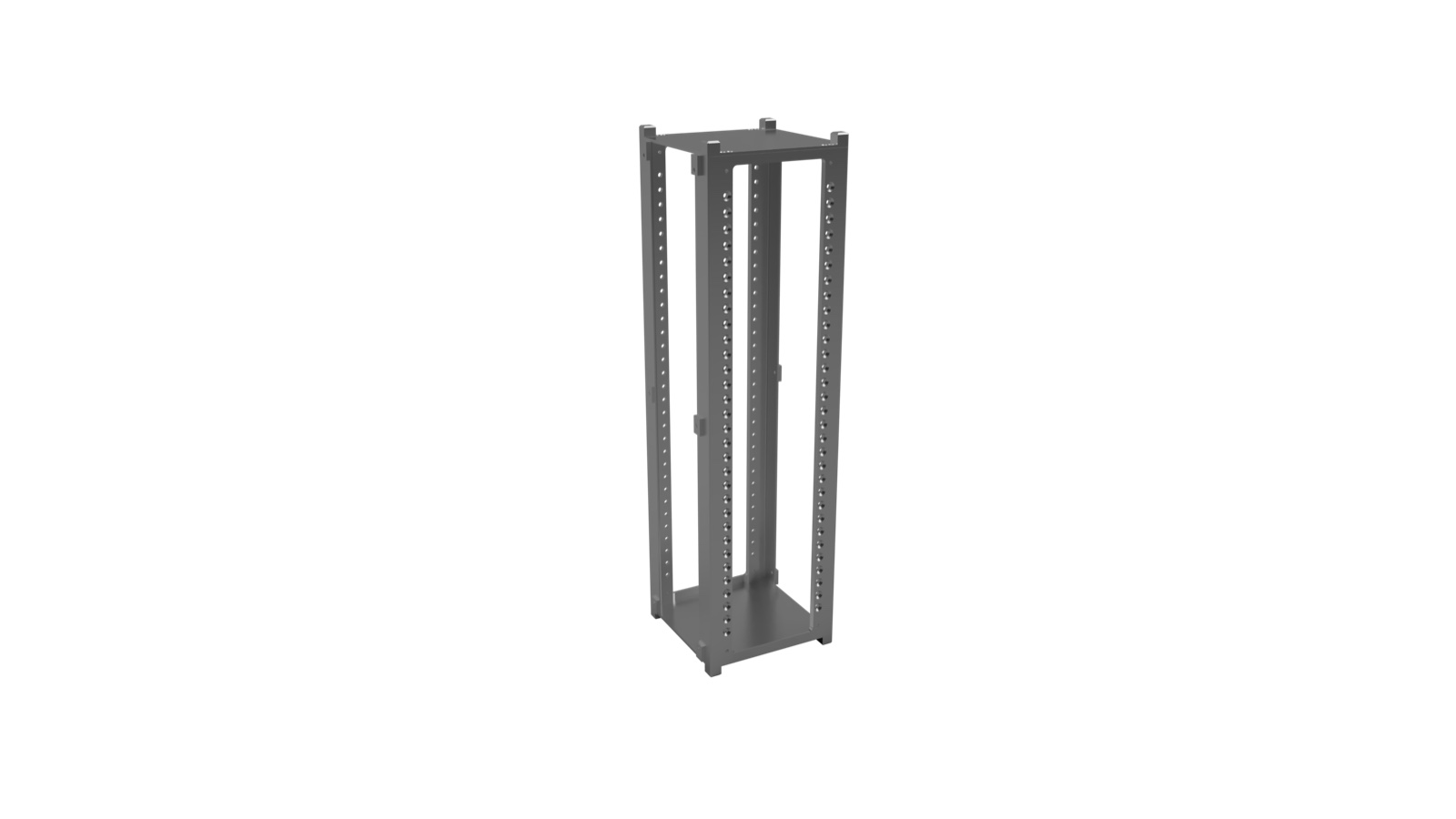
Official render of the bare Kestrel 3U XL chassis, a tall grey perforated aluminium frameOfficial render
Blackwing Space

Kestrel

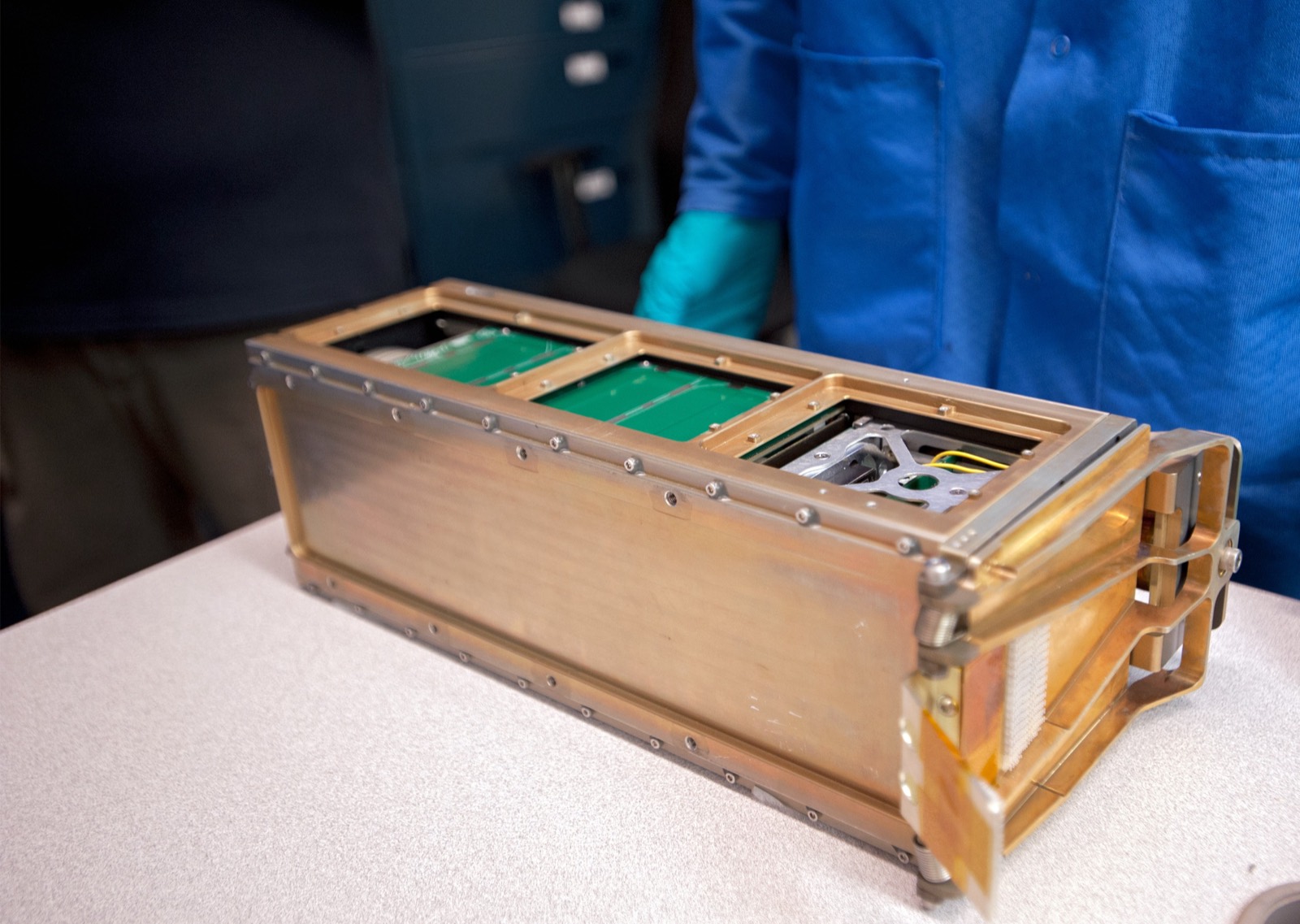
Kestrel is the middle satellite platform in Blackwing Space's range, a 3U XL made to carry a customer's payload.

Platforms and buses
Product IDblackwing-kestrel
Form factor
3U XL
Platform mass
6 kg
Orbit-average power
3 to 30 W
Battery capacity
150 W-h (two Puffin Packs)
Structure mass
375 g (+680 g with blank side panels)

In short

Kestrel sits between the small Sparrow and the large Osprey in Blackwing Space's range of satellite platforms. It is a 3U XL, sold online and rated at 3 to 30 watts of average power over an orbit. Blackwing says the rails let a satellite join a shared launch late, by taking an open slot in a dispenser.

The frame is 6061 aluminium with a hard anodised finish, and Blackwing says it is qualified for the mechanical loads of SpaceX rideshare launches. Inside is the same Rook flight computer as on Sparrow. Two Puffin battery packs hold 150 watt-hours between them.

Application

A mid-size 3U XL platform with room for a 4 kg payload and 30 W of orbit-average power. It is sold online with transparent pricing and can ride in open slots of existing rideshare deployers, which helps teams that need a late launch opportunity.

How it is built

Frame and side panels

The frame alone weighs 375 grams. Optional side panels come blank, ready for the customer to modify, and add another 680 grams. Assembly instructions and fasteners are included, and the frame has built-in connections for deployment switches, solar arrays, a de-orbiting device, antennas and radiators.

  • Kestrel 3U XL Chassis
  • Kestrel 3U XL Chassis optional side panels
  • Kestrel 3U XL Chassis assembly fasteners
  • Chassis interface provisions
  • Rideshare-qualified frame

Computer and battery

The Rook board puts the flight computer and power control on one four-layer FR-4 circuit board. Its charge controller takes solar or USB-C input. Each Puffin Pack holds lithium-ion 18650 cells, and Kestrel carries two of them.

  • Rook onboard computer (one per platform)
  • Rook printed circuit board
  • Charge controller, TI BQ25798 buck-boost
  • Puffin battery pack (Puffin Pack)

Radio, pointing and propulsion

An S-band radio rated at 5 megabits a second is available for Kestrel and Osprey only. Pointing control comes in coarse versions, accurate to better than 10 degrees, and a precision version, better than 1 degree. Electric propulsion is available in a standard and an advanced form.

  • S-band radio
  • 2-axis coarse ADCS
  • 3-axis fine ADCS
  • Electric propulsion, standard
  • Electric propulsion, advanced
Where the parts areNumber of parts we have listed in each group
  • Avionics (Rook board)15
  • Optional modules (pricing page)9
  • Chassis (frame)8
  • Electrical power (Rook board)8
  • Draft specification page options6
  • Radios (options)2

What it is made of

  • Aluminium alloy 6061

    The 3U XL frame, finished with hard anodising.

  • FR-4

    The four-layer Rook circuit board.

  • Lithium-ion cells

    The 18650 cells in each of the two Puffin Packs.

  • PEEK

    A draft Blackwing specification names PEEK, a plastic, as an alternative to aluminium for the frame.

The materials by familyHow many of the parts that name a material use each one
  • Other5
  • Polymers and foams2
  • Aluminium1
  • Glass fibre1
  • Semiconductors1

How it connects to other things

Blackwing says Kestrel complies with the CubeSat Design Specification and the PC/104 board format. It names four compatible dispensers, which also fit Sparrow and Osprey: SEOPS Equalizer Flex, Maverick Space NLAS, Exolaunch EXOpod Nova and SPACEMIND SMPOD12. The Rook computer grew out of PyCubed, an open-source CubeSat design. Blackwing's pages mention no Kestrel flight.

Launched on

  • SEOPS Equalizer Flex (deployer)

    Compatible deployer: 1U to 12U, tab and rail, up to 96U per port, flown on SpaceX Falcon 9 rideshare

  • Maverick Space Systems NLAS (deployer)

    Compatible deployer: ruggedized 6U (or 2x3U) dispenser with NASA Ames NLAS heritage

  • Exolaunch EXOpod Nova (deployer)

    Compatible deployer: 6U to 16U, expands CubeSat Design Specification limits (+30% mass, +400% protrusion volume)

  • NPC Spacemind SMPOD (deployer)

    Compatible deployer: SMPOD family, 3U/12U/16U, redundant NEA actuation; named on the home page as SMPOD12

Builds on

  • PyCubed (open-source CubeSat flight computer)

    The Rook avionics board used on every platform evolved from the PyCubed architecture

Built on

  • CubeSat Design Specification (Cal Poly)

    Interface standard; the draft specification page claims compliance

  • PC/104 form factor

    Board form factor named in the draft specification page

  • CubeSat 101

    NASA CubeSat Launch Initiative

    Reference for the CubeSat Design Specification and dispensers; the guide does not name this product

Products that use the same materials

  • Sparrow

    Blackwing Space

    Aluminium alloy 6061Lithium-ion 18650 cells, two in seriesCarbon fibreFR-4 glass-fibre epoxy laminate+2 more
    Where each one is used

    Aluminium alloy 6061. Here: Kestrel 3U XL Chassis; Structure (all platforms table). There: Sparrow 1U Chassis; Sparrow 1U XL Chassis and more.

    Lithium-ion 18650 cells, two in series. Here: Puffin battery pack (Puffin Pack); Draft power module cells (Li-ion or LiFePO4). There: Puffin battery pack (Puffin Pack); Draft power module cells (Li-ion or LiFePO4).

    Carbon fibre. Here: Structure option: carbon composite shell finish. There: Structure option: carbon composite shell finish.

    FR-4 glass-fibre epoxy laminate. Here: Rook printed circuit board. There: Rook printed circuit board.

    Gallium arsenide. Here: Draft solar panel cells (triple-junction GaAs). There: Draft solar panel cells (triple-junction GaAs).

    Polyetheretherketone. Here: Structure option: PEEK frame. There: Structure option: PEEK frame.

  • Osprey

    Blackwing Space

    Aluminium alloy 6061Lithium-ion 18650 cells, two in seriesCarbon fibreFR-4 glass-fibre epoxy laminate+2 more
    Where each one is used

    Aluminium alloy 6061. Here: Kestrel 3U XL Chassis; Structure (all platforms table). There: Osprey 6U XL Chassis; Structure (all platforms table).

    Lithium-ion 18650 cells, two in series. Here: Puffin battery pack (Puffin Pack); Draft power module cells (Li-ion or LiFePO4). There: Puffin battery pack (Puffin Pack); Draft power module cells (Li-ion or LiFePO4).

    Carbon fibre. Here: Structure option: carbon composite shell finish. There: Structure option: carbon composite shell finish.

    FR-4 glass-fibre epoxy laminate. Here: Rook printed circuit board. There: Rook printed circuit board.

    Gallium arsenide. Here: Draft solar panel cells (triple-junction GaAs). There: Draft solar panel cells (triple-junction GaAs).

    Polyetheretherketone. Here: Structure option: PEEK frame. There: Structure option: PEEK frame.

  • Proba-2

    ESA

    Lithium-ion 18650 cells, two in seriesCarbon fibreGallium arsenide
    Where each one is used

    Lithium-ion 18650 cells, two in series. Here: Puffin battery pack (Puffin Pack); Draft power module cells (Li-ion or LiFePO4). There: Battery.

    Carbon fibre. Here: Structure option: carbon composite shell finish. There: Platform structure supplier (eoPortal).

    Gallium arsenide. Here: Draft solar panel cells (triple-junction GaAs). There: Solar cells.

  • Proba-V

    ESA

    Lithium-ion 18650 cells, two in seriesCarbon fibreGallium arsenide
    Where each one is used

    Lithium-ion 18650 cells, two in series. Here: Puffin battery pack (Puffin Pack); Draft power module cells (Li-ion or LiFePO4). There: Battery.

    Carbon fibre. Here: Structure option: carbon composite shell finish. There: Outer panels (3).

    Gallium arsenide. Here: Draft solar panel cells (triple-junction GaAs). There: Photovoltaic array.

  • OreSat

    PSAS / Oregon State

    Aluminium alloy 6061Lithium-ion 18650 cells, two in seriesGallium arsenide
    Where each one is used

    Aluminium alloy 6061. Here: Kestrel 3U XL Chassis; Structure (all platforms table). There: 1U +X frame; Card wedge (card clamp) and more.

    Lithium-ion 18650 cells, two in series. Here: Puffin battery pack (Puffin Pack); Draft power module cells (Li-ion or LiFePO4). There: 18650 cell (Tenergy, 4 per card); Battery cell model (README).

    Gallium arsenide. Here: Draft solar panel cells (triple-junction GaAs). There: Solar cell (SpectraLabs XTE-SF, 2 per module); Solar cell technology.

  • Icarus CubeSat

    AlbertaSat

    Aluminium alloy 6061Gallium arsenidePolyetheretherketone
    Where each one is used

    Aluminium alloy 6061. Here: Kestrel 3U XL Chassis; Structure (all platforms table). There: Rails; Rails (material statement) and more.

    Gallium arsenide. Here: Draft solar panel cells (triple-junction GaAs). There: Solar cell type (paper).

    Polyetheretherketone. Here: Structure option: PEEK frame. There: Deployment-mechanism parts.

What we do not know

Blackwing hasn't published a datasheet, developer page or interface guide for Kestrel, and says final specifications go to qualified customers on request. It says all its platforms share one payload interface, but only Sparrow's is documented. Its pages give two different payload masses and two different lengths for Kestrel.

The detailed data

What is written above is built from these numbers and quotes. Each row links to the page it was taken from. Get all of it as JSON, or ask our MCP server.

Features

  • Sold online as a commercial off-the-shelf system with transparent pricing
  • Modular architecture
  • Railed CubeSat format supports late manifesting in existing deployer slots

Specifications

WhatValue
Form factor3U XL
Payload4 kg payload mass; 2U payload volume; 30W OAP (not defined on the site)
Compatible deployersSEOPS Equalizer Flex, Maverick Space NLAS, Exolaunch EXOpod Nova, SPACEMIND SMPOD12
Kestrel 3U XL structure mass375 g (+680 g with blank side panels)
Kestrel dimensions (chassis page)340 / 100 / 100 mm (page text says Standard 6U, a typo)
Kestrel stowed dimensions (pricing page)366 x 100 x 100 mm
Kestrel payload limit (chassis page)2.95 kg (pricing page says 4 kg)
Platform mass6 kg
Orbit-average power3 to 30 W
Battery capacity150 W-h (two Puffin Packs)
Draft structure mass range (1U to 6U)0.15 kg (1U) to 0.80 kg (6U) including fasteners, draft
CDS Rev 14.1: rail minimum width8.5 mm, measured from the rail edge to the first protrusion
CDS Rev 14.1: rail surface roughnessless than 1.6 micrometres (a 'should')
CDS Rev 14.1: rail edge radiusat least 1 mm (a 'should')
CDS Rev 14.1: rail end contact area6.5 mm x 6.5 mm minimum on the +/- Z face
CDS Rev 14.1: protrusion limit6.5 mm normal to the surface from the plane of the rail
CDS Rev 14.1: rail contact with dispenserat least 75% of the rail
CDS Rev 14.1: structure materialaluminium alloy; 7075, 6061, 6082, 5005 and/or 5052 typical
CDS Rev 14.1: rail surface finishhard anodized wherever it touches the dispenser rails
CDS Rev 14.1: maximum mass per size1U 2.00 kg, 1.5U 3.00 kg, 2U 4.00 kg, 3U 6.00 kg, 6U 12.00 kg, 12U 24.00 kg
CDS Rev 14.1: separation spring guidelinemax force below 6.7 N (1.5 lbf), stroke above 2.5 mm
CDS Rev 14.1: deployment switchat least one, actuated while the CubeSat is in the dispenser
CDS Rev 14.1: outgassingTML at most 1.0 % and CVCM at most 0.1 %
CDS Rev 14.1: remove-before-flight pinrequired; protrudes no more than 6.5 mm from the rail surface when fully inserted

Materials in detail

Each material named in the sources: where it is used here, which other products use it, and its key numbers when its material page exists.

  • Aluminium alloy 6061

    Used in 2 partsKestrel 3U XL Chassis · Structure (all platforms table)

    Strength
    276 MPa yield
    Weight and stiffness
    2.7 g/cm3
    Heat conduction
    167 W/(m·K)
    Also in 9 other products
  • Lithium-ion 18650 cells, two in series

    lithium-ion-cell

    Used in 2 partsPuffin battery pack (Puffin Pack) · Draft power module cells (Li-ion or LiFePO4)

    Also in 12 other products
    Material page coming soon
  • Carbon fibre (PAN-based, pitch-based) and carbon/carbon

    Used in 1 partStructure option: carbon composite shell finish

    Strength and stiffness
    4100 MPa
    Thermal conduction
    140 W/(m·K)
    Heat tolerance in carbon/carbon
    Oxidises above about 500 C
    Also in 19 other products
  • FR-4 glass-fibre epoxy laminate

    Used in 1 partRook printed circuit board

    Survive thermal stress
    60 min T260
    Hold a stable board
    13 ppm/°C X-axis CTE
    Stay insulating
    54 kV/mm
    Also in 2 other products
  • Gallium arsenide

    Used in 1 partDraft solar panel cells (triple-junction GaAs)

    Carry electrons fast
    8500
    Absorb and emit at a wide band gap
    1.424
    Hold up in orbit, with a cost
    30
    Also in 10 other products
  • Polyetheretherketone

    Used in 1 partStructure option: PEEK frame

    Strength and stiffness
    98.0 MPa
    Heat
    Melts at 343 °C
    Low temperature
    198.14 MPa at 77 K
    Also in 3 other products

Every part we have

The only parts-level data is the chassis shop page and a spec-table row that name one aluminium alloy and a hard anodize; no drawings or interface documents exist for Kestrel. Components, suppliers and links were added from public sources. A material is left blank where no source states it.

Chassis (frame)8
PartMaterialFinish and standardMade by
Kestrel 3U XL Chassis“Aluminum 6061 T6 or T651 Hard anodized (Anodized + Flight)” Aluminum 6061 T6 or T651aluminium-6061 Hard anodized (Anodized + Flight); anodize type/class not stated SKU KESTREL-3U-XL-CHASSI
Kestrel 3U XL Chassis optional side panels“Optional side panels ready to be modified to end user needs” not stated — —
Kestrel 3U XL Chassis assembly fasteners“Guided assembly instructions and fasteners provided” not stated — —
Structure (all platforms table)“Structure Material Al 6061-T6” Al 6061-T6aluminium-6061 — —
Chassis interface provisionsMounting and electrical interfaces built into the chassis for deployment switches, solar arrays, de-orbiting device, HF antennas and radiators“Includes interfaces for deployment switches, solar arrays, de-orbiting device, HF antennas, radiators and more” Not said — —
Tuna can antenna volumeChassis is prepared for the CubeSat -Z face extra-volume antenna“Tuna can antenna ready” Not said — —
Blank side panelsOptional panels bolted to the chassis; sold blank to be modified by the user“375g structure (+680g with blank side panels)” Not said — —
Rideshare-qualified frameFrame is stated as qualified to SpaceX rideshare mechanical levels“Frame qualified to SpaceX ride share mechanical levels” Not said — —
Avionics (Rook board)15
PartMaterialFinish and standardMade by
Rook onboard computer (one per platform)Flight computer, command and data handling and electrical power system on one four-layer board; the platform's OBC“Rook is Blackwing Space’s integrated flight avionics board” Not said — Supplier: Blackwing Space
Rook printed circuit boardCarries all Rook electronics“Four-layer FR-4” FR-4 (glass-epoxy laminate; grade not stated)fr-4 — —
Flight processor, Microchip ATSAMD51J20A32-bit Arm Cortex-M4F running CircuitPython or embedded C“Microchip ATSAMD51J20A, 32-bit Arm Cortex-M4F, up to 120 MHz” Not said — Supplier: Microchip
Persistent memory, Everspin MR25H40 MRAMStores logs, event counters, calibration data and safe-mode flags“Everspin MR25H40 MRAM, 4 Mbit (512 KB)” Not said — Supplier: Everspin
QSPI NOR flash, Winbond W25Q128Holds software, libraries, telemetry buffers and over-the-air images“Winbond W25Q128 NOR flash, 128 Mbit (16 MB)” Not said — Supplier: Winbond
microSD card interfaceRemovable bulk storage for mission or payload data“Removable storage - microSD interface” Not said — —
Inertial sensor, BNO086Nine-axis IMU with onboard sensor fusion“BNO086 nine-axis IMU with onboard sensor fusion” Not said — —
Watchdogs (SAMD51 internal and MAX706 external)Watchdog recovery of the flight computer“SAMD51 internal watchdog and MAX706 external watchdog” Not said — —
Bootloader ROOKBOOTRuns first after every reset from a protected flash region; MRAM holds a backup image“ROOKBOOT, in the protected 16 KB BOOTPROT region, with MRAM backup image” Not said — —
Flight software environmentCircuitPython 10 or embedded C on the Rook board“CircuitPython 10 or embedded C” Not said — —
GPIO expander, MCP2301716-bit I2C expander for burn-wire relays, payload power switching, RBF sensing and charger interrupts“MCP23017 16-bit I2C GPIO expander - burn-wire relays, payload power switching, RBF sensing, charger interrupts” Not said — —
I2C hot-swap buffers, TCA4307 (x4)Hot-swap and stuck-bus recovery on the I2C buses“Four TCA4307 I2C hot-swap and stuck-bus-recovery buffers” Not said — —
Burn-wire driversRelease deployables; hardware relay inhibit“High-current burn-wire drivers with hardware relay inhibit” Not said — —
Radio interface connector (20-pin Samtec) and SMP RF connectionPower, SPI, reset, programming and control to the radio, plus a separate RF cable connection“20-pin Samtec connector - power, SPI, reset, programming, control; separate SMP RF connection” Not said — Supplier: Samtec
GNSS footprint, Orion B16-S L1/L5 (provision only)Footprint and SMP antenna connection for a GNSS receiver; not populated in the current bill of materials“Orion B16-S L1/L5 footprint provision and SMP antenna connection - NOT populated in the current BOM” Not said — —
Electrical power (Rook board)8
PartMaterialFinish and standardMade by
Charge controller, TI BQ25798 buck-boostDual-input (solar and USB-C) battery charger, software-programmable up to 5 A“TI BQ25798 buck-boost charger” Not said — Supplier: Texas Instruments
Solar-input ideal-diode controllers, LTC4412 (x6)Isolate the solar inputs from each other so shaded panels cannot backfeed“Six LTC4412 ideal-diode PowerPath controllers” Not said — —
eFuse, TPS259470 (with fuses, TVS, zener clamps, battery protection FETs)Layered electrical protection“TPS259470 eFuse, physical fuses, TVS protection, zener clamps, and battery protection FETs” Not said — —
Low-noise regulator, LT3045Supplies the RF and GNSS circuits“LT3045-regulated RF/GNSS supply” Not said — —
Radio power-amplifier supply (switched 11 V boost)Powers the radio power amplifier“Switched 11 V boost supply” Not said — —
Power monitor, ADM1176Voltage and current monitoring“ADM1176 voltage and current monitor” Not said — —
Regulated rails (3.3 V and two 5 V)Rails offered to the platform and payload“3.3 V and two 5 V rails” Not said — —
Puffin battery pack (Puffin Pack)Rechargeable battery pack; platform carries two Puffin Packs (150 W-h)“150 W-h (2x Puffin Pack)” Lithium-ion 18650 cells, two in serieslithium-ion-cell — —
Radios (options)2
PartMaterialFinish and standardMade by
Warbler UHF radioOpenLST-derived UHF radio on the Rook radio interface“Warbler UHF radio - OpenLST-derived, on the dedicated 20-pin Rook radio interface” Not said — —
Hummingbird LoRa radioLoRa radio for packet, telemetry, ground-station and RF-link development; stated as available Q3 2026“Hummingbird LoRa radio - packet, telemetry, ground-station, and RF-link development. (Available Q3 2026)” Not said — —
Optional modules (pricing page)9
PartMaterialFinish and standardMade by
Deployable solar panel wings (1 or 2 panels)Optional deployable arrays to raise orbit-average power; body-mounted panels are the alternative“Deployable Solar Panels (1 Panel)” Not said — —
S-band radioHigher-rate downlink; offered on Kestrel and Osprey only“S-Band Radio — — $5,000 $5,000” Not said — —
Iridium transceiverGlobal backup communications band“Iridium Transceiver — $5,000 $5,000 $5,000” Not said — —
2-axis coarse ADCSAttitude control option; offered on Kestrel and Osprey“ADCS (2-Axis Coarse) — — $20,000 $20,000” Not said — —
3-axis coarse ADCSAttitude control option“ADCS (3-Axis Coarse)” Not said — —
3-axis fine ADCSPrecision attitude control option; offered on Kestrel and Osprey“ADCS (3-Axis Fine) — — $50,000 $50,000” Not said — —
Electric propulsion, standardOrbit-control option; offered on Kestrel and Osprey“Electric Propulsion (Standard) — — $20,000 $20,000” Not said — —
Electric propulsion, advancedHigher-performance orbit-control option“Electric Propulsion (Advanced) — — $30,000 $30,000” Not said — —
Passive drag sailDeorbit device for the FCC 5-year lifetime rule“Passive Drag Sail (Deorbit)” Not said — —
Draft specification page options6
PartMaterialFinish and standardMade by
Structure option: PEEK frameAlternative to aluminium in the draft structure specification (page marked draft, subject to change)“Material: Aluminum 6061-T6 or PEEK” PEEKpeek — —
Structure option: carbon composite shell finishAlternative to hard anodizing in the draft structure specification“Finish: Hard-anodized or carbon composite shell” Carbon composite (resin not stated)carbon-fibre — —
Draft solar panel cells (triple-junction GaAs)Draft specification for fixed or deployable arrays“Triple-junction GaAs cells > 29 % efficiency” Gallium arsenide (triple-junction cells)gallium-arsenide — —
Draft power module cells (Li-ion or LiFePO4)Draft specification for battery packs sized 1U to 6U“Configurations: 1U–6U with Li-ion or LiFePO₄ packs” Lithium-ion or lithium iron phosphate cells (draft)lithium-ion-cell — —
Draft antennas (deployable spring or hinge type)UHF (LoRa), S-band, Iridium and GNSS L1/E1 options with integrated ground plane“Deployable spring or hinge type; integrated ground plane” Not said — —
Draft software-defined radioUHF (LoRa), S-band or Iridium options; firmware reprogrammable on orbit“Software-Defined Radio (SDR) firmware reprogrammable on-orbit” Not said — —

Standards named

  • CubeSat specification (compliance claim only) · Chassis; the revision is not named

What the sources leave out

No Kestrel developer page, payload interface guide, drawings or STEP file are published (Blackwing says Kestrel developer tools are in development; the Sparrow guide is the only published interface document). The pricing page says all platforms share the same payload interfaces, but the Sparrow payload module drawings are Sparrow-specific and are not applied here. No anodize standard, fastener material, side-panel material, or connector part number for this platform is stated. Chassis pages say 'Aluminum 6061 T6 or T651' without saying which. More detail: Kestrel has no published developer page, interface guide or drawings (listed as coming soon). No bill of materials: fastener count and material, side-panel material, anodize type, solar panel and radio suppliers, ADCS and electric-propulsion suppliers, thermal coatings and adhesives are not stated. The chassis page gives 340 / 100 / 100 mm and 'Standard 6U' while the pricing page gives 366 x 100 x 100 mm for the 3U XL, and payload mass 2.95 kg vs 4 kg. The Specifications page is draft. No Kestrel has flown according to the pages read. More detail: Kestrel has no published developer page, interface guide or drawings (listed as coming soon). No bill of materials: fastener count and material, side-panel material, anodize type, solar panel and radio suppliers, ADCS and electric-propulsion suppliers, thermal coatings and adhesives are not stated. The chassis page gives 340 / 100 / 100 mm and 'Standard 6U' while the pricing page gives 366 x 100 x 100 mm for the 3U XL, and payload mass 2.95 kg vs 4 kg. The Specifications page is draft. No Kestrel has flown according to the pages read.
Where this comes from

6 pages from 2 websites

More space products

Collected from public pages and documents, checked 4 Nov 2026.

Published · Updated