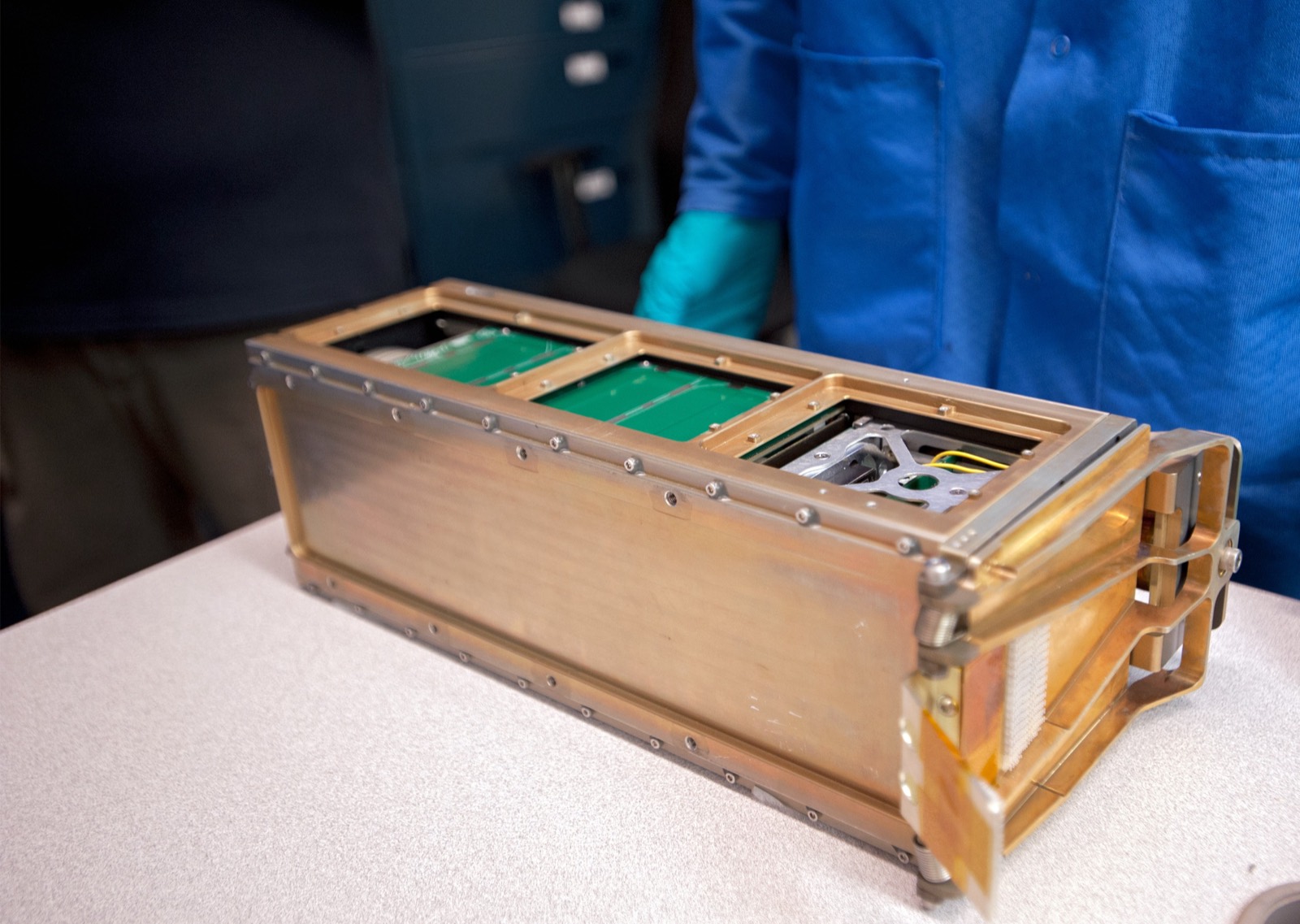
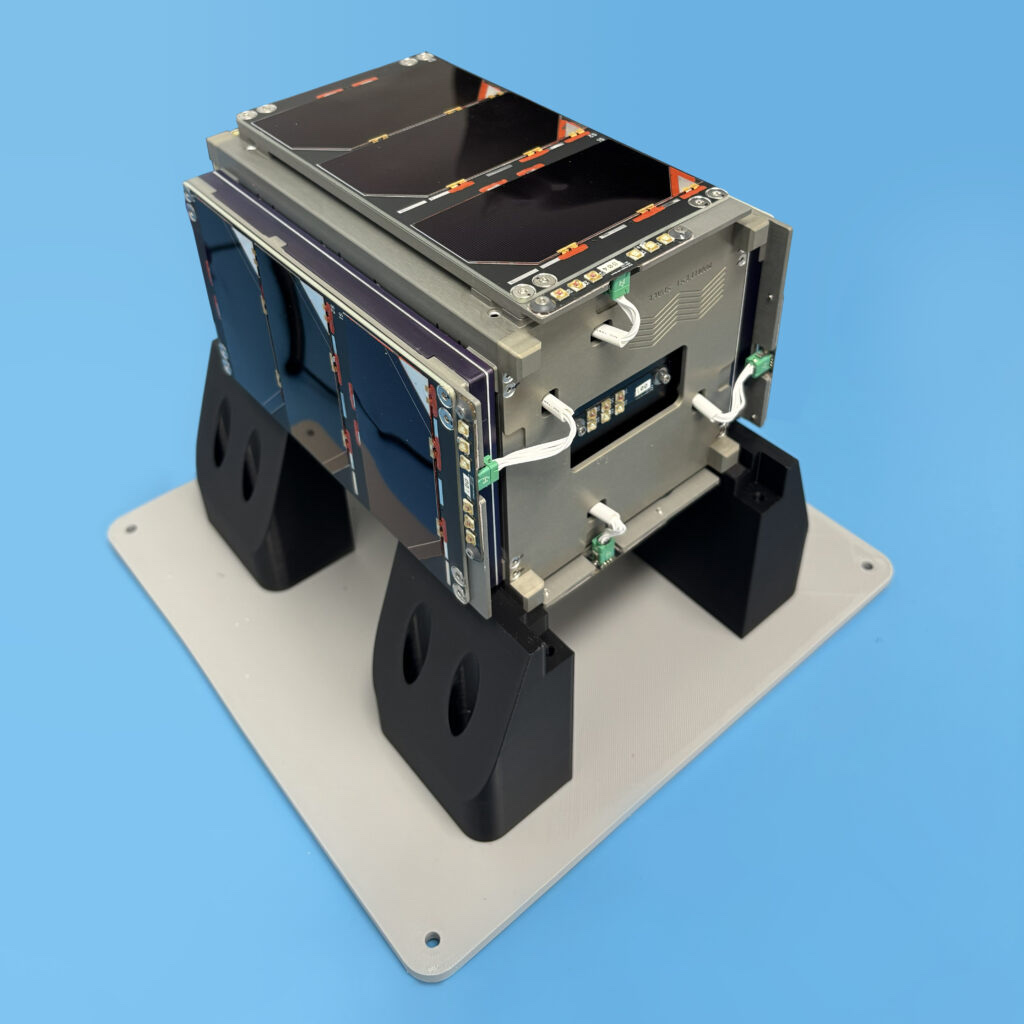
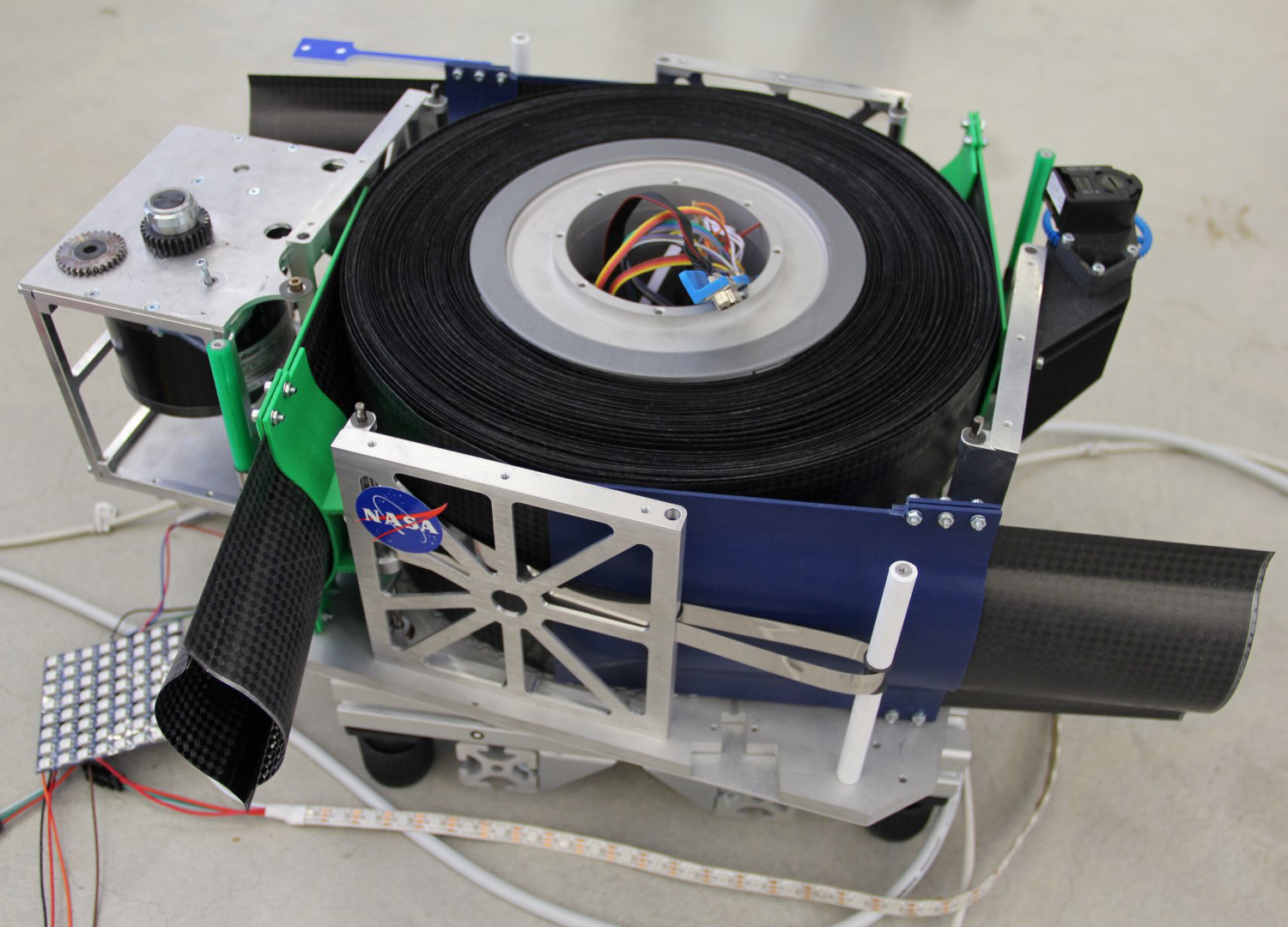
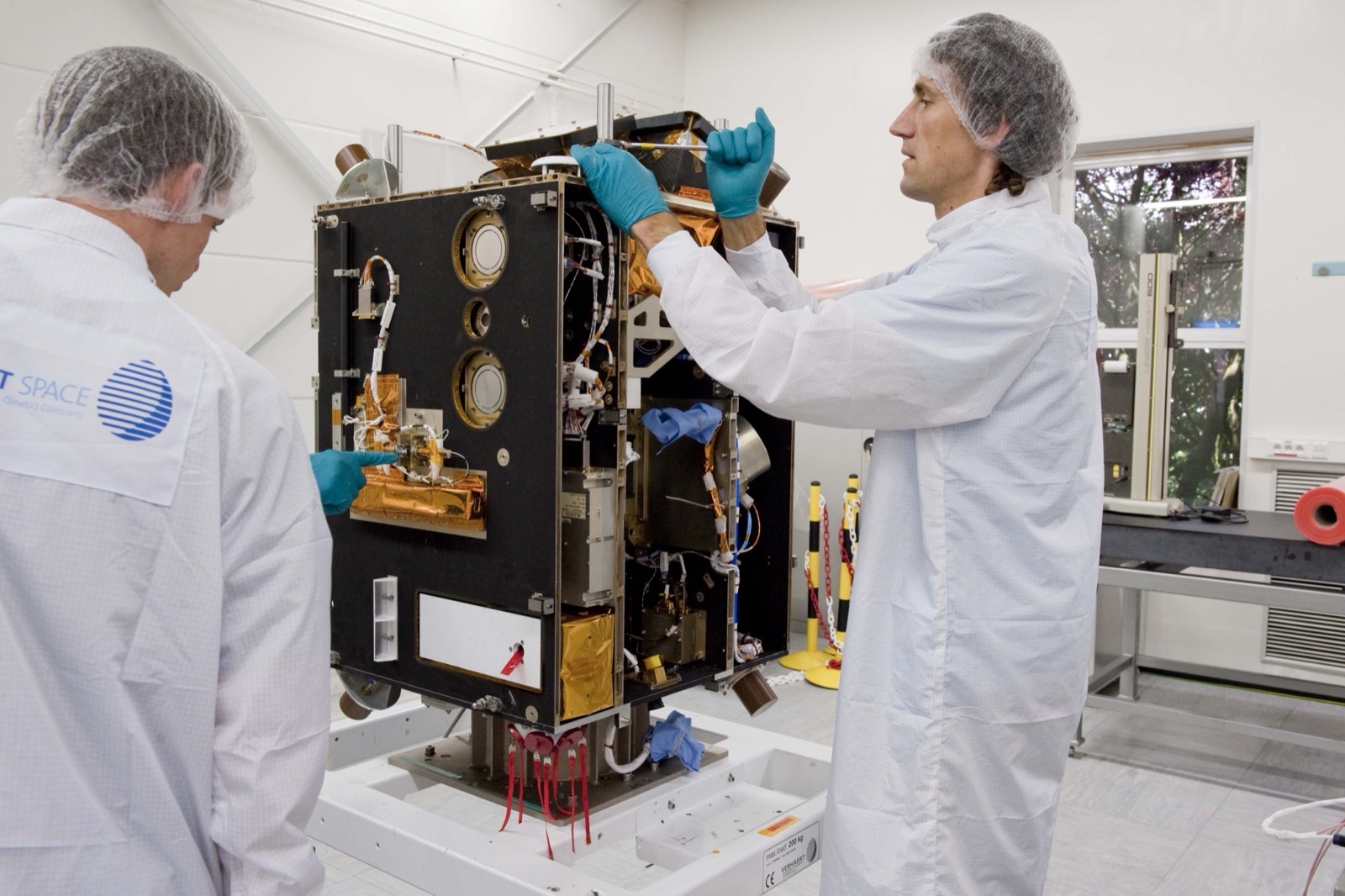
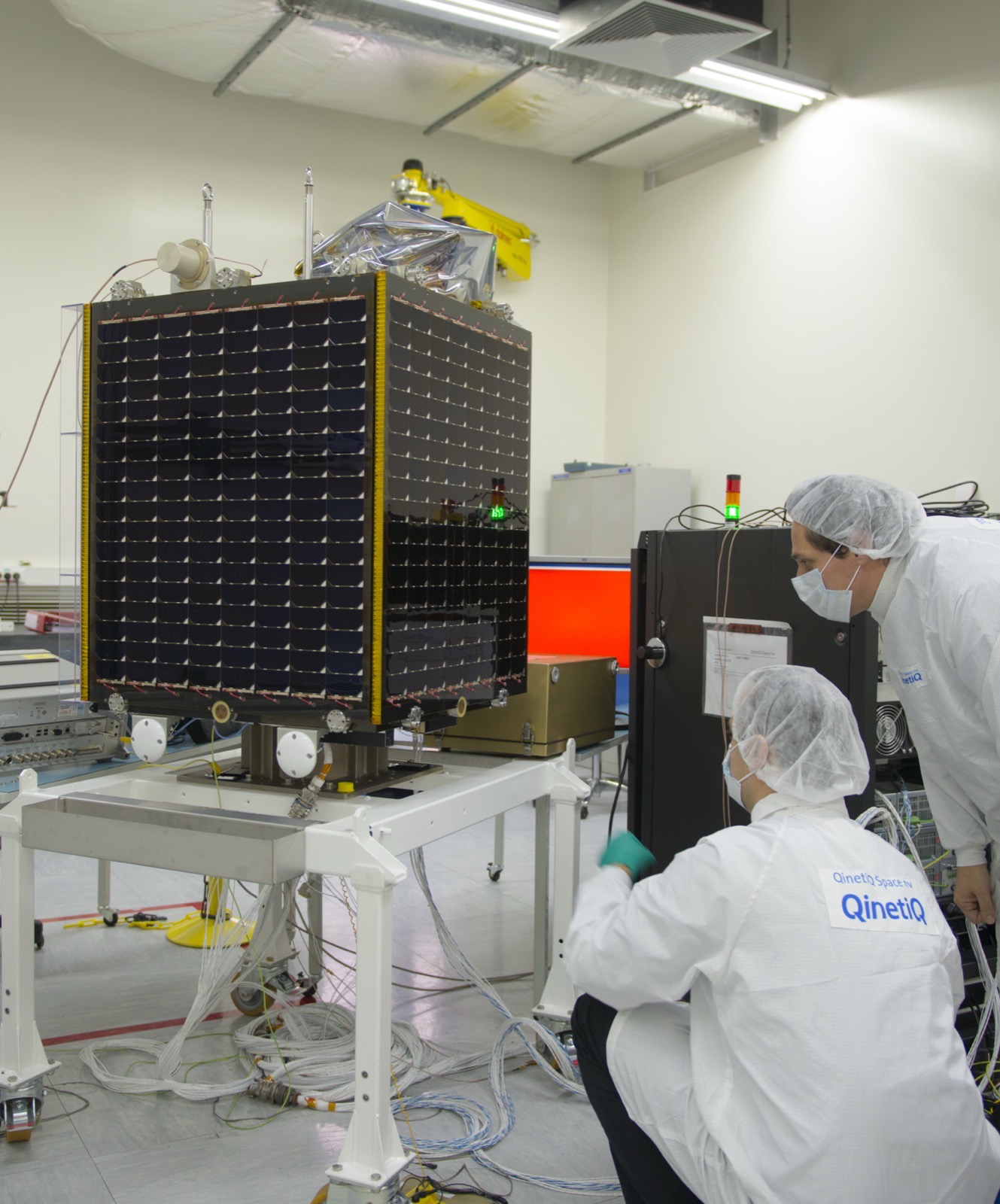
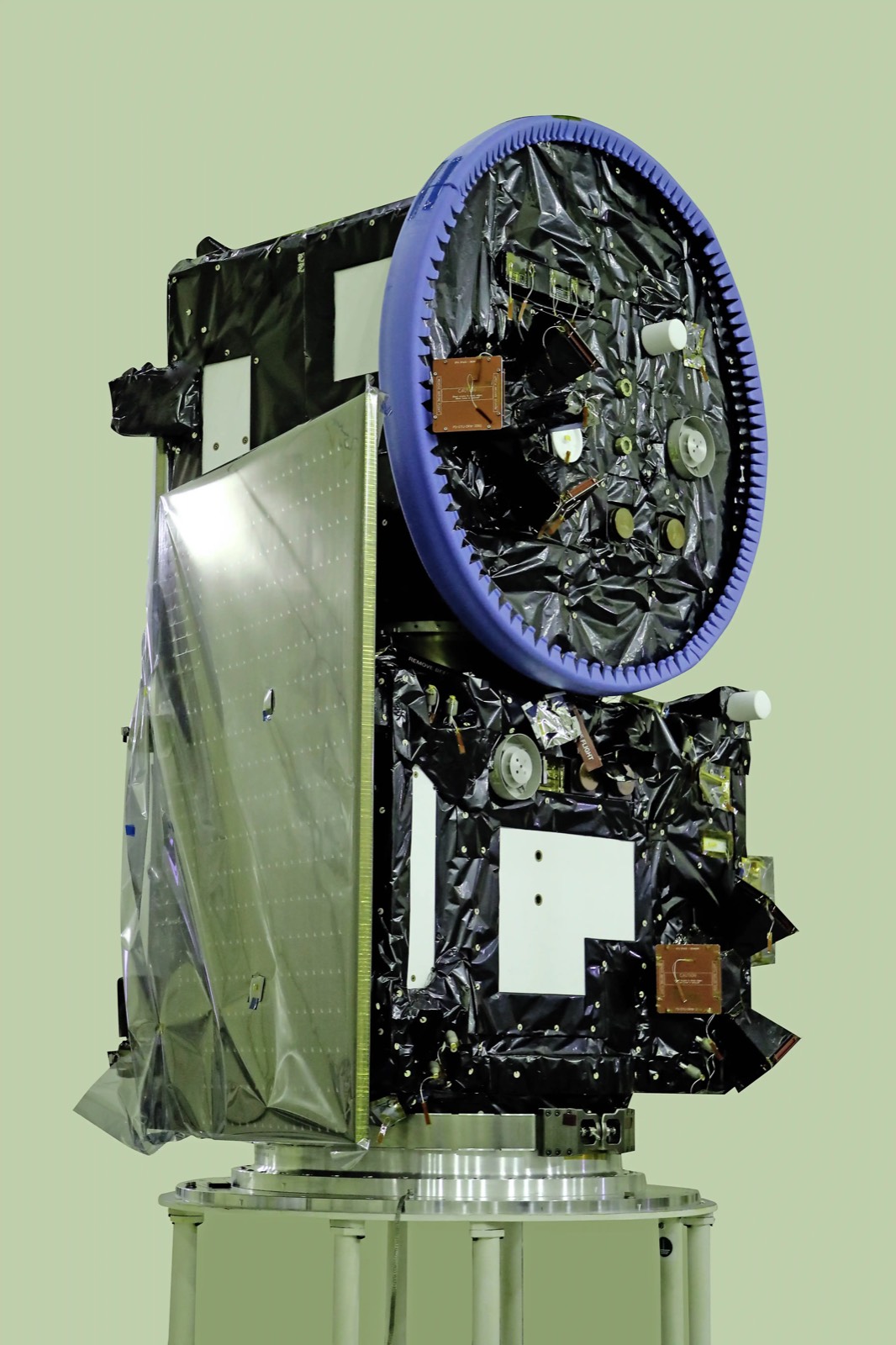
CubeSat 101 comes from NASA's CubeSat Launch Initiative and is written for people building their first CubeSat. A CubeSat is a small satellite made in standard units, and the basic unit, 1U, is roughly a 10 cm cube. The guide covers size and mass limits, the dispenser that releases the satellite, battery safety and orbital debris paperwork.
The guide describes no real spacecraft. Its materials show typical practice, not the make-up of one mission. Its sample CubeSat has a 6061-T6 aluminium structure, a ceramic patch antenna and lithium-ion batteries. A blank NASA form adds a few more materials, each marked 'e.g.'.
Application
NASA's guide for first-time CubeSat developers. It shows what a first mission has to get right, from size and mass limits to deployer rules, anodized rails and battery safety. It is a teaching document with example materials, not a specific spacecraft.
Photos
How it is built
Size, mass and dispensers
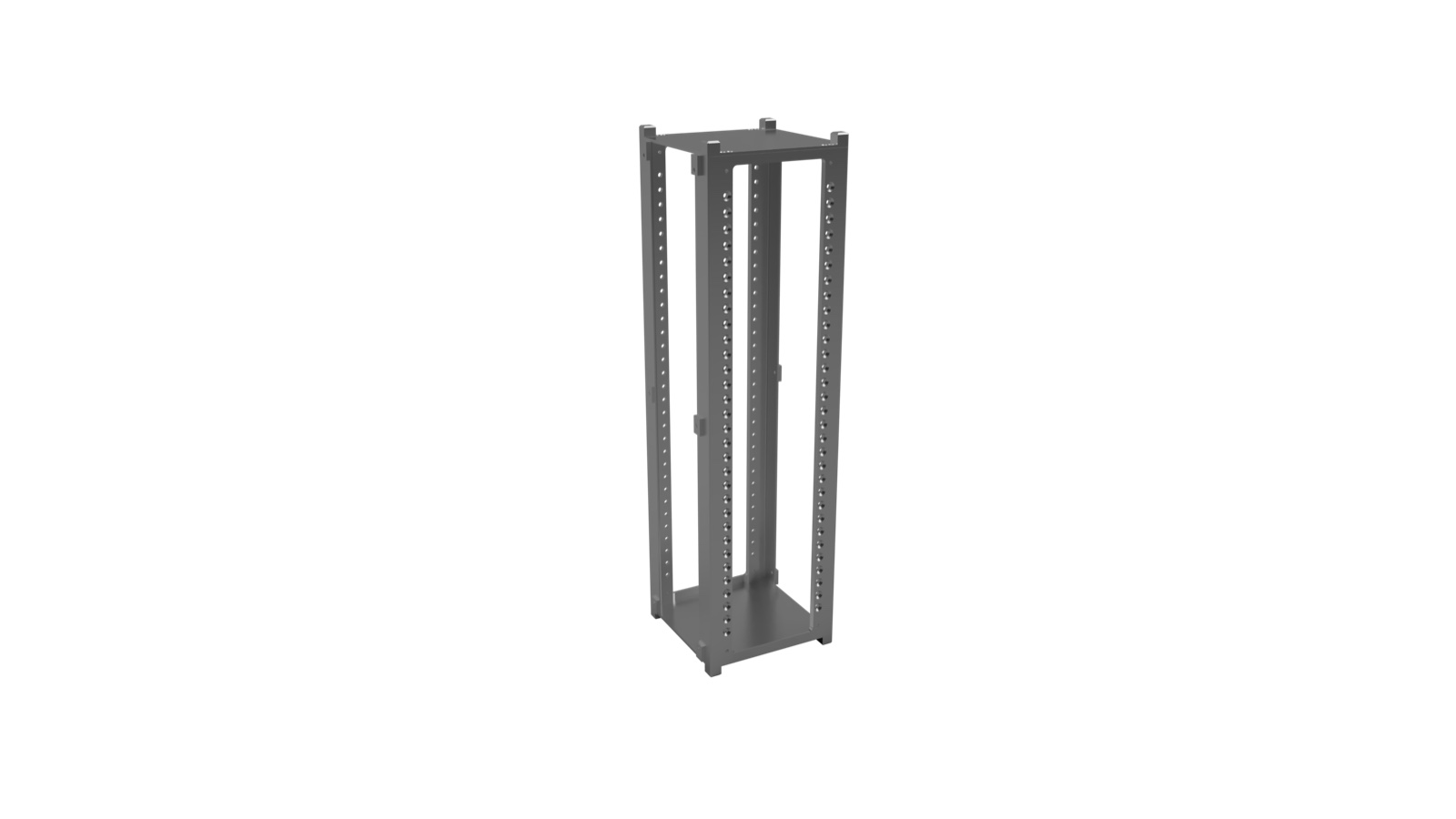
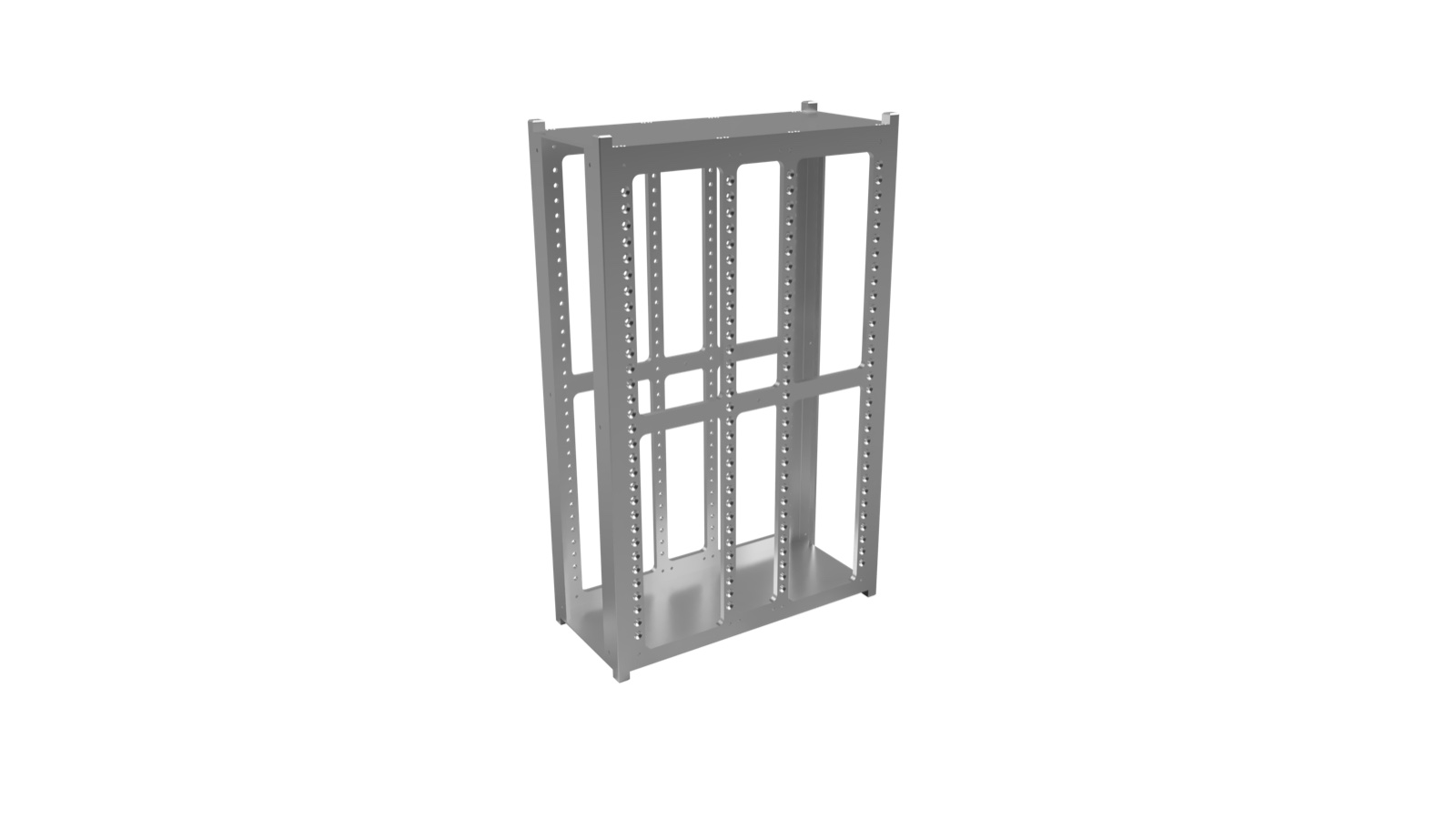
A basic CubeSat, called 1U, weighs roughly 1 to 1.33 kg. Larger versions come as 1.5U, 2U, 3U, 6U and 12U, and a 3U measures 10 cm by 10 cm by 34 cm. The standard dispenser is the Cal Poly P-POD, which carries units from 1U to 3U.
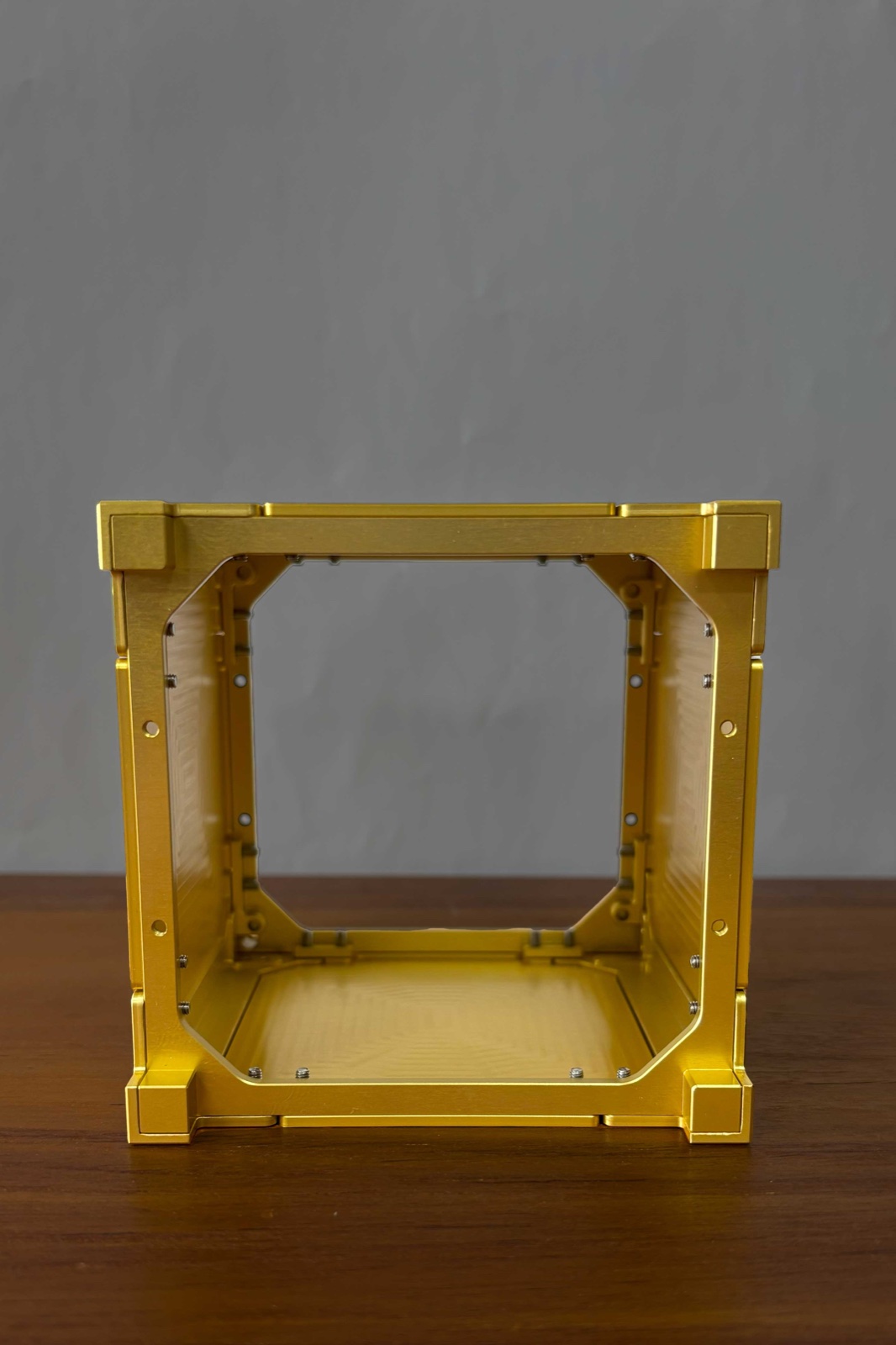
Rails (deployer interface rails)
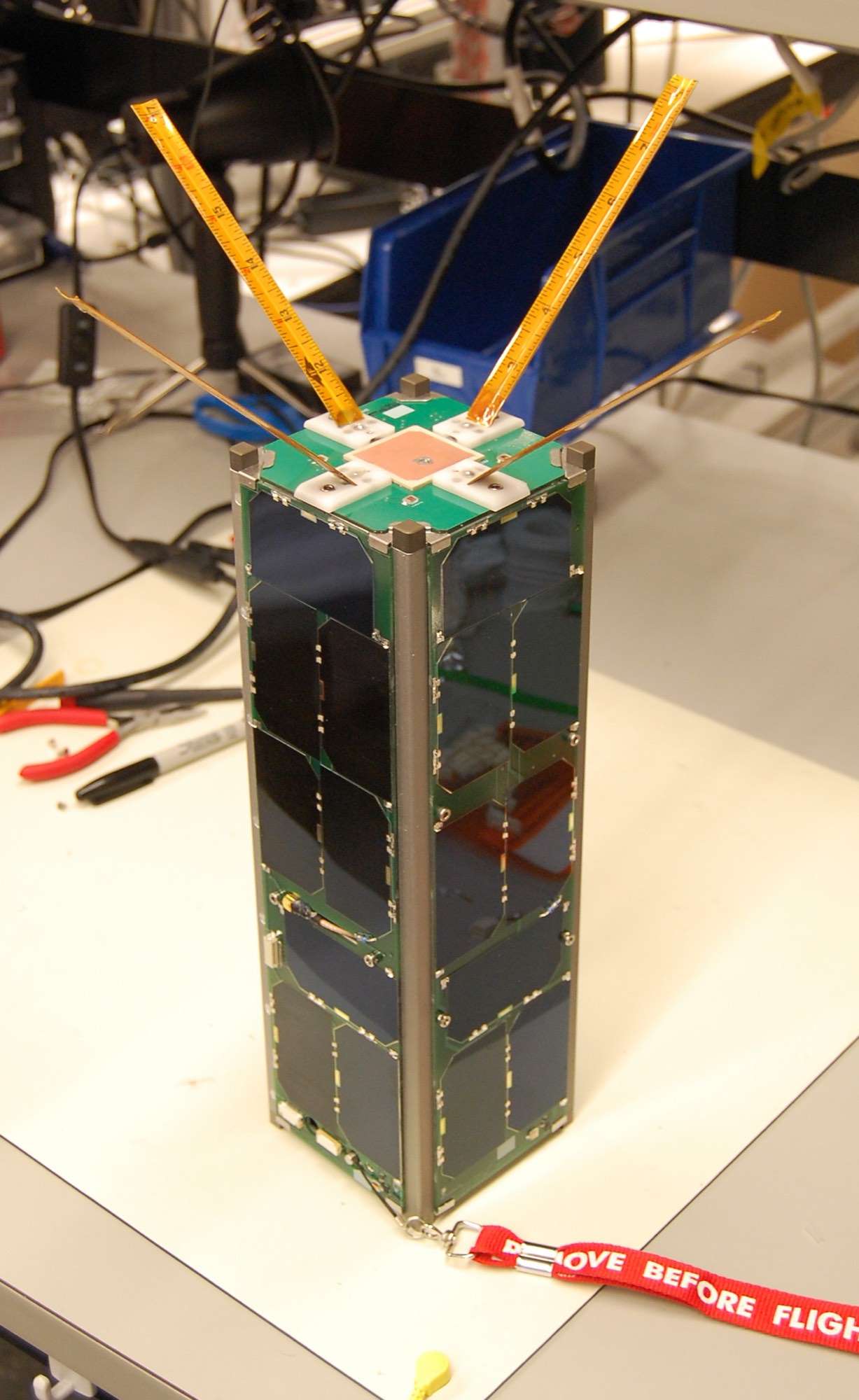
A sample CubeSat
The guide includes a sample orbital debris report, an ODAR, written for an example CubeSat. Its structure is aluminium, and its high-speed radio has a ceramic patch antenna. The electronics, circuit boards and solar cells are standard commercial off-the-shelf parts. The report adds that it has no pressure vessels, hazardous or exotic materials.
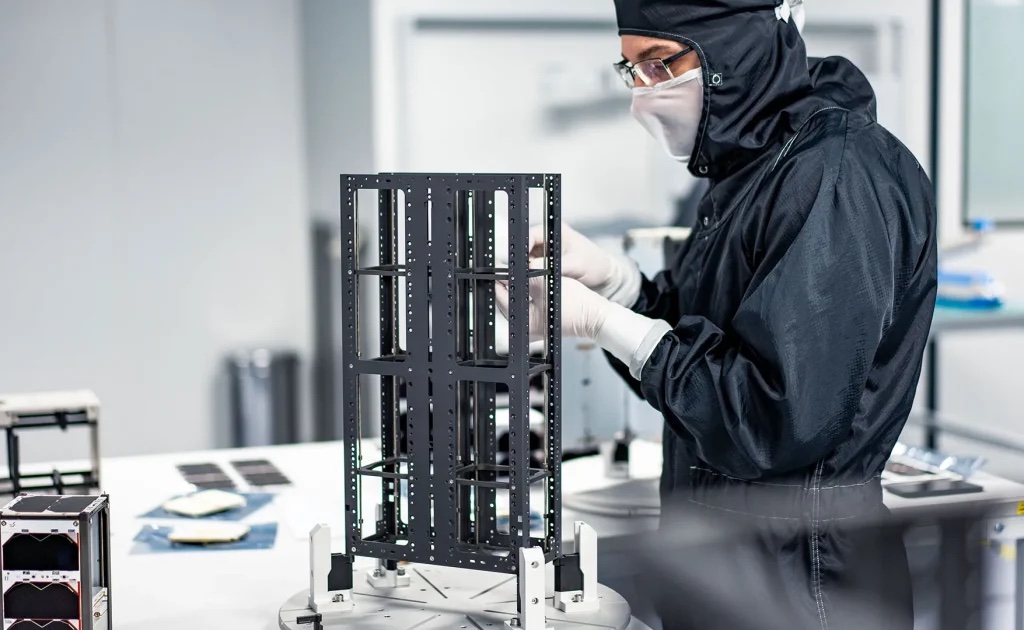
CubeSat structure
High-speed radio antenna
Electronics, PCBs and solar cells
The components template
NASA's blank components template for the debris report has a row for each part of the satellite. Four rows carry example materials: aluminium 6061 for the structure, steel 410 for the antennae, fibreglass for the solar panels and copper alloy for the cabling. The mass and size columns are blank.
CubeSat structure (template row 2, body type Box)
Antennae (template row 3)
Solar panels (template row 4)
Cabling, etc. (template row 14)
Rules to check before launch
The checklist asks if the rails are anodised, a treatment that grows a thin oxide layer. It also calls for batteries with a UL safety listing and, for a 1U, a mass under 1.33 kg. To let a satellite burn up on re-entry, the guide prefers aluminium and steel to tantalum, titanium or tungsten.
Rails (deployer interface rails)
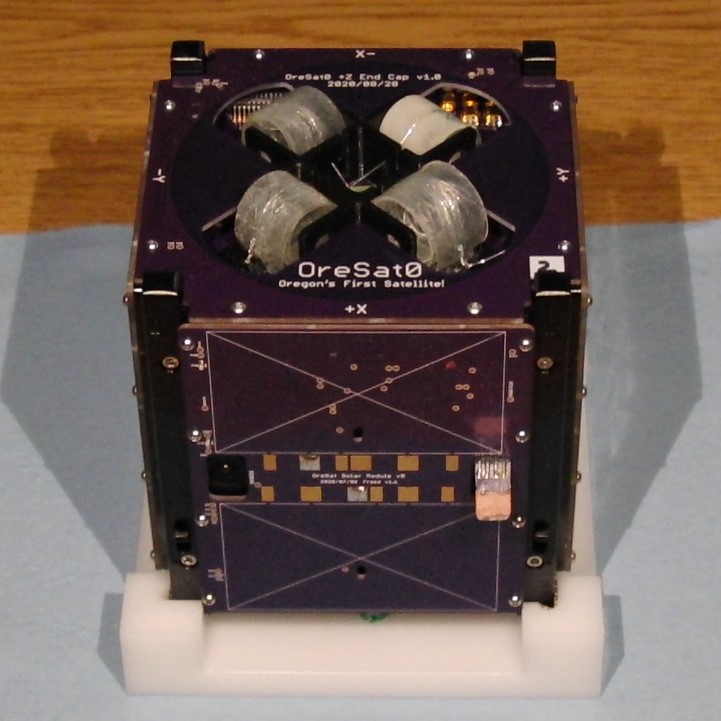
Electrical power storage
Where the parts areNumber of parts we have listed in each group
Sample ODAR narrative (illustrative CubeSat)4
NASA CubeSat Components ODAR Template (example column, rows as listed by NASA)4
Power storage in the sample CubeSat. Its report gives a UL listing number for the batteries.
The materials by familyHow many of the parts that name a material use each one
Aluminium3
Other3
Stainless steel1
Glass fibre1
Copper1
How it connects to other things
NASA's CubeSat Launch Initiative wrote the guide. It names the Cal Poly P-POD as the standard dispenser. The debris paperwork rests on NASA-STD-8719.14A, the agency's process for limiting orbital debris, and on NPR 8715.6A, its procedural requirements for the same job. A third document, LSP-REQ-317.01, sets CubeSat requirements for NASA launches.
Because the guide describes no real satellite, it gives no breakdown of where the mass goes. Its forms for coatings, rubbery materials and adhesives are left blank, and no fasteners or thermal materials are named. It asks for anodised rails but does not say to which specification, or on which metal.
The detailed data
What is written above is built from these numbers and quotes. Each row links to the page it was taken from. Get all of it as JSON, or ask our MCP server.
Features
Standard deployer is the Cal Poly P-POD; CubeSats are deployed from dispenser carrying 1U to 3U units
Sample ODAR narrative: no pressure vessels, hazardous, or exotic materials
Rails must be anodized (checklist item)
Use UL listed batteries
Thermal vacuum bakeout test is part of qualification (section 6.9.3)
Specifications
What
Value
1U size
10 cm x 10 cm x 11 cm
3U size
10 cm x 10 cm x 34 cm
1U mass
approximately 1 to 1.33 kg
Larger sizes
1.5U, 2U, 3U, 6U, 12U
Mass checklist limit (1U)
< 1.33 kg
Materials in detail
Each material named in the sources: where it is used here, which other products use it, and its key numbers when its material page exists.
The document is a how-to guide, not a flown spacecraft: its parts are the rows of a blank ODAR components template, which gives example materials for only four rows, plus one sample ODAR paragraph.
NASA-STD-6016 Standard Materials and Processes Requirements for Spacecraft · listed in the Appendix reference list; the guide does not tie it to a named part
NASA-STD-8719.14A Process for Limiting Orbital Debris · ODAR (the components template and sample ODAR)
NPR 8715.6A NASA Procedural Requirements for Limiting Orbital Debris Generation · ODAR
LSP-REQ-317.01 (Program Level Requirements) · CubeSat requirements for NASA launches
CubeSat Design Specification (CDS) · envelope, and outgassing limits (TML/CVCM) that most ICDs reuse
SMC-S-016 · test requirements for launch, upper-stage and space vehicles
What the sources leave out
No hardware part numbers, fasteners, finishes (other than 'anodized' on the rails checklist line) or per-part masses; the template's mass/size columns are blank. Examples are illustrative and not tied to a flown CubeSat. A Materials List form (Metals, Non-Metal, Surface Coatings, Elastomerics tables with TML/CVCM columns) is provided blank. Existing products.json lists a Mylar LightSail sail and a carbon-nanotube mirror quote; neither the word Mylar nor a Mylar quote was found in the PDF text extracted here, so Mylar was NOT carried into this BOM (needs re-check of products.json). The carbon-nanotube/epoxy mirror is a photo caption about a possible telescope mirror, not a CubeSat part, so it is not listed.