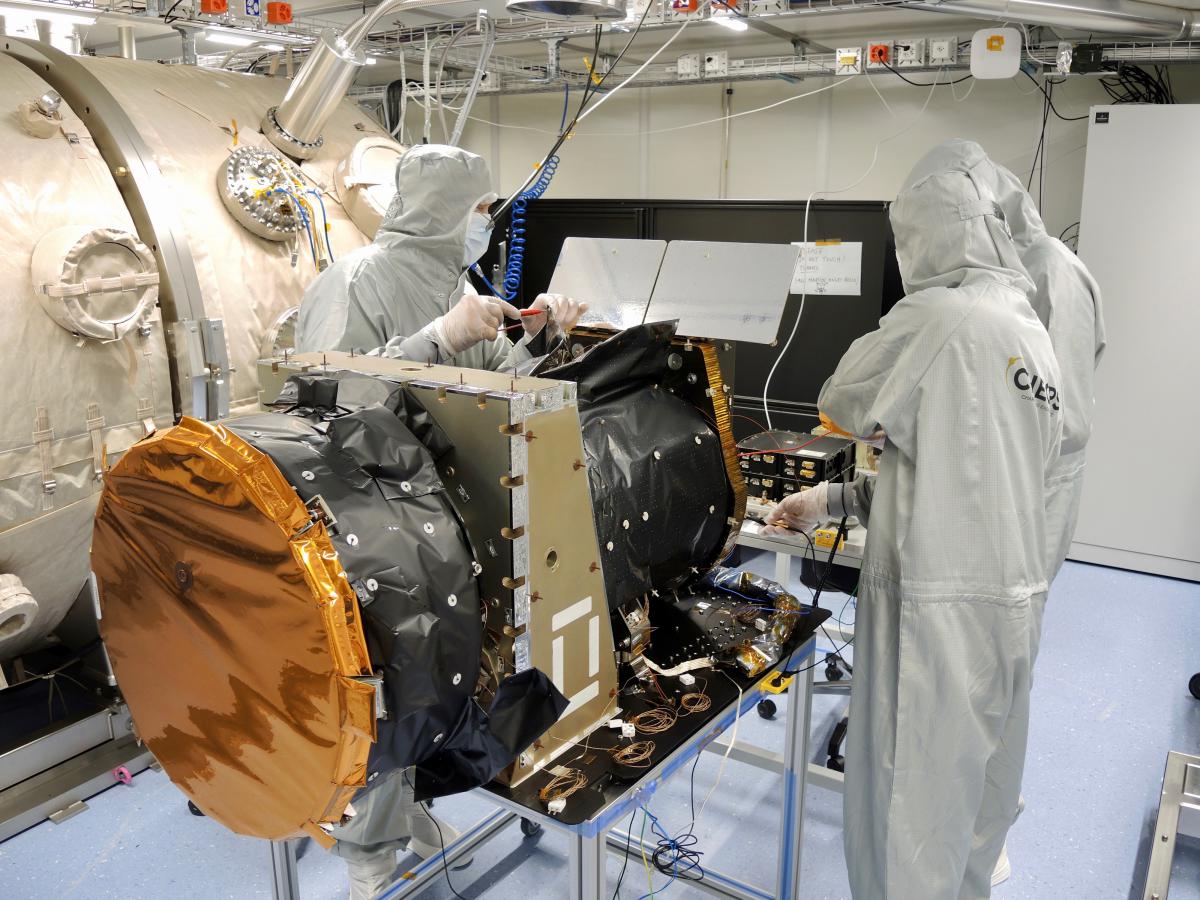
Arquimea makes thermal blankets for satellites. They are multi-layer insulation, usually shortened to MLI, and they protect electronics and propulsion parts from large swings in temperature. A typical blanket works from -150 to +150 °C. Cryogenic versions go down to 20 kelvin, and high-temperature ones up to +450 °C.
Arquimea works from a palette of materials, not one fixed recipe. Its blankets can use Kapton, Upilex, Mylar, FEP (Teflon), Dacron, Beta Cloth and Nextel, with glass-fibre yarns for spacing and sewing, and Velcro for fixing. Blankets are designed in CAD, or by fitting them to the real hardware, and made in cleanrooms.
Application
Multi-layer insulation blankets that protect satellite electronics and propulsion parts from extreme temperature swings. They are designed in CAD, made in cleanrooms and cover cold, hot and cryogenic ranges, so a spacecraft thermal engineer can pick a blanket type for each part.
Photos
How it is built
Blanket types
Standard plastic blankets are built from plastic films, and sewn versions have a fabric-coated cover. Internal blankets wrap electronic units and propulsion parts, while external blankets face space with Kapton, Beta Cloth or coated Teflon outside. Single-layer insulation, or SLI, is sold alongside them.
Standard plastic MLI
Sewn fabric-coated MLI
Internal MLI for electronic units and propulsion components
External MLI (Kapton, Beta Cloth or coated Teflon outer covers)
SLI (single-layer insulation)
Extreme and test versions
High-temperature blankets reach +450 °C, and cryogenic ones work down to 20 kelvin. Test blankets are made for thermal tests on the ground. Titanium plume impingement shields protect blankets from thruster plumes.
High-temperature MLI
Cryogenic blankets
Test MLI
Plume impingement shield
Fixings and yarns
Glass-fibre yarns are used as spacers and as sewing thread. Velcro and Vespel SP1 stand-offs fix the blankets in place. For the outer surface, Arquimea names coating options such as germanium and Beta Cloth.
Spacer and sewing yarns
Fixation, hook-and-loop
Fixation stand-offs
Specific external coating
Design and cleanrooms
Blanket patterns are drawn in 3D and 2D CAD, using Catia, or worked out by fitting a blanket to the real hardware. Blankets are made in ISO 8 and ISO 5 cleanrooms, and Arquimea says it works to ESA, NASA and MIL quality standards.
3D and 2D CAD design (Catia V4/V5) and fit-check approach
Where the parts areNumber of parts we have listed in each group
Blanket types9
Blanket materials (page lists a palette; per-layer mapping not given)7
Flight hardware named by the maker5
Related Arquimea thermal hardware (separate products on the same site)5
The plume impingement shields that protect blankets from thruster plumes.
The materials by familyHow many of the parts that name a material use each one
Polyimide2
Other2
Titanium2
Glass fibre1
Semiconductors1
How it connects to other things
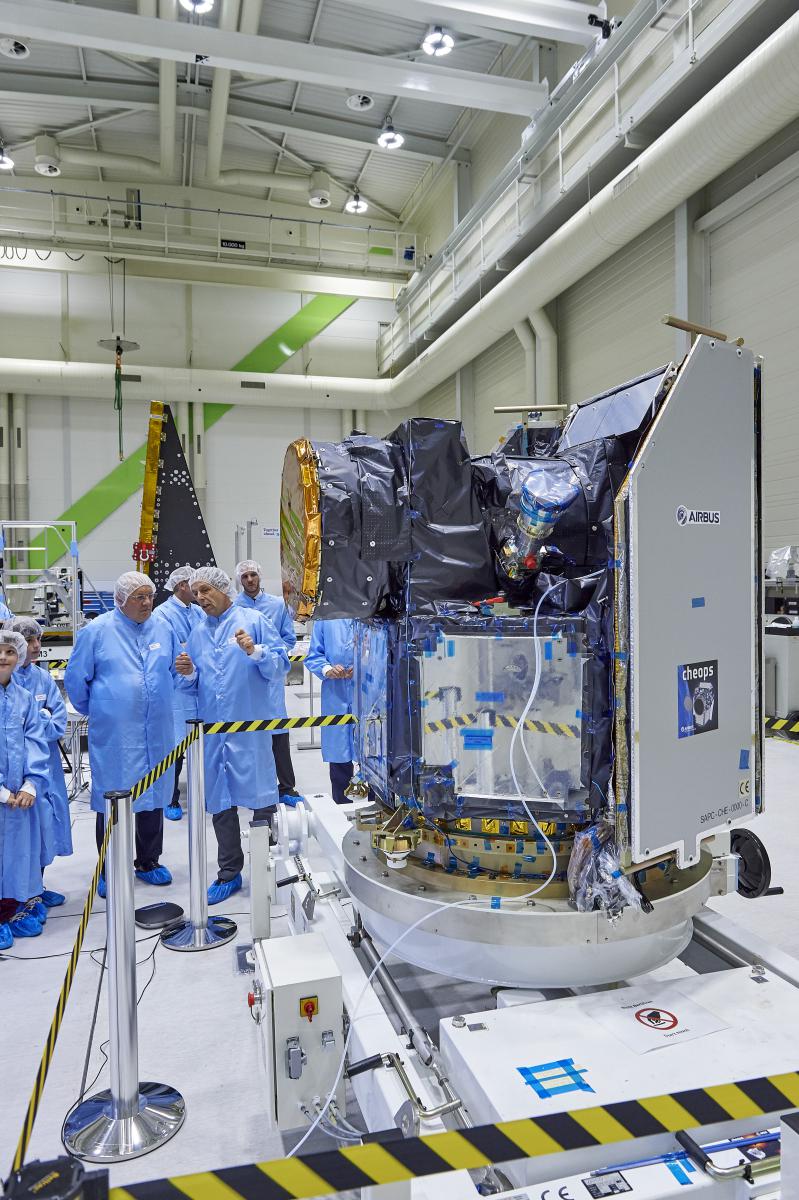
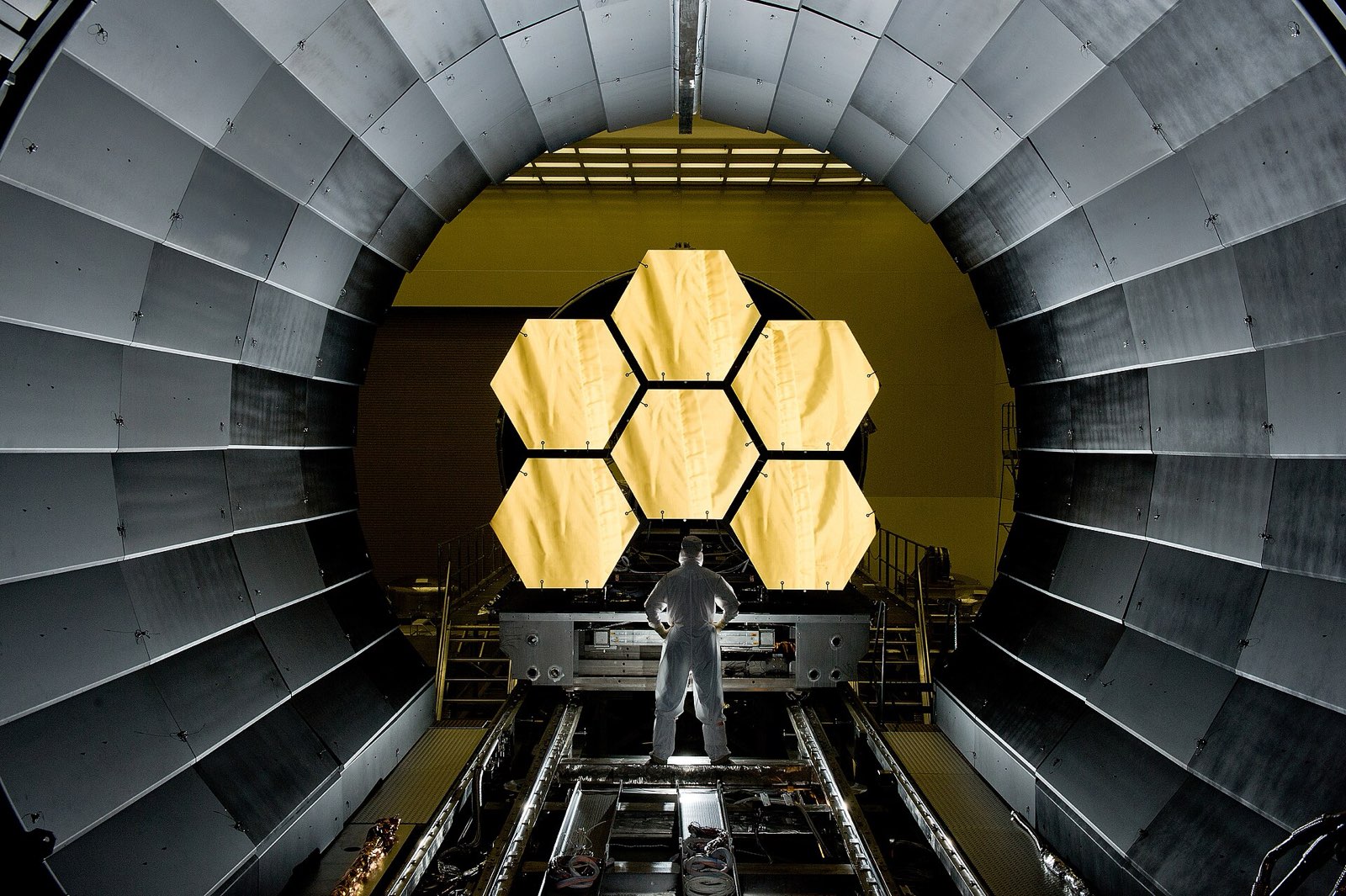
Arquimea says its blankets are on 39 missions in orbit, with 20 more waiting to launch. It made and integrated all the MLI blankets on the platform of ESA's Cheops satellite, launched in 2019. It supplied blankets for the Italian Space Agency's Agile gamma-ray mission in 2007, and made single-layer cryogenic sheaths for the James Webb Space Telescope's NIRSpec instrument. Its page also names Galileo, Sentinel 2A and Sentinel 3A.
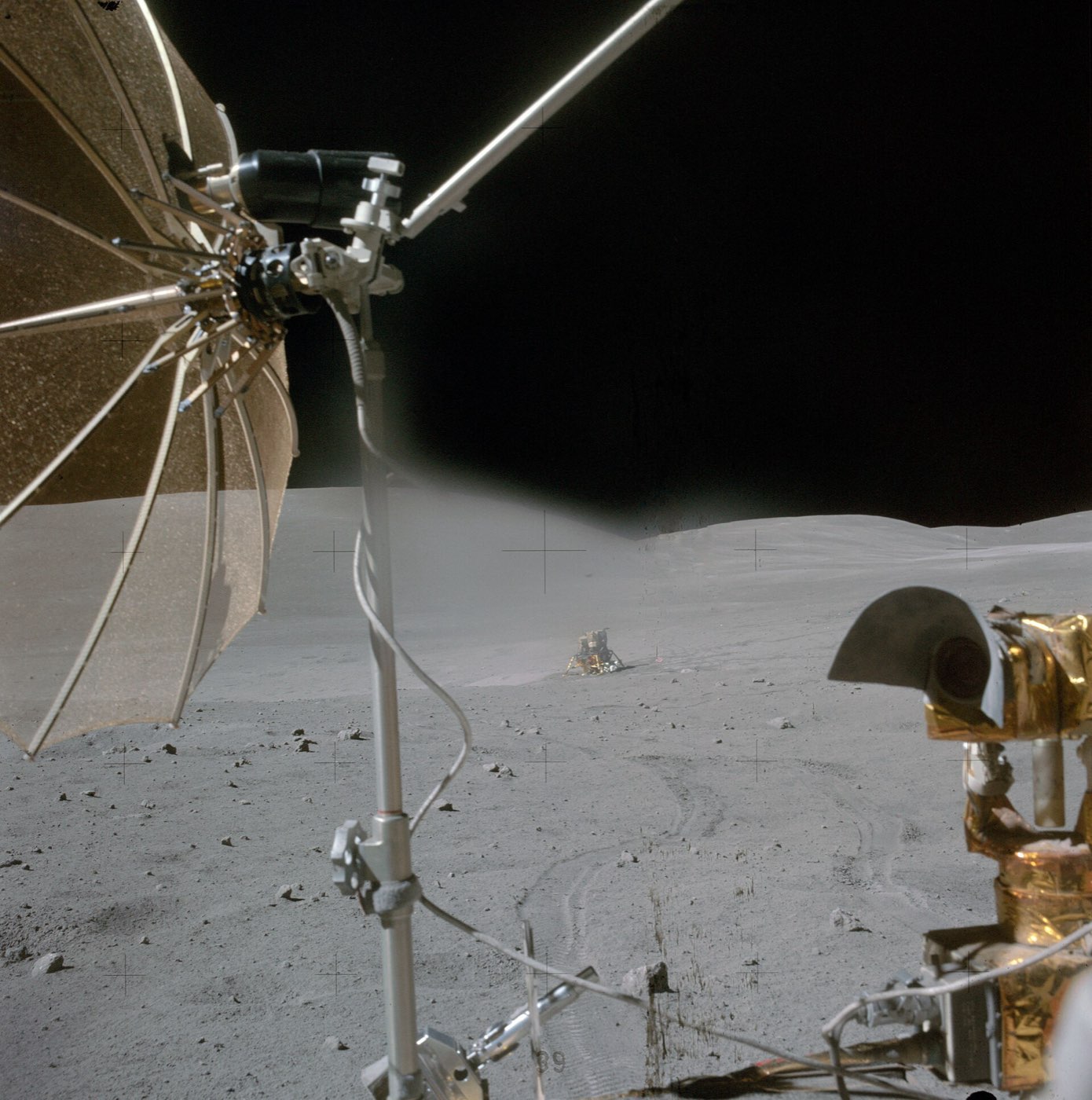
Titanium. Here: Plume impingement shielding; Plume impingement shield. There: Some brackets and fasteners (lunar module); Descent-stage hot-area structure and more.
Arquimea doesn't publish how many layers a blanket has, how thick the films are, or whether they are coated with aluminium. Weight per area, insulation performance and the material of each layer aren't given either. Standards are named only in general terms, and the brochure sits behind a contact form.
The detailed data
What is written above is built from these numbers and quotes. Each row links to the page it was taken from. Get all of it as JSON, or ask our MCP server.
Features
Designed with CAD (Catia V4/V5) and/or fit-check approach
Internal MLI for electronic units and propulsion components; external MLI
Plume impingement shielding with titanium shields
Standard plastic MLI, sewn fabric coated MLI, SLI, high temperature MLI and test MLI
Built for long-term durability from cryogenic to high temperatures
Used on Agile, Galileo, Sentinel 2A, JWST, Cheops
Specifications
What
Value
Typical temperature range
-150 to +150 C
Cryogenic range
down to 20 K
High temperature range
up to +450 C
Cleanroom manufacturing
ISO 8 (Class 100000) and ISO 5 (Class 100)
Quality standards
ESA, NASA, MIL
Flight heritage
39 missions in orbit, 20 awaiting launch
Thermal portfolio, missions launched
90 missions, 2200 units launched, 1000 units in progress (all thermal products)
Space missions participated in (company-wide)
over 190
Copernicus presence
19 Copernicus missions, about 20 satellites and instruments (all hardware types)
The page lists the materials Arquimea uses for blankets but does not tie any material to a specific layer or part, and the brochure sits behind a contact form. Components, suppliers and links were added from public sources. A material is left blank where no source states it.
ESA, NASA and MIL quality standards (specific documents not named) · Products, materials and procedures in general
Cleanroom ISO 8 (Class 100000) and ISO 5 (Class 100) · Manufacturing environment, not a material standard
What the sources leave out
No layer stack (number of layers, film thicknesses, aluminisation, spacer mesh), no grade of Kapton/Mylar/Beta Cloth, no ECSS/ASTM/MIL document numbers, no adhesives/tapes, no velcro or thread specification. The brochure download requires submitting a personal-data form, so it was not opened. More detail: Arquimea publishes no layer stack, film thickness, aluminisation, spacer mesh, effective emittance, areal mass, outgassing data or material standards for its blankets; the brochure sits behind a personal-data form and was not opened. The materials palette (Kapton, Upilex, Mylar, FEP, Dacron, Beta Cloth, Nextel, glass fibre, Velcro, Vespel SP1) is already in the entry's bill of materials and is not repeated here. The company timeline names thermal insulators, heat pipes and radiators together, so Galileo and Sentinel items are only partly blankets. SLI is not expanded on the page. The two web searches that could have found third-party documents on Arquimea MLI were cut off by the session search limit, so no ESA or NASA report on a specific Arquimea blanket set was read. More detail: Arquimea publishes no layer stack, film thickness, aluminisation, spacer mesh, effective emittance, areal mass, outgassing data or material standards for its blankets; the brochure sits behind a personal-data form and was not opened. The materials palette (Kapton, Upilex, Mylar, FEP, Dacron, Beta Cloth, Nextel, glass fibre, Velcro, Vespel SP1) is already in the entry's bill of materials and is not repeated here. The company timeline names thermal insulators, heat pipes and radiators together, so Galileo and Sentinel items are only partly blankets. SLI is not expanded on the page. The two web searches that could have found third-party documents on Arquimea MLI were cut off by the session search limit, so no ESA or NASA report on a specific Arquimea blanket set was read.