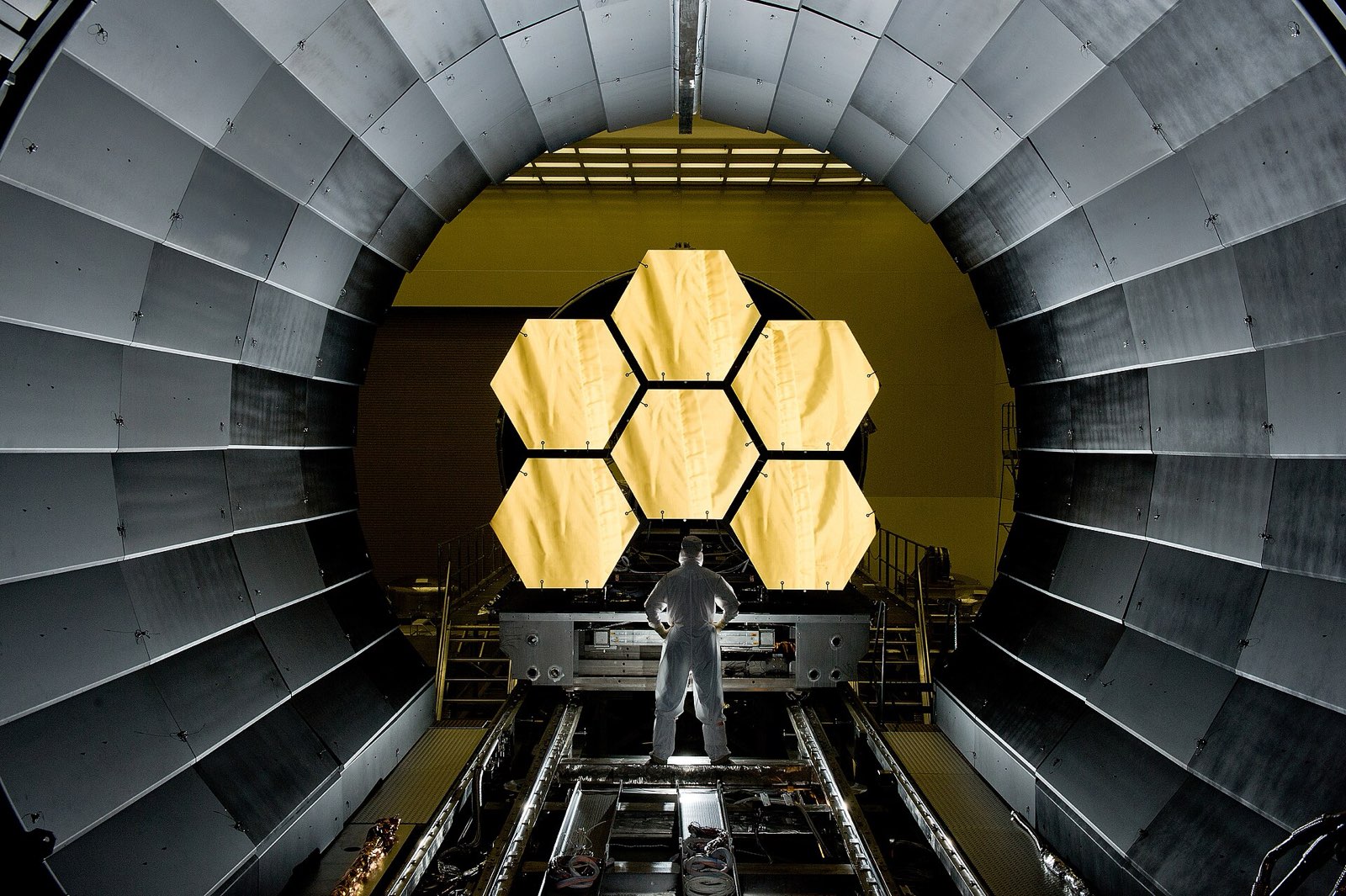
Engineer standing before the first six flight-ready gold-coated JWST primary mirror segments in the X-ray and Cryogenic
NASA

James Webb Space Telescope

Webb is NASA's infrared space telescope, and the largest one ever launched.

Telescopes and probes
Product IDnasa-jwst
Mirror diameter
6.5 m
Sunshield size
21.197 m x 14.162 m
Gold used
About 48 g on 25 m2
Operating temperature
Under 50 K
Orbit
1.5 million km from Earth, Sun-Earth L2
Launch
25 December 2021, Ariane 5 ECA

In short

The James Webb Space Telescope looks at the sky in infrared light, which our eyes cannot see. NASA built it with the European and Canadian space agencies, and Northrop Grumman was the main contractor. It studies early galaxies, how stars and planets form, and the atmospheres of planets around other stars.

Its main mirror is 6.5 m across and made of 18 hexagonal segments, each a piece of beryllium with a thin coat of gold. A five-layer sunshield blocks the light and heat of the Sun, Earth and Moon. That keeps the instruments below 50 kelvin, far below freezing.

Application

The largest space telescope ever launched, observing in the infrared from the Sun-Earth L2 point. Its gold-coated beryllium mirror stays shape-stable at cryogenic temperature, and a five-layer Kapton sunshield keeps the instruments below 50 K. It studies early galaxies, star and planet formation and exoplanet atmospheres.

How it is built

The mirror

The 18 segments are made of beryllium, which gives them strength without much weight. One segment weighs 20.1 kg. A gold coating, 100 nanometres (billionths of a metre) thick, covers 25 square metres of mirror and takes about 48 g of gold.

  • Primary mirror segment substrate
  • Primary mirror coating

The sunshield

The shield measures 21.197 m by 14.162 m and has five membranes of Kapton E plastic film, each thinner than a human hair. Every layer is coated with aluminium. On layers 1 and 2, the sun-facing side also carries a doped silicon coating, which gives them a lavender-pink colour.

  • Sunshield membrane layers (5)
  • Sunshield layer coating (all 5 layers)
  • Sunshield Layers 1 and 2 sun-facing coating

The backplane

The backplane is the structure that holds the mirror segments steady at cryogenic, or extremely low, temperatures. It must carry more than 2,400 kg. It is made of advanced graphite composite, joined to titanium and invar fittings.

  • Backplane structure
  • Backplane fittings and interfaces

Engines and fuel

The spacecraft's MRE-1 engines run on hydrazine alone. The SCAT thrusters burn hydrazine with dinitrogen tetroxide as the oxidiser, the chemical that lets the fuel burn.

  • Monopropellant engine fuel
  • SCAT thruster oxidizer
Where the parts areNumber of parts we have listed in each group
  • Instruments12
  • Sunshield9
  • Optical Telescope Element: mirrors8
  • Spacecraft bus: power and data6
  • Optical Telescope Element: structure4
  • Spacecraft bus: attitude control4
  • Infrared detectors4
  • Backplane (telescope structure)3
  • Spacecraft bus: communications3
  • Spacecraft bus: propulsion3

What it is made of

  • Beryllium

    The 18 hexagonal segments of the primary mirror. It gives them the strength they need at light weight.

  • Gold

    A very thin coating, 100 nm thick, on each mirror segment.

  • Kapton E polyimide film

    The five membrane layers of the sunshield. Each one is thinner than a human hair.

  • Aluminium

    A coating on all five sunshield layers.

  • Doped silicon

    The sun-facing coating on sunshield layers 1 and 2. It gives them their lavender-pink colour.

  • Advanced graphite composite

    The backplane structure that holds the mirror segments steady.

The materials by familyHow many of the parts that name a material use each one
  • Other8
  • Semiconductors4
  • Beryllium2
  • Gold and silver1
  • Polyimide1
  • Aluminium1
  • Carbon fibre1
  • Titanium1

How it connects to other things

Webb is a joint project of NASA, the European Space Agency and the Canadian Space Agency, with Northrop Grumman as main contractor. An Ariane 5 ECA rocket launched it on 25 December 2021. It now orbits a point called Sun-Earth L2, 1.5 million km from Earth. Its propulsion comes from MRE-1 engines and SCAT thrusters, and its sunshield film is DuPont's Kapton E.

Built with

Carries

  • SCAT bipropellant thruster (x4)

    Secondary Combustion Augmented Thrusters for orbit correction, hydrazine and dinitrogen tetroxide

  • MRE-1 monopropellant thruster (x8)

    hydrazine thrusters for attitude control and reaction-wheel unloading

Launched on

  • Ariane 5 ECA (Arianespace)

    launched 25 December 2021 from ELA-3, Kourou; the vehicle and launch services were ESA's contribution

  • Vulcain 2 engine (Ariane 5 ECA main stage)

    single cryogenic engine on the EPC core stage, up to 137 tonnes of thrust

  • HM7B engine (Ariane 5 ECA ESC-A upper stage)

    reused from Ariane 4; 6.5 tonnes vacuum thrust, about 940 s burn

  • EAP solid rocket boosters (two, Ariane 5 ECA)

    twin boosters, 1300 tonnes of thrust at liftoff

Replaces

Made or supplied by

  • Northrop Grumman

    backplane, sunshield assembly, spacecraft and final integration

  • Ball Aerospace

    cryogenic testing of the primary mirror segments

  • Brush Wellman

    purified the beryllium for the mirror blanks

  • Axsys Technologies

    shaped the beryllium blanks into segments

  • SSG/Tinsley

    polished the mirror segments

  • Quantum Coating Incorporated

    applied the gold coating by vacuum vapor deposition

  • Airbus

    built NIRSpec for ESA

  • Lockheed Martin Advanced Technology Center and University of Arizona

    developed NIRCam

  • Honeywell International

    designed and built FGS/NIRISS for the Canadian Space Agency

  • Teledyne Imaging Sensors

    near-infrared H2RG detectors

  • Raytheon Vision Systems

    mid-infrared Si:As detectors

  • NASA Jet Propulsion Laboratory

    MIRI detectors, data chain and flight software

  • European Space Agency

    NIRSpec, MIRI optics assembly, the Ariane launch vehicle and launch services

  • Canadian Space Agency

    Fine Guidance Sensor and NIRISS

Operated by

  • Space Telescope Science Institute (AURA)

    operates Webb for NASA

Products that use the same materials

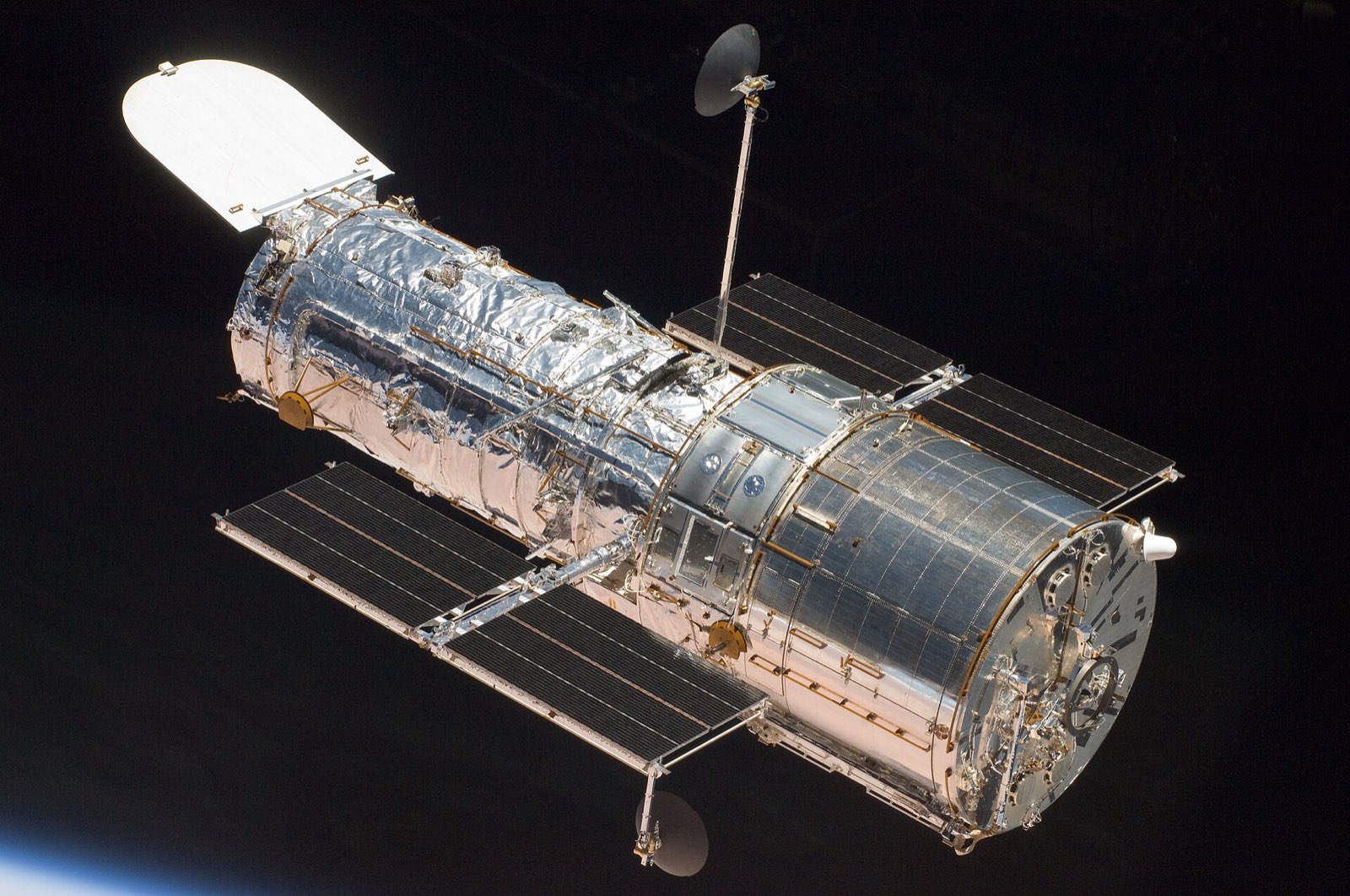
  • Lunar Reconnaissance Orbiter (LRO)

    NASA Goddard Space Flight Center

    advanced graphite compositeAluminiumhydrazineTitanium
    Where each one is used

    advanced graphite composite. Here: Backplane structure. There: Instrument optical bench; Solar array wing (three panels, 10.7 m2).

    Aluminium. Here: Sunshield layer coating (all 5 layers). There: Primary structure (heating/cooling panel, edge members, fittings, brackets); Optical-bench heater aluminum tape and more.

    hydrazine. Here: Monopropellant engine fuel. There: Propellant.

    Titanium. Here: Backplane fittings and interfaces. There: Propellant tanks (2); Instrument mounting flexures.

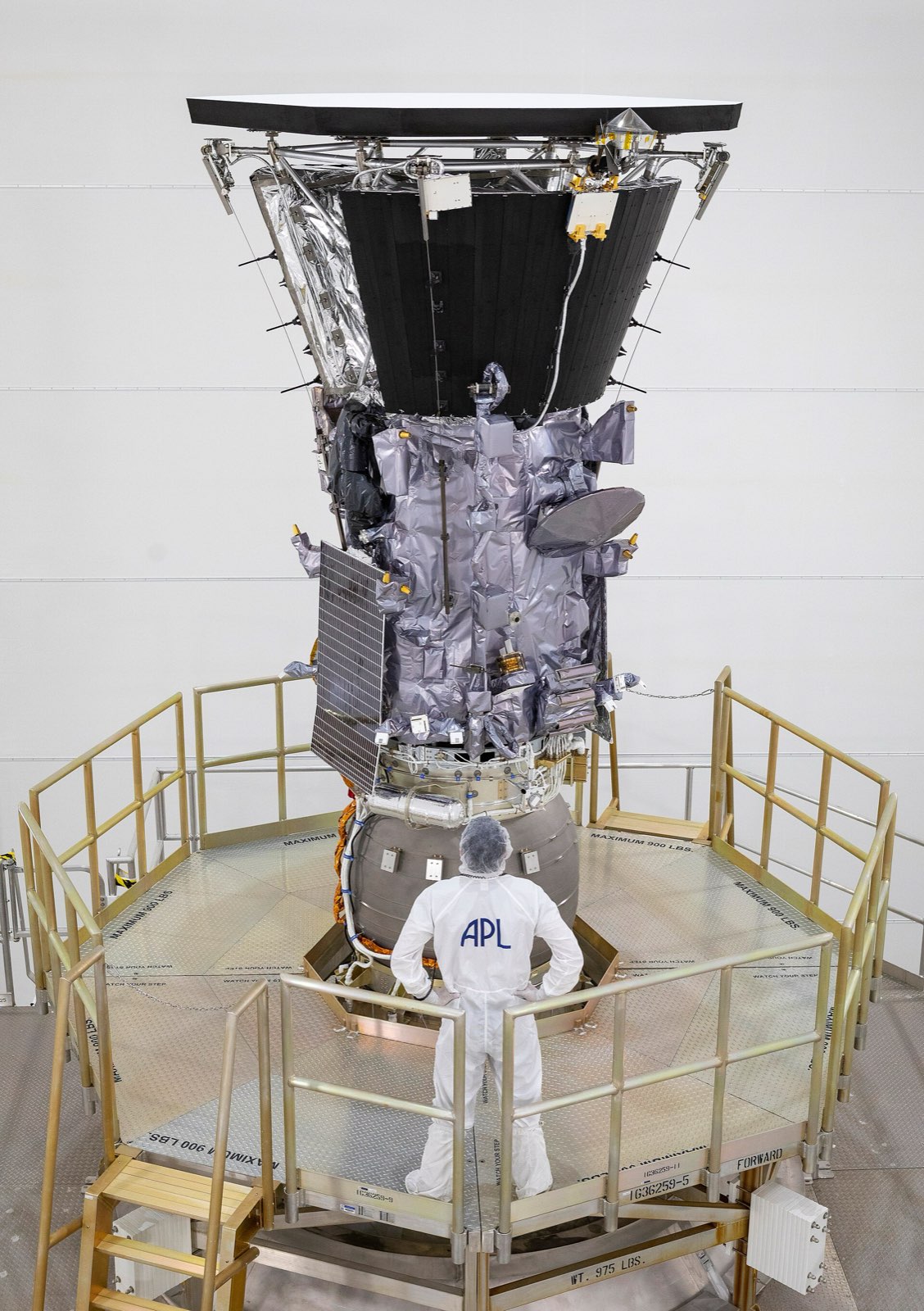
  • Parker Solar Probe

    NASA / Johns Hopkins APL

    AluminiumhydrazineSiliconTitanium
    Where each one is used

    Aluminium. Here: Sunshield layer coating (all 5 layers). There: Radiator fins.

    hydrazine. Here: Monopropellant engine fuel. There: MR-111C hydrazine thrusters (x12).

    Silicon. Here: Silicon readout integrated circuit (ROIC). There: EPI-Hi silicon detectors.

    Titanium. Here: Backplane fittings and interfaces. There: Radiator tubes (x4 radiators); Titanium truss under the heat shield.

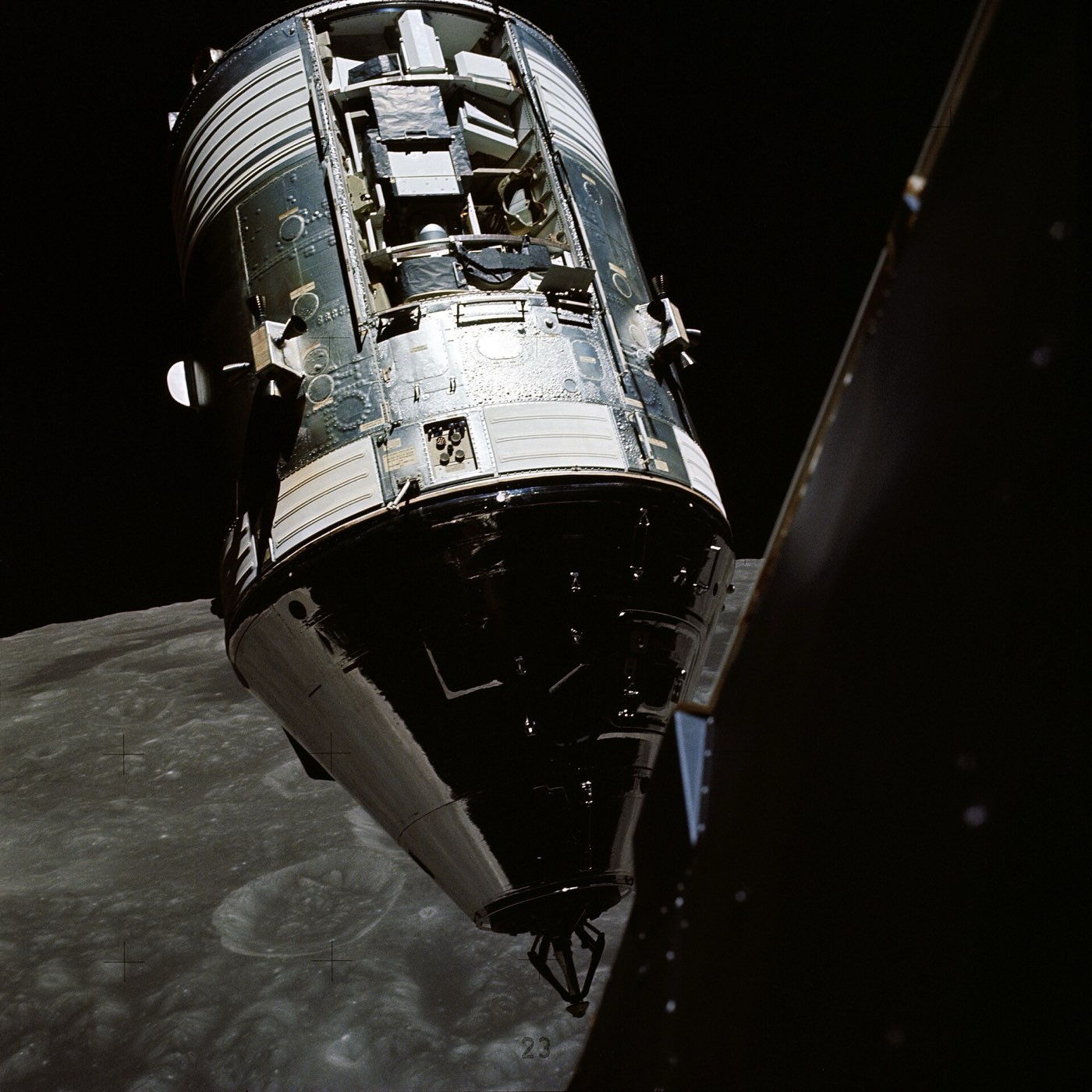
  • Apollo Command and Service Module

    North American Aviation

    AluminiumberylliumTitanium
    Where each one is used

    Aluminium. Here: Sunshield layer coating (all 5 layers). There: Radial beams; Crushable ribs (x4) and more.

    beryllium. Here: Primary mirror segment substrate. There: Inertial measurement unit (IMU).

    Titanium. Here: Backplane fittings and interfaces. There: Helium tanks (2); Fuel tanks (2) and more.

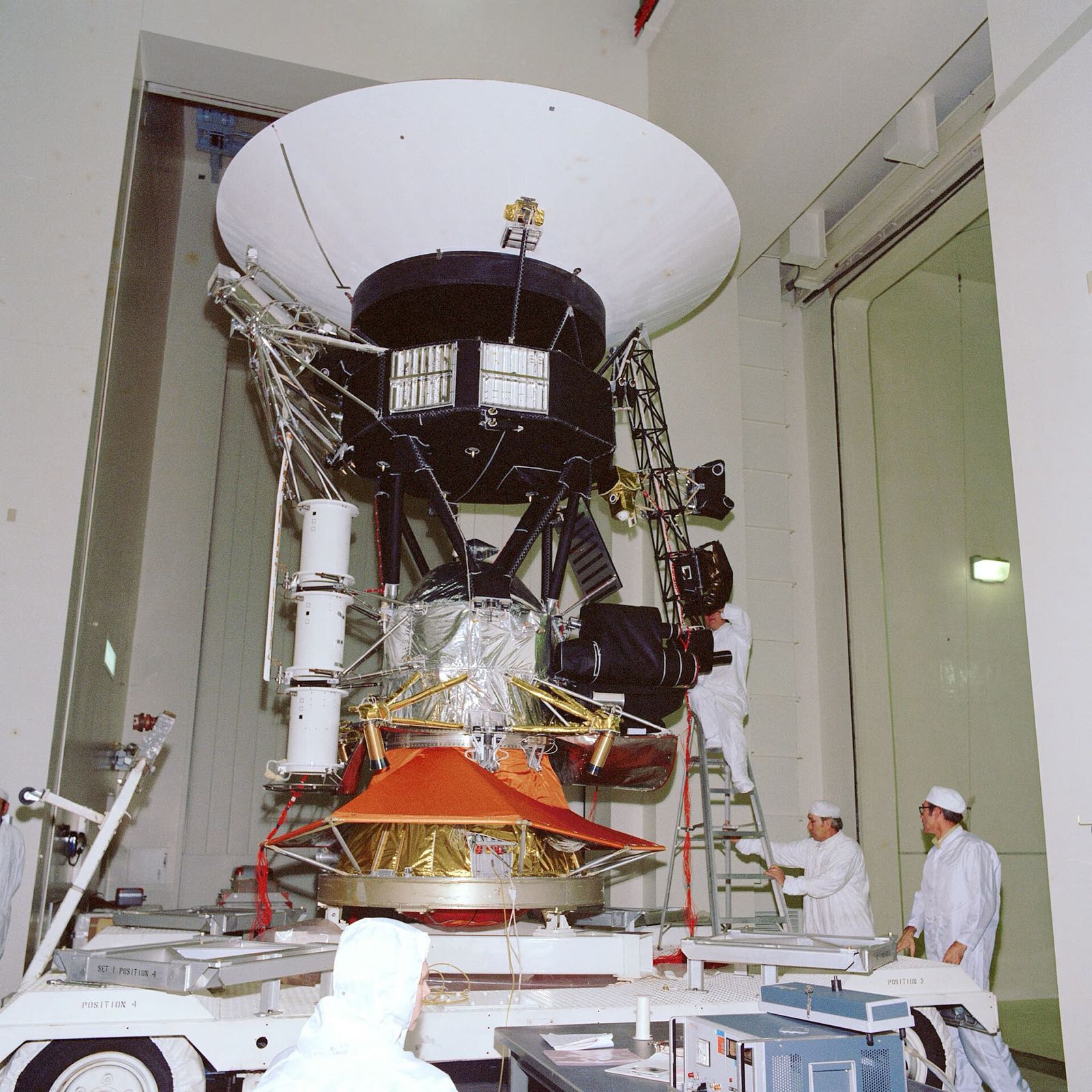
  • Voyager spacecraft (Voyager 1 and 2)

    NASA / JPL

    Aluminiumberylliumhydrazine
    Where each one is used

    Aluminium. Here: Sunshield layer coating (all 5 layers). There: Record cover; Record protective jacket.

    beryllium. Here: Primary mirror segment substrate. There: RTG outer case.

    hydrazine. Here: Monopropellant engine fuel. There: Hydrazine propellant.

  • Proba-V

    ESA

    AluminiumTitanium
    Where each one is used

    Aluminium. Here: Sunshield layer coating (all 5 layers). There: Telescope (structure and mirrors, 3 telescopes).

    Titanium. Here: Backplane fittings and interfaces. There: Focal plane interconnecting structure; Instrument mounting feet / flexures and more.

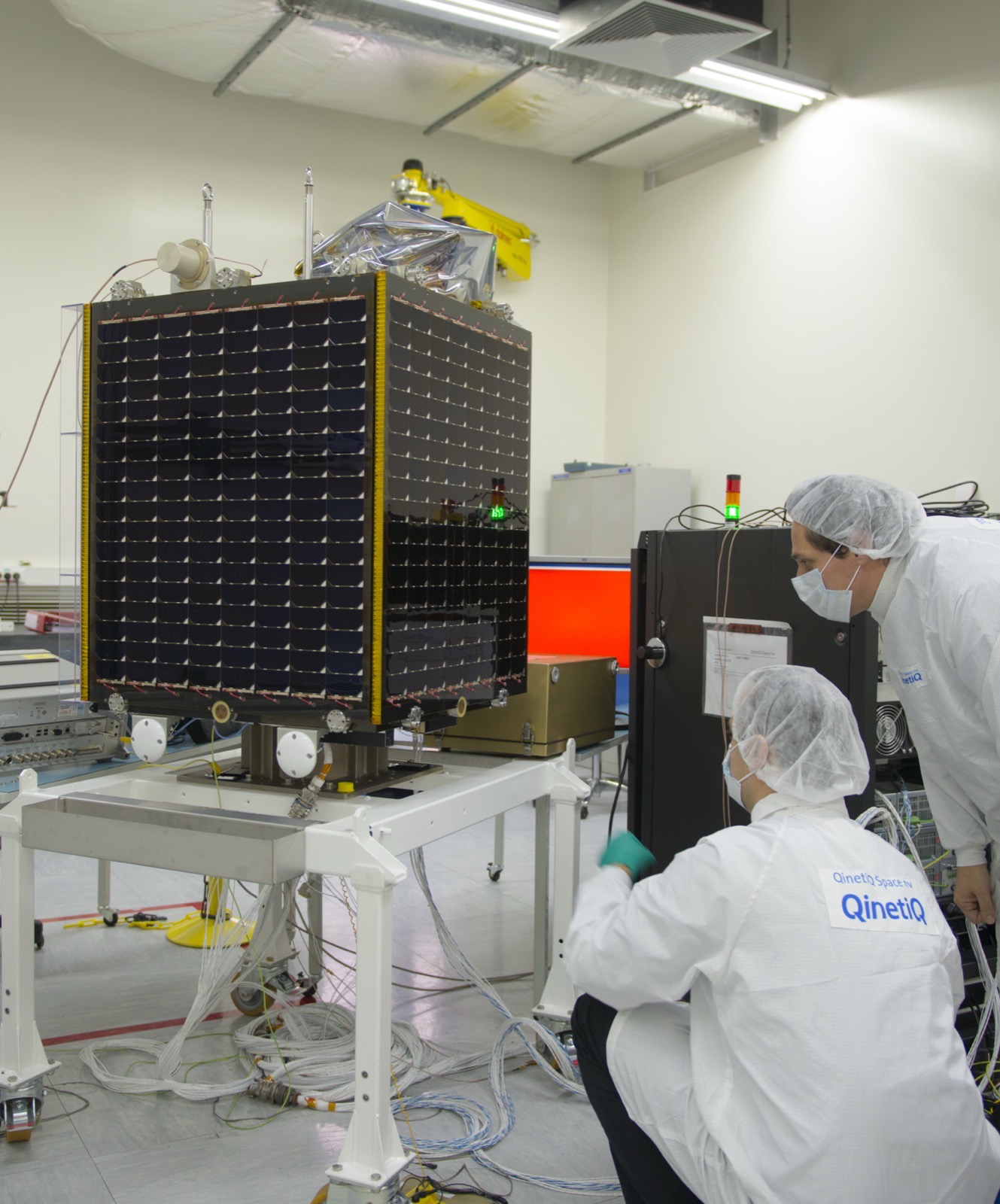
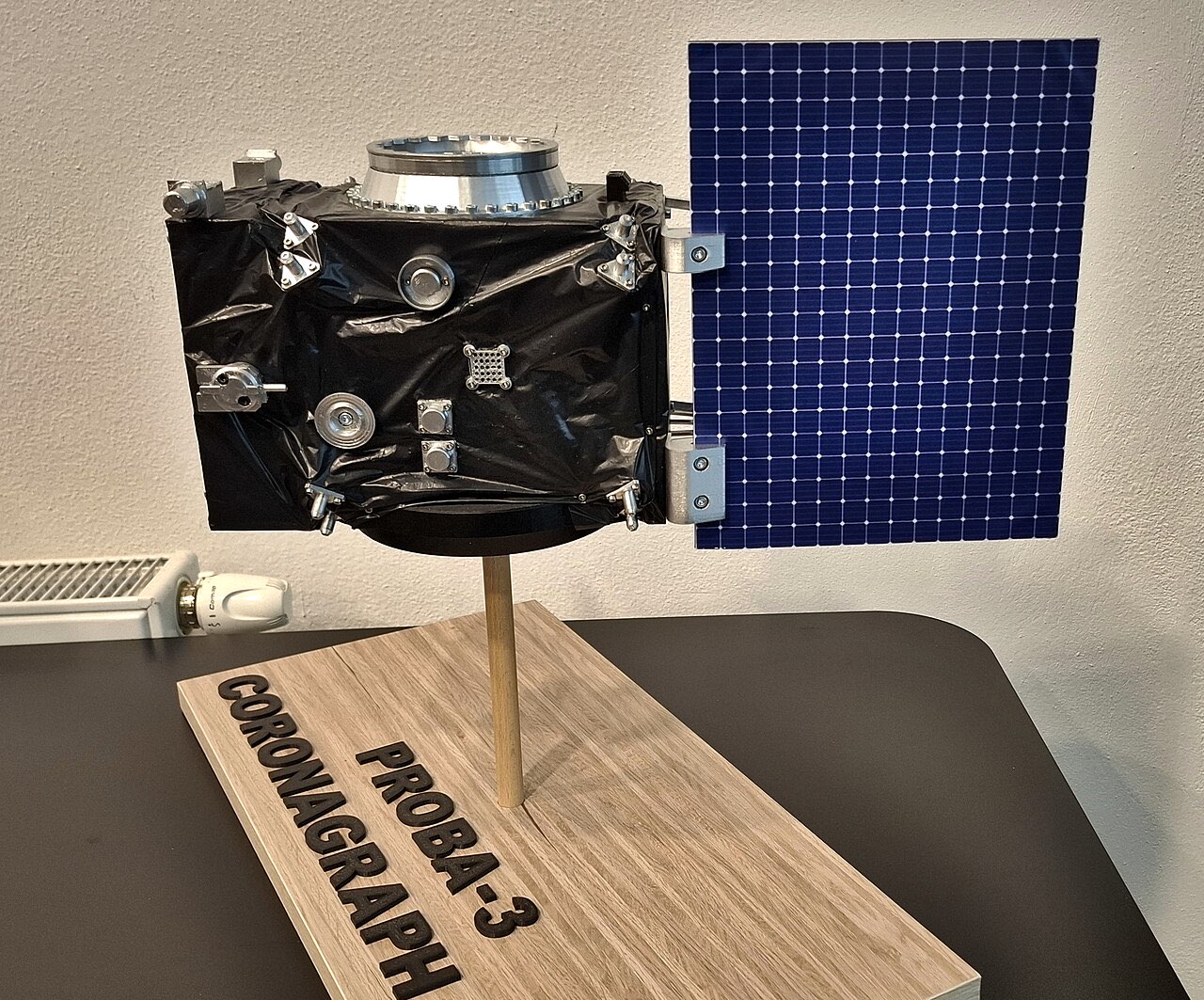
  • Proba-3 Coronagraph spacecraft

    ESA / Airbus

    AluminiumTitanium
    Where each one is used

    Aluminium. Here: Sunshield layer coating (all 5 layers). There: Main structure tube; Equipment box (EQB) and more.

    Titanium. Here: Backplane fittings and interfaces. There: OBA unit attachment fittings; Instrument support bipods (3).

What we do not know

A few details are not public. The makers do not name the grade of beryllium in the mirror. The thickness of each sunshield layer, the fibre and resin in the backplane, and the materials of the spacecraft body, its insulation and its solar cells are also missing. It is not clear who made the mirror segments.

The detailed data

What is written above is built from these numbers and quotes. Each row links to the page it was taken from. Get all of it as JSON, or ask our MCP server.

Features

  • 18 hexagonal beryllium mirror segments with a thin gold coating form the primary mirror
  • Five-layer sunshield blocks heat of Sun, Earth and Moon
  • Backplane holds the mirrors steady at cryogenic temperature

Specifications

WhatValue
Launch date25 December 2021, Ariane 5 ECA
Total payload massApprox 6200 kg including observatory, consumables and launch adaptor
Primary mirror diameter6.5 m
Primary mirror mass705 kg
Mirror segment mass20.1 kg per beryllium segment
Sunshield size21.197 m x 14.162 m
Gold coating thickness100 nm
Gold usedAbout 48 g on 25 m2
Orbit1.5 million km from Earth, Sun-Earth L2
Operating temperatureUnder 50 K
Primary mirror segment assembly massabout 40 kg with its actuator
Unobscured collecting area25.4 m2
Sunshield thermal dropintercepts over 200,000 W, passes about 1 W
Cryogenic instrument module detector temperature39 K
Propellant lifeenough for more than 20 years
CommunicationsKa-band 0.875, 1.75 or 3.5 Mbytes/s; S-band 40 kbps real time
Downlink per contactat least 229 Gbits science and 8 Gbits engineering in 4 hours
Launch25 December 2021, 7:20 AM ET (12:20 UT), ELA-3, Kourou
Ariane 5 ECA core stage load150 t liquid oxygen and 25 t liquid hydrogen
NIRSpec multi-object capacityabout 100 objects at once
MIRI temperatureno more than 6.7 K
Contributing countries14 countries, 29+ U.S. states

Materials in detail

Each material named in the sources: where it is used here, which other products use it, and its key numbers when its material page exists.

  • helium (pressurant gas)

    helium

    Used in 2 partsPropellant tanks (one fuel, one oxidizer) and helium pressurant · MIRI cryocooler: Cryocooler Compressor Assembly (CCA)

    Material page coming soon
  • advanced graphite composite

    graphite-composite

    Used in 1 partBackplane structure

    Material page coming soon
  • Aluminium

    Used in 1 partSunshield layer coating (all 5 layers)

    Weight
    2.7 g/cm3
    Electrical conduction
    2.6458 µΩ·cm
    Heat conduction
    220 W/(m·K)
    Also in 33 other products
  • amorphous silicon dioxide (SiO2)

    silicon-dioxide-amorphous

    Used in 1 partProtective silica layer over the gold coating

    Material page coming soon
  • arsenic-doped silicon (Si:As)

    arsenic-doped-silicon

    Used in 1 partMIRI detectors (three 1024 x 1024 Si:As)

    Material page coming soon
  • beryllium

    beryllium

    Used in 1 partPrimary mirror segment substrate

    Material page coming soon
  • beryllium, grade O-30 powder

    beryllium-o-30

    Used in 1 partBeryllium mirror blanks (O-30 powder grade)

    Material page coming soon
  • dinitrogen tetroxide

    dinitrogen-tetroxide

    Used in 1 partSCAT thruster oxidizer

    Material page coming soon
  • doped silicon

    doped-silicon

    Used in 1 partSunshield Layers 1 and 2 sun-facing coating

    Material page coming soon
  • gold

    gold

    Used in 1 partPrimary mirror coating

    Also in 1 other product
    Material page coming soon
  • hydrazine

    hydrazine

    Used in 1 partMonopropellant engine fuel

    Material page coming soon
  • Indium

    Used in 1 partIndium interconnects in the detector sandwich

    Melt low
    156.6 degC melting point
    Stay soft
    2.6 to 4.5 MPa tensile strength
    Carry heat
    81.8 W/(m·K)
  • invar

    invar

    Used in 1 partBackplane fittings and interfaces

    Material page coming soon
  • Kapton E polyimide film

    kapton-e

    Used in 1 partSunshield membrane layers (5)

    Material page coming soon
  • mercury-cadmium-telluride (HgCdTe)

    mercury-cadmium-telluride

    Used in 1 partNear-infrared H2RG detectors (HgCdTe)

    Also in 1 other product
    Material page coming soon
  • metal plate (metal not stated)

    aperture-mask-metal-unspecified

    Used in 1 partNIRISS aperture mask

    Material page coming soon
  • Silicon

    Used in 1 partSilicon readout integrated circuit (ROIC)

    Act as a semiconductor
    1.12 eV
    Carry heat
    150 W/(m·K)
    Weight
    2.328 g/cm3
  • Titanium (commercially pure, grades 1 to 4)

    Used in 1 partBackplane fittings and interfaces

    Density, CP grade 1
    4.51 g/cm³
    Density, CP grade 2 (bar and billet)
    4.51 g/cm³
    Density, CP grade 3
    4.51 g/cm³
    Also in 17 other products

Every part we have

Mirror, sunshield, backplane and propellant materials are stated by NASA; bus structure, MLI and electronics are not. Components, suppliers and links were added from public sources. A material is left blank where no source states it.

Material IDs

berylliumgoldkapton-ealuminiumdoped-silicongraphite-compositetitaniuminvarhydrazinedinitrogen-tetroxideberyllium-o-30silicon-dioxide-amorphousheliumarsenic-doped-siliconaperture-mask-metal-unspecifiedmercury-cadmium-tellurideindiumsilicon
Primary mirror (18 segments)2
PartMaterialFinish and standardMade by
Primary mirror segment substrate“The mirror segments are made of beryllium which gives them the required strength and light weight.” berylliumberyllium — —
Primary mirror coating“Each mirror segment has a very thin coating of gold applied.” goldgold gold coating —
Sunshield9
PartMaterialFinish and standardMade by
Sunshield membrane layers (5)“five thin layers of Kapton E with aluminum and doped-silicon coatings” Kapton E polyimide filmkapton-e — Kapton E (DuPont)
Sunshield layer coating (all 5 layers)“each layer is coated with aluminum” aluminumaluminium — —
Sunshield Layers 1 and 2 sun-facing coating“The "doped silicon" gives layers 1 and 2 there distinct lavender/pink color.” doped silicondoped-silicon — —
Sunshield release actuators and hinge assembliesabout 140 release actuators and about 70 hinge assemblies“about 140 release actuators, approximately 70 hinge assemblies, eight deployment motors” Not said — —
Sunshield deployment motors (8)motors that drive the sunshield deployment“eight deployment motors, about 400 pulleys and 90 cables” Not said — —
Sunshield pulleys and tensioning cablesabout 400 pulleys and 90 cables tension the five layers“about 400 pulleys and 90 cables, and scores of bearings, springs and gears” Not said — —
Rip-stop reinforcing stripsmembrane strips spot-bonded in a grid so small tears cannot spread“reinforcing strips of membrane material are Thermal Spot Bonded to the parent membrane” Not said — —
Sunshield coverscovers over the folded sunshield for launch“Technicians preparing the sunshield and sunshield covers into their folded launch configuration.” Not said — —
Momentum flapbalances solar pressure on the sunshield; fixed on orbit“The momentum flap balances the solar pressure on the sunshield, like a trim flap in sailing.” Not said — —
Backplane (telescope structure)3
PartMaterialFinish and standardMade by
Backplane structure“advanced graphite composite materials mated to titanium and invar fittings and interfaces” advanced graphite compositegraphite-composite — Northrop Grumman
Backplane fittings and interfaces“advanced graphite composite materials mated to titanium and invar fittings and interfaces” titaniumtitanium — —
Backplane fittings and interfaces“advanced graphite composite materials mated to titanium and invar fittings and interfaces” invarinvar — —
Spacecraft bus propulsion2
PartMaterialFinish and standardMade by
Monopropellant engine fuel“since it only uses hydrazine” hydrazinehydrazine — MRE-1 engines
SCAT thruster oxidizer“They use hydrazine and dinitrogen tetroxide” dinitrogen tetroxidedinitrogen-tetroxide — SCAT thrusters
Optical Telescope Element: mirrors8
PartMaterialFinish and standardMade by
Primary mirror segment actuators (7 per segment)six actuators position each segment; a seventh sets its radius of curvature“has actuators on the back that allow control of the 6 spatial degrees of freedom with a precision better than 10 nm” Not said — —
Beryllium mirror blanks (O-30 powder grade)pressed beryllium blanks, each cut to make one segment; adds the grade and supplier to the entry's beryllium substrate row“The particular type of beryllium used in the Webb mirrors is called O-30 and is a fine powder.” beryllium, grade O-30 powderberyllium-o-30 — Supplier: Brush Wellman (Ohio)
Ribbed lightweight back of each segmentmaterial cut away to leave ribs about 1 mm thick; shaping by Axsys“Axsys Technologies shaped the mirror blanks into their final shape.” Not said — Supplier: Axsys Technologies (Cullman, Alabama)
Protective silica layer over the gold coatingthin amorphous SiO2 layer that guards the soft gold against scratches“A thin layer of amorphous SiO2 (glass) is deposited on top of the gold to protect it from scratches” amorphous silicon dioxide (SiO2)silicon-dioxide-amorphous — Supplier: Quantum Coating Incorporated
Secondary mirror (0.74 m, convex)round mirror at the end of the booms; moved by six actuators“SECONDARY MIRROR: Round 0.74 meter Secondary mirror” Not said — —
Tertiary mirrorstationary mirror that removes astigmatism and flattens the focal plane“The telescope's tertiary mirror remains stationary.” Not said — —
Fine steering mirror (FSM)flat fourth mirror for pointing stabilization and very small offset maneuvers“A 4th flat mirror, called the fine steering mirror (FSM), is used for pointing stabilization and very small offset maneuvers” Not said — —
Aft Optics Subsystemholds the tertiary and fine steering mirrors“Both contained in the Aft Optics Subsystem” Not said — —
Optical Telescope Element: structure4
PartMaterialFinish and standardMade by
Primary mirror wings (2)two folding wings, three segments each, folded for launch“The James Webb Space Telescope is shown with one of its two "wings" folded.” Not said — —
Secondary mirror support structureholds the secondary mirror in front of the primary“the backplane; the secondary mirror support structure; the main backplane support fixture (BSF)” Not said — —
Backplane Support Fixture (BSF)carries the backplane and the flight telescope structure“the main backplane support fixture (BSF)” Not said — —
Deployable tower structurelifted the telescope off the spacecraft bus after launch“the deployable tower structure that lifted the telescope off of” Not said — —
Spacecraft bus: power and data6
PartMaterialFinish and standardMade by
Solar arrayalways faces the Sun and powers the observatory“The solar array is always facing the sun to convert sunlight to electricity to power the Observatory.” Not said — —
Power conditioning, control and distribution systemscondition and distribute the array power“The solar array, together with the power conditioning, control and distribution systems” Not said — —
Batterypowered the observatory until the array deployed after separation“so that Webb could start making electricity from sunshine and stop draining its battery” Not said — —
Command Telemetry Processor (CTP)bus computer that takes in commands and directs them to recipients“The system has a computer, the Command Telemetry Processor (CTP)” Not said — —
Solid State Recorder (SSR)stores science and engineering data; about 65 GB“The spacecraft's solid state recorder (SSR) provides about 65 Gbytes” Not said — —
ISIM Command and Data Handling (ICDH) computercreates science data files as detectors are read out and sends them to the recorder“The ISIM Command and Data Handling (ICDH) computer creates science data files as the detectors are read out” Not said — —
Spacecraft bus: attitude control4
PartMaterialFinish and standardMade by
Sun sensors, star trackers, gyroscopessense the orientation and movement of the observatory“The ACS uses sun sensors, star trackers, and gyroscopes to sense the observatory orientation and movement, as well as reaction wheels and/or thrusters” Not said — —
Star trackers (x2)small telescopes that use star patterns; about 16 degree field of view“The star trackers are small telescopes that use star patterns to target the observatory.” Not said — —
Gyroscopesused with star tracker assemblies to estimate orientation“Gyroscopes are used in combination with star tracker assemblies (STAs) to estimate the orientation” Not said — —
Reaction wheelssupply the control torques for pointing and slewing“The reaction wheels provide the control torques needed to maintain attitude and pointing as well as to slew.” Not said — —
Spacecraft bus: communications3
PartMaterialFinish and standardMade by
Ka-band high-gain antenna (0.6 m)high-rate science and telemetry downlink“JWST has a 0.6 m Ka-band high-gain antenna (HGA) as well as a 0.2 m S-band medium-gain antenna (MGA).” Not said — —
S-band medium-gain antenna (0.2 m)command uplink, low-rate telemetry and ranging“JWST has a 0.6 m Ka-band high-gain antenna (HGA) as well as a 0.2 m S-band medium-gain antenna (MGA).” Not said — —
HGA articulated platformcommon platform for both antennas; moved to keep the beam on Earth“Both are mounted on a common articulated platform, generally referred to as the HGA platform.” Not said — —
Spacecraft bus: propulsion3
PartMaterialFinish and standardMade by
SCAT bipropellant thrusters (2 pairs)orbit correction and station keeping; hydrazine plus dinitrogen tetroxide“Webb has two pairs of them (paired for redundancy). They use hydrazine and dinitrogen tetroxide” Not said — —
MRE-1 monopropellant thrusters (x8)attitude control and unloading reaction-wheel momentum; hydrazine only“There are eight MRE-1s on Webb, and they are used for attitude control and momentum unloading of the reaction wheels.” Not said — —
Propellant tanks (one fuel, one oxidizer) and helium pressurantblowdown tanks, one per propellant, pressurized with gaseous helium“They operate in "blowdown mode" with one tank for each type of propellant and use gaseous helium as a pressurizing agent.” helium (pressurant gas)helium — —
Spacecraft bus: thermal2
PartMaterialFinish and standardMade by
Bus thermal control subsystemkeeps the bus at its operating temperature“The Thermal Control Subsystem maintains the operating temperature of the spacecraft bus.” Not said — —
Radiators released and deployed in the first weekradiators on the observatory deployed after launch“other things like radiators were released and deployed” Not said — —
Integrated Science Instrument Module (ISIM)3
PartMaterialFinish and standardMade by
ISIM region 1: cryogenic instrument moduleholds the instruments and chills the detectors to 39 K“The "region 1" component is the cryogenic instrument module.” Not said — —
ISIM region 2: electronics compartmentmounting surfaces and ambient environment for instrument control electronics“The "region 2" component is the ISIM Electronics Compartment” Not said — —
ISIM region 3: ICDH and MIRI cryocooler electronics (in the bus)flight software computer and the cryocooler compressor and control electronics“is the ISIM Command and Data Handling subsystem, with integral ISIM flight Software, and the MIRI cryocooler compressor and control electronics” Not said — —
Instruments12
PartMaterialFinish and standardMade by
NIRCam modules (x2)two redundant modules, each with a dichroic splitting short and long wavelength channels“Each module uses a dichroic to also observe simultaneously in both the short wavelength channel” Not said — Supplier: University of Arizona and Lockheed Martin Advanced Technology Center
NIRCam coronagraphsblock bright starlight to see faint planets and disks“NIRCam is equipped with coronagraphs, instruments that allow astronomers to take pictures of very faint objects around a central bright” Not said — —
NIRSpec microshutter array (MSA)grid of 248,000 tiny doors that lets NIRSpec observe about 100 objects at once; invented at NASA Goddard“microshutter array (MSA) is a grid of 248,000 tiny doors” Not said — Supplier: NASA Goddard Space Flight Center
NIRSpec instrument (Airbus for ESA)multi-object, integral-field and fixed-slit spectrograph“NIRSpec was built for the European Space Agency by Airbus Industries” Not said — Supplier: Airbus (for ESA)
MIRI optical systemmid-infrared imager and spectrograph optics built by the European Consortium“The EC constructed and delivered the MIRI optical system” Not said — Supplier: MIRI European Consortium
MIRI detectors (three 1024 x 1024 Si:As)mid-infrared detectors; JPL responsible for detectors, data chain and flight software“JPL was responsible for the detectors (three 1024 X 1024 Si:As IBC devices), data chain, and flight software” arsenic-doped silicon (Si:As)arsenic-doped-silicon — Supplier: NASA Jet Propulsion Laboratory
MIRI coronagraphs (one Lyot, three four-quadrant phase mask)four coronagraphs for faint objects near bright stars“MIRI also contains one Lyot and three 4-quadrant phase mask” Not said — —
MIRI imager with nine broad-band filtersimaging channel“Imaging can be obtained with 9 broad-band filters” Not said — —
MIRI medium-resolution integral field unitspectrograph channel“or with a medium spectral resolving power integral field unit” Not said — —
Fine Guidance Sensor (FGS)Webb's guide camera that helps point the telescope“FGS is Webb’s guide camera, which helps point the telescope.” Not said — Supplier: Honeywell International (for the Canadian Space Agency)
NIRISS aperture maskmetal plate with seven hexagonal holes in front of the detectors for aperture masking interferometry“a metal plate with seven hexagonal holes that is placed in front of the detectors” metal plate (metal not stated)aperture-mask-metal-unspecified — —
NIRISS spectrograph and imagerslitless spectroscopy and near-infrared imaging“NIRISS gathers spectra (like NIRSpec), and capture images of the universe at near-infrared wavelengths (like NIRCam)” Not said — —
Infrared detectors4
PartMaterialFinish and standardMade by
Near-infrared H2RG detectors (HgCdTe)mercury-cadmium-telluride arrays used in NIRCam, NIRSpec and FGS/NIRISS“mercury-cadmium-telluride (abbreviated HgCdTe)” mercury-cadmium-telluride (HgCdTe)mercury-cadmium-telluride — Supplier: Teledyne Imaging Sensors (California)
Indium interconnects in the detector sandwichjoin each absorber pixel to the readout“a layer of indium interconnects to join each pixel in the absorber layer to the readout” indiumindium — —
Silicon readout integrated circuit (ROIC)reads out millions of pixels“a silicon readout integrated circuit (ROIC)” siliconsilicon — —
MIRI cryocooler: Cryocooler Compressor Assembly (CCA)primary piece of the refrigerator; precooler uses three stages of pulse-tube cooling“The primary piece is the Cryocooler Compressor Assembly (CCA).” helium gas (working fluid)helium — —
Launch segment2
PartMaterialFinish and standardMade by
Payload adapter (Cone 3936 and ACU 2624)separating mechanical and electrical interface between Webb and the Ariane 5“comprised of the Cone 3936 plus the ACU 2624 lower cylinder and clamp-band” Not said — —
Long payload fairing (Ariane 5)4.57 m static diameter and 16.19 m useable length“with a long payload fairing providing a maximum 4.57 meter static diameter and useable length of 16.19 meters” Not said — —

What the sources leave out

Alloy or grade of the beryllium (e.g. S-200F), mirror substrate lightweighting, sunshield membrane thickness per layer, backplane fibre/resin, MLI, spacecraft-bus structure and solar-cell materials are not stated in the NASA pages read. Mirror segment manufacturer not confirmed in this entry. More detail: Not published on the pages read: the makers of the SCAT and MRE-1 thrusters and the propellant tanks, the solar array cell type and maker, the battery chemistry and maker, the star tracker, gyroscope, reaction wheel and sun sensor makers, the high-gain antenna materials, the sunshield boom and spreader materials, MLI film types, the NIRSpec optics material, and the mirror actuator maker. Ball Aerospace's exact role as optical subcontractor is only shown through mirror testing credits on the NASA page. Ariane 5 ECA is not in the catalog (only Ariane 6 is), so its engines are linked as plain names; the ESA page says the ECA used the Vulcain 2 and HM7B engines, not Vulcain 2.1 or Vinci. The 'two pairs of SCATs' count in the entry uses NASA wording; no engine in the catalog flew on Webb.
Where this comes from

27 pages from 4 websites

More space products

Maker credit: NASA (with ESA and CSA; prime contractor Northrop Grumman). Collected from public pages and documents, checked 4 Nov 2026.