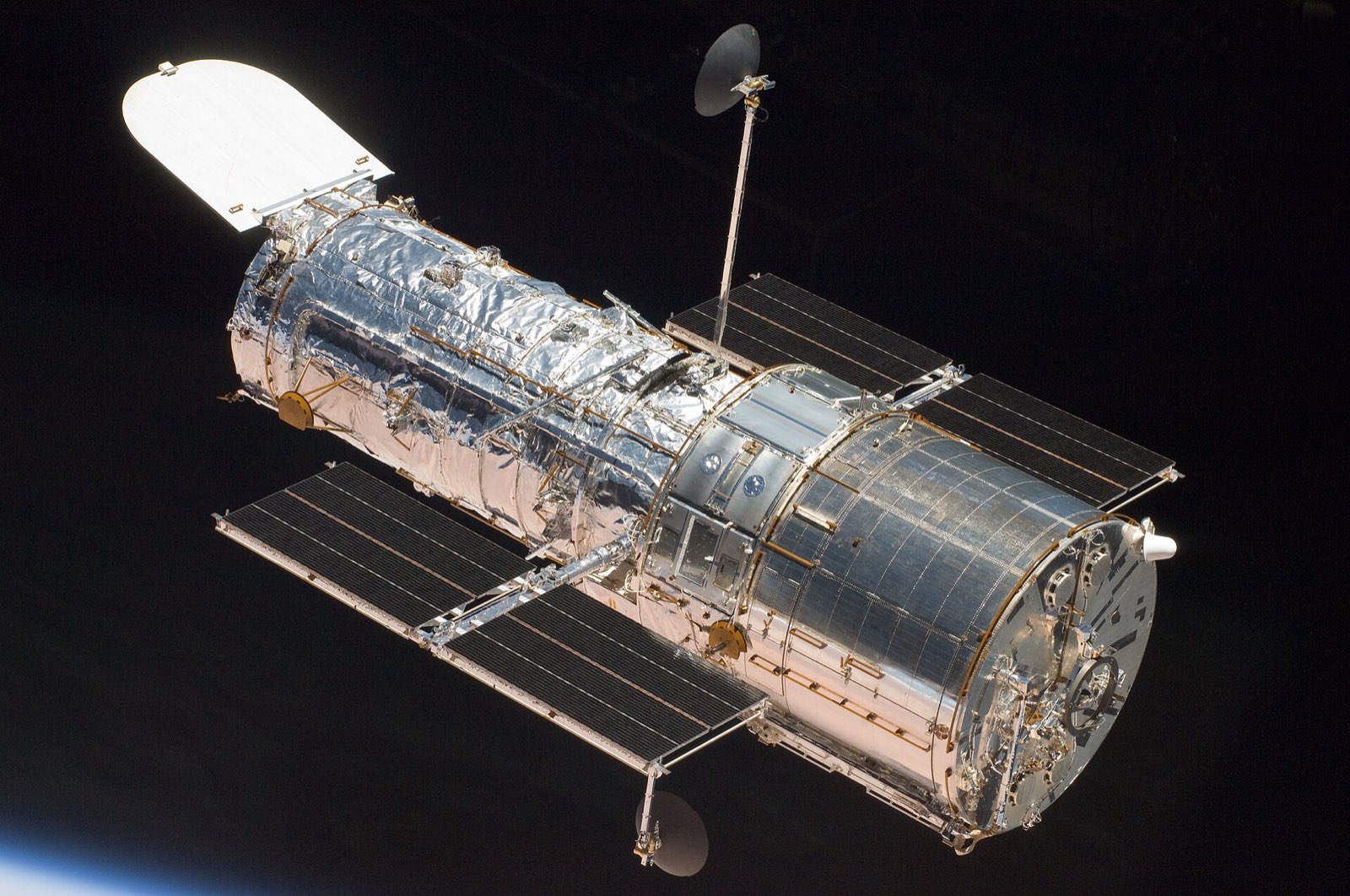
Hubble Space Telescope in orbit photographed from Space Shuttle Atlantis after release on STS-125, May 19, 2009, showing its
NASA

Hubble Space Telescope

Hubble is NASA's orbiting space telescope, designed to be repaired by astronauts.

Telescopes and probes
Product IDnasa-hubble
Length
43.5 ft (13.2 m)
Mass
About 27,000 lb (12,246 kg)
Primary mirror
94.5 in (2.4 m)
Orbit height
About 300 miles (483 km) above Earth
Time for one orbit
about 95 minutes
Servicing missions
five visits by astronauts

In short

The Hubble Space Telescope is a NASA observatory built with the European Space Agency and launched in 1990. It orbits about 483 km (300 miles) up and looks at visible, ultraviolet and near-infrared light. It was the first space observatory designed for servicing in orbit, and astronauts visited five times to repair and upgrade it.

Hubble's mirrors are made of a glass from Corning that hardly changes size as the temperature shifts. The main mirror has a honeycomb core, which cut its weight from about 3,636 kg to 818 kg. The frame is graphite-epoxy under a light aluminium shell. There are no engines on board.

Application

Orbiting visible, ultraviolet and near-infrared observatory launched in 1990 and serviced by shuttle astronauts. Its low-expansion glass mirror, graphite-epoxy frame and aluminum shell keep optics stable, and GaAs solar arrays plus nickel-hydrogen batteries power it.

How it is built

The mirrors

Both mirrors start as blanks of Ultra-Low Expansion glass with a honeycomb core. A layer of aluminium only four millionths of an inch thick makes the surface reflective. Magnesium fluoride on top protects the aluminium from oxidation, or reacting with oxygen.

  • Primary and secondary mirror substrate
  • Mirror reflective layer
  • Mirror protective layer

Frame, shell and insulation

The frame is graphite-epoxy, covered by a light aluminium shell and a multi-layered shroud of insulation. Together with the low-expansion glass, they keep the optics stable. Black paint lining the optical tube prevents reflections from stray light.

  • Frame
  • Outer shell
  • Multilayer insulation shroud
  • Optical tube interior black paint

Solar arrays and batteries

The arrays installed in 2002 have aluminium-lithium frames and gallium arsenide cells, which are more efficient than the silicon cells on the original arrays. They produce about 5,000 W, while the telescope uses 2,100 W on average. Six batteries, each made of 22 nickel-hydrogen cells, deliver 32 volts apiece.

  • Solar cells (current arrays, installed 2002)
  • Solar cells (original arrays)
  • Solar array wings, third generation (installed 2002)
  • Batteries (6)

Pointing without engines

Hubble points itself with four reaction wheels, each weighing 100 lb (45 kg), and four magnetic torquers, which are eight-foot iron rods wrapped in wire. Neither uses propellant, because exhaust by-products could contaminate the telescope's field of view. The telescope has six gyroscopes, but typical operations use only three.

  • Reaction Wheel Assemblies (x4)
  • Magnetic torquers (x4)
  • Rate Sensor Units with six gyroscopes
Where the parts areNumber of parts we have listed in each group
  • Electrical power14
  • Science instruments13
  • Pointing and control8
  • Optical Telescope Assembly7
  • Support Systems Module and structure7
  • Communications6
  • Data handling6
  • Optics3
  • Structure and thermal2
  • Servicing and disposal hardware2

What it is made of

  • Ultra-Low Expansion glass

    Both the primary and secondary mirrors, as a honeycomb-core blank. The glass was developed by Corning Glass Works.

  • Aluminium

    The mirror's reflective layer, four millionths of an inch thick. A light aluminium shell also covers the frame.

  • Magnesium fluoride

    A coating over the aluminium on the mirror, to protect it from oxidation.

  • Graphite-epoxy

    The frame, which is covered by the aluminium shell and the insulation shroud.

  • Gallium arsenide

    The solar cells on the arrays installed in 2002, more efficient than the silicon cells before them.

  • Nickel-hydrogen cells

    The six batteries, each made of 22 cells.

The materials by familyHow many of the parts that name a material use each one
  • Other5
  • Aluminium3
  • Semiconductors3
  • Glass fibre1
  • Carbon fibre1
  • Nickel and cobalt alloys1

How it connects to other things

The space shuttle Discovery carried Hubble into orbit in April 1990. Perkin-Elmer built the optical system, and Lockheed Missile and Space Company built the outer shroud and spacecraft systems and assembled the telescope. Ball Aerospace was the main contractor for several instruments, and the European Space Agency developed the first two sets of solar arrays. The James Webb Space Telescope is Hubble's observing partner and builds on its work.

Launched on

  • Space Shuttle Discovery (STS-31)

    deployed from the orbiter's cargo bay on 25 April 1990

Replaced by

Made or supplied by

  • Perkin-Elmer

    built the optical system and the fine guidance sensors

  • Lockheed Missile and Space Company

    built the outer shroud and spacecraft systems and assembled and tested the telescope

  • Ball Aerospace & Technologies

    prime contractor for several science instruments (ACS, COS, STIS, NICMOS, COSTAR, GHRS)

  • European Space Agency

    developed the first two sets of solar arrays and the third set's drive mechanisms

  • NASA Jet Propulsion Laboratory

    designed and built WFPC2

Operated by

  • NASA Goddard Space Flight Center (Space Telescope Operations Control Center)

    operates and commands the telescope

  • Space Telescope Science Institute (STScI)

    identifies and schedules the observing targets

Products that use the same materials

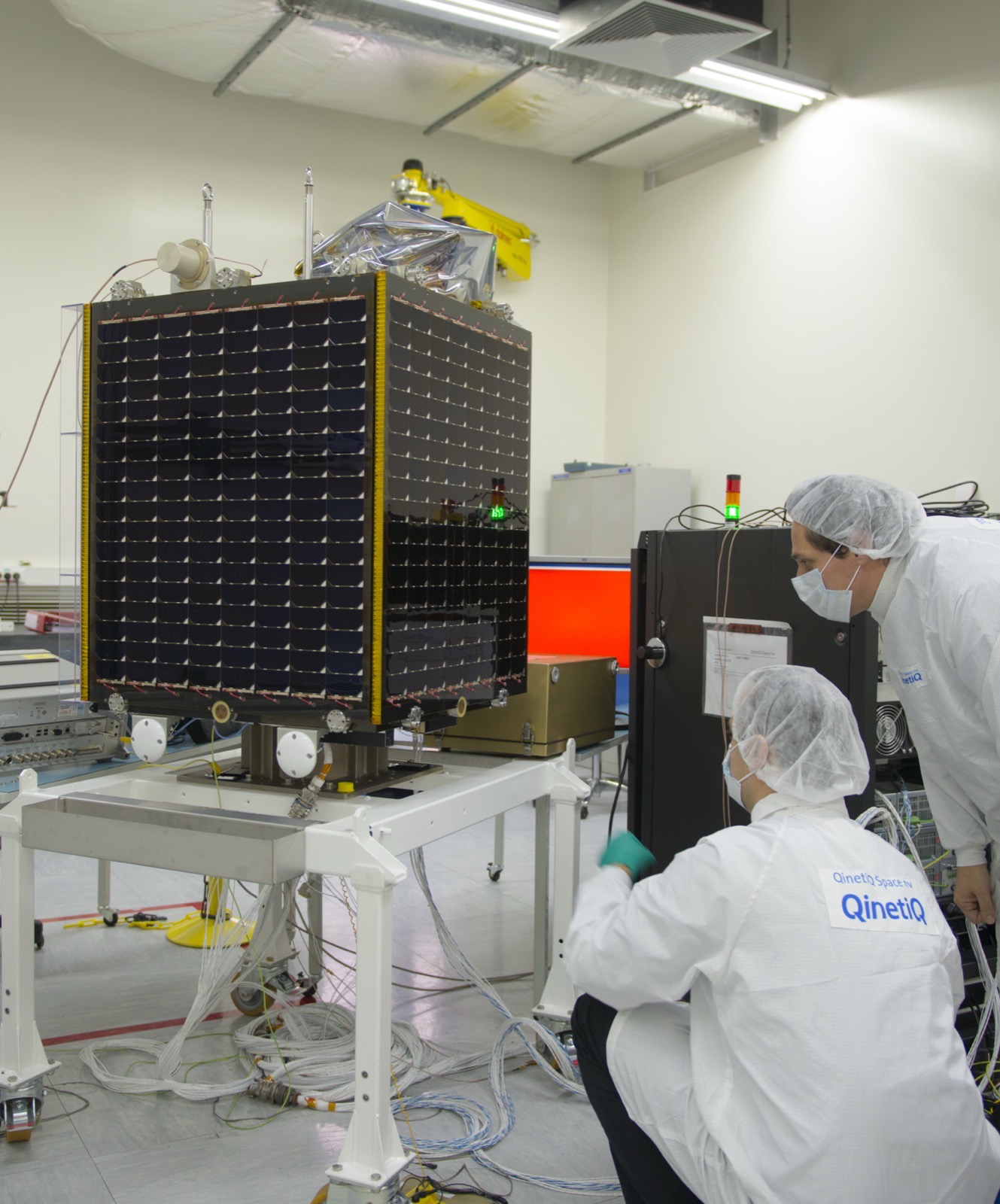
  • Proba-V

    ESA

    AluminiumGallium arsenideMultilayer insulation
    Where each one is used

    Aluminium. Here: Mirror reflective layer; Outer shell. There: Telescope (structure and mirrors, 3 telescopes).

    Gallium arsenide. Here: Solar cells (current arrays, installed 2002). There: Photovoltaic array.

    Multilayer insulation. Here: Multilayer insulation shroud. There: Instrument thermal wrap.

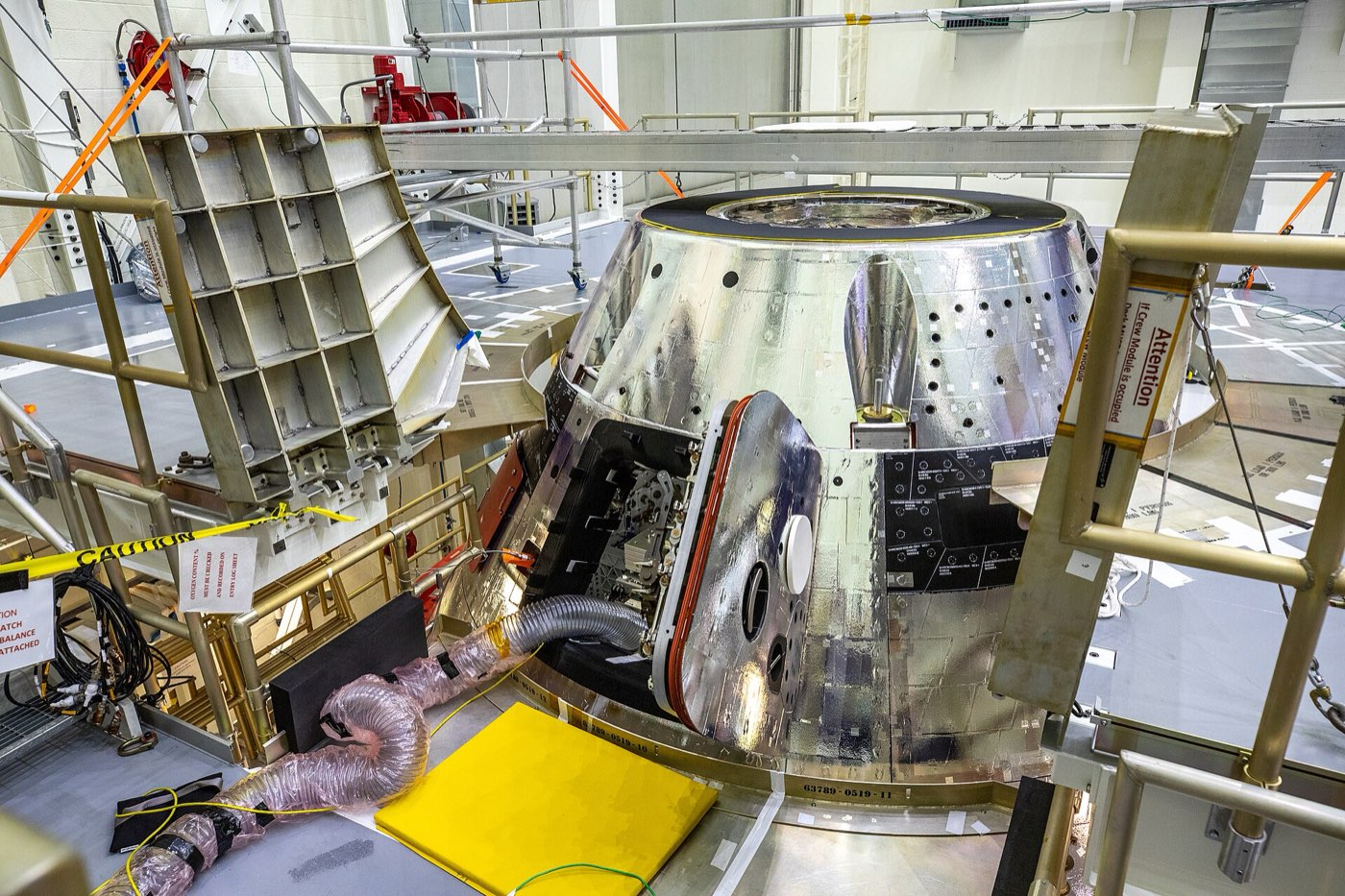
  • Orion spacecraft

    NASA

    AluminiumGallium arsenideMultilayer insulation
    Where each one is used

    Aluminium. Here: Mirror reflective layer; Outer shell. There: Pressure vessel (seven large pieces, friction-stir welded); Backbone assembly (floor structure) and more.

    Gallium arsenide. Here: Solar cells (current arrays, installed 2002). There: Triple-junction gallium arsenide solar cells (15,000 across the four wings).

    Multilayer insulation. Here: Multilayer insulation shroud. There: Passive thermal control: multilayer insulation blankets (incl. high-temperature blankets at thrusters and nozzle) and heaters.

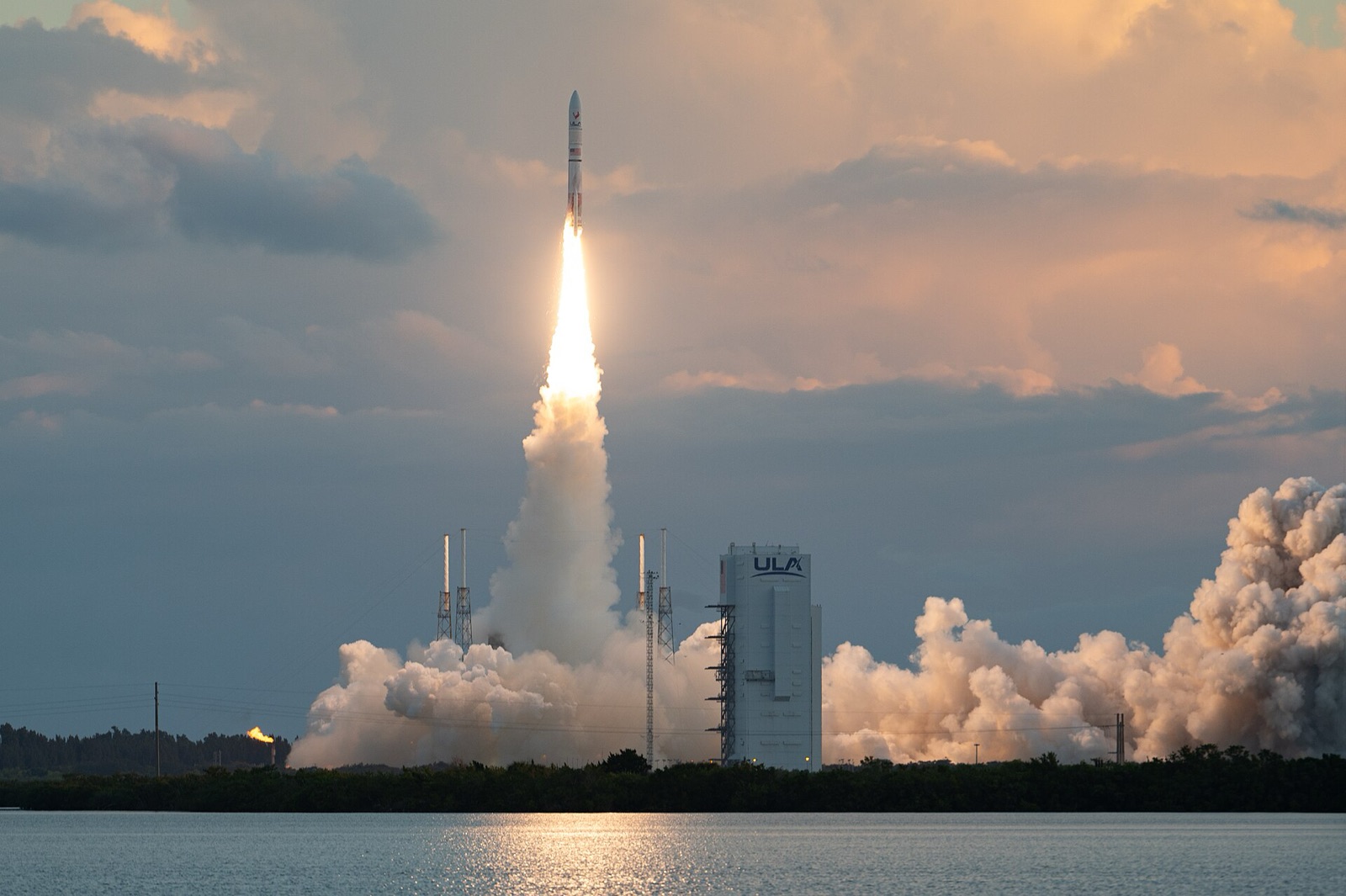
  • Vulcan Centaur

    United Launch Alliance

    Aluminiumgraphite-epoxyMultilayer insulation
    Where each one is used

    Aluminium. Here: Mirror reflective layer; Outer shell. There: Booster propellant tanks; Booster tank panels and domes.

    graphite-epoxy. Here: Frame. There: GEM 63XL motor case.

    Multilayer insulation. Here: Multilayer insulation shroud. There: Multilayer insulation (MLI) blankets and radiation shields.

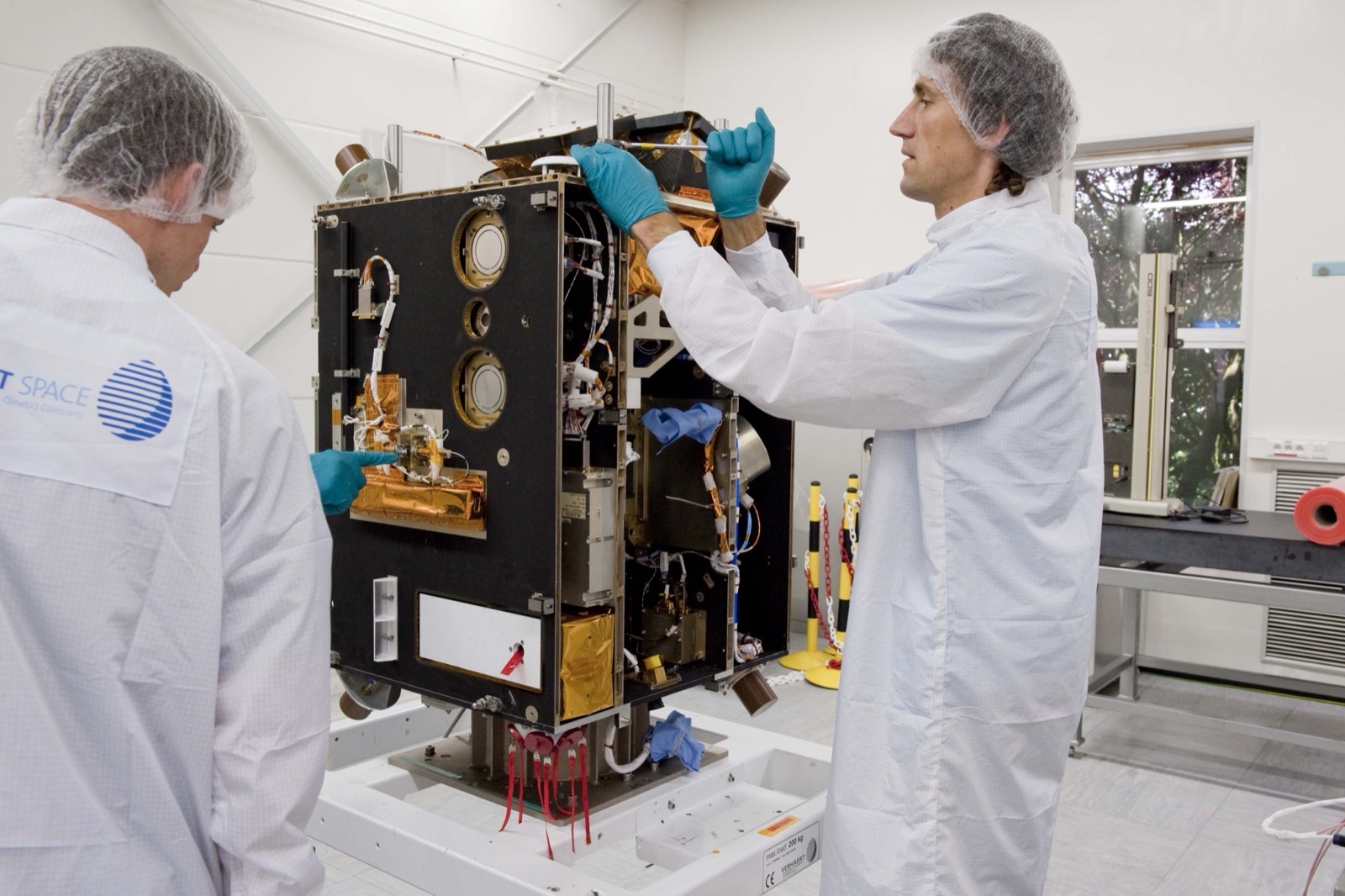
  • Proba-2

    ESA

    AluminiumGallium arsenide
    Where each one is used

    Aluminium. Here: Mirror reflective layer; Outer shell. There: TPMU/DSLP housing.

    Gallium arsenide. Here: Solar cells (current arrays, installed 2002). There: Solar cells.

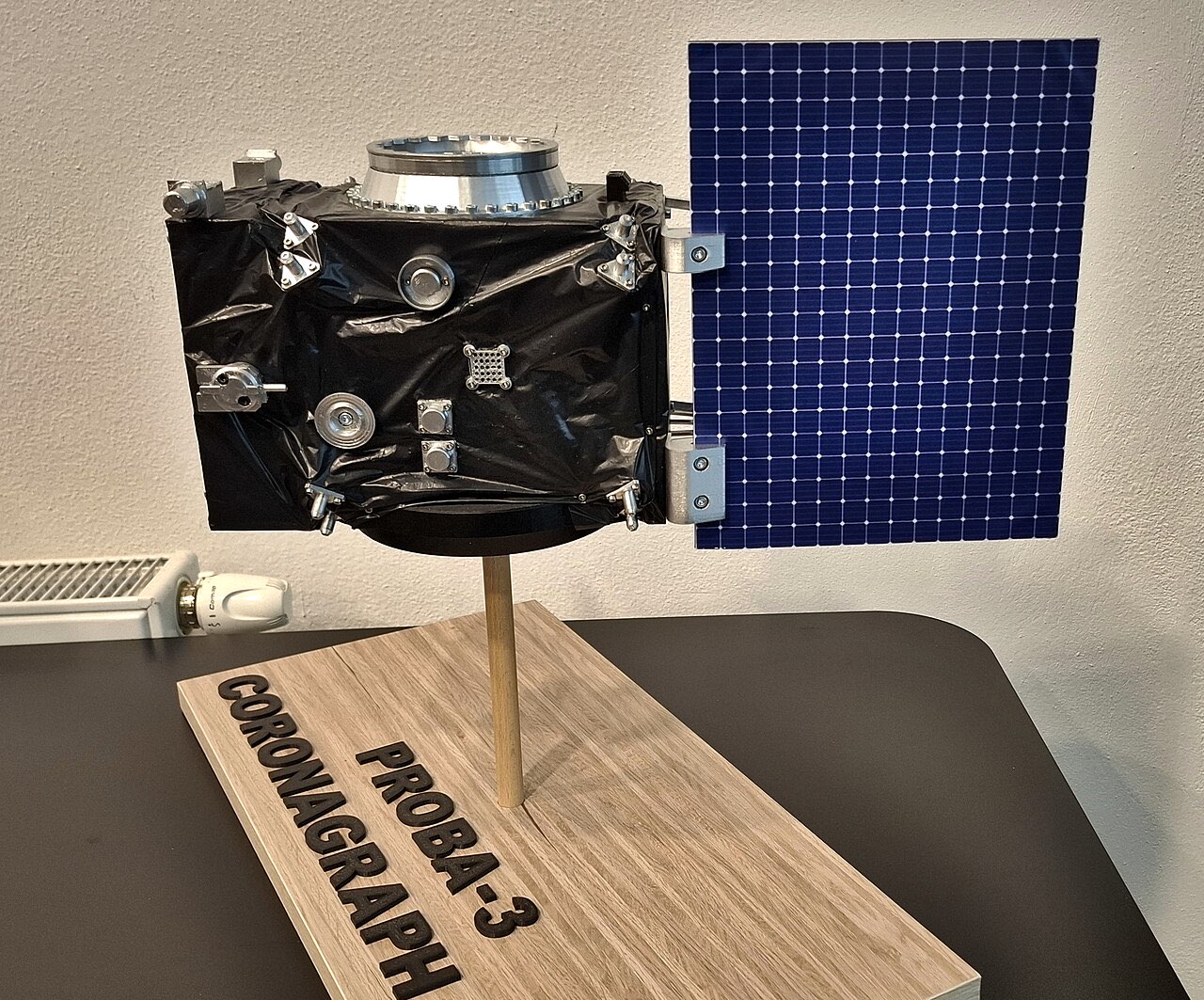
  • Proba-3 Coronagraph spacecraft

    ESA / Airbus

    AluminiumMultilayer insulation
    Where each one is used

    Aluminium. Here: Mirror reflective layer; Outer shell. There: Main structure tube; Equipment box (EQB) and more.

    Multilayer insulation. Here: Multilayer insulation shroud. There: Outer thermal blanket (both spacecraft).

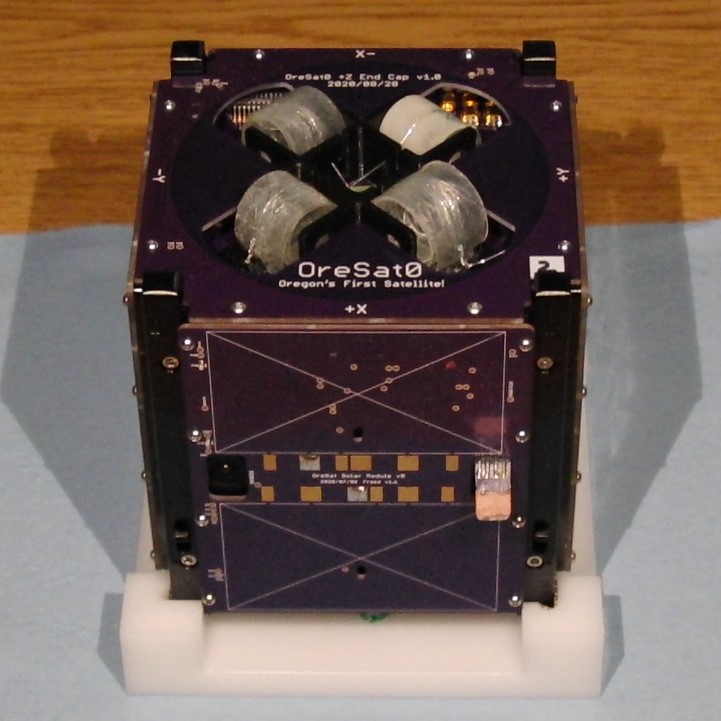
  • OreSat

    PSAS / Oregon State

    AluminiumGallium arsenide
    Where each one is used

    Aluminium. Here: Mirror reflective layer; Outer shell. There: Backplane grounding to frame.

    Gallium arsenide. Here: Solar cells (current arrays, installed 2002). There: Solar cell (SpectraLabs XTE-SF, 2 per module); Solar cell technology.

What we do not know

Not everything is public. The fibre and resin in the graphite-epoxy frame, the alloy of the aluminium shell and the types of film in the insulation are not given. Nor is the maker of the current solar cells, or the material of the antenna dishes.

The detailed data

What is written above is built from these numbers and quotes. Each row links to the page it was taken from. Get all of it as JSON, or ask our MCP server.

Features

  • Serviceable in orbit by astronauts
  • Observes ultraviolet to near-infrared light

Specifications

WhatValue
Launch24 April 1990, space shuttle Discovery
OrbitAbout 300 miles (483 km) above Earth
Length43.5 ft (13.2 m)
MassAbout 27,000 lb (12,246 kg)
Primary mirror diameter94.5 in (2.4 m)
Primary mirror mass1,800 lb (818 kg) after honeycombing, from 8,000 lb
Solar array powerAbout 5,000 W
Average power use2,100 W
Battery systemsix batteries of 22 NiH2 cells; 32 V; 88 Ah each; 528 Ah total
Width at back14 ft (4.2 m)
Orbit periodabout 95 minutes
Pointing stabilityno more than 0.007 arcsecond over extended periods
Propulsionnone; attitude control uses reaction wheels and magnetic torquers with no propellant
Science data downlink rate1 Mbps
Servicing missionsfive visits by astronauts
Deployment date25 April 1990

Materials in detail

Each material named in the sources: where it is used here, which other products use it, and its key numbers when its material page exists.

  • Aluminium

    Used in 2 partsMirror reflective layer · Outer shell

    Weight
    2.7 g/cm3
    Electrical conduction
    2.6458 µΩ·cm
    Heat conduction
    220 W/(m·K)
    Also in 33 other products
  • Silicon

    Used in 2 partsSolar cells (original arrays) · Coarse Sun Sensors

    Act as a semiconductor
    1.12 eV
    Carry heat
    150 W/(m·K)
    Weight
    2.328 g/cm3
  • aluminium-lithium (frames; alloy grade not stated)

    aluminium-lithium

    Used in 1 partSolar array wings, third generation (installed 2002)

    Also in 1 other product
    Material page coming soon
  • black paint (type not stated)

    black-paint-unspecified

    Used in 1 partOptical tube interior black paint

    Material page coming soon
  • Gallium arsenide

    Used in 1 partSolar cells (current arrays, installed 2002)

    Carry electrons fast
    8500
    Absorb and emit at a wide band gap
    1.424
    Hold up in orbit, with a cost
    30
    Also in 10 other products
  • graphite-epoxy

    graphite-epoxy

    Used in 1 partFrame

    Also in 2 other products
    Material page coming soon
  • high-silicon Ultra-Low Expansion glass (Corning)

    ule-glass

    Used in 1 partPrimary and secondary mirror substrate

    Material page coming soon
  • Iron (pure and ingot iron)

    Used in 1 partMagnetic torquers (x4)

    Mass estimate
    7.874 g/cm³
    Magnetic state
    1043 K
    Heat conduction
    79 W/(m K)
  • magnesium fluoride

    magnesium-fluoride

    Used in 1 partMirror protective layer

    Material page coming soon
  • metal matrix composite (matrix and fibre not stated)

    metal-matrix-composite

    Used in 1 partMetal Matrix Mast

    Material page coming soon
  • Multilayer insulation (MLI) blanket, aluminized Mylar and Kapton

    Used in 1 partMultilayer insulation shroud

    Radiative shielding
    0.03 typical, 0.05 maximum
    Temperature under heating
    110 °C at 15 min
    Continuous temperature range
    93 °C (Mylar) and 288 °C (Kapton)
  • nickel hydrogen (NiH2) cells

    nickel-hydrogen-cell

    Used in 1 partBatteries (6)

    Also in 2 other products
    Material page coming soon

Every part we have

Mirror, frame, shell, solar cells and batteries are named by NASA; insulation, tanks and wiring are not. Components, suppliers and links were added from public sources. A material is left blank where no source states it.

Material IDs

ule-glassaluminiummagnesium-fluoridegraphite-epoxygallium-arsenidesiliconnickel-hydrogen-cellblack-paint-unspecifiedmultilayer-insulation-mlimetal-matrix-compositeironaluminium-lithium
Optics3
PartMaterialFinish and standardMade by
Primary and secondary mirror substrate“Both the primary and secondary mirrors are made of a high-silicon, Ultra-Low Expansion Glass developed by Corning Glass Works.” high-silicon Ultra-Low Expansion glass (Corning)ule-glass — Corning Glass Works
Mirror reflective layer“The layer of aluminum is only 4/1,000,000th of an inch thick and provides the mirror’s reflectivity.” aluminumaluminium — —
Mirror protective layer“The magnesium fluoride layer is coated on top of the aluminum to protect it from oxidation” magnesium fluoridemagnesium-fluoride — —
Structure and thermal2
Electrical power14
PartMaterialFinish and standardMade by
Solar cells (current arrays, installed 2002)“This set of arrays uses gallium arsenide (GaAs) solar cells” gallium arsenidegallium-arsenide — —
Solar cells (original arrays)“more efficient than the silicon solar cells used by the previous arrays” siliconsilicon — —
Batteries (6)“Hubble’s six batteries are each constructed of 22 nickel hydrogen (NiH2) cells.” nickel hydrogen (NiH2) cellsnickel-hydrogen-cell — —
Solar array wings, third generation (installed 2002)two rigid wings, four panels each, folded rather than rolled“supporting frames made of aluminum-lithium” aluminium-lithium (frames; alloy grade not stated)aluminium-lithium — Supplier: Panels bought from a commercial communications-satellite production line; wing structures fabricated at NASA Goddard
Solar array blankets, first and second generation (ESA)flexible roll-out arrays flown 1990 to 2002“Solar Array Blanket ESA” Not said — Supplier: European Space Agency
Solar Array Drive Mechanismsturn the arrays to stay pointed at the Sun“ESA designed, developed and tested the Solar Array Drive Mechanisms” Not said — Supplier: European Space Agency
Solar array drive electronicselectronics for the array drive“Solar Array Drive Electronics ESA” Not said — Supplier: European Space Agency
Solar array primary and secondary deployment mechanismsdeploy the original solar arrays“Primary Deployment Mechanism ESA” Not said — Supplier: European Space Agency
Power Control Unit (PCU)manages and distributes the power the arrays make; replaced in 2002“Power created by the solar arrays is managed by the power control unit (PCU).” Not said — Supplier: Lockheed Missile and Space Company (original unit)
Power Distribution Units (x4)switch equipment on or off and fuse each circuit“The PCU distributes power to the spacecraft through four power distribution units (PDUs).” Not said — Supplier: Lockheed Missile and Space Company
Charge Current Controllercontrols battery charging current“Charge Current Controller LMSC” Not said — Supplier: Lockheed Missile and Space Company
Battery modules (x2, three batteries each)store power for the roughly 36 minutes per orbit in Earth's shadow“the batteries are contained in two modules that hold three batteries apiece” Not said — Supplier: Eagle Picher / GE
Battery Improvement Kit (BIK)prevents battery overcharge when Hubble enters safe mode; installed 1997“The Battery Improvement Kit (BIK), installed during Servicing Mission 2 in 1997, prevents the batteries from becoming overcharged” Not said — —
Voltage/Temperature Improvement Kit (VIK)lets engineers choose charge levels best for the batteries; installed 1999“The Voltage/Temperature Improvement Kit (VIK), installed in 1999 during the third servicing mission” Not said — —
Optical Telescope Assembly7
PartMaterialFinish and standardMade by
Optical Telescope Assembly (OTA)Cassegrain mirror system that collects and focuses light for the science and guidance instruments“Optical Telescope Assembly Perkin-Elmer” Not said — Supplier: Perkin-Elmer
Primary Mirror Assembly (2.4 m)large concave mirror that gathers the light; its glass substrate is already in the entry bom“Primary Mirror Assembly Perkin-Elmer” Not said — Supplier: Perkin-Elmer
Secondary Mirror Assemblysmaller mirror suspended above the primary that sends light back through a hole in the primary“Secondary Mirror Assembly Perkin-Elmer” Not said — Supplier: Perkin-Elmer
Focal Plane Assemblyoptical interface at the focal plane where the instruments receive light“Focal Plane Assembly Perkin-Elmer” Not said — Supplier: Perkin-Elmer
Optical Control Electronicselectronics for the optical telescope assembly“Optical Control Electronics Perkin-Elmer” Not said — Supplier: Perkin-Elmer
Actuator Control Electronicselectronics that drive actuators in the optical assembly“Actuator Control Electronics Perkin-Elmer” Not said — Supplier: Perkin-Elmer
Optical tube interior black paintlines the optical tube to stop stray-light reflections“black paint lining the optical tube that prevents reflections from stray light” black paint (type not stated)black-paint-unspecified — —
Science instruments13
PartMaterialFinish and standardMade by
Advanced Camera for Surveys (ACS)third-generation wide-field survey camera (Wide Field, High Resolution and Solar Blind channels); installed 2002“Dr. Holland Ford, Johns Hopkins University Prime contractor Ball Aerospace” Not said — Supplier: Ball Aerospace (prime contractor); principal investigator at Johns Hopkins University
Wide Field Camera 3 (WFC3)main imager, ultraviolet through infrared; installed 2009“Ball Aerospace & Technologies Corporation in Boulder jointly developed the WFC3” Not said — Supplier: Ball Aerospace & Technologies Corporation, with NASA Goddard and the Space Telescope Science Institute
Cosmic Origins Spectrograph (COS)ultraviolet spectrograph for faint point sources; installed 2009 in the slot COSTAR had used“The prime contractor for the design and manufacture of COS was Ball Aerospace & Technologies Corporation in Boulder, CO.” Not said — Supplier: Ball Aerospace & Technologies Corporation (prime contractor); built at the University of Colorado CASA
Space Telescope Imaging Spectrograph (STIS)versatile imaging spectrograph; installed 1997, repaired 2009“STIS was developed under the direction of the principal investigator, Dr. Bruce E. Woodgate, jointly with Ball Aerospace.” Not said — Supplier: Ball Aerospace (prime contractor); principal investigator at NASA Goddard
Near Infrared Camera and Multi-Object Spectrometer (NICMOS)near-infrared camera and spectrometer; installed 1997, now inactive“Dr. Rodger I. Thompson, U. of Arizona Ball Aerospace” Not said — Supplier: Ball Aerospace (contractor); principal investigator at the University of Arizona
Fine Guidance Sensors (x3)three interferometers: two lock onto guide stars for pointing, the third can serve as a science instrument“Fine Guidance Sensor Perkin-Elmer” Not said — Supplier: Perkin-Elmer
Wide Field and Planetary Camera 2 (WFPC2)second-generation imaging camera, installed 1993 and removed in 2009“WFPC2 was designed and built at NASA’s Jet Propulsion Laboratory” Not said — Supplier: NASA Jet Propulsion Laboratory
Wide Field and Planetary Camera 1 (WFPC1)first-generation camera launched with the telescope in 1990“Wide Field Planetary Camera JPL” Not said — Supplier: NASA Jet Propulsion Laboratory
Faint Object Camera (FOC)original-complement camera, replaced by ACS in 2002“Faint Object Camera Dornier” Not said — Supplier: Dornier
Faint Object Spectrograph (FOS)original-complement spectrograph, later replaced“Faint Object Spectrograph Martin Marietta Corporation” Not said — Supplier: Martin Marietta Corporation
Goddard High Resolution Spectrograph (GHRS)original-complement ultraviolet spectrograph“the Goddard High Resolution Spectrograph, one of the original science instruments launched aboard HST” Not said — Supplier: Ball Aerospace
Corrective Optics Space Telescope Axial Replacement (COSTAR)set of corrective mirrors that countered the primary-mirror flaw; installed 1993“designed and built the Corrective Optics Space Telescope Axial Replacement” Not said — Supplier: Ball Aerospace
High Speed Photometer (HSP)original-complement photometer, later replaced“High Speed Photometer” Not said — —
Support Systems Module and structure7
PartMaterialFinish and standardMade by
Support Systems Module (SSM)encloses the telescope assembly and science instruments and carries the spacecraft systems“The Lockheed Missile and Space Company of Sunnyvale, California, produced the protective outer shroud and spacecraft systems” Not said — Supplier: Lockheed Missile and Space Company (Sunnyvale, California)
Multilayer insulation shroudmulti-layered insulation that stabilizes temperature inside the telescope“Multilayer Insulation LMSC/Perkin-Elmer” multilayer insulation (film types not stated)multilayer-insulation-mli — Supplier: Lockheed Missile and Space Company / Perkin-Elmer
New Outer Blanket Layer (NOBL) coverscovers fitted over damaged external insulation blankets“The New Outer Blanket Layer (NOBL) covers protect Hubble external blankets.” Not said — —
Metal Matrix Mastmast structure; the NASA table does not say where it is used“Metal Matrix Mast DWA/LMSC” metal matrix composite (matrix and fibre not stated)metal-matrix-composite — Supplier: DWA / Lockheed Missile and Space Company
Aperture door latchlatch for the telescope aperture door“Latch, Aperture Door LMSC” Not said — Supplier: Lockheed Missile and Space Company
Solar array latches (forward and aft)latches that hold the solar arrays“Forward Latch, Solar Array LMSC” Not said — Supplier: Lockheed Missile and Space Company
High-gain antenna latchlatch for the high-gain antenna“Latch, High Gain Antenna LMSC” Not said — Supplier: Lockheed Missile and Space Company
Pointing and control8
PartMaterialFinish and standardMade by
Reaction Wheel Assemblies (x4)four wheels near the centre of gravity that turn the observatory with no propellant“four 100-pound (45 kg) reaction wheel assemblies for attitude control” Not said — Supplier: Sperry
Rate Sensor Units with six gyroscopesgyroscopes that measure the direction and rate of the telescope's rotation“The telescope has six gyros, but typical operations only use three of them.” Not said — Supplier: Bendix (as Rate Gyro Assembly)
Magnetic torquers (x4)iron rods that push against Earth's magnetic field to rotate the telescope and unload the wheels“Magnetic torquers are eight-foot iron rods wrapped in wire” iron (rods wrapped in wire; grade not stated)iron — Supplier: Ithaco / Bendix
Magnetic Sensing Systemmagnetometers and electronics that act as Hubble's compass“The system consists of magnetometers and dedicated electronics” Not said — Supplier: Schoenstadt / Bendix
Fixed Head Star Trackersmatch star patterns to find the telescope's attitude to within 60 arcseconds“The Fixed Head Star Trackers determine Hubble’s attitude by measuring the locations and brightnesses of stars” Not said — Supplier: Ball / Bendix
Coarse Sun Sensorssilicon diode detectors that find the Sun so the telescope can be kept at least 50 degrees away from it“The sensors use silicon diode detectors to determine whether the Sun is present in their field of view” silicon (diode detectors)silicon — Supplier: Lockheed Missile and Space Company
Fine Guidance Electronicselectronics for the Fine Guidance System“Fine Guidance Electronics Harris” Not said — Supplier: Harris
Pointing Safemode Electronics Assemblypointing electronics for safe mode“Pointing Safemode Electronics Assembly Bendix” Not said — Supplier: Bendix
Communications6
PartMaterialFinish and standardMade by
High-gain antennas (x2)dish antennas that transmit science images and data through the TDRS relay satellites“The HGAs are dish-shaped parabolic reflectors that can send more information out at once than the LGAs can.” Not said — Supplier: GE (dish and feed)
Low-gain antennas (x2)small stationary spiral-cone antennas that receive all commands“The LGAs are small, stationary, spiral cone antennas that can send and receive signals in every direction.” Not said — Supplier: Lockheed Missile and Space Company
Antenna Pointing System (APS)points the high-gain antennas along two axes at the relay satellite“the APS can manipulate the HGAs along two axes so that the antenna can point directly at the targeted satellite” Not said — Supplier: Sperry
Multiple-Access Transponders (MATs)carry real-time science memory dumps and engineering data on two channels“the Multiple-Access Transponders (MATs) and the S-Band Single-Access Transmitters (SSATs)” Not said — Supplier: Motorola
S-Band Single-Access Transmitters (SSATs)send recorded and real-time science data at 1 Mbps“The SSATs transmit real-time science, recorded science, and recorded engineering information at 1 Mbps.” Not said — Supplier: Odetics
RF Multiplexerradio-frequency multiplexer in the communications chain“RF Multiplexer Wavecom” Not said — Supplier: Wavecom
Data handling6
PartMaterialFinish and standardMade by
Main flight computercalculates which reaction wheels to speed up or slow to point at each target“Hubble’s main computer then calculates which wheels should slow and which ones spin faster” Not said — Supplier: Rockwell Autonetics
Science Instrument Command and Data Handling (SIC&DH) unitcommands the science instruments and routes science and engineering data to the ground“provides all of the electronics to command Hubble's science instruments from the ground” Not said — Supplier: Fairchild / IBM (original unit)
Data Management Unitavionics unit in the Support Systems Module equipment section“Data Management Unit LMSC” Not said — Supplier: Lockheed Missile and Space Company
Data Interface Unitavionics unit in the Support Systems Module equipment section“Data Interface Unit LMSC” Not said — Supplier: Lockheed Missile and Space Company
Instrument Control Unitcontrol unit for the instruments“Instrument Control Unit LMSC” Not said — Supplier: Lockheed Missile and Space Company
Mechanism Control Unitcontrol unit for mechanisms“Mechanism Control Unit LMSC” Not said — Supplier: Lockheed Missile and Space Company
Servicing and disposal hardware2
PartMaterialFinish and standardMade by
Soft Capture Mechanism (SCM)ring on the aft bulkhead that allows a future vehicle to dock for controlled de-orbit“a ring-like device which will be permanently attached to Hubble's aft bulkhead” Not said — —
Relative Navigation System (RNS)imaging system flown on the shuttle to record Hubble's capture and deployment during SM4“an imaging system consisting of optical and navigation sensors and supporting avionics that will be mounted on the Shuttle” Not said — —

What the sources leave out

Graphite-epoxy fibre and resin, aluminum shell alloy, insulation film types, and the substrate of the mirror coatings are not stated on the NASA pages read. The current solar cells are GaAs per NASA; cell supplier not stated. The ULE glass is described as honeycomb in the NASA text. More detail: Hubble has no propulsion system (NASA: reaction wheels and magnetic torquers use no propellant), so there are no thrusters or engines to link. Not published on the pages read: antenna dish and cone materials, the contractor for the Soft Capture Mechanism and the NOBL covers, and who built the High Speed Photometer. The NASA partner table lists parts 'at launch', so some listed suppliers (computer, SIC&DH, PCU, gyros, batteries) supplied the original units that were later replaced. Frame alloy is stated as aluminum-lithium on the SA3 fact sheet and lithium-aluminum alloy on the electrical-power page. The launch vehicle was the Space Shuttle Discovery (three RS-25 main engines), which is not a catalog product. More detail: Hubble has no propulsion system (NASA: reaction wheels and magnetic torquers use no propellant), so there are no thrusters or engines to link. Not published on the pages read: antenna dish and cone materials, the contractor for the Soft Capture Mechanism and the NOBL covers, and who built the High Speed Photometer. The NASA partner table lists parts 'at launch', so some listed suppliers (computer, SIC&DH, PCU, gyros, batteries) supplied the original units that were later replaced. Frame alloy is stated as aluminum-lithium on the SA3 fact sheet and lithium-aluminum alloy on the electrical-power page. The launch vehicle was the Space Shuttle Discovery (three RS-25 main engines), which is not a catalog product.
Where this comes from

15 pages from 4 websites

More space products

Maker credit: NASA (with ESA). Collected from public pages and documents, checked 4 Nov 2026.