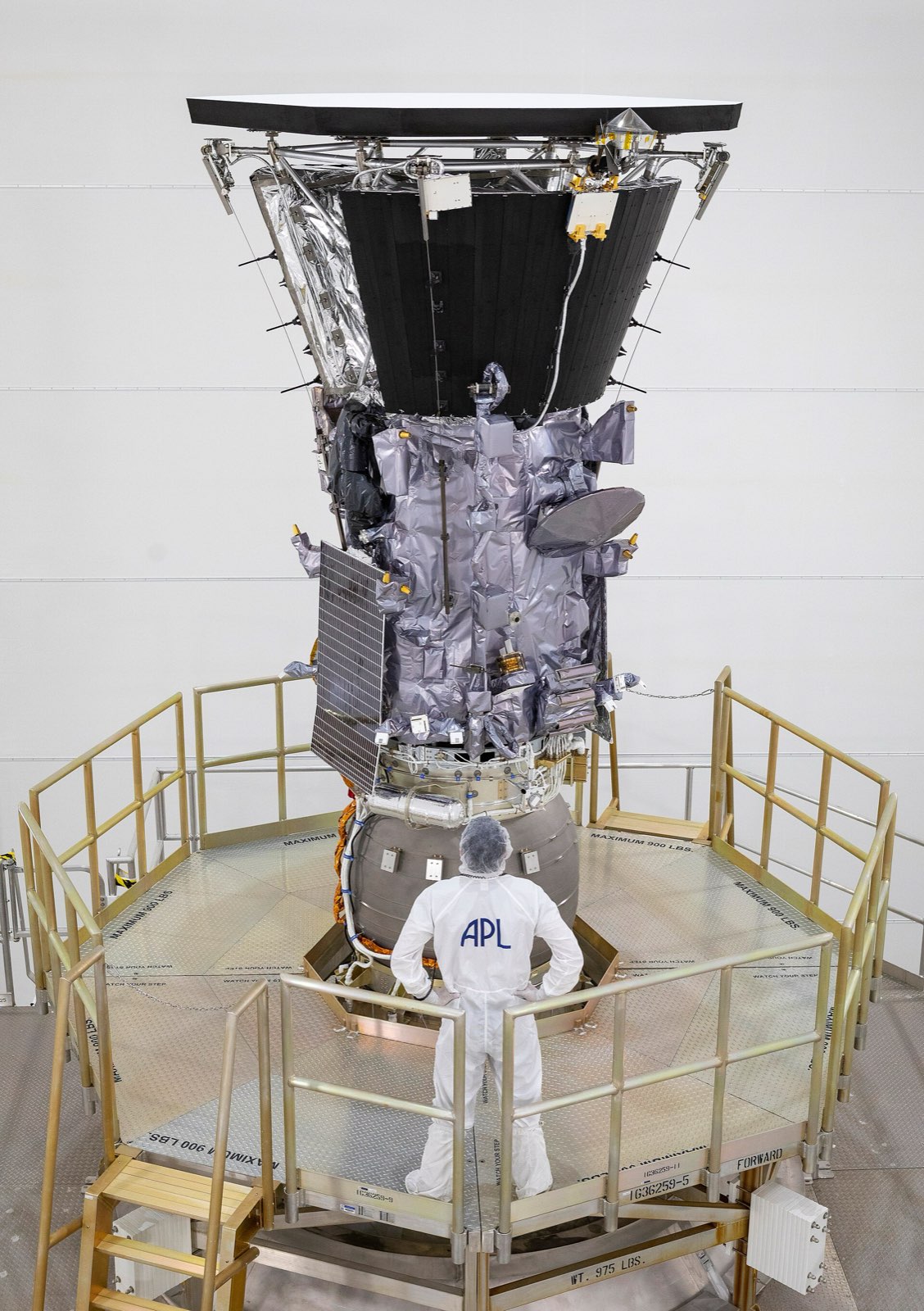
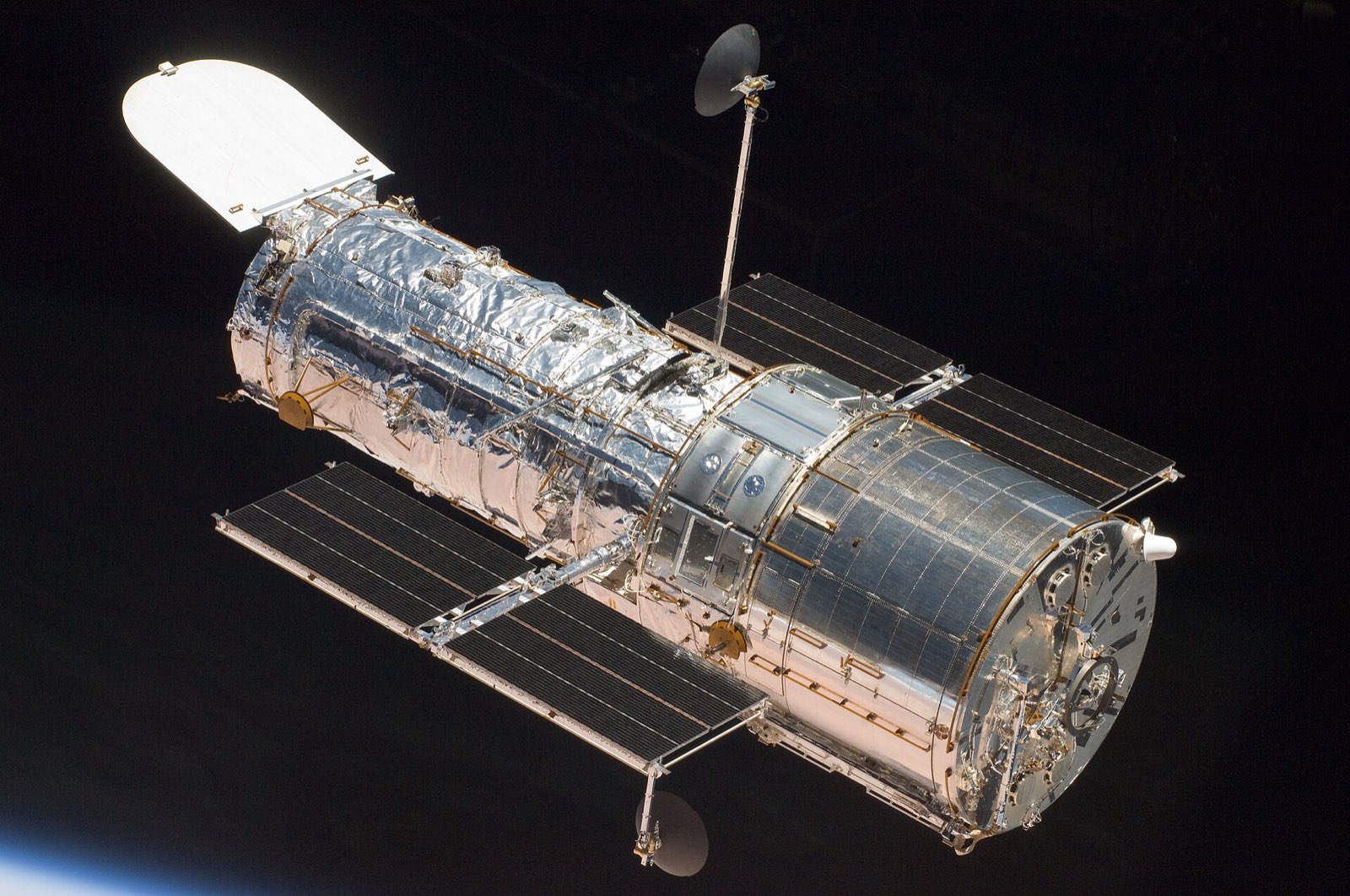
Parker Solar Probe was designed and built by the Johns Hopkins University Applied Physics Laboratory for NASA. It flies through the Sun's corona, its outer atmosphere, to measure magnetic fields, energetic particles and the solar wind, the stream of particles flowing off the Sun.
A heat shield 2.43 m across protects the instruments. It is two carbon-carbon panels with a carbon foam core between them, and the foam is 97% air. The shield weighs only about 160 lb, yet its face reaches nearly 2,500 F while the instruments stay near room temperature.
Application
NASA's probe that flies through the Sun's corona to measure the solar wind, magnetic fields and energetic particles. A carbon heat shield keeps the instruments near room temperature while the shield face heats to about 2,500 F. It has made the closest approaches to the Sun of any spacecraft.
Photos
How it is built
The heat shield
Two panels of carbon-carbon composite sandwich a carbon foam core 4.5 inches thick. The outer panel carries a sprayed white coating based on aluminium oxide, with a tungsten layer thinner than a hair between coating and shield. The whole shield rests on a titanium truss.
Heat shield face sheets (2)
Heat shield core
Sun-facing coating
Coating barrier layer
Titanium truss under the heat shield
Cooling the solar arrays
Water circulates through mini-channels in the solar arrays and through four radiators, absorbing heat. The radiator tubes are titanium, which will not corrode, and the fins are aluminium, just two hundredths of an inch thick. Parker is the first scientific mission to use water-cooled solar arrays.
Coolant
Mini-channels in the solar arrays
Radiator tubes (x4 radiators)
Radiator fins
Heated accumulator tank
Antennas and sensors
The FIELDS instrument has four electric-field antennas, each 2 m long and made of niobium alloy C-103, which can withstand extreme temperatures. The Solar Probe Cup, a metal device that catches charged particles, has a heat shield of the same alloy and uses sapphire to keep its parts electrically separate.
FIELDS electric-field antennas V1 to V4 (x4)
Solar Probe Cup (SPC)
Solar Probe Cup heat shield
Solar Probe Cup sapphire insulators
Thrusters and wheels
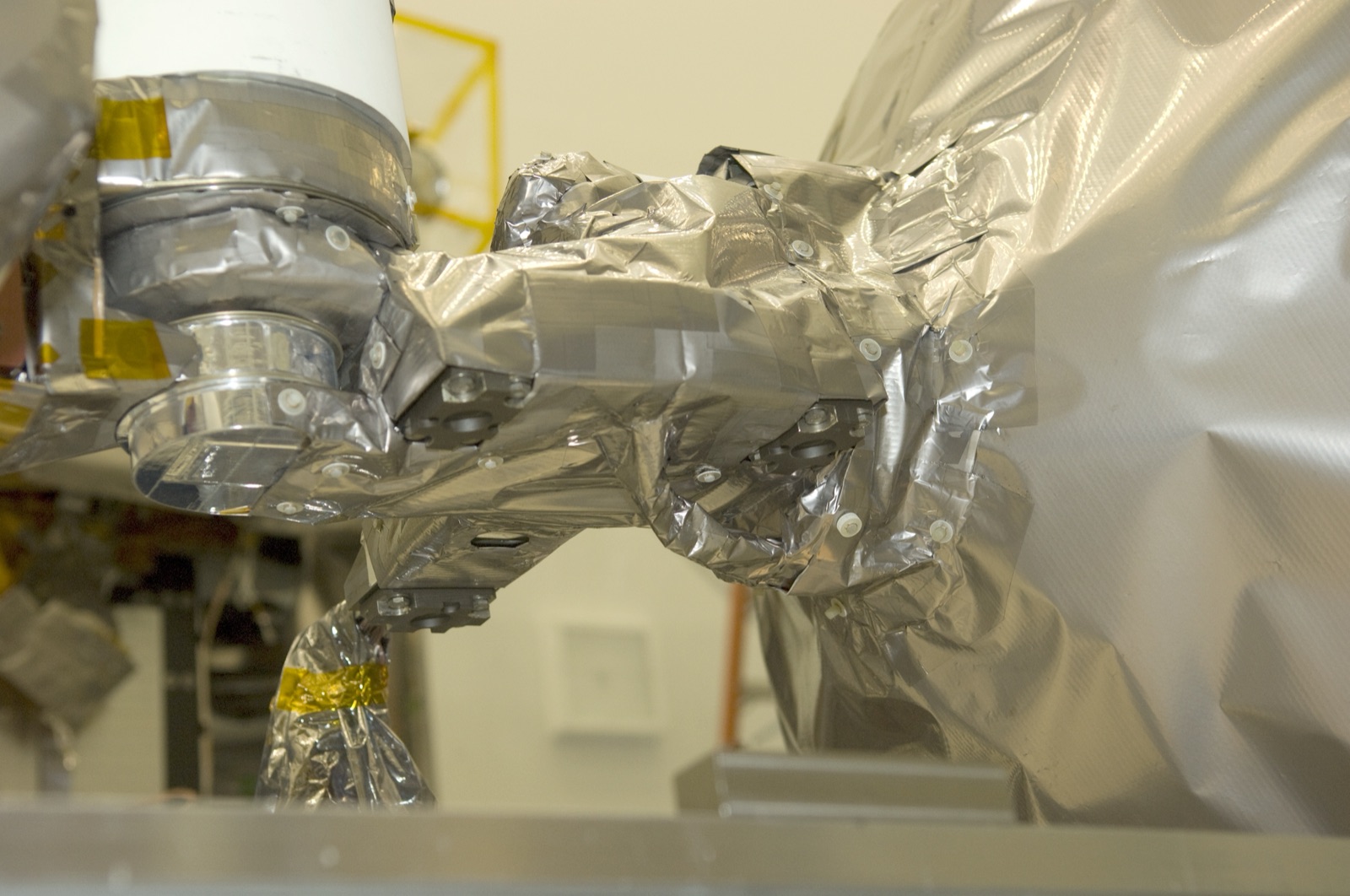
Twelve MR-111C thrusters use hydrazine propellant, each producing one pound of thrust. They handle attitude, momentum and trajectory control. Reaction wheels also help reposition the spacecraft within the shadow of the heat shield.
Propellant tank and feed system
MR-111C hydrazine thrusters (x12)
Reaction wheels (number not stated)
Where the parts areNumber of parts we have listed in each group
Solar array cooling system8
Electrical power6
Science instruments: FIELDS5
Thermal protection system (heat shield)4
Science instruments: SWEAP4
Science instruments: ISOIS4
Spacecraft bus and structure3
Science instruments: WISPR3
Propulsion2
Guidance and control2
What it is made of
Carbon-carbon composite
The two face sheets of the heat shield, which sandwich the foam core.
Carbon foam
The 4.5-inch core of the heat shield. It is 97% air.
Aluminium oxide (alumina)
A white ceramic coating sprayed on the outer panel of the heat shield.
Tungsten
A layer thinner than a strand of hair between the shield and its white coating.
Niobium alloy C-103
The FIELDS instrument's four antennas and the heat shield of the Solar Probe Cup. It can withstand extreme temperatures.
Deionised water
The coolant that circulates through the solar arrays and the four radiators.
The materials by familyHow many of the parts that name a material use each one
Other10
Aluminium3
Titanium2
Glass fibre2
Polymers and foams1
Semiconductors1
How it connects to other things
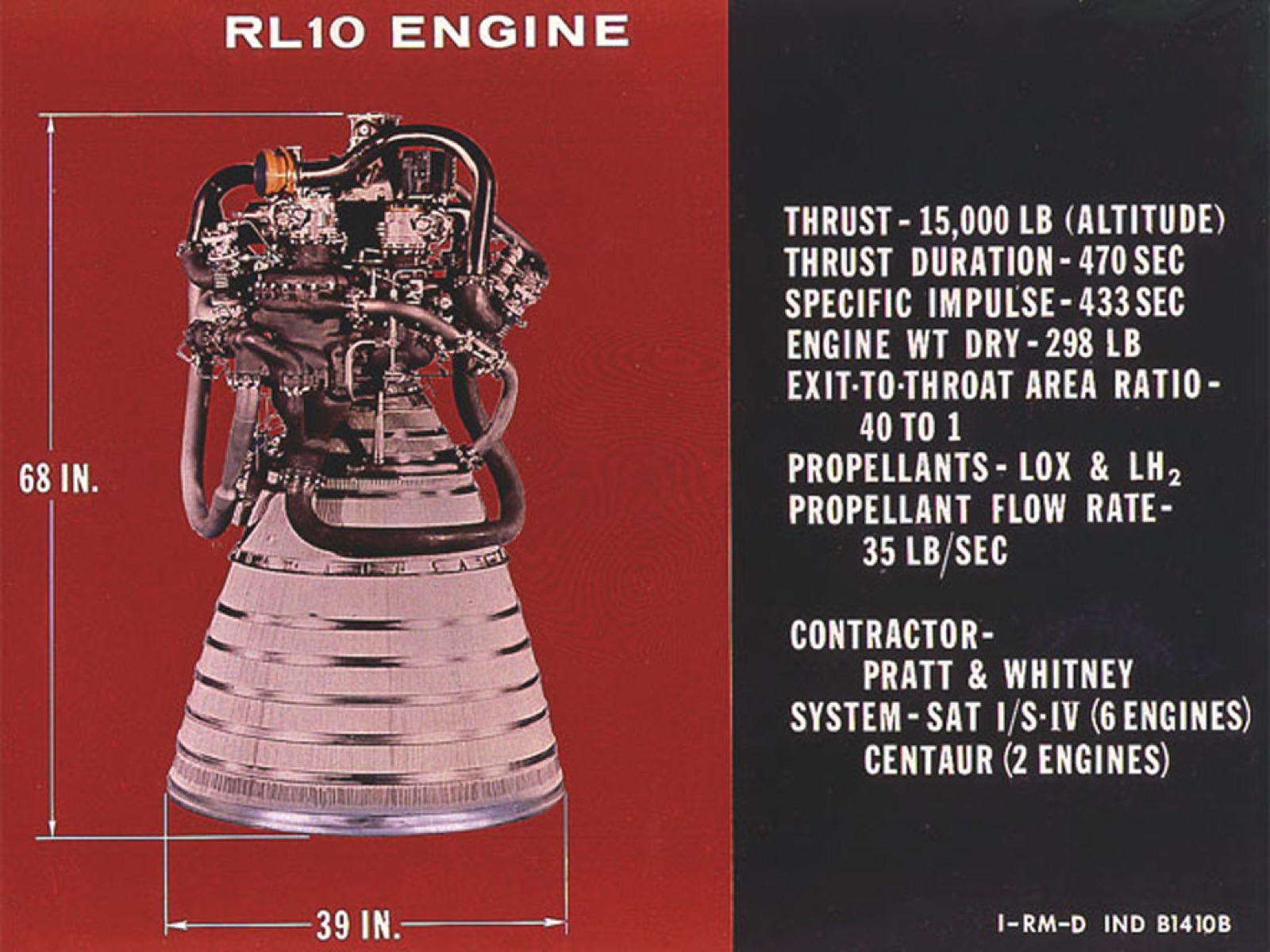
Parker flew on a Delta IV Heavy, which burns an RS-68A in each of its three booster cores and an RL10B-2 in its second stage. Aerojet Rocketdyne made the probe's own twelve thrusters, the same model that helped steer New Horizons. Carbon-Carbon Advanced Technologies made the shield panels, Ultramet the foam, SolAero the solar arrays and United Technologies Aerospace Systems the cooling system.
Carries
MR-111C hydrazine thruster (x12)
Aerojet Rocketdyne 1 lbf monopropellant thrusters used for attitude, momentum and trajectory control
Launched on
Delta IV Heavy (United Launch Alliance)
launched 12 August 2018 from Space Launch Complex-37, Cape Canaveral
RS-68A engine (x3, Delta IV Heavy booster cores)
each of the three common booster cores burns one RS-68A; 702,000 lb thrust each
Titanium. Here: Radiator tubes (x4 radiators); Titanium truss under the heat shield. There: OBA unit attachment fittings; Instrument support bipods (3).
Aluminium. Here: Radiator fins. There: Main structure tube; Equipment box (EQB) and more.
Titanium. Here: Radiator tubes (x4 radiators); Titanium truss under the heat shield. There: Some brackets and fasteners (lunar module); Descent-stage hot-area structure and more.
Aluminium. Here: Radiator fins. There: Cabin front-face, RCS cluster trusses, decks and bulkheads; Micrometeoroid shield and more.
What we do not know
Some details are still missing. The makers do not say which fibre and resin go into the carbon-carbon panels, or what small additions go into the white coating. The type of solar cell, the battery chemistry, the number of reaction wheels and the material of the main body are not published either.
The detailed data
What is written above is built from these numbers and quotes. Each row links to the page it was taken from. Get all of it as JSON, or ask our MCP server.
Features
Heat shield faces the Sun and protects the instruments
Water-cooled solar array cooling system
Specifications
What
Value
Launch
12 August 2018
Spacecraft mass
1,510 lb (685 kg) at launch
Heat shield thickness
4.5 in (11.43 cm)
Heat shield mass
About 160 lb
Heat shield temperature
Nearly 2,500 F (1,377 C)
Foam air content
97% air
Planned orbits
24 orbits over seven years
Heat shield size
2.43 m diameter, 11.4 cm thick
Temperature behind the shield
about 30 C
Coolant volume
about five liters of deionized, pressurized water
Coolant operating range
10 C to 125 C
Radiators
four, two released at launch and two later
Water release
about two-thirds of a gallon at launch and one-third of a gallon later
Array temperature limit
below 302 F
Transponder bands
Ka-band and X-band
Launch vehicle performance
Delta IV Heavy lifts 14,210 kg to GTO
Materials in detail
Each material named in the sources: where it is used here, which other products use it, and its key numbers when its material page exists.
niobium C-103 alloy
niobium-c-103
Used in 2 partsFIELDS electric-field antennas V1 to V4 (x4) · Solar Probe Cup heat shield
Used in 1 partThermally conductive adhesive (cell carrier to platen)
Material page coming soon
tungsten
tungsten
Used in 1 partCoating barrier layer
Material page coming soon
Every part we have
Heat-shield layers and coolant are stated; spacecraft bus, arrays and electronics materials are not. Components, suppliers and links were added from public sources. A material is left blank where no source states it.
Carbon-carbon fibre and resin, foam supplier grade, dopant identity, structure of the spacecraft body, solar-cell type, radiator tube material (titanium tubes appear only in secondary press) and insulation are not stated on the primary NASA pages read. The alumina and tungsten details come from EarthSky, which cites Johns Hopkins; the original JHU page was not retrievable. More detail: Not published on the pages read: battery chemistry and maker, reaction wheel and star tracker count and makers, flight computer, low-gain and fan-beam antenna details, high-gain antenna size and maker, propellant tank material and propellant load (DLA page with the 178 lb figure returned 403), solar cell type, and the structural materials of the bus panels. Aerojet Rocketdyne is now part of L3Harris; UTAS is now Collins Aerospace. The 12 MR-106 thrusters in the SpaceNews text are on the launcher's second stage, not on the probe. The Springer mission paper (Fox et al. 2016) and the APL spacecraft pages could not be fetched, so the bus subsystem list is shorter than it could be. More detail: The white ceramic coating on the shield is already in the entry bom (alumina); Aerospace America adds that Plasma Processes sprayed it and APL researchers made the recipe, recorded in relations only. Not published on the pages read: battery chemistry and maker, reaction wheel and star tracker count and makers, flight computer, low-gain and fan-beam antenna details, high-gain antenna size and maker, propellant tank material and propellant load (DLA page with the 178 lb figure returned 403), solar cell type, and the structural materials of the bus panels. Aerojet Rocketdyne is now part of L3Harris; UTAS is now Collins Aerospace. The 12 MR-106 thrusters in the SpaceNews text are on the launcher's second stage, not on the probe. The Springer mission paper (Fox et al. 2016) and the APL spacecraft pages could not be fetched, so the bus subsystem list is shorter than it could be.