The frame
The frame was made of aluminium alloy 2219 in welded tubing assemblies. It was 3.1 m long with a wheelbase of 2.3 m, and its maximum height was 1.14 m.
- Frame
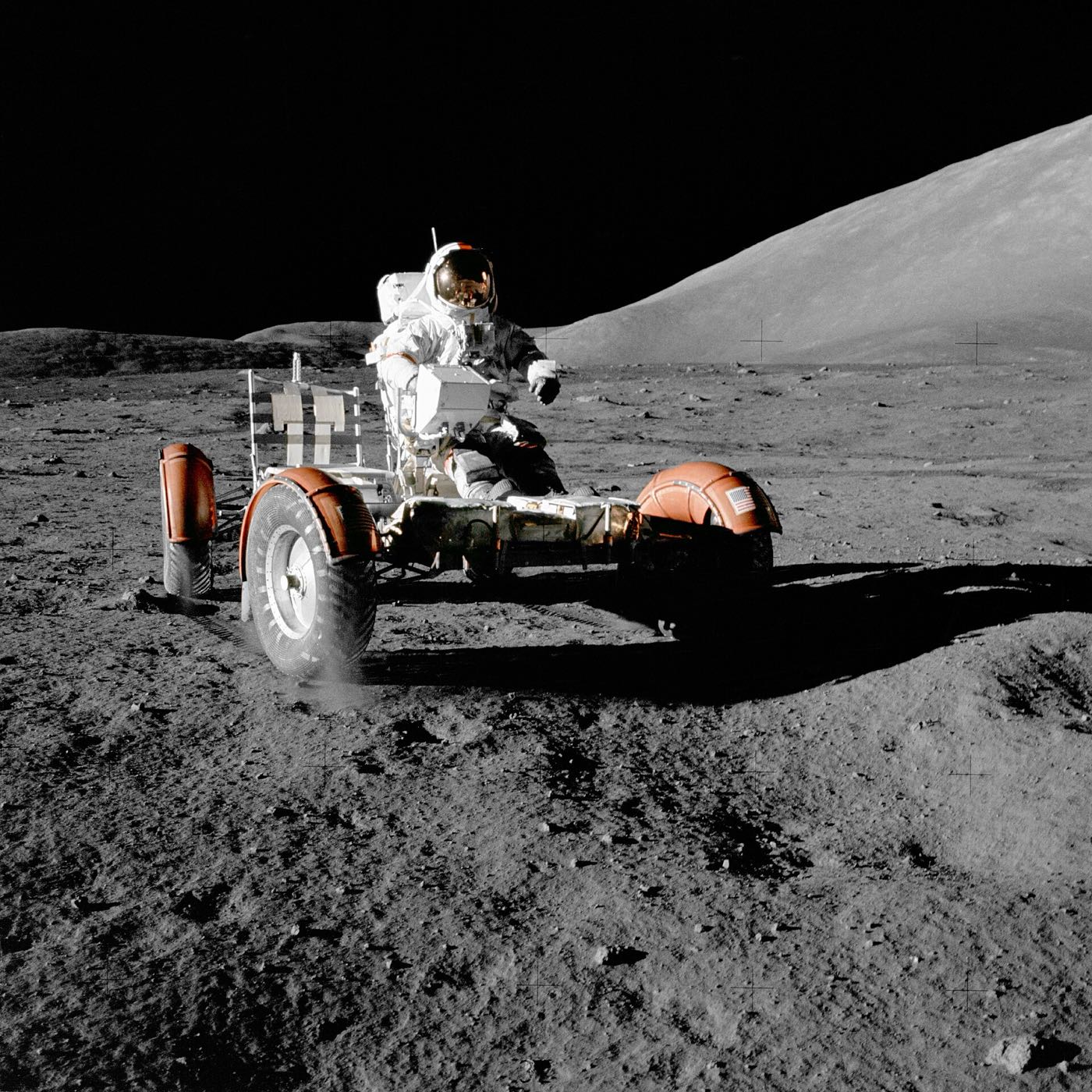
The Lunar Roving Vehicle was a folding, battery-powered rover that carried two Apollo astronauts across the Moon.
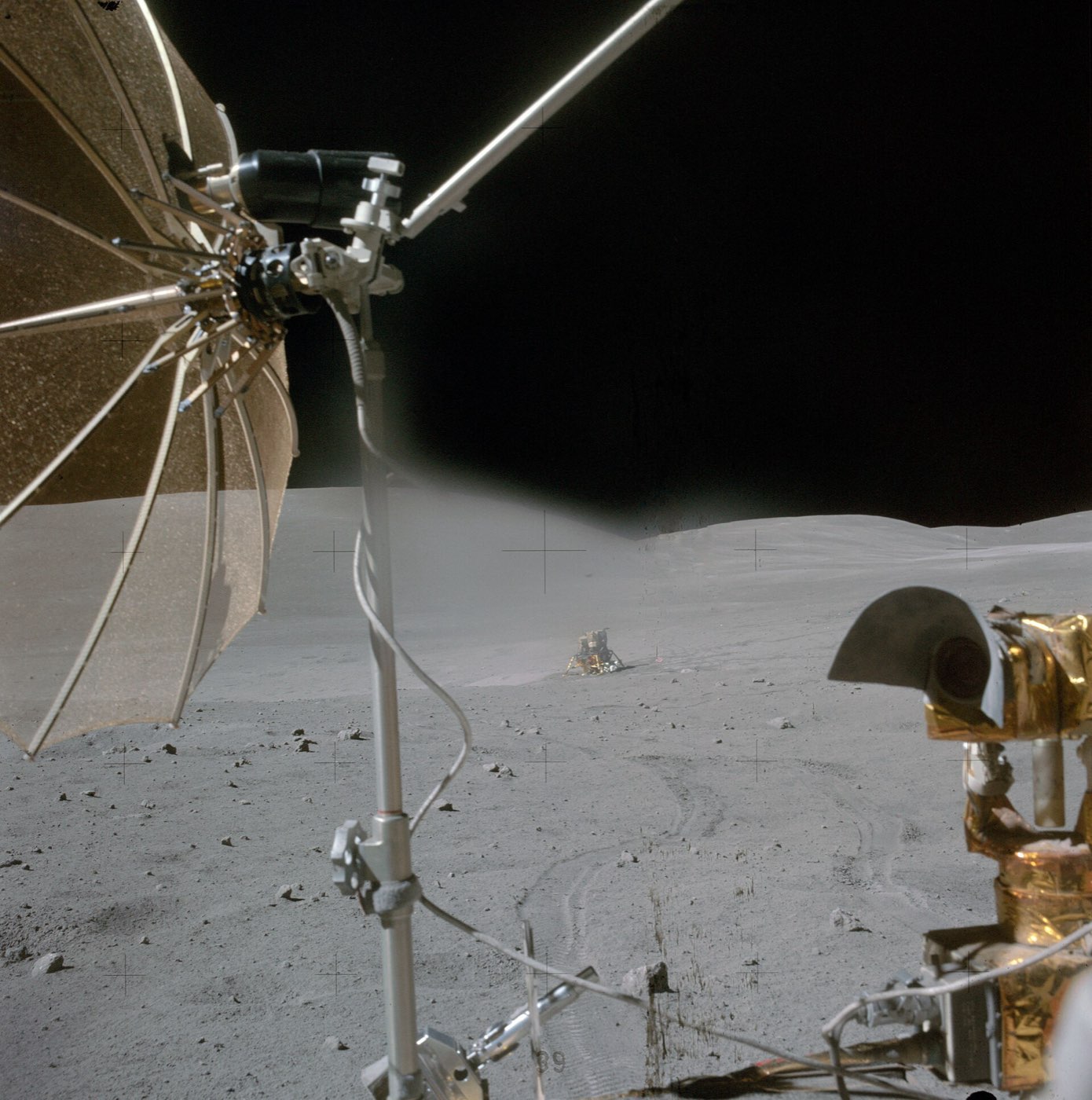
boeing-lunar-roving-vehicle Used on Apollo 15, 16 and 17, the rover let crews drive kilometres from their lander. Boeing built it, and General Motors made the wheels. The frame folded to fit in the Lunar Module bay, yet the rover could still carry two astronauts over rough ground.
The frame was welded aluminium tubing. The wheels were springy wire mesh, woven from zinc-coated steel wire, with titanium chevrons across half the contact area for grip. Power came from two non-rechargeable silver-zinc batteries, and every wheel had its own electric motor.
Battery-powered rover that let Apollo 15, 16 and 17 crews drive kilometres from the lander. Its folding aluminium frame and springy wire mesh wheels let it fit in the Lunar Module bay and still carry two astronauts over rough ground.
The frame was made of aluminium alloy 2219 in welded tubing assemblies. It was 3.1 m long with a wheelbase of 2.3 m, and its maximum height was 1.14 m.
Each tyre was woven from zinc-coated steel wire. Titanium chevrons covered half of the contact area to give traction. The springy mesh let the rover carry two astronauts over rough ground.
Two 36 V silver-zinc batteries with a potassium hydroxide electrolyte powered the rover, and they could not be recharged. Each wheel had a DC series-wound motor of 0.25 horsepower, able to turn at 10,000 rpm.
The welded tubing of the frame.
Woven into the mesh of each wheel.
The chevron treads, which covered half of each wheel's contact area.
The two 36 V batteries, which used potassium hydroxide as the electrolyte and could not be recharged.
Boeing built the rover and General Motors made its wheels. One went to the Moon on each of Apollo 15, 16 and 17, stowed in the bay of the Lunar Module. On Apollo 17 the rover covered 35.9 km in 4 hours 26 minutes of driving.
NASA
Titanium. Here: Tread chevrons; Inner frame (MESH-1 prototype wheel; flight material not stated). There: Outboard engine fairings and stabilization fins; Control pressure nitrogen bottle (2,200 cubic in) and more.
Aluminium. Here: Hub and wheel disc (MESH-1 prototype wheel). There: S-IVB forward skirt, aft skirt, thrust structure and aft interstage.
aluminium alloy 2219. Here: Frame. There: LOX tank skin.
fiberglass. Here: Fenders. There: Boost protective cover.
silver-zinc cells with potassium hydroxide electrolyte. Here: Batteries (2). There: Flight batteries (x4 zinc-silver oxide); Flight batteries (x4 zinc/silver-oxide) and more.
Grumman / NASA
Titanium. Here: Tread chevrons; Inner frame (MESH-1 prototype wheel; flight material not stated). There: Some brackets and fasteners (lunar module); Descent-stage hot-area structure and more.
Aluminium. Here: Hub and wheel disc (MESH-1 prototype wheel). There: Cabin front-face, RCS cluster trusses, decks and bulkheads; Micrometeoroid shield and more.
aluminium alloy 2219. Here: Frame. There: Ascent-stage cabin, midsection and aft equipment bay shell.
silver-zinc cells with potassium hydroxide electrolyte. Here: Batteries (2). There: Descent stage batteries (x5, silver-zinc); Ascent stage batteries (x2, silver-zinc).
North American Aviation
Titanium. Here: Tread chevrons; Inner frame (MESH-1 prototype wheel; flight material not stated). There: Helium tanks (2); Fuel tanks (2) and more.
Aluminium. Here: Hub and wheel disc (MESH-1 prototype wheel). There: Radial beams; Crushable ribs (x4) and more.
fiberglass. Here: Fenders. There: Thruster outer wrap.
silver-zinc cells with potassium hydroxide electrolyte. Here: Batteries (2). There: Silver oxide-zinc batteries in the command module (x5).
NASA
Titanium. Here: Tread chevrons; Inner frame (MESH-1 prototype wheel; flight material not stated). There: Heat shield skeleton.
Aluminium. Here: Hub and wheel disc (MESH-1 prototype wheel). There: Pressure vessel (seven large pieces, friction-stir welded); Backbone assembly (floor structure) and more.
aluminium alloy 2219. Here: Frame. There: Longeron (Orion ground test article).
ESA
Titanium. Here: Tread chevrons; Inner frame (MESH-1 prototype wheel; flight material not stated). There: Focal plane interconnecting structure; Instrument mounting feet / flexures and more.
Aluminium. Here: Hub and wheel disc (MESH-1 prototype wheel). There: Telescope (structure and mirrors, 3 telescopes).
ESA / Airbus
Titanium. Here: Tread chevrons; Inner frame (MESH-1 prototype wheel; flight material not stated). There: OBA unit attachment fittings; Instrument support bipods (3).
Aluminium. Here: Hub and wheel disc (MESH-1 prototype wheel). There: Main structure tube; Equipment box (EQB) and more.
The alloy of the hub, rim and fixed hardware on the flight vehicles is not stated, nor are the materials of the seat, floor panels, electronics and antenna mesh. The hub and inner frame are known only from a prototype wheel.
What is written above is built from these numbers and quotes. Each row links to the page it was taken from. Get all of it as JSON, or ask our MCP server.
| What | Value |
|---|---|
| Mass | 210 kg |
| Payload capacity | 490 kg on the lunar surface |
| Frame length | 3.1 m, wheelbase 2.3 m |
| Height | 1.14 m maximum |
| Power | Two 36 V silver-zinc batteries |
| Motors | One 0.25 hp DC motor per wheel |
| Wheel size | 81.3 cm diameter, 22.9 cm wide |
| Maximum speed | 16 km/h |
| Destination | Moon; flown on Apollo 15, 16 and 17 |
| Total distance Apollo 17 | 35.9 km |
Each material named in the sources: where it is used here, which other products use it, and its key numbers when its material page exists.
Used in 2 partsTread chevrons · Inner frame (MESH-1 prototype wheel; flight material not stated)
Used in 2 partsWheel carcass (mesh) · Tire (as described by NASA NSSDC)
Used in 1 partHub and wheel disc (MESH-1 prototype wheel)
Used in 1 partFrame
Used in 1 partFenders
Used in 1 partBatteries (2)
Frame, wheel wire, treads and batteries have a stated material; the hub, inner frame and fenders are prototype or museum-unit descriptions.
| Part | Material | Finish and standard | Made by |
|---|---|---|---|
| Frame“The frame was made of aluminum alloy 2219 tubing welded assemblies” | aluminium alloy 2219aluminium-2219 | — | — |
| Part | Material | Finish and standard | Made by |
|---|---|---|---|
| Wheel carcass (mesh)“800 strands of 0.838 mm, zinc coated piano wire” | zinc-coated piano wirezinc-coated-piano-wire | — | General Motors wire mesh wheel; NSSDC gives 0.083 cm steel strands |
| Tire (as described by NASA NSSDC)“tire made of zinc coated woven 0.083 cm diameter steel strands” | zinc-coated steel wirezinc-coated-piano-wire | — | — |
| Tread chevrons“Titanium chevrons covered 50% of the contact area to provide traction.” | titaniumtitanium | — | — |
| Inner frame (MESH-1 prototype wheel; flight material not stated)“a titanium inner frame, and an aluminum hub and wheel disc” | titaniumtitanium | — | — |
| Hub and wheel disc (MESH-1 prototype wheel)“an aluminum hub and wheel disc” | aluminium (alloy not stated)aluminium | — | — |
| Part | Material | Finish and standard | Made by |
|---|---|---|---|
| Batteries (2)“two 36-volt silver-zinc potassium hydroxide non-rechargeable batteries” | silver-zinc cells with potassium hydroxide electrolytesilver-zinc-battery | — | — |
| Part | Material | Finish and standard | Made by |
|---|---|---|---|
| Fenders“Aluminum chassis, zinc-coated piano wire wheels, fiberglass fenders, canvas, nylon, brass” | fiberglassfiberglass | — | Smithsonian qualification test unit listing |
| Part | Material | Finish and standard | Made by |
|---|---|---|---|
| High-gain antenna dish“A large mesh dish antenna was mounted on a mast” | mesh (material not stated) | — | — |
Alloy of hub, rim and fixed hardware on the flight vehicles not stated in sources found; the MESH-1 hub and inner frame are from a prototype description in NASA/TM-2009-215798. Antenna mesh, seat, floor panels and electronics materials not found. Launch dates not stated on the NSSDC page. Original Boeing/GM reports not retrieved. Smithsonian fender and canvas/nylon/brass items are from the museum qualification test unit.
Maker credit: Boeing (wheels by General Motors). Collected from public pages and documents, checked 4 Nov 2026.
Published · Updated