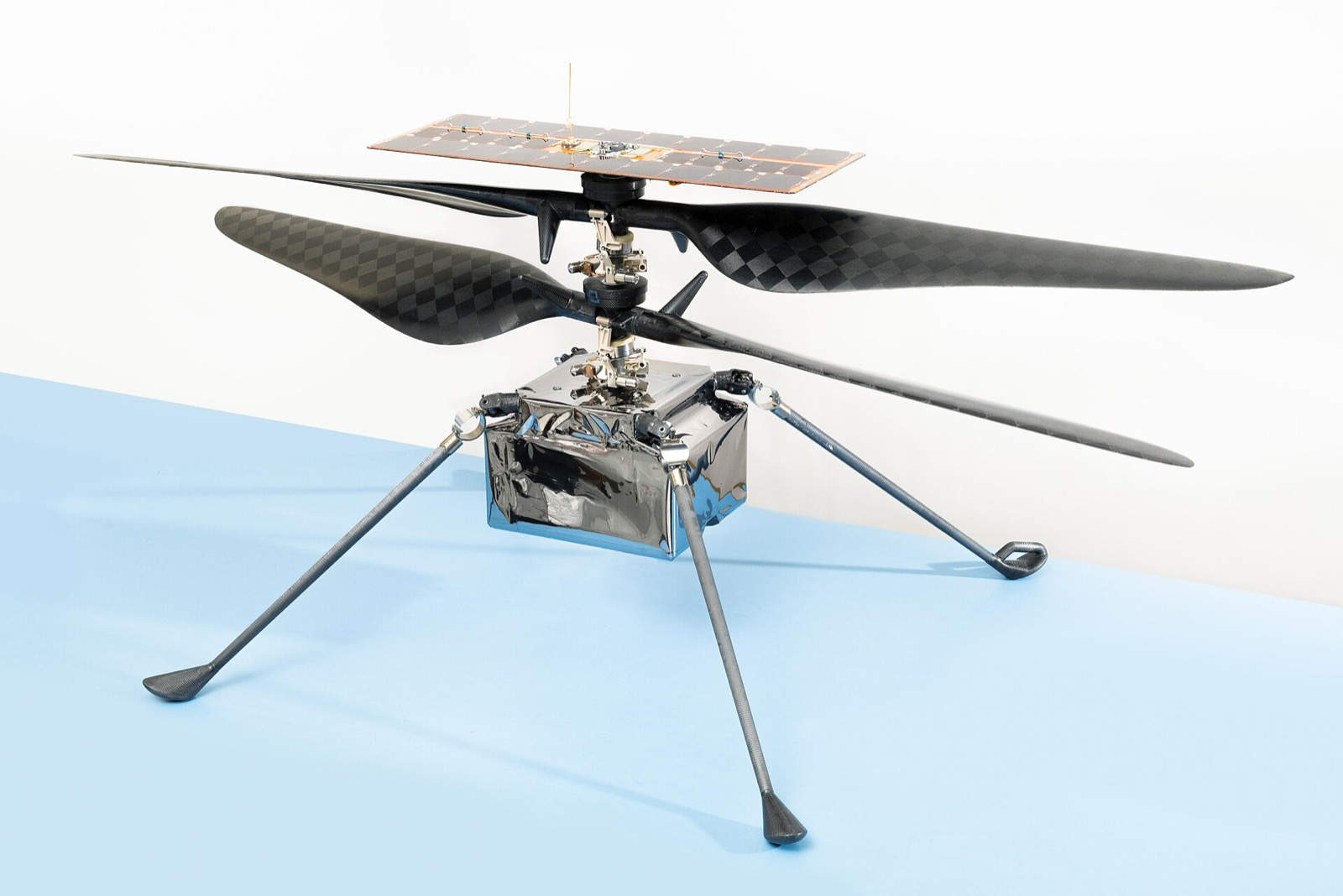
Ingenuity was a NASA technology demonstration that proved powered, controlled flight in the thin air of Mars. Built by NASA and the Jet Propulsion Laboratory, it rode on the belly of the Perseverance rover and flew short scouting flights from the surface. It made 72 flights between 19 April 2021 and 18 January 2024.
Its low mass of 1.8 kg drove the choice of materials. The two 1.2 m rotors, one above the other, spin at up to 2,400 revolutions per minute and have blades with a foam core wrapped in carbon fibre. The legs are carbon fibre too, and the power comes from lithium-ion cells and a small solar panel.
Application
Ingenuity was a technology demonstration that proved powered, controlled flight in the thin Martian air. It rode on the belly of Perseverance and flew short scouting flights from the surface. Its low mass drove its materials: carbon-fibre composite rotors and legs, lithium-ion cells and a small solar panel.
Photos
How it is built
Rotors
Each rotor is 1.2 m long, and its blades have a foam core wrapped in carbon fibre. In the design, most of the rotor's primary structure is carbon fibre composite, and the motor windings use rectangular copper wire.
Rotor blades (upper and lower)
Blade foam core
Rotor primary structure
Rotor motor windings
Legs and mast
The landing gear is four legs made of tapered carbon fibre and epoxy tubes, which absorb the loads of landing. A central mast, a hollow tube, runs from the top of the helicopter to the bottom.
Legs (4)
Central mast
Power and warmth
The battery is six lithium-ion cells, and a solar panel recharges it between flights. The panel's cells are inverted metamorphic cells from SolAero Technologies. At night, Kapton film heaters attached to the cells keep the battery warm.
Battery cells (6)
Solar panel cells
Battery heaters
Where the parts areNumber of parts we have listed in each group
The rectangular wire in the motor windings, and the wiring that comes down through the mast.
Lithium-ion cells
The six cells of the battery.
Inverted metamorphic solar cells
The cells of the solar panel, made by SolAero Technologies.
Kapton film
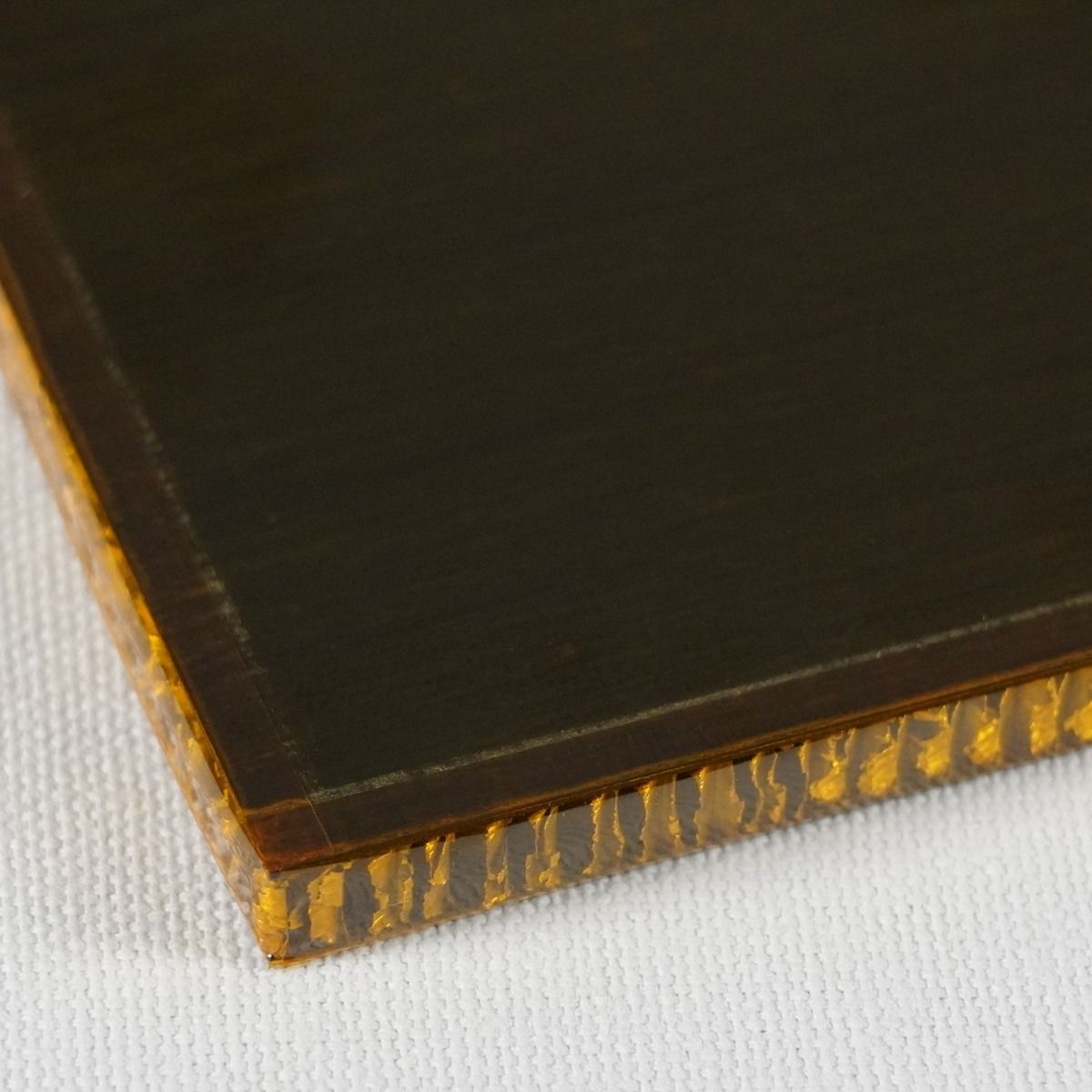
The film heaters attached to the battery cells. The grade is not stated.
The materials by familyHow many of the parts that name a material use each one
Carbon fibre3
Other3
Copper2
Polyimide1
How it connects to other things
Ingenuity travelled to Mars on the Perseverance rover and rode on its belly. NASA and the Jet Propulsion Laboratory built it. SolAero Technologies made the solar cells, and the battery uses Sony cells. The outermost thermal coating on the fuselage comes from Sheldahl.
Carbon fibre. Here: Rotor blades (upper and lower); Rotor primary structure and more. There: Face skin carbon fibre; HR40 / NB321 unidirectional prepreg and more.
Copper. Here: Rotor motor windings; Wiring through mast to ECM. There: Copper traces in the skins.
Kapton film. Here: Battery heaters. There: Kapton edging on STRATOSubstrate panels.
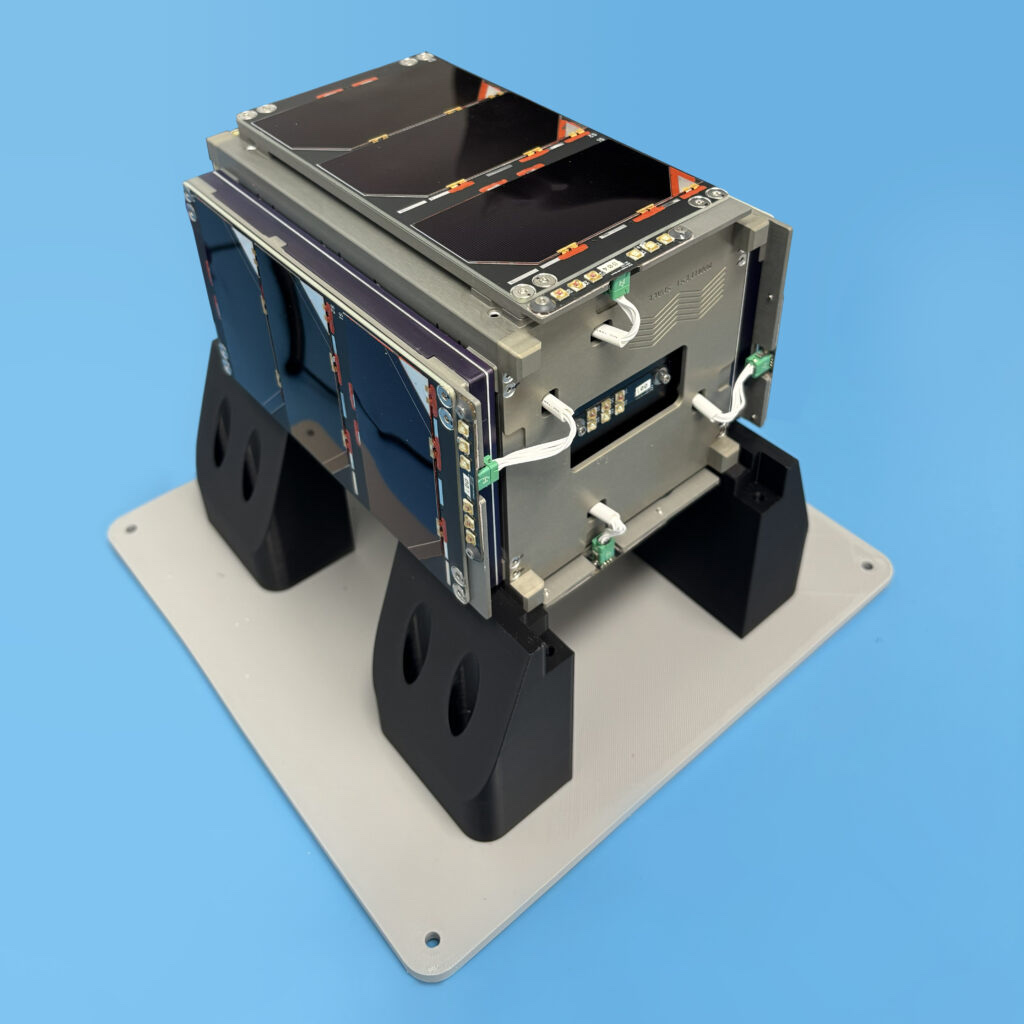
Carbon fibre. Here: Rotor blades (upper and lower); Rotor primary structure and more. There: TechEdSat secondary structural pieces.
Copper. Here: Rotor motor windings; Wiring through mast to ECM. There: Frangibolt actuator cylinder.
What we do not know
Most of what is known about its materials comes from the design stage, before the flight hardware was final, so the flown parts may differ. The foam in the blades, the mast tube, the motor magnets, the base under the solar cells and the exact grade of Kapton are not stated.
The detailed data
What is written above is built from these numbers and quotes. Each row links to the page it was taken from. Get all of it as JSON, or ask our MCP server.
Features
Solar panel recharges Li-ion batteries between flights
Landing gear: four tapered carbon-fibre/epoxy legs absorb landing loads
Battery heated at night by Kapton film heaters
Specifications
What
Value
Mass
1.8 kg (4 lb)
Rotors
Two rotors, 1.2 m long, up to 2,400 rpm
First flight
19 April 2021
Last flight
18 January 2024
Flights
72
Battery mass (6 cells)
273 g (design paper)
Solar panel
680 cm2 substrate, 544 cm2 active cell area (design paper)
Materials in detail
Each material named in the sources: where it is used here, which other products use it, and its key numbers when its material page exists.
Carbon fibre (PAN-based, pitch-based) and carbon/carbon
Rotor, legs, battery, solar cells and heaters have stated materials; the mast, fuselage frame and foam do not. Much of the detail is from the 2018 design paper.