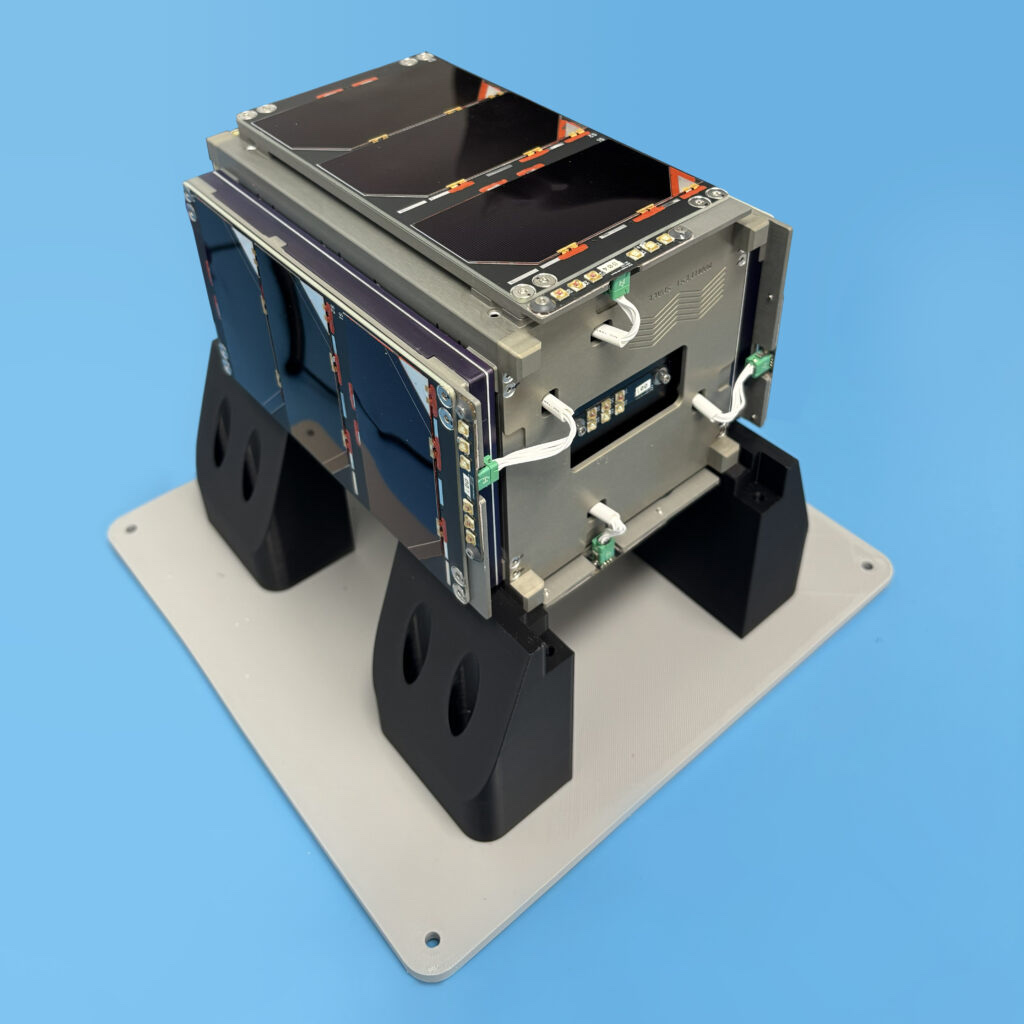
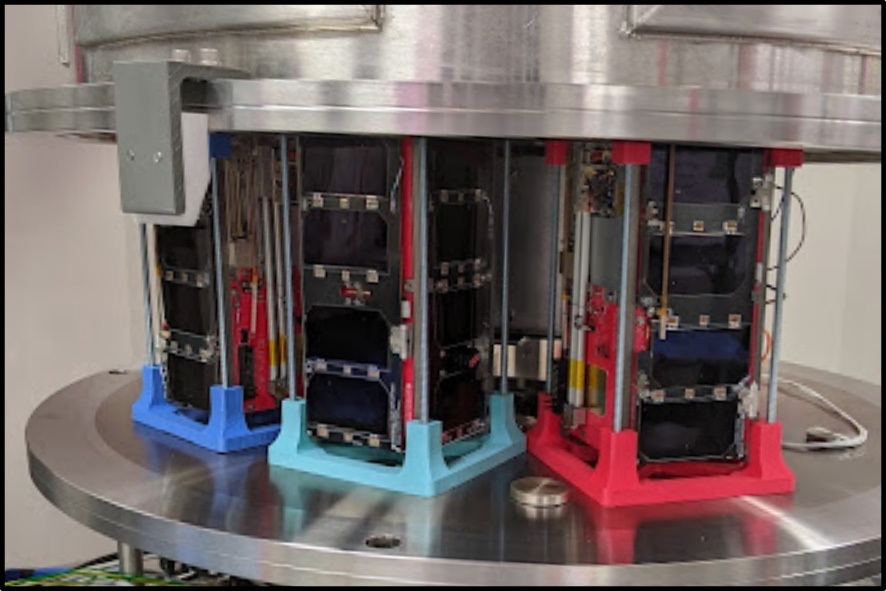
Sparrow is a small satellite that Blackwing Space sells online, off the shelf, at published prices. A team builds one payload module and plugs it into the platform, which supplies the power and the flight computer. There are two sizes. The 1U is 113.5 by 100 by 100 millimetres, and the 1U XL is 170 millimetres long.
The frame is 6061 aluminium with a hard anodised finish. The flight computer, called Rook, is a four-layer circuit board that grew out of an open-source CubeSat computer named PyCubed. Blackwing publishes the payload connection in detail, with a 3D model for checking fit before anything is built.
Application
A ready-made 1U to 1.5U XL nanosatellite platform for teams that want to fly a payload without building the satellite around it. The payload plugs into the platform through a single connector with documented power rails, so a team can design and test its own module against the published interface. Useful for universities, startups and research groups proving new hardware in orbit.
Photos
How it is built
Frame and side panels
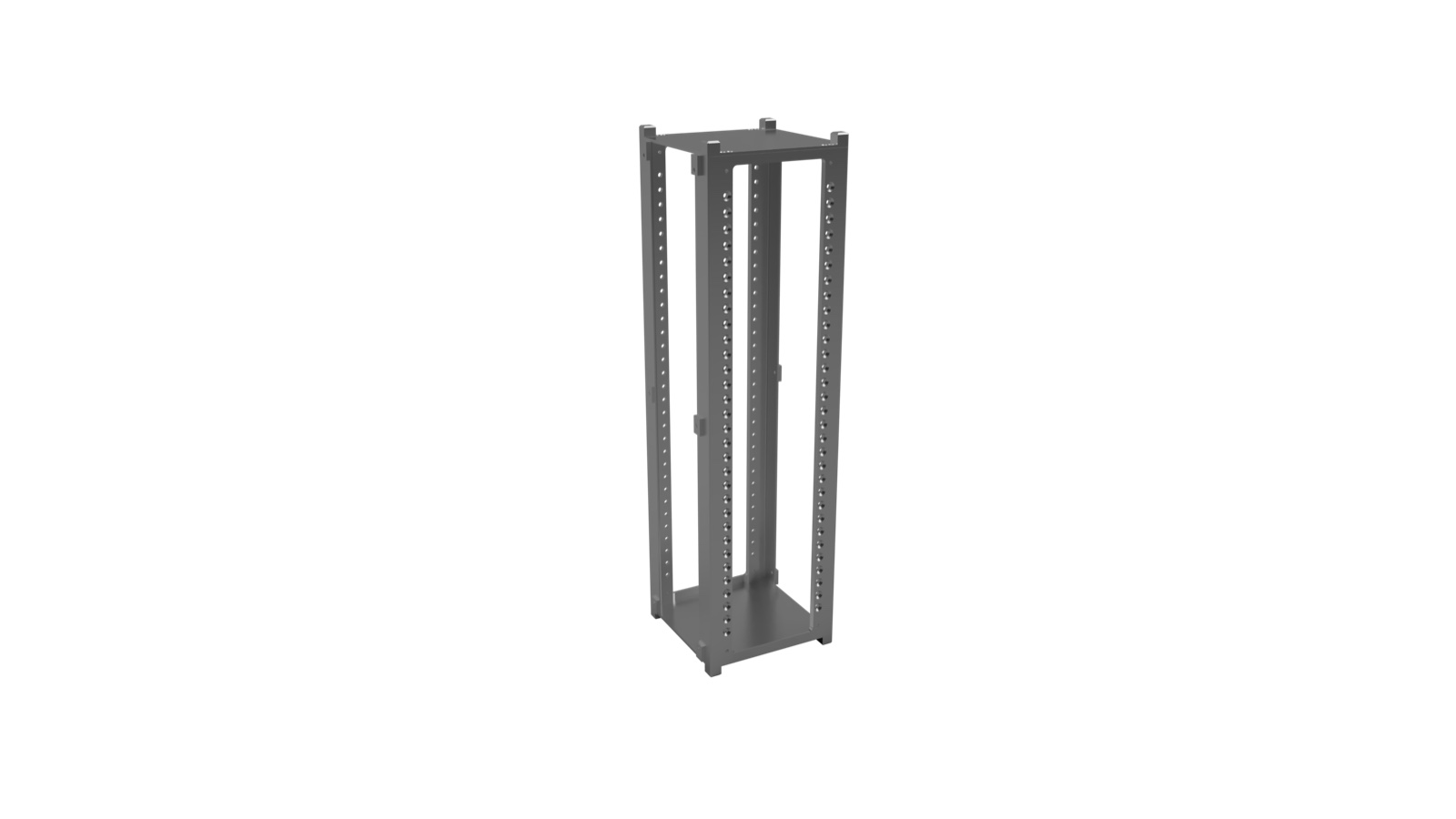
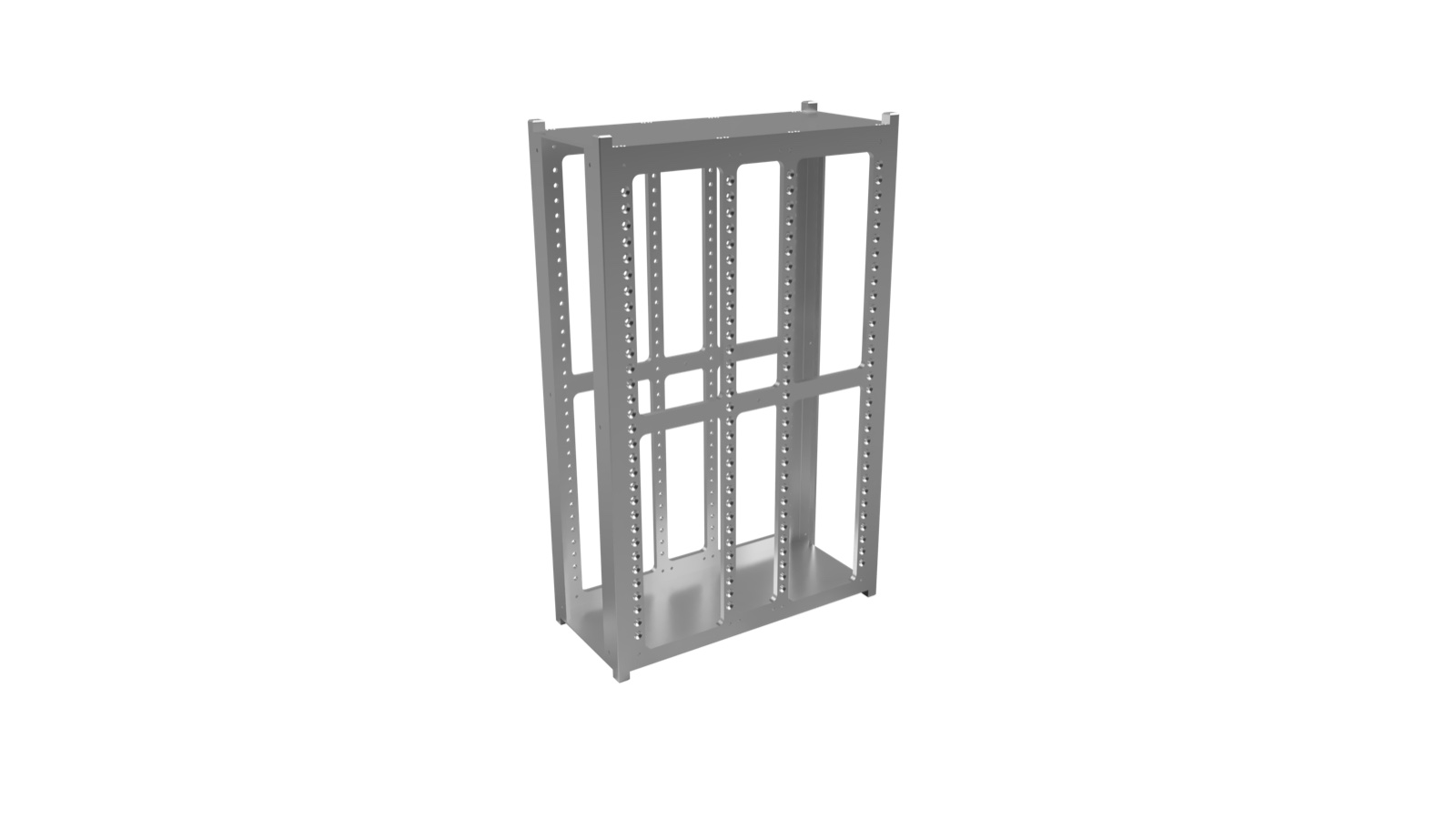
Each size has a 6061 aluminium frame, supplied with fasteners and assembly instructions. Optional side panels arrive blank, ready for the customer to modify. The frame has built-in mounting and electrical connections for deployment switches, solar arrays, a de-orbiting device, antennas and radiators.
Sparrow 1U Chassis
Sparrow 1U XL Chassis
Sparrow 1U Chassis optional side panels
Sparrow 1U XL Chassis optional side panels
Chassis interface provisions (1U and 1U XL)
Payload module
The standard payload module is a two-piece housing machined from 6061 aluminium, a cover and an enclosure, both anodised black. It includes an interface board called Dodo and a 40-pin Samtec connector. Blackwing's catalogue has a module built around a Raspberry Pi Compute Module 5, which relies on the chassis to shed its heat.
Payload Module Top (cover)
Payload Module Bottom (enclosure)
Standard DODO interface PCB
Avionic interface connector
Raspberry Pi Compute Module 5 payload module (Broadcom BCM2712)
Flight computer
Rook is the platform's flight computer, combining data handling and power control on one four-layer board of FR-4, a glass-epoxy laminate. Its processor runs CircuitPython or embedded C. A persistent memory chip called MRAM keeps logs and safe-mode flags, and two watchdogs, one inside the processor and one outside it, handle recovery.
Rook onboard computer (one per platform)
Rook printed circuit board
Flight processor, Microchip ATSAMD51J20A
Persistent memory, Everspin MR25H40 MRAM
Watchdogs (SAMD51 internal and MAX706 external)
Power and battery
A charge controller takes power from the solar panels or a USB-C cable and charges the battery. Six ideal-diode controllers isolate the solar inputs, so a shaded panel cannot feed current backwards. The battery is a Puffin Pack of lithium-ion 18650 cells.
There are two radios: Warbler for UHF and Hummingbird for LoRa. Solar panels can be fixed to the body or carried on one or two deployable wings. The larger 1U XL can also take an Iridium backup link, three-axis pointing control and a passive drag sail for the FCC's five-year lifetime rule.
Warbler UHF radio
Hummingbird LoRa radio
Deployable solar panel wings (1 or 2 panels)
Iridium transceiver (offered on Sparrow 1U XL, not on the 1U)
Passive drag sail (Sparrow 1U XL and larger)
Where the parts areNumber of parts we have listed in each group
The draft specification describes triple-junction gallium arsenide cells for fixed or deployable solar arrays.
The materials by familyHow many of the parts that name a material use each one
Other14
Aluminium2
Polymers and foams2
Glass fibre1
Semiconductors1
How it connects to other things
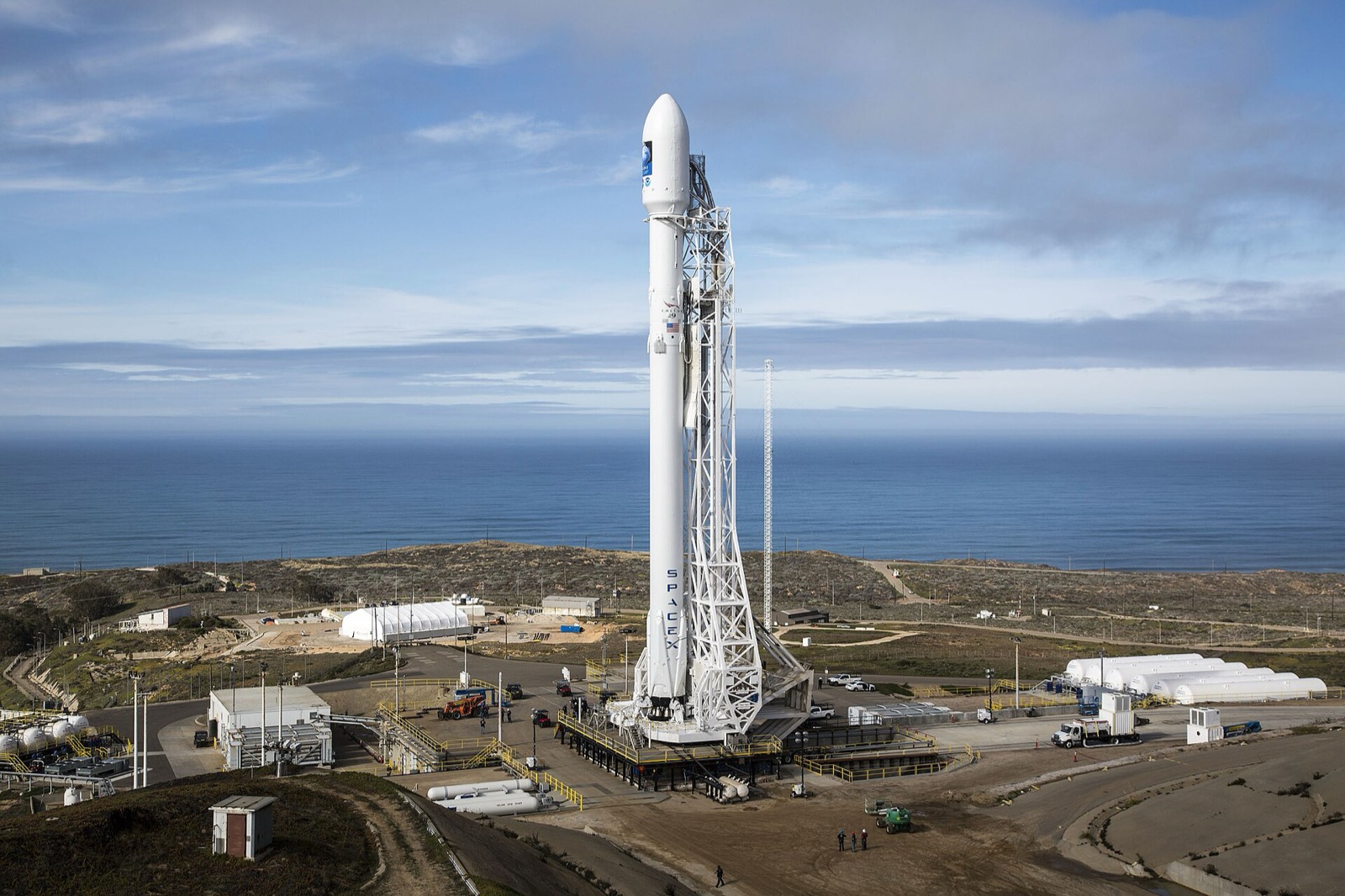
Blackwing says Sparrow complies with the CubeSat Design Specification and the PC/104 board format. It names four compatible dispensers, from SEOPS, Maverick Space Systems, Exolaunch and Spacemind. Sparrow's first flight was Baby Bird, the company's first orbital mission. It launched from Vandenberg on SpaceX's Transporter-18 rideshare, a shared launch, with a Manifest Space optical beacon, a Celestis memorial payload and Melagen Labs' radiation-shielding material on board.
Used in
Baby Bird (Blackwing Space satellite)
First Sparrow flight; Baby Bird is the company's inaugural orbital mission
Orbital Software Demonstration Mission (Parsimoni SpaceOS), planned
Planned, not flown: targeting Q3 2027 on a Sparrow 2U and the CM5 module
Carries
Manifest Space optical beacon payload
Primary technology demonstration on Baby Bird
Celestis Memorial Spaceflight payload
Secondary payload on Baby Bird (the 25th Celestis flight)
Melagen Labs MLC2 radiation-shielding material
Secondary payload on Baby Bird
Launched on
SEOPS Equalizer Flex (deployer)
Compatible deployer: 1U to 12U, tab and rail, up to 96U per port, flown on SpaceX Falcon 9 rideshare
Maverick Space Systems NLAS (deployer)
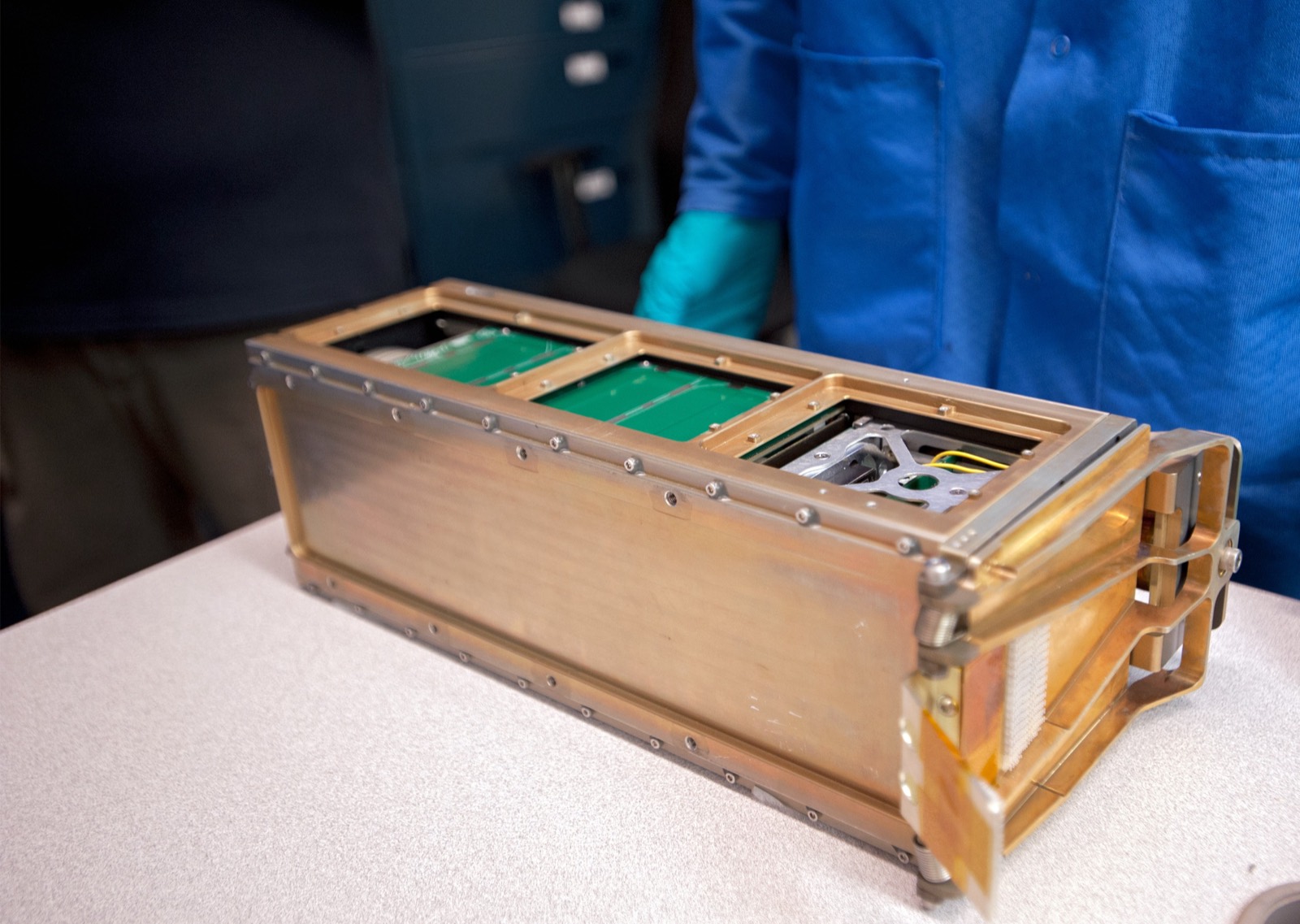
Compatible deployer: ruggedized 6U (or 2x3U) dispenser with NASA Ames NLAS heritage
Aluminium alloy 6061Lithium-ion 18650 cells, two in seriesGallium arsenide
Where each one is used
Aluminium alloy 6061. Here: Sparrow 1U Chassis; Sparrow 1U XL Chassis and more. There: 1U +X frame; Card wedge (card clamp) and more.
Lithium-ion 18650 cells, two in series. Here: Puffin battery pack (Puffin Pack); Draft power module cells (Li-ion or LiFePO4). There: 18650 cell (Tenergy, 4 per card); Battery cell model (README).
Gallium arsenide. Here: Draft solar panel cells (triple-junction GaAs). There: Solar cell (SpectraLabs XTE-SF, 2 per module); Solar cell technology.
Blackwing doesn't say what the side panels or fasteners are made of, or which kind of anodising the frame gets. It hasn't named the makers of the solar cells or the battery cells. Its own pages disagree on the payload volume and on how much current each power line can carry.
The detailed data
What is written above is built from these numbers and quotes. Each row links to the page it was taken from. Get all of it as JSON, or ask our MCP server.
Features
Payload module plugs into the platform avionics enclosure through a single Samtec board-to-board connector
Each power rail can be independently enabled or disabled by the platform
STEP template to validate fit before fabrication
Standardised 0.3U mounting envelope with defined metric fastener locations
The chassis SKUs, the two payload-module housings and the module assembly drawing each state a material and finish, and the connector is named by Samtec part number, but there is no full platform parts list. Components, suppliers and links were added from public sources. A material is left blank where no source states it.
ANODIZE PER MIL-PRF-8625, TYPE II, CLASS 2, COLOR: BLACK; SEAL PER MIL-PRF-8625 WITH DI WATER ONLY; mask all threaded holes prior to anodize · MIL-PRF-8625 Type II Class 2 (black)
ANODIZE PER MIL-PRF-8625, TYPE II, CLASS 2, COLOR: BLACK; SEAL PER MIL-PRF-8625 WITH DI WATER ONLY; mask all threaded holes prior to anodize · MIL-PRF-8625 Type II Class 2 (black)
Deployable solar panel wings (1 or 2 panels)Optional deployable arrays to raise orbit-average power; body-mounted panels are the alternative“Deployable Solar Panels (1 Panel)”
Structure option: PEEK frameAlternative to aluminium in the draft structure specification (page marked draft, subject to change)“Material: Aluminum 6061-T6 or PEEK”
MIL-PRF-8625 Type II Class 2, black, DI-water seal · Payload Module Top and Bottom housings
ASME Y14.5 (geometric tolerancing) · Payload module top/bottom drawings (not a material standard)
CubeSat specification (compliance claim only) · Chassis; the revision is not named
What the sources leave out
Connector side is contradictory: the interface guide (v0.3) says payload connector SFM-120-01-L-D and platform connector TFM-120-31-L-D, while the developer page says SFM-120-01-L-D is platform side and TFM-120-31-L-D payload side. The assembly drawing calls SFM-120-01-L-D the avionic interface connector. Not published: chassis anodize standard and class (shop pages say only 'hard anodized'; the payload housings are Type II Class 2, which is a conventional rather than hard anodize), fastener material and count for the chassis, side-panel material, the 'Anodized + Flight' vs 'Non-Flight' difference, PCB laminate, the STEP file carries no material data in its header, solar panels, battery (Puffin Pack), Rook OBC, antenna and radiator materials. Chassis pages say 'Aluminum 6061 T6 or T651' without stating which. The principles page mentions PEEK, ULTEM and carbon-fibre additive manufacturing as aspirations, not as parts. More detail: Blackwing publishes no bill of materials. Not stated anywhere read: chassis fastener count and material, side-panel material, anodize type, solar cell and panel supplier, Puffin Pack cell count and supplier beyond the Rook page line, radio and antenna parts, ADCS and propulsion suppliers, thermal coatings, adhesives. The Specifications page is marked draft and lists a PEEK and carbon composite option that the shop pages do not. The Sparrow pages disagree on payload volume (0.3U vs 0.5U) and rail currents. The chassis page for the 1U gives 'Standard 6U' with 1U dimensions. Baby Bird deployer model is not named; the press release has a dateline of October 2, 2026 but a page date of September 02, 2026. The FAQ section of the developer page contains unrelated NuSCIS text and was not used. More detail: Blackwing publishes no bill of materials. Not stated anywhere read: chassis fastener count and material, side-panel material, anodize type, solar cell and panel supplier, Puffin Pack cell count and supplier beyond the Rook page line, radio and antenna parts, ADCS and propulsion suppliers, thermal coatings, adhesives. The Specifications page is marked draft and lists a PEEK and carbon composite option that the shop pages do not. The Sparrow pages disagree on payload volume (0.3U vs 0.5U) and rail currents. The chassis page for the 1U gives 'Standard 6U' with 1U dimensions. Baby Bird deployer model is not named; the press release has a dateline of October 2, 2026 but a page date of September 02, 2026. The FAQ section of the developer page contains unrelated NuSCIS text and was not used.