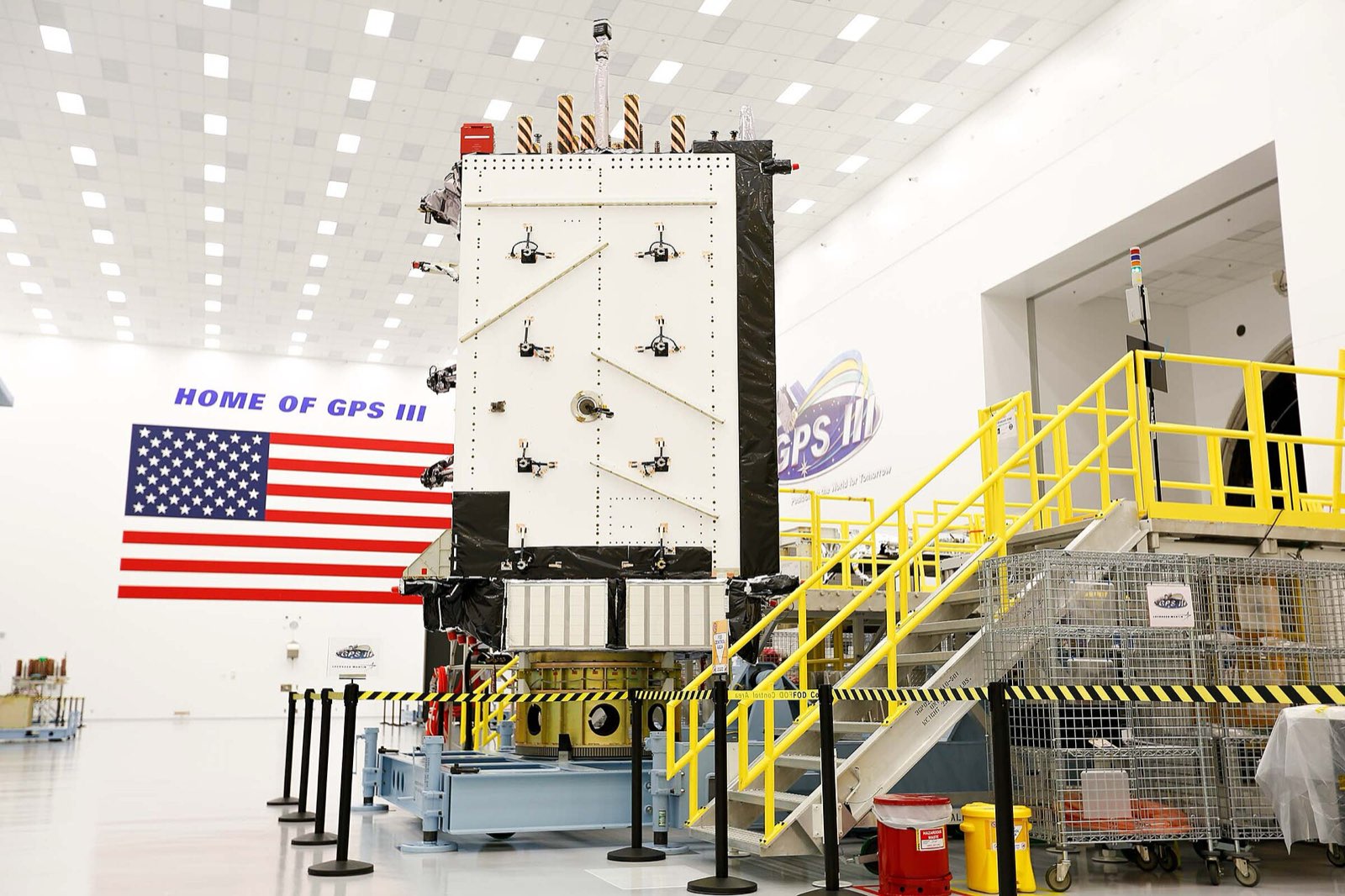
GPS III is a navigation satellite for the US Space Force. Its signals give military and civil users their position and the time, and this generation adds a civil signal, better accuracy and more resistance to jamming. Lockheed Martin built the satellite body, or bus, on its A2100 design, and ITT built the navigation payload.
Each satellite hosts three enhanced rubidium atomic clocks, with a fourth slot kept for an experimental clock design such as a hydrogen maser. The tanks that hold the fuel and the pressurising gas are made of lightweight, high-strength composite. One antenna has eight deployable elements of the jack-in-the-box type.
Application
Navigation satellite for the GPS constellation, giving positioning and timing signals to military and civil users. GPS III adds a civil signal, better accuracy and anti-jamming, with a 15-year design life.
Photos
How it is built
Navigation payload
The payload computer, called the mission data unit, includes the waveform generator first used on the GPS IIR-M satellites. L-band transmitters send the L1, L2, L3 and L5 signals. Three enhanced rubidium atomic clocks keep time, and a fourth slot is kept free for an experimental clock.
Atomic frequency standards (3)
Navigation payload element (NPE)
Mission data unit (MDU) payload computer
L-band transmitters (L1, L2, L3, L5)
Fourth clock slot (experimental frequency standard)
Engine, thrusters and tanks
A liquid apogee engine handles the final move into orbit. Thrusters of 5 lbf, or pounds of force, make the large manoeuvres, and the smaller 0.2 lbf thrusters handle coarse ones such as periodic station keeping. Orbital ATK made the propellant and pressurant tanks from lightweight, high-strength composite.
Liquid apogee engine (LAE)
5-lbf thrusters
0.2-lbf thrusters
Propellant and pressurant tanks
Power and pointing
Power comes from solar arrays, batteries and a power regulation unit. To control its orientation the satellite has coarse sun sensors, earth sensors and an inertial measurement unit, with reaction wheels and magnetic torque rods for fine manoeuvres.
Solar arrays
Power regulation unit
Coarse sun sensors, earth sensors and inertial measurement unit
Reaction wheels
Magnetic torque rods
Antennas and links
The antenna subsystem has an Earth-coverage L-band panel, S-band antennas and UHF antennas. A further antenna has eight deployable elements of the jack-in-the-box type, designed and made by Northrop Grumman Astro Aerospace. General Dynamics was subcontractor for the communications payload.
Earth coverage L-band antenna panel
S-band antennas
UHF antennas
Deployable antenna with 8 JIB elements
Enhanced crosslink transponder subsystem (ECTS)
Where the parts areNumber of parts we have listed in each group
In the three enhanced atomic clocks on each satellite. SV10 also carried a demonstration digital rubidium clock.
Lightweight, high-strength composite
The propellant and pressurant tanks, made by Orbital ATK. The type of composite is not named.
Nickel-hydrogen cells
The 2011 design names these for the batteries, though lithium-ion was also mentioned as lighter. The flown chemistry is not confirmed.
The materials by familyHow many of the parts that name a material use each one
Other3
Nickel and cobalt alloys1
How it connects to other things
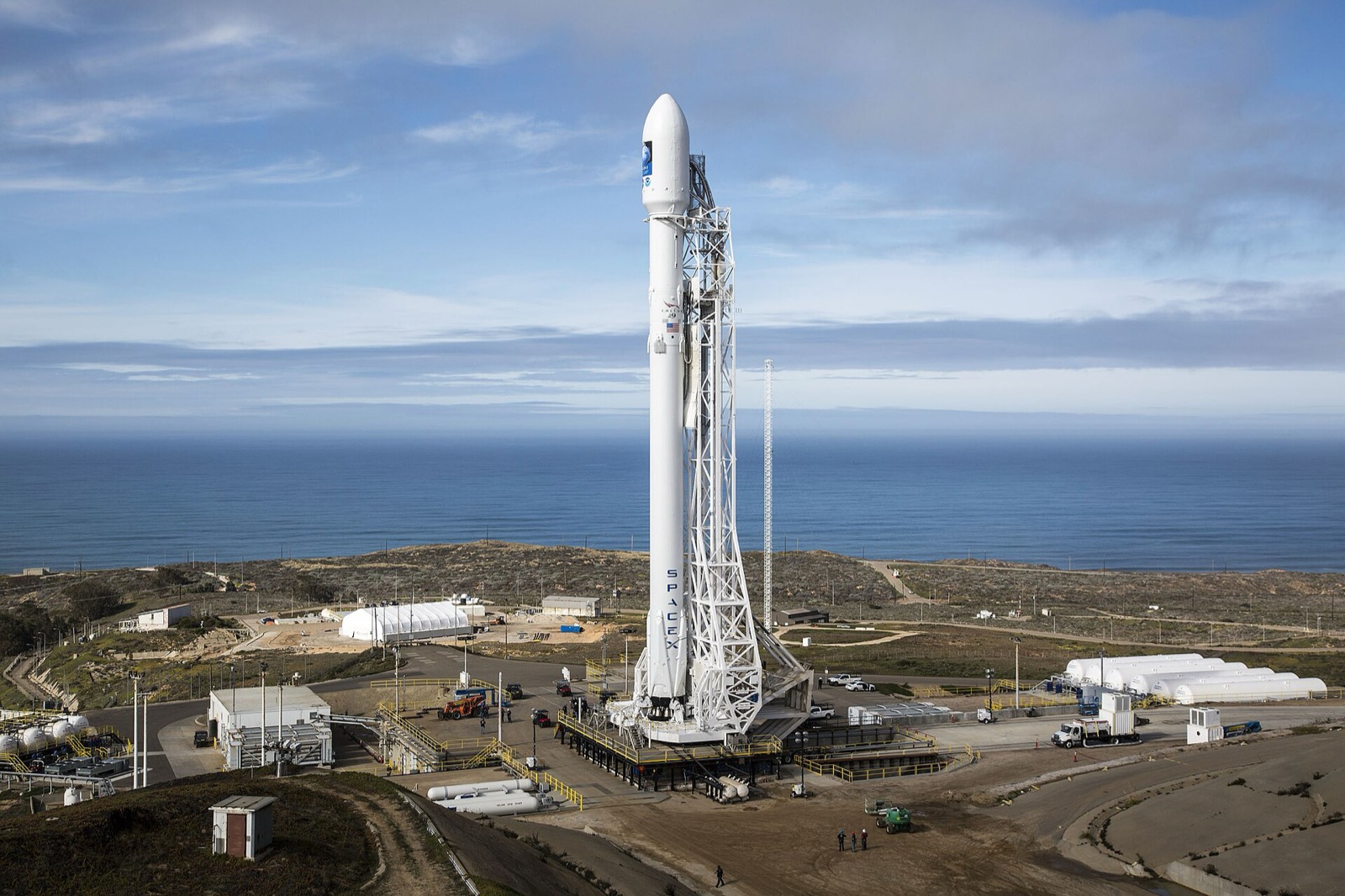
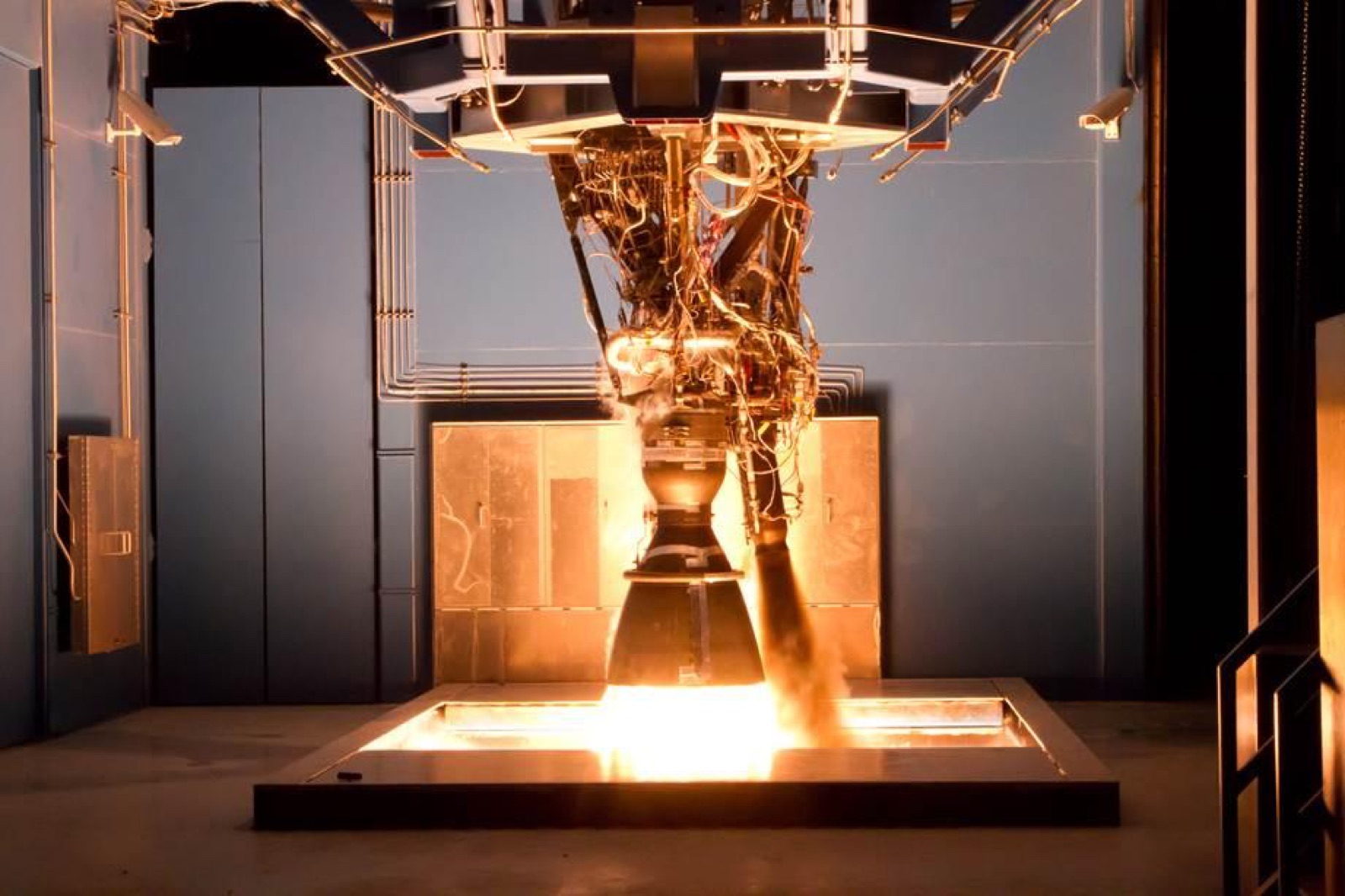
Most GPS III satellites flew on SpaceX Falcon 9 rockets, whose first stage burns nine Merlin engines. SV02 flew on a United Launch Alliance Delta IV in August 2019. Lockheed Martin built them on its A2100 bus, borrowing design elements from the earlier GPS Block IIR and IIR-M satellites. ITT, later L3Harris, built the navigation payload. SV10, launched on 21 April 2026, paves the way for the GPS IIIF series.
Falcon 9 first stage burns nine Merlin engines (2010 page; Block 5 flights use the Merlin 1D family, linked to the catalog hub)
Delta IV Medium+ (4,2) (United Launch Alliance)
launched SV02 in August 2019
Builds on
GPS Block IIR and IIR-M
design elements and the waveform generator come from the IIR and IIR-M satellites
Built on
Lockheed Martin A2100 bus
expandable GPS III design is based on the A2100 bus
Made or supplied by
ITT / Exelis / Harris / L3Harris
navigation payload
General Dynamics
communications payload subcontractor
Orbital ATK (now Northrop Grumman)
composite propellant and pressurant tanks
Northrop Grumman Astro Aerospace
JIB deployable antenna elements
Operated by
Lockheed Martin Launch & Checkout (Denver) then U.S. Space Force
Lockheed provides early on-orbit operations before handover
What we do not know
Little is said about what the structure, panels, solar cells and thermal blankets are made of. Published figures for the satellite's mass do not agree, and the flight battery chemistry is unconfirmed. The description of the bus dates from the design stage, so the flown hardware may differ.
The detailed data
What is written above is built from these numbers and quotes. Each row links to the page it was taken from. Get all of it as JSON, or ask our MCP server.
Features
Navigation payload designed and built by ITT
Subsystems: attitude control, power, thermal, telemetry, propulsion and mechanical
Specifications
What
Value
Design life
15 years (12-year mean mission duration)
Bus
Lockheed Martin A2100
SV01 mass
About 4,400 kg (9,700 lb); secondary source
Atomic clocks
Three enhanced rubidium clocks per satellite
Final block launch
SV10 launched 21 April 2026
Launch mass (Wikipedia)
3,880 kg (8,550 lb)
Dry mass (Wikipedia)
2,269 kg (5,002 lb)
End-of-life power (Wikipedia)
4,480 W
Operational orbit
about 12,550 miles above Earth
Accuracy and anti-jamming
3x better accuracy and up to 8x improved anti-jamming
Navigation accuracy requirement
1.0 m user range error at 24 hours
M-code received power
at least -153 dBW at five degrees elevation
Production facility
GPS III Processing Facility near Denver, $128 million
Final launch
SV10, 21 April 2026, 2:53 a.m. ET
Mean mission duration
12 years, with a 15-year design life
Bus variant (Wikipedia)
A2100M
Materials in detail
Each material named in the sources: where it is used here, which other products use it, and its key numbers when its material page exists.
Only battery chemistry and clock element are named; structure materials are unpublished in sources found. Components, suppliers and links were added from public sources. A material is left blank where no source states it.
No structural, panel, solar-cell, thermal-blanket or tank material is stated in the Lockheed Martin or InsideGNSS pages read. The InsideGNSS article (2011, design stage) names nickel-hydrogen batteries but later says lithium-ion batteries will reduce weight, so the flight battery chemistry is unconfirmed. SV01 mass comes from a secondary source (Wikipedia) and was not matched to a Lockheed or Space Force document. More detail: Not published on the pages read: solar cell type and array maker, the flight battery chemistry (the 2011 article says nickel-hydrogen then lithium-ion for later builds; Wikipedia says nickel-hydrogen), reaction wheel, IMU, sun sensor and thruster makers, the liquid apogee engine model and maker, the bus panel and tank liner materials, thermal blanket film types, antenna element materials, and the makers of the bus computer and uplink/downlink unit. The subsystem list is from a 2011 design-stage article, so the flight hardware may differ. The 2010 SpaceNews page that Wikipedia cites for the Orbital ATK tanks no longer loads, so the tank and JIB antenna statements rest on Wikipedia. Per the sources read, GPS III flew on Falcon 9 (SV01, SV03 to SV10) and on a Delta IV (SV02); no GPS III launch on Vulcan was found. The Delta IV Medium+ (4,2) engines and the Falcon 9 second-stage Merlin Vacuum engine were not sourced here. More detail: Not published on the pages read: solar cell type and array maker, the flight battery chemistry (the 2011 article says nickel-hydrogen then lithium-ion for later builds; Wikipedia says nickel-hydrogen), reaction wheel, IMU, sun sensor and thruster makers, the liquid apogee engine model and maker, the bus panel and tank liner materials, thermal blanket film types, antenna element materials, and the makers of the bus computer and uplink/downlink unit. The subsystem list is from a 2011 design-stage article, so the flight hardware may differ. The 2010 SpaceNews page that Wikipedia cites for the Orbital ATK tanks no longer loads, so the tank and JIB antenna statements rest on Wikipedia. Per the sources read, GPS III flew on Falcon 9 (SV01, SV03 to SV10) and on a Delta IV (SV02); no GPS III launch on Vulcan was found. The Delta IV Medium+ (4,2) engines and the Falcon 9 second-stage Merlin Vacuum engine were not sourced here.