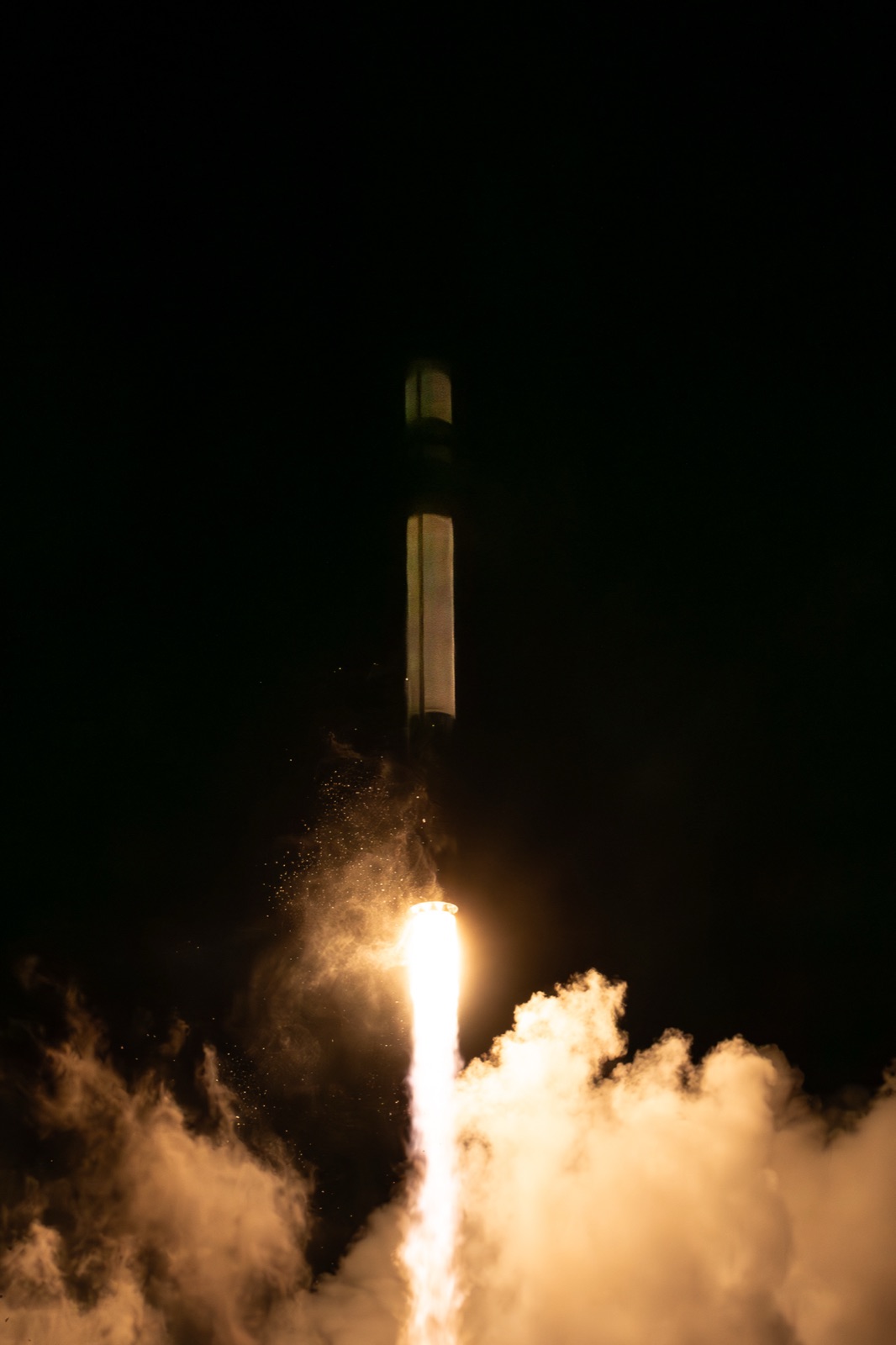
Electron is a small two-stage rocket for dedicated launches of small satellites. Rocket Lab designs, builds and launches it. Flights leave from Launch Complex-1 in New Zealand and Launch Complex-2 in Virginia. It stands 18 metres tall and 1.2 metres across, and lifts 300 kilograms to low Earth orbit, up from 225.
The whole structure is carbon composite, which Rocket Lab says cuts mass by as much as 40 percent against aluminium. The engines, called Rutherford, have all their primary parts 3D printed, and electric motors driven by lithium-polymer batteries run their pumps. Each engine weighs only 35 kilograms.
Application
A small two-stage launcher for dedicated flights of small satellites. Its carbon composite body and 3D printed electric-pump engines cut inert mass, which matters for a rocket that lifts only a few hundred kilograms.
Photos
How it is built
Body and tanks
Electron's structure is a carbon fibre composite monocoque, a shell that carries the loads itself. The casings and tanks are carbon composite, and the tanks hold liquid oxygen and kerosene without a liner. The tanks of each stage share one bulkhead, and the second stage carries about 2,000 kilograms of propellant.
Nine sea-level Rutherford engines power the first stage, each producing 5,600 pounds-force, and one vacuum version powers the second. Every primary part is 3D printed, including the thrust chamber and the main propellant valves, and an engine can be printed in as little as 24 hours. Electromechanical actuators steer each engine.
Brushless electric motors drive the propellant pumps in place of gas-generator turbomachinery, and can reach 90 percent efficiency. Lithium-polymer batteries power the motors. Two battery packs are jettisoned in flight to cut mass when a third takes over.
Brushless DC electric motors driving the propellant pumps
The second stage burns for about five minutes. The Kick Stage, a third stage, is 405 millimetres tall, 1.2 metres across and weighs 40 kilograms dry. It has carbon composite tanks and Rocket Lab's Curie engine, which is 3D printed, pressure-fed and restartable.
Rutherford vacuum engine (x1)
Kick Stage structure
Kick Stage carbon composite propellant tanks
Curie engine
Fairing and payload
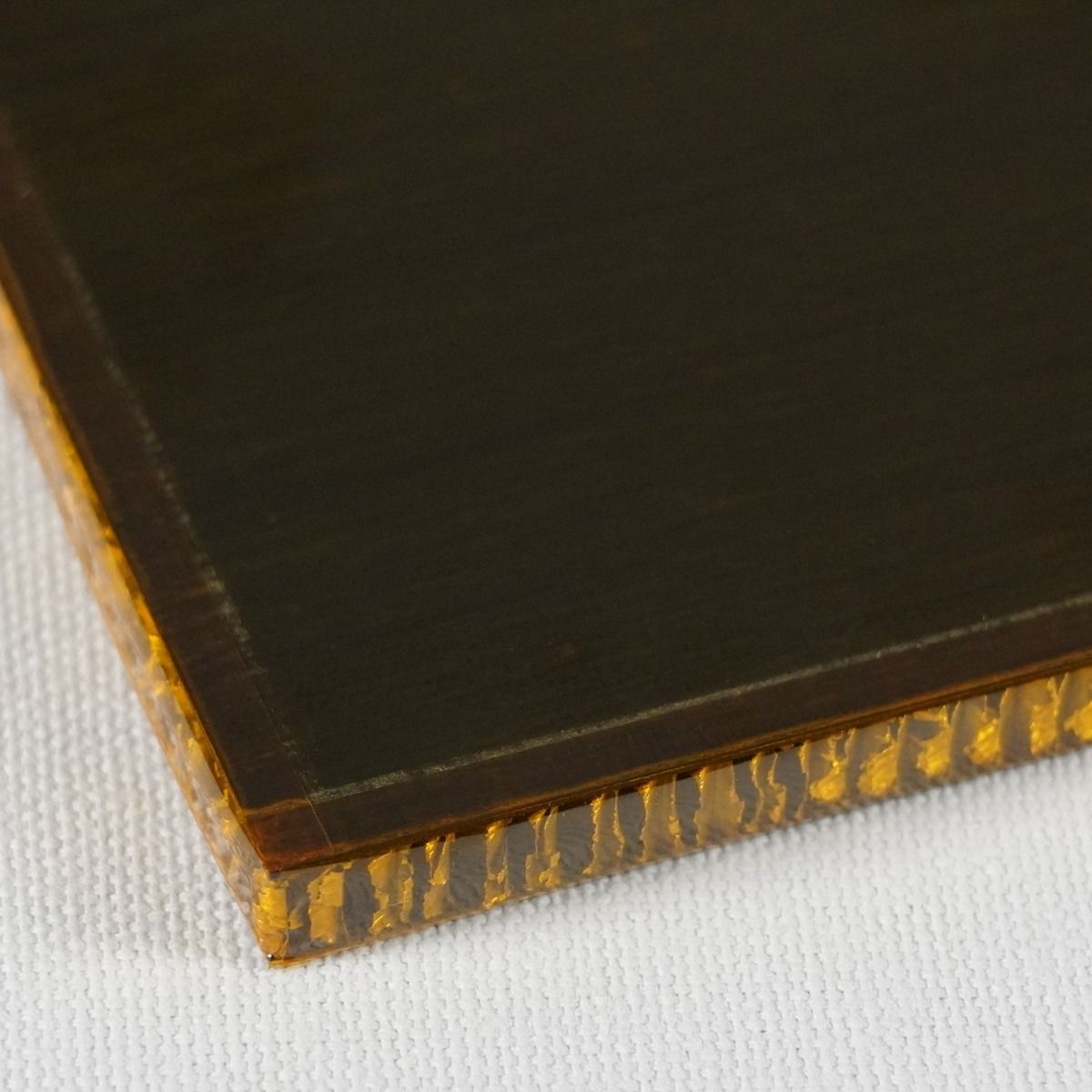
The fairing is a composite split clamshell, 1.2 metres across and 2.5 metres tall, with environmental control for the payload. At separation each half rotates away on a hinge, released by pneumatic unlocking and springs. Satellites mount on a honeycomb composite payload plate, or in Rocket Lab's Maxwell CubeSat dispensers.
Payload fairing (composite split clam shell)
Fairing separation system (pneumatic unlocking, springs, hinge)
Payload plate (honeycomb composite, about 1 m diameter)
Maxwell CubeSat dispensers
Where the parts areNumber of parts we have listed in each group
The whole vehicle structure, the casings and tanks, and the Kick Stage structure and tanks. The fibre and resin are not named.
Lithium-polymer batteries
The high-voltage packs that power the electric pump motors. Two are jettisoned in flight.
Fibre-reinforced composite
The split clamshell payload fairing. Rocket Lab does not name the type.
Honeycomb composite
The payload plate, about 1 metre across. The face sheet and core materials are not named.
The materials by familyHow many of the parts that name a material use each one
Other4
Polymers and foams4
How it connects to other things
Nine sea-level Rutherford engines power the first stage, one vacuum Rutherford the second, and a Curie engine drives the Kick Stage. In its most advanced form the Kick Stage becomes Photon, Rocket Lab's satellite bus. Rocket Lab designs and builds the rocket itself. RUAG and Planetary Systems Corp supply payload separation systems. The first launch, in May 2017, failed to reach orbit, and a second followed in January 2018.
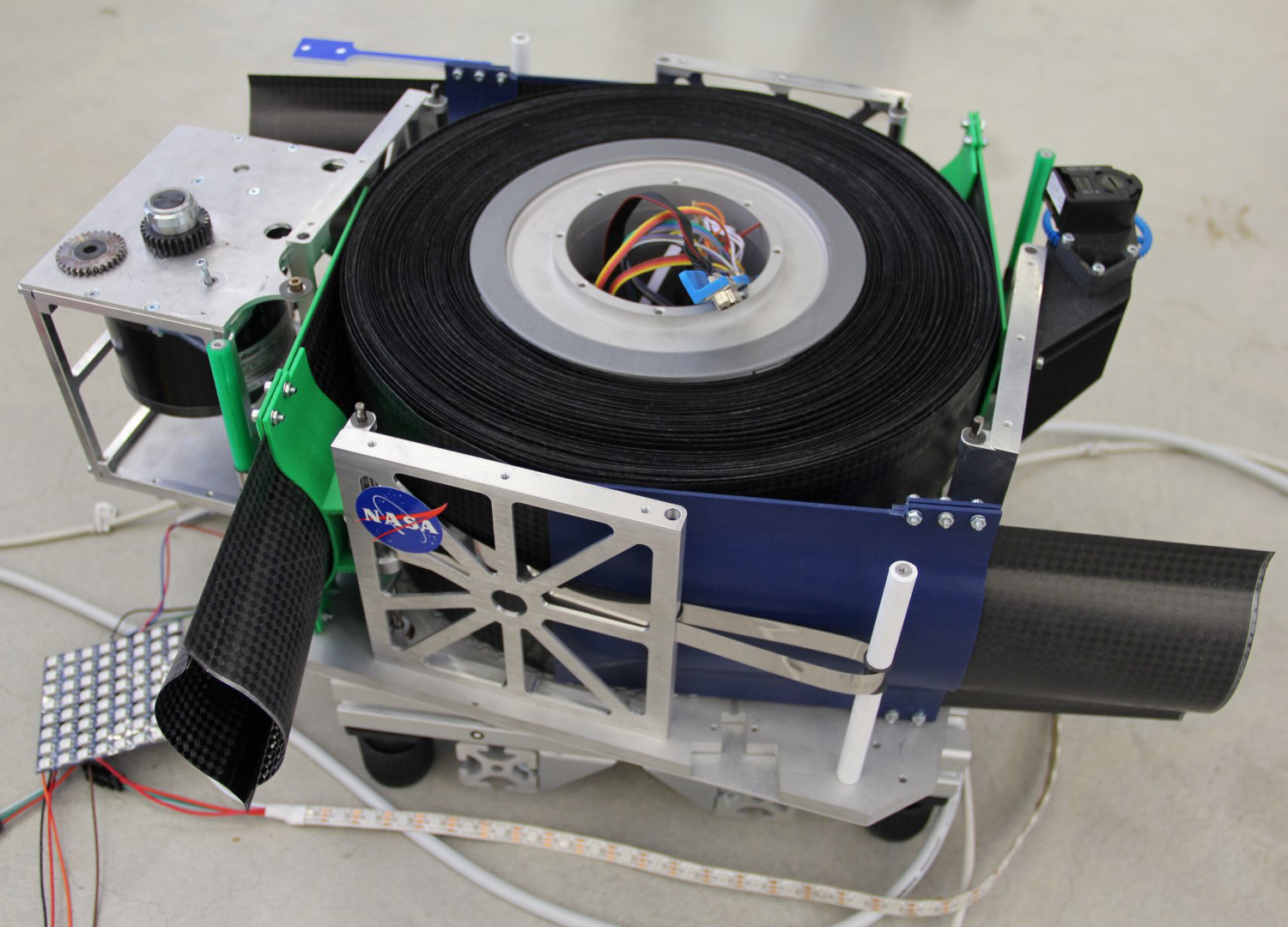
Carbon fibre. Here: Vehicle structure; Casings and propellant tanks and more. There: Core panels (webs, tank bulkhead, lower platform); Solar array wings (x4, X-wing, three panels each) with wing-tip cameras.
Rocket Lab's payload guide does not name the metal of the Rutherford engines, the fibre and resin of the composite, or the materials of the interstage, fairing and payload plate. It also names no battery maker and only two separation-system partners, and says nothing about recovery or reuse hardware.
The detailed data
What is written above is built from these numbers and quotes. Each row links to the page it was taken from. Get all of it as JSON, or ask our MCP server.
Features
Engine pumps run on electric motors powered by lithium-polymer batteries
Composite tanks tolerate cryogenic liquid oxygen
Specifications
What
Value
Payload to LEO
300 kg (up from 225 kg)
Engine count
Nine engines on first stage, one on second
Rutherford mass
35 kg each
Vehicle height and diameter
18 m tall, 1.2 m diameter
Lift-off mass
13,000 kg
Structure
carbon fibre composite monocoque
Mass saving from composites
up to 40 percent lighter than aluminium launch vehicle structures
Nominal payload
200 kg / 440 lbm to a 500 km sun-synchronous orbit
Stage 2 burn
about five minutes
Stage 2 ignition in the example flight profile
L+162 s at about 82 km
Rutherford engines flown
130 engines flown to space as of July 2020
Rutherford print time
as little as 24 hours per engine
First launch
May 2017, failed to reach orbit; second launch January 2018
Launch rate
more than 130 launches a year from two launch sites
Kick Stage thruster count
6 reaction control thrusters in 2 pods
Materials in detail
Each material named in the sources: where it is used here, which other products use it, and its key numbers when its material page exists.
Carbon fibre (PAN-based, pitch-based) and carbon/carbon
honeycomb composite (face sheet and core materials not stated)
honeycomb-composite-unstated
Used in 1 partPayload plate (honeycomb composite, about 1 m diameter)
Material page coming soon
Every part we have
Structure and engine manufacturing method sourced; no parts list. Components, suppliers and links were added from public sources. A material is left blank where no source states it.
Engine alloy, fairing, kick stage and Curie not sourced. More detail: Rocket Lab's own pages (rocketlabcorp.com/launch/electron, rocketlabusa.com/electron) return HTTP 403 to automated fetches; the Payload User Guide PDF (version 8.0, September 2025, footers still read V 7.0) was readable and is the main source. The guide gives no alloy or composite system for the engines, tanks, interstage, fairing or payload plate, no engine thrust-chamber material, no recovery or reuse hardware (parachute, heat shield, helicopter catch), no separation-ordnance or battery maker names, and no Neutron or Archimedes link. Rutherford thrust values in the guide (5,600 lbf sea level, 5,800 lbf vacuum) differ from older trade-press figures. The first-launch statement comes from Gunter's Space Page. More detail: Rocket Lab's own pages (rocketlabcorp.com/launch/electron, rocketlabusa.com/electron) return HTTP 403 to automated fetches; the Payload User Guide PDF (version 8.0, September 2025, footers still read V 7.0) was readable and is the main source. The guide gives no alloy or composite system for the engines, tanks, interstage, fairing or payload plate, no engine thrust-chamber material, no recovery or reuse hardware (parachute, heat shield, helicopter catch), no separation-ordnance or battery maker names, and no Neutron or Archimedes link. Rutherford thrust values in the guide (5,600 lbf sea level, 5,800 lbf vacuum) differ from older trade-press figures. The first-launch statement comes from Gunter's Space Page.