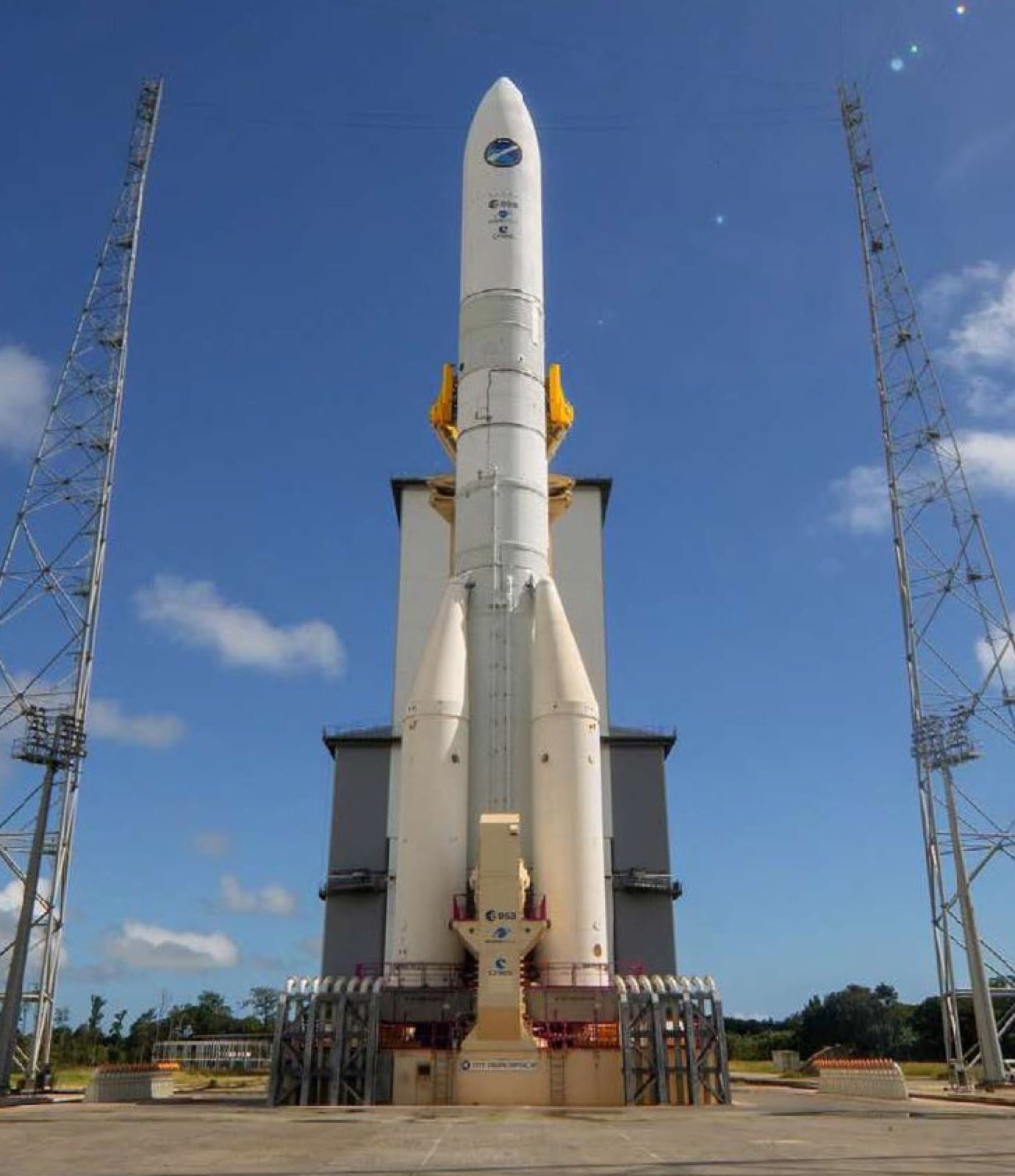
Ariane 6 on the ELA-4 launch pad at Kourou, ESA/Arianespace/CNES logos on the fairing and two strap-on boosters visible
ArianeGroup / Arianespace

Ariane 6

Ariane 6 is Europe's heavy launcher, flown with two or four solid boosters for institutional and commercial payloads.

Launch vehicles
Product IDarianespace-ariane-6
Height
56-62 m depending on payload size
Main stage
32 m tall, 5.4 m wide
Boosters
13.5 m long, 3.4 m diameter
Booster propellant
about 142 t solid propellant each
Upper stage propellant
30 t liquid oxygen and hydrogen
Fairing
5.4 m wide; 14 m or 20 m tall

In short

Ariane 6 is Europe's heavy launcher for institutional and commercial payloads, and it takes over from Ariane 5. ArianeGroup is prime contractor, Arianespace runs the commercial side, and ESA is the launch system architect. With two boosters, as Ariane 62, it lifts about 10.3 tonnes to low Earth orbit. With four, as Ariane 64, it lifts about 21.6.

The core stage tanks are a lighter mixture of aluminium and lithium. The booster casings are carbon composite, and so is the fairing. Making the rocket takes a network of more than 600 companies in 13 European countries, 350 of them small or medium-sized.

Application

Ariane 6 is Europe's heavy launcher for institutional and commercial payloads. Its core stage tanks, solid booster casings and fairing show a mix of aluminium-lithium and carbon composites.

How it is built

Core stage

The core stage is 32 metres tall and 5.4 metres wide, and weighs 23,000 kg without propellant. Its tanks are a lighter mixture of aluminium and lithium, made by MT Aerospace, and it holds almost 154 tonnes of liquid hydrogen and oxygen. Carbon fibre helium tanks store the gas for pressurising them.

  • Core stage structure and propellant load
  • Main stage propellant tanks
  • Core and upper stage inter-tank structures and tanks
  • Cryogenic propellant lines
  • Helium tanks (carbon fibre)

Engines and thrust frames

Vulcain 2.1, the core stage engine, burns liquid hydrogen and oxygen. Its nozzle is two large metal sheets laser-welded together. Airbus makes the aluminium thrust frames, and the one for the Vinci upper stage engine is only 11 parts, against more than 1,000 in Ariane 5's structure.

  • Vulcain 2.1 engine (x1)
  • Vulcain 2.1 nozzle
  • Vulcain 2.1 thrust frame
  • Vinci thrust frame

Upper stage

The upper stage carries 30 tonnes of liquid oxygen and hydrogen. Its Vinci engine, rated at 180 kilonewtons, lights with glow plugs instead of an explosive igniter and can ignite up to four times in a single flight. A 10 kg gimbal mechanism from Beyond Gravity steers it.

  • Vinci engine (x1, re-ignitable)
  • Vinci glow-plug igniter
  • Vinci cardan gimbal mechanism
  • Upper stage hydrogen tank

Solid boosters

Each P120C booster is 13.5 metres long and 3.4 metres across and holds about 142 tonnes of solid propellant. Its one-piece case is carbon fibre in pre-impregnated epoxy, wound at Avio's factory in Colleferro. The rear aluminium skirt carries the weight of the whole rocket, up to 860 tonnes at liftoff.

  • P120C motor casing
  • P120C solid rocket motors (x2 on Ariane 62, x4 on Ariane 64)
  • Booster igniter (27 kg of solid propellant)
  • Booster forward and rear skirts

Fairing and adapters

The fairing is 5.4 metres wide and comes 14 or 20 metres tall. Beyond Gravity makes its two halves of carbon fibre composite at Emmen in Switzerland, and a pyrotechnic expansion tube and cord separate them. A carbon dual launch structure lets two satellites fly together.

  • Payload fairing halves (20 m and 14 m versions)
  • Fairing horizontal and vertical separation systems
  • Dual launch structure
  • Standard payload adapters (PAF 937, 1194, 1663, 1666)
Where the parts areNumber of parts we have listed in each group
  • Engines and engine parts18
  • Solid boosters (ESR, P120C)13
  • Avionics, power and safety12
  • Core stage (lower liquid propulsion module)7
  • Fairing, adapters and dual launch structure6
  • Core stage (main stage)3
  • Upper stage (upper liquid propulsion module)3
  • Fairing2
  • Solid boosters (P120C)1
  • Dual launch structure1

What it is made of

  • Aluminium-lithium alloy

    The core stage propellant tanks, a lighter mixture of aluminium and lithium. ESA gives no grade.

  • Carbon fibre

    The P120C booster casings, fairing halves, helium tanks and payload adapters.

  • Aluminium

    Thrust frames for both engines and structural rings in the lower section of the boosters, in unnamed alloys.

  • Anodised aluminium

    The forward and rear skirts of the boosters, made from plate.

The materials by familyHow many of the parts that name a material use each one
  • Aluminium6
  • Carbon fibre6
  • Other2
  • Polymers and foams1
  • Glass fibre1

How it connects to other things

Vulcain 2.1 powers the core stage, an upgrade of Ariane 5's Vulcain 2, and the restartable Vinci powers the upper stage. The P120C boosters double as the first stage motor of Vega-C. Europropulsion, a joint venture of Avio and ArianeGroup, developed them. Beyond Gravity, formerly RUAG Space, has made the fairing for every Ariane mission since 1979, and MT Aerospace makes the tanks. ESA operated the first flight.

Engines

  • Vulcain 2.1 engine

    ArianeGroup

    Core stage: one engine, liquid oxygen and hydrogen (batch2 draft entry arianegroup-vulcain-2-1)

  • Vinci engine

    ArianeGroup

    Upper stage: one re-ignitable engine (batch2 draft entry arianegroup-vinci)

  • P120C solid rocket motor

    Two (Ariane 62) or four (Ariane 64) boosters; common with Vega-C

Builds on

  • Vulcain 2 (Ariane 5)

    Vulcain 2.1 is an upgrade of Ariane 5's Vulcain 2

Built on

  • Vega-C (shared P120C motor)

    The same motor is the first stage of Vega-C

Replaces

  • Ariane 5

    Ariane 6 takes over from Ariane 5

Made or supplied by

  • ArianeGroup

    Prime contractor and design authority; engines, core stage assembly

  • Europropulsion (Avio and ArianeGroup)

    Developed the P120C motor

  • Avio

    Colleferro: P120C case and LOX turbopumps

  • MT Aerospace

    Inter-tank structures, tanks, engine parts, booster skirts

  • Airbus

    Thrust frames, structures, avionics units, wiring and batteries (see components)

  • Safran

    Chamber valves, valves and regulators, inertial guidance unit

  • Beyond Gravity (formerly RUAG Space)

    Payload fairing; thermal protection; Vinci gimbal

  • GKN Aerospace

    Engine turbines and Vulcain 2.1 nozzle extension

  • SABCA

    Thrust vector control systems

  • Kongsberg

    Booster attachments, level conditioners, OptoPyro

  • Nammo

    Booster igniters and separation motors; bearings

  • APCO Technologies

    Booster nose cap and attachments

  • ATC Space

    Booster forward and rear skirts

  • Sonaca

    Booster structural rings and carbon-fibre sensor covers

  • Air Liquide

    Cryogenic propellant lines

  • APP (Aerospace Propulsion Products)

    Engine igniters and starters

  • Thales Alenia Space

    Range safeguard system, power electronics (Belgium) and transmitters (Spain)

  • TTTech

    Computer network chips

  • Regulus

    Mixes the booster propellant at the spaceport

Operated by

  • Arianespace

    Commercial exploitation of Ariane 6

  • ESA

    Launch system architect; operator of the first flight

  • CNES

    Built, runs and maintains the launch zone in French Guiana

Products that use the same materials

  • NASA small spacecraft structures review

    NASA Ames

    Carbon fibreAnodized aluminium
    Where each one is used

    Carbon fibre. Here: P120C motor casing; Nose fairing (user manual description) and more. There: TechEdSat secondary structural pieces.

    Anodized aluminium. Here: Booster forward and rear skirts. There: Dispenser-compatible rails.

  • Proba-2

    ESA

    Carbon fibreAluminium
    Where each one is used

    Carbon fibre. Here: P120C motor casing; Nose fairing (user manual description) and more. There: Platform structure supplier (eoPortal).

    Aluminium. Here: Vulcain 2.1 thrust frame; Vinci thrust frame and more. There: TPMU/DSLP housing.

  • Proba-V

    ESA

    Carbon fibreAluminium
    Where each one is used

    Carbon fibre. Here: P120C motor casing; Nose fairing (user manual description) and more. There: Outer panels (3).

    Aluminium. Here: Vulcain 2.1 thrust frame; Vinci thrust frame and more. There: Telescope (structure and mirrors, 3 telescopes).

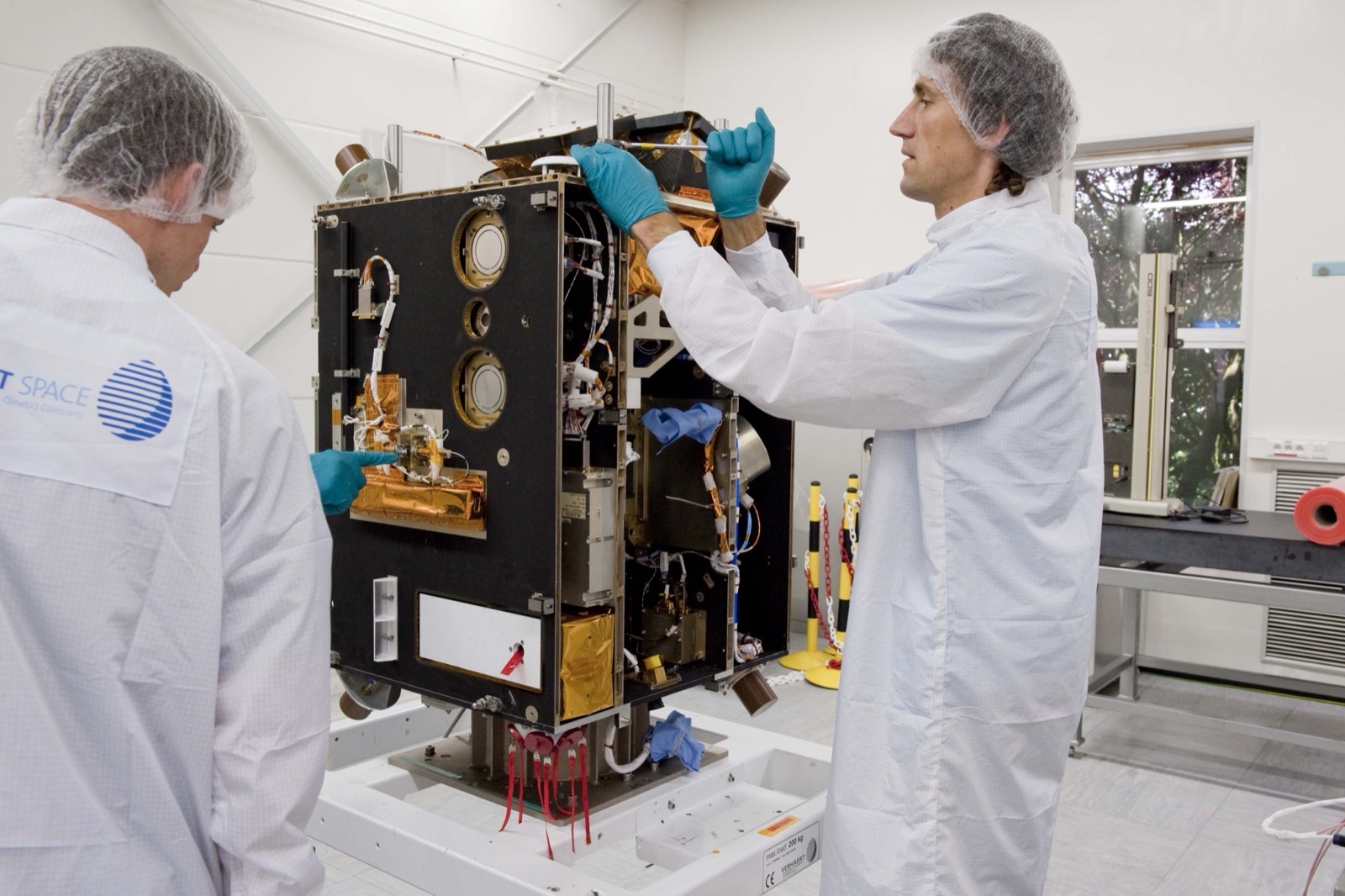
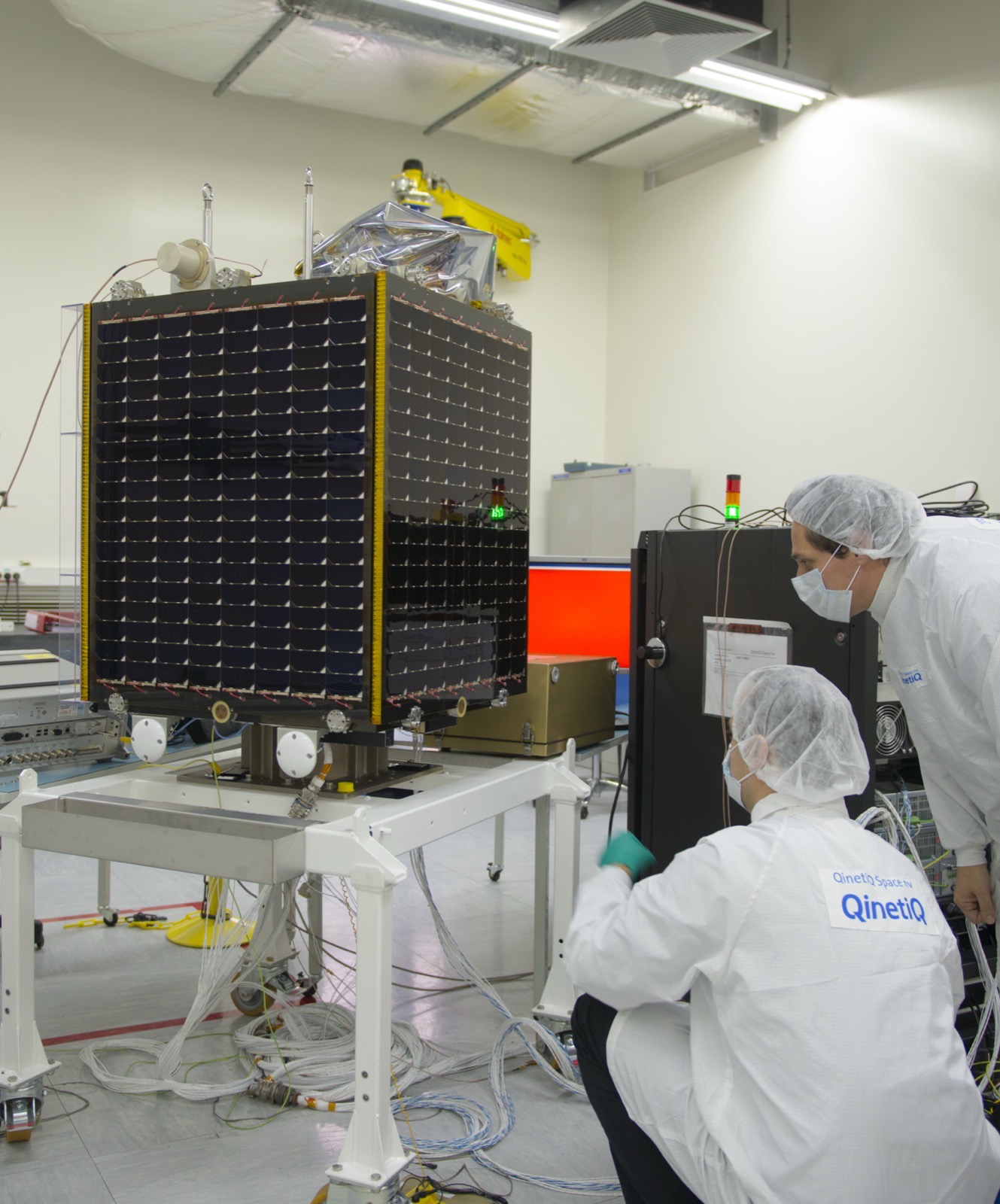
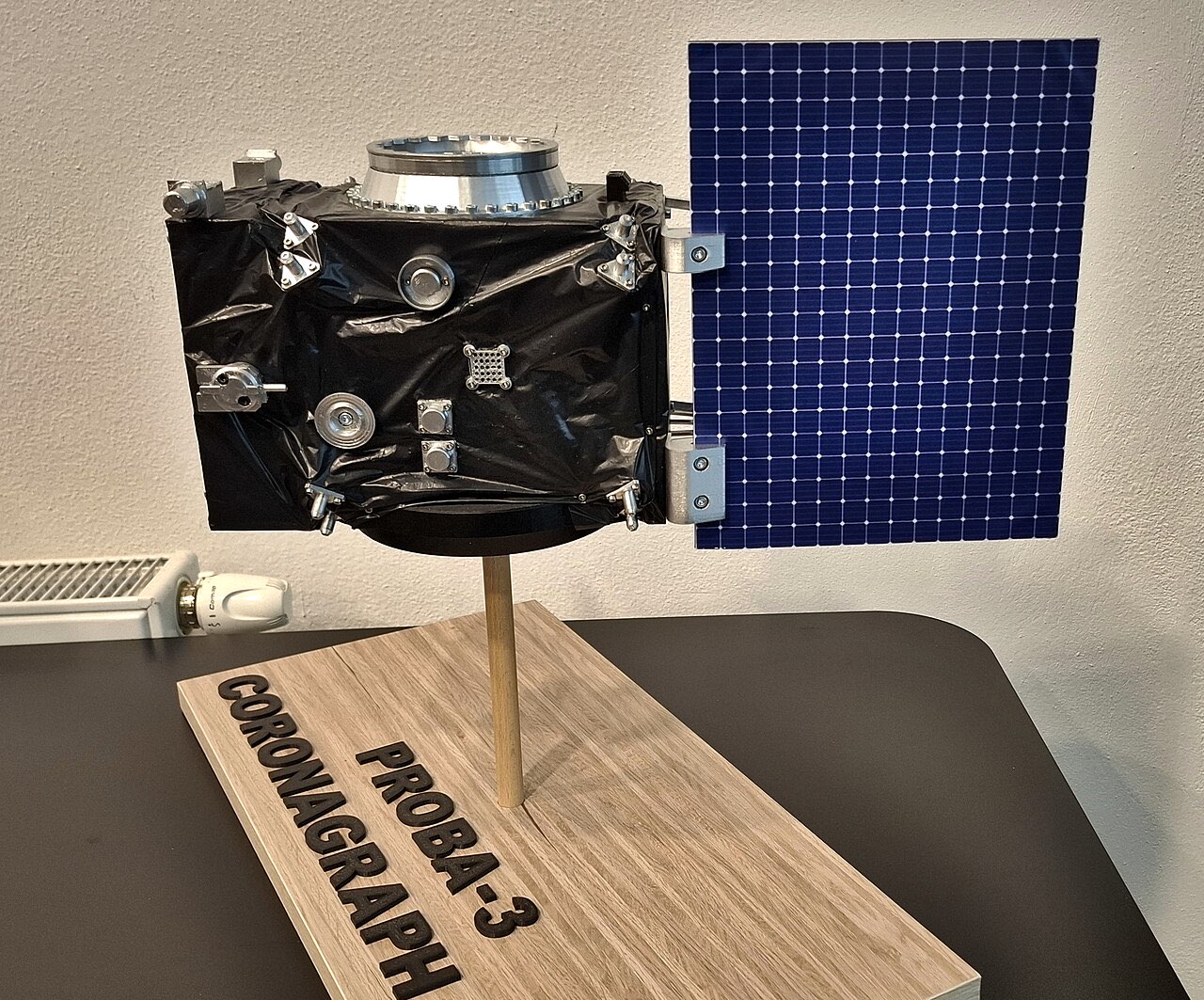
  • Proba-3 Coronagraph spacecraft

    ESA / Airbus

    Carbon fibreAluminium
    Where each one is used

    Carbon fibre. Here: P120C motor casing; Nose fairing (user manual description) and more. There: OBA sandwich panels.

    Aluminium. Here: Vulcain 2.1 thrust frame; Vinci thrust frame and more. There: Main structure tube; Equipment box (EQB) and more.

  • Rockwest solar array substrate

    Rockwest Composites

    Carbon fibreAluminium
    Where each one is used

    Carbon fibre. Here: P120C motor casing; Nose fairing (user manual description) and more. There: Face skin carbon fibre; HR40 / NB321 unidirectional prepreg and more.

    Aluminium. Here: Vulcain 2.1 thrust frame; Vinci thrust frame and more. There: Aluminium inserts, in-plane and out-of-plane (DiskSat build).

  • OreSat

    PSAS / Oregon State

    AluminiumAnodized aluminium
    Where each one is used

    Aluminium. Here: Vulcain 2.1 thrust frame; Vinci thrust frame and more. There: Backplane grounding to frame.

    Anodized aluminium. Here: Booster forward and rear skirts. There: 1U +X frame (anodize); Card wedge (anodize) and more.

What we do not know

Published descriptions do not name the grade of the aluminium-lithium alloy, the exact resin systems of the fairing, adapters and booster cases, or the materials of the upper stage tanks, tank insulation and engines. They also disagree on the thrust of the P120C and Vulcain 2.1, and on whether the fairing includes glass fibre.

The detailed data

What is written above is built from these numbers and quotes. Each row links to the page it was taken from. Get all of it as JSON, or ask our MCP server.

Features

  • Main stage burns liquid hydrogen and oxygen in the Vulcain 2.1 engine
  • Upper stage uses the restartable Vinci engine
  • Fairing available in two lengths

Specifications

WhatValue
Height56-62 m depending on payload size
Main stage32 m tall, 5.4 m wide
Boosters13.5 m long, 3.4 m diameter
Booster propellantabout 142 t solid propellant each
Upper stage propellant30 t liquid oxygen and hydrogen
Fairing5.4 m wide; 14 m or 20 m tall
Liftoff massalmost 900 t with payload
Ariane 62 performanceabout 4.5 t to GTO or 10.3 t to LEO
Ariane 64 performanceabout 11.5 t to GTO or 21.6 t to LEO
Lower stage (LLPM) propellant150 t LOX-LH2
Liftoff mass and thrust, Ariane 62530 t liftoff mass, 800 t thrust at liftoff
Liftoff mass and thrust, Ariane 64860 t liftoff mass, 1500 t thrust at liftoff
Core stage dry mass23,000 kg without propellant
Vulcain 2.1 vacuum thrust (ESA 2018)135 tonnes in vacuum
Vulcain 2.1 acceptance test21 July 2020 in France
P120C nozzle production rateup to 35 nozzles per year in Le Haillan
Industrial networkmore than 600 companies in 13 European countries
Launcher assembly building20 m tall, 112 m long, 41 m wide
Vinci thrust180 kN

Materials in detail

Each material named in the sources: where it is used here, which other products use it, and its key numbers when its material page exists.

  • Carbon fibre (PAN-based, pitch-based) and carbon/carbon

    Used in 10 partsP120C motor casing · Nose fairing (user manual description) · Dual launch structure · +7 more

    Strength and stiffness
    4100 MPa
    Thermal conduction
    140 W/(m·K)
    Heat tolerance in carbon/carbon
    Oxidises above about 500 C
    Also in 19 other products
  • Aluminium

    Used in 3 partsVulcain 2.1 thrust frame · Vinci thrust frame · BACO L-Square and Upper Cover assemblies

    Weight
    2.7 g/cm3
    Electrical conduction
    2.6458 µΩ·cm
    Heat conduction
    220 W/(m·K)
    Also in 33 other products
  • Anodized aluminium

    Used in 1 partBooster forward and rear skirts

    Thin protective film
    0.0001 to 0.001 in
    Thick hard film
    350 to 360 HV
    Dyed finish
    13 to 25 µm
  • aluminium-lithium alloy (alloy grade not stated)

    aluminium-lithium

    Used in 1 partMain stage propellant tanks

    Also in 1 other product
    Material page coming soon
  • carbon-glass fibre composite

    carbon-glass-fibre-composite

    Used in 1 partPayload fairing (ESA description)

    Material page coming soon

Every part we have

ESA names the core-stage tank alloy family, the P120C casing and the fairing material. No grade, resin system or upper-stage tank material is given in the pages read. Components, suppliers and links were added from public sources. A material is left blank where no source states it.

Material IDs

aluminium-lithiumcarbon-fibrecarbon-glass-fibre-compositealuminiumanodized-aluminium
Core stage (main stage)3
PartMaterialFinish and standardMade by
Main stage propellant tanks“a lighter mixture of aluminium and lithium material” aluminium-lithium alloy (alloy grade not stated)aluminium-lithium — —
Main stage tank insulation“well protected with insulating materials” Not said — —
Vulcain 2.1 nozzle“built by laser-welding two large sheets of metal together” Not said — —
Solid boosters (P120C)1
Fairing2
PartMaterialFinish and standardMade by
Payload fairing (ESA description)“made in one piece from carbon-glass fibre composite” carbon-glass fibre compositecarbon-glass-fibre-composite — —
Nose fairing (user manual description)“two half-shell carbon fiber structure” carbon fiber (matrix not stated)carbon-fibre — —
Dual launch structure1
Upper stage1
PartMaterialFinish and standardMade by
Upper stage tanks and Vinci engine“fuelled by 30 tonnes of cryogenically cooled liquid oxygen and liquid hydrogen” Not said — —
Engines and engine parts18
PartMaterialFinish and standardMade by
Vulcain 2.1 engine (x1)Core stage main engine, liquid oxygen and hydrogen“this rocket engine uses liquid oxygen and hydrogen as fuel, providing more than 1370 kN of thrust” Not said — Supplier: ArianeGroup
Vinci engine (x1, re-ignitable)Upper stage engine, can fire up to four times“It can ignite up to four times in a single Ariane 6 flight” Not said — Supplier: ArianeGroup
Vulcain 2.1 gas generator (3D printed)Drives the turbopumps“a 3D-printed gas generator” Not said — —
Vulcain 2.1 oxygen tank pressurisation heaterHeats gas to pressurize the oxygen tank“and a heater for oxygen tank pressurisation” Not said — —
Hydrogen turbopumps (Vulcain 2.1 and Vinci)Feed liquid hydrogen to the engines“ArianeGroup created the hydrogen turbopumps that feed fuel to the engines, and gas generators, which help power the system.” Not said — Supplier: ArianeGroup
Liquid oxygen turbopumps (Vulcain 2.1 and Vinci)Feed liquid oxygen; Vinci pump has a dynamic seal package between 600 C hydrogen gas and cold LOX“Avio provides the liquid oxygen turbopumps for the Vinci and Vulcain 2.1 engines for Ariane 6.” Not said — Supplier: Avio (transfer to ArianeGroup France in progress)
Engine turbines (Vulcain 2.1 and Vinci)Drive the fuel pumps“the company provides the turbines and the nozzle extension for the Vulcain 2.1 rocket engine and the turbines for the Vinci engine” Not said — Supplier: GKN Aerospace
Thrust chambers (Vulcain 2.1 and Vinci)Combustion chambers built by the German branch of ArianeGroup“The German branch manufactures the thrust chamber for both the Vinci and Vulcain 2.1 engines.” Not said — Supplier: ArianeGroup (Germany)
Engine chamber valves (Vulcain 2.1 and Vinci)Control hydrogen and oxygen into the combustion chamber“Safran Aero Boosters supplies chamber valves for both Ariane 6 engines.” Not said — Supplier: Safran Aero Boosters
Engine valves and pressure regulatorsRegulate cryogenic hydrogen pressure at about -260 C“produces valves and pressure regulators for the Vinci and Vulcain engines that power the Ariane 6 upper and main stage” Not said — Supplier: Safran (Turin, former Microtecnica site)
Fuel and propellant valvesValves for fuel and propellant lines“TestFuchs provides valves for fuel and propellant.” Not said — Supplier: TestFuchs
Vulcain 2.1 starter and igniterSolid-propellant starter spins the turbopump; igniter lights the gas generator“APP’s starter provides hot gas to kick-start the turbo-pump.” Not said — Supplier: APP (Aerospace Propulsion Products, now part of ArianeGroup)
Vinci glow-plug igniterNon-explosive ignition system for the upper stage engine“instead APP designed an ignition system that uses glow plugs” Not said — Supplier: APP (Aerospace Propulsion Products, now part of ArianeGroup)
Vulcain 2.1 thrust frameAluminium frame that holds the engine and spreads thrust into the core stage“Airbus Netherlands supplies two thrust frames for each Ariane 6, one for the main Vulcain engine, and one for the upper stage Vinci engine.” aluminium (alloy not stated)aluminium — Supplier: Airbus (Netherlands)
Vinci thrust frameFrame for the upper stage engine; 11 parts, 330 kg“the upper stage thrust frame is made up of just 11 parts – compared to over 1000 parts in the Ariane 5 structure” aluminium (alloy not stated)aluminium — Supplier: Airbus (Netherlands)
Vinci cardan gimbal mechanismSteers the upper stage engine, a 10 kg unit“Beyond Gravity is also responsible for the Vinci cardan gimbal mechanism – a 10 kg piece of tech” Not said — Supplier: Beyond Gravity (Austria)
Vulcain 2.1 exhaust-line thermal protection (TPLE) and flexible thermal protectionHeat insulation against engine heat up to 1500 C“Beyond Gravity provides the Vulcain 2.1 engine Thermal Protection Exhaust Lines (TPLE) and the Flexible Thermal Protection (FTP)” Not said — Supplier: Beyond Gravity (Austria)
Dry-film lubricated spherical bearings in the engine supportsSupport bearings for both engines“The company also manufactures dry-film lubricated spherical bearings that are used in the supports.” Not said — Supplier: Nammo Ireland
Core stage (lower liquid propulsion module)7
PartMaterialFinish and standardMade by
Core stage structure and propellant loadMain stage: 32 m tall, 5.4 m wide“At 32 m tall, 5.4 m wide and weighing 23000kg without propellants” Not said — —
Core and upper stage inter-tank structures and tanksStructure between the tanks and the tank shells“MT Aerospace is responsible for making the upper and core inter-tank structures, the upper and core stage tanks, parts of the Vulcain 2.1 engine” Not said — Supplier: MT Aerospace
Cryogenic propellant linesPipes that carry liquid hydrogen and oxygen to the engines“built the pipes that carry this super cold fuel to the engines” Not said — Supplier: Air Liquide
Helium tanks (carbon fibre)Pressurant storage“designed, developed, qualified and manufactures the carbon fibre helium tanks for Ariane 6” carbon fibre (resin not stated)carbon-fibre — Supplier: Enrichment Technology Company
Level conditioner units (about 25 per vehicle)Measure liquid oxygen and hydrogen levels in the tanks“Each Ariane 6 typically contains 25 level conditioner units.” Not said — Supplier: Kongsberg
Thrust vector control systems (core stage, upper stage, boosters)Direct the exhaust of each engine“SABCA makes sure rockets stay on the right path by building the Thrust Vector Control systems” Not said — Supplier: SABCA
Torque motors of the low-liquid thrust vector actuation system (Vulcain 2.1)Limited-angle torque motors steer the main engine through hydraulics“ICPE Electric motors provides small torque motors that help move Ariane 6’s main Vulcain 2.1 engine” Not said — Supplier: ICPE Electric motors
Upper stage (upper liquid propulsion module)3
PartMaterialFinish and standardMade by
Auxiliary propulsion unit (APU)Pressurizes the tanks in flight and gives extra thrust; needed for Vinci restarts“a small system that plays a vital role by pressurising the fuel tanks during flight and providing additional thrust on demand” Not said — —
Upper stage thermal insulation tents, membranes and conditioning bagsKeep gases and electronics at working temperature“Beyond Gravity provides ‘tent’ insulation to protect the Vinci Intermediate Thrust Frame (VITF), membranes to protect the electronics, and conditioning bags” Not said — Supplier: Beyond Gravity (Austria)
Upper stage hydrogen tankFirst tanks delivered to Bremen in April 2018“MT-Aerospace – one of the main industrial partners of ArianeGroup on the Ariane 6 project – has delivered the first hydrogen tanks” Not said — Supplier: MT Aerospace
Solid boosters (ESR, P120C)13
PartMaterialFinish and standardMade by
P120C solid rocket motors (x2 on Ariane 62, x4 on Ariane 64)Boost stage, shared with Vega-C“The boosters are developed by Europropulsion, owned by Avio and ArianeGroup” Not said — Supplier: Europropulsion (joint venture of Avio and ArianeGroup)
P120C case (refines the existing carbon-fibre row)One-segment carbon-fibre case wound at Avio's Colleferro factory“P120C’s case is made of carbon-fibre, built from pre-impregnated epoxy sheets through filament winding and automatic fabric deposition” carbon fibre in pre-impregnated epoxycarbon-fibre — Supplier: Avio (Colleferro)
P120C nozzleWithstands up to 3000 C; made in Le Haillan“The booster nozzles are produced at an ArianeGroup site in Le Haillan, near Bordeaux.” Not said — Supplier: ArianeGroup (Le Haillan)
Solid propellant chargePropellant powder mixed at Europe's Spaceport“The explosive powder for the boosters is mixed by Regulus” Not said — Supplier: Regulus
Booster igniter (27 kg of solid propellant)Small rocket motor that starts booster combustion“The igniter’s newly-developed hardware is made of carbon-fibre composite and aluminium” carbon-fibre composite and aluminiumcarbon-fibre — Supplier: Nammo Raufoss Space
Booster separation rocket motorsPush the spent boosters away from the core“small separation rocket motors that push the boosters away from the main launcher once they have run out of fuel” Not said — Supplier: Nammo Raufoss Space
Booster attachment and release mechanismsHold each booster to the core and release it after about two minutes“Kongsberg provides the booster attachment and release mechanisms, level conditioners and optical safety barriers” Not said — Supplier: Kongsberg
Booster nose cap and booster attachmentsTop cap and attach points that carry thrust to the core stage“provide the booster nose cap as well as the booster attachments” Not said — Supplier: APCO Technologies
Booster forward and rear skirtsAluminium skirts; the rear skirt carries the weight of the rocket“supplying the top and bottom protective enclosure for the boosters, known as the forward and rear skirts” aluminium plate, anodized (alloy not stated)anodized-aluminium — Supplier: ATC Space
Booster conical upper structureUpper conical part of each booster“Airbus in Spain developed the upper – conical part, of the boosters” Not said — Supplier: Airbus (Spain)
BACO L-Square and Upper Cover assembliesStructural rings in the lower section of the boosters“These assemblies include aluminium components that are stretched and machined in Belgium at Sonaca’s headquarters before being assembled in Romania.” aluminium (alloy not stated)aluminium — Supplier: Sonaca (Belgium and Romania)
Carbon-fibre protective covers for sensors (about 30 parts)Composite caps over sensors“Around thirty carbon-fibre parts are manufactured at their Romanian facility.” carbon fibre (resin not stated)carbon-fibre — Supplier: Sonaca Romania
P120C motor caseOne-segment carbon-fibre case made at Avio's Colleferro factory; adds the epoxy prepreg detail to the current carbon-fibre row“automatic fabric deposition in one segment at Avio’s Colleferro rocket factory near Rome, Italy” carbon fibre in pre-impregnated epoxycarbon-fibre — Supplier: Avio (Colleferro)
Fairing, adapters and dual launch structure6
PartMaterialFinish and standardMade by
Payload fairing halves (20 m and 14 m versions)Two half-shells, each made in one piece at Emmen“Manufactured by Beyond Gravity at its Emmen site in Switzerland, these indispensable launcher parts come in two variants, 20 or 14 metres tall” carbon fibre (resin not stated)carbon-fibre — Supplier: Beyond Gravity (Switzerland, formerly RUAG Space)
Fairing horizontal and vertical separation systemsPyrotechnic expansion tube joins fairing to the upper stage; pyrotechnic cord splits the halves“An horizontal one (HSS) made of a pyrotechnical expansion tube which connects the fairing to the Upper Liquid Propulsion Module (ULPM)” Not said — —
Dual launch structure separation system and springsCuts the dual launch structure and pushes it clear; heights 7.8 m, 8.8 m, 9.8 m“Separation of the dual launch structure is achieved by means of a HSS which cuts the dual launch structure along a horizontal plane” Not said — —
Standard payload adapters (PAF 937, 1194, 1663, 1666)Carbon structures with clamp-band or pyrotechnic-nut separation“Off-the-shelf adapters, with separation interface diameter of 937 mm, 1,194 mm, 1,663 mm (TBC) and 1,666 mm are available.” carbon structure (fibre and matrix not stated)carbon-fibre — Supplier: Airbus (Spain)
Main-stage to upper-stage interface structure and launch vehicle adapter (LVA)Skeletal structures that join the stages“the interface structure that connects the main stage and upper stage, and the Launch Vehicle Adapter” Not said — Supplier: Airbus (Spain)
Payload carriers for small satellites (under 200 kg)Piggyback adapters from the L3 initiative“Payload carriers allow small satellites lighter than 200 kg to ride 'piggyback' on the launch of the main payload” Not said — —
Avionics, power and safety12
PartMaterialFinish and standardMade by
Centralised multi-functional units (CMFU, x4) and pyrotechnical firing units (PFU, x4)Power distribution, onboard computing, engine actuator control and pyro timing“Four CMFUs and four PFUs are supplied for every Ariane 6, a total of about 100 kg of electronics per launcher.” Not said — Supplier: Airbus (Spain)
Electrical wiringAbout 90 percent of the harness“supplying 90% of Ariane 6's electrical wiring” Not said — Supplier: Airbus (Spain)
Inertial guidance unit, telemetry equipment and radar transpondersNavigation and flight data to the ground“Safran’s inertial guidance unit keeps Ariane 6 on track throughout its mission.” Not said — Supplier: Safran
BatteriesCommercial off-the-shelf cells qualified for space“Airbus in France contributed the rocket’s batteries, which provide electricity to its systems during flight.” Not said — Supplier: Airbus (France)
Data network switch chips (Time-Triggered Ethernet)Computer network backbone“TTTech supplies chips for the rocket’s computer network” Not said — Supplier: TTTech Computertechnik
Range safeguard system electronicsInitiates the destruct command if the launcher veers off course“The company is responsible for Ariane 6’s range safeguard system.” Not said — Supplier: Thales Alenia Space (Belgium)
Telemetry transmittersSend flight data to the ground“Thales Alenia Space developed the transmitters that send data back to Earth.” Not said — Supplier: Thales Alenia Space (Spain)
Telemetry antennaTransmits data during ascent“development of its telemetry antenna that transmits data during the rocket's ascent” Not said — Supplier: Sener
Video telemetry kit (VIKI) with six camerasLive video during the mission“Réaltra builds the Video Telemetry Kit known as VIKI, that delivers the live video feed throughout the launcher mission via six cameras” Not said — Supplier: Réaltra
OptoPyro optical safety barrierFibre-optic barrier that stops accidental firing of the self-destruct pyrotechnics“Kongsberg supplies Ariane 6’s optical safety barrier” Not said — Supplier: Kongsberg
Mechanical safety barriers and safe-and-arm elementsComplement the optical barrier“Nammo also supplies elements for the safe-and-arm device that complements Kongberg’s OptyPyro.” Not said — Supplier: Nammo Raufoss Space
Fuelling umbilical connectors and wiring bracketsConnectors that disconnect at liftoff; lightweight brackets and pipe clamps“Eaton, formerly Souriau, for example, created the connectors that link the rocket to the ground systems during fuelling and preparation.” Not said — Supplier: Eaton (formerly Souriau); Amphenol

What the sources leave out

Al-Li grade not named; upper-stage tank, Vinci, Vulcain 2.1 and insulation materials not stated; first flight date not sourced (the manual copy read says 2020, which is outdated); the manual is a third-party hosted copy of an early issue and ESA and the manual differ on fairing (carbon-glass vs carbon fibre); thrust and payload figures not captured. More detail: Component and supplier data come from ESA's 'Ariane 6 - made in...' country series and engine story, an ArianeGroup IAC-2018 paper, and a third-party copy of the early Ariane 6 User's Manual (Issue 1). Not stated in the pages read: alloy grade of the Al-Li tanks and the metal of the nozzle extension, resin systems of the fairing, adapters and P120C case beyond 'pre-impregnated epoxy', Vinci and Vulcain 2.1 internals, and the first flight date. ESA pages differ on some numbers: P120C thrust (3500 kN, about 4500 kN, 350 t), Vulcain 2.1 thrust (1371 kN, 137 t, 138 t, 135 t in vacuum) and where Vulcain 2.1 is built (Vernon on the engines story, Les Mureaux on the France page); both values are kept. The France page says Vinci integration moves from Vernon to Lampoldshausen (Oct 2025) and LOX turbopumps move from Avio to ArianeGroup France; supplier rows may change. The Ariane 6 launch zone (ELA-4) is ground equipment and is not listed as a vehicle part. More detail: Component and supplier data come from ESA's 'Ariane 6 - made in...' country series and engine story, an ArianeGroup IAC-2018 paper, and a third-party copy of the early Ariane 6 User's Manual (Issue 1). Not stated in the pages read: alloy grade of the Al-Li tanks and the metal of the nozzle extension, resin systems of the fairing, adapters and P120C case beyond 'pre-impregnated epoxy', Vinci and Vulcain 2.1 internals, and the first flight date. ESA pages differ on some numbers: P120C thrust (3500 kN, about 4500 kN, 350 t), Vulcain 2.1 thrust (1371 kN, 137 t, 138 t, 135 t in vacuum) and where Vulcain 2.1 is built (Vernon on the engines story, Les Mureaux on the France page); both values are kept. The France page says Vinci integration moves from Vernon to Lampoldshausen (Oct 2025) and LOX turbopumps move from Avio to ArianeGroup France; supplier rows may change. The Ariane 6 launch zone (ELA-4) is ground equipment and is not listed as a vehicle part.
Where this comes from

19 pages from 3 websites

More space products

Maker credit: ArianeGroup / Arianespace (ESA programme). Collected from public pages and documents, checked 4 Nov 2026.

Published · Updated