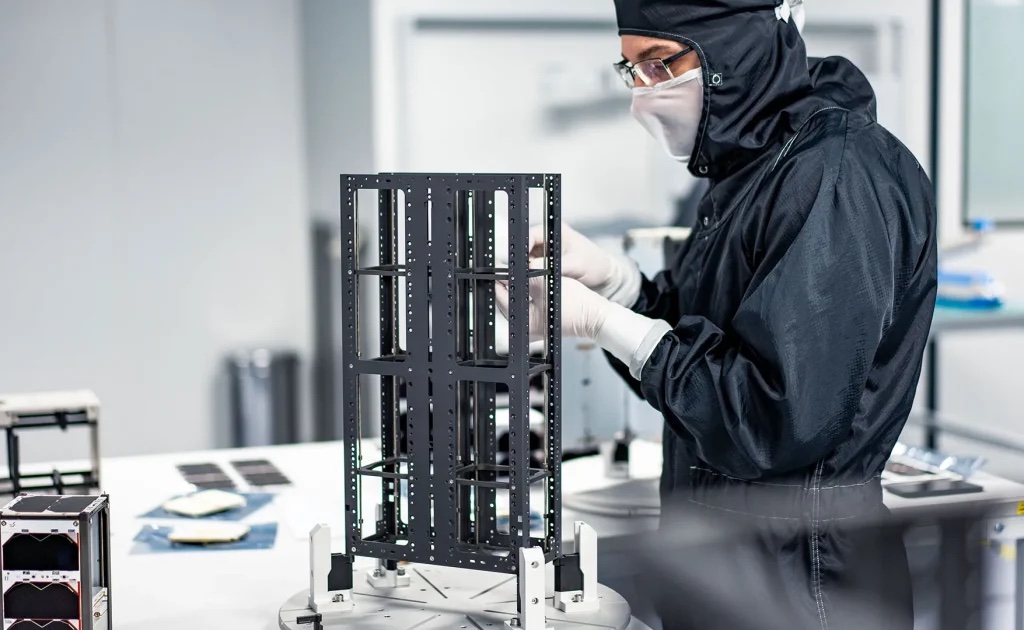
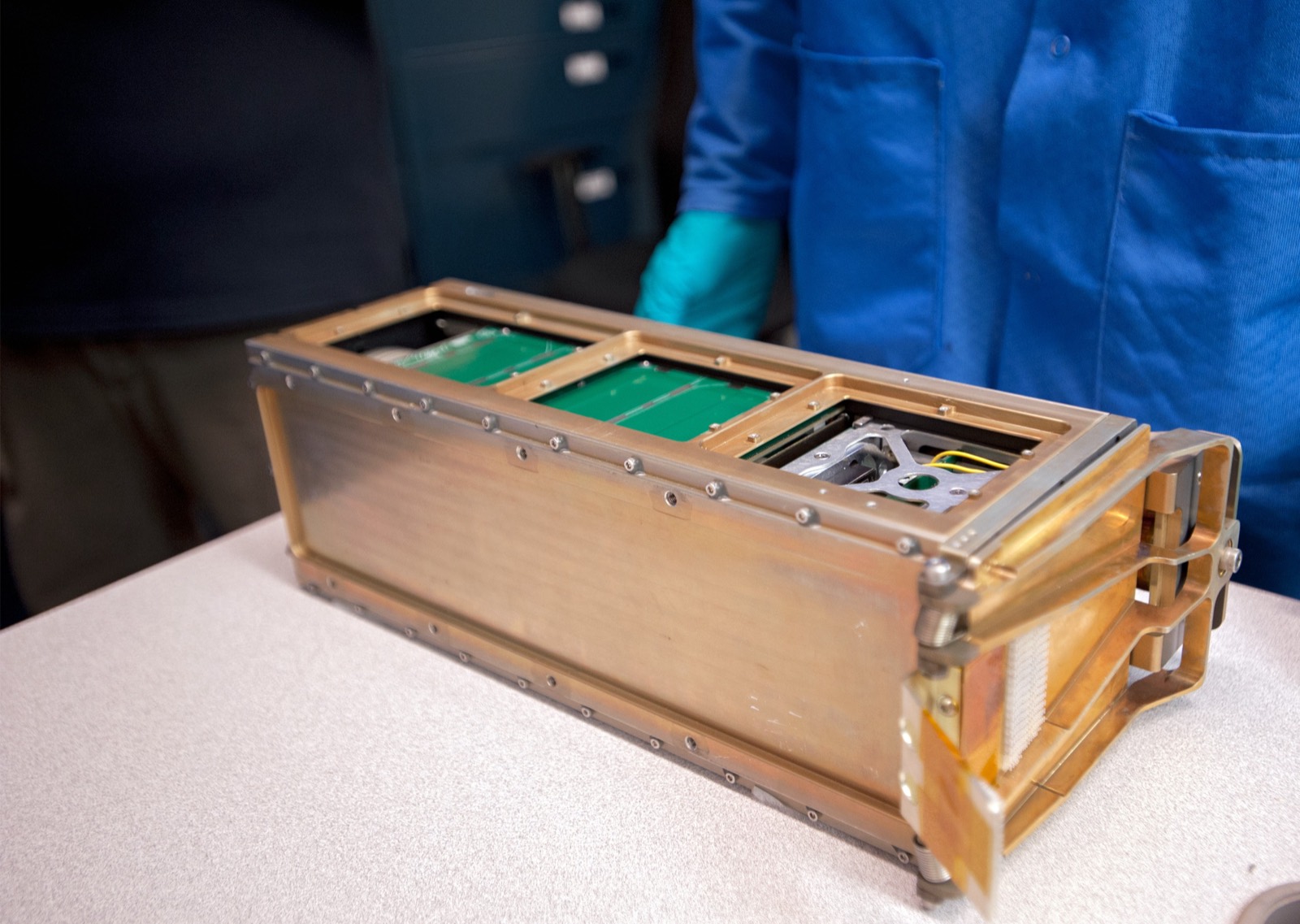
Environmental qualification including vibration, thermal and TVAC
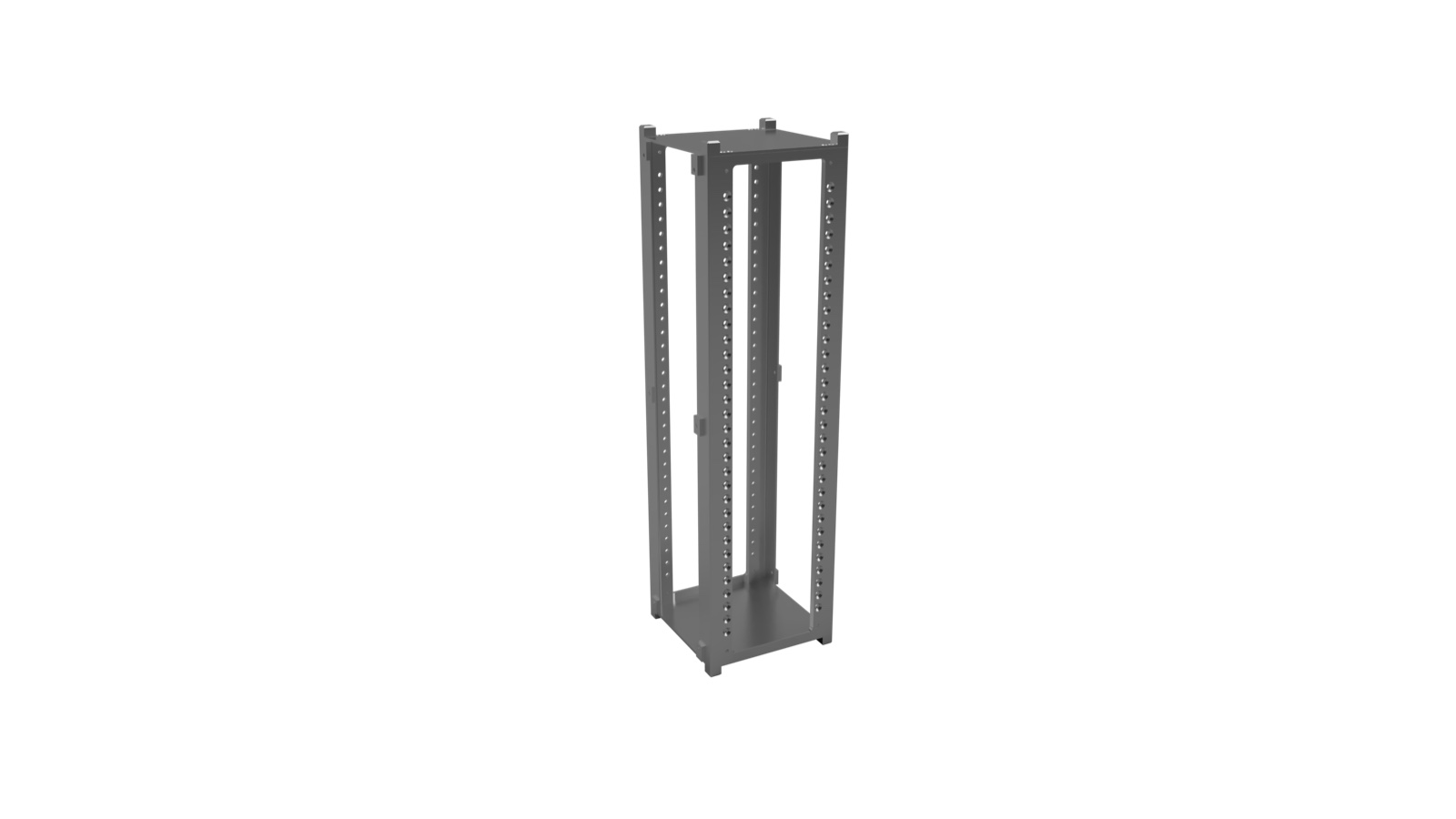
3U size
100 x 100 x 340 mm
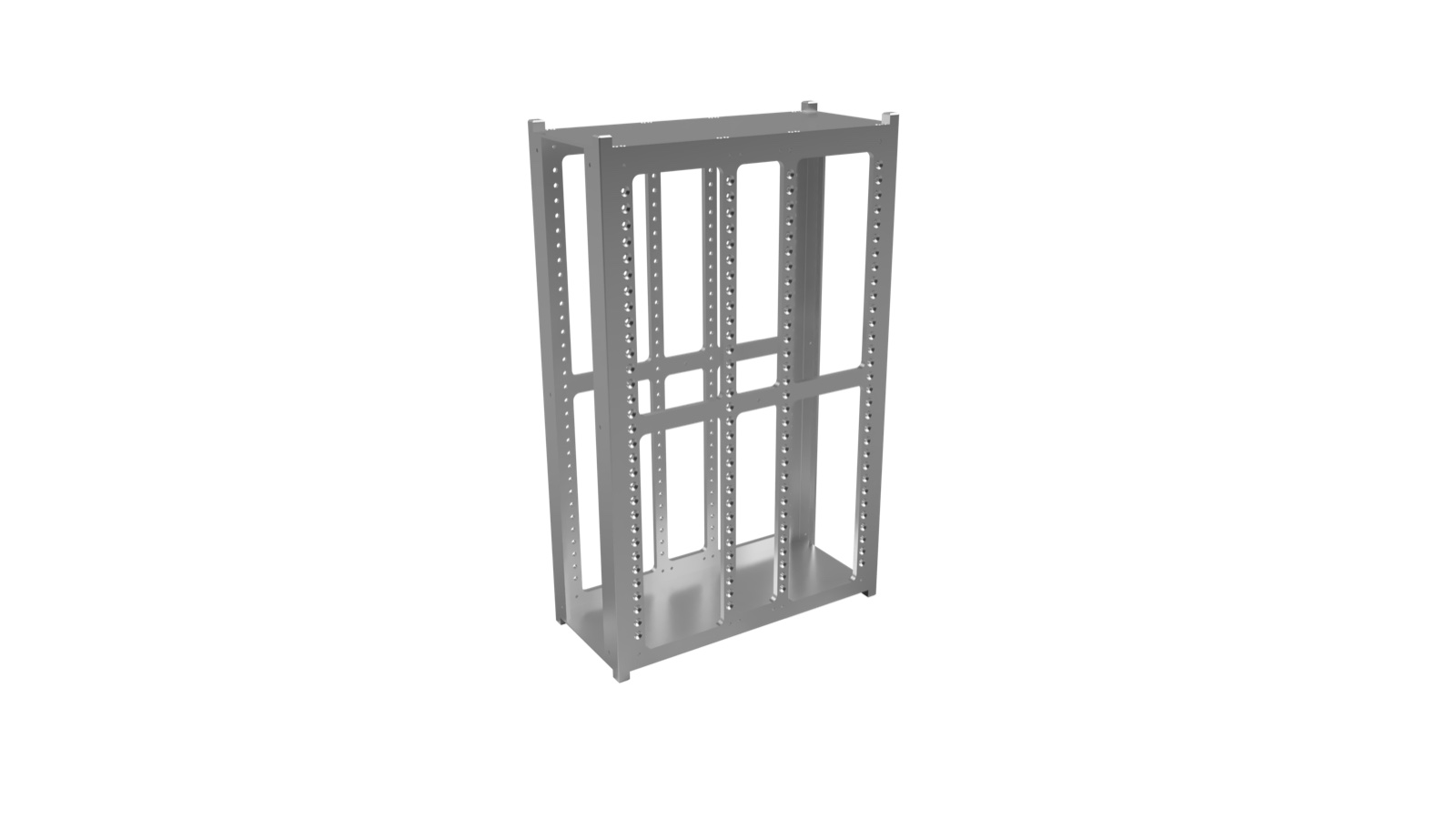
6U size
100 x 226 x 366 mm
Structures in orbit (EnduroSat's count)
590+
In short
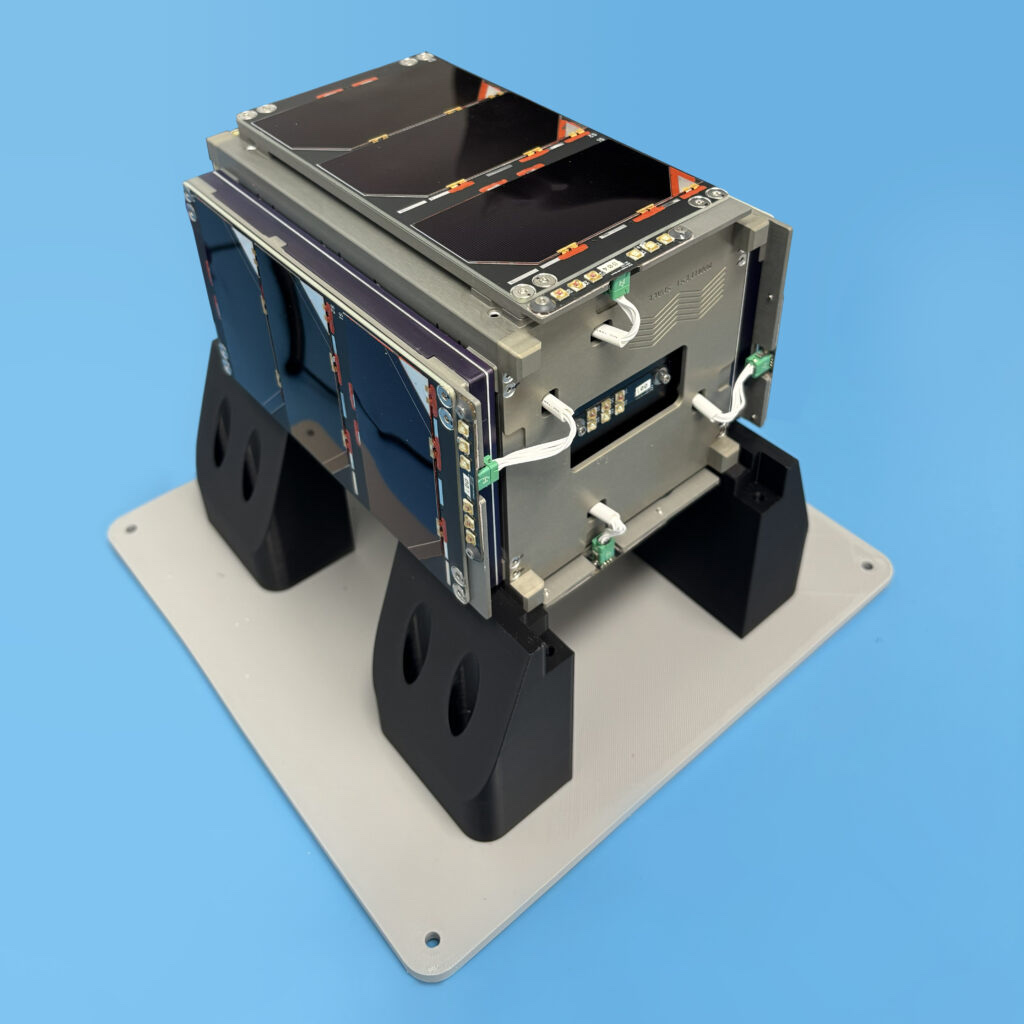
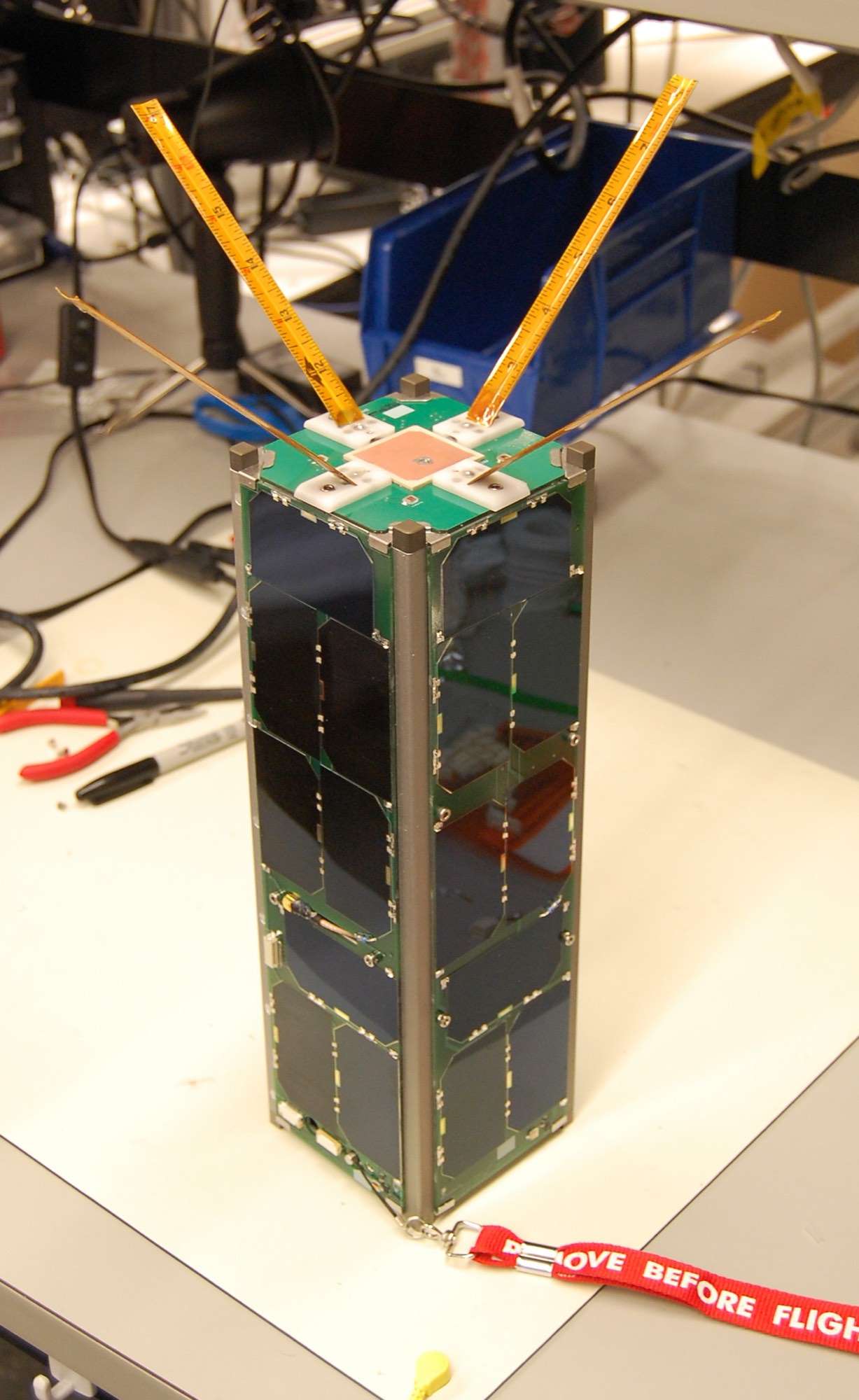
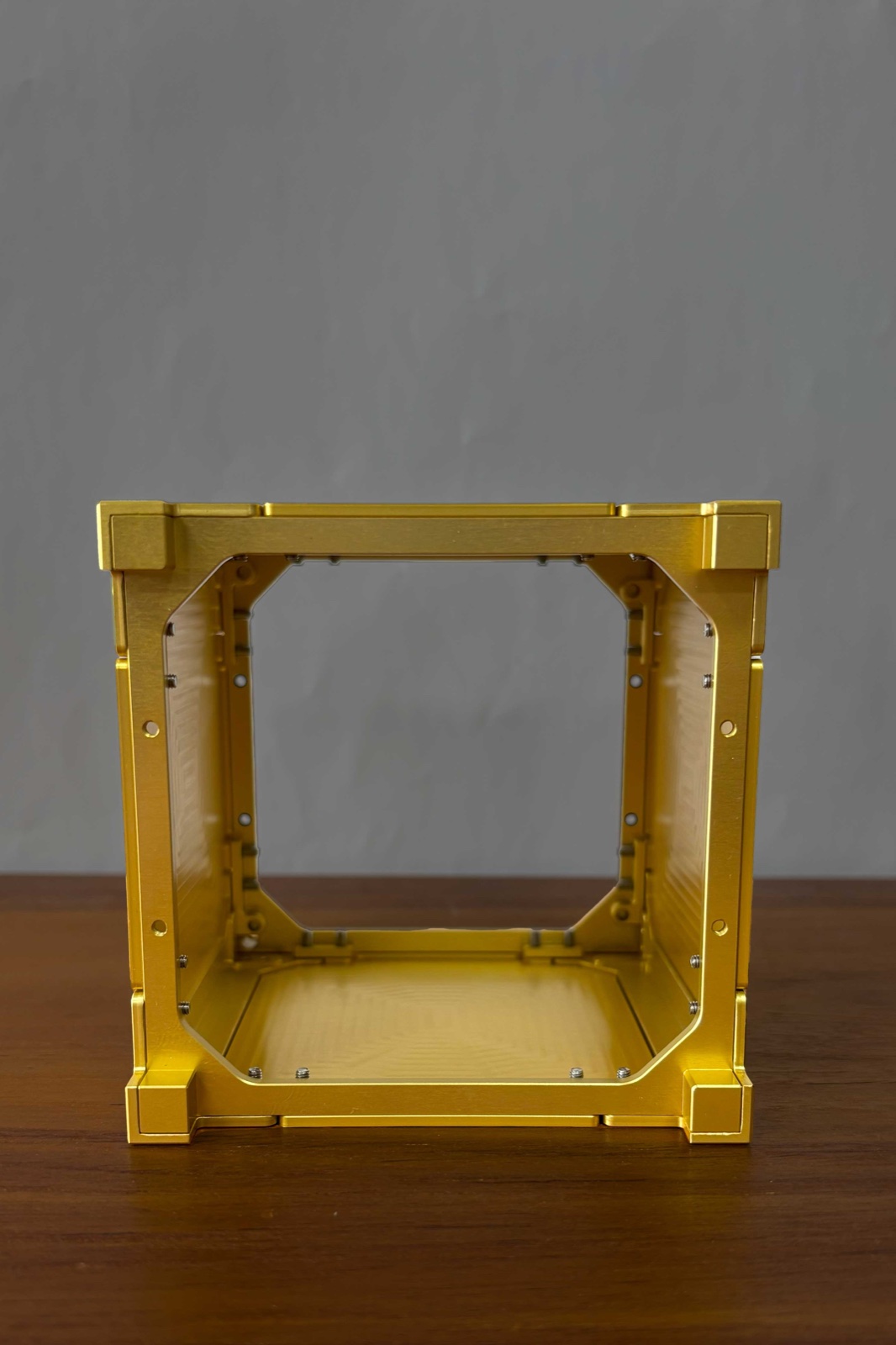
EnduroSat sells aluminium CubeSat frames in four sizes: 1U, 1.5U, 3U and 6U. NASA's 2021 chapter on structures reports vibration, thermal and thermal-vacuum testing, and says the 1U and 3U frames have flown. EnduroSat says more than 590 of its CubeSat structures are now in orbit.
NASA's table names the metal for each size. The 3U and 6U frames are 6061 aluminium, and the 1U and 1.5U are given as 6061 or 7075. A 2022 design paper for the student CubeSat 3UCubed describes the 3U kit in more detail: a hard-anodised frame, brass rods that carry the circuit boards, and 304 stainless-steel screws and nuts.
Application
Commercial CubeSat frames in 1U, 1.5U, 3U and 6U sizes, with vibration and thermal-vacuum qualification and flight heritage on the 1U and 3U. A qualified structure shortens the path to a launch-ready satellite.
Photos
How it is built
Frames and sizes
The 1U frame measures 100 by 100 by 114 millimetres. The 3U is 100 by 100 by 340 and the 6U is 100 by 226 by 366. NASA's table puts the 1U frame's mass under 0.1 kilogram and the 6U's under 1 kilogram.
EnduroSat structures (all sizes)
1U structure
1.5U structure
3U structure
6U structure
Inside the 3U kit
The paper says the 3U kit comes as a PC/104 base with rods, a frame, mid supports, a top plate and securing hardware. The frame is hard-anodised 6061 aluminium. The brass rods carry the board stack and help conduct heat.
PC/104 base
Mounting rods
Frame
Mid supports
Top plate
Switches and openings
The 3U kit comes with separation switches, and roller switches on the rails are optional. The screws and nuts are 304 stainless steel. Wide openings in the frame suited 3UCubed, whose instrument needed a clear 45-degree view, and they make solar panels easy to fit.
Separation switches
Roller switches on the rails (optional)
Securing hardware (screws, nuts)
Wide openings in the frame
Where the parts areNumber of parts we have listed in each group
3U structure kit (as described in the 3UCubed paper)10
Primary structure (as cited by NASA State of the Art report)5
8U structure (current product page)5
16U structure (current product page)2
Compatible EnduroSat products2
Rails and dispenser interface (CubeSat Design Specification)1
The other option for the 1U and 1.5U frames. The temper is not given.
Brass
The mounting rods in the 3U kit, chosen for efficient heat conduction.
Stainless steel 304
The screws and nuts that hold the 3U structure together.
The materials by familyHow many of the parts that name a material use each one
Aluminium6
Other5
Stainless steel1
Semiconductors1
How it connects to other things
On its page for the larger 8U frame, EnduroSat states full compliance with PC/104 and the CubeSat standard. The one flight tied to the 3U frame is 3UCubed. The paper says its team chose the frame at the design stage and fitted EnduroSat solar panels with Azur Space cells. 3UCubed launched on a SpaceX Falcon 9 from Vandenberg on 28 November 2025.
The team chose the EnduroSat COTS 3U structure at preliminary design (2022 paper); the flight article's structure is not re-confirmed in the launch pages
Launched on
P-POD (Cal Poly), simulated by the EnduroSat CubeSat Test Pod
EnduroSat's test pod simulates a P-POD for vibration tests; no flight deployer compatibility list is published for the 1U to 6U structures
Aluminium alloy 6061. Here: 3U structure; 6U structure and more. There: EnduroSat 3U structure; ISISPACE 3U structure and more.
Aluminium alloy 7075-T6. Here: EnduroSat structures (all sizes); 1U structure and more. There: EnduroSat structures (1U to 6U); EnduroSat 1U structure and more.
Anodized aluminium. Here: Hard-anodized pearl finish. There: Dispenser-compatible rails.
Aluminium alloy 6061. Here: 3U structure; 6U structure and more. There: 1U +X frame; Card wedge (card clamp) and more.
Anodized aluminium. Here: Hard-anodized pearl finish. There: 1U +X frame (anodize); Card wedge (anodize) and more.
Gallium arsenide. Here: Body-mounted solar panels (1U, 1.5U, 3U sizes) with triple-junction cells. There: Solar cell (SpectraLabs XTE-SF, 2 per module); Solar cell technology.
EnduroSat's own pages for these four sizes are no longer on its website, so the details come second-hand from NASA and a design paper. The anodising specification, fastener count, tolerances, loads, temperatures and compatible dispensers aren't published. The two sources give different masses for the 3U frame. Launch reports don't say which structure flew on 3UCubed.
The detailed data
What is written above is built from these numbers and quotes. Each row links to the page it was taken from. Get all of it as JSON, or ask our MCP server.
Specifications
What
Value
Sizes offered
1U, 1.5U, 3U, 6U
Qualification
Environmental qualification including vibration, thermal and TVAC
Flight heritage
1U and 3U structures
3U dimensions
100 x 100 x 340 mm
1U dimensions
100 x 100 x 114 mm (table also lists < 0.1 kg)
1.5U dimensions
100 x 100 x 170.2 mm
6U dimensions
100 x 226 x 366 mm
1U structure mass (NASA table)
less than 0.1 kg
1.5U structure mass (NASA table)
0.11 kg
3U structure mass (NASA table)
less than 0.29 kg
6U structure mass (NASA table)
less than 1 kg
8U structure
100 x 226.3 x 454 mm, 973 g, Aluminium 6082
16U structure
226.3 x 226.3 x 454 mm, 2.5 kg, Aluminium 6082
CubeSat structures in orbit (maker claim)
590+
Qualification of the 3U structure (paper)
vibration, shock, thermal vacuum per NASA GEVS GSFC-STD-7000
CDS Rev 14.1: rail minimum width
8.5 mm, measured from the rail edge to the first protrusion
CDS Rev 14.1: rail surface roughness
less than 1.6 micrometres (a 'should')
CDS Rev 14.1: rail edge radius
at least 1 mm (a 'should')
CDS Rev 14.1: rail end contact area
6.5 mm x 6.5 mm minimum on the +/- Z face
CDS Rev 14.1: protrusion limit
6.5 mm normal to the surface from the plane of the rail
The only usable source is a NASA State-of-the-Art table that names an aluminium alloy per frame size; EnduroSat's own structure pages returned no content. Components, suppliers and links were added from public sources. A material is left blank where no source states it.
All data is second-hand (NASA SOA 2021, which cites EnduroSat 2017); EnduroSat's own 1U/1.5U/3U/6U pages were not retrievable (the product URLs returned the site's 404 page). No temper for 7075, no finish/anodize, no fastener material, no parts list. The NASA text gives 'either 6061-T651 or 7075' for the family but the table narrows 3U and 6U to Al 6061 without saying which applies to a given order. EnduroSat's current 8U and 16U structure pages (not this product) state 'Aluminum 6082' and a hard-anodized surface, so the maker may use different alloys for larger frames; those are not recorded as parts here. More detail: EnduroSat's own 1U, 1.5U, 3U and 6U product pages are no longer on the live site (they redirect to the structures category page, which lists only the 8U and 16U), so per-part data for the 1U to 6U sizes comes from the NASA 2021 table and the 3UCubed paper. Not published in what was read: temper of the 7075 option, anodize specification, kill-switch and separation-spring part numbers and count per size, fastener count, rail dimensions and tolerances beyond the CDS, dispenser (P-POD, NRCSD, ISIPOD, EXOpod) compatibility list, and the datasheet and CAD files (behind a form). The maker's 8U and 16U pages give Aluminum 6082 while the NASA table and the 3UCubed paper give 6061 for the smaller sizes. Satellites that flew: only 3UCubed is tied to the EnduroSat 3U structure, and only by the 2022 design paper. More detail: EnduroSat's own 1U, 1.5U, 3U and 6U product pages are no longer on the live site (they redirect to the structures category page, which lists only the 8U and 16U), so per-part data for the 1U to 6U sizes comes from the NASA 2021 table and the 3UCubed paper. Not published in what was read: temper of the 7075 option, anodize specification, kill-switch and separation-spring part numbers and count per size, fastener count, rail dimensions and tolerances beyond the CDS, dispenser (P-POD, NRCSD, ISIPOD, EXOpod) compatibility list, and the datasheet and CAD files (behind a form). The maker's 8U and 16U pages give Aluminum 6082 while the NASA table and the 3UCubed paper give 6061 for the smaller sizes. Satellites that flew: only 3UCubed is tied to the EnduroSat 3U structure, and only by the 2022 design paper.