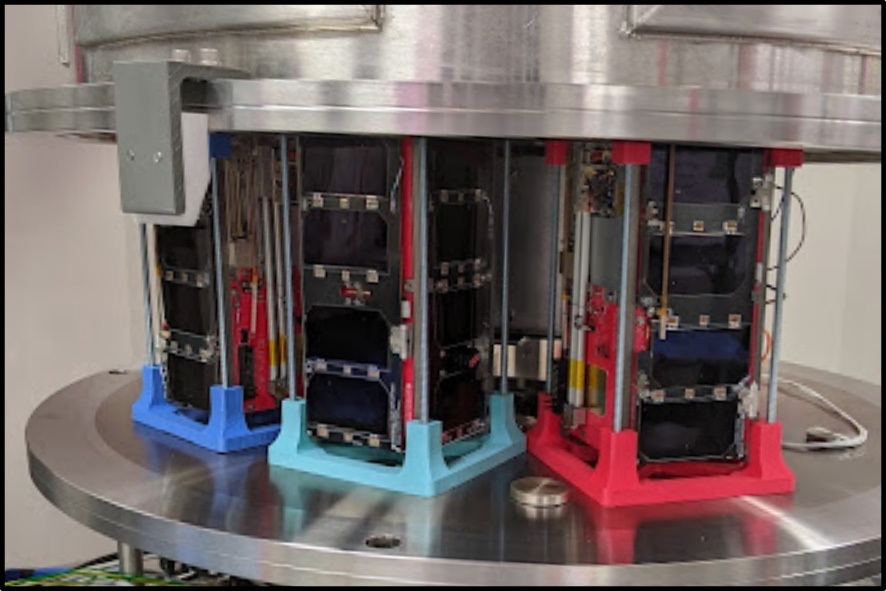
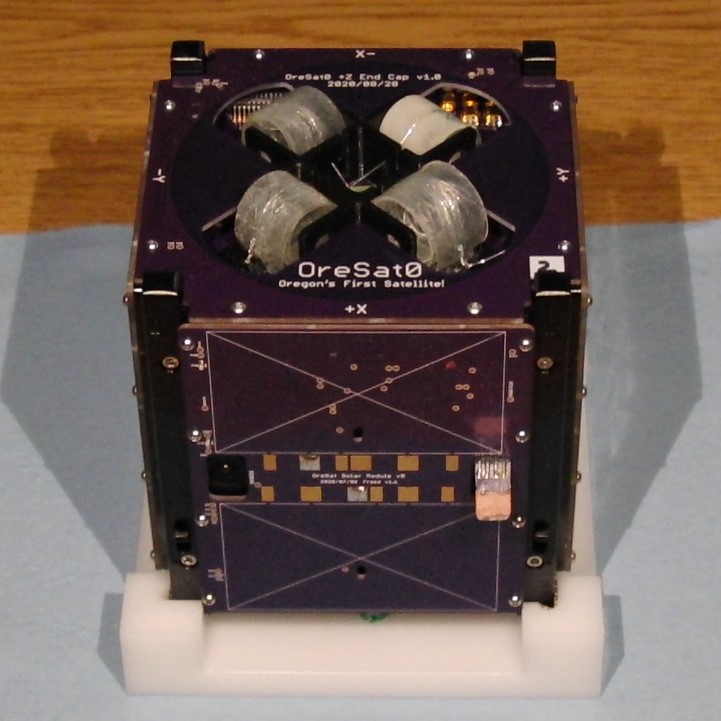
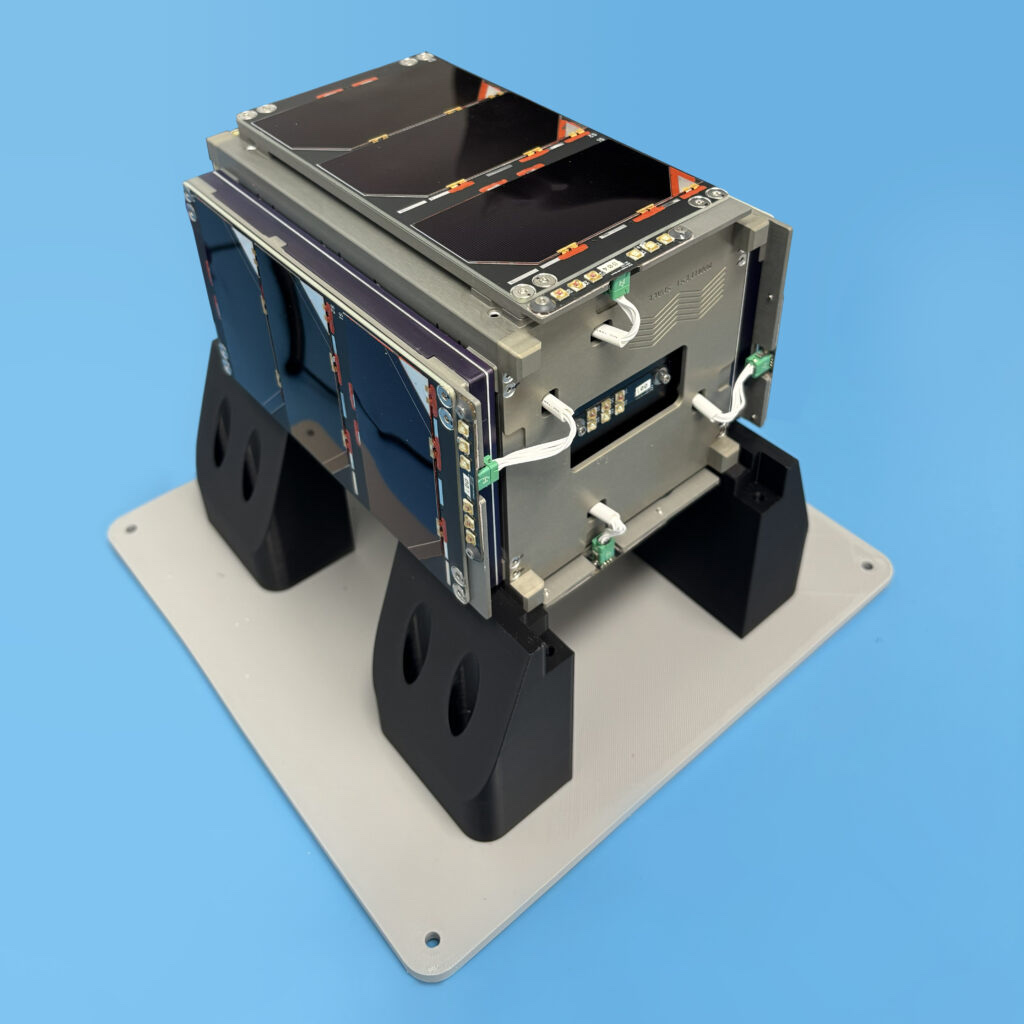
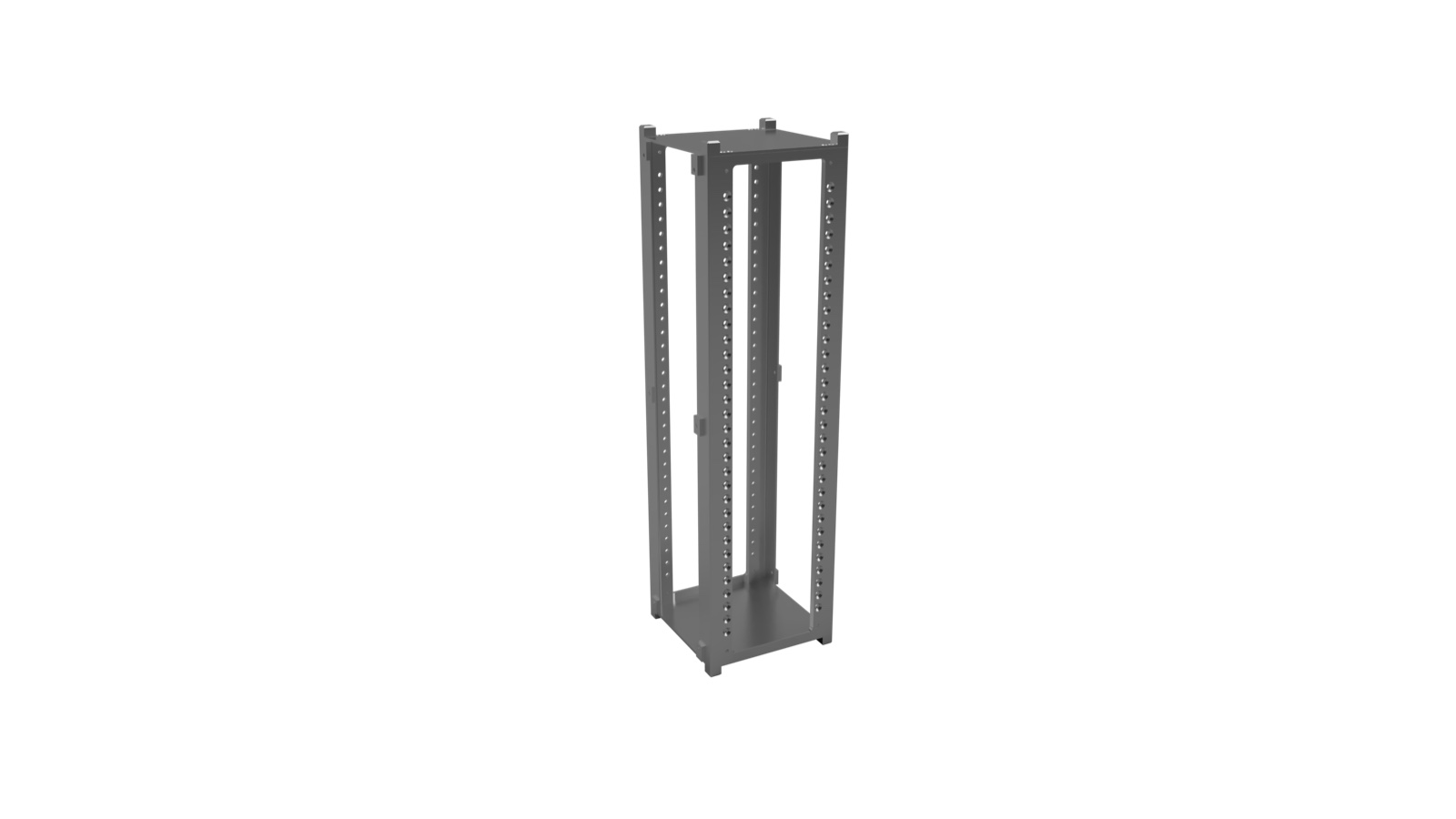
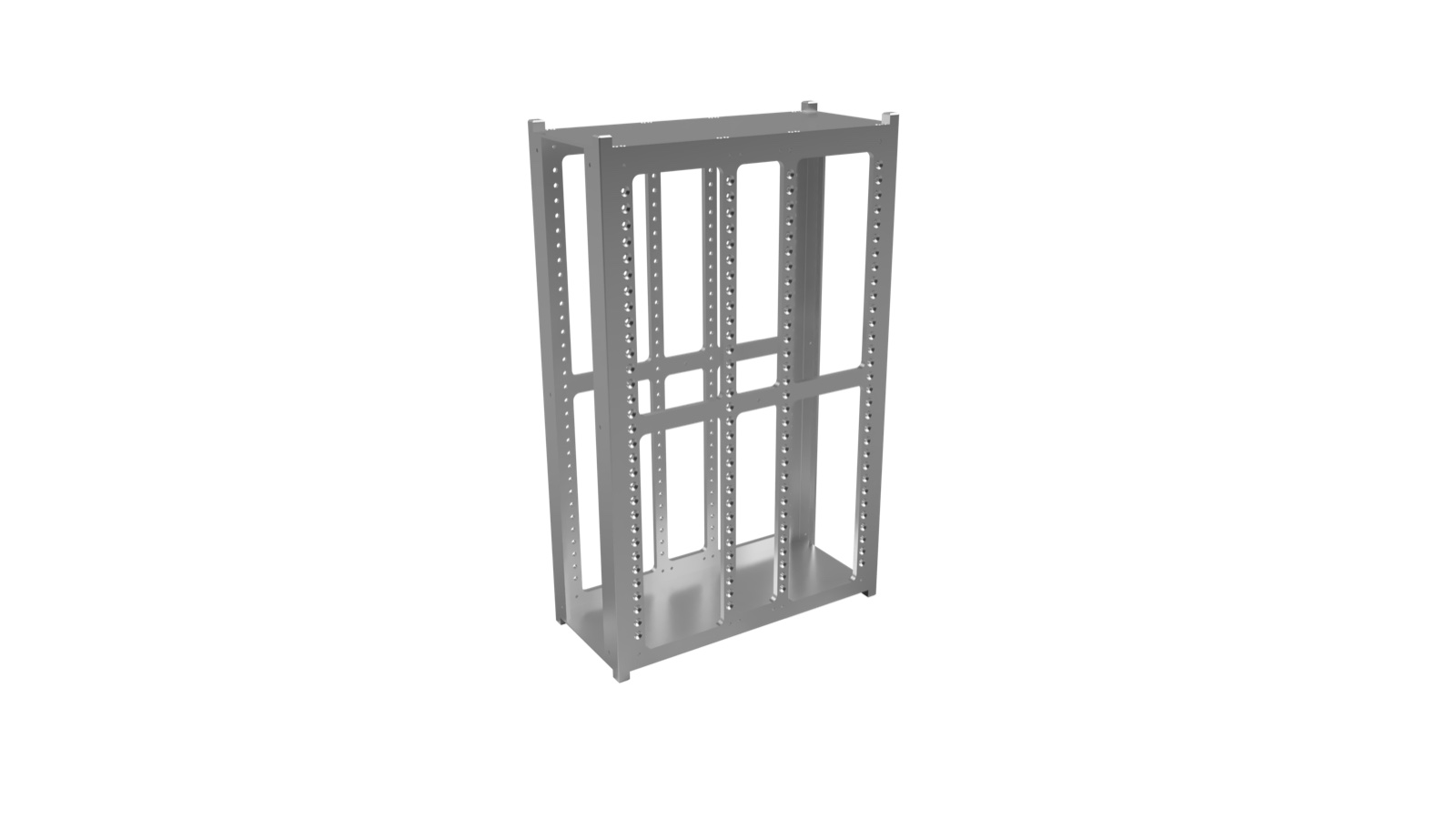
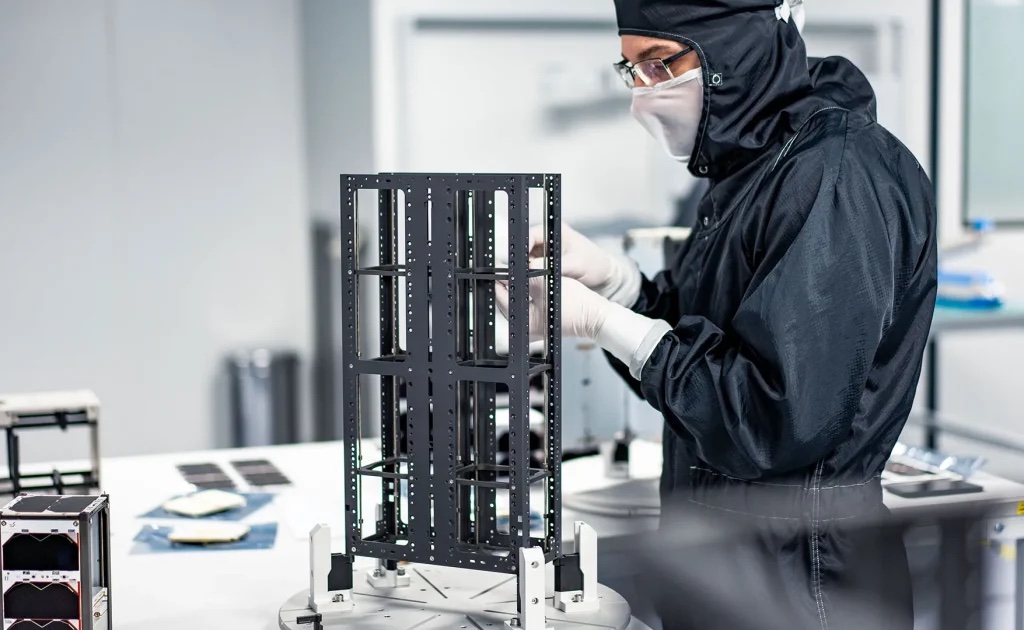
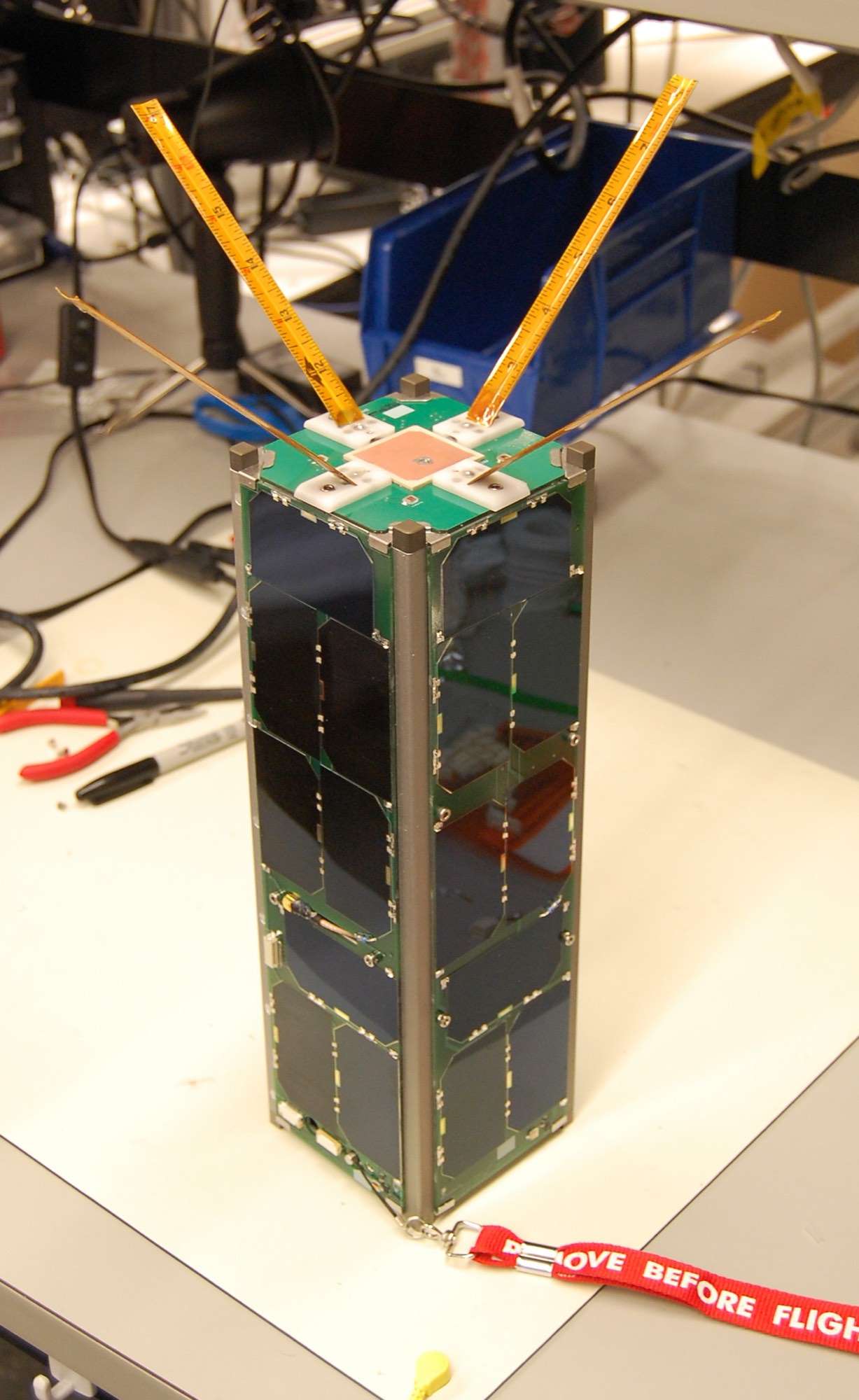
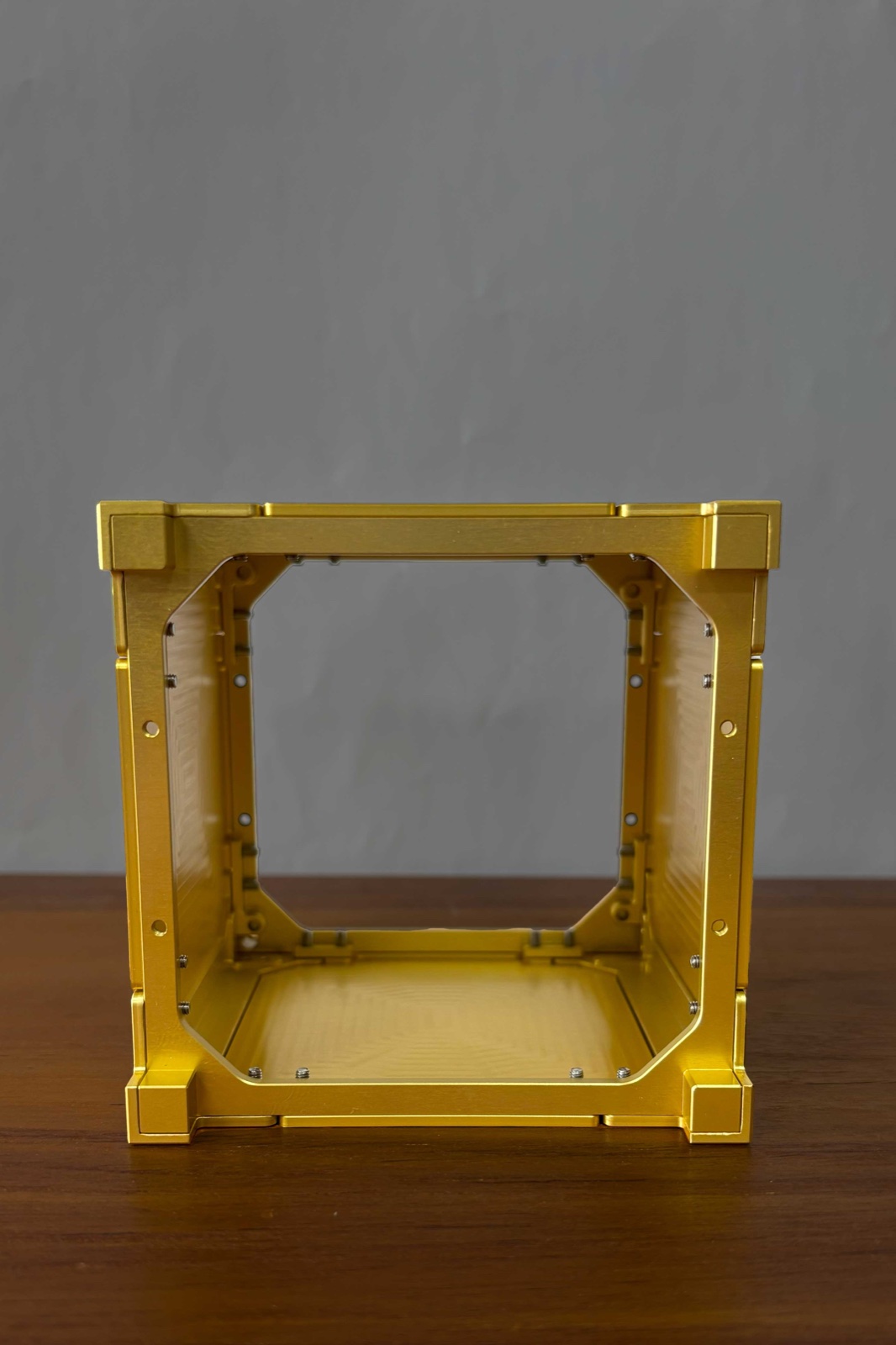
Icarus is the structure of a 3U CubeSat, a small satellite made of three standard units stacked end to end. AlbertaSat, the University of Alberta's satellite team, designed it in-house for its Ex-Alta 2 satellite. It is published as an open-source design that follows the NanoRacks deployer standard.
The rails, ribs and rods are all 6061-T6 aluminium. Four rails run the length of the satellite and four ribs divide it into three units. Four rods carry the circuit boards. The solar panels fold out on hinges that began as an undergraduate engineering project.
Application
An open-source CubeSat structure design from the University of Alberta's AlbertaSat team. It follows the NanoRacks deployer standard and is a worked example for teams designing their own 3U frame.
Photos
How it is built
Rails, ribs and rods
Each of the four rails is 340.5 mm long, plus or minus 0.1 mm, with a cross-section of at least 6 mm by 6 mm. The ribs sit about 100 mm apart. Each rod is threaded at both ends, and the circuit boards sit along it, separated by washers and spacers.
Rails
Ribs (4)
Rods (4), threaded both ends
PCB spacers and washers on rods
Fasteners and ballast
HeliCoil thread inserts were chosen to avoid cold welding, where touching metal surfaces fuse together. Loctite locks the threads. Two ribs carry ballast weights, each a machined metal shell around a dense core, held by M2.5 fasteners. A soft silicone pad separates one ballast from an electronics board to prevent vibration damage.
Thread inserts
Thread locking
Ballasts
Ballast fasteners
Ballast vibration isolator
Folding solar panels
The solar panels fold out on aluminium hinges with springs, which the team machined in-house. The deployment mechanisms use 3D-printed PEEK, a high-performance plastic. The cells are Spectrolab XTJ-Prime gallium arsenide, stuck down with double-sided polyimide tape and electrically connected with silver epoxy.
Hinge bodies (deployable solar panels)
Deployment-mechanism parts
Cell-to-board tape
Cell electrical connection
Where the parts areNumber of parts we have listed in each group
Structure (Icarus 3U bus)14
Deployable and body solar panels (Hyperion, Ex-Alta 2)9
The electrical connections between the solar cells and the board.
Space-grade silicone
A soft pad that protects an electronics board from a ballast weight's vibration, and the adhesive on the tape under the solar cells.
The materials by familyHow many of the parts that name a material use each one
Other10
Aluminium6
Polymers and foams3
Polyimide3
Stainless steel1
How it connects to other things
AlbertaSat designed Icarus in-house for Ex-Alta 2, its 3U CubeSat, and says this cut the cost of construction. The solar panels on Ex-Alta 2 are a separate design called Hyperion, described in their own design document. Texas Instruments supplies the panels' temperature sensors, and Molex their connector. The frame meets the NanoRacks CubeSat Deployer.
Aluminium. Here: Hinge bodies (deployable solar panels); Hinge bodies (statement of material). There: TPMU/DSLP housing.
Gallium arsenide. Here: Solar cell type (paper). There: Solar cells.
What we do not know
No design files, drawings or full list of parts for Icarus are published. The page does not say how the ribs and rods are finished, what the screws are made of, or which grades of Loctite and silicone are used. The ballast metals are not named either.
The detailed data
What is written above is built from these numbers and quotes. Each row links to the page it was taken from. Get all of it as JSON, or ask our MCP server.
Features
4 rails interface with the NanoRacks CubeSat deployer
Four ribs divide the CubeSat into 3 units
Four rods hold the PCBs, threaded at each end
Deployable solar panels: 2 arrays of 3 cells each
Designed in house for Ex-Alta 2, cutting construction cost
Rails kept bare and continuous
Ballasts attached to the ram and anti-ram ribs
Specifications
What
Value
External dimensions
100 x 100 x 340.5 mm (NanoRacks standard)
Mass
0.306 kg
Rail length
340.50 mm +/- 0.1 mm
Rail minimum width
6 mm on x and y faces
Rail minimum cross-section
6 x 6 mm
Rail fillet radius
0.5 mm +/- 0.1 mm
Rib spacing
about 100 mm
Rod end thread
7 mm threaded ends
Solar panel thickness
2 mm
Solar panel area
60 cm2
Solar panel mass
50 g
Ballast fastener thread
M2.5
Materials in detail
Each material named in the sources: where it is used here, which other products use it, and its key numbers when its material page exists.
The Icarus page names only aluminium 6061-T6 and a few hardware items, so panel, adhesive and component lines come from the Ex-Alta 2 Hyperion design document and paper (no assembly needed the 25-line cap).
NanoRacks CubeSat Deployer interface (NR-NRCSD-S0003) · Envelope, rails and requirements the Icarus bus conforms to
NASA outgassing guidelines (TML <= 1.0 %, CVCM <= 0.1 %) · Selection of non-metallic materials for Ex-Alta 2 (test standard not named)
MSFC-SPEC-522 Table I · Stress-corrosion-resistant material selection (screws)
SSP 30245 · Electrical bonding of spacecraft components
What the sources leave out
No Icarus CAD, drawing or BOM is published (no Icarus repository under github.com/AlbertaSat). Missing: anodize/finish spec for ribs and rods (the page calls rails completely bare while the paper says hinges were anodized with the chassis, and these are not reconciled), HeliCoil alloy, Loctite grade, ballast metals, silicone grade, washer/spacer and fastener alloys, hinge spring material, solar panel PCB laminate, finish, solder and mask (Altium .PcbDoc files are binary and no fabrication notes are in the repo), connector part numbers (PicoLock has no MPN), and the Ex-Alta 2 Prometheus battery board cells and Atlas EPS parts (Altium schematics only). The Icarus page describes panels as 2 arrays of 3 cells while the Hyperion document uses 6 cells per panel; the difference is not explained. Solar-panel and component lines are from Ex-Alta 2's Hyperion boards, which fly on the Icarus structure but are documented separately. The design review TX2-MC-127 Ex-Alta 2 Icarus Design CDR is referenced by the Hyperion document but not public.