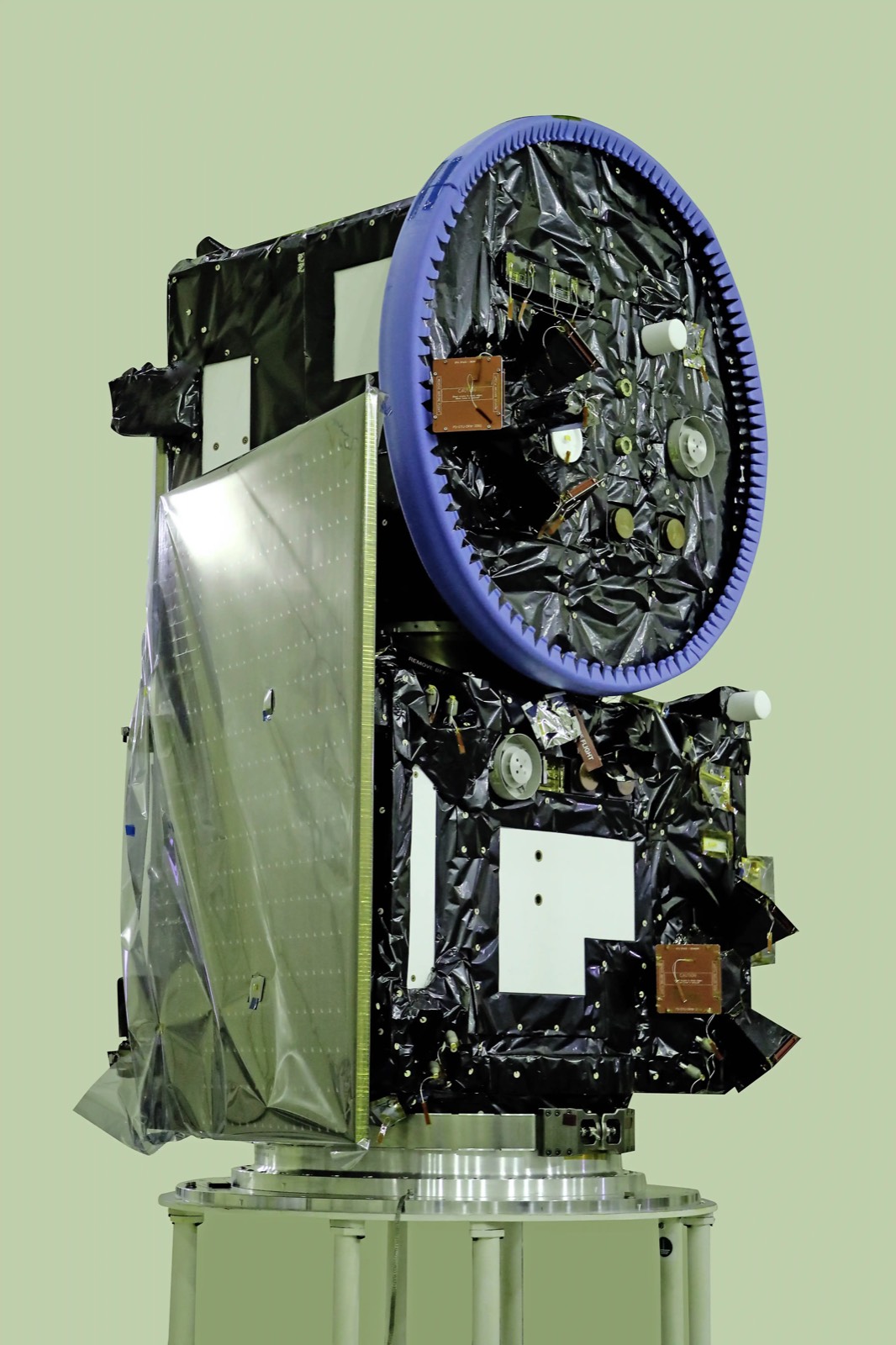
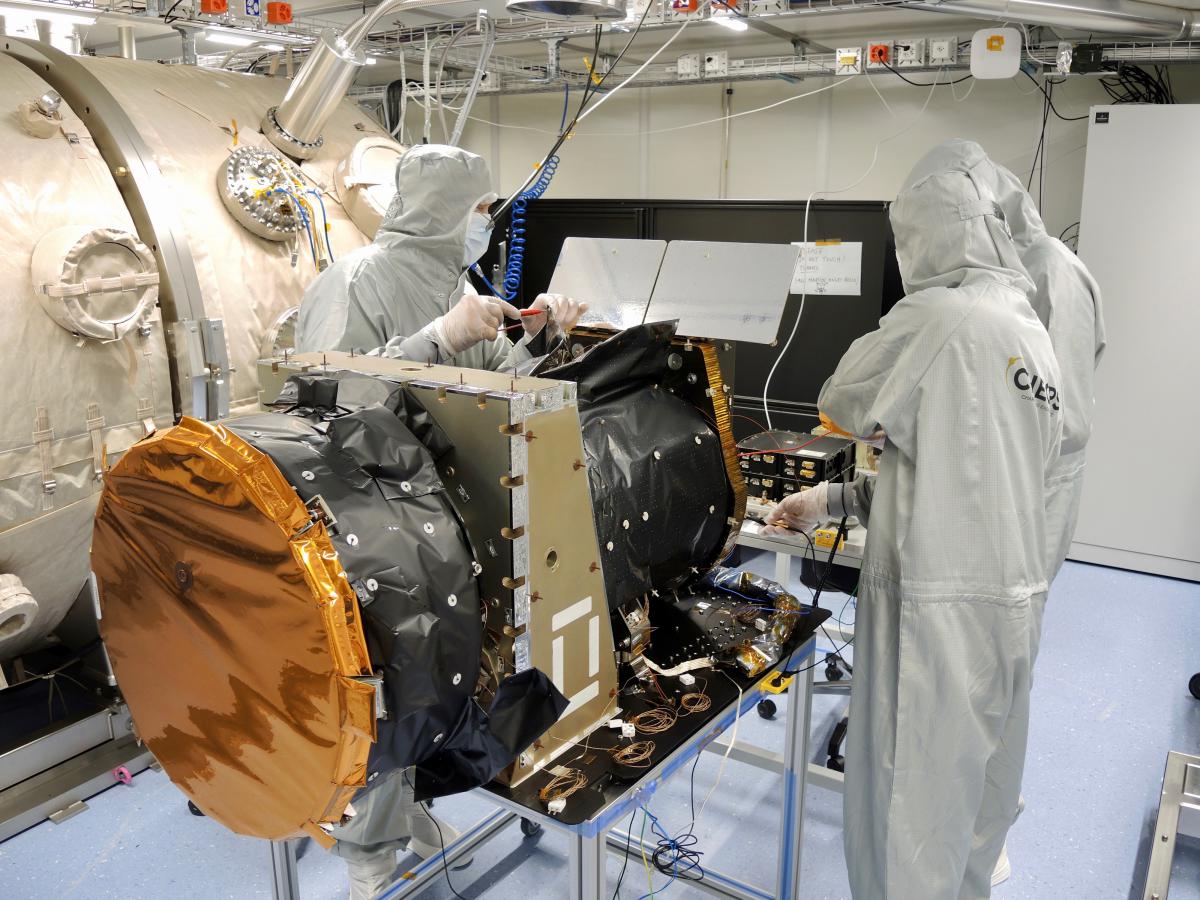
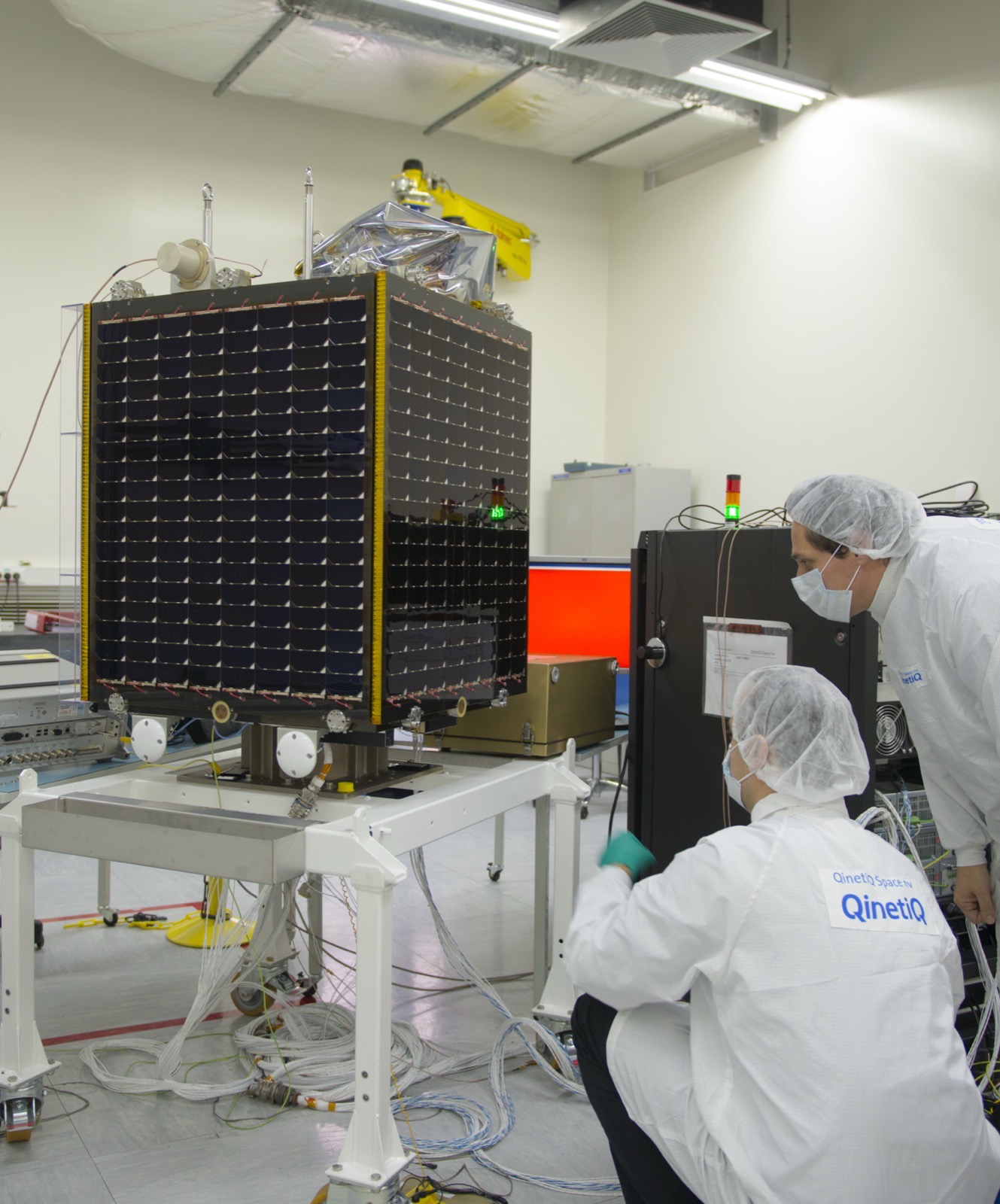
Assembled Proba-V microsatellite on a white stand in a clean room, with two technicians beside it
ESA

Proba-V

Proba-V is a small ESA satellite that watches the world's vegetation and carries guest experiments.

Missions
Product IDesa-proba-v
Orbit
Sun-synchronous polar, 820 km
Launch
7 May 2013, Vega
Swath
2250 km
Sensor temperature extremes
sunlit face up to 100 C, deep-space side down to -50 C
Guest technology
Gallium nitride amplifier in comms subsystem

In short

Proba-V, a small satellite from the European Space Agency (ESA), monitors vegetation worldwide from a polar orbit 820 km up. It crosses the equator every morning between 10:30 and 11:00 local time. Its Vegetation imager sees a strip of ground 2250 km wide.

The Vegetation sensor has to live with big temperature swings. Its sunlit face might reach 100 °C while the side facing deep space can drop to minus 50 °C or lower. Titanium isolators, chosen because they conduct heat poorly, join it to the rest of the satellite, and a dozen layers of insulation wrap it.

Application

A small ESA satellite that monitors vegetation worldwide and carries guest experiments. Its public pages describe thermal-vacuum testing of the structure, which makes it a useful reference for qualifying a small Earth-observation platform.

How it is built

The structure

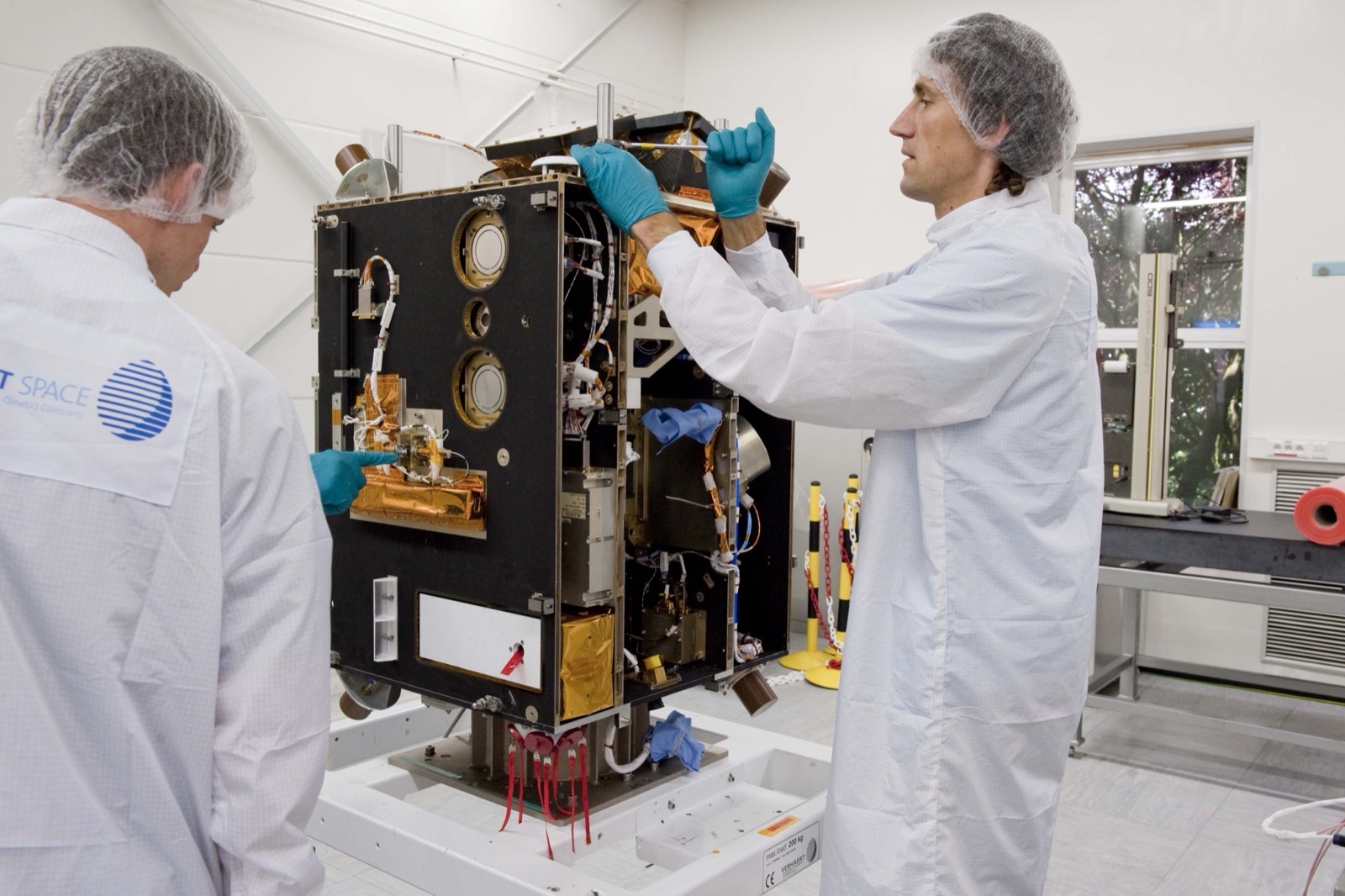
The body is an H-shaped structure of aluminium honeycomb panels, light sandwiches with a cellular core. The thin face sheets are aluminium alloy 2024-T3, 0.8 mm thick on the inner panels and 0.4 mm on the top and Earth-facing panels. Edge profiles and inserts are alloy 7075-T7351, and three outer panels are carbon-fibre composite.

  • Honeycomb panel face sheets
  • Honeycomb core
  • Edge profiles and hot inserts
  • Outer panels (3)

The Vegetation instrument

The instrument has three telescopes. Each telescope's structure and mirrors are made of the same aluminium, in an athermal design, which means temperature changes should not upset the optics. A very accurately machined titanium structure ties the focal plane together, and titanium feet mount the instrument.

  • Telescope (structure and mirrors, 3 telescopes)
  • Focal plane interconnecting structure
  • Instrument mounting feet / flexures

Keeping the temperature steady

A 12-layer wrap of multi-layer insulation covers the instrument, and its radiator is covered with aluminised Teflon. For the satellite as a whole, thermal control is passive, using insulation and paint. A structural and thermal model, a stand-in for the real satellite, stayed within its temperature limits in a vacuum chamber.

  • Instrument thermal wrap
  • Instrument radiator
  • Platform thermal control

Power and radio

The solar array has gallium arsenide cells under cover glass, arranged in 25 strings of 18. The battery is 12 Ah lithium-ion, made of ABSL 18650HC cells. In the radio, a gallium nitride amplifier flies as a guest technology.

  • Photovoltaic array
  • Battery
  • Communication amplifier
Where the parts areNumber of parts we have listed in each group
  • Vegetation instrument (VGT-P)6
  • Bus structure (eoPortal subsystem table)5
  • Power, thermal, RF4

What it is made of

  • Aluminium 2024-T3

    The face sheets of the honeycomb panels, 0.8 mm thick inside and 0.4 mm on the top and Earth-facing panels.

  • Carbon fibre

    Three outer panels, made of carbon-fibre composite.

  • Titanium

    The isolators, the focal plane structure and the mounting feet of the Vegetation instrument.

  • Aluminium

    The three telescopes and their mirrors, all in the same aluminium.

  • Gallium arsenide

    The solar cells, under cover glass.

  • Gallium nitride

    The amplifier in the communication system, flown as a guest technology.

The materials by familyHow many of the parts that name a material use each one
  • Aluminium5
  • Other3
  • Titanium3
  • Carbon fibre1
  • Glass fibre1
  • Semiconductors1

How it connects to other things

Proba-V is one of ESA's Proba missions, and a Vega rocket launched it on 7 May 2013. Its Vegetation imager is a new version of the one flown on the Spot satellites. Guest experiments on board include an Energetic Particle Telescope, the SATRAM radiation monitor, an ADS-B detector for aircraft signals and a fibre optic photonics experiment.

Products that use the same materials

  • Proba-2

    ESA

    Aluminium honeycomb coreAluminiumCarbon fibreLi-ion+1 more
    Where each one is used

    Aluminium honeycomb core. Here: Structure (summary). There: H-configuration inner panels (3); Outer panels without cells and more.

    Aluminium. Here: Telescope (structure and mirrors, 3 telescopes). There: TPMU/DSLP housing.

    Carbon fibre. Here: Outer panels (3). There: Platform structure supplier (eoPortal).

    Li-ion. Here: Battery. There: Battery.

    Gallium arsenide. Here: Photovoltaic array. There: Solar cells.

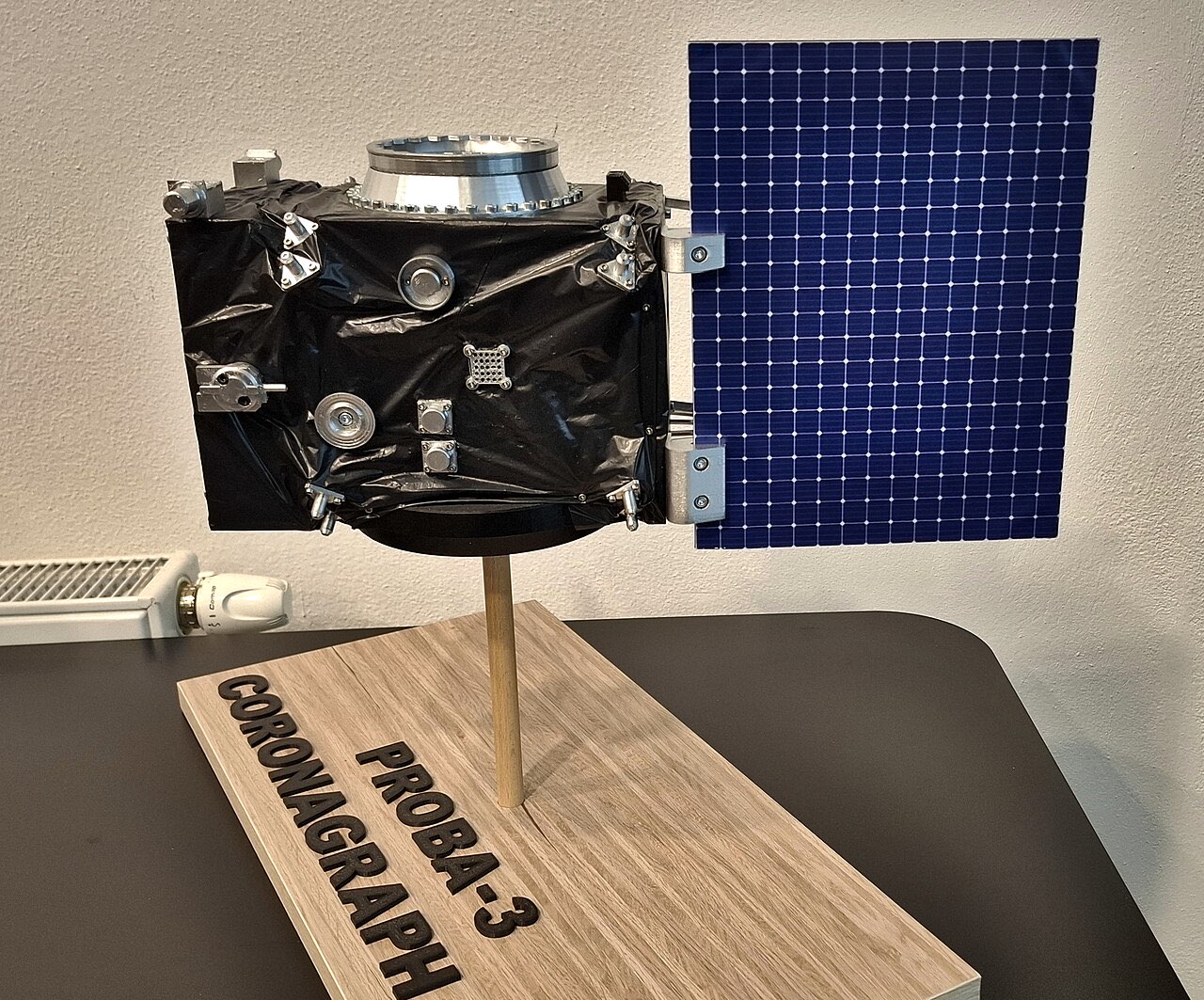
  • Proba-3 Coronagraph spacecraft

    ESA / Airbus

    TitaniumAluminiumCarbon fibreLi-ion+1 more
    Where each one is used

    Titanium. Here: Focal plane interconnecting structure; Instrument mounting feet / flexures and more. There: OBA unit attachment fittings; Instrument support bipods (3).

    Aluminium. Here: Telescope (structure and mirrors, 3 telescopes). There: Main structure tube; Equipment box (EQB) and more.

    Carbon fibre. Here: Outer panels (3). There: OBA sandwich panels.

    Li-ion. Here: Battery. There: Batteries and solar cells.

    Multilayer insulation. Here: Instrument thermal wrap. There: Outer thermal blanket (both spacecraft).

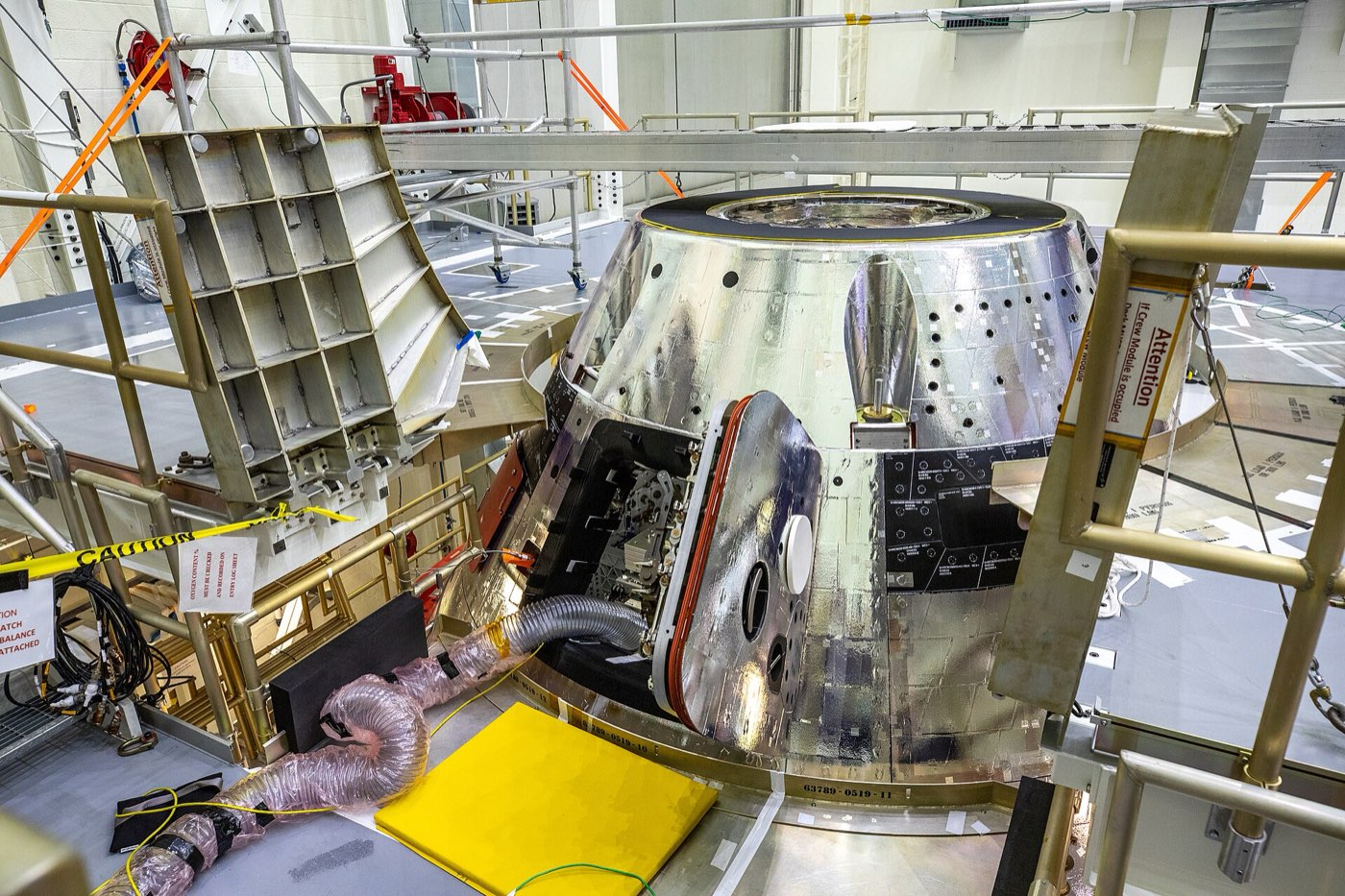
  • Orion spacecraft

    NASA

    TitaniumAluminiumCarbon fibreMultilayer insulation+1 more
    Where each one is used

    Titanium. Here: Focal plane interconnecting structure; Instrument mounting feet / flexures and more. There: Heat shield skeleton.

    Aluminium. Here: Telescope (structure and mirrors, 3 telescopes). There: Pressure vessel (seven large pieces, friction-stir welded); Backbone assembly (floor structure) and more.

    Carbon fibre. Here: Outer panels (3). There: Core panels (webs, tank bulkhead, lower platform); Solar array wings (x4, X-wing, three panels each) with wing-tip cameras.

    Multilayer insulation. Here: Instrument thermal wrap. There: Passive thermal control: multilayer insulation blankets (incl. high-temperature blankets at thrusters and nozzle) and heaters.

    Gallium arsenide. Here: Photovoltaic array. There: Triple-junction gallium arsenide solar cells (15,000 across the four wings).

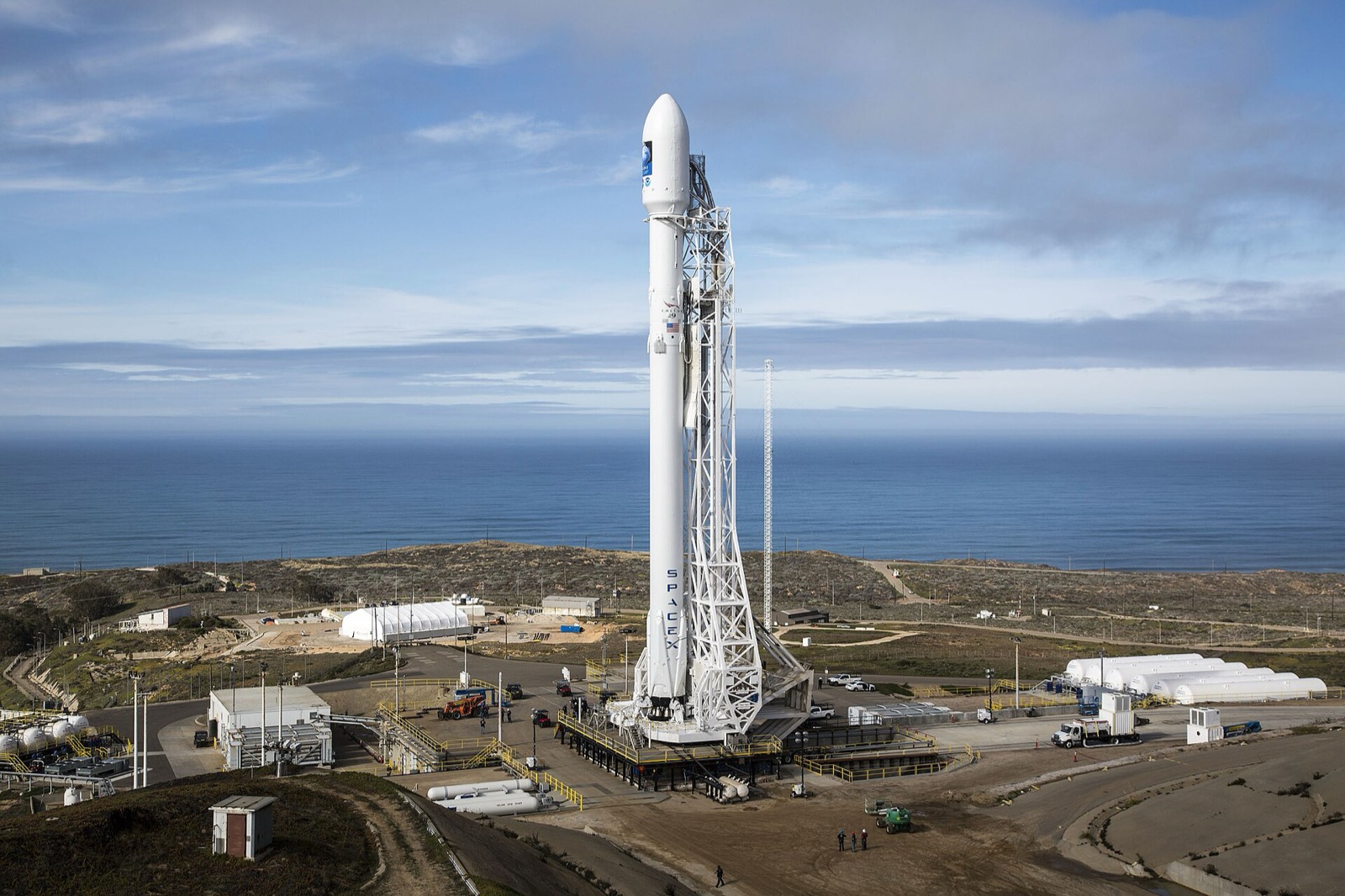
  • Falcon 9

    SpaceX

    TitaniumAluminium honeycomb coreAluminiumCarbon fibre+1 more
    Where each one is used

    Titanium. Here: Focal plane interconnecting structure; Instrument mounting feet / flexures and more. There: Grid fins, titanium version.

    Aluminium honeycomb core. Here: Structure (summary). There: Interstage; Fairing shell (aluminium honeycomb with carbon fibre face sheets).

    Aluminium. Here: Telescope (structure and mirrors, 3 telescopes). There: Tank domes (aluminium).

    Carbon fibre. Here: Outer panels (3). There: Interstage face sheets; Landing legs.

    Li-ion. Here: Battery. There: Lithium-ion batteries (redundant, on each stage).

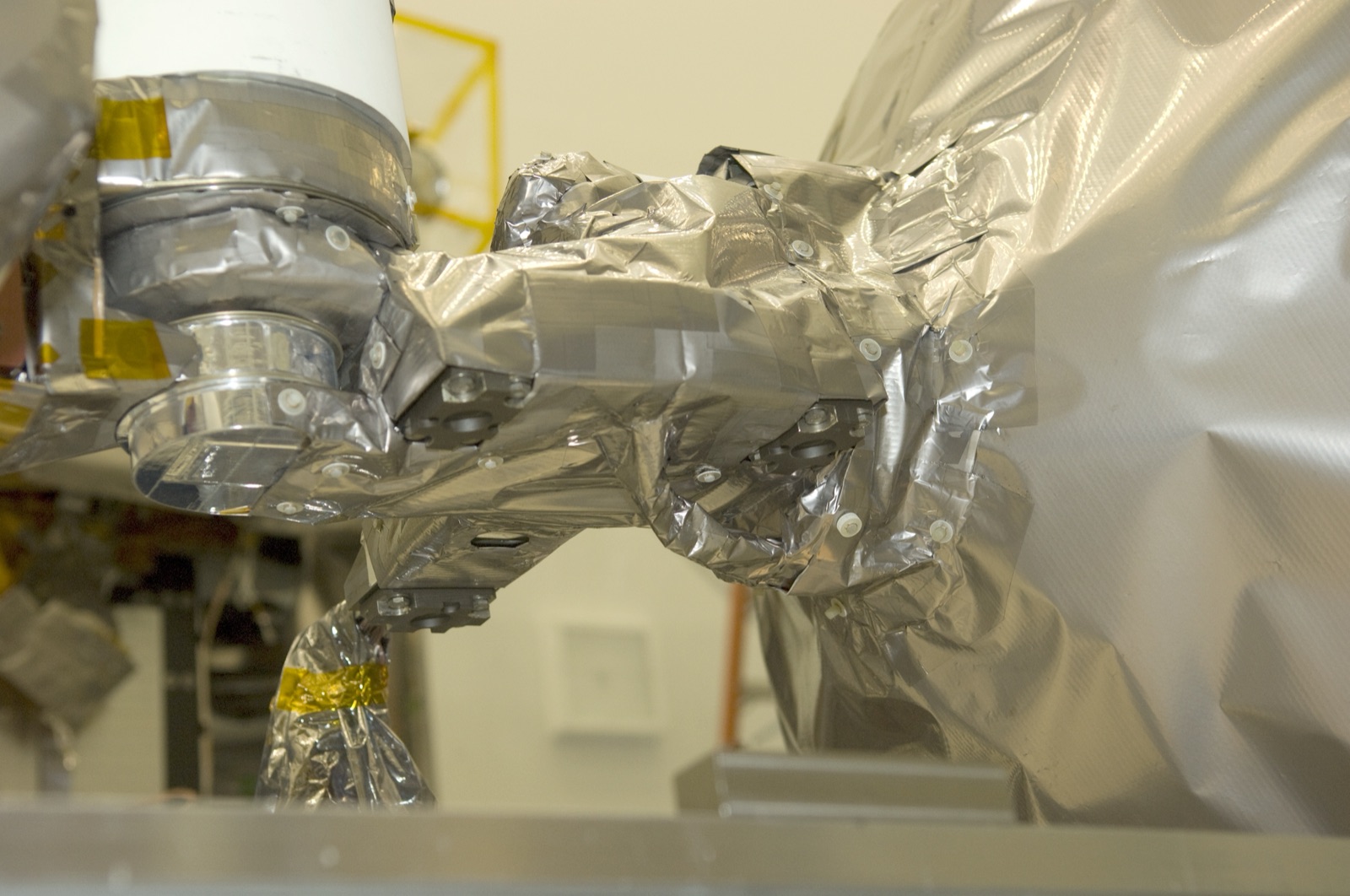
  • Lunar Reconnaissance Orbiter (LRO)

    NASA Goddard Space Flight Center

    TitaniumAluminiumLi-ionMultilayer insulation
    Where each one is used

    Titanium. Here: Focal plane interconnecting structure; Instrument mounting feet / flexures and more. There: Propellant tanks (2); Instrument mounting flexures.

    Aluminium. Here: Telescope (structure and mirrors, 3 telescopes). There: Primary structure (heating/cooling panel, edge members, fittings, brackets); Optical-bench heater aluminum tape and more.

    Li-ion. Here: Battery. There: Battery cells.

    Multilayer insulation. Here: Instrument thermal wrap. There: High Gain Antenna multi-layer insulation and heaters.

  • Perseverance

    NASA / JPL

    TitaniumAluminiumCarbon fibreLi-ion
    Where each one is used

    Titanium. Here: Focal plane interconnecting structure; Instrument mounting feet / flexures and more. There: Wheel spokes; Legs / suspension tubing and more.

    Aluminium. Here: Telescope (structure and mirrors, 3 telescopes). There: Wheel body (6).

    Carbon fibre. Here: Outer panels (3). There: Heat shield facesheets.

    Li-ion. Here: Battery. There: Rechargeable batteries (2).

What we do not know

ESA does not name the alloy of the honeycomb core, the adhesives, fasteners, paints or insulation films, or the base material under the radiator's aluminised Teflon. It gives no figures for the satellite's power, size or lifetime.

The detailed data

What is written above is built from these numbers and quotes. Each row links to the page it was taken from. Get all of it as JSON, or ask our MCP server.

Features

  • Guest experiments: EPT, SATRAM, ADS-B detector, fibre optic photonics
  • Structural and thermal model passed thermal-vacuum test

Specifications

WhatValue
Mass140 kg
OrbitSun-synchronous polar, 820 km
Launch7 May 2013, Vega
LauncherVega
PayloadVegetation imager
Swath2250 km
Guest technologyGallium nitride amplifier in comms subsystem
Temperature extremes (sensor)sunlit face up to 100 C, deep-space side down to -50 C

Materials in detail

Each material named in the sources: where it is used here, which other products use it, and its key numbers when its material page exists.

Every part we have

eoPortal gives a real alloy-and-temper list for the bus structure (face sheets, edge profiles, inserts, CFRP panels) and several instrument parts, but not a full bill of materials.

Bus structure (eoPortal subsystem table)5
PartMaterialFinish and standardMade by
Honeycomb panel face sheets“Aluminum (AA2024-T3): Face sheets t = 0.8 mm inner panels, t = 0.4 mm top and nadir panel), honeycomb core (t = 10. 8 mm)” Aluminum (AA2024-T3)aluminium-2024 — —
Honeycomb core“honeycomb core (t = 10. 8 mm)” Not said — —
Edge profiles and hot inserts“Aluminum (AA7075-T7351): edge profiles, hot inserts” Aluminum (AA7075-T7351)aluminium-7075 — —
Outer panels (3)“3 CFRP (EX-1515/M55J + Redux 312L) outer panels” CFRP (EX-1515/M55J + Redux 312L)carbon-fibre — EX-1515/M55J; Redux 312L
Structure (summary)“Structure Aluminium honeycomb H-structure” Aluminium honeycombaluminium-honeycomb-hexweb — —
Power, thermal, RF4
PartMaterialFinish and standardMade by
Photovoltaic array“Photo-Voltaic Array : Triple junction GaAs cells (3G-28%) Cover glass CMG 100AR coating, 25 strings, 18 cells per string” Triple junction GaAs cells (3G-28%) with cover glass CMG 100AR coatinggallium-arsenide — 3G-28%; CMG 100AR
Battery“Battery:12 Ah Li-ion (7s8p) ABSL 18650HC cells” Li-ionlithium-ion-cell — ABSL 18650HC
Platform thermal control“Thermal Passive (MLI and paint)” MLI and paint (types not named) — —
Communication amplifier“Gallium nitride amplifier incorporated in communication subsystem” Gallium nitridegallium-nitride — —
Vegetation instrument (VGT-P)6

Standards named

  • AA2024-T3 and AA7075-T7351 (alloy-temper designations) · face sheets; edge profiles and hot inserts. No AMS/ASTM specification is cited

What the sources leave out

Honeycomb core alloy and cell size, adhesives (only 'Redux 312L' named, with no stated role beyond the CFRP bracket), fasteners, MLI film types, paint products and radiator base material are not stated. The table is a heritage/equipment table, so panel-by-panel positions are not given.
Where this comes from

3 pages from 2 websites

More space products

Collected from public pages and documents, checked 4 Nov 2026.

Published · Updated