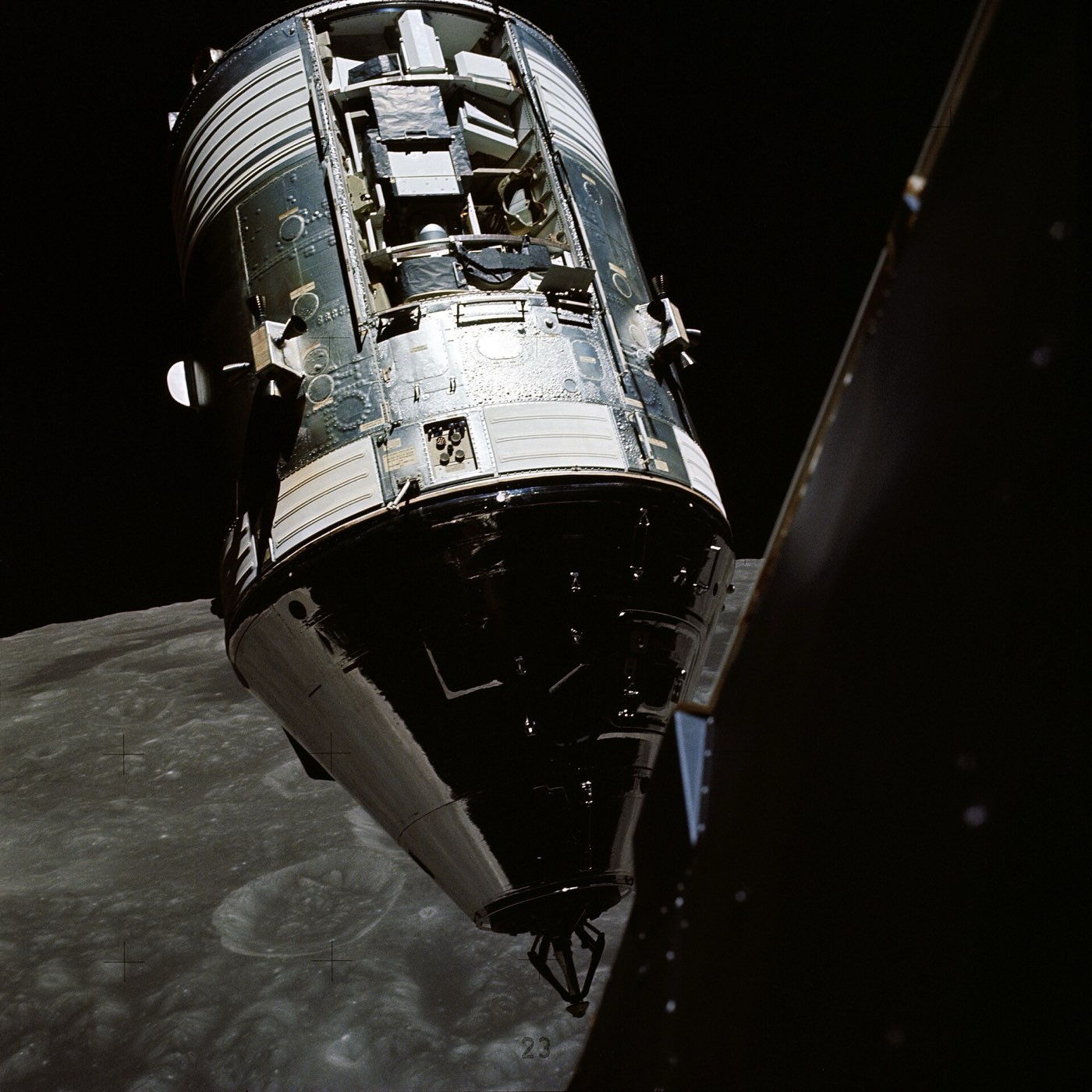
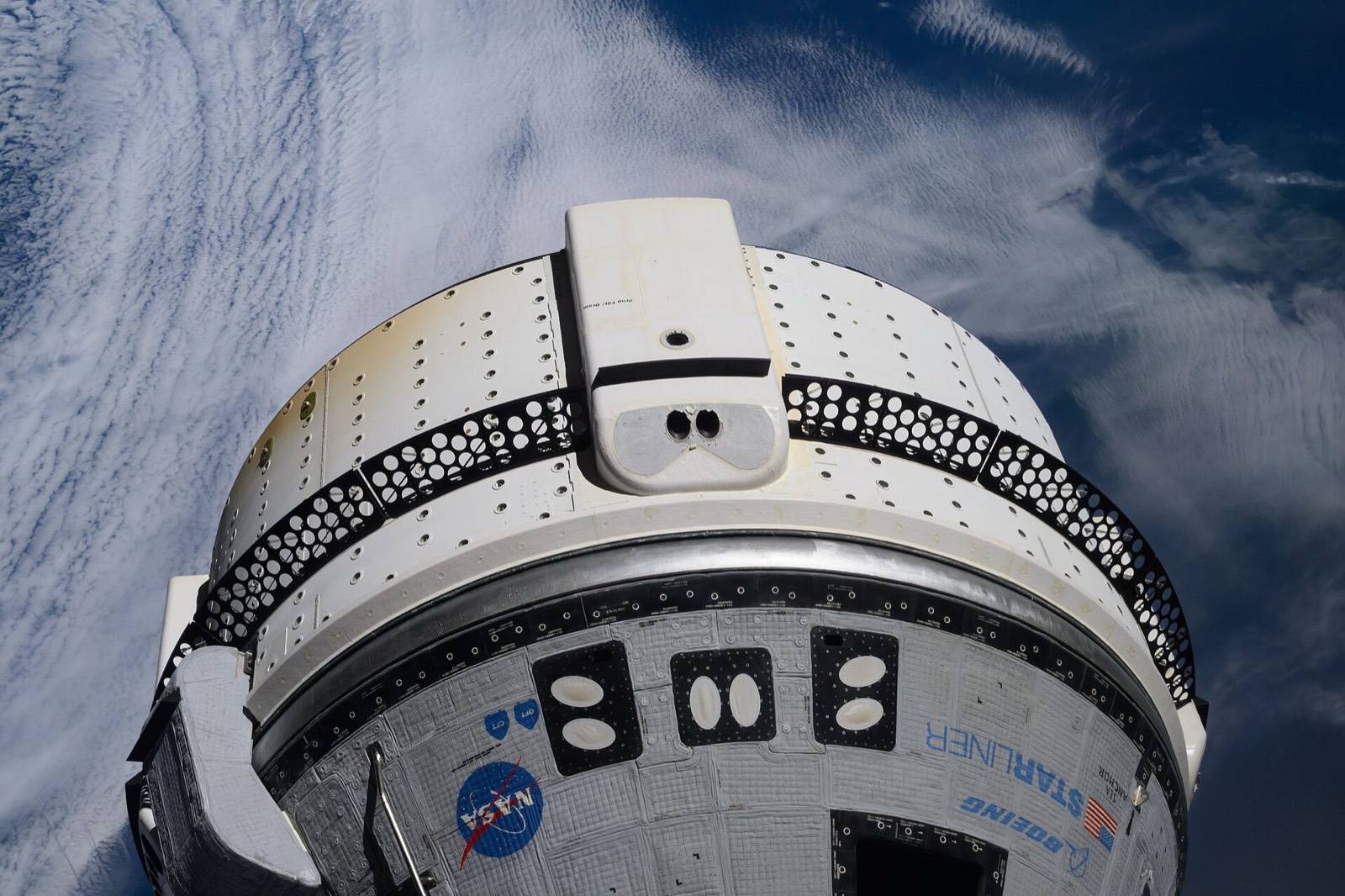
Orion is NASA's crew capsule for deep space, built for the Artemis missions to the Moon. Lockheed Martin builds the crew module, which holds four people for up to 21 days without docking with another spacecraft. A European service module supplies power, propulsion, air and water.
Orion returns from the Moon at lunar-return speed, so its heat shield and welded aluminium pressure vessel are designed for high re-entry heating and loads. The shield is made of Avcoat, an ablative material that wears away as it heats up.
Application
Orion carries astronauts on NASA’s Artemis missions to the Moon. The capsule returns at lunar-return speed, so its heat shield and welded aluminium pressure vessel are designed for high re-entry heating and loads.
Photos
How it is built
Crew module pressure vessel
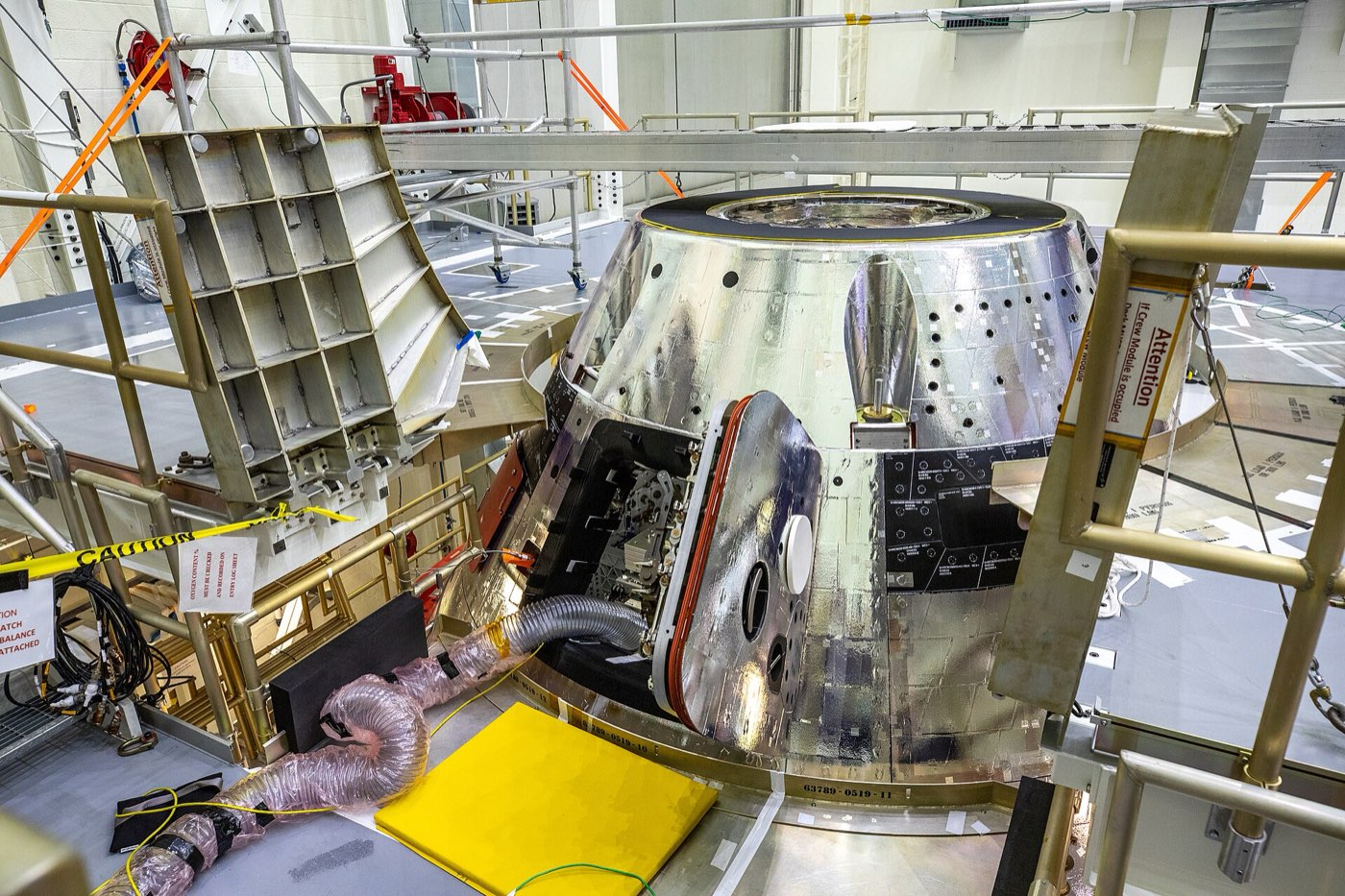
The pressure vessel, the sealed shell around the astronauts, is made of seven large pieces of aluminium alloy, joined by friction-stir welding. That method stirs the metal together with a spinning tool instead of melting it. Engineers refined the design to cut the welds from 33 to seven.
Pressure vessel (seven large pieces, friction-stir welded)
Heat shield and tiles
The outer surface of the heat shield is 186 blocks of Avcoat, bonded to a titanium skeleton and a composite skin. The backshell, the covering over the rest of the capsule, carries about 1,300 tiles of a silica fibre called AETB-8.
Heat shield ablator (186 blocks)
Heat shield skeleton
Heat shield skin
Backshell tiles (about 1,300)
European service module
The European service module is about 4 m long and unpressurised. It supplies power, propulsion, thermal control, air and water, with four solar array wings that unfold to span 19 m. Its structure is built from carbon-fibre sandwich panels with an aluminium honeycomb core.
Core panels (webs, tank bulkhead, lower platform)
CFRP sandwich panel core
Where the parts areNumber of parts we have listed in each group
The service module's core panels, including the tank bulkhead and lower platform.
Aluminium honeycomb
The core inside the service module's carbon-fibre sandwich panels.
The materials by familyHow many of the parts that name a material use each one
Other14
Aluminium7
Polymers and foams4
Carbon fibre2
Titanium1
Glass fibre1
Semiconductors1
How it connects to other things
The service module is European, from ESA and Airbus. The heat shield material, Avcoat, is a reformulated version of the one used on the Apollo capsules.
Orion Main Engine (OME / OMS-E), a refurbished Space Shuttle OMS engine, Aerojet Rocketdyne; one main engine on the European Service Module; about 6,000 lbf; also used for ascent aborts after LAS jettison
R-4D-11 engine
Auxiliary thruster, Aerojet Rocketdyne; eight 110 lbf (490 N) bipropellant thrusters on the service module; backup to the main engine
Orion launch abort motor
Northrop Grumman; solid motor with four nozzles, about 400,000 lbf; pulls the crew module away in an abort
Orion launch abort attitude control motor
Northrop Grumman; solid gas generator with eight valves, about 7,000 lbf; steers the crew module after the abort motor
Orion launch abort jettison motor
Aerojet Rocketdyne / L3Harris; solid motor, about 40,000 lbf; separates the LAS and fires on every flight
Used in
NASA Artemis program
Orion is the crew vehicle of the Artemis missions to the Moon
Carries
220 N reaction control thruster
ATV model, ArianeGroup; twenty-four thrusters in six pods of four on the service module
MR-104J thruster
Crew module reaction control thruster, Aerojet Rocketdyne; twelve 160 lbf monopropellant thrusters in 10 pods on the crew module; steer the capsule during entry
Pyrotechnic linear thrusters (forward bay cover separation)
Push the forward bay cover away together with the three forward bay cover parachutes
Orion parachute deployment mortar
General Dynamics Ordinance & Tactical Systems; cannon-like mortars eject the drogue and pilot parachutes from the forward bay
Orion Crew Survival System (OCSS) pressure suit
Custom-fit orange suits for launch, entry and emergencies; maker not named in the sources read
Orion Artemis II Optical Communications System (O2O) laser terminal
Laser communications demonstration payload managed by NASA Goddard
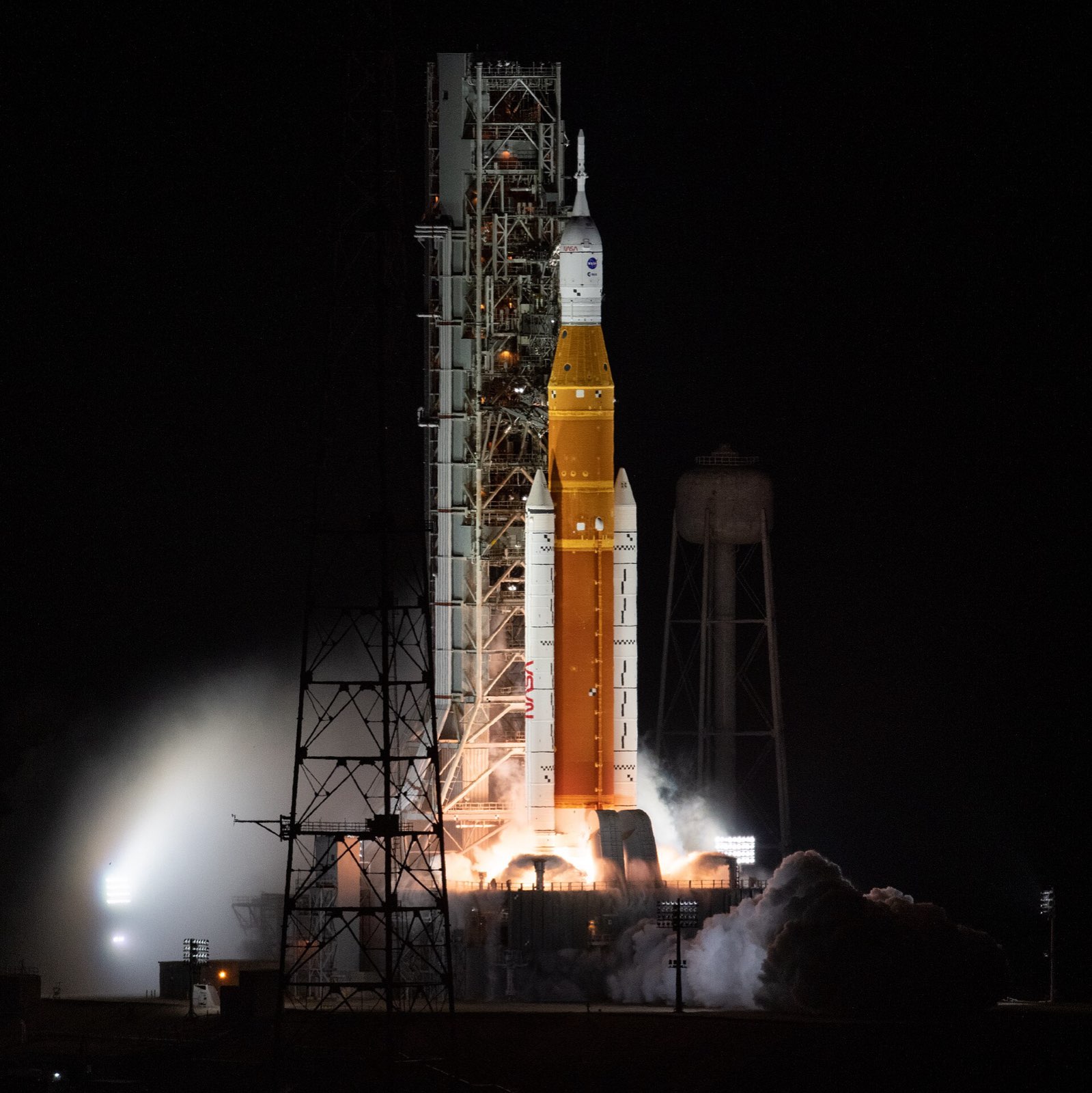
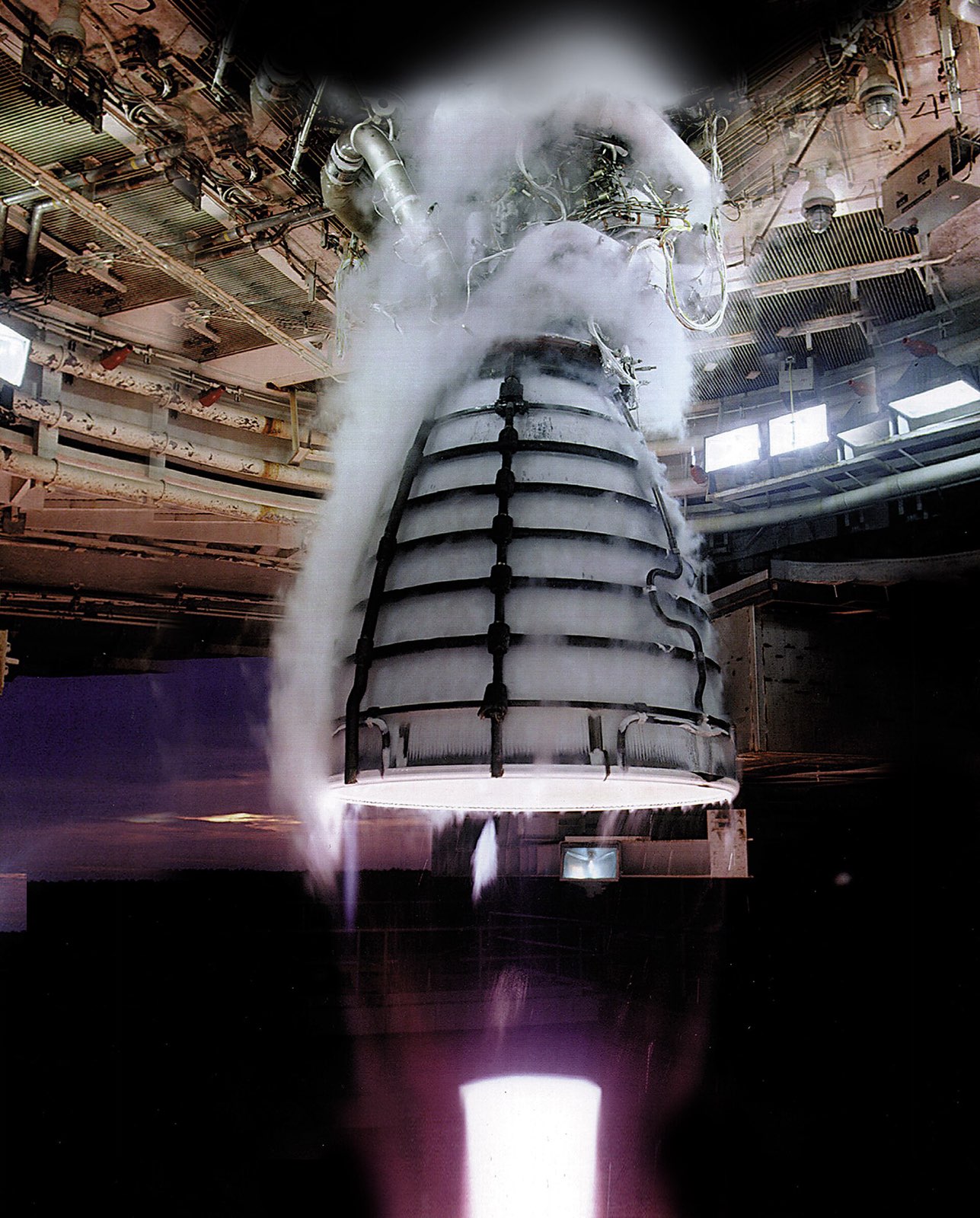
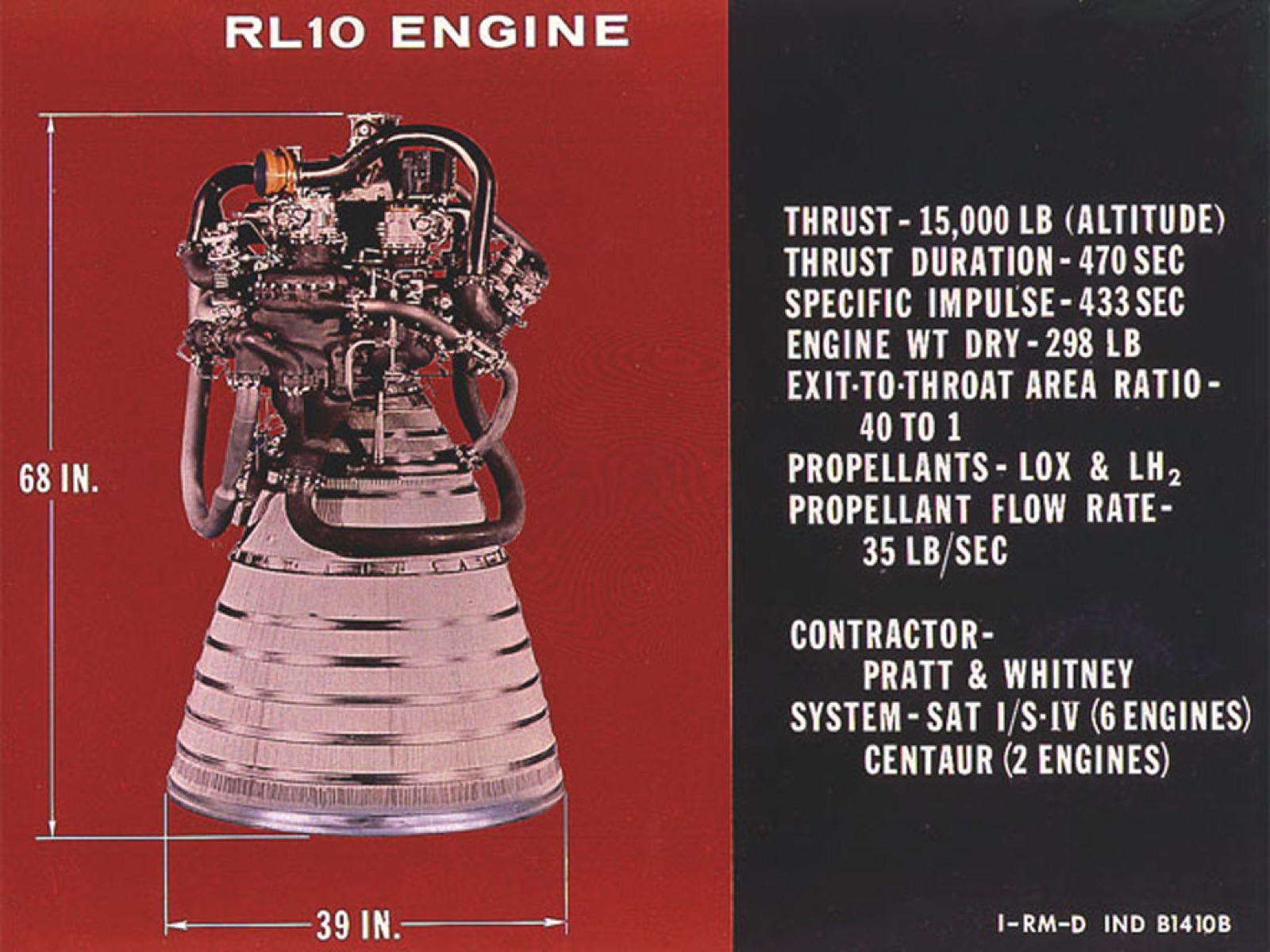
ICPS upper-stage engine: it sent Orion to the Moon with the translunar injection burn on Artemis I and raised Orion's orbit on Artemis II, where Orion's own main engine did translunar injection; launcher engine, not carried by the capsule
SLS five-segment solid rocket booster
Two boosters, Northrop Grumman; twin boosters give most of the liftoff thrust; launcher motors, not carried by the capsule
Builds on
ESA Automated Transfer Vehicle (ATV)
The European Service Module evolved from ATV; same X-wing solar layout and RCS thruster model
Space Shuttle Orbital Maneuvering System engine
The first service module's main engine is a repurposed shuttle OMS engine that already flew in space
Aerojet Rocketdyne AJ10-190 engine (AJ10 family)
Model designation of the shuttle OMS engine, as given by eoPortal; NASA and ESA pages do not state the model number
Space Shuttle thermal protection tiles
Backshell and forward bay cover tiles are AETB-8 silica fibre tiles like the shuttle's
Same three-element layout (launch abort system, crew module, service module); the catalog already links the Avcoat heat shield heritage
Made or supplied by
Lockheed Martin
Prime contractor: crew module, launch abort system and crew module adapter; integrates the service module
European Space Agency (ESA)
Provides the European Service Module under the ISS barter arrangement
Airbus Defence and Space
Prime contractor of the European Service Module; assembled in Bremen
Thales Alenia Space
Service module structure, micrometeoroid and debris protection, thermal control and consumables storage (water, oxygen, nitrogen); the structure comes from Thales Alenia Space Italia
ArianeGroup
Service module reaction control thrusters, propellant tanks and pressure control system
Aerojet Rocketdyne (L3Harris)
Eight R-4D-11 auxiliary engines (on the service module), 12 crew module RCS thrusters, the LAS jettison motor, flotation helium tanks and refurbished main-engine valves
Northrop Grumman
Launch abort motor and attitude control motor
Honeywell Aerospace
Vehicle management computer, inertial measurement system, GPS receiver, barometric altimeter, three display units, seven control panels, hand controllers and core flight software
Collins Aerospace
Environmental control and life support, active thermal control, power management and distribution, and waste management for Artemis III onward
Airborne Systems
Designs and fabricates the 11-parachute system
General Dynamics Ordinance & Tactical Systems
Parachute mortars, provided through Lockheed Martin
AMRO Fabricating Corp.
Pressure vessel: the three cone panels (and the window frames)
Ingersoll Machine Tools
Pressure vessel: barrel, tunnel and forward and aft bulkheads
Emcore
Triple-junction gallium arsenide solar cells for the service module wings
Vivace
Oxygen and nitrogen tanks of the service module
Jena-Optronik
Star tracker (named in a NASA photo caption of a technician working on an Orion star tracker)
Aluminium. Here: Pressure vessel (seven large pieces, friction-stir welded); Backbone assembly (floor structure) and more. There: Main structure tube; Equipment box (EQB) and more.
Carbon fibre. Here: Core panels (webs, tank bulkhead, lower platform); Solar array wings (x4, X-wing, three panels each) with wing-tip cameras. There: OBA sandwich panels.
Multilayer insulation. Here: Passive thermal control: multilayer insulation blankets (incl. high-temperature blankets at thrusters and nozzle) and heaters. There: Outer thermal blanket (both spacecraft).
Titanium. Here: Heat shield skeleton. There: OBA unit attachment fittings; Instrument support bipods (3).
Aluminium. Here: Pressure vessel (seven large pieces, friction-stir welded); Backbone assembly (floor structure) and more. There: Cabin front-face, RCS cluster trusses, decks and bulkheads; Micrometeoroid shield and more.
Aluminium. Here: Pressure vessel (seven large pieces, friction-stir welded); Backbone assembly (floor structure) and more. There: Radial beams; Crushable ribs (x4) and more.
Multilayer insulation. Here: Passive thermal control: multilayer insulation blankets (incl. high-temperature blankets at thrusters and nozzle) and heaters. There: High Gain Antenna multi-layer insulation and heaters.
Aluminium. Here: Pressure vessel (seven large pieces, friction-stir welded); Backbone assembly (floor structure) and more. There: TPMU/DSLP housing.
Carbon fibre. Here: Core panels (webs, tank bulkhead, lower platform); Solar array wings (x4, X-wing, three panels each) with wing-tip cameras. There: Platform structure supplier (eoPortal).
Gallium arsenide. Here: Triple-junction gallium arsenide solar cells (15,000 across the four wings). There: Solar cells.
What we do not know
NASA does not name the alloy of the flight pressure vessel. Lockheed Martin named aluminium-lithium 2195 and aluminium 2219 in 2009, but for a ground-test structure. The heat shield's composite skin, the solar array cells, the tanks and the launch abort system have no published materials.
The detailed data
What is written above is built from these numbers and quotes. Each row links to the page it was taken from. Get all of it as JSON, or ask our MCP server.
Features
Heat shield uses Avcoat, a reformulated Apollo-era ablator
Welds on the pressure vessel cut from 33 to seven
European Service Module supplies power, propulsion, thermal control, air and water
Used in 4 partsPressure vessel (seven large pieces, friction-stir welded) · Backbone assembly (floor structure) · Platforms, longerons and secondary structures · +1 more
Used in 1 partHeat shield white epoxy paint coat and aluminized tape
Material page coming soon
Every part we have
Crew module structure, backshell tiles, heat shield and the ESM structure are described with materials; propulsion, power and launch abort system parts are not. Components, suppliers and links were added from public sources. A material is left blank where no source states it.
Missing: pressure vessel flight alloy grade, heat shield skin composite, ESM tank and solar array materials, windows, hatches, parachute fabrics, launch abort system. More detail: Not found in public sources read: the launch abort system canards and any Boost Protective Cover on the SLS configuration (older Constellation-era term), the LAS tower and fairing composite types, the alloy of the hatches and window frames, ESM propellant, helium and water tank materials, crew module RCS propellant tanks, the maker and chemistry of the four main batteries, makers of the crew seats, OCSS suits, displays' glass, S-band radios, phased-array antennas, the O2O terminal hardware (only NASA Goddard management is stated), the docking mechanism and its maker (only the docking hatch and the Artemis III docking system are stated), pyrotechnic device makers, parachute fibre grades and weaves, and the maker of the Avcoat blocks. The WebSearch budget ran out part-way, so ILC Dover (uprighting bags), David Clark (suits) and battery-supplier pages could not be searched for. Numbers that disagree between sources are listed side by side: OMS-E thrust 6,000 lbf / 26.7 kN (NASA), 25.7 kN (ESA), 27.7 kN (AIAA 2013), up to 6,700 lbf (NASA Artemis II blog); pilot parachute diameter 10 ft, 11 ft and 9.85 ft; habitable volume 330 and 316 cubic feet; LAS height 44 ft (Lockheed) vs 50 ft (Quick Facts); abort motor propellant 4,500 lb (NASA LAS page) vs 4,700 lb (Quick Facts); splashdown speed 20, 17 and 16 mph. The NASA management page says Aerojet Rocketdyne supplies the eight auxiliary engines 'for the crew module', but the NASA service module page, ESA and Aerojet place them on the service module. Several ESM figures (6 water tanks, 4 gas tanks of 33 kg, CFRP solar panels, 8 RCS pods) come from the 2013 preliminary-design-review paper and differ from the final ESA figures (4 water tanks, 1+3 gas tanks, 6 RCS pods); the final ESA values are used where both exist. Pad Abort-1 slides (2015) describe the test-flight LAS motors (abort motor 500,000 lbf, jettison motor 44,000 lbf), not the Artemis flight motors; only their construction details are used and each is labelled. The eoPortal page is a secondary summary and is used only for the AJ10-190 model designation. The Artemis II launch profile changed: the ICPS RL10 raised the orbit and Orion's main engine did translunar injection, whereas on Artemis I the ICPS did translunar injection.