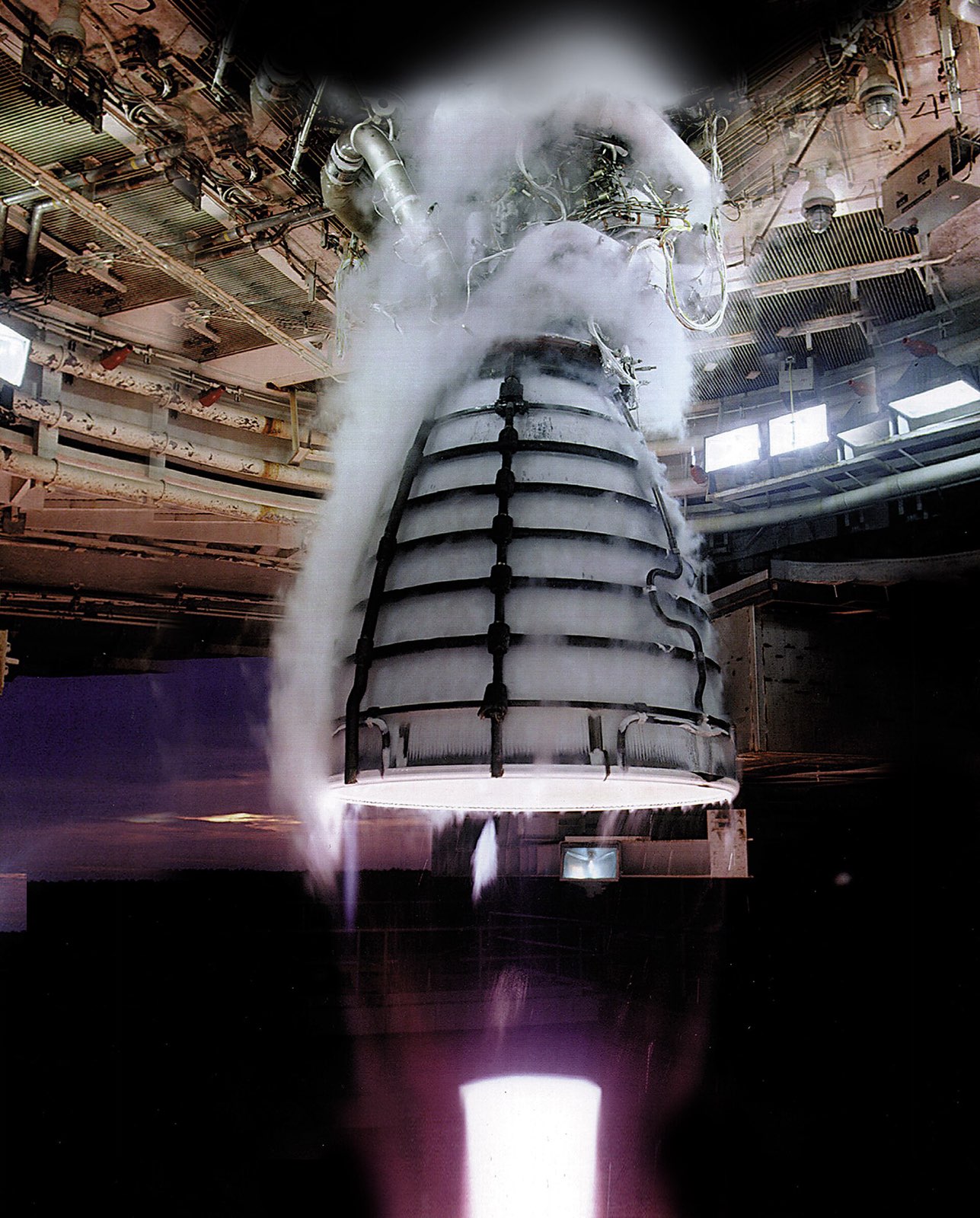
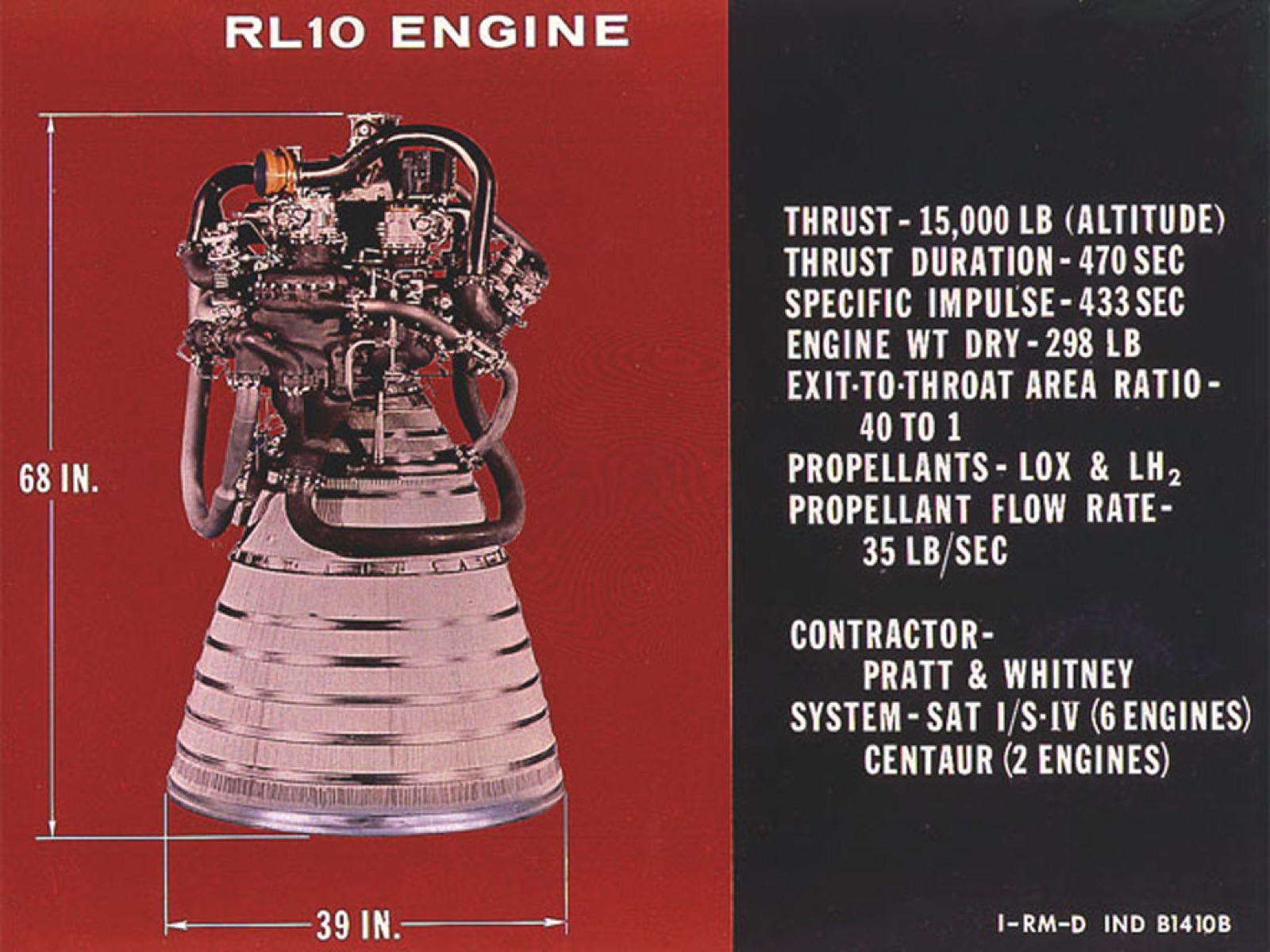
RL10 engine on a Pratt & Whitney data card with dimensions, thrust and specific impulse printed beside a photo of the engine
Aerojet Rocketdyne

RL10 engine

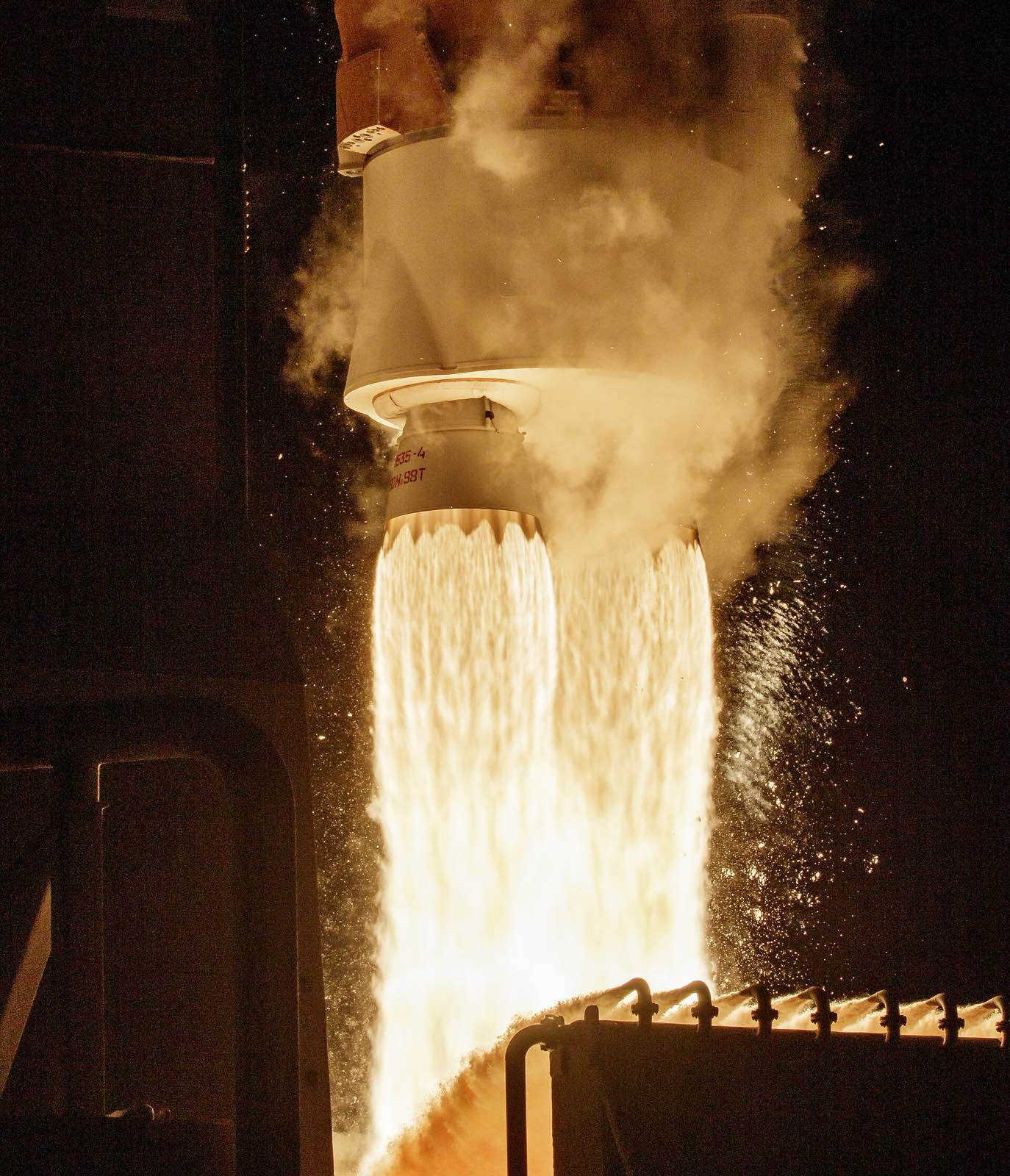
The RL10 is a hydrogen and oxygen upper-stage rocket engine that first ran in 1959 and is still flying.

Engines
Product IDula-rl10
First run
1959
Propellants
Liquid hydrogen and liquid oxygen
Cycle
Expander cycle
Thrust today
Nearly 25,000 lbf, Isp nearing 467 s
Original thrust
15,000 lbf, Isp about 444 s (RL10A-1 era)
Longest single run
one engine ran at full thrust for 1,680 s (28 minutes)

In short

The RL10 is a rocket engine for upper stages, burning liquid hydrogen with liquid oxygen. It first ran in 1959 and began at 15,000 pounds-force of thrust. Current versions are rated at nearly 25,000. Pratt & Whitney designed it, as the company's first rocket engine, and Aerojet Rocketdyne makes it today in West Palm Beach, Florida.

The original design's thrust chamber is a bundle of thin stainless steel tubes brazed together, and its pumps are aluminium. Hydrogen runs through the tubes, picks up heat from the chamber walls, and then drives the turbine that pumps the propellants. This is the expander cycle.

Application

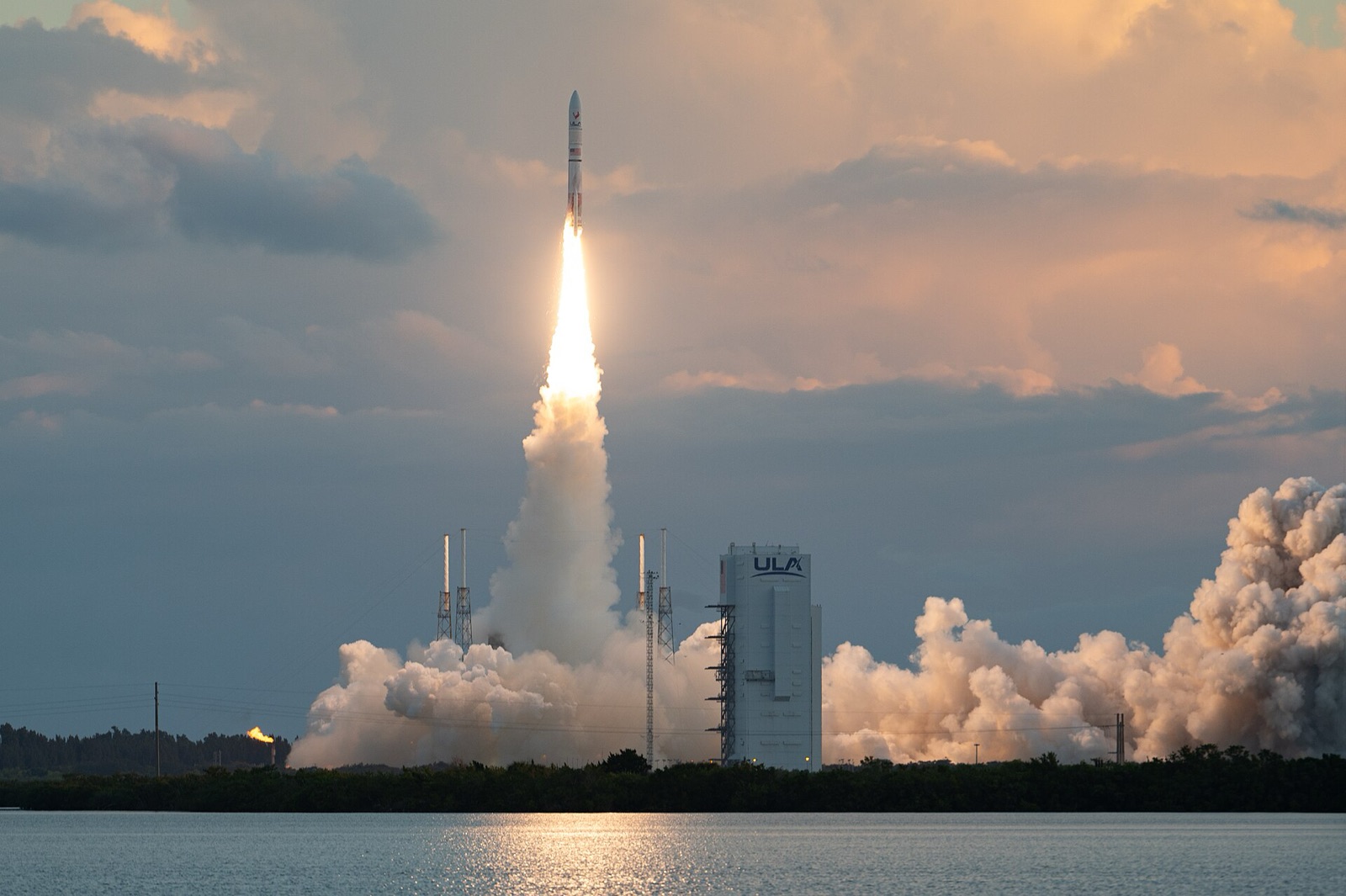
RL10 is the upper-stage engine on ULA’s Centaur stage, used on Atlas V and Vulcan. It burns liquid hydrogen and liquid oxygen and is built for restartable in-space burns, so its materials must handle both cryogenic propellant and hot exhaust.

How it is built

Thrust chamber

The tapered tubes are Type 347 stainless steel, with walls only 0.012 inch thick, rolled by the LeFiell Company. They are silver-brazed together in a gas furnace for 20 hours, with manifolds at each end, to make one light chamber. Hydrogen flowing inside protects the tubes from combustion at nearly 6,000 degrees Fahrenheit.

  • Thrust chamber tubes (RL10 as described in P&W-era history)
  • Tube braze joints
  • Thrust chamber tube bundle (180 up tubes and 180 down tubes)
  • Chamber inlet and discharge manifolds with stiffening bands
  • RL10C-1 thrust chamber tubes

Injector

The injector face is Rigimesh, stacks of Type 347 stainless steel mesh hot-rolled into a porous sintered plate. It carries 216 injector elements in concentric circles, each a central stream of liquid oxygen wrapped in a ring of gaseous hydrogen. A spark igniter set into the face starts combustion.

  • Injector face plate (Rigimesh)
  • Injector elements (x216)
  • Spark igniter

Pumps and turbine

The fuel pump's impellers and body are aluminium, and its shaft and bearings are stainless steel. Both turbine stages, both disks and the hub are machined from one aluminium alloy forging. A gear train of 6260 alloy gears drives the oxygen pump, which has a stainless steel impeller in an aluminium housing.

  • Fuel pump inducer, impellers and body
  • Fuel pump drive shaft and bearings
  • Turbine blades, disks and hub
  • Drive gears
  • Oxidizer pump impeller and inducer

Nozzle extensions

Some versions add a nozzle extension to improve performance. The RL10A-4 had an extendible, radiation-cooled nozzle of columbium, a name for niobium alloy, and the RL10A-4-2 has a fixed 51-centimetre columbium extension. The RL10B-2 uses carbon-carbon from Safran Ceramics, and no other American liquid engine has flown with one.

  • RL10A-4 extendible nozzle
  • RL10A-4-2 fixed columbium nozzle extension (51 cm)
  • RL10B-2 carbon-carbon nozzle extension

A printed copper chamber

Aerojet Rocketdyne has tested an RL10 thrust chamber of copper alloy made by 3D printing. It has only two main copper parts in place of the brazed tube bundle, a part count more than 90 percent lower. A full-scale 3D-printed injector was hot-fired with it.

  • Additively manufactured copper-alloy thrust chamber (test article)
  • Additively manufactured injector (test article)
Where the parts areNumber of parts we have listed in each group
  • Thrust control and valves8
  • Thrust chamber and nozzle5
  • Turbomachinery5
  • Fuel turbopump4
  • Oxidizer pump and gear train4
  • Injector and ignition4
  • Thrust chamber and primary nozzle3
  • Nozzle extension2
  • Development hardware2
  • Injector1

What it is made of

  • Type 347 stainless steel

    The thin chamber tubes and the injector face. Pump shafts, bearings and the oxygen impeller are stainless too, grade unstated.

  • Silver braze

    Joins the chamber tubes in a 20-hour furnace cycle. The alloy is unnamed.

  • Aluminium

    The fuel pump, turbine blades and disks, and the oxygen pump housings, in unnamed alloys.

  • Columbium (niobium) alloy

    The radiation-cooled nozzle extensions of the RL10A-4 and RL10A-4-2.

  • Carbon-carbon

    The nozzle extension of the RL10B-2, made by Safran Ceramics from a needled preform.

  • Copper alloy

    The 3D-printed test chamber. It is a development part, not a flight engine.

The materials by familyHow many of the parts that name a material use each one
  • Stainless steel5
  • Other5
  • Aluminium4
  • Gold and silver2
  • Polymers and foams1
  • Copper1

How it connects to other things

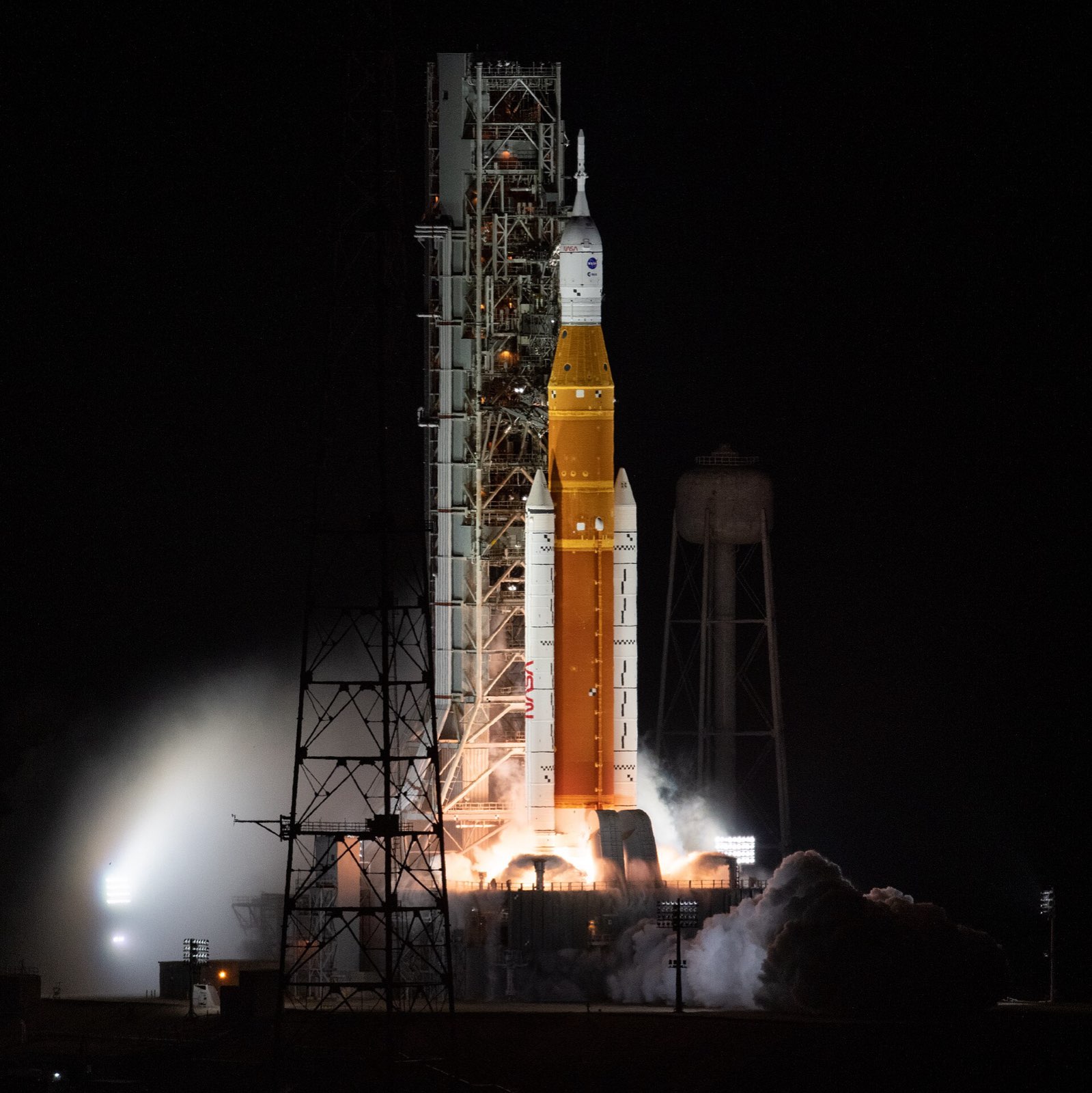
The RL10 was created for Convair's Centaur stage. Today one or two power the Centaur on Atlas V, two power Vulcan's Centaur V, and one powers the upper stage of NASA's Space Launch System. Earlier users include the Delta III and IV second stages, Titan Centaurs and, in a cluster of six, the Saturn I's S-IV stage. At least three of its technologies passed into the J-2.

Used in

  • Atlas V

    United Launch Alliance

    One engine (single-engine Centaur) or two (dual-engine); RL10A-4-2, now RL10C-1

    1 more detail

    Current Atlas V Centaur carries the RL10C-1

  • Vulcan Centaur

    United Launch Alliance

    Two RL10C-1-1A engines, 23,825 lbf each

  • Space Launch System (Block 1)

    NASA

    Interim Cryogenic Propulsion Stage: one RL10B-2 engine (24,750 lbf)

    1 more detail

    Planned stage with four RL10C-3 engines (about 97,000 lbf total)

  • Saturn I (S-IV second stage)

    Cluster of six RL10 engines (RL10A-3S)

    1 more detail

    S-IV was 18.3 ft in diameter with six engines

  • Delta IV (Delta Cryogenic Second Stage)

    One RL10B-2-1 engine per stage

    1 more detail

    RL10B-2 upper stage engines with carbon-carbon nozzle extensions

  • Delta III (Delta Cryogenic Second Stage)

    One RL10B-2 engine per stage

    1 more detail

    Delta III chose a carbon-carbon nozzle extension for the RL10B-2

  • Titan IIIE Centaur (Centaur D-1T)

    Two RL10A-3-3T engines

  • Titan IV Centaur

    Two RL10A-3-3AT engines on the Titan IVA Centaur

    1 more detail

    Two RL10A-4-1T engines on the Titan IVB Centaur

  • Atlas II Centaur (D-2)

    Two engines per Centaur

  • Atlas III Centaur (D-3A, D-3B)

    One engine on the Atlas IIIA single-engine Centaur

    1 more detail

    Two engines on the Atlas IIIB dual-engine Centaur

  • Atlas-Centaur AC-1 (first Atlas/Centaur vehicle)

    Two RL10A-1 engines on the Atlas SLV-3C Centaur A

  • Delta Clipper DC-X

    Four RL10A-5 engines

Launches

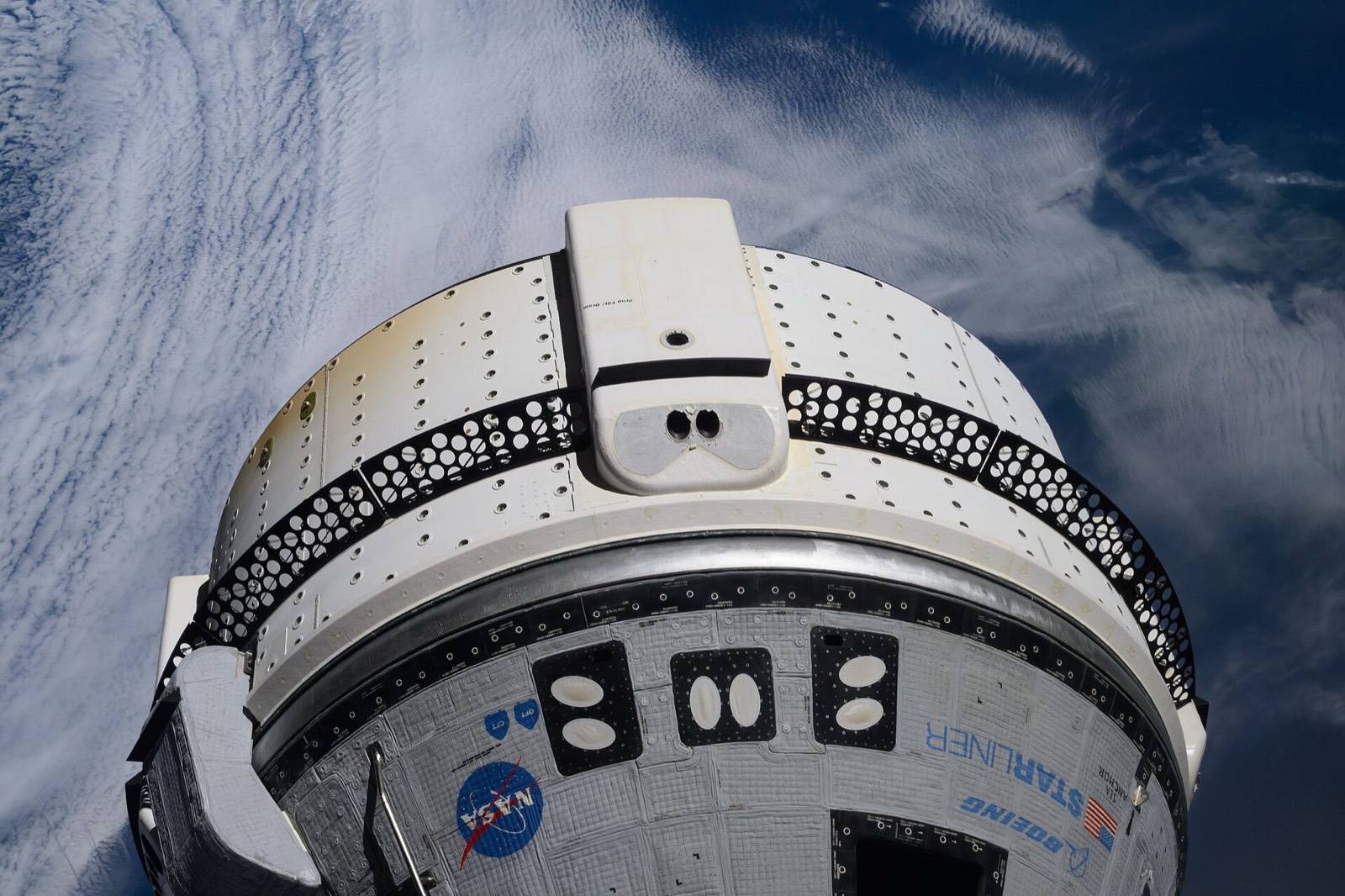
  • CST-100 Starliner

    Boeing

    Upper-stage engines of the Atlas V that lifts Starliner; launcher engine, not carried by the capsule

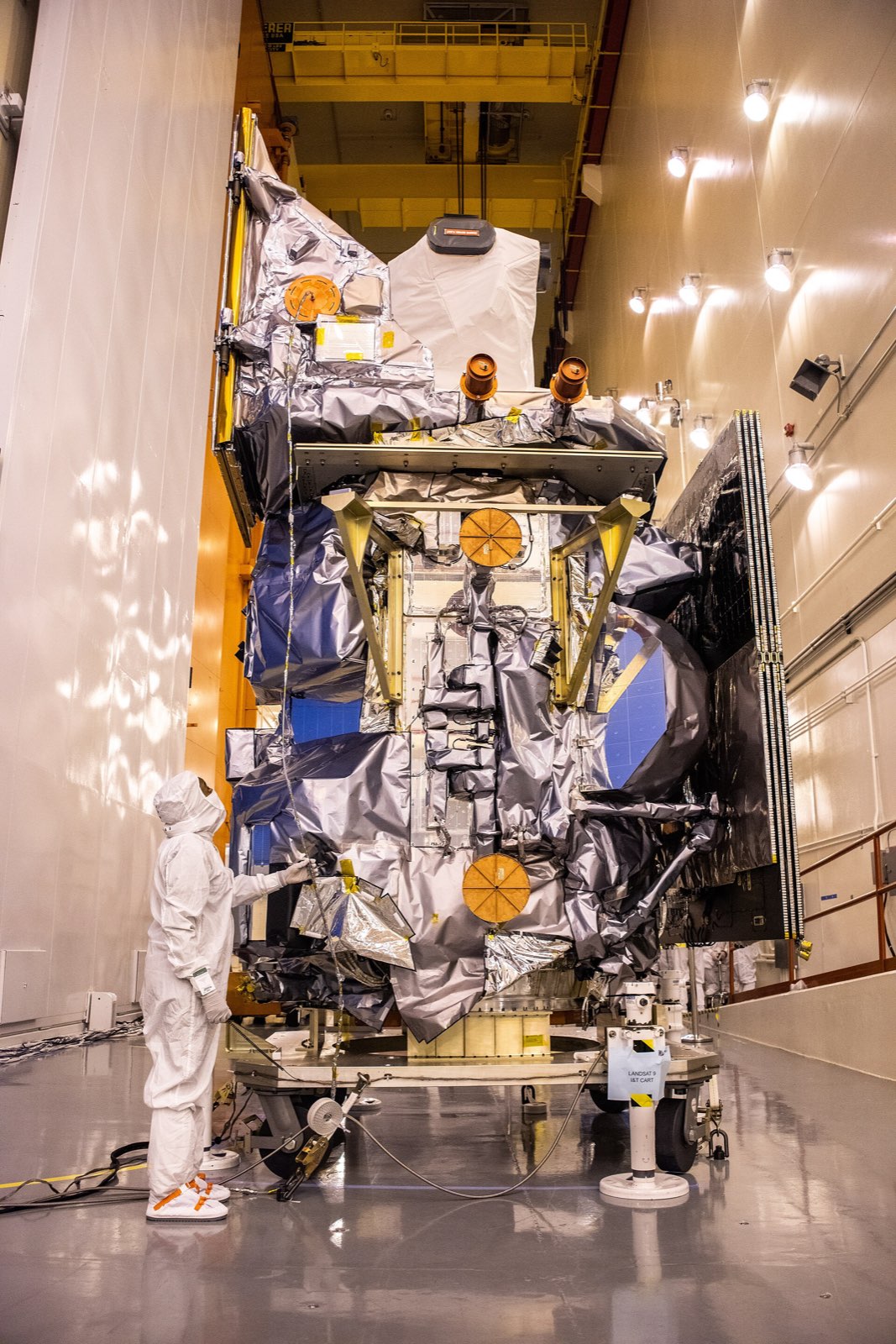
  • Landsat 9

    NASA / USGS

    single RL10C-1 producing 22,900 lb of thrust; RL10 hub is ula-rl10

  • Lunar Reconnaissance Orbiter (LRO)

    NASA Goddard Space Flight Center

    single RL10A-4-2 on Centaur, 22,300 lb thrust; RL10 hub is ula-rl10

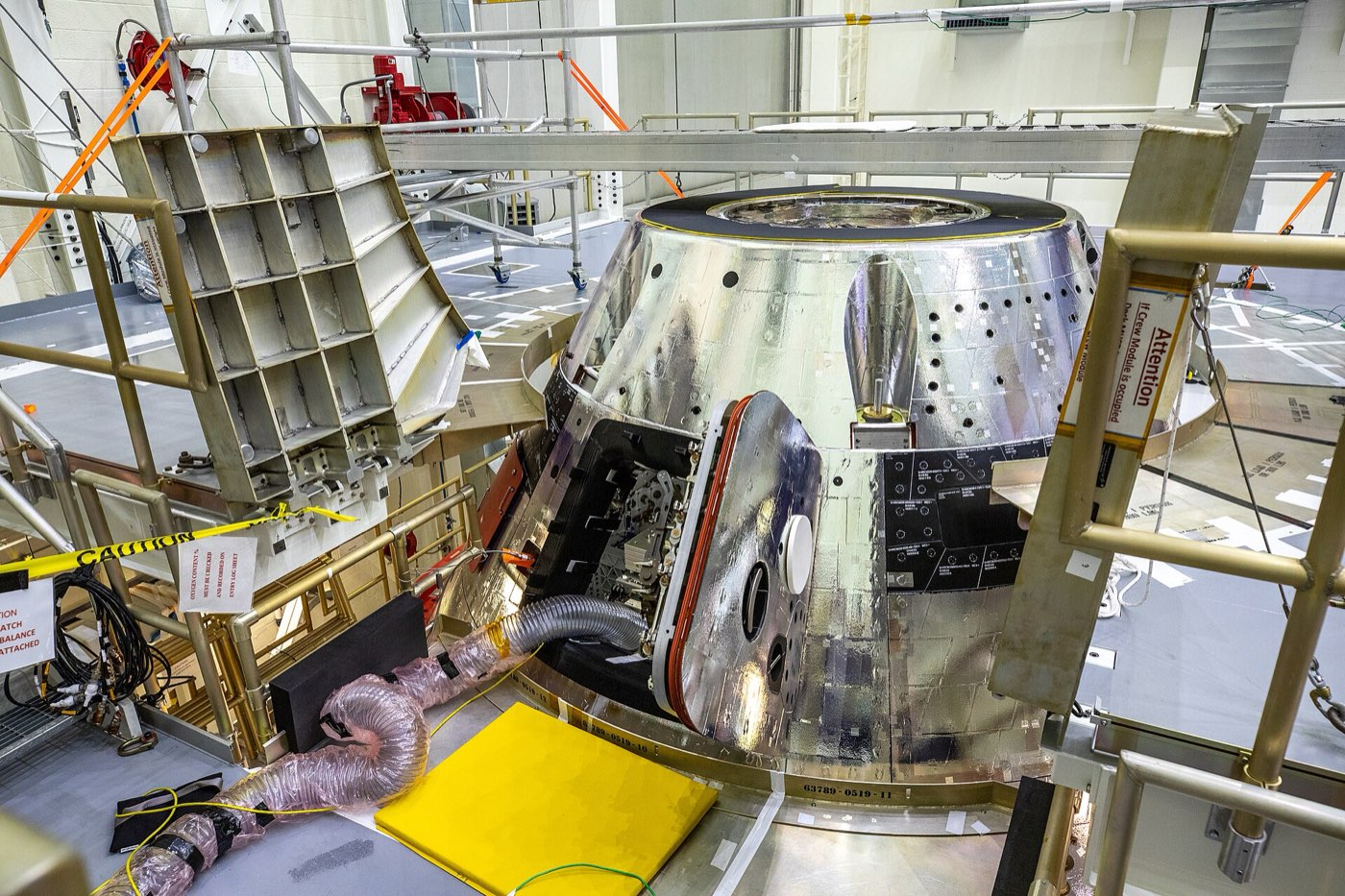
  • Orion spacecraft

    NASA

    ICPS upper-stage engine: it sent Orion to the Moon with the translunar injection burn on Artemis I and raised Orion's orbit on Artemis II, where Orion's own main engine did translunar injection; launcher engine, not carried by the capsule

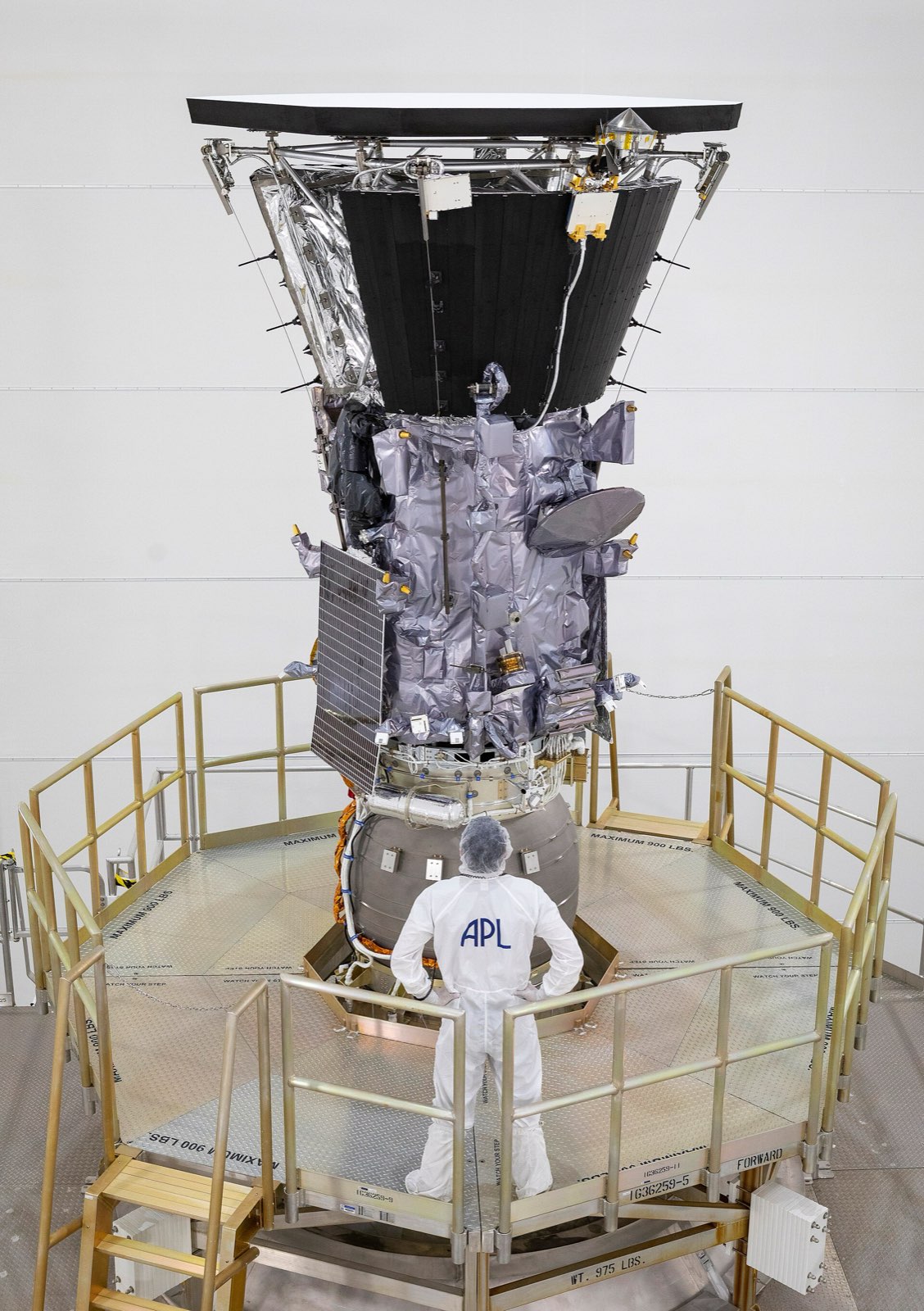
  • Parker Solar Probe

    NASA / Johns Hopkins APL

    single RL10B-2 on the second stage, 24,750 lb thrust; RL10 family hub is ula-rl10

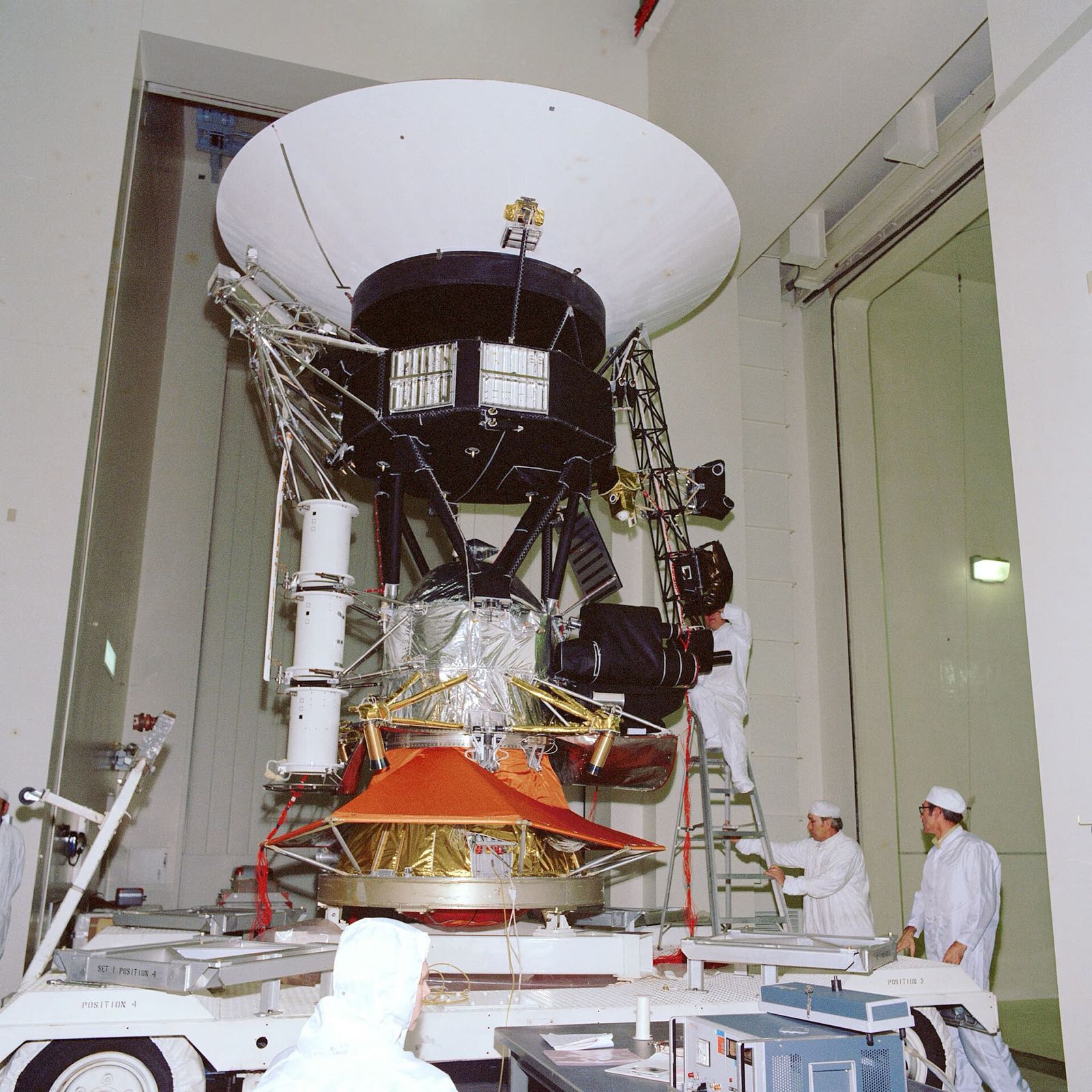
  • Voyager spacecraft (Voyager 1 and 2)

    NASA / JPL

    Centaur D-1T used two RL10A-3 engines from Pratt & Whitney; RL10 hub is ula-rl10

Builds on

  • J-2 engine

    Rocketdyne

    Three RL10 technologies were adopted in the J-2

Built on

  • Centaur upper stage (Convair)

    Engine was created for the Centaur stage; two 15,000 lbf engines

Made or supplied by

  • Aerojet Rocketdyne

    Current maker, West Palm Beach, Florida

  • L3Harris Technologies

    Named as maker of the ICPS RL10 engine

  • Pratt & Whitney

    Original designer; the RL10 was P&W's first rocket engine

  • LeFiell Company

    Rolled the tapered chamber tubes

  • Safran Ceramics

    Carbon-carbon nozzle extension of the RL10B-2

Products that use the same materials

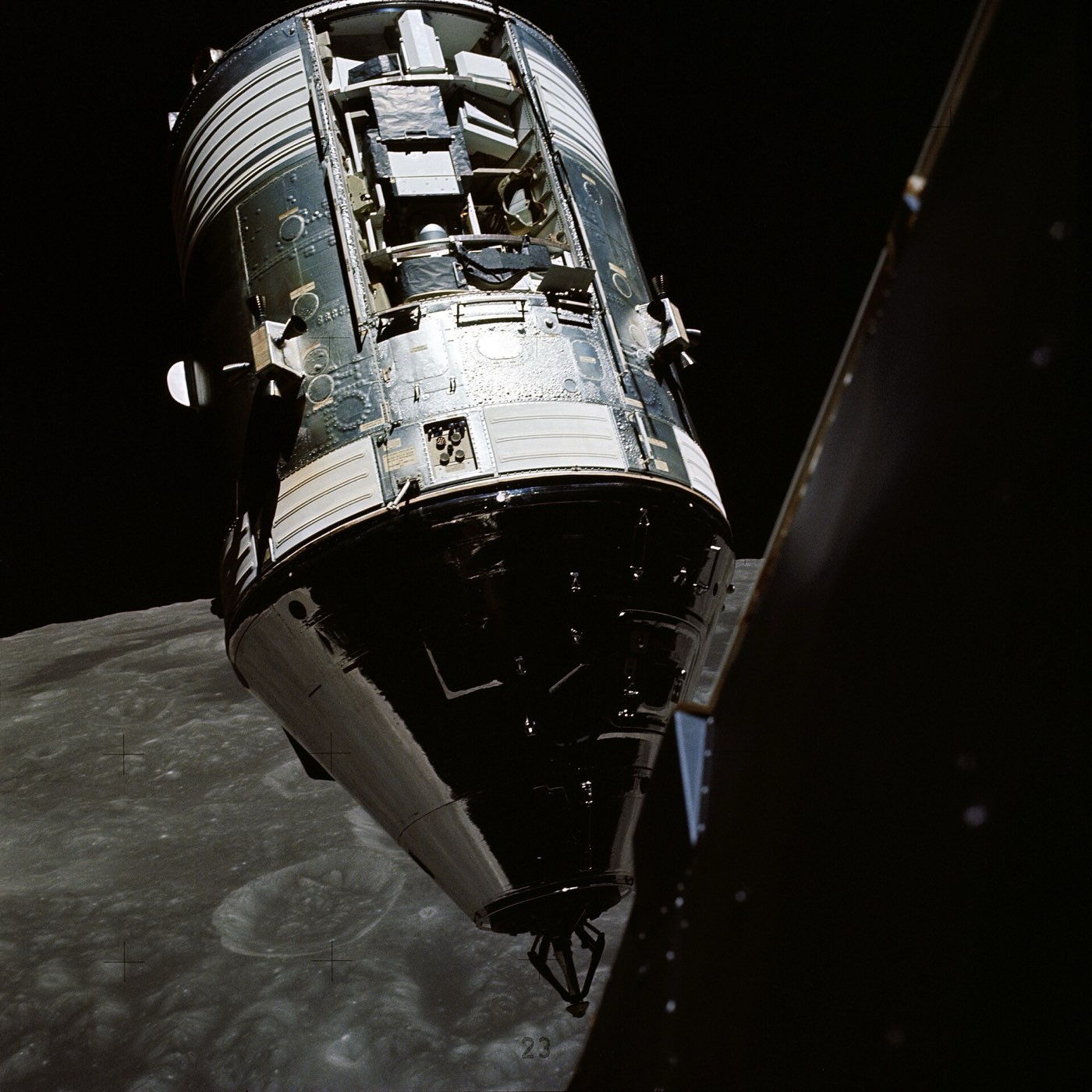
  • Apollo Command and Service Module

    North American Aviation

    Aluminiumstainless steelcolumbium
    Where each one is used

    Aluminium. Here: Fuel pump inducer, impellers and body; Turbine blades, disks and hub and more. There: Radial beams; Crushable ribs (x4) and more.

    stainless steel. Here: RL10C-1 thrust chamber tubes; Fuel pump drive shaft and bearings and more. There: Outer shell (heat shield structure); VHF scimitar antennas and more.

    columbium. Here: RL10A-4-2 fixed columbium nozzle extension (51 cm). There: SPS nozzle extension.

  • Atlas V

    United Launch Alliance

    Aluminiumstainless steelcolumbium
    Where each one is used

    Aluminium. Here: Fuel pump inducer, impellers and body; Turbine blades, disks and hub and more. There: Booster LO2 and RP tanks; Propellant feedlines and more.

    stainless steel. Here: RL10C-1 thrust chamber tubes; Fuel pump drive shaft and bearings and more. There: Centaur propellant tanks.

    columbium. Here: RL10A-4-2 fixed columbium nozzle extension (51 cm). There: Centaur extendible nozzle (RL10, dual engine).

  • F-1 engine

    Rocketdyne, Division of North American Aviation

    AluminiumcarbonTeflon-coated conical washer
    Where each one is used

    Aluminium. Here: Fuel pump inducer, impellers and body; Turbine blades, disks and hub and more. There: High-pressure propellant ducts.

    carbon. Here: Shaft seals. There: Carbon shaft seals.

    Teflon-coated conical washer. Here: Duct flange seals (Teflon-coated conical washers). There: Main oxidizer valve poppet seal; Main fuel valve poppet seal.

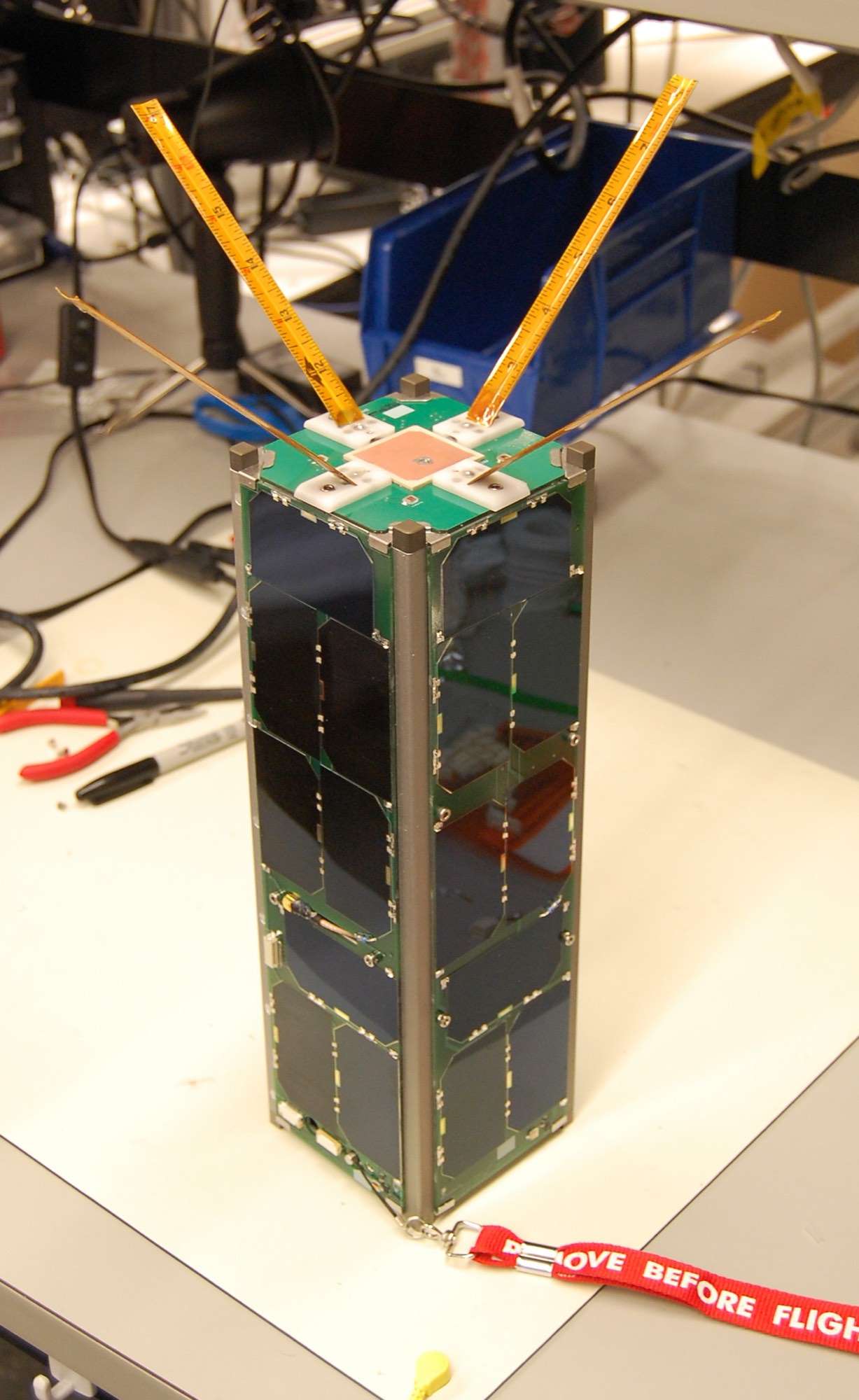
  • Pumpkin CubeSat Kit structure

    Pumpkin Space Systems

    Aluminiumstainless steel
    Where each one is used

    Aluminium. Here: Fuel pump inducer, impellers and body; Turbine blades, disks and hub and more. There: Structure, three major assemblies; Through-hole spacers, aluminium, 15.24 mm x 6.0 mm OD (x16) and more.

    stainless steel. Here: RL10C-1 thrust chamber tubes; Fuel pump drive shaft and bearings and more. There: Chassis screws (ten per structure, M3x5mm flathead); Threaded rods, M3 stainless (x4) and more.

  • CST-100 Starliner

    Boeing

    AluminiumTeflon-coated conical washer
    Where each one is used

    Aluminium. Here: Fuel pump inducer, impellers and body; Turbine blades, disks and hub and more. There: Pressure vessel domes (upper and lower).

    Teflon-coated conical washer. Here: Duct flange seals (Teflon-coated conical washers). There: RCS and OMAC thruster valves (dual poppet valves, Teflon poppet seat on the oxidizer side); Spring-energized Teflon seal at the RCS and OMAC thruster flanges.

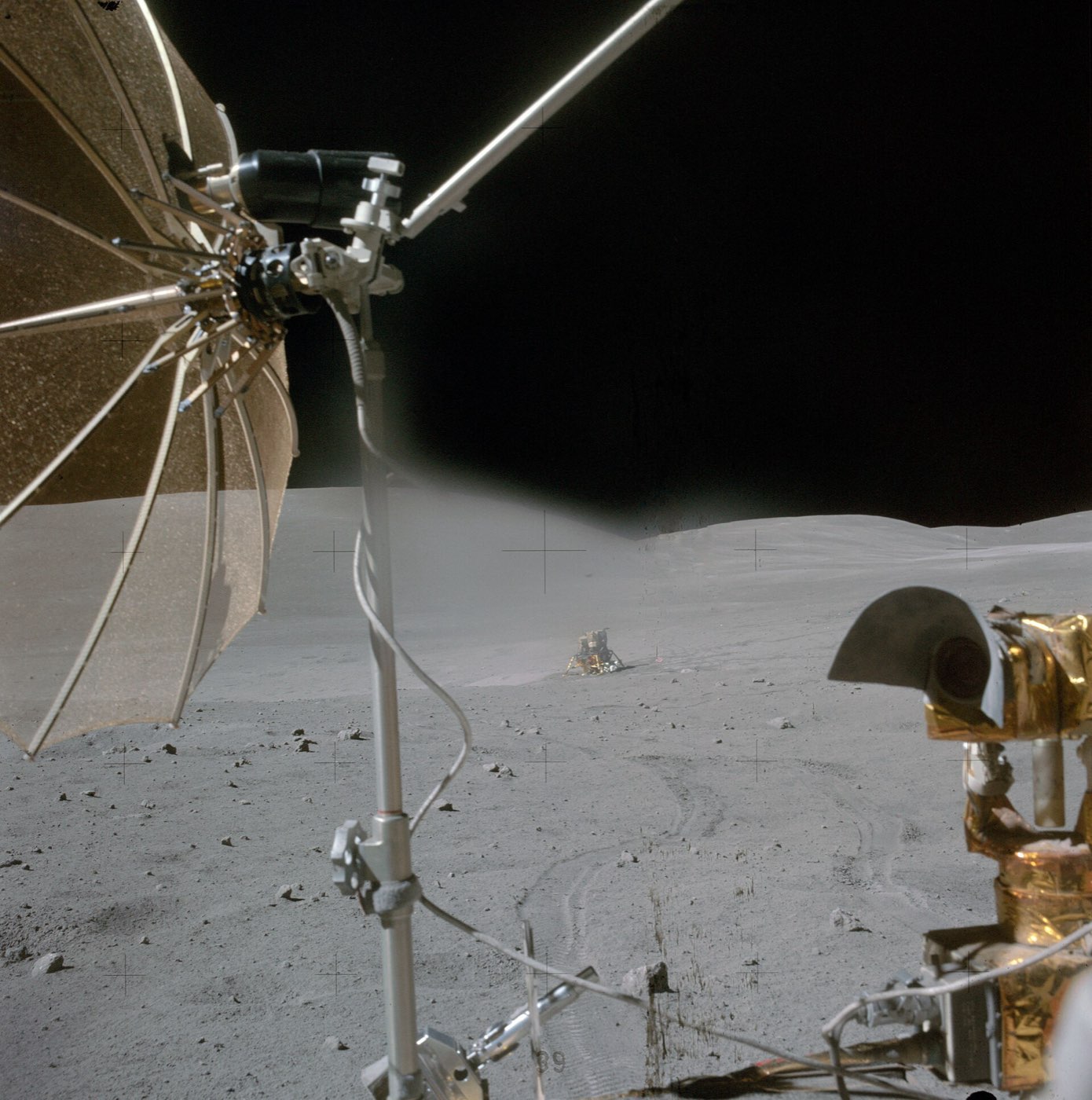
  • Apollo Lunar Module (LM)

    Grumman / NASA

    AluminiumTeflon-coated conical washer
    Where each one is used

    Aluminium. Here: Fuel pump inducer, impellers and body; Turbine blades, disks and hub and more. There: Cabin front-face, RCS cluster trusses, decks and bulkheads; Micrometeoroid shield and more.

    Teflon-coated conical washer. Here: Duct flange seals (Teflon-coated conical washers). There: Inner window seal jacket.

What we do not know

The detailed accounts of its materials describe the original Pratt & Whitney engine, so current versions may differ. The alloys of today's valves, bearings, igniters and injectors are not published, and the RL10C-1's chamber tubes are called only stainless steel.

The detailed data

What is written above is built from these numbers and quotes. Each row links to the page it was taken from. Get all of it as JSON, or ask our MCP server.

Features

  • Hydrogen heated in the chamber tubes drives the turbine, which pumps the propellants
  • Only US liquid engine to fly a carbon-carbon nozzle extension (RL10B-2)
  • Thrust chamber is built from thin tubes joined into one lightweight part

Specifications

WhatValue
First run1959
PropellantsLiquid hydrogen and liquid oxygen
CycleExpander cycle
Thrust and Isp (current)Nearly 25,000 lbf, Isp nearing 467 s
RL10A-4 vacuum thrust20,800 lbf (upgraded from 16,500 lbf)
RL10A-4 expansion ratio84:1 with extendible nozzle
Turbine powerAbout 644 hp
Original thrust and specific impulse15,000 lbf, Isp about 444 s (RL10A-1 era)
First flight-rated production modelRL10A-1, preliminary flight rating testing completed November 1961
First experimental engine testJuly 1959
RL10A-4-2 thrust and Isp99.2 kN (22,300 lbf), 450.5 s
RL10B-2 thrust (ICPS)24,750 lbf (110 kN)
RL10C-1-1A thrust (Vulcan Centaur V)23,825 lbf (106 kN) each
Exploration Upper Stage thrustabout 97,000 lbf from four RL10C-3 engines
Dual-engine Centaur missionsCentaur evolution proven over more than 260 missions, over 150 with a dual-engine Centaur
Engine temperature and pressurecombustion temperature nearly 6,000 F
Longest single runone engine ran at full thrust for 1,680 s (28 minutes)
RL10C-1 first flightDecember 2014 (Atlas V)

Materials in detail

Each material named in the sources: where it is used here, which other products use it, and its key numbers when its material page exists.

  • Aluminium

    Used in 4 partsFuel pump inducer, impellers and body · Turbine blades, disks and hub · Turbine shrouds · +1 more

    Weight
    2.7 g/cm3
    Electrical conduction
    2.6458 µΩ·cm
    Heat conduction
    220 W/(m·K)
    Also in 33 other products
  • stainless steel (grade not stated)

    stainless-steel

    Used in 3 partsRL10C-1 thrust chamber tubes · Fuel pump drive shaft and bearings · Oxidizer pump impeller and inducer

    Material page coming soon
  • Type 347 stainless steel

    stainless-347

    Used in 2 partsThrust chamber tubes (RL10 as described in P&W-era history) · Injector face plate (Rigimesh)

    Material page coming soon
  • 6260 gear alloy with molysulfide coating

    gear-alloy-6260

    Used in 1 partDrive gears

    Material page coming soon
  • carbon

    carbon-seal

    Used in 1 partShaft seals

    Also in 1 other product
    Material page coming soon
  • carbon-carbon (Safran Novoltex, CVI-densified)

    carbon-carbon-novoltex

    Used in 1 partRL10B-2 carbon-carbon nozzle extension

    Material page coming soon
  • columbium (niobium) alloy

    niobium-alloy

    Used in 1 partRL10A-4 extendible nozzle

    Also in 1 other product
    Material page coming soon
  • columbium (niobium) alloy

    columbium-niobium

    Used in 1 partRL10A-4-2 fixed columbium nozzle extension (51 cm)

    Material page coming soon
  • copper alloy (grade not stated)

    copper-alloy

    Used in 1 partAdditively manufactured copper-alloy thrust chamber (test article)

    Also in 1 other product
    Material page coming soon
  • Silver

    Used in 1 partSilver throat insert (RL10A-3-3A and later chamber shape)

    Conduct electricity
    1.63 µΩ·cm
    Conduct heat
    429 W/(m K)
    Reflect light
    About 98% at 400 to 1000 nm
    Also in 1 other product
  • silver braze (alloy not stated)

    silver-braze

    Used in 1 partTube braze joints

    Material page coming soon
  • Teflon-coated conical washer (base material not stated)

    teflon-ptfe

    Used in 1 partDuct flange seals (Teflon-coated conical washers)

    Material page coming soon

Every part we have

Chamber tubes, injector plate, pump and gear materials are described in a detailed EngineHistory.org account of the P&W-era engine; nozzle extension materials come from NASA and P&W papers. Components, suppliers and links were added from public sources. A material is left blank where no source states it.

Material IDs

stainless-347silver-brazestainless-steelaluminiumgear-alloy-6260carbon-sealcarbon-carbon-novoltexniobium-alloycolumbium-niobiumsilverteflon-ptfecopper-alloy
Thrust chamber and primary nozzle3
PartMaterialFinish and standardMade by
Thrust chamber tubes (RL10 as described in P&W-era history)“Type 347 stainless steel tubes with a wall thickness of only 0.012"” Type 347 stainless steelstainless-347 — —
Tube braze joints“silver-brazed in a gas furnace for 20 hours” silver braze (alloy not stated)silver-braze — —
RL10C-1 thrust chamber tubes“The thrust chamber of the current RL10C-1 model design uses a complex array of brazed-together hydroformed, drawn stainless tubes” stainless steel (grade not stated)stainless-steel — —
Injector1
PartMaterialFinish and standardMade by
Injector face plate (Rigimesh)“a material formed by hot-rolling stacks of Type 347 stainless steel mesh together to form a porous sintered plate” Type 347 stainless steel meshstainless-347 — —
Fuel turbopump4
PartMaterialFinish and standardMade by
Fuel pump inducer, impellers and body“The inducer, impellers, and pump body are made of aluminum” aluminum (alloy not stated)aluminium — —
Fuel pump drive shaft and bearings“while the pump drive shaft and bearings are of stainless steel” stainless steel (grade not stated)stainless-steel — —
Turbine blades, disks and hub“Both turbine blade stages, both disks and the hub are machined from a single aluminum alloy forging.” aluminum alloy (grade not stated)aluminium — —
Turbine shrouds“Aluminum alloy shrouds are attached by dip brazing.” aluminum alloy (grade not stated)aluminium — —
Oxidizer pump and gear train4
PartMaterialFinish and standardMade by
Oxidizer pump impeller and inducer“The impeller and inducer are made of stainless steel while the housings are machined aluminum.” stainless steel (grade not stated)stainless-steel — —
Oxidizer pump housings“The impeller and inducer are made of stainless steel while the housings are machined aluminum.” aluminum (alloy not stated)aluminium — —
Drive gears“The gear train gears were fabricated from 6260 gear alloy with a molysulfide coating on the teeth.” 6260 gear alloy with molysulfide coatinggear-alloy-6260 — —
Shaft seals“Three vented compartments, separated by carbon ring seals” carboncarbon-seal — —
Nozzle extension2
PartMaterialFinish and standardMade by
RL10B-2 carbon-carbon nozzle extension“pseudo-3D needled Novoltex preform that is densified through chemical vapor infiltration (CVI)” carbon-carbon (Safran Novoltex, CVI-densified)carbon-carbon-novoltex — Safran Ceramics (France)
RL10A-4 extendible nozzle“an extendible, radiation-cooled columbium nozzle was incorporated, bringing the expansion ratio to 84:1” columbium (niobium) alloyniobium-alloy — —
Thrust chamber and nozzle5
PartMaterialFinish and standardMade by
Thrust chamber tube bundle (180 up tubes and 180 down tubes)Regeneratively cooled chamber and primary nozzle built from thin tapered tubes“Initial engines were assembled with 144/288 tube thrust chambers; this was changed to a 180/360 tube configuration” Not said — —
Chamber inlet and discharge manifolds with stiffening bandsLH2 inlet and GH2 outlet manifolds brazed to the tube bundle“assembled along with inlet and discharge manifolds and stiffening bands on a mandrel under clean-room conditions” Not said — —
Fixed primary nozzle and secondary nozzle extensionPrimary nozzle is part of the tube bundle; the extension raises expansion ratio“consists of a fixed primary nozzle and a secondary nozzle extension” Not said — —
RL10A-4-2 fixed columbium nozzle extension (51 cm)Radiation-cooled extension fixed in place before flight on Atlas V“The 51-cm (20-in.) long columbium fixed extended nozzle provides enhanced engine performance through an increase in nozzle expansion ratio.” columbium (niobium) alloycolumbium-niobium — —
Silver throat insert (RL10A-3-3A and later chamber shape)Insert at the throat that later became part of the tube shape“with the addition of a silver insert at the throat” silversilver — —
Injector and ignition4
PartMaterialFinish and standardMade by
Injector elements (x216)Concentric jets, central LOX stream surrounded by an annular GH2 stream“The injector contains 216 injector elements arranged in equally-spaced concentric circles.” Not said — —
Spark igniterElectric spark igniter recessed in the injector face“A spark igniter recessed in the propellant injector face initiates combustion chamber ignition.” Not said — —
Igniter oxidizer supply valveAdmits gaseous oxygen to the igniter during start“The igniter oxidizer supply valve assures a combustible mixture at the igniter by admitting gaseous oxygen” Not said — —
Dual direct spark ignition (DDSI) systemFully redundant electronic ignition on the RL10A-4-2“The most significant change that is part of the RL-10A-4-2 engine is the incorporation of Dual Direct Spark Ignition (DDSI) system.” Not said — —
Turbomachinery5
PartMaterialFinish and standardMade by
Fuel turbopump (two-stage centrifugal)Pumps LH2 through the chamber walls to the turbine“The two-stage centrifugal fuel pump features back-shrouded impellers, volute collectors, and tangential diffusers.” Not said — —
Oxidizer pump (single stage, gear driven)Pumps LOX, driven through a reduction gear train from the fuel pump shaft“The oxidizer pump is a single-stage fully-shrouded centrifugal pump driven through a reduction gear train from the fuel pump drive shaft.” Not said — —
Turbine (two-stage, full admission)Driven by hydrogen heated in the chamber walls (expander cycle)“A full admission, pressure compounded, two-stage turbine producing about 644 hp drives the propellant pumps.” Not said — —
Prelaunch cool-down check valveLets cold helium or hydrogen chill the turbopump before launch“Cold helium or hydrogen flowing through a prelaunch cool-down check valve partially cools the turbopump before vehicle launch.” Not said — —
Duct flange seals (Teflon-coated conical washers)Hydrogen-tight joints in the solid propellant ducts“The seal was a Teflon-coated conical washer that was captured in an angular cavity machined into the flanges.” Teflon-coated conical washer (base material not stated)teflon-ptfe — —
Thrust control and valves8
PartMaterialFinish and standardMade by
Pneumatic/mechanical thrust control (bellows section and valve section)Holds chamber pressure steady by bypassing hot hydrogen around the turbine“The thrust control employs two separate interacting sections – a thrust control bellows section and a thrust control valve section.” Not said — —
Turbine bypass valveRegulates how much hot GH2 skips the turbine“The quantity of GH2 bypassing the turbine is regulated to control pump output as a function of combustion chamber pressure.” Not said — —
Sonic venturiSenses chamber-exit hydrogen flow for the thrust control“Hot GH2 exiting the thrust chamber wall tubes is routed through a sonic venturi whose upstream pressure is a function of its mass flow.” Not said — —
Oxidizer flow control and propellant utilization valveThree orifices set the mixture ratio during start and flight“The oxidizer flow control and propellant utilization valve has three orifices that perform three functions.” Not said — —
Main fuel shutoff valveBullet-type valve with a bellows actuator that starts and stops fuel to the injector“The main fuel shutoff valve is a normally-closed, bullet-type valve with a bellows actuator.” Not said — —
Propellant pump inlet shutoff valvesHelium-actuated ball valves on the pumps“These normally-closed helium-actuated ball valves are mounted on the propellant pumps.” Not said — —
Fuel pump cool-down and bleed valvesSleeve valves that chill the pump and vent the fuel system overboard“The fuel pump cool-down and bleed valves are sleeve-type valves” Not said — —
Prestart and start solenoid valvesElectrical signals route vehicle helium to the pneumatic valves“Start and cutoff are controlled by pneumatic valves actuated by vehicle-supplied pressurized helium” Not said — —
Installation on the stage1
PartMaterialFinish and standardMade by
Thrust vector control actuation (electromechanical on single-engine Centaur, hydraulic on dual)Gimbals the engine in flight“EMAs for thrust vector control were developed for the SEC program and are used on all single-engine Common Centaurs.” Not said — —
Development hardware2
PartMaterialFinish and standardMade by
Additively manufactured copper-alloy thrust chamber (test article)Two primary copper parts replace the brazed tube bundle“The RL10 thrust chamber assembly was built from a copper alloy, using SLM technology.” copper alloy (grade not stated)copper-alloy — Supplier: Aerojet Rocketdyne
Additively manufactured injector (test article)Full-scale 3D printed injector hot-fired with the copper chamber“full-scale testing of a 3-D printed injector and copper thrust chamber” Not said — Supplier: Aerojet Rocketdyne

What the sources leave out

Current-production alloy grades for RL10C versions not confirmed. No standards (AMS/ASTM numbers) are given in the sources. Valve, bearing and igniter materials not covered. More detail: Internals of current RL10C-1, RL10C-1-1A and RL10C-3 hardware (valve, bearing, igniter, injector alloys) are not published in the pages read; the EngineHistory description is of the P&W-era RL10A. The B14643 page is a third-party compilation of two primary papers (Santiago, Pratt & Whitney 1996; Rudman and Austad, Lockheed Martin 2002), used for the variant-to-vehicle table, whose rows are flattened text. Engine counts per stage for Delta IV, Atlas III and Titan rows come from that table. Surveyor, Viking and Voyager launches on Centaur are named only in lists, without a source tying each to a specific RL10 variant. The EUS status should be re-checked (see the SLS entry). More detail: Internals of current RL10C-1, RL10C-1-1A and RL10C-3 hardware (valve, bearing, igniter, injector alloys) are not published in the pages read; the EngineHistory description is of the P&W-era RL10A. The B14643 page is a third-party compilation of two primary papers (Santiago, Pratt & Whitney 1996; Rudman and Austad, Lockheed Martin 2002), used for the variant-to-vehicle table, whose rows are flattened text. Engine counts per stage for Delta IV, Atlas III and Titan rows come from that table. Surveyor, Viking and Voyager launches on Centaur are named only in lists, without a source tying each to a specific RL10 variant. The EUS status should be re-checked (see the SLS entry).
Where this comes from

9 pages from 6 websites

More space products

Maker credit: Aerojet Rocketdyne (originally Pratt & Whitney); flown on ULA Centaur. Collected from public pages and documents, checked 4 Nov 2026.

Published · Updated