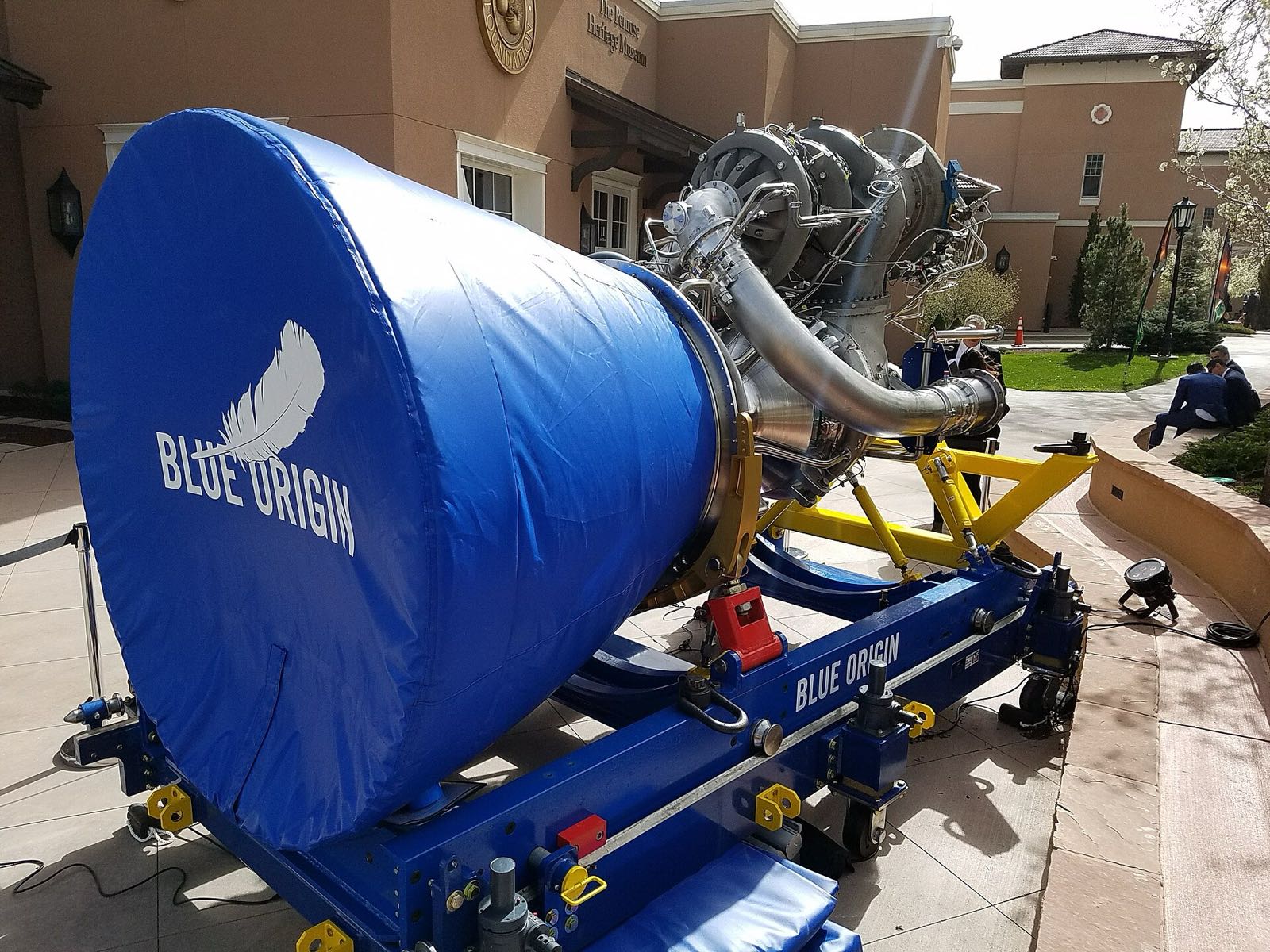
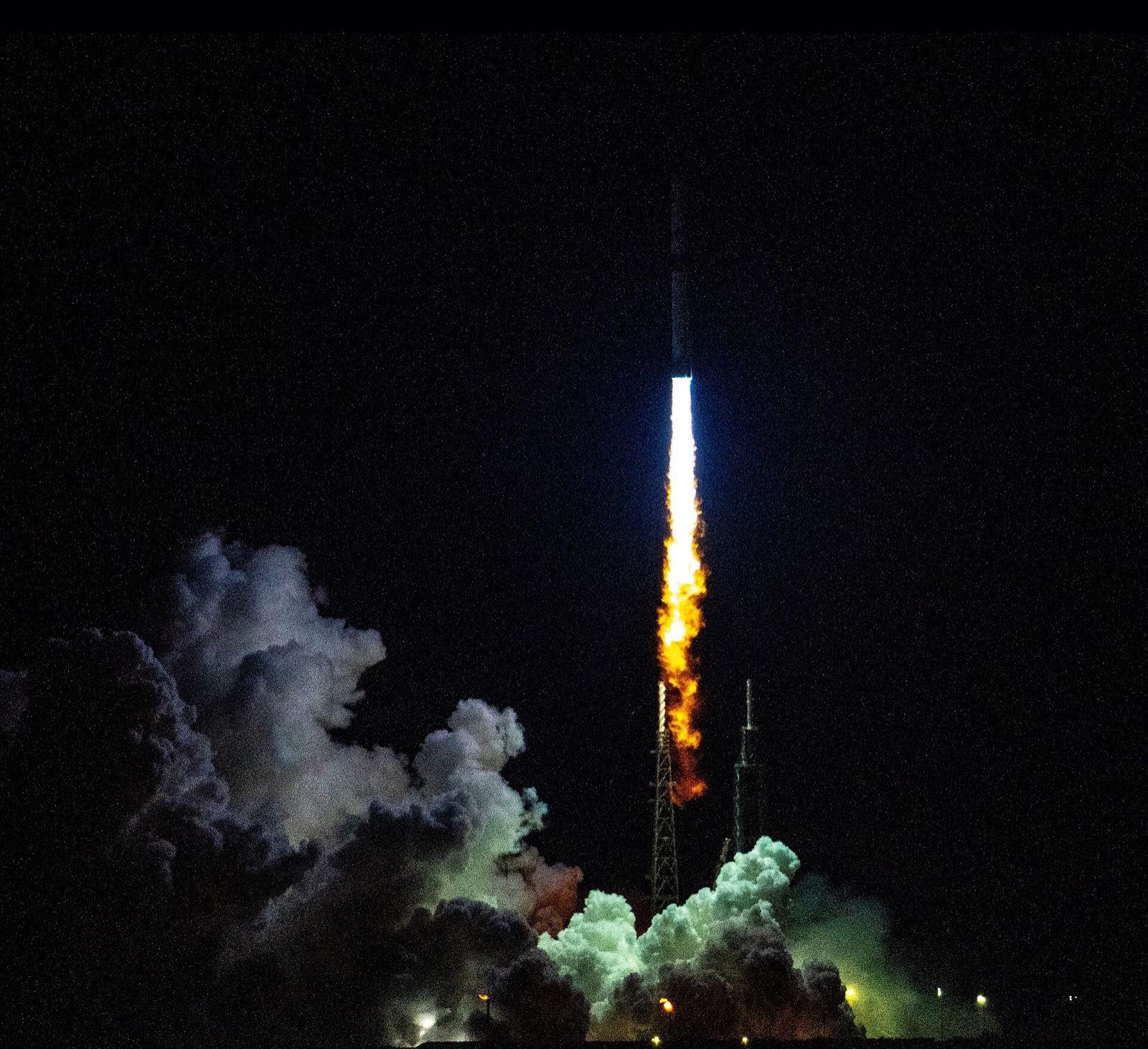
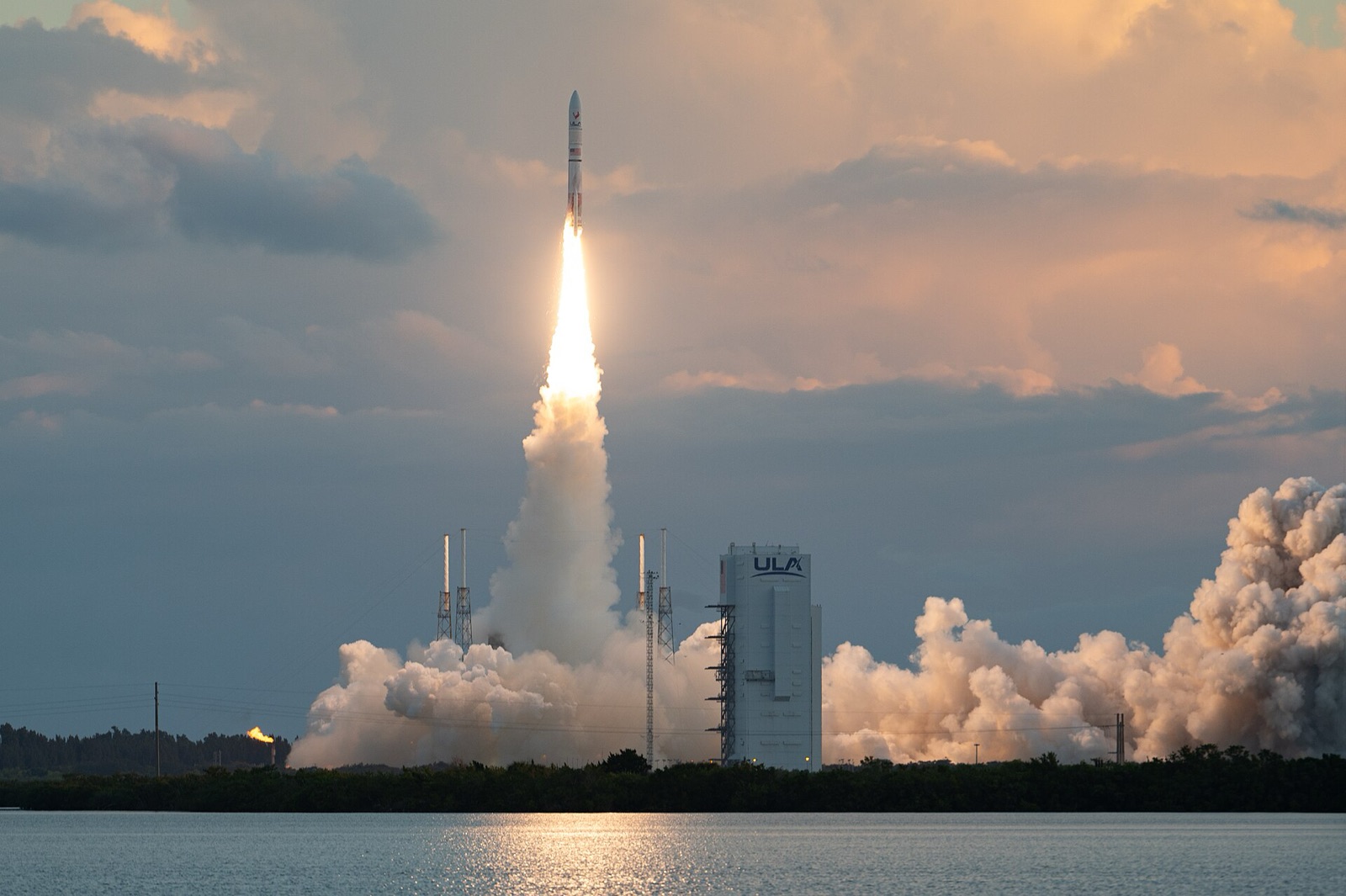
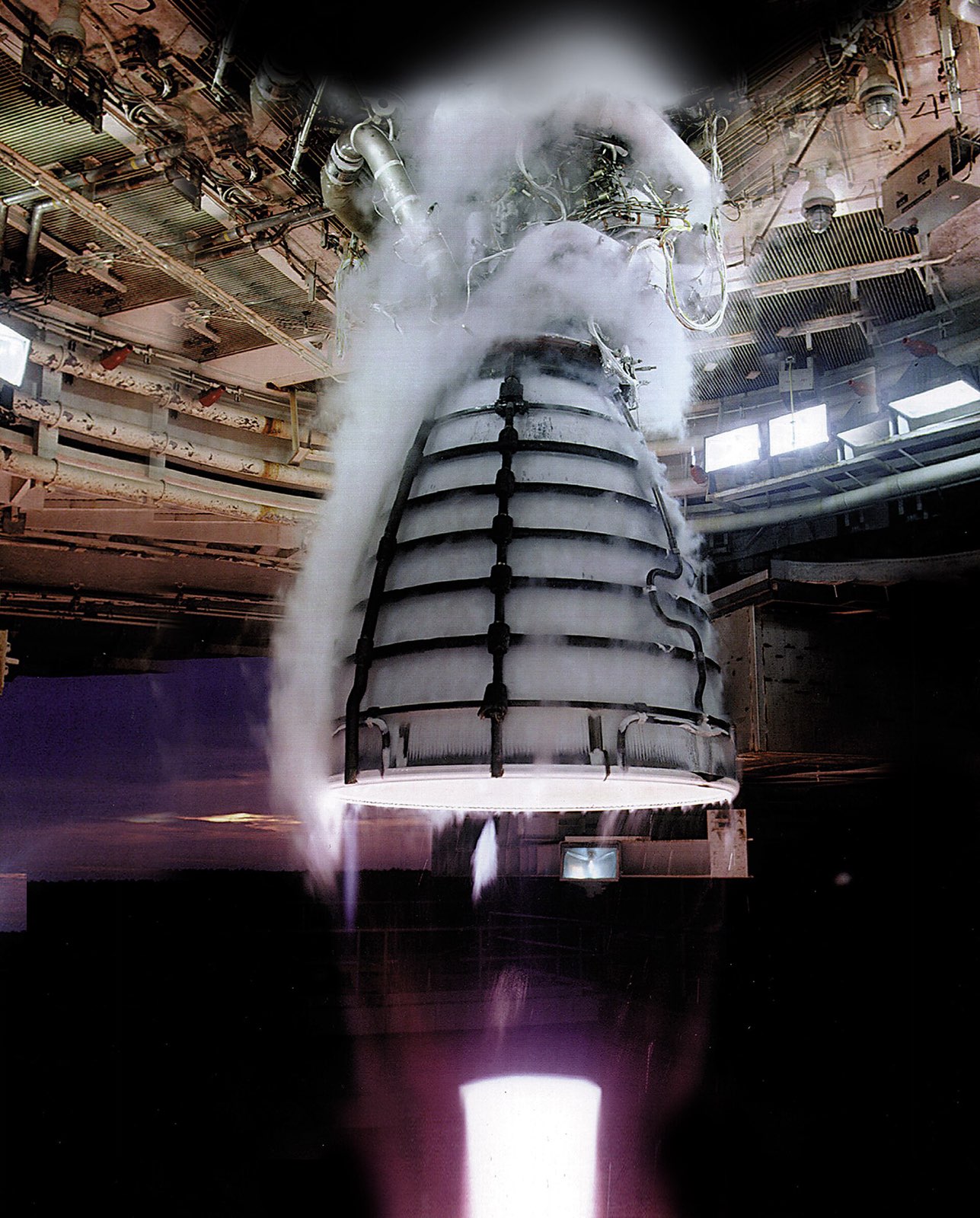
Blue Origin's BE-4 burns liquid oxygen and liquefied natural gas. Two engines power United Launch Alliance's Vulcan Centaur and seven power Blue Origin's New Glenn. In 2015 Blue Origin gave the sea-level thrust as 550,000 pounds-force, and in November 2025 it announced that maximum thrust had risen to 2,847 kilonewtons (640,000 pounds-force).
The BE-4 uses oxygen-rich staged combustion. A single preburner makes hot, oxygen-rich gas that spins one turbine, and that turbine drives both the fuel and oxygen pumps. The gas then goes on to mix with fuel in the main chamber. Parts of the oxygen boost pump are 3D printed.
Application
BE-4 engines power ULA’s Vulcan Centaur (two engines) and Blue Origin’s New Glenn (seven engines). It is the first large US engine to burn liquefied natural gas on an oxygen-rich staged-combustion cycle.
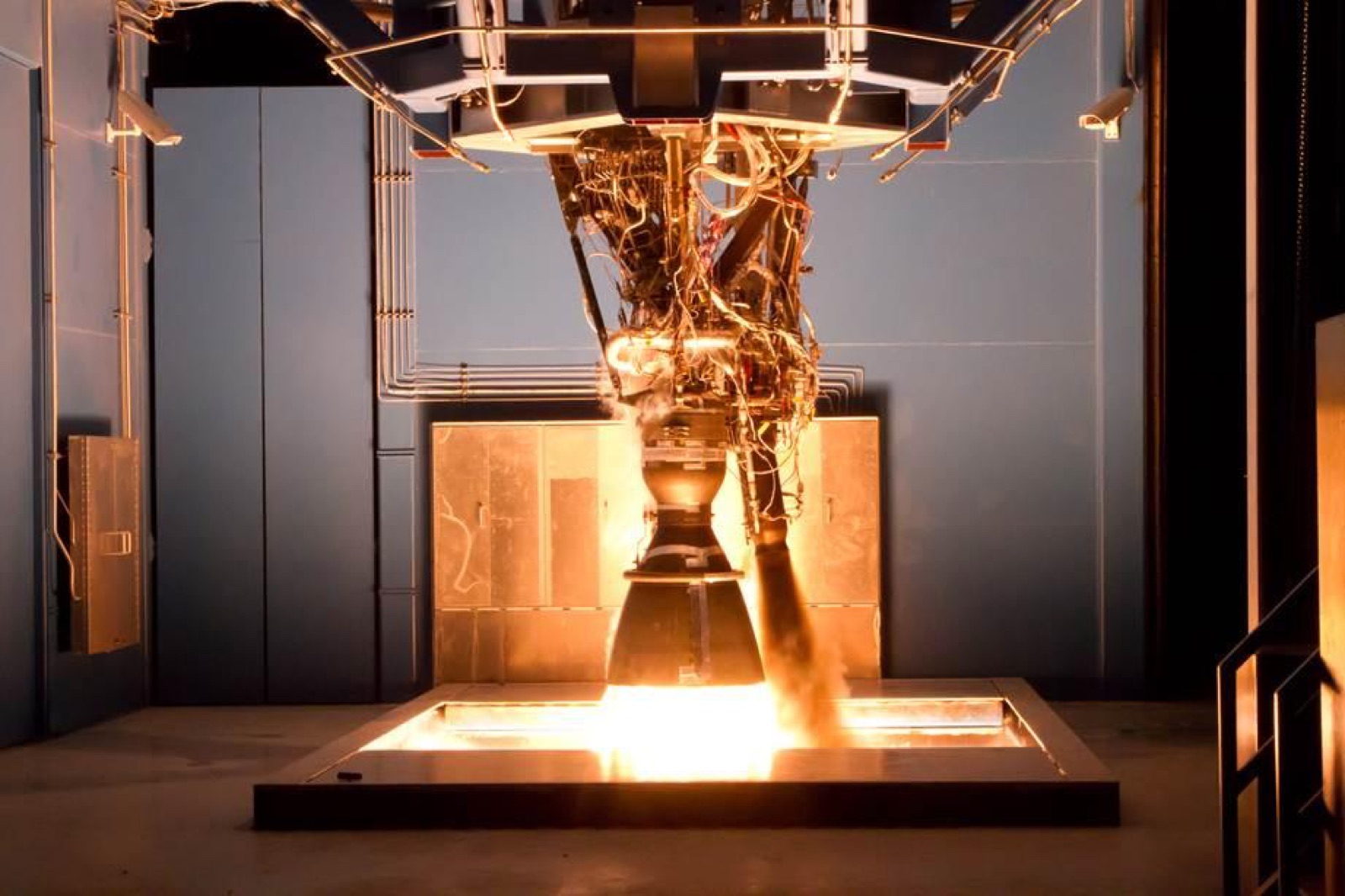
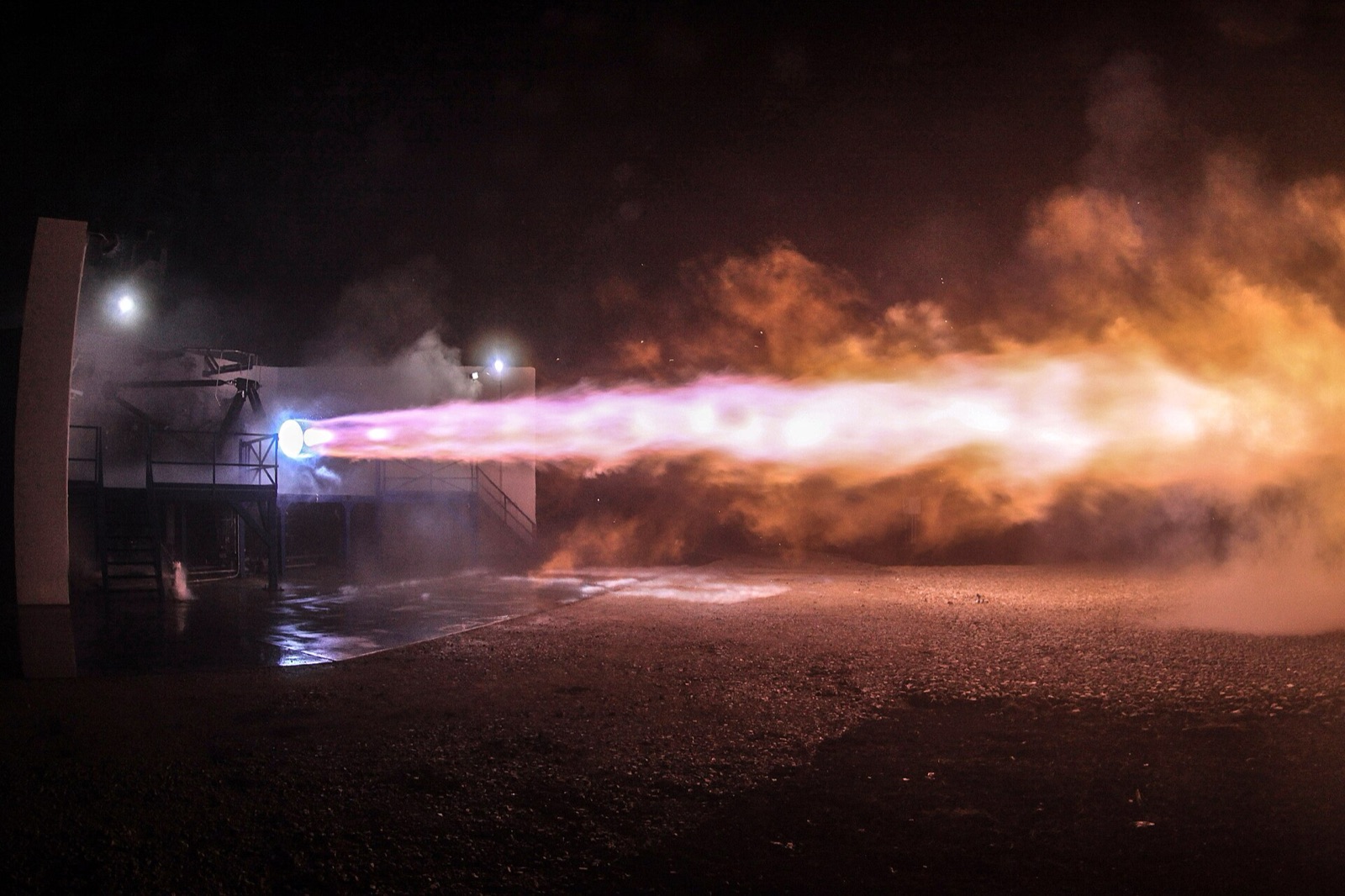
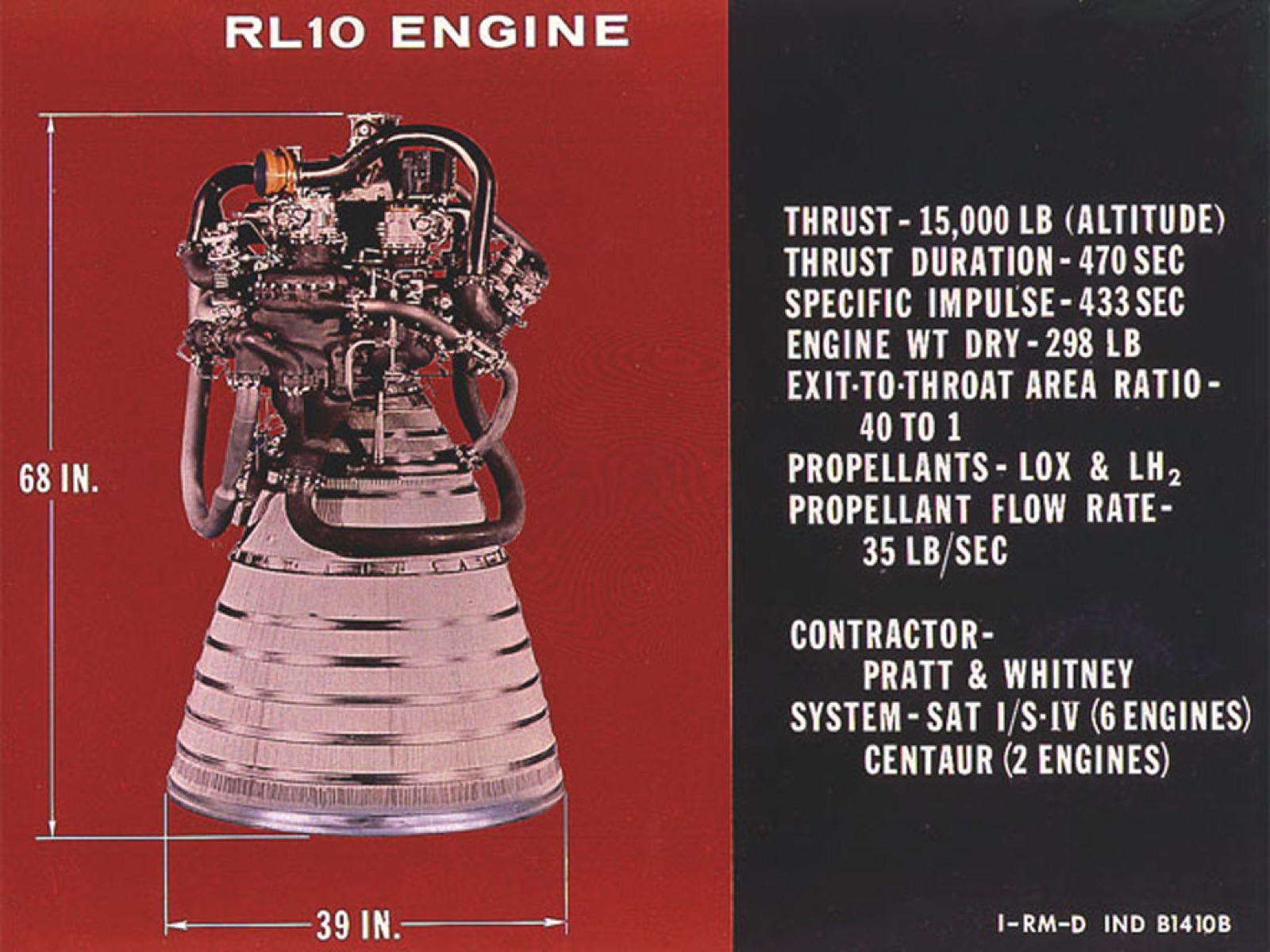
Photos
How it is built
Oxygen boost pump
The oxygen boost pump feeds the main oxygen pump, and many of its components are 3D printed. In a 2017 email, Blue Origin's founder said the housing is one printed aluminium part and the turbine stages are printed from Monel, a nickel alloy. The turbine nozzle and rotors are printed too and need little machining.
Oxidizer boost pump (OBP)
Pump housing
Hydraulic turbine stages
Turbine nozzle and rotors
Chamber and injector
The main chamber is cooled by propellant flowing through its walls, and the main injector mixes the preburner's exhaust gas with fuel. Each engine has a single combustion chamber and nozzle, unlike the Russian RD-180's twin chambers. Parts of the chamber and nozzle are 3D printed.
Main injector assembly
Regeneratively cooled thrust chamber with multiple full-scale injector elements
Single combustion chamber and nozzle
Thrust chamber and nozzle
Pumps and tank pressure
The main turbopump rides on hydrostatic bearings rather than ball or roller bearings. Main valves control the flow of propellant to the preburner and the chamber. Burning liquefied natural gas also lets the tanks be pressurised with the propellant's own gas, so no helium pressurisation hardware is needed.
Main turbopump (one turbine driving the fuel and oxygen pumps)
Autogenous tank pressurisation from LNG
Main valves
Making and testing
Blue Origin tests engine components in Kent, Washington, and in Texas. A dedicated liquefied natural gas test site near Van Horn, Texas, opened in May 2014 and can test thrust above one million pounds-force. In June 2017 the company announced a new factory in Huntsville, Alabama, to build the BE-4.
Component test facilities, Kent, Washington
LNG test facility near Van Horn, Texas
Engine factory, Huntsville, Alabama
Where the parts areNumber of parts we have listed in each group
The housing of the oxygen boost pump, printed as a single part. Blue Origin does not name the alloy.
Monel
The stages of the boost pump's hydraulic turbine, 3D printed from this nickel alloy.
How it connects to other things
Two BE-4 engines power the first stage of United Launch Alliance's Vulcan Centaur, and seven power Blue Origin's New Glenn, with nine planned for a larger version. ULA chose the engine in September 2018, after an initial agreement in September 2014. The BE-4 is meant to end ULA's reliance on the Russian-built RD-180. It builds on the flight heritage of Blue Origin's hydrogen engine, the BE-3, and Blue Origin makes it itself.
intended to end ULA's reliance on the Russian RD-180 first-stage engine
Made or supplied by
Blue Origin
designs and builds the engine; the BE-4 is a commercial development funded by private industry
Operated by
United Launch Alliance
ULA selected the BE-4 for the Vulcan Centaur booster stage (ULA press release of 27 September 2018)
Blue Origin
flies BE-4 on its own New Glenn first stage; first New Glenn flight 16 January 2025
What we do not know
Blue Origin has not published a materials list for the main chamber, injector or turbopumps. The only metals it has named belong to the oxygen boost pump, in a 2017 email. It names no supplier for any part. Many early descriptions cover test engines, not the one that flies.
The detailed data
What is written above is built from these numbers and quotes. Each row links to the page it was taken from. Get all of it as JSON, or ask our MCP server.
Features
Oxidizer boost pump parts made by 3D printing
Thrust chamber and nozzle manufacturing used additive manufacturing
Specifications
What
Value
Sea-level thrust (2015)
550,000 lbf
Propellants
Liquid oxygen and liquefied natural gas
Development start
2011
Sea-level thrust per engine (Vulcan guide)
2446.5 kN (550k lbf)
Propellants on Vulcan
liquid oxygen and liquefied natural gas
Power cycle
oxygen-rich staged combustion
Deep throttling demonstrated
to at least 40 percent power
First flight
8 January 2024, Vulcan Centaur
First hot fire of the full engine
October 2017, at 50 percent thrust for 3 seconds
Full-thrust testing
100 percent by August 2019
Thrust increase announced November 2025
2,847 kN (640,000 lbf) maximum thrust
Staged-combustion tests by September 2015
more than 100
Materials in detail
Each material named in the sources: where it is used here, which other products use it, and its key numbers when its material page exists.
Only the oxidizer boost pump housing (aluminum) and turbine stages (Monel) have a stated material. Components, suppliers and links were added from public sources. A material is left blank where no source states it.
No main chamber, injector, preburner or turbopump alloys stated. No standards or grades. More detail: Blue Origin has not published a BE-4 bill of materials: turbopump housings, impellers, preburner, injector, main chamber liner, nozzle and valve alloys are not stated beyond the aluminium housing and Monel turbine of the oxidizer boost pump already in the entry. No supplier is named for any BE-4 sub-part. The thrust-vector-control actuators, gimbal range, igniters and engine controller are not described in any readable source (blueorigin.com returned HTTP 429 on every attempt). Several statements are from 2015 ULA and Blue Origin development reports and describe test hardware, not the flight engine; the November 2025 thrust increase and the first-flight dates come from Wikipedia, whose cited Blue Origin page could not be opened. The BE-4U vacuum variant planned for an earlier New Glenn upper stage is not listed because the plan was dropped. Quotes from the Vulcan User's Guide and the ULA BE-4 fact sheet were machine-checked against the PDF text; quotes from Wikipedia, Via Satellite, Spaceflight Now and the ULA news page came through a text extractor and were not machine-checked. More detail: Blue Origin has not published a BE-4 bill of materials: turbopump housings, impellers, preburner, injector, main chamber liner, nozzle and valve alloys are not stated beyond the aluminium housing and Monel turbine of the oxidizer boost pump already in the entry. No supplier is named for any BE-4 sub-part. The thrust-vector-control actuators, gimbal range, igniters and engine controller are not described in any readable source (blueorigin.com returned HTTP 429 on every attempt). Several statements are from 2015 ULA and Blue Origin development reports and describe test hardware, not the flight engine; the November 2025 thrust increase and the first-flight dates come from Wikipedia, whose cited Blue Origin page could not be opened. The BE-4U vacuum variant planned for an earlier New Glenn upper stage is not listed because the plan was dropped. Quotes from the Vulcan User's Guide and the ULA BE-4 fact sheet were machine-checked against the PDF text; quotes from Wikipedia, Via Satellite, Spaceflight Now and the ULA news page came through a text extractor and were re-checked in a second fetch pass but not against a saved copy of the page.