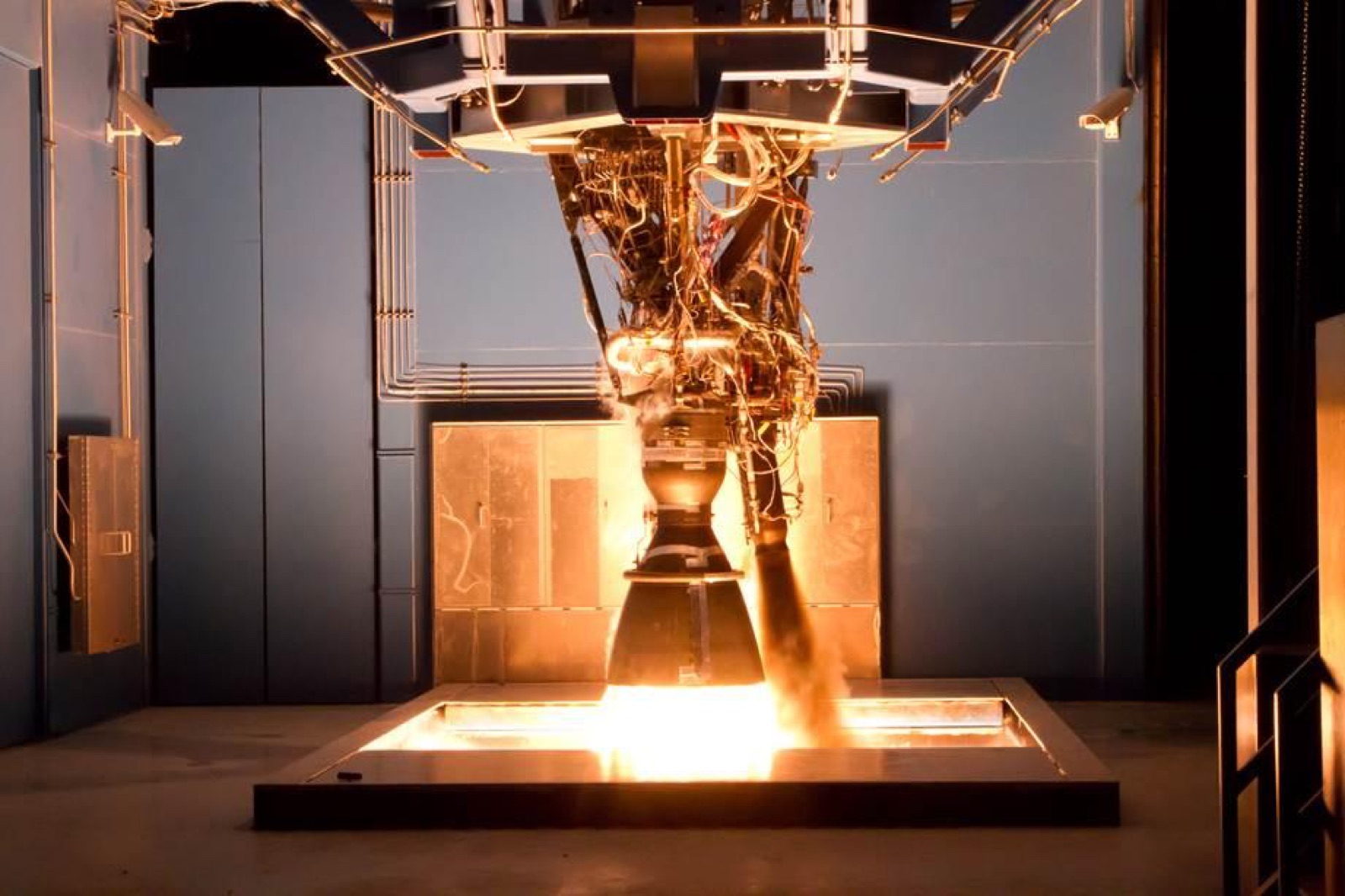
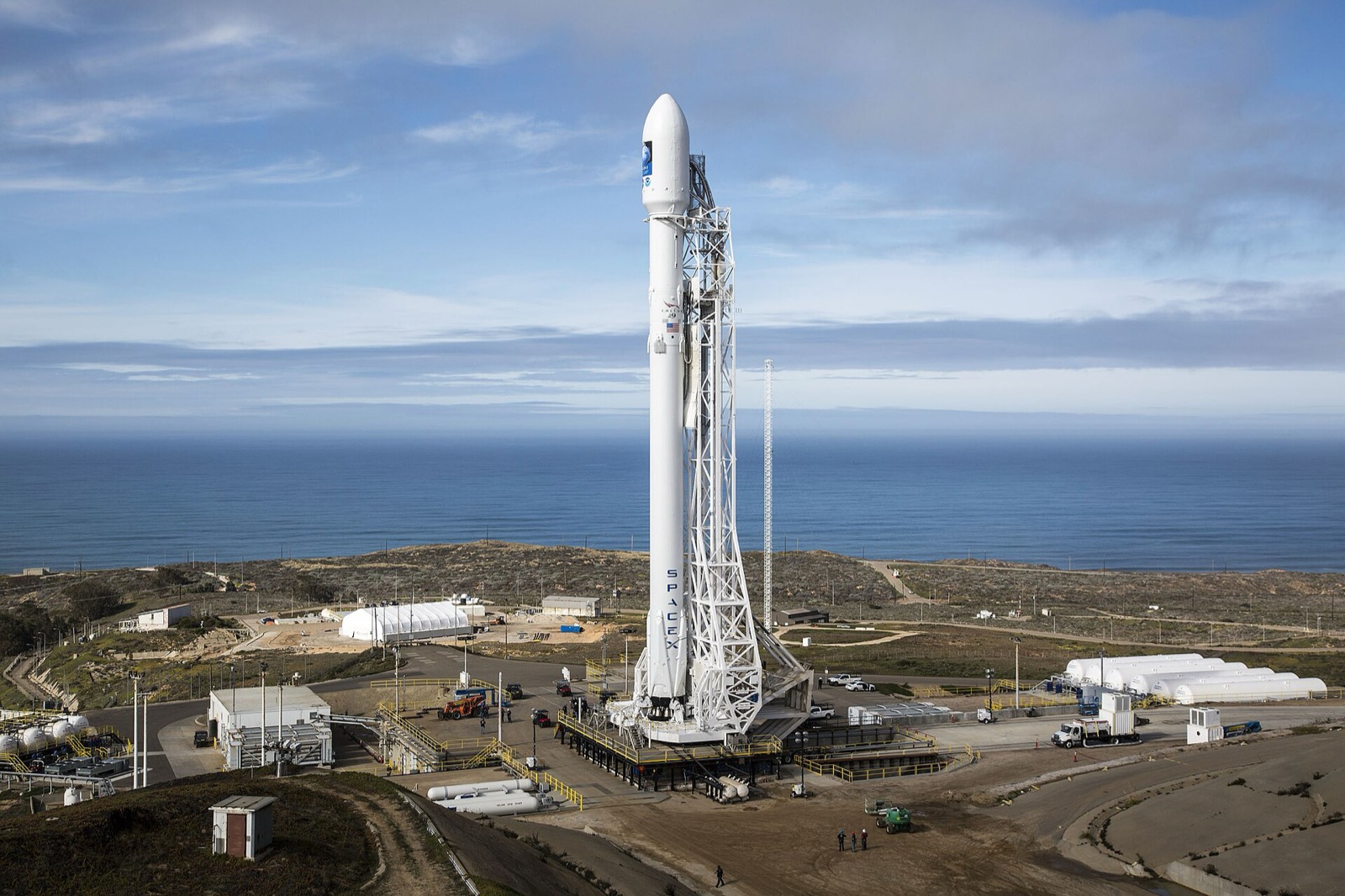
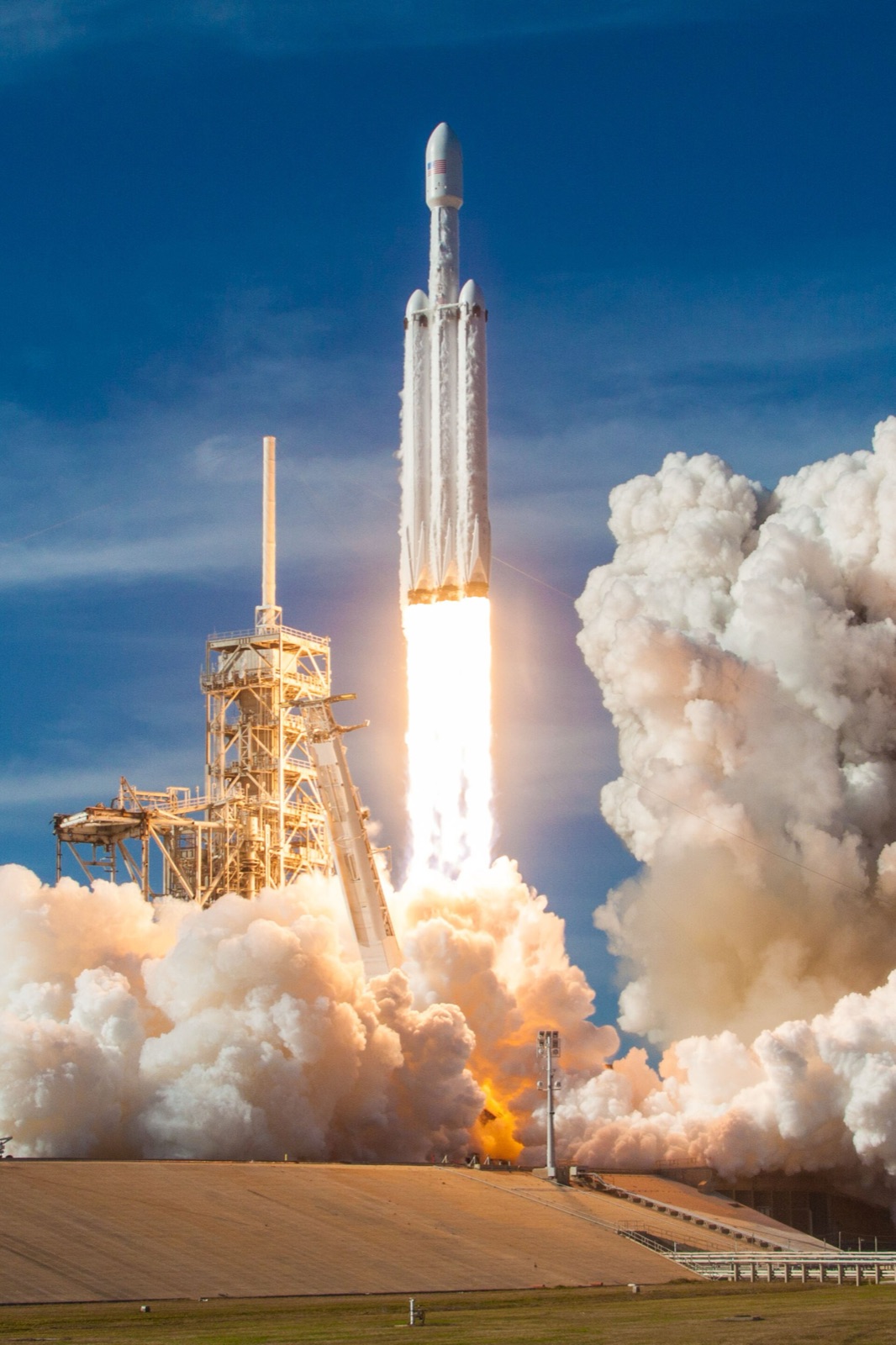
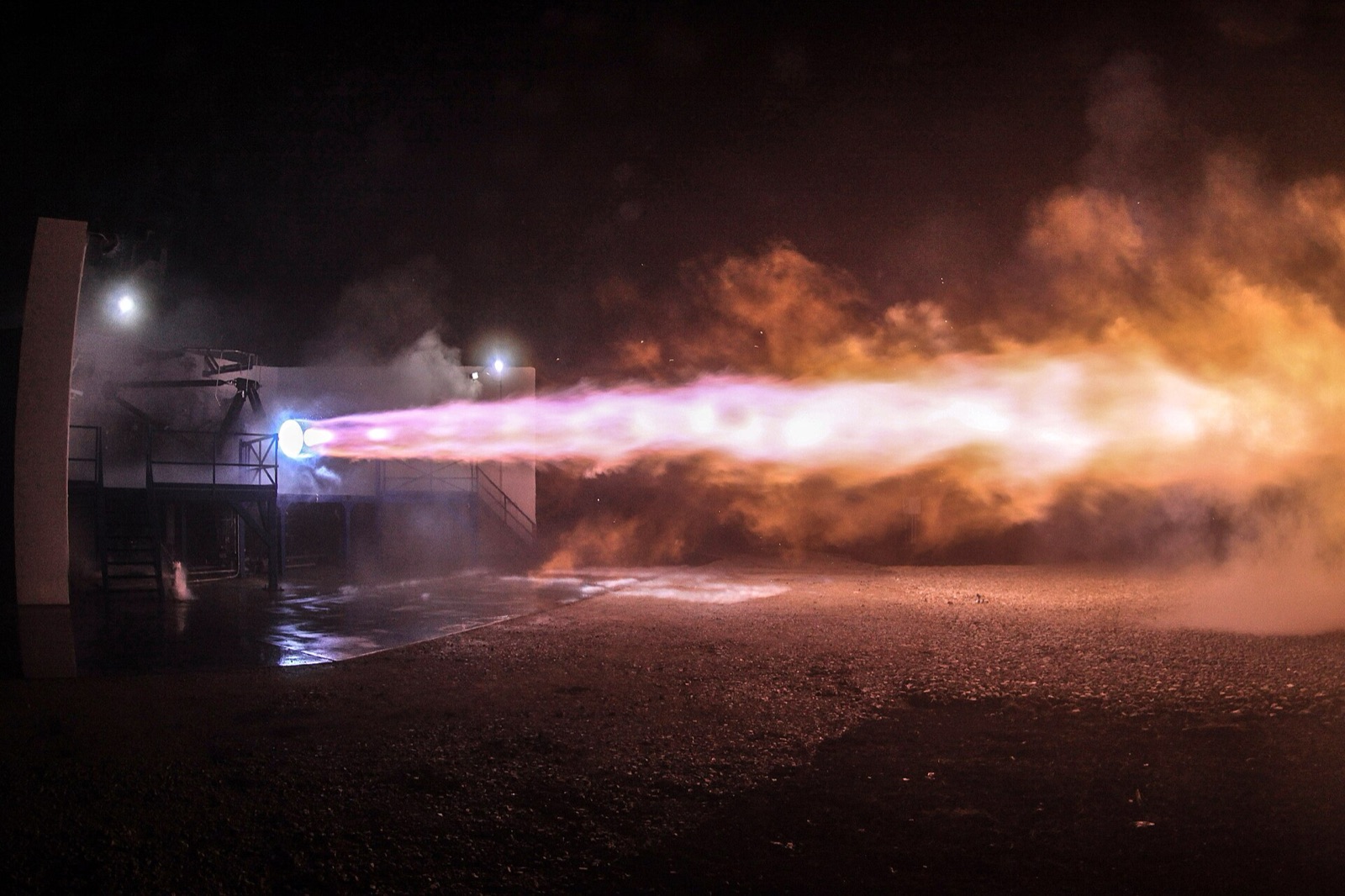
SpaceX designs and builds the Merlin 1D for its Falcon rockets. It burns kerosene with liquid oxygen, and each sea-level engine pushes with 845 kilonewtons (190,000 pounds of force). Nine of them lift a Falcon 9 first stage, and SpaceX lands and reuses that stage. Twenty-seven lift a Falcon Heavy. A vacuum version powers the second stage.
Milled copper alloy lines the chamber and the nozzle and gives a large safety margin against heat. The injector sprays the propellants into the chamber. It is a pintle design, first used in the Apollo-era Lunar Module landing engine. On the vacuum version, the bell-shaped nozzle is made of niobium sheet alloy.
Application
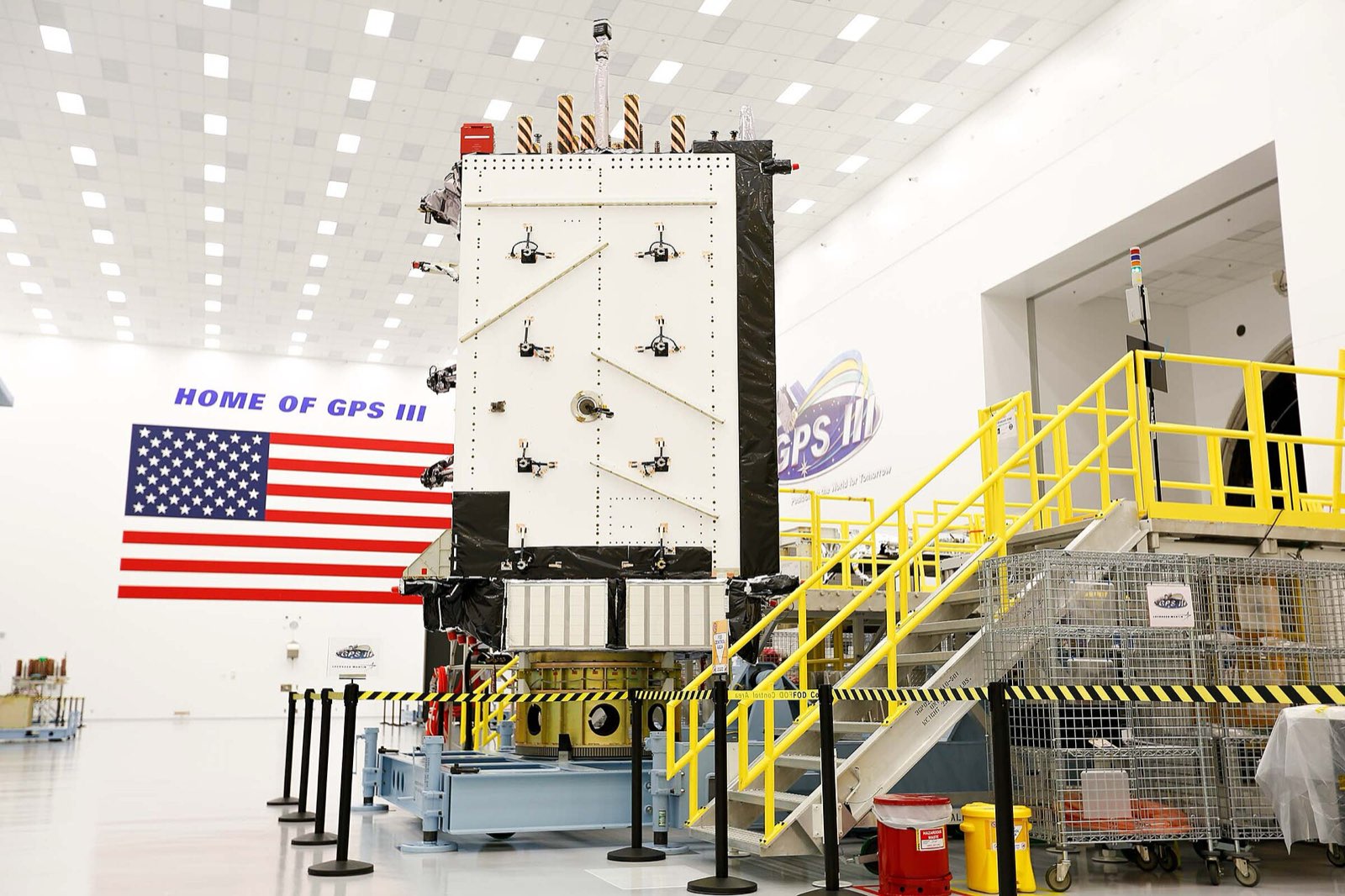
Nine Merlin 1D engines lift the Falcon 9 first stage, which SpaceX lands and reuses. The engines launch NASA crew and cargo to the International Space Station and commercial satellites to orbit.
Photos
How it is built
Chamber and nozzle
The thrust chamber and nozzle are regeneratively cooled: propellant flows through their walls and carries heat away. The liner is milled copper alloy. On the vacuum version, a thin niobium nozzle extension is radiatively cooled, so it gives off heat as radiation instead.
Chamber and nozzle liner
Radiatively cooled nozzle extension
Injector and turbopump
SpaceX says the pintle injector gives the engine inherent combustion stability. The turbopump, the machine that forces propellant into the engine, has a single shaft joining the oxygen pump, the fuel pump and the turbine, and it spins at roughly 30,000 rpm. A gas generator burns a small flow of propellant to drive that turbine.
Pintle injector
Turbopump (single shaft for LOX pump, fuel pump and turbine)
Gas generator (open cycle)
Steering and start-up
The whole engine swivels on a gimbal to steer the rocket, and on the first stage the actuators run on high-pressure kerosene, so no separate hydraulic system is needed. TEA-TEB, a fluid that ignites by itself, starts the engine. Triple-redundant computers control each engine.
Engine gimbal (pitch and yaw)
Thrust-vector-control actuators driven by high-pressure RP-1
TEA-TEB pyrophoric igniter
Engine computers (triple-redundant)
Checks before liftoff
Falcon 9 chills its engines before launch. After ignition the first stage stays on the pad until automated monitors confirm that each engine is running normally. If anything is off, the engines shut down on their own, and in flight the vehicle software can shut down a failing engine.
Engine chill-down before launch
Pad hold-down and automated engine monitors
Autonomous safe shutdown
Engine-out vehicle management software
Vacuum version
The Merlin Vacuum powers the second stage and delivers 981 kilonewtons in vacuum. Its nozzle is fixed rather than folding out, and two redundant igniters let it restart in flight. A later version has a shorter nozzle extension that gives up some performance and uses less material.
The milled liner of the thrust chamber and nozzle. SpaceX does not name the grade.
Niobium alloy
Thin sheet forming the bell-shaped, radiatively cooled nozzle extension of the Merlin Vacuum.
How it connects to other things
The Merlin 1C powered the first Falcon 9, and the Merlin 1D follows it. The original Merlin 1A drew on NASA's Fastrac engine. The 1D's pintle injector was borrowed from the Apollo Lunar Module's landing engine, and its gas generator is like the one in Rocketdyne's F-1. A Falcon 9 first stage carries nine Merlin 1Ds and a Falcon Heavy 27, and each rocket adds one Merlin Vacuum. Barber-Nichols built the turbopump of an earlier Merlin.
SpaceX says little about what the engine is made of. It does not name the copper alloy, the grade of the niobium, or the metals in the turbopump, injector, manifolds and valves. Nor does it name any outside supplier for the current engine.
The detailed data
What is written above is built from these numbers and quotes. Each row links to the page it was taken from. Get all of it as JSON, or ask our MCP server.
Features
Pintle injector for combustion stability
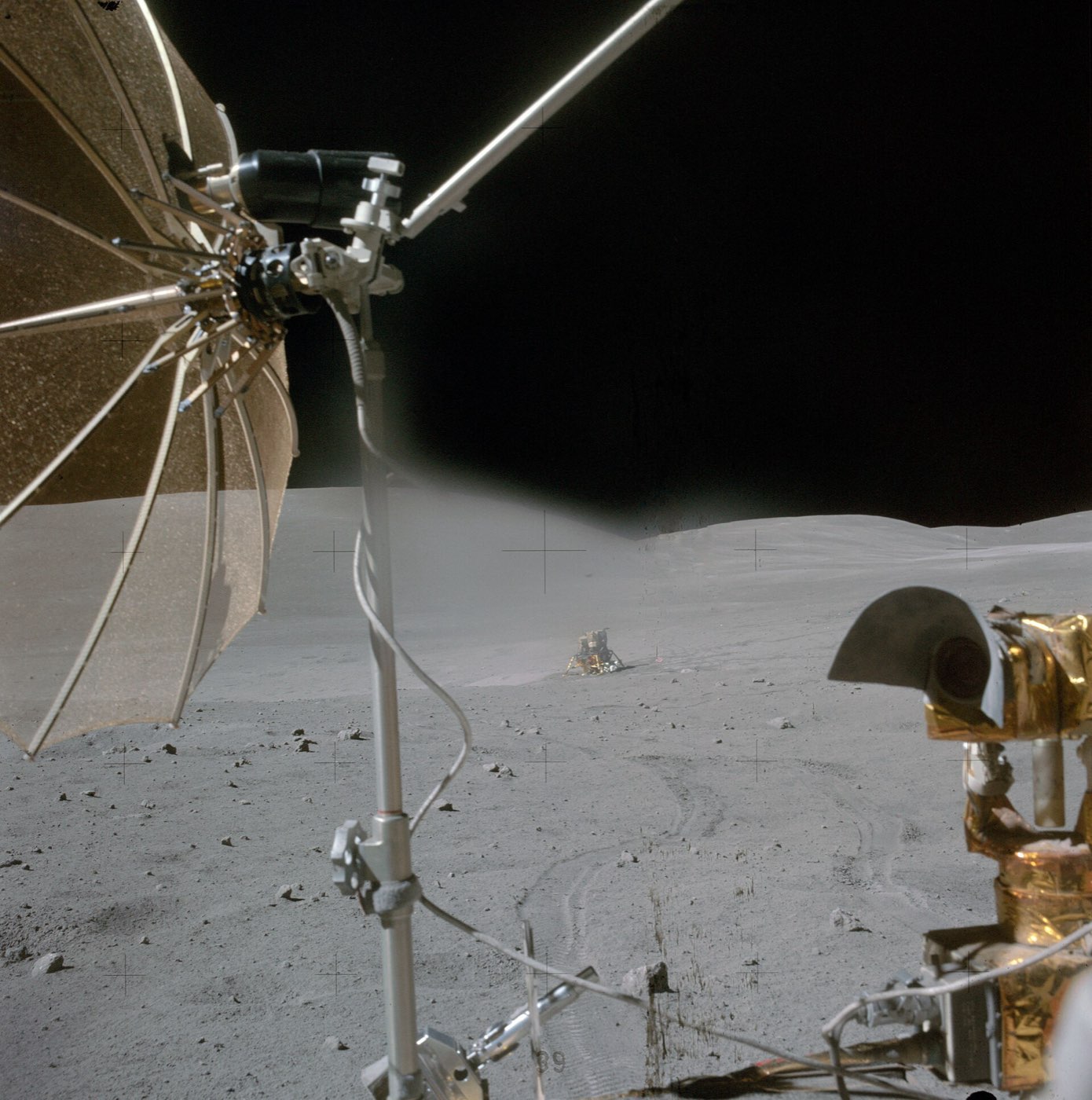
Pintle design borrowed from the Apollo lunar module landing engine
Fixed vacuum nozzle on the second-stage Merlin Vacuum
Specifications
What
Value
Sea-level thrust
845 kN (190,000 lbf)
Cycle
Gas generator
Propellants
Kerosene and liquid oxygen
Engines per vehicle
9 on Falcon 9 first stage; 27 on Falcon Heavy
Vacuum thrust of the Merlin Vacuum (second stage)
981 kN (220,500 lbf)
Throttle range, first stage (sea level)
190,000 lbf to 108,300 lbf
Throttle range, second stage
220,500 lbf to 140,679 lbf
Restart capability
yes on both stages
Engines flown per launch
10 on Falcon 9, 28 on Falcon Heavy
Thrust-to-weight claim
highest of any boost engine ever made (SpaceX claim)
Turbopump shaft speed
about 30,000 rpm
Chamber pressure
9.7 MPa (1,410 psi)
Development and first flight
developed 2011 to 2012, first flight 2013
First flight of the first-generation Merlin Vacuum (Merlin 1C-based)
4 June 2010, first Falcon 9 flight (second stage)
Propellants (NASA description)
kerosene and liquid oxygen
Materials in detail
Each material named in the sources: where it is used here, which other products use it, and its key numbers when its material page exists.
Only the chamber liner (copper alloy) and the Merlin Vacuum nozzle extension (niobium alloy) have a stated material; other parts are listed with no material. Components, suppliers and links were added from public sources. A material is left blank where no source states it.
Gimballing turbine exhaust duct (Falcon 9 v1.0 Merlin Vacuum)provided second-stage roll control on the first Falcon 9 version“Turbine exhaust duct (gimbal)”
No turbopump, injector, manifold, jacket or valve materials stated. No standards or grades. More detail: SpaceX publishes no Merlin bill of materials: turbopump housings, gas generator, manifolds, valves, igniter hardware and the actuator hardware have no stated alloys. No supplier is named for the Merlin 1D beyond SpaceX itself; Barber-Nichols is named only for the earlier Merlin turbopump (more than 100,000 lbf class). The hydraulic actuator, gimbal and engine-computer hardware is described only in general terms. The 2025 user guide quotes the engine designation 'M1D' and 'MVac'; the exact first-flight date of the Merlin 1D (Falcon 9 v1.1, 2013) comes from Wikipedia and the Spaceflight Now article, not from a SpaceX document. Quotes from the Falcon User's Guides (2025 and 2009) were machine-checked against the PDF text; quotes from NASA web pages, Spaceflight Now, Barber-Nichols and Wikipedia came through a text extractor and were not machine-checked. The chamber-pressure figure is a Wikipedia statement that cites Aviation Week; the F-1 gas-generator similarity is a Wikipedia statement that cites a textbook. More detail: SpaceX publishes no Merlin bill of materials: turbopump housings, gas generator, manifolds, valves, igniter hardware and the actuator hardware have no stated alloys. No supplier is named for the Merlin 1D beyond SpaceX itself; Barber-Nichols is named only for the earlier Merlin turbopump (more than 100,000 lbf class). The hydraulic actuator, gimbal and engine-computer hardware is described only in general terms. The 2025 user guide quotes the engine designation 'M1D' and 'MVac'; the exact first-flight date of the Merlin 1D (Falcon 9 v1.1, 2013) comes from Wikipedia and the Spaceflight Now article, not from a SpaceX document. Quotes from the Falcon User's Guides (2025 and 2009) were machine-checked against the PDF text; quotes from NASA web pages, Spaceflight Now, Barber-Nichols and Wikipedia came through a text extractor and were re-checked in a second fetch pass but not against a saved copy of the page. The chamber-pressure figure is a Wikipedia statement that cites Aviation Week; the F-1 gas-generator similarity is a Wikipedia statement that cites a textbook.