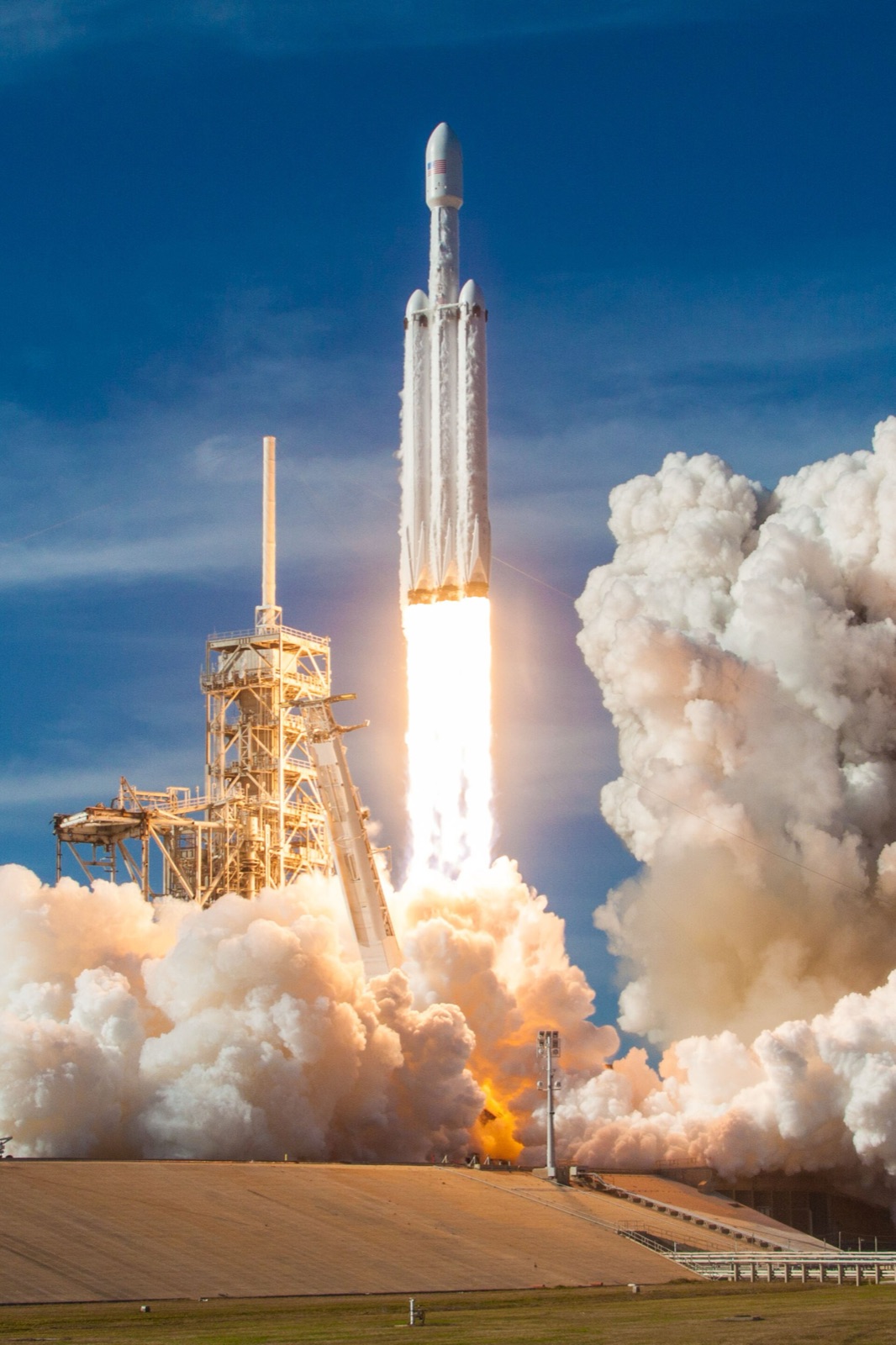
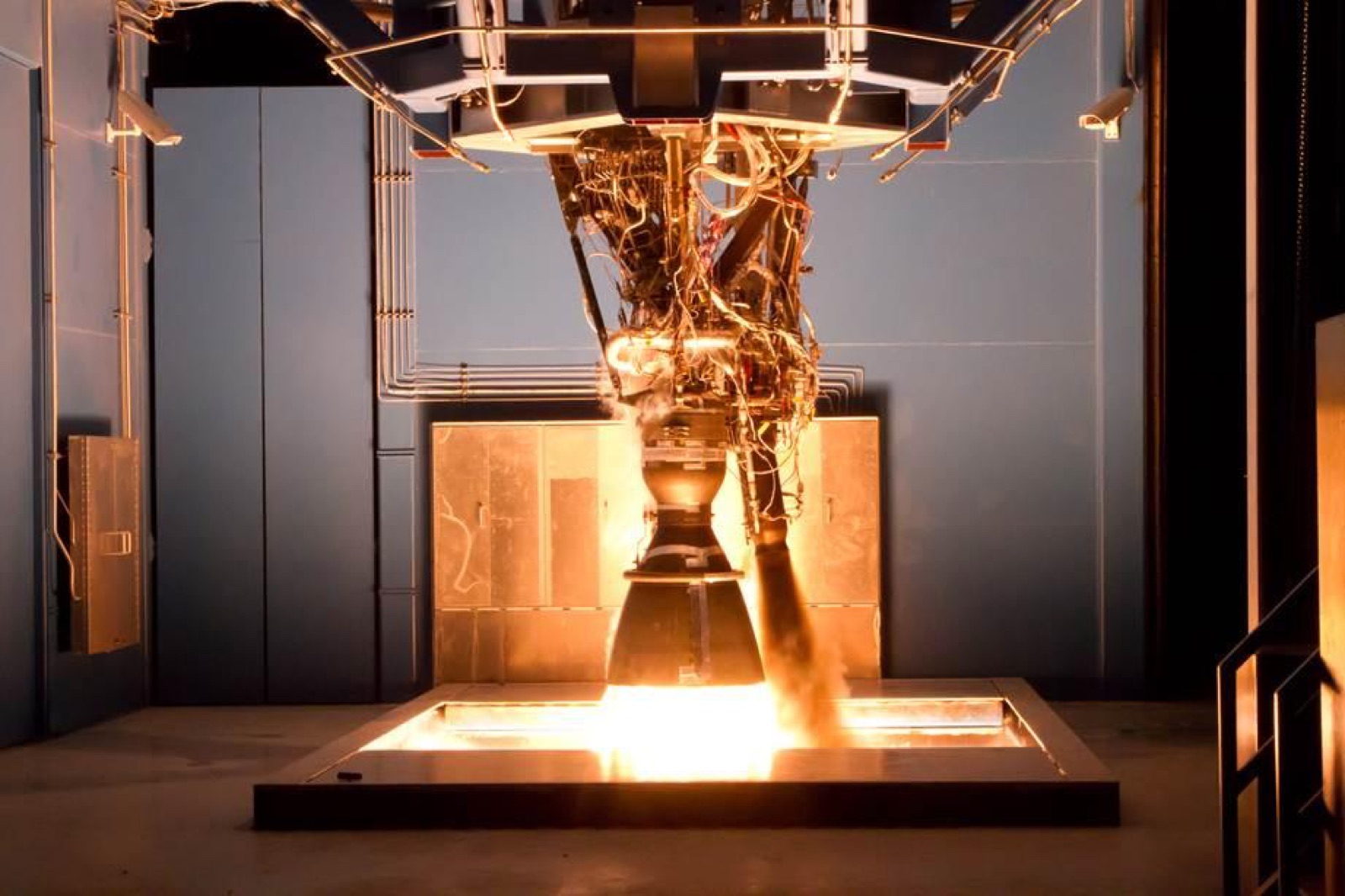
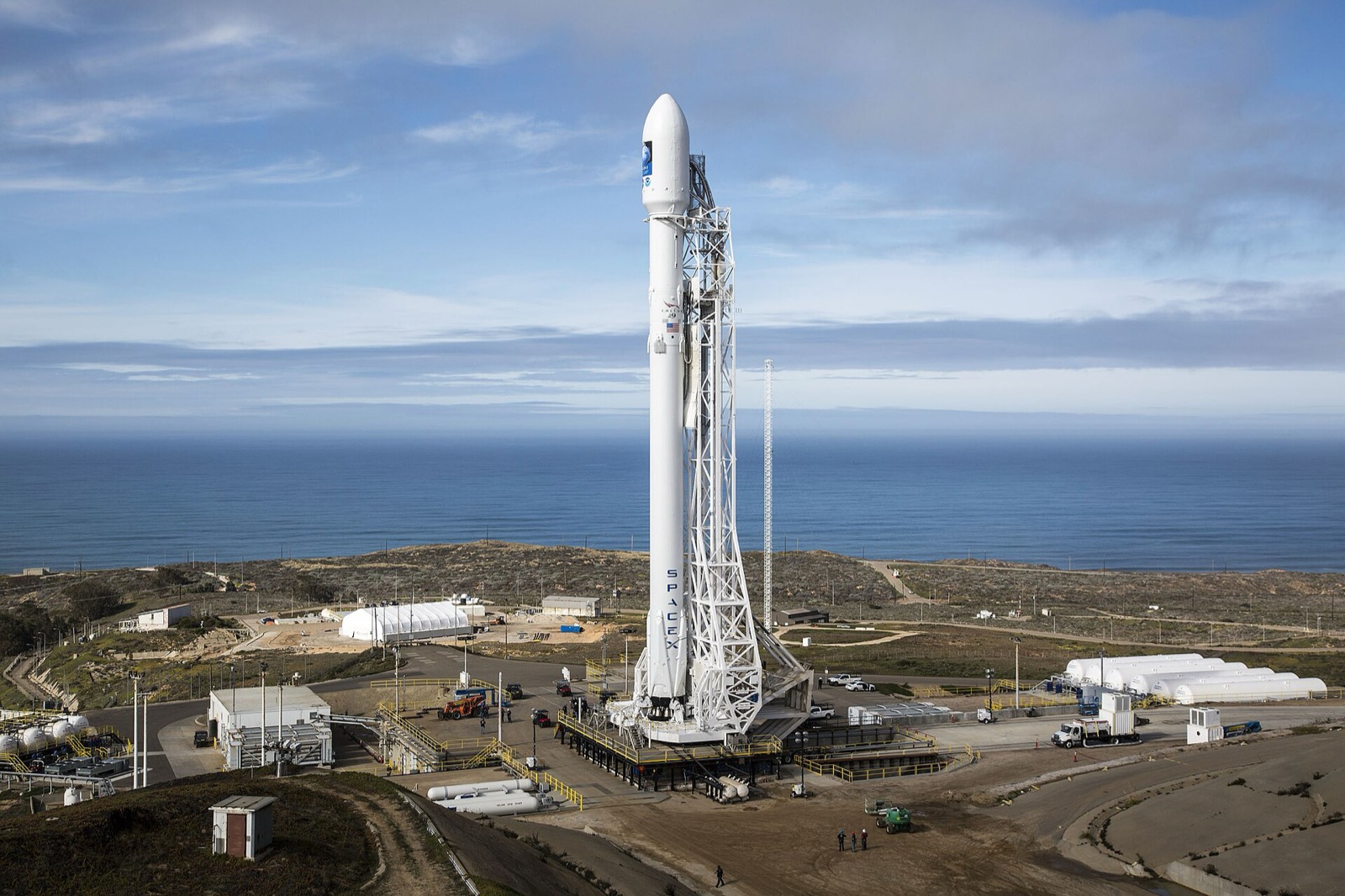
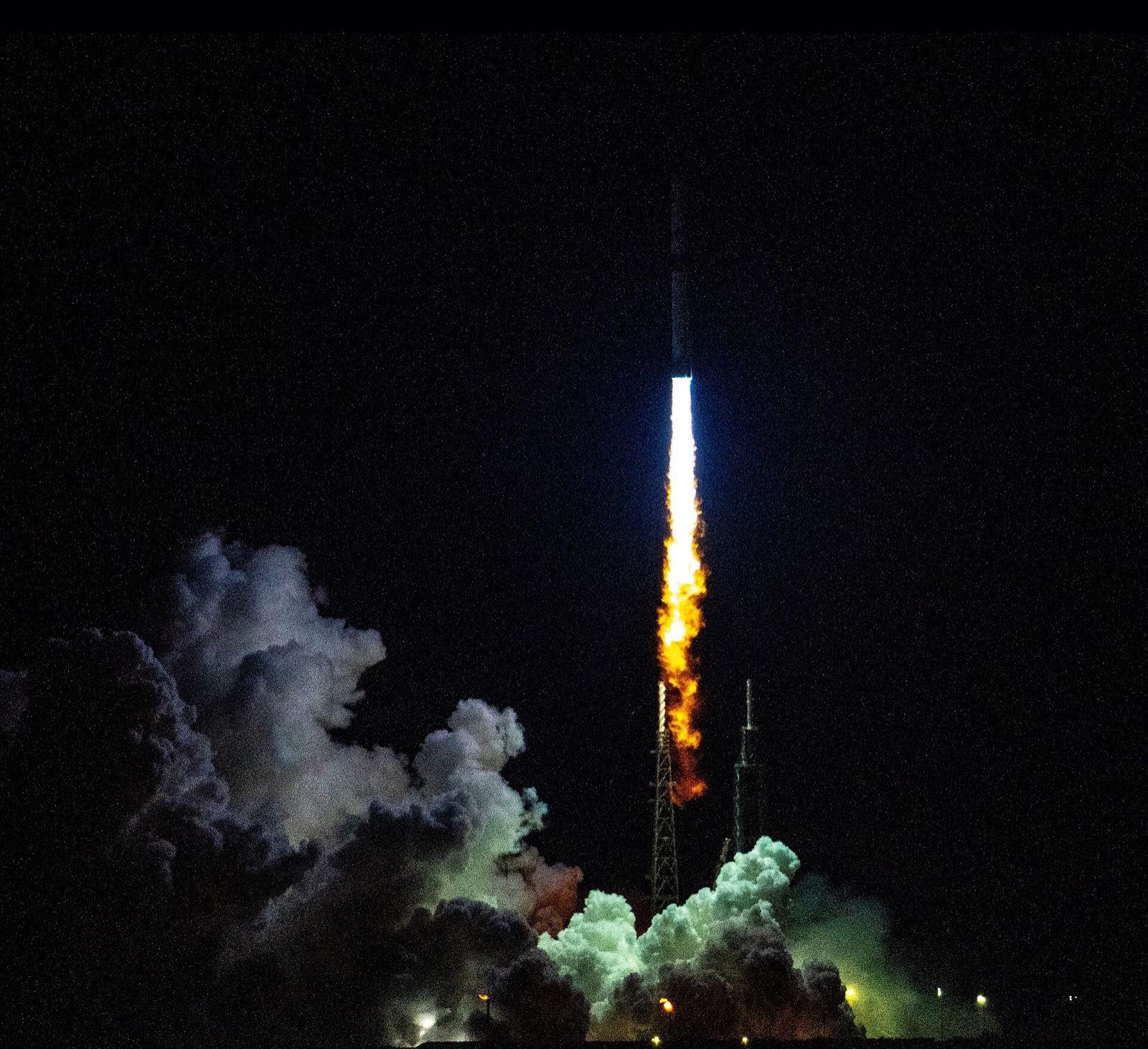
SpaceX built Falcon Heavy from three Falcon 9 first stages, joined side by side, with one upper stage on the centre core. Its 27 Merlin engines together produce more than 5 million pounds of thrust. It first flew on 6 February 2018, and its only payload was a Tesla Roadster carrying a mannequin called Starman.
Most of it is Falcon 9. The side boosters are Falcon 9 first stages with nose cones fitted, and the centre core is a strengthened version. The upper stage and the fairing, the shell that protects the payload, are unchanged. SpaceX publishes no materials list for Falcon Heavy, but Falcon 9, the rocket it is built on, has aluminium-lithium tanks.
Application
A three-core heavy-lift rocket that has launched large satellites and NASA science missions. Its materials are inherited from Falcon 9, so the core and booster structure is aluminum-lithium with a carbon-fibre interstage.
Photos
How it is built
Three cores
A centre core and two side boosters make up the first stage, each with nine Merlin engines, and the identical side boosters wear nose cones. The centre core has thicker tank walls. At liftoff it runs at full power for a few seconds, throttles down, then returns to maximum once the side boosters separate.
Three-core first stage
Center core (thicker tank walls)
Side boosters (two, structurally identical)
Side-booster nose cones
Merlin 1D engines (x27, nine per core)
Joints and release
Each side booster is connected to the centre core at the base engine mount and at the forward end of the core's oxygen tank. The release system sits on the centre core. After burnout, four gas-powered pushers on each side booster, two at the top and two at the base, push it away.
Core-to-core structural connections (forward and aft)
Attachment at the base engine mount and the forward end of the centre-core LOX tank
Booster separation system on the centre core
Forward pneumatic pusher separation mechanisms (two per side booster)
Aft pusher separation mechanisms (two per side booster)
Upper stage and fairing
The second stage and the fairing are the same as Falcon 9's, with one Merlin engine modified for vacuum. Most flights have used a mission-extension kit, which allows long coasts between burns. A 4.5-metre composite interstage, the section between the stages, joins the centre core to the second stage.
Second stage (same as Falcon 9)
Merlin Vacuum engine (x1, second stage)
Mission-extension kit on the second stage
Payload fairing (same as Falcon 9)
Centre-core interstage (4.5 m)
Coming back
Each core has four retractable grid fins at the top, which extend after separation to steer it down. Landing legs of the Falcon 9 type, made of carbon fibre and aluminium, let the boosters touch down. The two side boosters have landed side by side at Landing Zones 1 and 2.
Grid fins on each core (four per core)
Landing legs (Falcon 9 booster)
Where the parts areNumber of parts we have listed in each group
Cores7
Booster separation3
Propulsion3
Upper stage and fairing3
Side boosters and core (Falcon 9-derived tanks)2
Recovery hardware2
Ground systems2
Interstage1
Payload (demo flight)1
What it is made of
Aluminium-lithium alloy
Tank walls of the Falcon 9 first stage, which the three cores are based on.
Aluminium-lithium alloy 2195-T8
Plate for the barrels of the Falcon 9 first-stage tanks, the design the cores build on.
The outer sheets of the interstage and, with aluminium, the Falcon 9-type landing legs.
The materials by familyHow many of the parts that name a material use each one
Aluminium4
Other1
How it connects to other things
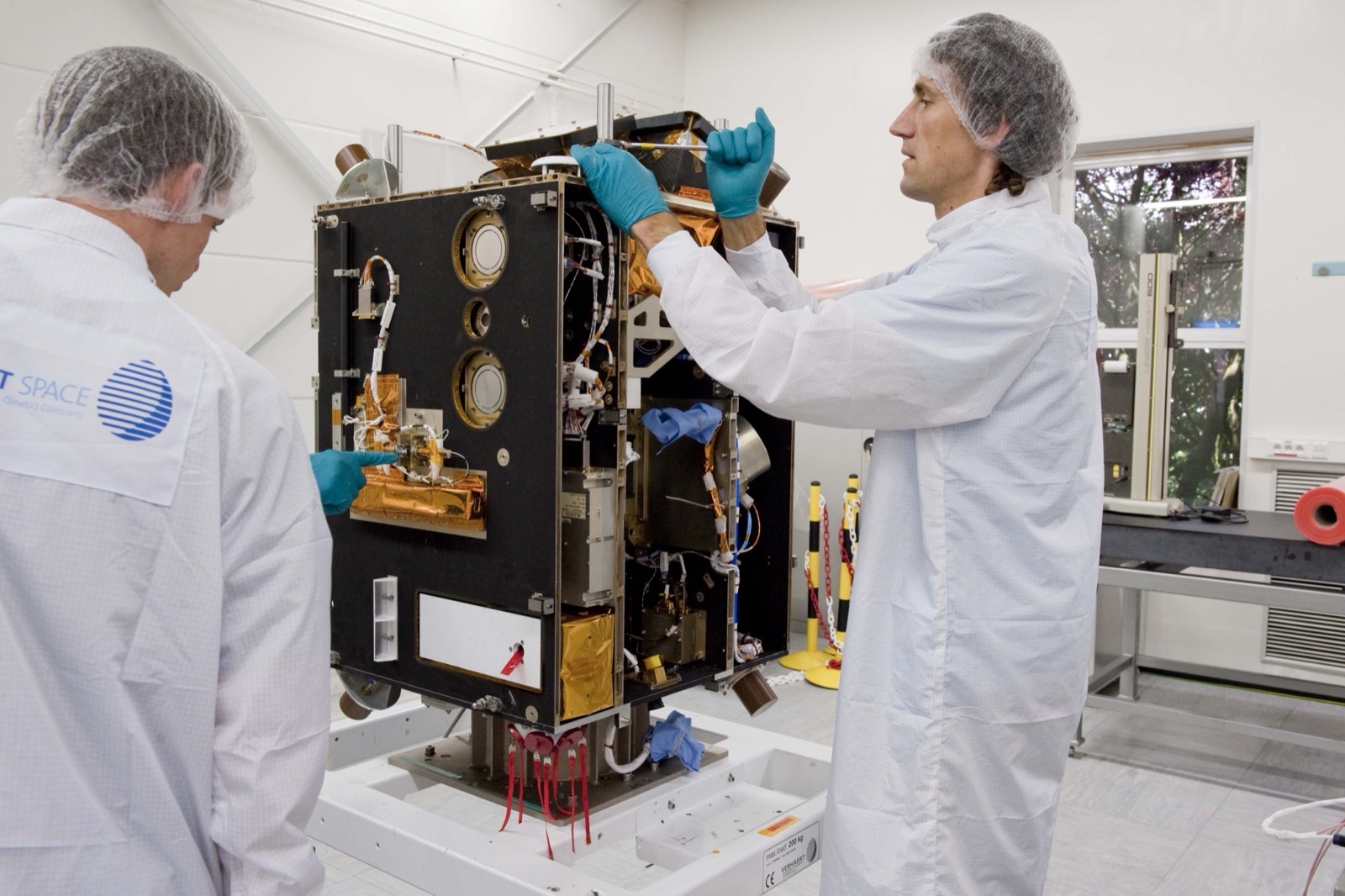
Merlin 1D engines power all three cores, nine on each, and a single Merlin Vacuum powers the upper stage. The design builds on Falcon 9, whose second stage and fairing it shares. Later flights carried the Arabsat-6A communications satellite and the 25 satellites of the STP-2 mission. The fourth and fifth carried the US Space Force payloads USSF-44 and USSF-67.
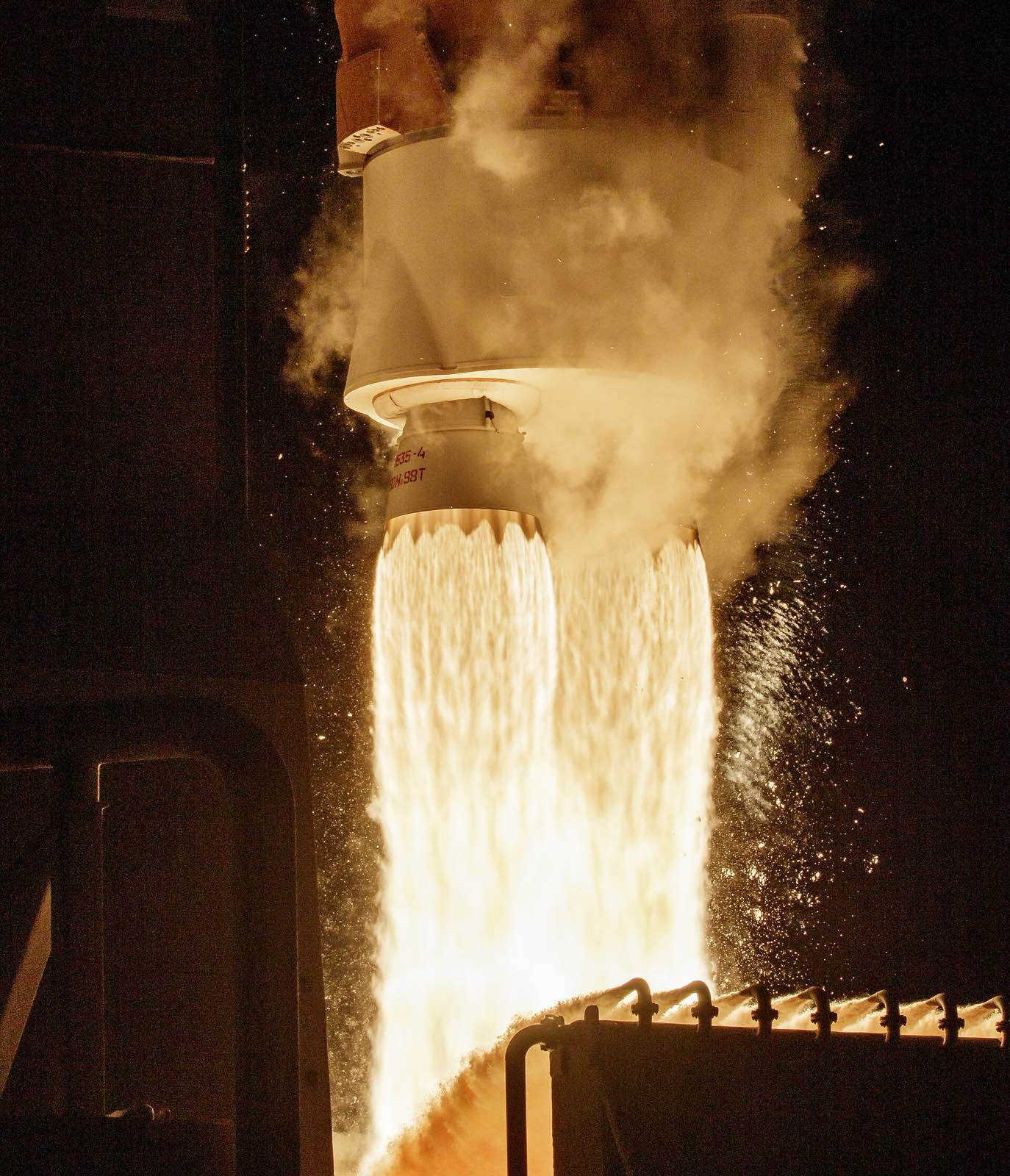
Merlin 1D engine. Here: 27 on the first stage: nine on the centre core and nine on each of the two side boosters. There: nine on the first stage, up to 845 kN each at sea level.
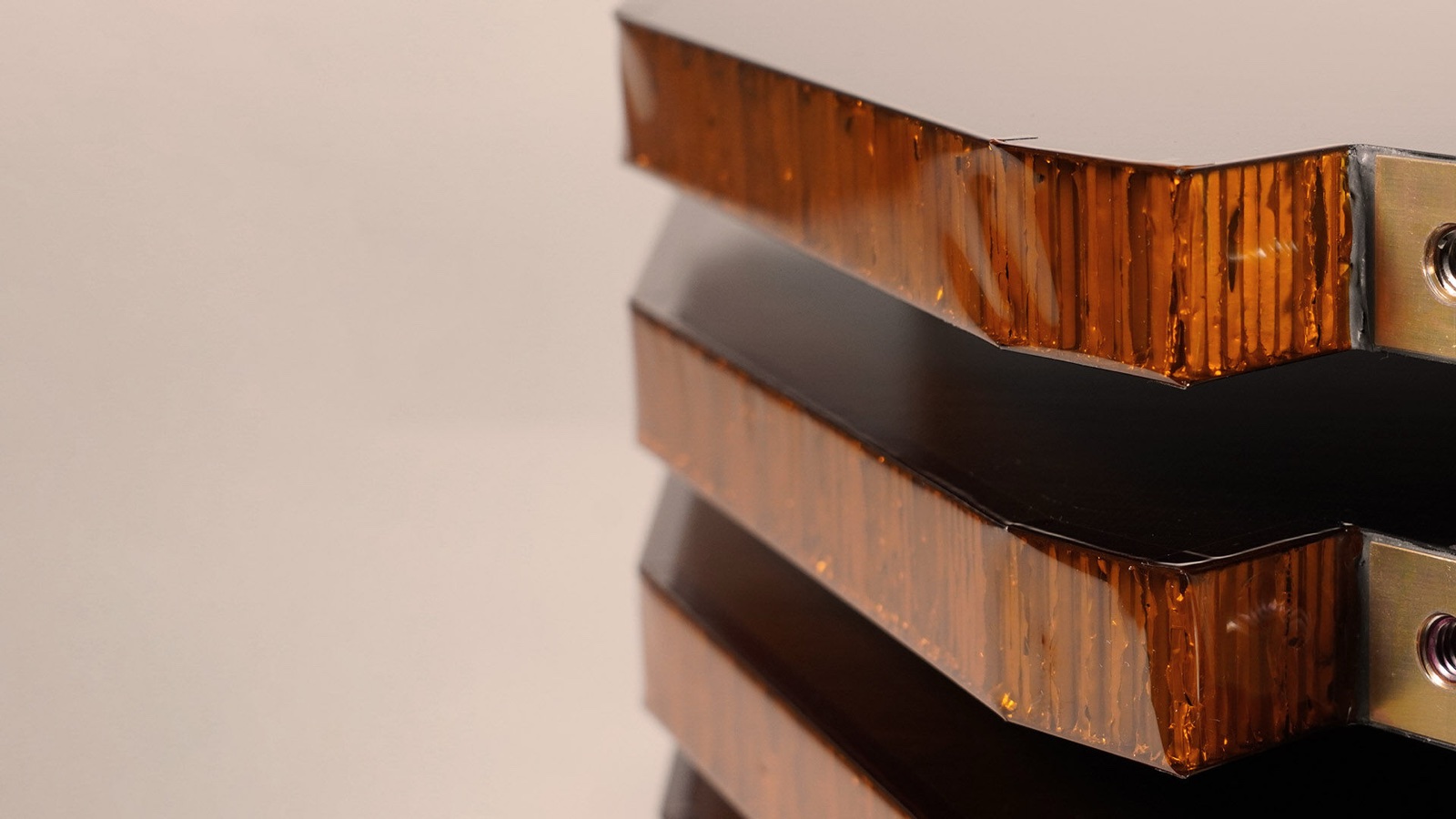
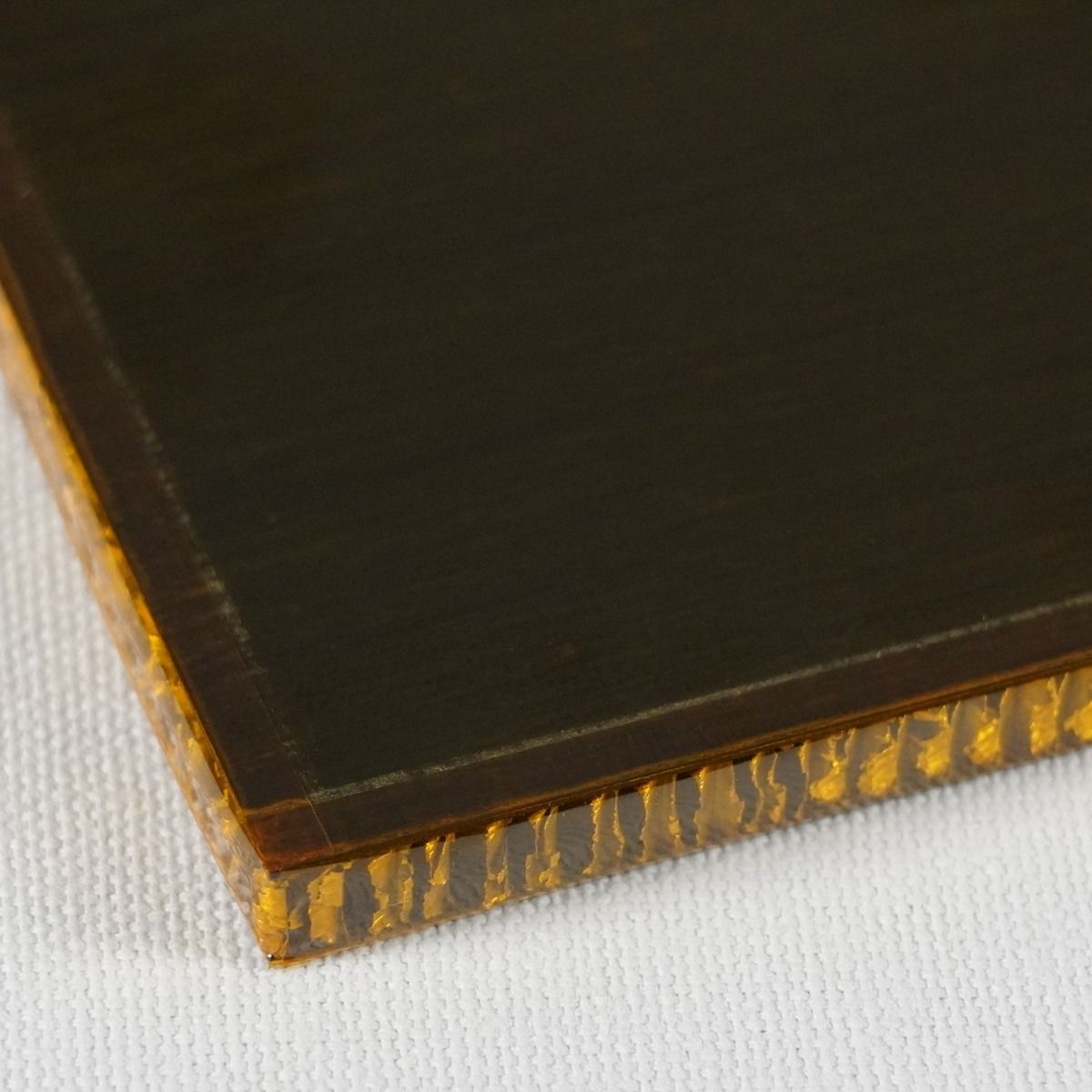
Aluminium honeycomb core. Here: Interstage (Falcon 9); Centre-core interstage (4.5 m). There: Booster heat shield; 5-m payload fairing and more.
Carbon fibre. Here: Landing legs (Falcon 9 booster). There: 400 series interstage adapter; SRB case.
What we do not know
SpaceX gives no materials of its own for Falcon Heavy, so what is known comes from Falcon 9. It says little about how the centre core is reinforced, or what the crossbeams and the side-booster nose cones are made of. It names no suppliers for them. The pushers that separate the boosters are described only in outline.
The detailed data
What is written above is built from these numbers and quotes. Each row links to the page it was taken from. Get all of it as JSON, or ask our MCP server.
Features
Side boosters land back in parallel at Landing Zones 1 and 2
Specifications
What
Value
Engines and thrust
27 Merlin engines, more than 5 million lbf
Payload to LEO
141,000 lb (low inclination)
Payload to Mars
37,000 lb
First flight
6 February 2018
Total liftoff thrust (sea level)
22,819 kN (5,130,000 lbf)
Thrust of one first-stage engine at sea level
845 kN (190,000 lbf)
Overall length at launch
70 m (230 ft)
Total fuelled mass
1,420 t (3,130,000 lb)
Thrust at altitude
24.68 MN (5,550,000 lbf)
Crossfeed
not implemented
Demonstration flight date
6 February 2018
Materials in detail
Each material named in the sources: where it is used here, which other products use it, and its key numbers when its material page exists.
Aluminium honeycomb core (Hexcel HexWeb CR III, 5052 and 5056)
Only Falcon 9 statements apply; no Falcon Heavy-specific material source found. Components, suppliers and links were added from public sources. A material is left blank where no source states it.
Falcon Heavy-specific structure (center core reinforcement, crossbeams) not sourced. More detail: SpaceX publishes no Falcon Heavy bill of materials; the centre-core crossbeam and reinforcement hardware, the side-booster nose-cone material and supplier, and the separation mechanism hardware (pneumatic pushers) construction are not described beyond the user guide wording. The NASA page used for the payload relations is dated February 2023, so 'planned' launches may have flown or moved since; no flight outcome is checked here. Quotes from the Falcon User's Guide (2025) and the NASA Commercial Crew press kit were machine-checked against the PDF text; Wikipedia and NASA web-page quotes came through a text extractor and were not machine-checked. Wikipedia is used for the nose-cone, interstage dimension, grid-fin count and vacuum-engine statements because the readable primary pages do not state them. More detail: SpaceX publishes no Falcon Heavy bill of materials; the centre-core crossbeam and reinforcement hardware, the side-booster nose-cone material and supplier, and the separation mechanism hardware (pneumatic pushers) construction are not described beyond the user guide wording. The NASA page used for the payload relations is dated February 2023, so 'planned' launches may have flown or moved since; no flight outcome is checked here. Quotes from the Falcon User's Guide (2025) and the NASA Commercial Crew press kit were machine-checked against the PDF text; Wikipedia and NASA web-page quotes came through a text extractor and were re-checked in a second fetch pass but not against a saved copy of the page. Wikipedia is used for the nose-cone, interstage dimension, grid-fin count and vacuum-engine statements because the readable primary pages do not state them.