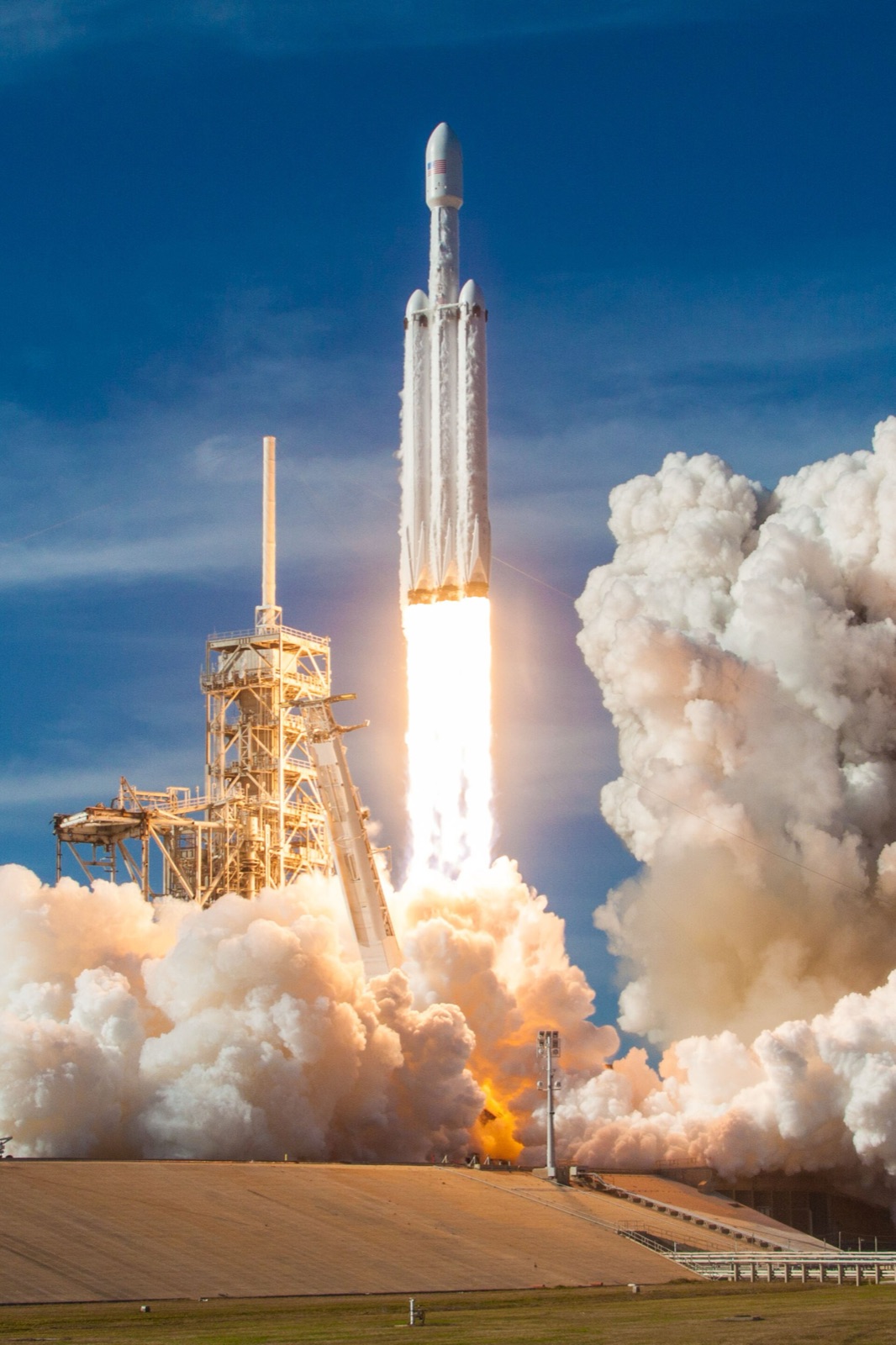
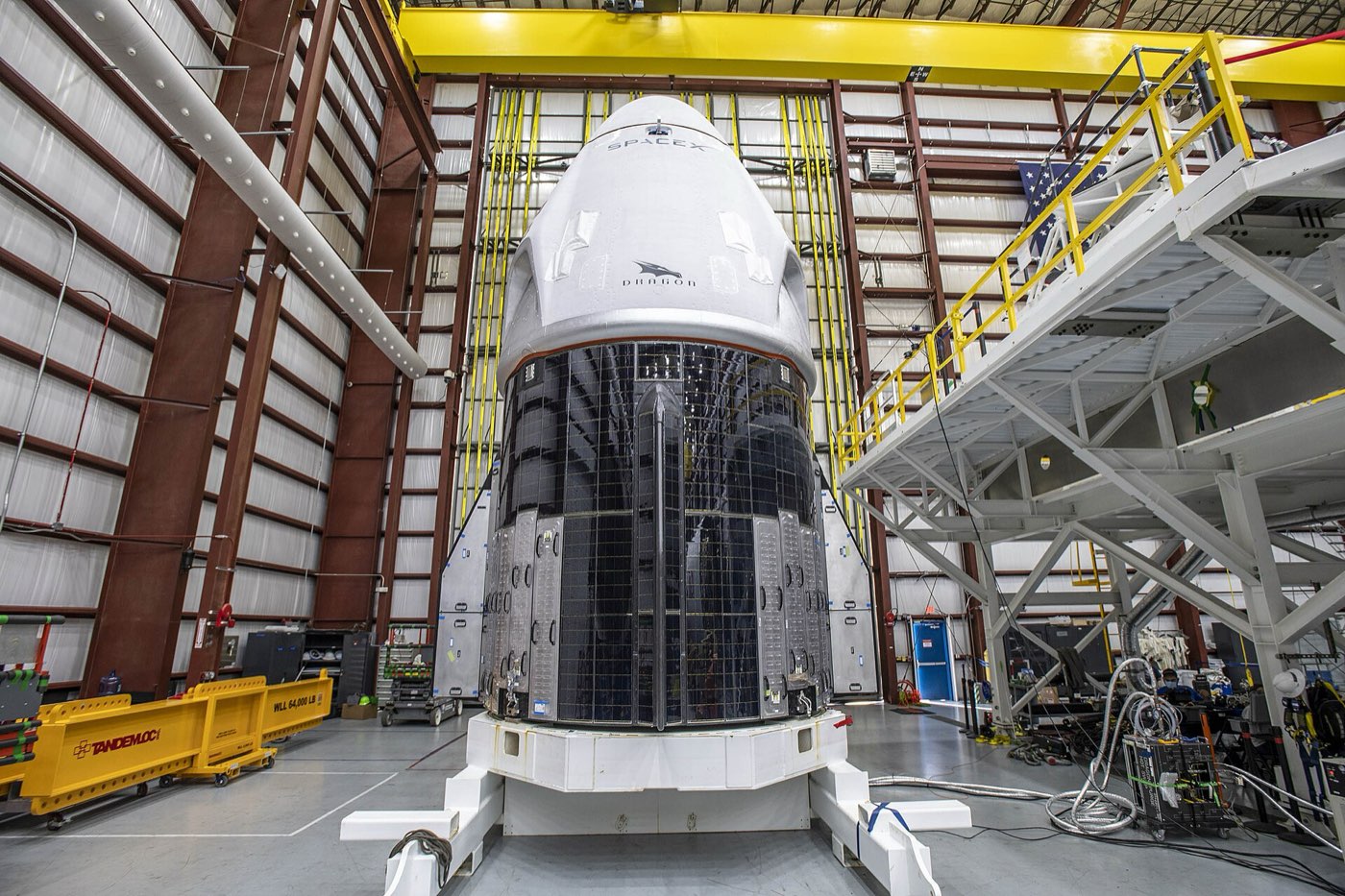
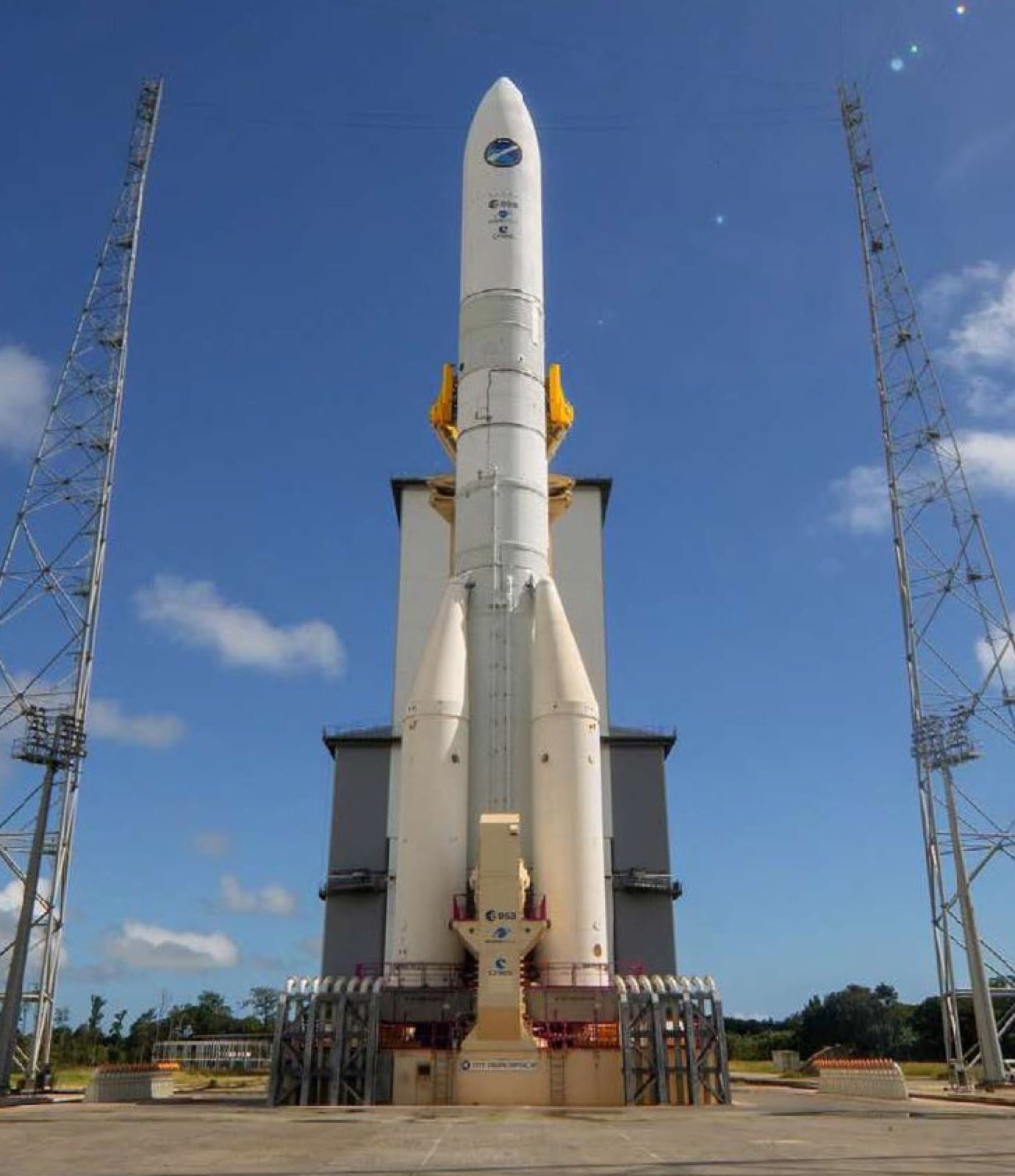
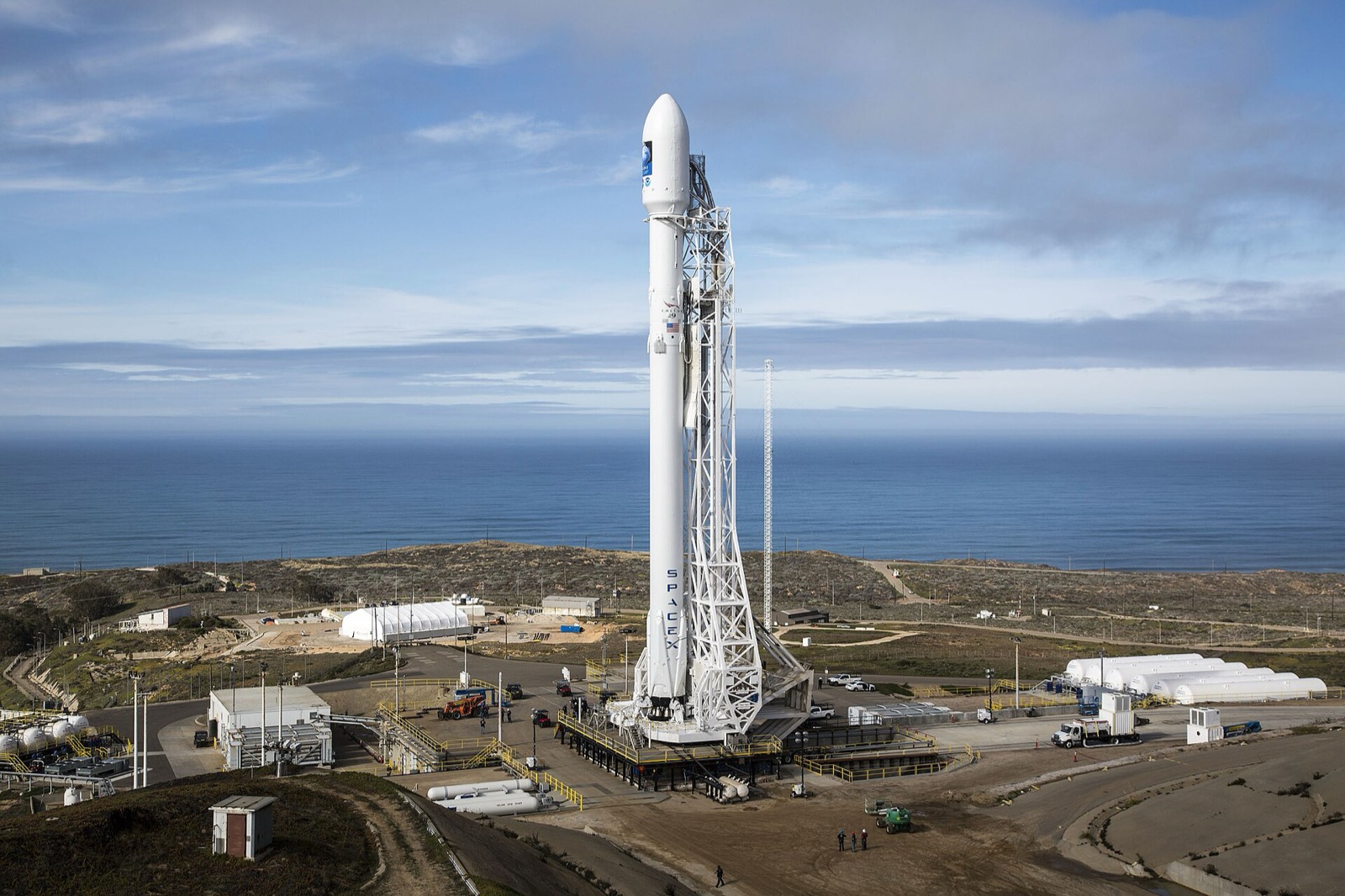
A Falcon 9 standing vertical on its launch mount at Vandenberg Air Force Base with a payload fairing, ocean behind
SpaceX

Falcon 9

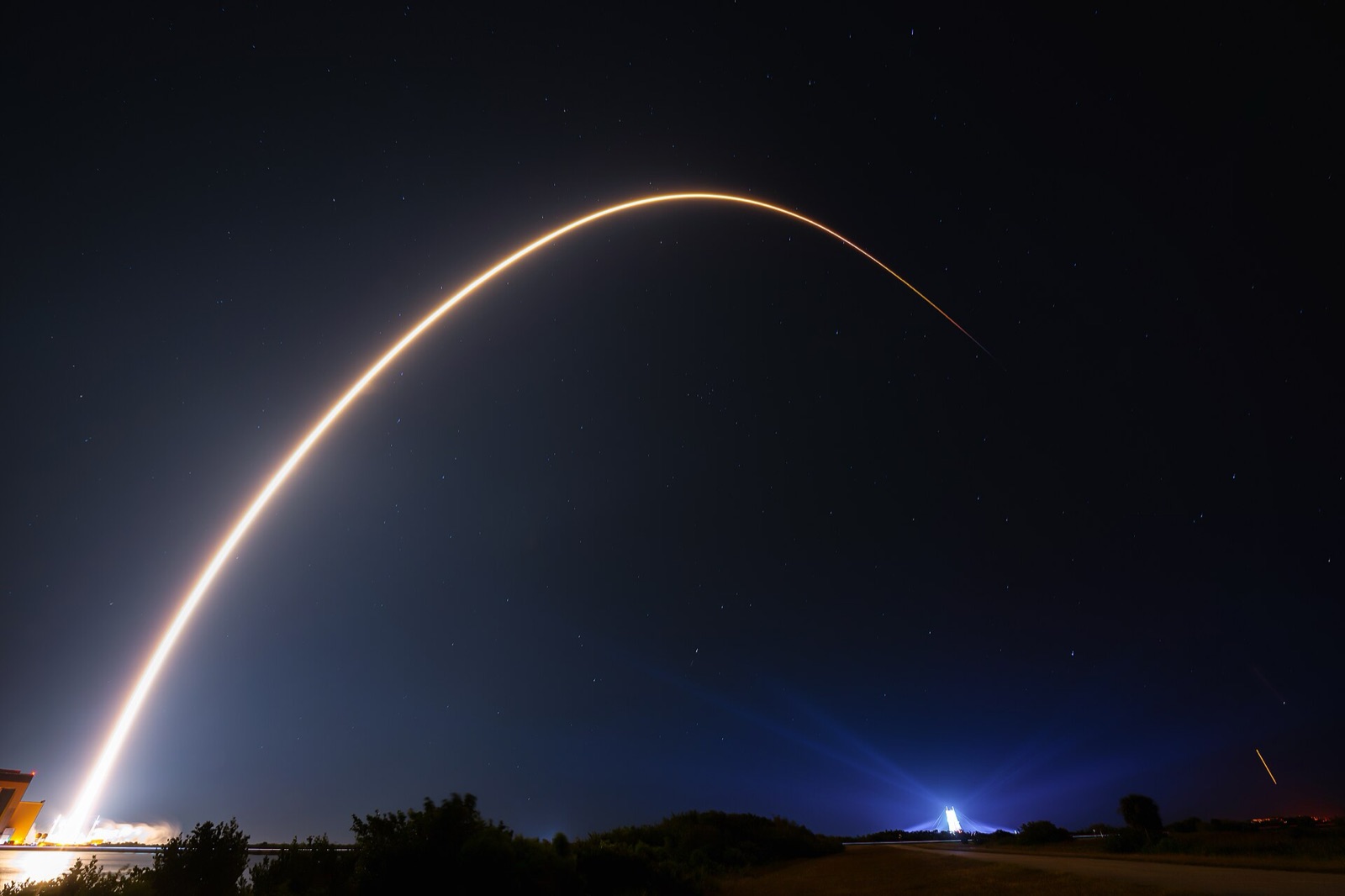
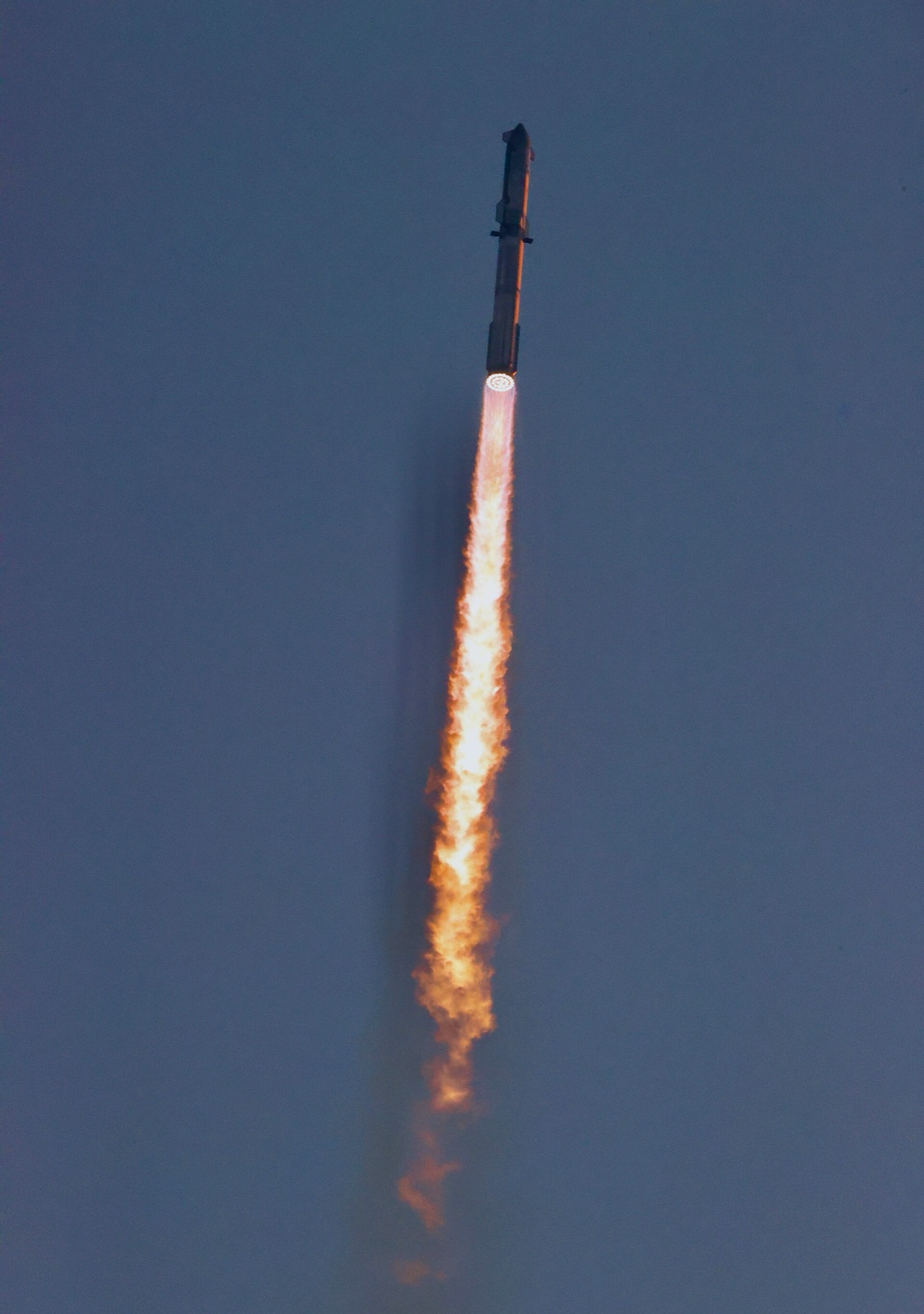
Falcon 9 launches satellites and the Dragon spacecraft, then lands its first stage so it can fly again.

Launch vehicles
Product IDspacex-falcon-9
Height with standard fairing
70 m (229.6 ft)
Diameter
3.66 m (12 ft)
First-stage thrust at liftoff
7,686 kN (1,710,000 lbf)
First successful launch
4 June 2010
Standard fairing
5.2 m outer diameter, 13.2 m high
Booster re-flights, to February 2025
more than 384

In short

Falcon 9 is a two-stage rocket built by SpaceX. It carries satellites inside a nose cover called a fairing, or the Dragon spacecraft in its place. The first stage flies back and lands, and by February 2025 SpaceX said it had re-flown its boosters more than 384 times.

Keeping the structure light leaves the booster enough mass budget to fly back and land. The tanks are a low-density alloy of aluminium and lithium. The section between the two stages, the interstage, is a sandwich of aluminium honeycomb and carbon fibre.

Application

A partly reusable two-stage rocket used to launch satellites and the Dragon spacecraft. Its light aluminum-lithium tanks and carbon-fibre interstage are what keep enough mass budget for the booster to fly back and land.

How it is built

Tanks and engine mount

The tank walls are an aluminium-lithium alloy, joined by friction stir welding, in which a spinning tool stirs two pieces of metal together. A double-wall tube carries liquid oxygen through the middle of the kerosene tank to the engines. The nine engines sit on a frame SpaceX calls the Octaweb.

  • Tank walls
  • Tank joints
  • Double-wall LOX transfer tube
  • Octaweb engine mount (thrust structure)
  • Individual engine bays (one metal bay per engine)

Interstage and separation

The interstage is a composite structure, an aluminium honeycomb core between carbon fibre face sheets. Mechanical latches at three points join its top to the base of the second stage. After the first-stage engines shut down, high-pressure helium releases the latches and four gas-powered pushers force the stages apart.

  • Interstage
  • Interstage face sheets
  • Stage mating latches (three points)
  • Helium release circuit with redundant actuators
  • Stage separation pneumatic pushers (four, one redundant)

Fairing

The two halves of the fairing are latched along a seam, and helium releases the latches before four pushers force them apart. SpaceX's first user guide describes the shell as aluminium honeycomb wrapped in carbon fibre. Each half returns under a steerable parachute, and by February 2025 SpaceX had re-flown halves on 307 missions.

  • Fairing shell (aluminium honeycomb with carbon fibre face sheets)
  • Fairing halves latched along a vertical seam
  • Fairing pneumatic pushers (four)
  • Fairing recovery system (steerable parachute and RCS thrusters)
  • Acoustic blankets

Second stage

The second-stage tank is a shorter version of the first stage's, and one Merlin Vacuum engine powers it. Two redundant igniters use a chemical that catches fire by itself, so the engine can restart in flight. Cold nitrogen gas thrusters handle pointing and roll.

  • Second-stage propellant tank
  • Merlin Vacuum engine (x1)
  • Dual redundant TEA-TEB igniters
  • Cold nitrogen gas attitude control system

Landing gear

The landing legs, carbon fibre and aluminium, span about 18 metres and weigh under 2,100 kg in all. Grid fins steer the stage down: the first ones were aluminium, and titanium ones replaced them. One landing platform at sea is a drone ship called Of Course I Still Love You.

  • Landing legs
  • Grid fins
  • Grid fins, titanium version
  • Drone ship 'Of Course I Still Love You'
Where the parts areNumber of parts we have listed in each group
  • Payload fairing9
  • Payload interfaces9
  • Avionics and power8
  • First stage structure7
  • First stage propulsion6
  • Recovery hardware4
  • Second stage4
  • First-stage and second-stage tanks3
  • Stage separation3
  • Interstage2

What it is made of

  • Aluminium-lithium alloy

    The walls of the propellant tanks, joined by friction stir welding.

  • Aluminium-lithium alloy 2195-T8

    Low-density plate from Constellium for the barrels of the first-stage tanks.

  • Aluminium honeycomb

    The core of the interstage sandwich. SpaceX's first guide gives the fairing shell the same construction.

  • Carbon fibre

    The outer sheets of the interstage and fairing, and part of the landing legs, with aluminium.

  • Titanium

    Grid fins that steer the falling first stage. They replaced the earlier aluminium ones.

  • Lithium-ion cells

    Redundant batteries on each stage. SpaceX gives no detail on the cells.

The materials by familyHow many of the parts that name a material use each one
  • Aluminium6
  • Other2
  • Carbon fibre1
  • Titanium1

How it connects to other things

Falcon 9 grew out of Falcon 1, and SpaceX's first guide says it kept that rocket's Merlin engines, structure and launch control system. Nine Merlin 1D engines power the first stage and one Merlin Vacuum the second. Dragon rides on top in place of the fairing, and the first launch of Starlink V2 Mini satellites carried 21 of them. Constellium supplies the aluminium-lithium plate for the tanks. Three Falcon 9 first stages form the first stage of Falcon Heavy.

Engines

  • Merlin 1D engine

    SpaceX

    nine on the first stage, up to 845 kN each at sea level

    1 more detail

    one on the second stage with a fixed 165:1 nozzle

Used in

  • Falcon Heavy

    SpaceX

    three Falcon 9 first stages form the Falcon Heavy first stage; second stage and fairing are shared

Carries

Launches

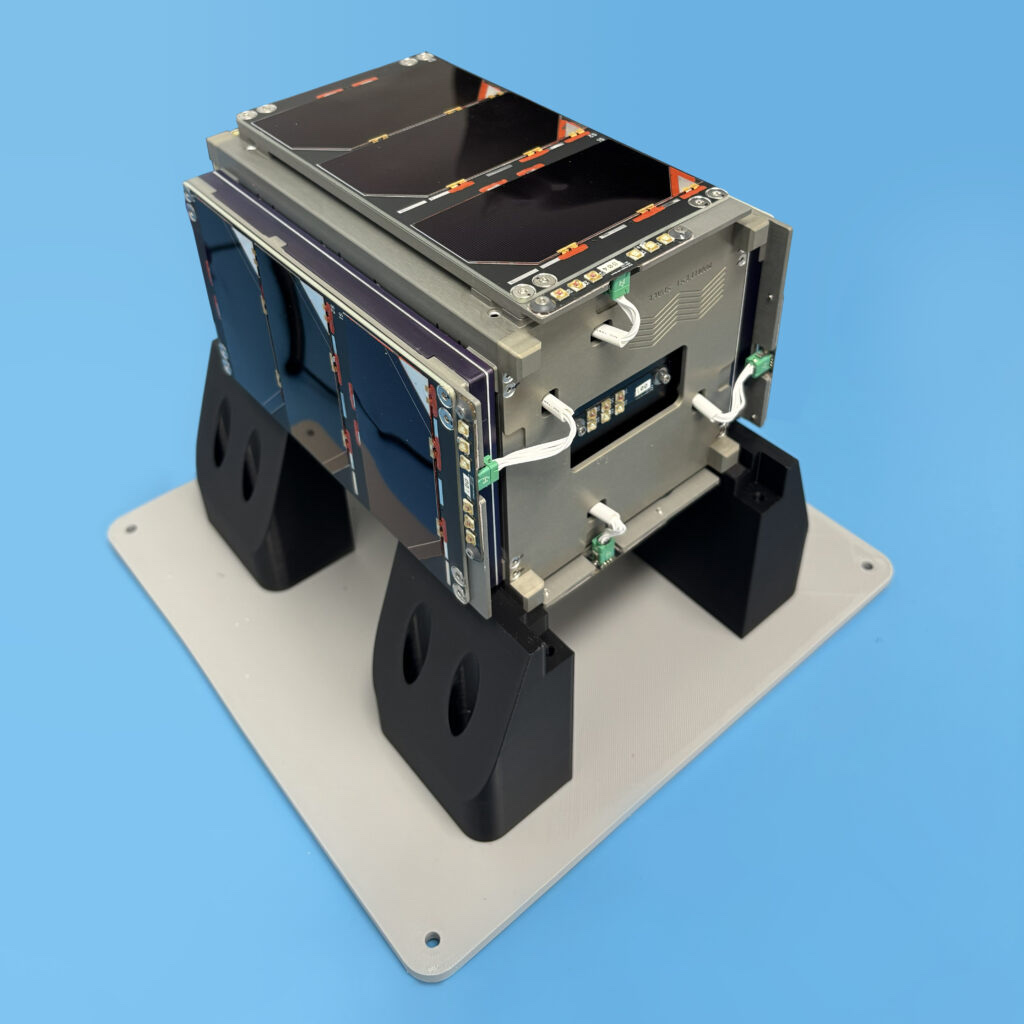
  • Sparrow

    Blackwing Space

    Baby Bird (Sparrow 1U) launched on the Transporter-18 rideshare; the release is dateline October 2, 2026 and the page header says September 02, 2026

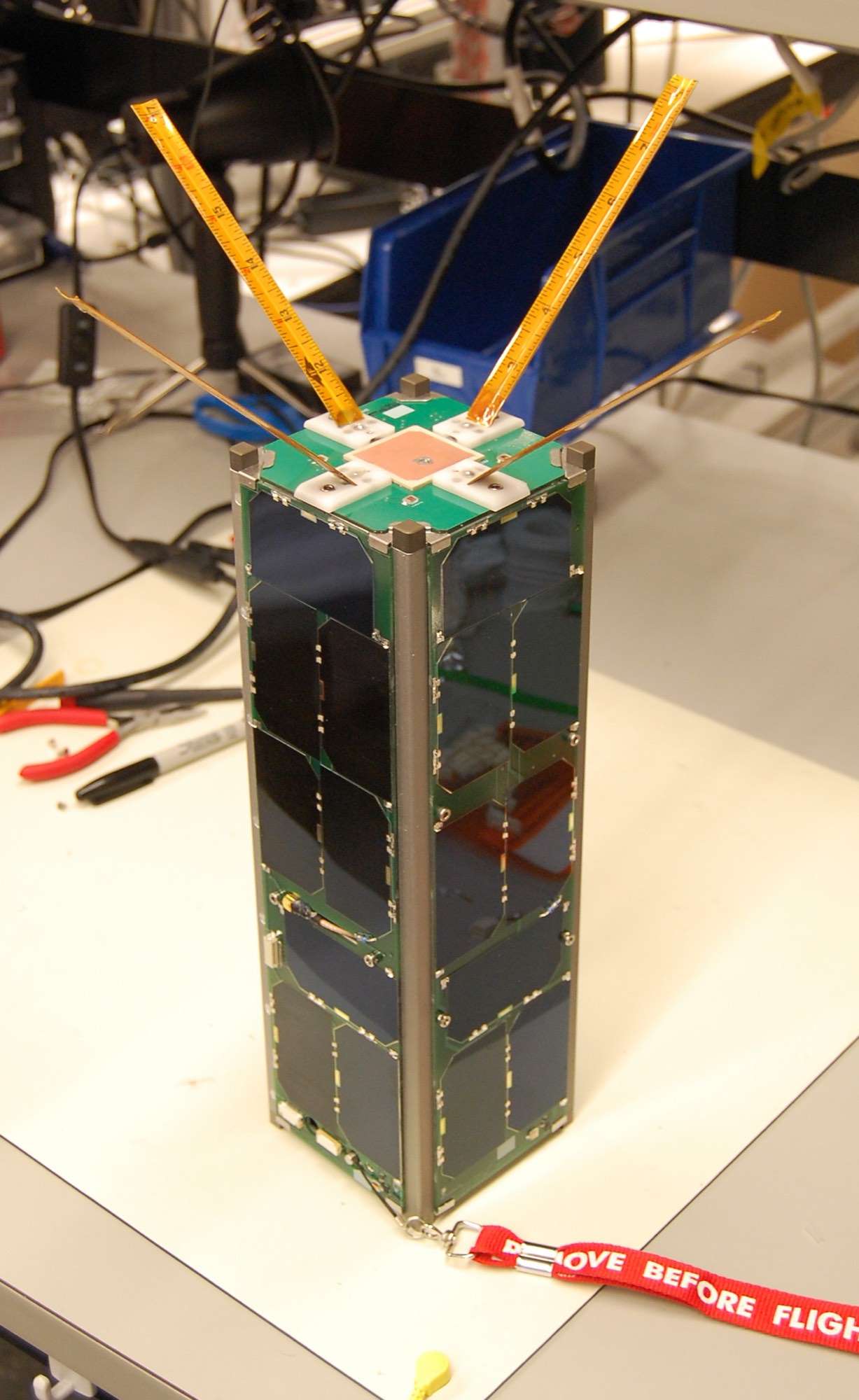
  • Pumpkin CubeSat Kit structure

    Pumpkin Space Systems

    Launched 8 December 2010 from Cape Canaveral

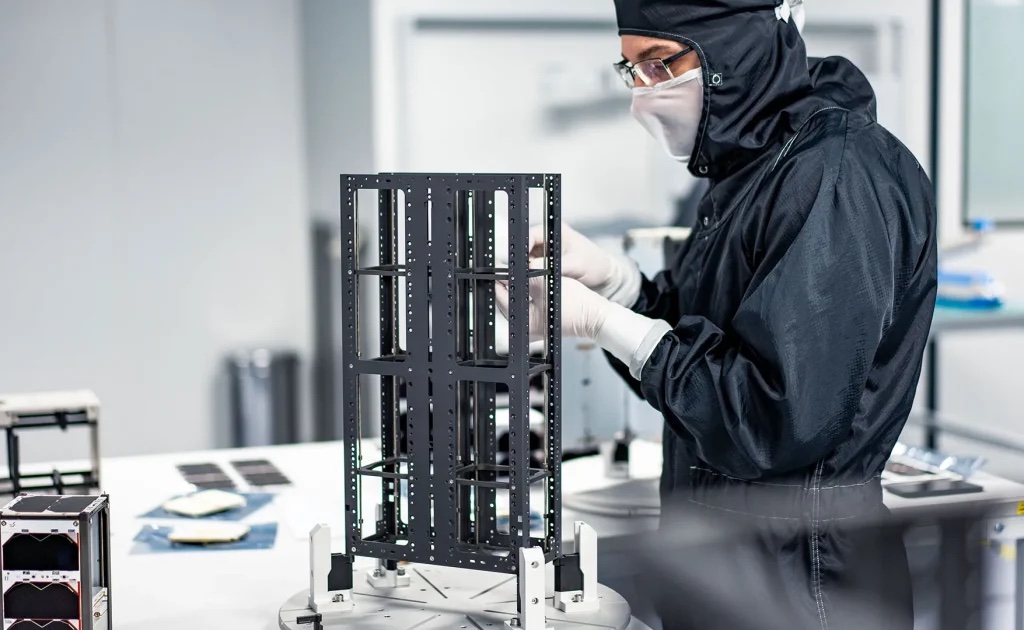
  • EnduroSat CubeSat structures

    EnduroSat

    3UCubed launched 28 November 2025 at 10:19 a.m. PST from Vandenberg (UNH news)

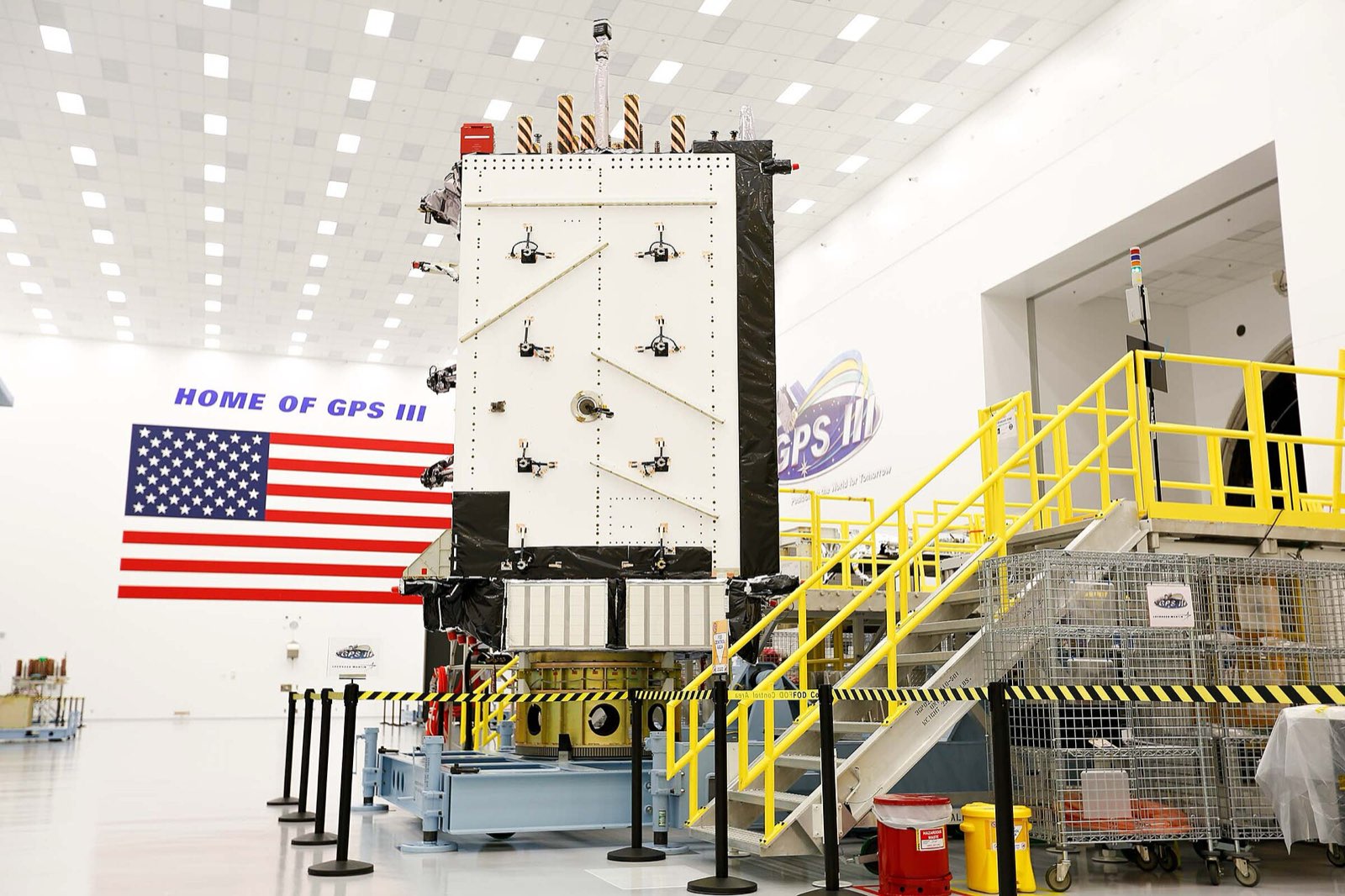
  • GPS III satellite

    Lockheed Martin

    launched SV01 (2018), SV03, SV04, SV06 and SV09 per Lockheed; Wikipedia lists Falcon 9 Block 5 for SV05, SV07, SV08 and SV10 too

    2 more details

    second Lockheed-confirmed Falcon 9 flight

    Lockheed-confirmed Falcon 9 flight, January 2023

  • Crew Dragon

    SpaceX

    launches on top of the second stage from Launch Complex 39A

  • Starlink V2 Mini satellite

    SpaceX

    21 satellites on the first V2 Mini launch

Builds on

  • Falcon 1

    same Merlin engines, structural architecture and launch control system as Falcon 1 (2009 guide, v1.0)

Passed on to

Used as a base by

  • Falcon Heavy

    SpaceX

    first stage is three Falcon 9 first stages with strengthened cores; same second stage and fairing

Made or supplied by

  • Constellium

    Airware 2195-T8 aluminium-lithium plate for the tank barrels and domes

Products that share an engine or part with this one

  • Falcon Heavy

    SpaceX

    How it is used

    Merlin 1D engine. Here: nine on the first stage, up to 845 kN each at sea level. There: 27 on the first stage: nine on the centre core and nine on each of the two side boosters.

Products that use the same materials

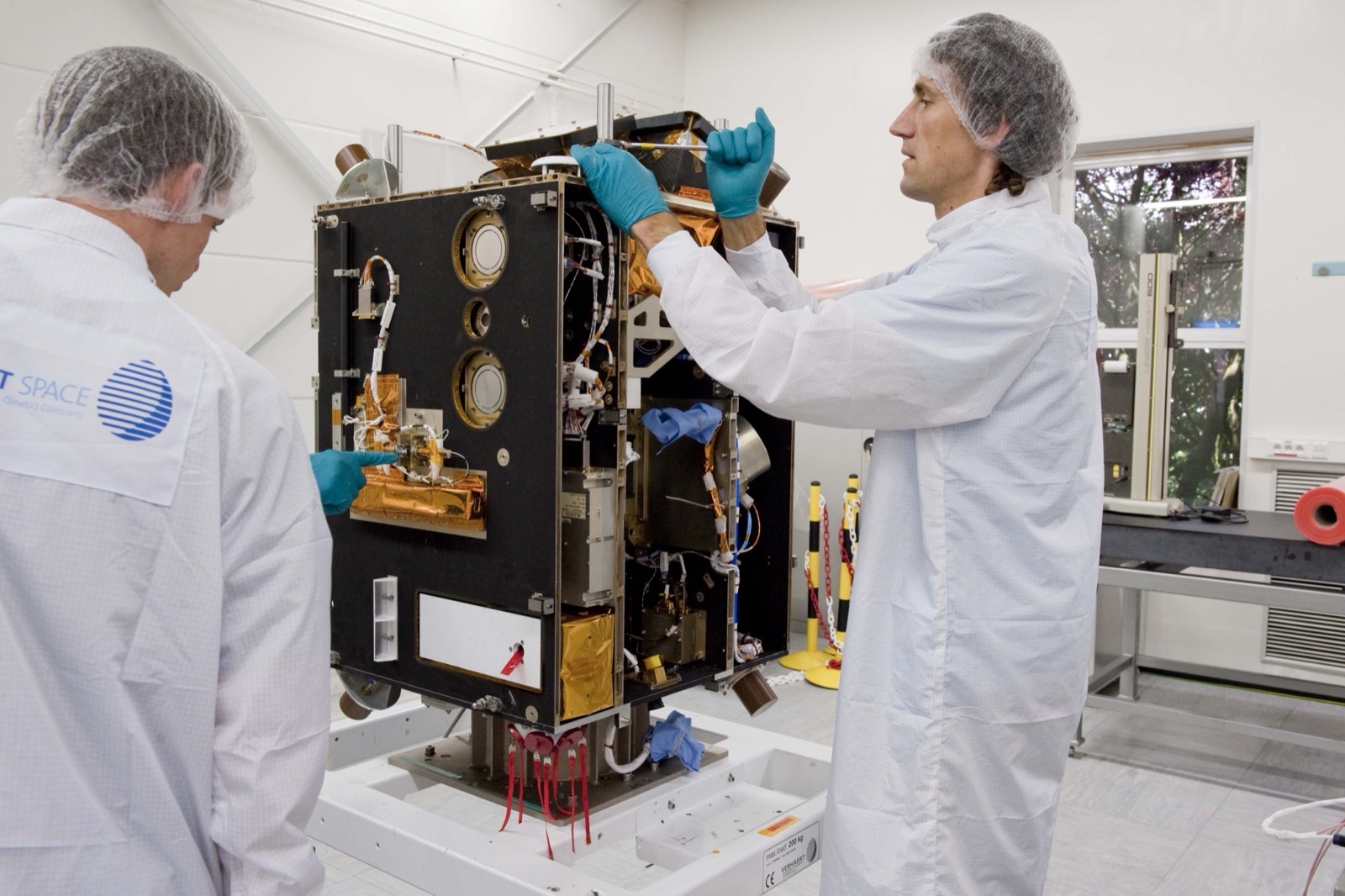
  • Proba-V

    ESA

    Aluminium honeycomb coreCarbon fibreAluminiumlithium-ion batteries+1 more
    Where each one is used

    Aluminium honeycomb core. Here: Interstage; Fairing shell (aluminium honeycomb with carbon fibre face sheets). There: Structure (summary).

    Carbon fibre. Here: Interstage face sheets; Landing legs. There: Outer panels (3).

    Aluminium. Here: Tank domes (aluminium). There: Telescope (structure and mirrors, 3 telescopes).

    lithium-ion batteries. Here: Lithium-ion batteries (redundant, on each stage). There: Battery.

    Titanium. Here: Grid fins, titanium version. There: Focal plane interconnecting structure; Instrument mounting feet / flexures and more.

  • Proba-2

    ESA

    Aluminium honeycomb coreCarbon fibreAluminiumlithium-ion batteries
    Where each one is used

    Aluminium honeycomb core. Here: Interstage; Fairing shell (aluminium honeycomb with carbon fibre face sheets). There: H-configuration inner panels (3); Outer panels without cells and more.

    Carbon fibre. Here: Interstage face sheets; Landing legs. There: Platform structure supplier (eoPortal).

    Aluminium. Here: Tank domes (aluminium). There: TPMU/DSLP housing.

    lithium-ion batteries. Here: Lithium-ion batteries (redundant, on each stage). There: Battery.

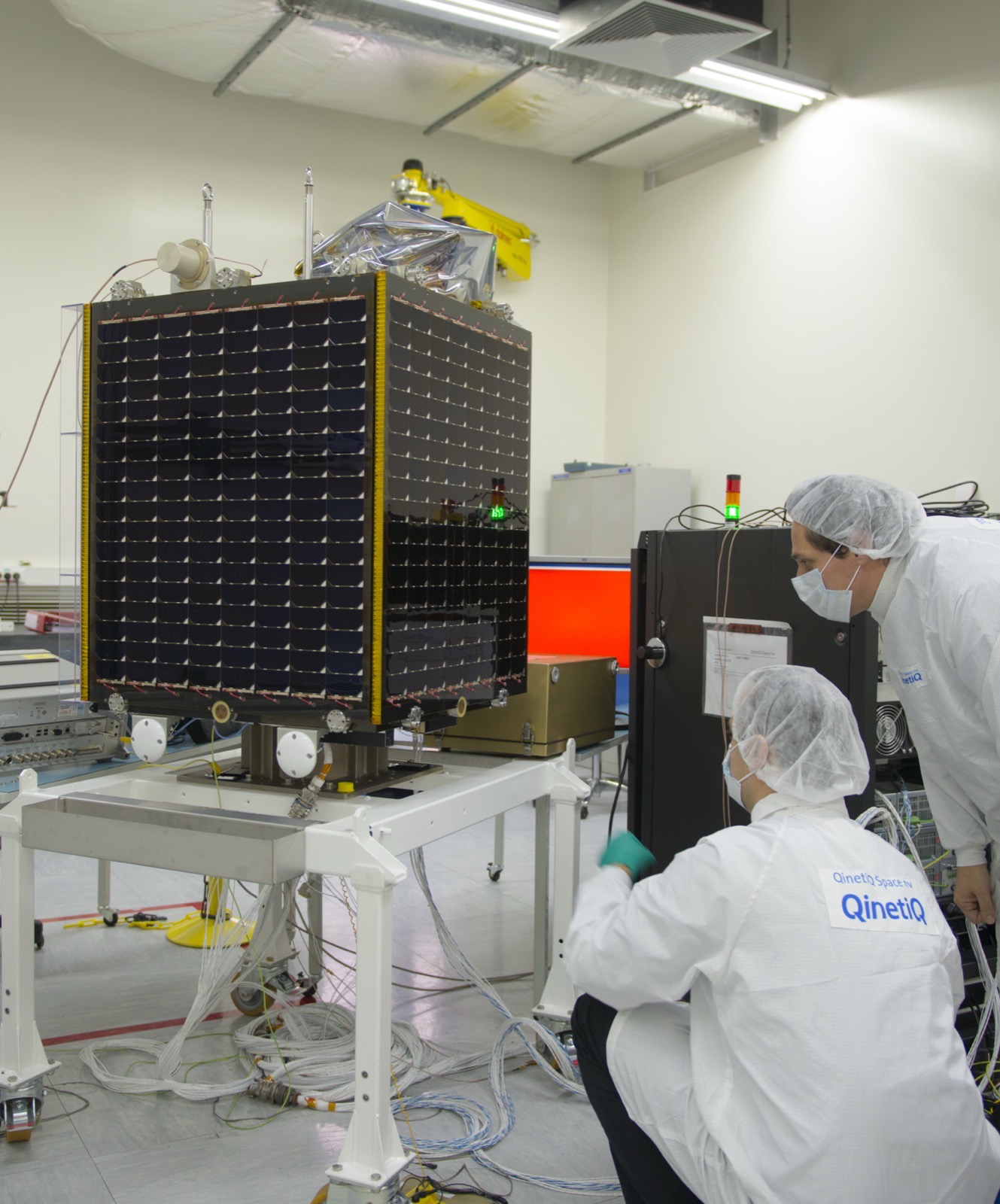
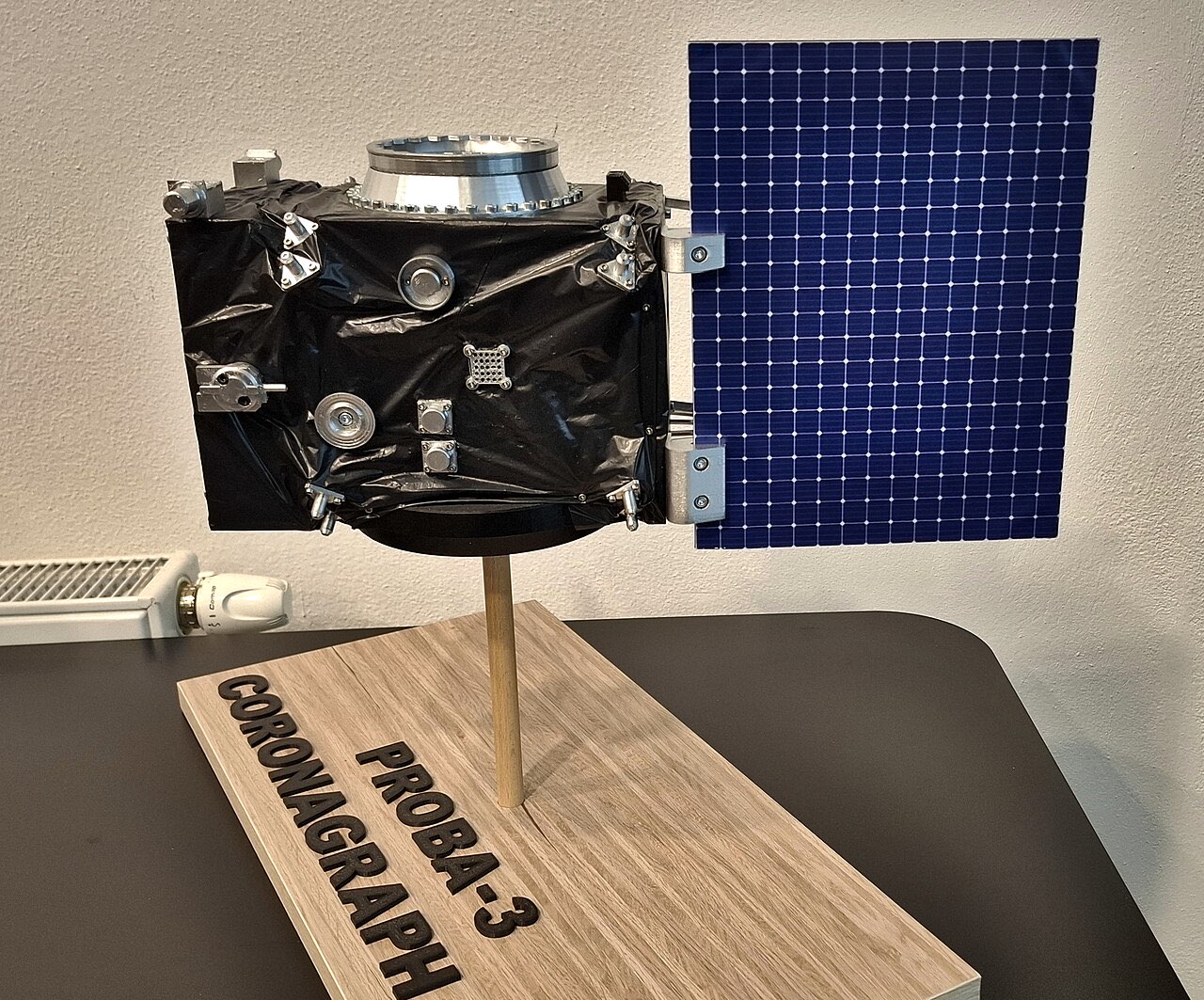
  • Proba-3 Coronagraph spacecraft

    ESA / Airbus

    Carbon fibreAluminiumlithium-ion batteriesTitanium
    Where each one is used

    Carbon fibre. Here: Interstage face sheets; Landing legs. There: OBA sandwich panels.

    Aluminium. Here: Tank domes (aluminium). There: Main structure tube; Equipment box (EQB) and more.

    lithium-ion batteries. Here: Lithium-ion batteries (redundant, on each stage). There: Batteries and solar cells.

    Titanium. Here: Grid fins, titanium version. There: OBA unit attachment fittings; Instrument support bipods (3).

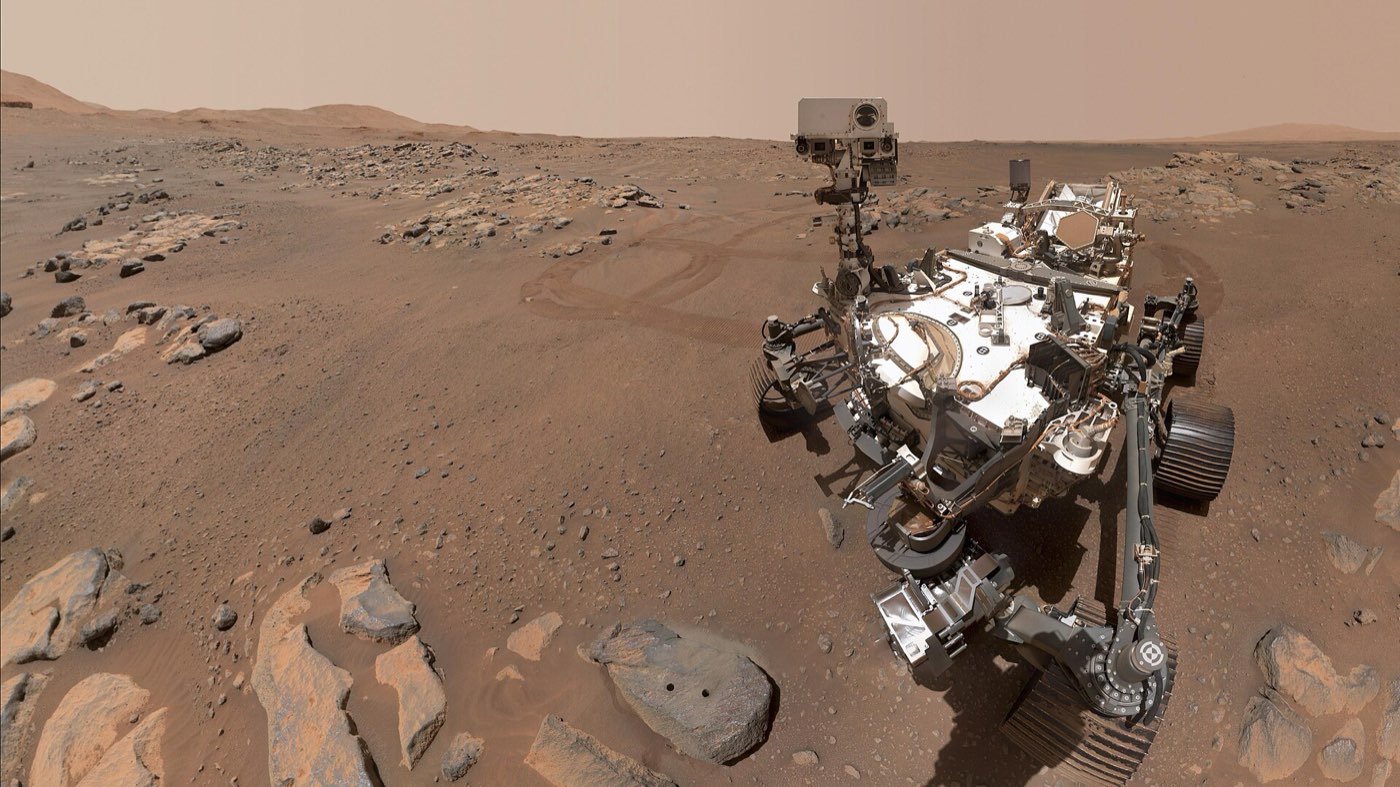
  • Perseverance

    NASA / JPL

    Carbon fibreAluminiumlithium-ion batteriesTitanium
    Where each one is used

    Carbon fibre. Here: Interstage face sheets; Landing legs. There: Heat shield facesheets.

    Aluminium. Here: Tank domes (aluminium). There: Wheel body (6).

    lithium-ion batteries. Here: Lithium-ion batteries (redundant, on each stage). There: Rechargeable batteries (2).

    Titanium. Here: Grid fins, titanium version. There: Wheel spokes; Legs / suspension tubing and more.

  • Falcon Heavy

    SpaceX

    Aluminium honeycomb coreCarbon fibreAirware 2195-T8 plateAluminum-lithium alloy
    Where each one is used

    Aluminium honeycomb core. Here: Interstage; Fairing shell (aluminium honeycomb with carbon fibre face sheets). There: Interstage (Falcon 9); Centre-core interstage (4.5 m).

    Carbon fibre. Here: Interstage face sheets; Landing legs. There: Landing legs (Falcon 9 booster).

    Airware 2195-T8 plate. Here: Tank barrels and domes (first stage). There: Tank barrels and domes (Falcon 9 first stage).

    Aluminum-lithium alloy. Here: Tank walls. There: Tank walls (Falcon 9 first stage, basis of the boosters).

  • Rockwest solar array substrate

    Rockwest Composites

    Aluminium honeycomb coreCarbon fibreAluminium
    Where each one is used

    Aluminium honeycomb core. Here: Interstage; Fairing shell (aluminium honeycomb with carbon fibre face sheets). There: Core.

    Carbon fibre. Here: Interstage face sheets; Landing legs. There: Face skin carbon fibre; HR40 / NB321 unidirectional prepreg and more.

    Aluminium. Here: Tank domes (aluminium). There: Aluminium inserts, in-plane and out-of-plane (DiskSat build).

What we do not know

SpaceX publishes no materials list for Falcon 9. It does not say which aluminium alloy the landing legs use, or what the engine mount and heat shielding are made of. Nor does it name who builds the fairing or the helium pressure vessels. Published descriptions differ on whether the tank domes use the same lithium alloy as the barrels.

The detailed data

What is written above is built from these numbers and quotes. Each row links to the page it was taken from. Get all of it as JSON, or ask our MCP server.

Features

  • Carries satellites to low Earth orbit and geosynchronous transfer orbit
  • First stage fitted with deployable grid fins and landing gear for recovery

Specifications

WhatValue
Height (with Dragon)48.1 m
First-stage thrust1 million lbf (vacuum), nine Merlin engines
First successful launch4 June 2010
Height (both stages, interstage, standard fairing)70 m (229.6 ft)
Diameter (first and second stage)3.66 m (12 ft)
First-stage liftoff thrust (user guide table)7,686 kN (1,710,000 lbf)
Second-stage vacuum thrust981 kN (220,500 lbf)
Liftoff mass549,054 kg (1,207,920 lb)
Payload to low Earth orbit (NASA press kit figure)22,800 kg (50,265 lb)
Thrust in vacuum (first stage)over 1.8 million lbf
Standard fairing size5.2 m outer diameter, 13.2 m high
Landing leg span and massspan about 18 m, under 2,100 kg
Block 5 first flightspring 2018
Booster re-flights (as of Feb 2025)more than 384
Fairing-half re-flights (as of Feb 2025)307 missions
Falcon launches completed by end of 2024over 430
First stage LOX temperature (Full Thrust)subcooled to 66.5 K

Materials in detail

Each material named in the sources: where it is used here, which other products use it, and its key numbers when its material page exists.

  • Aluminium honeycomb core (Hexcel HexWeb CR III, 5052 and 5056)

    Used in 2 partsInterstage · Fairing shell (aluminium honeycomb with carbon fibre face sheets)

    Compressive strength
    335 psi
    Shear strength
    210 psi
    Corrosion protection
    About 88 percent retained
    Also in 8 other products
  • Carbon fibre (PAN-based, pitch-based) and carbon/carbon

    Used in 2 partsInterstage face sheets · Landing legs

    Strength and stiffness
    4100 MPa
    Thermal conduction
    140 W/(m·K)
    Heat tolerance in carbon/carbon
    Oxidises above about 500 C
    Also in 19 other products
  • Airware 2195-T8 plate (Al-Li, Constellium)

    aluminium-lithium-2195-t8

    Used in 1 partTank barrels and domes (first stage)

    Also in 1 other product
    Material page coming soon
  • Aluminium

    Used in 1 partTank domes (aluminium)

    Weight
    2.7 g/cm3
    Electrical conduction
    2.6458 µΩ·cm
    Heat conduction
    220 W/(m·K)
    Also in 33 other products
  • Aluminum-lithium alloy

    aluminium-lithium-alloy

    Used in 1 partTank walls

    Also in 1 other product
    Material page coming soon
  • lithium-ion batteries (cell details not stated)

    lithium-ion-cell

    Used in 1 partLithium-ion batteries (redundant, on each stage)

    Also in 12 other products
    Material page coming soon
  • Titanium (commercially pure, grades 1 to 4)

    Used in 1 partGrid fins, titanium version

    Density, CP grade 1
    4.51 g/cm³
    Density, CP grade 2 (bar and billet)
    4.51 g/cm³
    Density, CP grade 3
    4.51 g/cm³
    Also in 17 other products

Every part we have

Tanks, interstage and recovery hardware have sourced materials; engines, fairing, upper stage detail and TPS do not. Components, suppliers and links were added from public sources. A material is left blank where no source states it.

Material IDs

aluminium-lithium-alloyaluminium-lithium-2195-t8aluminium-honeycomb-hexwebcarbon-fibrealuminiumlithium-ion-celltitanium
First-stage and second-stage tanks3
PartMaterialFinish and standardMade by
Tank walls“The Falcon 9 tank walls are made from an aluminum lithium alloy.” Aluminum-lithium alloyaluminium-lithium-alloy — —
Tank barrels and domes (first stage)“Low-density Airware 2195-T8 plate” Airware 2195-T8 plate (Al-Li, Constellium)aluminium-lithium-2195-t8 2195-T8 —
Tank joints“SpaceX manufactures the tanks using friction-stir welding, the strongest and most reliable welding technique available.” Not said — —
Interstage2
PartMaterialFinish and standardMade by
Interstage“is a composite structure with an aluminum honeycomb core and carbon fiber face sheets.” Aluminum honeycomb core with carbon fiber face sheetsaluminium-honeycomb-hexweb — —
Interstage face sheets“carbon fiber face sheets” Carbon fibercarbon-fibre — —
Recovery hardware4
PartMaterialFinish and standardMade by
Grid fins“deployable aluminum or titanium grid fins” Aluminum or titanium (not specified which) — —
Landing legs“landing gear comprised of carbon fiber and aluminum” Carbon fiber and aluminumcarbon-fibre — —
Grid fins, titanium versionsteer the descending first stage; later fins replaced the aluminium ones“aluminum grid fins were replaced by titanium versions” titaniumtitanium — —
Drone ship 'Of Course I Still Love You'sea-going landing platform for first-stage recovery“OF COURSE I STILL LOVE YOU DRONE SHIP” Not said — —
Engines1
PartMaterialFinish and standardMade by
Merlin engines“Nine SpaceX Merlin regeneratively cooled engines power the Falcon 9 first stage.” Not said — —
Payload fairing9
PartMaterialFinish and standardMade by
Fairing Not said — —
Fairing shell (aluminium honeycomb with carbon fibre face sheets)protects the payload during ascent“a composite structure consisting of a 1-inch (2.5-cm) thick aluminum honeycomb core surrounded by carbon fiber face sheet plies” aluminium honeycomb core (1 in thick) with carbon fibre face sheet pliesaluminium-honeycomb-hexweb — —
Fairing halves latched along a vertical seamhold the two fairing halves together until jettison“The two halves of the standard fairing are fastened by mechanical latches along the fairing vertical seam.” Not said — —
Fairing pneumatic pushers (four)push the fairing halves apart after the latches release“a high-pressure helium circuit releases the latches, and four pneumatic pushers facilitate positive-force deployment of the two halves” Not said — —
Extended fairing with frangible seamnon-standard 18.7 m fairing split by a contained detonating cord“The two halves of the extended fairing are fastened by a bolted frangible seam joint.” Not said — —
Redundant detonators and expanding tube assembly (extended fairing)breaks the frangible seam in a controlled way“redundant detonators initiate a detonation cord contained inside an expanding tube assembly” Not said — —
Fairing access doorsingle 610 mm circular door for late payload access“The standard fairing includes one access door in the cylindrical portion” Not said — —
Acoustic blanketsreduce acoustic loads on the payload inside the recoverable fairing“standard fairing with acoustic blankets installed” Not said — —
Fairing recovery system (steerable parachute and RCS thrusters)guides fairing halves back for recovery and reuse“equipped with a steerable parachute as well as RCS thrusters” Not said — —
First stage structure7
PartMaterialFinish and standardMade by
First-stage LOX tank (monocoque)holds the liquid oxygen oxidiser“LOX tank – monocoque” Not said — —
First-stage RP-1 fuel tank (skin and stringer)holds the rocket-grade kerosene fuel“Fuel tank – skin and stringer” Not said — —
Common dome between the LOX and RP-1 tanksbulkhead that separates the two propellant tanks“A common dome separates the LOX and RP-1 tanks” Not said — —
Double-wall LOX transfer tubecarries liquid oxygen through the centre of the RP-1 tank to the engine section“a double-wall transfer tube carries LOX through the center of the RP-1 tank to the engine section” Not said — —
Tank domes (aluminium)closes the ends of the propellant tanks“Aluminum lithium skin; aluminum domes” aluminium domes (alloy not stated); aluminium-lithium skinaluminium — —
Octaweb engine mount (thrust structure)arranges the nine engines and carries their thrust into the tank structure“The booster stage has 9 engines, arranged in a configuration that SpaceX calls Octaweb.” Not said — —
Individual engine bays (one metal bay per engine)isolates each engine from its neighbours if one fails“each engine is housed within its own metal bay to isolate it from neighboring engines” Not said — —
First stage propulsion6
PartMaterialFinish and standardMade by
Merlin 1D engine (x9)first-stage main engines; eight around one centre engine“The first stage M1D engines are configured in a circular pattern, with eight engines surrounding a center engine.” Not said — Supplier: SpaceX
Hold-before-release (hold-down) systemkeeps the rocket on the pad until all engines are verified at full thrust“After ignition, a hold-before-release system ensures that all engines are verified for full-thrust performance before the rocket is released for flight.” Not said — —
Thrust vector control using kerosene as hydraulic fluidgimbals the engines without a separate hydraulic system“the first stage thrust vector control system pulls from the high-pressure rocket-grade kerosene system” Not said — —
Heated-helium tank pressurisationpressurises the LOX and RP-1 tanks of both stages“Tank pressurization Heated helium Heated helium” Not said — —
Cold-gas nitrogen thrusters (first stage)attitude control and flip manoeuvre during recovery“Cold gas thrusters flip first stage” Not said — —
Block 5 thermal protection shieldingprotects the engine section during re-entry for rapid refurbishment“Thermal protection shielding was modified to support rapid recovery and refurbishment.” Not said — —
Stage separation3
PartMaterialFinish and standardMade by
Stage mating latches (three points)hold first and second stage together until separation“mated by mechanical latches at three points between the top of the interstage and the base of the second stage fuel tank” Not said — —
Helium release circuit with redundant actuatorsunlatches the stages after first-stage engine shutdown“After the first stage engines shut down, a high-pressure helium circuit is used to release the latches via redundant actuators.” Not said — —
Stage separation pneumatic pushers (four, one redundant)push the second stage away from the interstage“The helium system also preloads four pneumatic pushers, which provide a positive force for stage separation after latch release.” Not said — —
Second stage4
PartMaterialFinish and standardMade by
Second-stage propellant tankholds LOX and RP-1 for the vacuum engine“The second stage tank for Falcon vehicles is a shorter version of the first stage tank” Not said — —
Merlin Vacuum engine (x1)single upper-stage engine with a fixed 165:1 expansion nozzle“A single Merlin Vacuum (MVac) engine powers the second stage, using a fixed 165:1 expansion nozzle.” Not said — Supplier: SpaceX
Dual redundant TEA-TEB igniterspyrophoric ignition so the vacuum engine can restart“the engine contains dual redundant triethylaluminum-triethylborane (TEA-TEB) pyrophoric igniters” Not said — —
Cold nitrogen gas attitude control systempointing and roll control of the second stage“the second stage contains a cold nitrogen gas (GN2) attitude control system (ACS) for pointing and roll control” Not said — —
Payload interfaces9
PartMaterialFinish and standardMade by
Payload attach fitting, 1,575 mm circular PAFstandard bolted interface for medium-class payloads“a 1,575-mm (62.01 in.) diameter bolted interface” Not said — —
Payload attach fitting, 2,624 mm circular PAFlarger bolted interface for payloads above the 1,575 mm capability“SpaceX offers a PAF with a 2,624-mm (103.307 in.) bolted interface” Not said — —
Payload attach fitting, 3,117 mm circular PAFinterface for heavy to ultra-heavy payloads“SpaceX offers a PAF with a 3,117-mm (122.717 in.) bolted interface” Not said — —
Payload attach fitting, 3,117 mm strut PAFstrut-architecture interface used only with the extended fairing“The 3,117-mm strut PAF can be used only with an extended fairing.” Not said — —
Square payload attach fitting (96 fastener holes)mounts single or multiple payloads and constellation dispensers“The square PAF has 96 holes” Not said — —
Close-out platecloses the volume between the payload and the upper stage“includes a close-out plate between the payload and the upper stage of the launch vehicle” Not said — —
Rideshare Dispenser RingSpaceX-developed adapter for secondary payloads“a SpaceX-developed Rideshare Dispenser Ring” Not said — —
Surfboard secondary-payload adapterSpaceX-developed structure for secondary payloads“a SpaceX-developed Surfboard” Not said — —
Dragon spacecraft (crew or cargo configuration)alternative payload mounted on the second stage instead of a fairing“DRAGON SPACECRAFT” Not said — —
Avionics and power8
PartMaterialFinish and standardMade by
Flight computers (three-string architecture)fault-tolerant vehicle control“Falcon avionics feature a flight-proven, three-string, fault-tolerant architecture” Not said — —
GPS receivers and inertial measurement unitsnavigation sensors“Avionics include flight computers, Global Positioning System (GPS) receivers, inertial measurement units” Not said — —
Vehicle controllers (propulsion, valve, pressurisation, separation, payload)drive valves, separation and payload interfaces“SpaceX designed and manufactured controllers for vehicle control (propulsion, valve, pressurization, separation, and payload interfaces)” Not said — Supplier: SpaceX
Network backbonelinks the avionics units“a network backbone, S-band transmitters, and a C-band transponder for Range Safety tracking” Not said — —
S-band transmitterssend telemetry and video from both stages“The S-band transmitters are used to transmit telemetry and video to the ground, from both the first and second stages” Not said — —
C-band transponderRange Safety tracking“a C-band transponder for Range Safety tracking” Not said — —
Autonomous flight termination system (AFTS)ends the flight automatically if mission rules are violated“Our launch vehicles are equipped with an autonomous flight termination system (AFTS) to limit the potential damage caused by a launch vehicle malfunction.” Not said — —
Lithium-ion batteries (redundant, on each stage)stage-level electrical power“Both the first and second stages host their own multiple redundant lithium-ion batteries” lithium-ion batteries (cell details not stated)lithium-ion-cell — —
Ground systems2
PartMaterialFinish and standardMade by
Transporter Erector (TE)moves the rocket and Dragon upright over the flame trench“The Transporter Erector (TE) is used to move the Crew Dragon spacecraft to the top of the Falcon 9 rocket on the launch pad.” Not said — —
Horizontal Integration Facility (LC-39A)processes rockets horizontally before roll-out to the pad“SpaceX constructed a Horizontal Integration Facility near the perimeter of the pad” Not said — —

What the sources leave out

No SpaceX primary materials list; fairing, Merlin alloys, grid fin alloy, legs, upper stage not stated. More detail: SpaceX publishes no bill of materials. Not sourced in any document reachable: octaweb structure materials, engine-bay and heat-shield materials, helium COPV (pressure vessel) maker and materials, grid-fin and leg actuator hardware, flight-computer and sensor vendors, fairing supplier. The 2025 user guide says 'aluminum domes' while Light Metal Age says Airware 2195-T8 plate is used for barrels and domes; the two statements are not reconciled. Fairing core thickness (1 in) comes from the 2009 v1.0 user guide and may have changed. Quotes taken from the SpaceX user guides, the NASA press kit and the NASA callout graphics were machine-checked against the downloaded PDF text; quotes from Wikipedia, Light Metal Age and Spaceflight Now came through a text extractor and were not machine-checked. Wikipedia is used only for the Octaweb name, the fairing recovery system and the titanium grid-fin change, where no primary page was readable (spacex.com vehicle pages return no text). The 70 m height in the user guide is with the standard fairing. More detail: SpaceX publishes no bill of materials. Not sourced in any document reachable: octaweb structure materials, engine-bay and heat-shield materials, helium COPV (pressure vessel) maker and materials, grid-fin and leg actuator hardware, flight-computer and sensor vendors, fairing supplier. The 2025 user guide says 'aluminum domes' while Light Metal Age says Airware 2195-T8 plate is used for barrels and domes; the two statements are not reconciled. Fairing core thickness (1 in) comes from the 2009 v1.0 user guide and may have changed. Quotes taken from the SpaceX user guides, the NASA press kit and the NASA callout graphics were machine-checked against the downloaded PDF text; quotes from Wikipedia, Light Metal Age and Spaceflight Now came through a text extractor and were re-checked in a second fetch pass but not against a saved copy of the page. Wikipedia is used only for the Octaweb name, the fairing recovery system and the titanium grid-fin change, where no primary page was readable (spacex.com vehicle pages return no text). The 70 m height in the user guide is with the standard fairing.
Where this comes from

9 pages from 6 websites

More space products

Collected from public pages and documents, checked 4 Nov 2026.