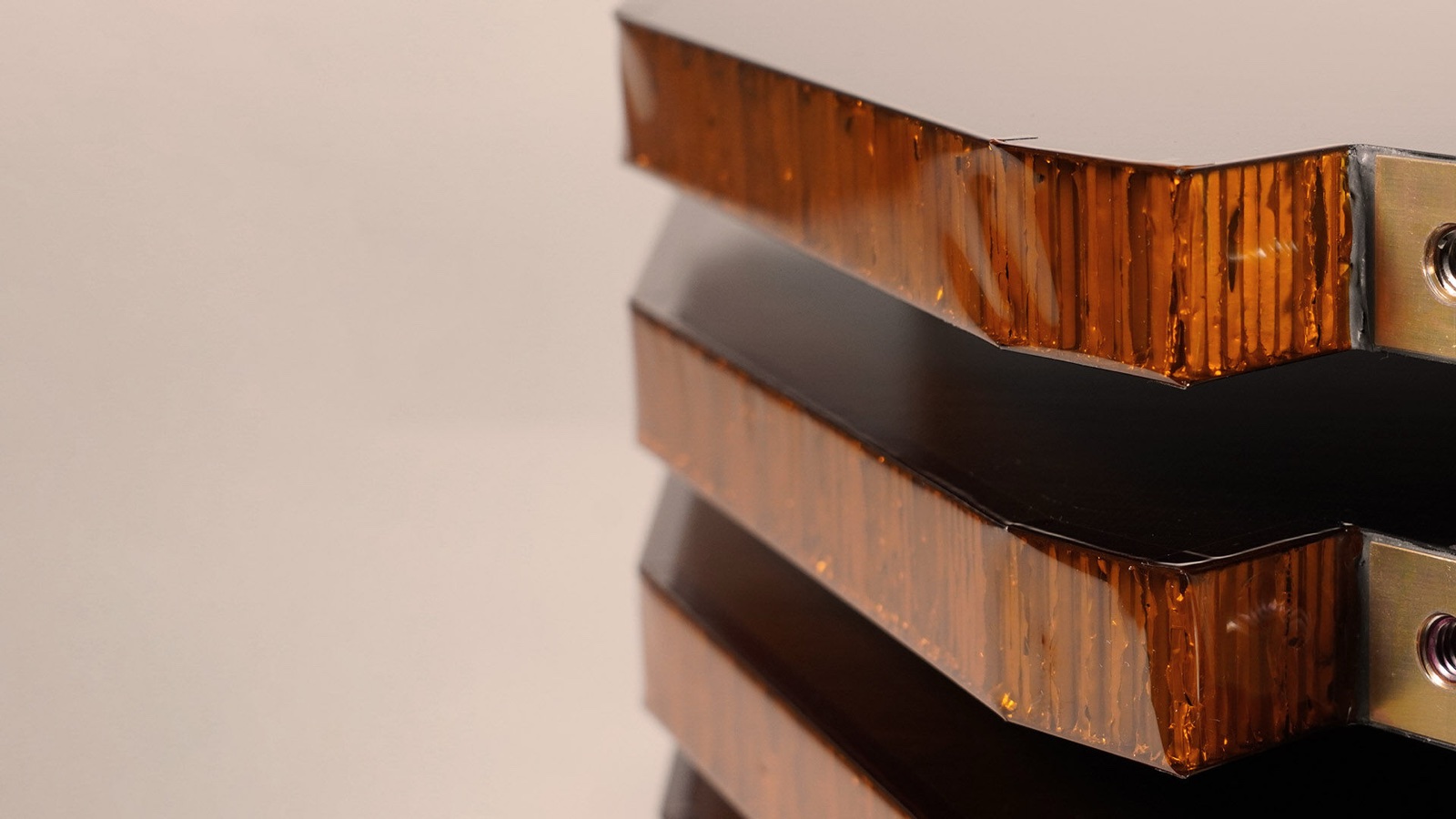
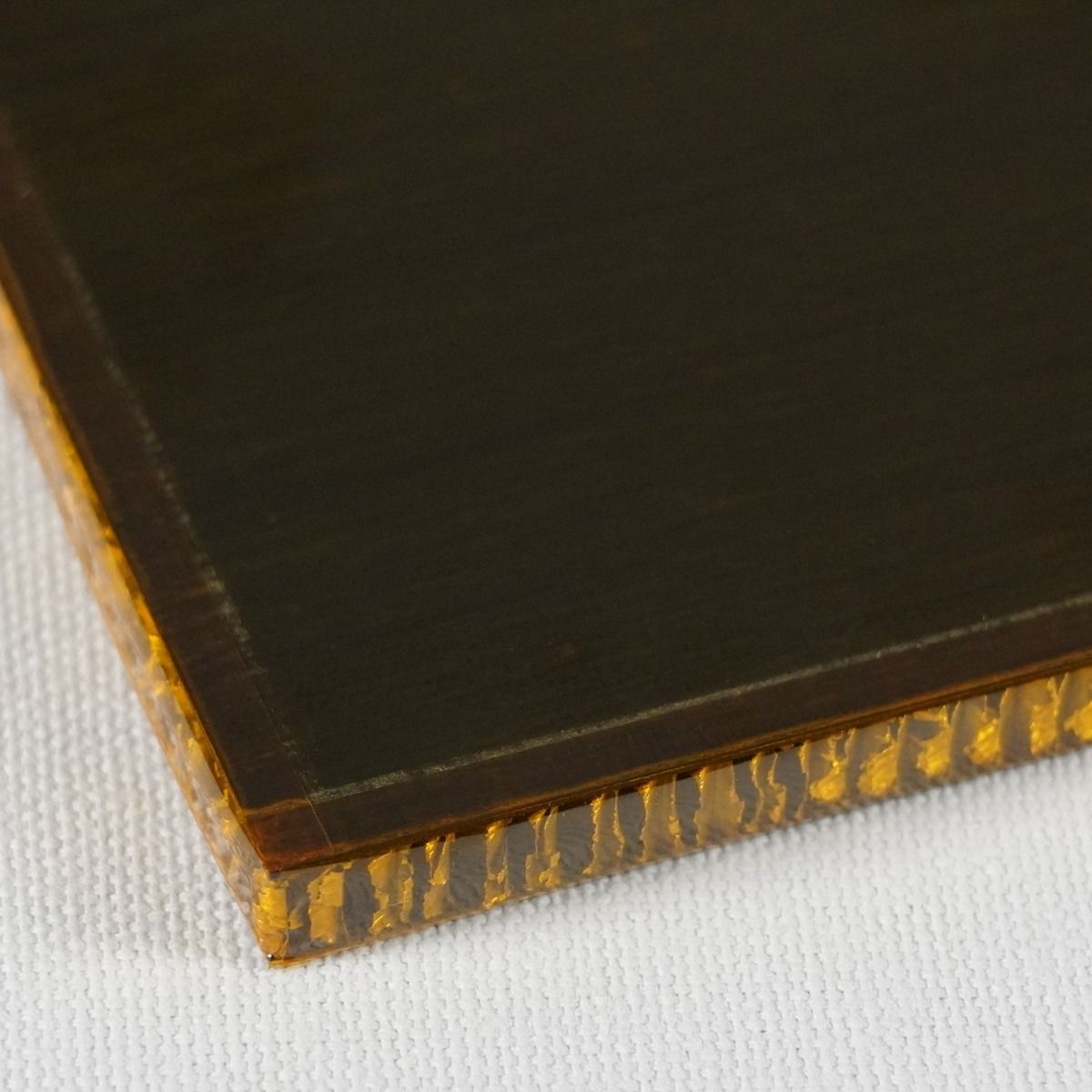
Corner of a STRATO substrate: dark carbon-fibre face over an amber honeycomb core
Rockwest Composites

Rockwest solar array substrate

This panel is a stiff, light base for solar cells in low Earth orbit, built from carbon fibre and aluminium.

Solar arrays and cells
Product IDrockwest-solar-array-substrate
Size
48 in x 96 in (1219.2 mm x 2438.4 mm)
Panel thickness
0.295 in
Thickness of each skin
0.020 in
Core thickness
0.25 in
Max suggested use temperature
225 F (107 C)
Target orbit
Low Earth Orbit

In short

Rockwest Composites makes this panel to order as a base for solar arrays in low Earth orbit. It is 48 by 96 inches (1219.2 by 2438.4 millimetres) and 0.295 inches thick. A Kapton film on one face is the surface the solar cells are bonded to. Rockwest says it can supply the panel on a short lead time.

The skins are Mitsubishi HR40 carbon fibre in NB321 epoxy, 0.020 inches thick each, around a perforated aluminium honeycomb core. Rockwest suggests a top use temperature of 225 °F (107 °C). Its sibling for higher orbits, built on a cyanate ester resin, goes up to 300 °F (150 °C).

Application

A Kapton-surfaced aluminium honeycomb substrate with carbon-fibre epoxy skins, made to order for solar arrays. It gives array builders a stiff, light base with full material-lot traceability.

How it is built

Carbon fibre skins

Each skin is 0.020 inches thick. The layers are laid up in a quasi-isotropic pattern and oven cured one skin at a time. Rockwest calls the NB321 resin a high-temperature epoxy.

  • Face skin carbon fibre
  • Face skin matrix resin
  • Face skin laminate pair (2 x 0.020 in), STRATOplateLEO

Core and adhesive

Between the skins sits a perforated aluminium honeycomb core, 0.25 inches thick. Newport NB301 film adhesive bonds core and skins. Rockwest says the perforated core and the film adhesive together tune the bending stiffness.

  • Core
  • Core-to-skin film adhesive

Kapton face

One face carries a 0.002 inch Kapton film, cured together with the skin, for bonding solar cells. The cells are not included. Both faces are finished matte black.

  • Kapton film, co-cured to one skin face
  • Panel surfaces (both faces)

Back-up structures for DiskSat

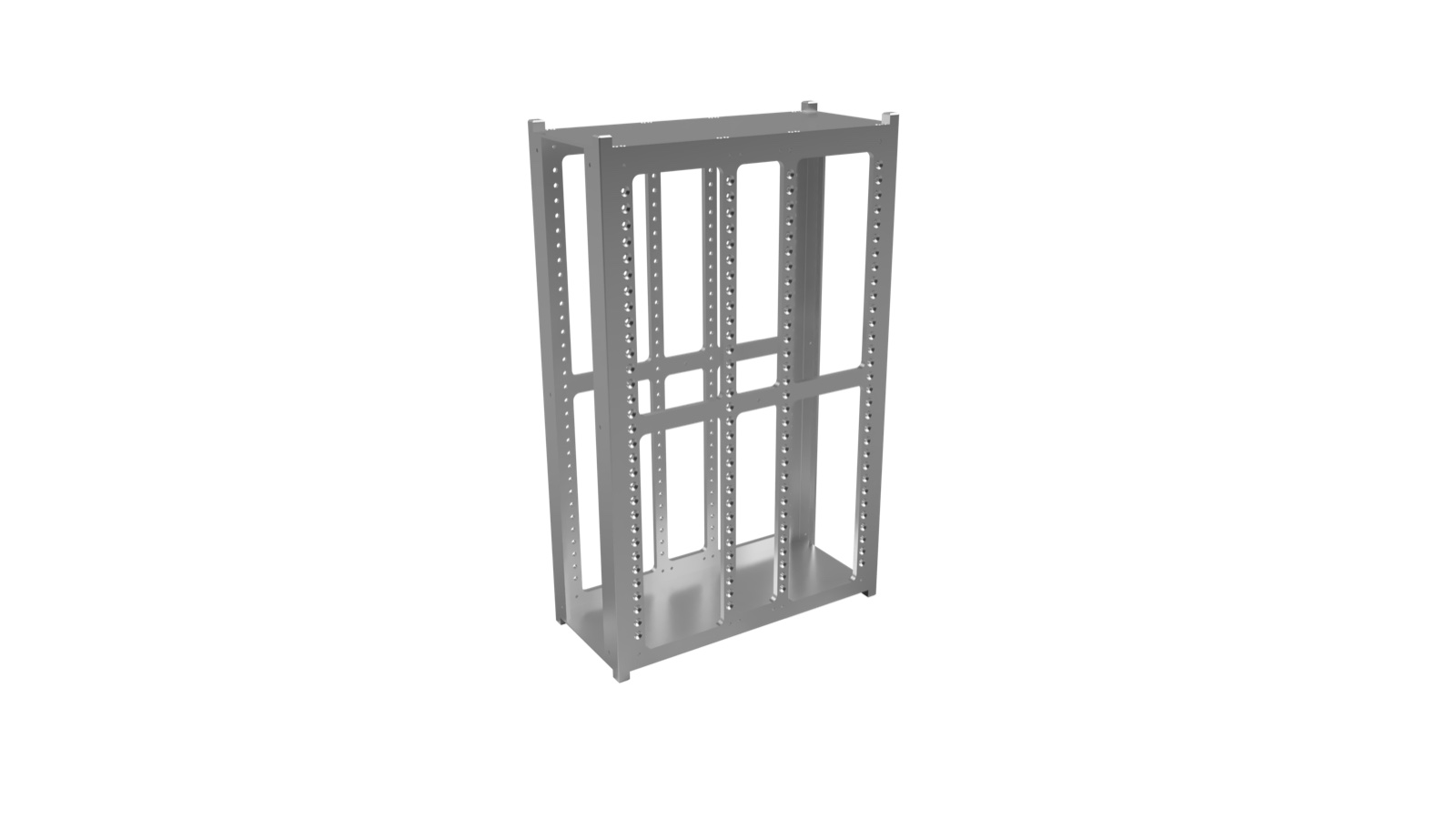
DiskSat is a one-metre-wide spacecraft from The Aerospace Corporation. For it, Rockwest built four assemblies from blanks of this substrate, with aluminium inserts primed with BR-127 and bonded in with EA9394 adhesive. The insert design locates itself, so no costly assembly fixture is needed, and positional tolerances run from 0.010 to 0.020 inches.

  • Back-up structure assemblies for DiskSat (4 delivered)
  • Aluminium inserts, in-plane and out-of-plane (DiskSat build)
  • BR-127 primer on the inserts
  • EA9394 insert bonding adhesive
Where the parts areNumber of parts we have listed in each group
  • Inserts and edge details4
  • Stock plates and sibling panels (same material system)4
  • Custom solar array substrate panels (Astro Digital 500 W arrays)4
  • Panel hardware shown on Rock West solar-array pages (not itemised on the product page)3
  • Face skins (STRATOplate)2
  • Core and bonding2
  • Face skins2
  • Solar cell bonding surface1
  • Panel surface1

What it is made of

  • Carbon fibre (Mitsubishi HR40)

    The fibre in both face skins.

  • Epoxy resin (Newport NB321)

    The resin in the skins, which Rockwest calls a high-temperature epoxy.

  • Kapton film

    A 0.002 inch layer on one face, where the solar cells are bonded.

  • Aluminium honeycomb

    The perforated core, 0.25 inches thick.

  • Newport NB301 film adhesive

    Bonds the core to the skins.

  • Aluminium

    The primed inserts bonded into the DiskSat assemblies. The alloy is not given.

The materials by familyHow many of the parts that name a material use each one
  • Carbon fibre5
  • Other4
  • Aluminium3
  • Polyimide2
  • Polymers and foams1
  • Glass fibre1
  • Copper1

How it connects to other things

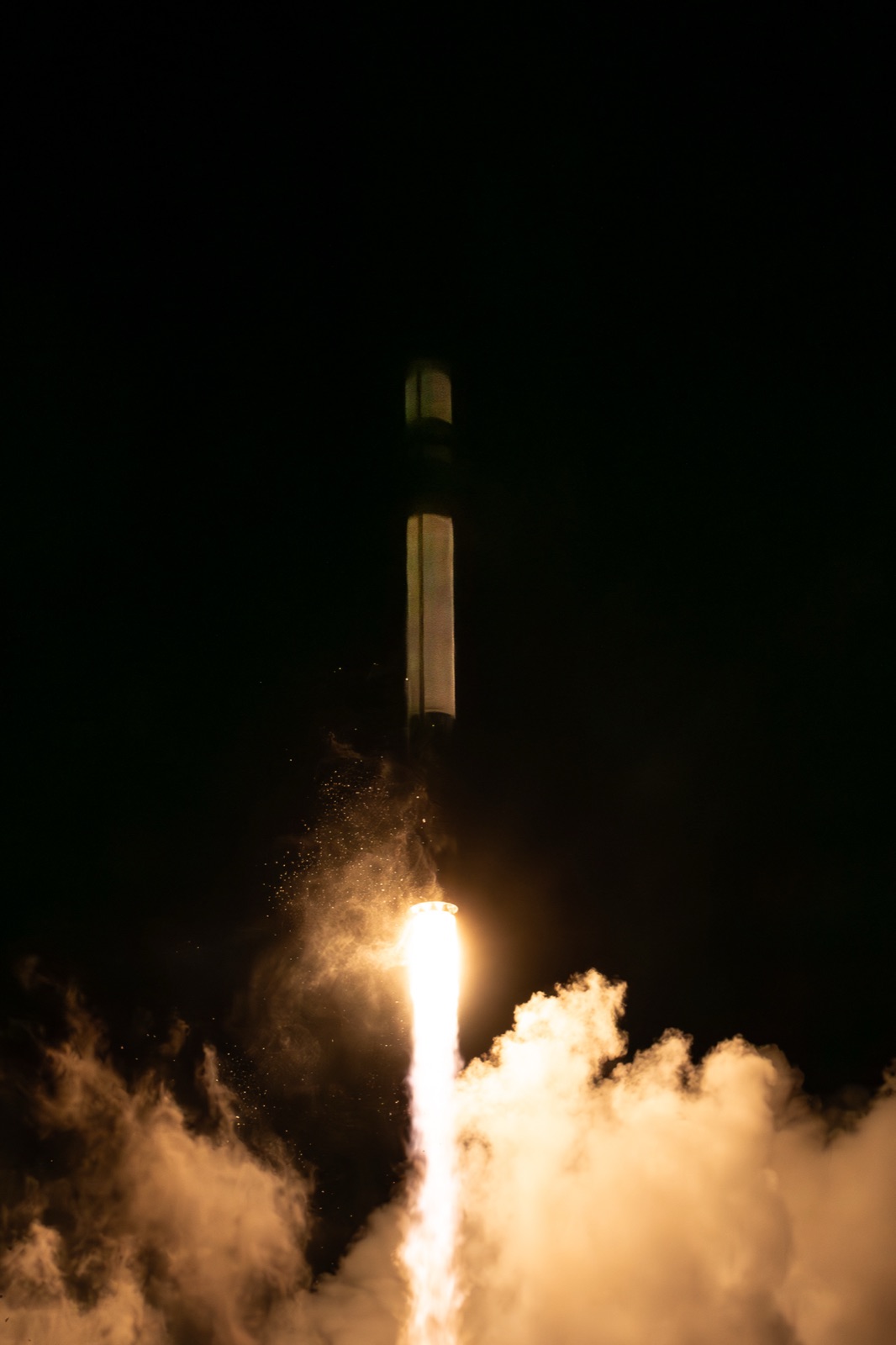
Four DiskSat spacecraft flew on a Rocket Lab Electron in December 2025. Rockwest's release and image captions tie its assemblies to the programme, but Aerospace's own fact sheet names no panel supplier. Rockwest also built custom panels, with skins supplied by the customer, for the 500-watt arrays on Astro Digital's Corvus satellite buses.

Used in

  • DiskSat (The Aerospace Corporation)

    Rock West shipped four STRATOSubstrate LEO based solar array substrate / back-up structure assemblies to The Aerospace Corporation for the DiskSat program

  • Astro Digital Corvus bus 500 W solar arrays (custom RWC panels)

    Custom SAS panels delivered June 2024 for higher-power Corvus buses; the release says the first would launch in October (year not stated)

Carries

  • Solar cells (bonded to the Kapton face)

    The Kapton layer is the solar-cell bonding substrate; cells are not part of the product

Launched on

  • Electron

    Rocket Lab

    Four DiskSat spacecraft flew on Electron; Aerospace does not name the substrate supplier, the Rock West link is the release and image captions

Builds on

Passed on to

  • Rockwest GEO solar array panel

    Rockwest Composites

    Sibling in the STRATOSubstrate line: same size and core, LEO resin system instead of the GEO cyanate ester

Built on

  • NASA and ESA outgassing requirements (STRATO line claim)

    Maker's claim for all STRATO materials

Products that use the same materials

  • Rockwest GEO solar array panel

    Rockwest Composites

    Carbon fibreKapton filmKapton HN polyimide filmMatte black finish+1 more
    Where each one is used

    Carbon fibre. Here: Face skin carbon fibre; HR40 / NB321 unidirectional prepreg and more. There: Face skin carbon fibre; Face skin laminate pair (2 x 0.008 in), STRATOplateGEO and more.

    Kapton film. Here: Kapton edging on STRATOSubstrate panels. There: Kapton edging on STRATOSubstrate panels.

    Kapton HN polyimide film. Here: Kapton film, co-cured to one skin face. There: Kapton film, co-cured to one skin face.

    Matte black finish. Here: Panel surfaces (both faces). There: Panel surfaces (both faces).

    Aluminium honeycomb core. Here: Core. There: Core.

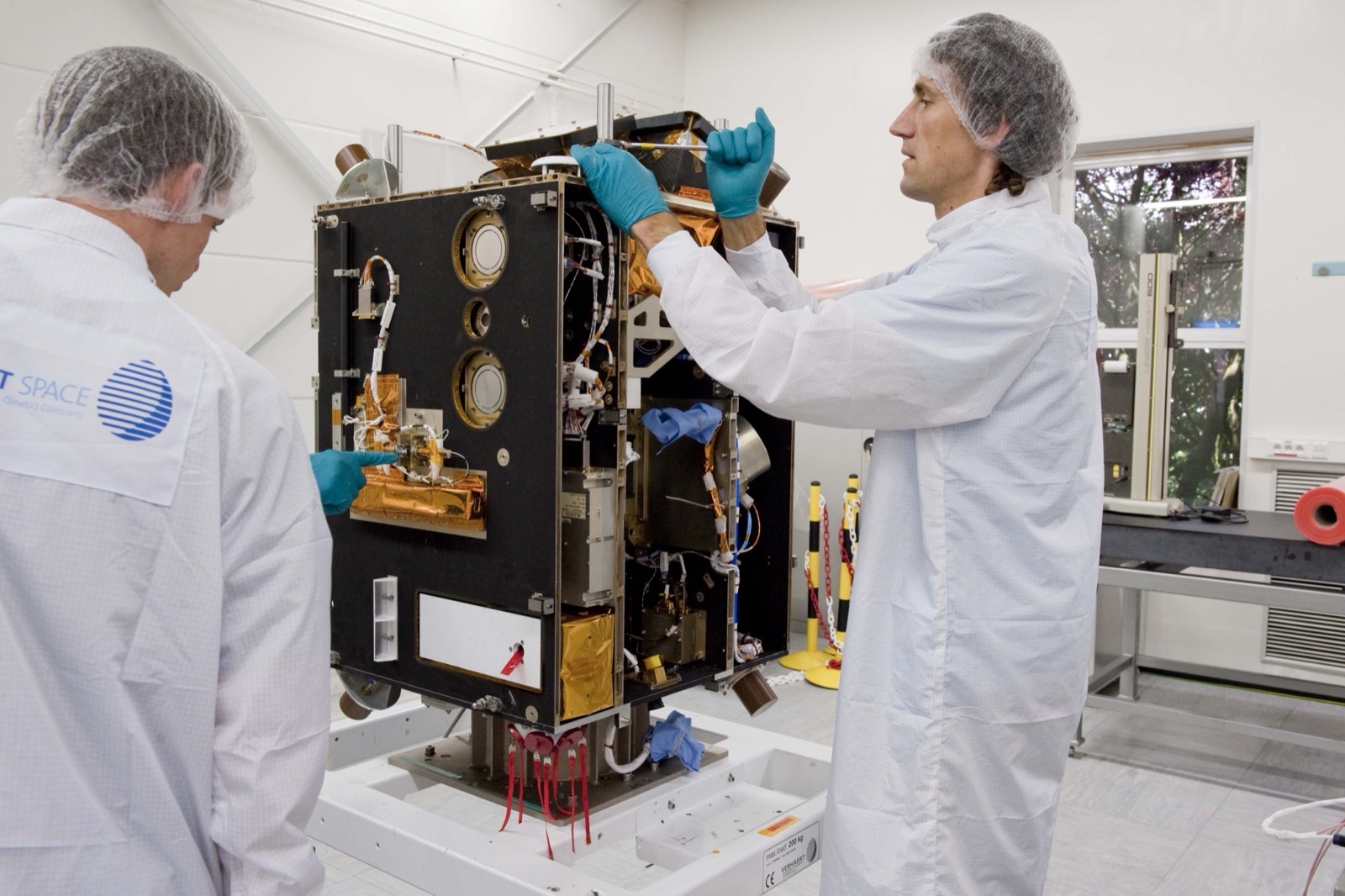
  • Proba-2

    ESA

    Carbon fibreAluminiumAluminium honeycomb core
    Where each one is used

    Carbon fibre. Here: Face skin carbon fibre; HR40 / NB321 unidirectional prepreg and more. There: Platform structure supplier (eoPortal).

    Aluminium. Here: Aluminium inserts, in-plane and out-of-plane (DiskSat build). There: TPMU/DSLP housing.

    Aluminium honeycomb core. Here: Core. There: H-configuration inner panels (3); Outer panels without cells and more.

  • Proba-V

    ESA

    Carbon fibreAluminiumAluminium honeycomb core
    Where each one is used

    Carbon fibre. Here: Face skin carbon fibre; HR40 / NB321 unidirectional prepreg and more. There: Outer panels (3).

    Aluminium. Here: Aluminium inserts, in-plane and out-of-plane (DiskSat build). There: Telescope (structure and mirrors, 3 telescopes).

    Aluminium honeycomb core. Here: Core. There: Structure (summary).

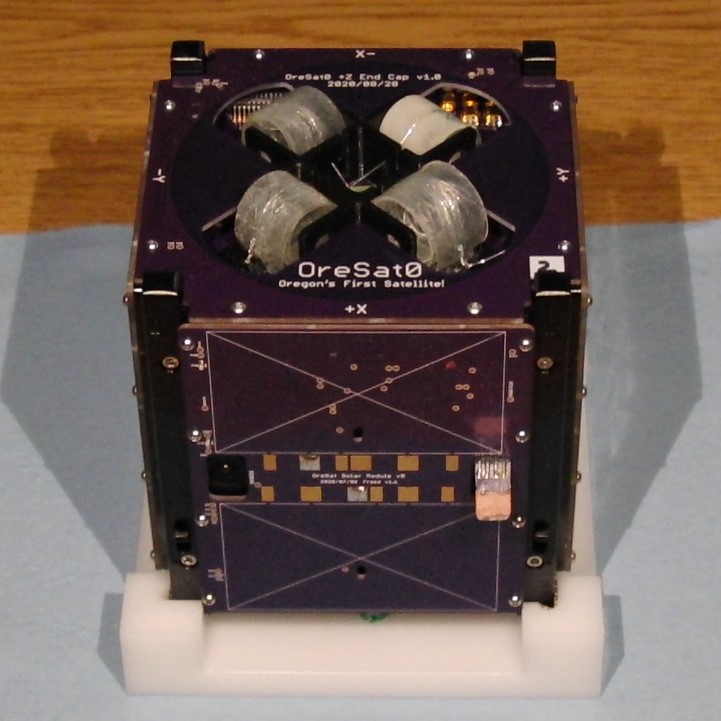
  • OreSat

    PSAS / Oregon State

    AluminiumCopperKapton HN polyimide film
    Where each one is used

    Aluminium. Here: Aluminium inserts, in-plane and out-of-plane (DiskSat build). There: Backplane grounding to frame.

    Copper. Here: Copper traces in the skins. There: Helical antenna (+Z end card); Outer copper foil and more.

    Kapton HN polyimide film. Here: Kapton film, co-cured to one skin face. There: Polyimide thermofoil heater (Minco, 2 per card); Heater tape.

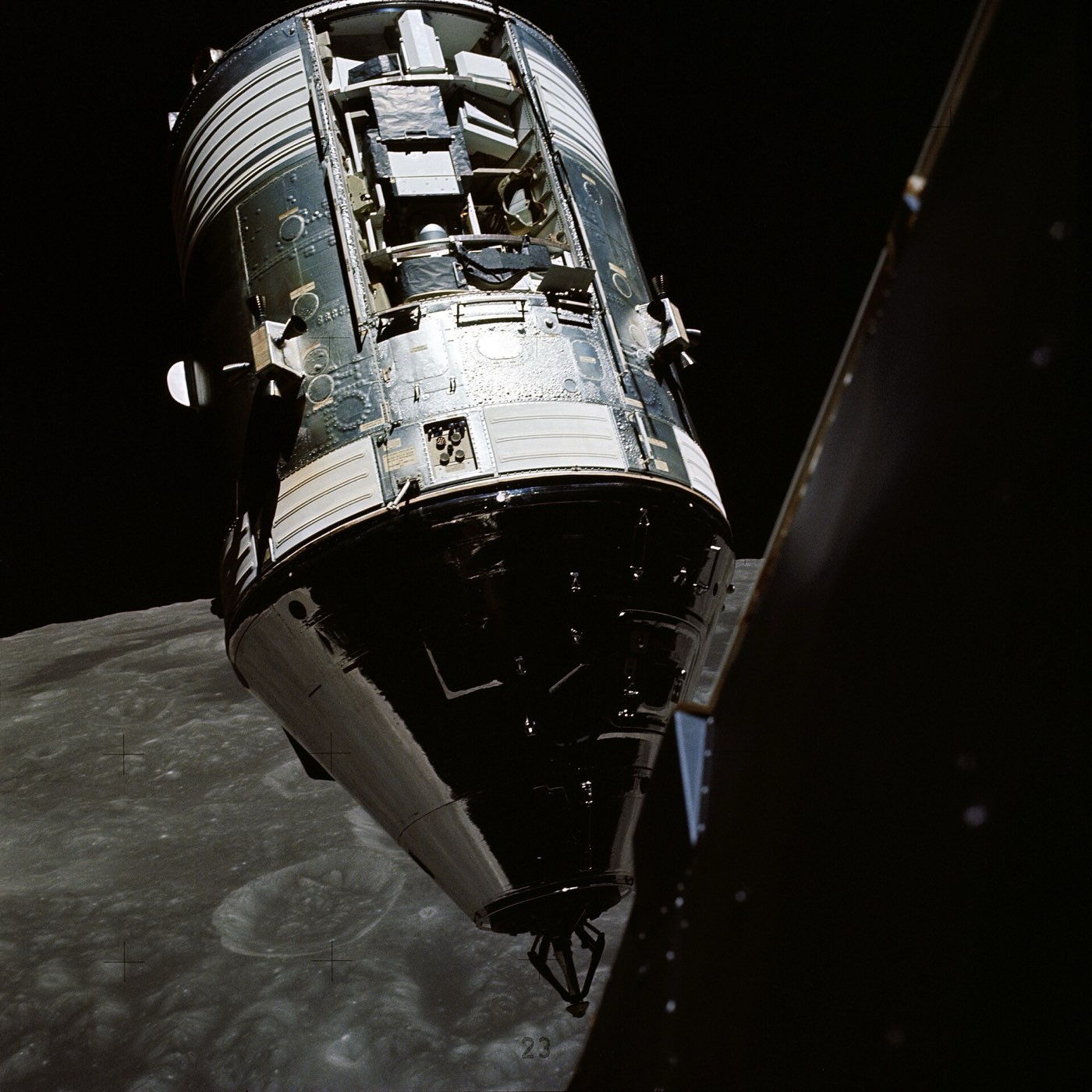
  • Apollo Command and Service Module

    North American Aviation

    AluminiumAluminium honeycombG10 fiberglass laminate
    Where each one is used

    Aluminium. Here: Aluminium inserts, in-plane and out-of-plane (DiskSat build). There: Radial beams; Crushable ribs (x4) and more.

    Aluminium honeycomb. Here: Aluminium honeycomb core and metallic inserts (Astro Digital panels). There: Inner pressure shell (crew compartment); Sector and RCS exterior panels (1 in thick).

    G10 fiberglass laminate. Here: G10 fiberglass skins with integrated copper traces. There: Thruster outer wrap.

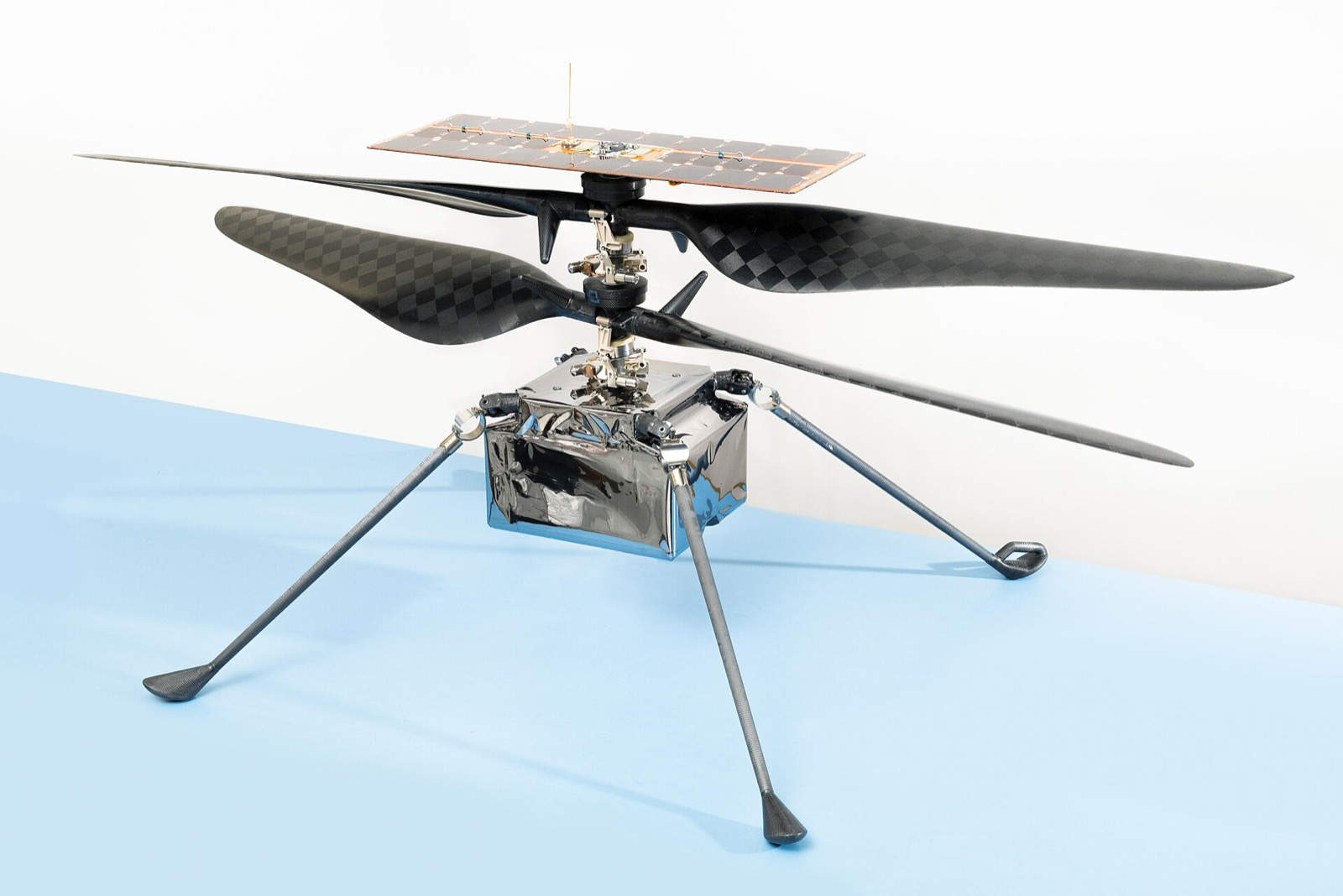
  • Ingenuity Mars Helicopter

    NASA / JPL

    Carbon fibreCopperKapton film
    Where each one is used

    Carbon fibre. Here: Face skin carbon fibre; HR40 / NB321 unidirectional prepreg and more. There: Rotor blades (upper and lower); Rotor primary structure and more.

    Copper. Here: Copper traces in the skins. There: Rotor motor windings; Wiring through mast to ECM.

    Kapton film. Here: Kapton edging on STRATOSubstrate panels. There: Battery heaters.

What we do not know

The page shows a weight with no unit, so the panel's mass isn't clear. Rockwest publishes no thermal or mechanical figures for it, and the exact layer-by-layer layup is shared only under a non-disclosure agreement. The Kapton grade is not named. Rockwest's DiskSat release and Aerospace's fact sheet give very different thicknesses for the finished assembly.

The detailed data

What is written above is built from these numbers and quotes. Each row links to the page it was taken from. Get all of it as JSON, or ask our MCP server.

Features

  • Kapton film co-cured to one face serves as the solar cell bonding surface
  • Sandwich panel is a high stiffness, ultra-low weight backing structure
  • Readily available, made to order with short lead time
  • Full traceability to material lots, cure cycle and coupon testing
  • Each order includes a certificate package; panels serialized and traceable
  • Perforated core and film adhesive combined to tune bending stiffness

Specifications

WhatValue
Size48 in x 96 in (1219.2 mm x 2438.4 mm)
Core materialAluminium honeycomb (perforated)
Core thickness0.25 in
Core density2.3 pcf
Colour / finishBlack, matte on both sides
Length tolerance+/- 0.125 in
Width tolerance+/- 0.125 in
Skin thickness tolerance (each)+/- 10%
Core thickness tolerance+/- 0.010 in
Flatness0.040 in (0.010 per 12 x 12 in)
ApplicationSpace and stable structures
Panel thickness0.295 in
Skin thickness (each)0.020 in
Max suggested use temperature225 F (107 C)
Target orbitLow Earth Orbit
Skin fibre modulus57 Msi (HR40)
Skin layupQuasi-isotropic
Cure processSkins oven cured individually; panels vacuum bag/oven consolidated
DiskSat assembly size (release)about 1 m diameter; release says 25 cm thick, Aerospace fact sheet says 2.5 cm
DiskSat insert positional tolerance0.010 to 0.020 in on in-plane and out-of-plane inserts, global datum scheme
DiskSat demonstration mission launchDecember 2025 on Rocket Lab Electron, four spacecraft
DiskSat structure (Aerospace fact sheet)carbon-fibre composite sandwich, about 13.5 kg, 1 m diameter by 2.5 cm
DiskSat power (Aerospace fact sheet)more than 100 W
Astro Digital panels sizeabout 2 ft x 2 ft
Constellation experience (maker claim)38 plus satellites

Materials in detail

Each material named in the sources: where it is used here, which other products use it, and its key numbers when its material page exists.

Every part we have

The page names the fibre, resin, adhesive, Kapton film and core of the sandwich panel, but gives no drawing, ply table or numbered parts list (technical drawing is NDA-only). Components, suppliers and links were added from public sources. A material is left blank where no source states it.

Material IDs

carbon-fibrenewport-nb321-epoxy-resinpi-kapton-hnaluminium-honeycomb-hexwebnewport-nb301-film-adhesivematte-black-finishaluminiumbr-127-primerea9394-adhesivefiberglasscopperaluminium-honeycombkapton-film-grade-unstated
Face skins (STRATOplate)2
PartMaterialFinish and standardMade by
Face skin carbon fibre“use HR40 carbon fiber (57 Msi) with NB321 high temperature epoxy resin in a quasi-isotropic layup” Mitsubishi HR40 high modulus fiber (57 Msi)carbon-fibre — Mitsubishi HR40
Face skin matrix resin“use HR40 carbon fiber (57 Msi) with NB321 high temperature epoxy resin in a quasi-isotropic layup” Newport 321 epoxy resin (NB321 high temperature epoxy)newport-nb321-epoxy-resin — Newport NB321
Solar cell bonding surface1
PartMaterialFinish and standardMade by
Kapton film, co-cured to one skin face“0.002” Kapton film co-cured to one face” Kapton film, 0.002 inpi-kapton-hn — —
Core and bonding2
PartMaterialFinish and standardMade by
Core“2.3 Pcf AL Core - 0.25 Inch Thick” Perforated aluminum honeycombaluminium-honeycomb-hexweb — Panel P/N 22Z002103-K25-1-UR-2.3-0.250-P-0.250-V
Core-to-skin film adhesive“Newport 301 film adhesive.” Newport 301 film adhesive (NB301)newport-nb301-film-adhesive — —
Panel surface1
PartMaterialFinish and standardMade by
Panel surfaces (both faces)“Color Black Finish Matte / Matte” Matte black finish (colour Black, finish Matte / Matte)matte-black-finish Matte / Matte —
Face skins2
PartMaterialFinish and standardMade by
HR40 / NB321 unidirectional prepregPrepreg form of the skin material, laid up quasi-isotropic and oven cured individually“STRATOSubstrate LEO class panels use HR40/NB321 unidirectional prepreg, NB301 film adhesive, perforated aluminum honeycomb core, and 0.002” HN Kapton.” Carbon fibre / epoxy prepreg (HR40 fibre, NB321 resin)carbon-fibre — Supplier: Rock West Composites
Face skin laminate pair (2 x 0.020 in), STRATOplateLEOTwo skins with a 0.002 in Kapton film co-cured to one face“The face skins are STRATOplateLEO plate with a 0.002” Kapton film co-cured to one face” HR40 carbon fibre / NB321 epoxy, quasi-isotropiccarbon-fibre — Supplier: Rock West Composites
Inserts and edge details4
PartMaterialFinish and standardMade by
Aluminium inserts, in-plane and out-of-plane (DiskSat build)Self-fixturing inserts that match a global datum scheme; positional tolerance 0.010 to 0.020 in“The inserts for the deliverable were BR-127 primed aluminum bonded with EA9394.” Aluminium (alloy not stated), BR-127 primedaluminium — Supplier: Rock West Composites
BR-127 primer on the insertsPrimer applied to the aluminium inserts before bonding“The inserts for the deliverable were BR-127 primed aluminum bonded with EA9394.” BR-127 primer (chemistry not stated)br-127-primer — Supplier: Rock West Composites
EA9394 insert bonding adhesiveAdhesive that bonds the primed inserts into the sandwich“The inserts for the deliverable were BR-127 primed aluminum bonded with EA9394.” EA9394 adhesive (maker and chemistry not stated)ea9394-adhesive — Supplier: Rock West Composites
Back-up structure assemblies for DiskSat (4 delivered)Combination solar array substrate / back-up structure assemblies built to print from STRATOSubstrate LEO blanks, about 1 m in diameter“shipped the first four solar array substrate/back-up structure assemblies to The Aerospace Corporation in support of the DiskSat Program” Not said — Supplier: Rock West Composites
Stock plates and sibling panels (same material system)4
PartMaterialFinish and standardMade by
STRATOplateLEO laminate 0.054 in (P/N 22Z002102-9-0.054-96-48)Stock plate of the HR40 / NB321 quasi-isotropic system, 96 x 48 in; vacuum bag / oven cured“STRATOplateLEO laminates are vacuum bag/oven cured, but autoclave cure may be available upon request.” HR40 carbon fibre / NB321 epoxycarbon-fibre — Supplier: Rock West Composites
STRATOplateLEO laminate 0.108 in (P/N 22Z002102-11-0.108-96-48)Thicker stock plate of the same system“Laminate - Space Grade - HR40 - Epoxy - Quasi-iso Unidirectional - 96.0 x 48.0 x 0.108 inch” HR40 carbon fibre / NB321 epoxycarbon-fibre — Supplier: Rock West Composites
STRATOsubstrate LEO variant with 0.010 in skins (P/N 22Z002103-K21-1-UR)Sibling LEO substrate: HR40 skins 0.010 in, NB301, 0.275 in thick“Substrate - Space Grade - Kapton Surface - HR40 - Epoxy - 0.010" Thick Skins - NB301 Film Adhesive” Not said — Supplier: Rock West Composites
STRATOPanel LEO sandwich panels, 1.0 in thick, 3.1 pcf core (0.027 in and 0.054 in skins)Thicker HR40 / epoxy sandwich panels with NB301 film adhesive“Panel - Space Grade - HR40 - Epoxy - 0.027" Thick Quasi-Iso Skins - NB301 Film Adhesive” Not said — Supplier: Rock West Composites
Custom solar array substrate panels (Astro Digital 500 W arrays)4
PartMaterialFinish and standardMade by
Sandwich panels with customer-furnished trace/lead integrated skins (about 2 ft x 2 ft)Custom SAS panels, not the stock STRATOsubstrate: face skins carry copper traces for direct solar cell integration“RWC built the sandwich panels from trace/lead integrated skins that allowed for direct integration with solar cells.” Not said — Supplier: Rock West Composites
G10 fiberglass skins with integrated copper tracesSkins supplied by the customer“The customer furnished the G10 (fiberglass) skins that already had the integrated copper traces.” G10 fiberglass laminate (resin not stated)fiberglass — —
Copper traces in the skinsElectrical traces for the solar cell strings“The customer furnished the G10 (fiberglass) skins that already had the integrated copper traces.” Coppercopper — —
Aluminium honeycomb core and metallic inserts (Astro Digital panels)RWC used specialized tooling to align the skins on the core so the traces stay in place“RWC used specialized tooling to align the face skins on the aluminum honeycomb core” Aluminium honeycomb (alloy not stated)aluminium-honeycomb — Supplier: Rock West Composites
Panel hardware shown on Rock West solar-array pages (not itemised on the product page)3
PartMaterialFinish and standardMade by
Kapton edging on STRATOSubstrate panelsKapton along the panel edge, seen on DiskSat panel images“Shows Kapton edging and metallic inserts” Kapton film (grade not stated for the edging)kapton-film-grade-unstated — Supplier: Rock West Composites
Precision metallic insertsInserts bonded into the sandwich panel for mounting; shown on the DiskSat panel images“Image shows exposed aluminum core, precision inserts and Kapton edging” Not said — Supplier: Rock West Composites
Cup/cone fittings (match-bonded in solar wings)Fittings that stack panels into deployable solar array wings“Our team excels at precision assembly and match bonding of cup/cone fittings.” Not said — Supplier: Rock West Composites

Standards named

  • ISO 9001:2015 / AS9100D (quality certification of the maker) · Maker certification, not a material standard

What the sources leave out

The page cites no material or process specification for the fibre, resin, adhesive, Kapton or core. No datasheet PDFs are linked on this page (unlike the GEO panel). The aluminium honeycomb alloy and cell size and the Kapton grade are not stated. 'Unreticulated' adhesive appears only in the title. Technical drawing, layup and cure details are only available under NDA. More detail: The stock part page gives no mass with a unit (Weight 14.01 only), no HR40 or NB321 datasheet, no honeycomb alloy or cell size, no insert specification (the DiskSat release names BR-127 primer and EA9394 for that custom build only) and no layup (drawing under NDA). The DiskSat release is headed January 31, 2023 in the dateline but dated 2024 in the page header, and gives the assembly thickness as 25 cm while Aerospace gives the DiskSat as 2.5 cm thick, so that number is probably a typo and is reported as printed. The Aerospace fact sheet does not name Rock West or any solar-panel supplier, and the Astro Digital panels are custom parts with customer-furnished G10 skins, not the stock STRATOsubstrate. Kapton edging and cup/cone fittings come from Rock West solar-array pages, not the product page. More detail: The stock part page gives no mass with a unit (Weight 14.01 only), no HR40 or NB321 datasheet, no honeycomb alloy or cell size, no insert specification (the DiskSat release names BR-127 primer and EA9394 for that custom build only) and no layup (drawing under NDA). The DiskSat release is headed January 31, 2023 in the dateline but dated 2024 in the page header, and gives the assembly thickness as 25 cm while Aerospace gives the DiskSat as 2.5 cm thick, so that number is probably a typo and is reported as printed. The Aerospace fact sheet does not name Rock West or any solar-panel supplier, and the Astro Digital panels are custom parts with customer-furnished G10 skins, not the stock STRATOsubstrate. Kapton edging and cup/cone fittings come from Rock West solar-array pages, not the product page.
Where this comes from

9 pages from 2 websites

More space products

Collected from public pages and documents, checked 4 Nov 2026.

Published · Updated