7 hours maximum (6 hours under worst-case solar exposure)
Gap between TMG liner and restraint
about one eighth inch
Ortho-Fabric temperature range
−184.4 to 149 C
In short
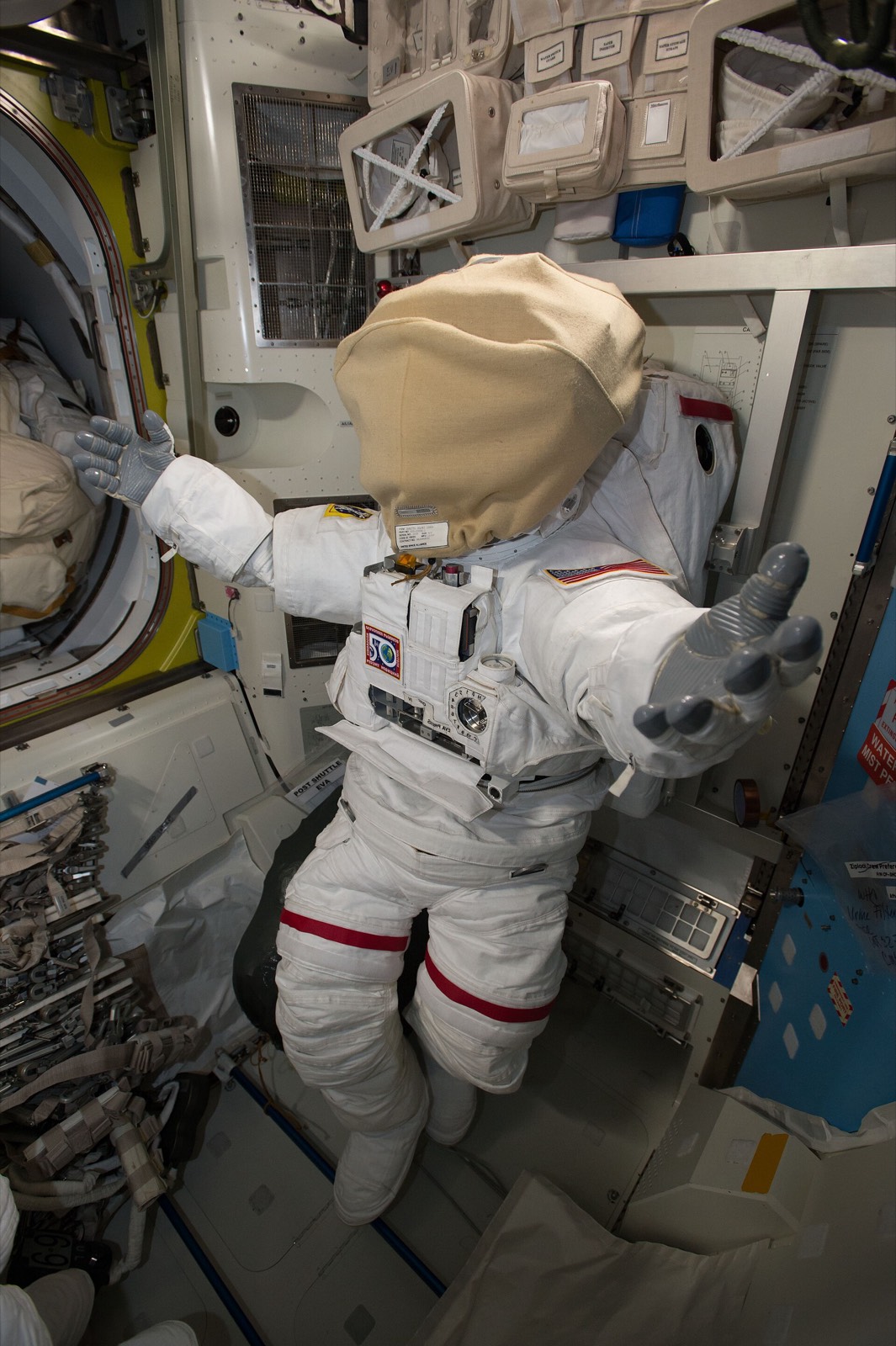
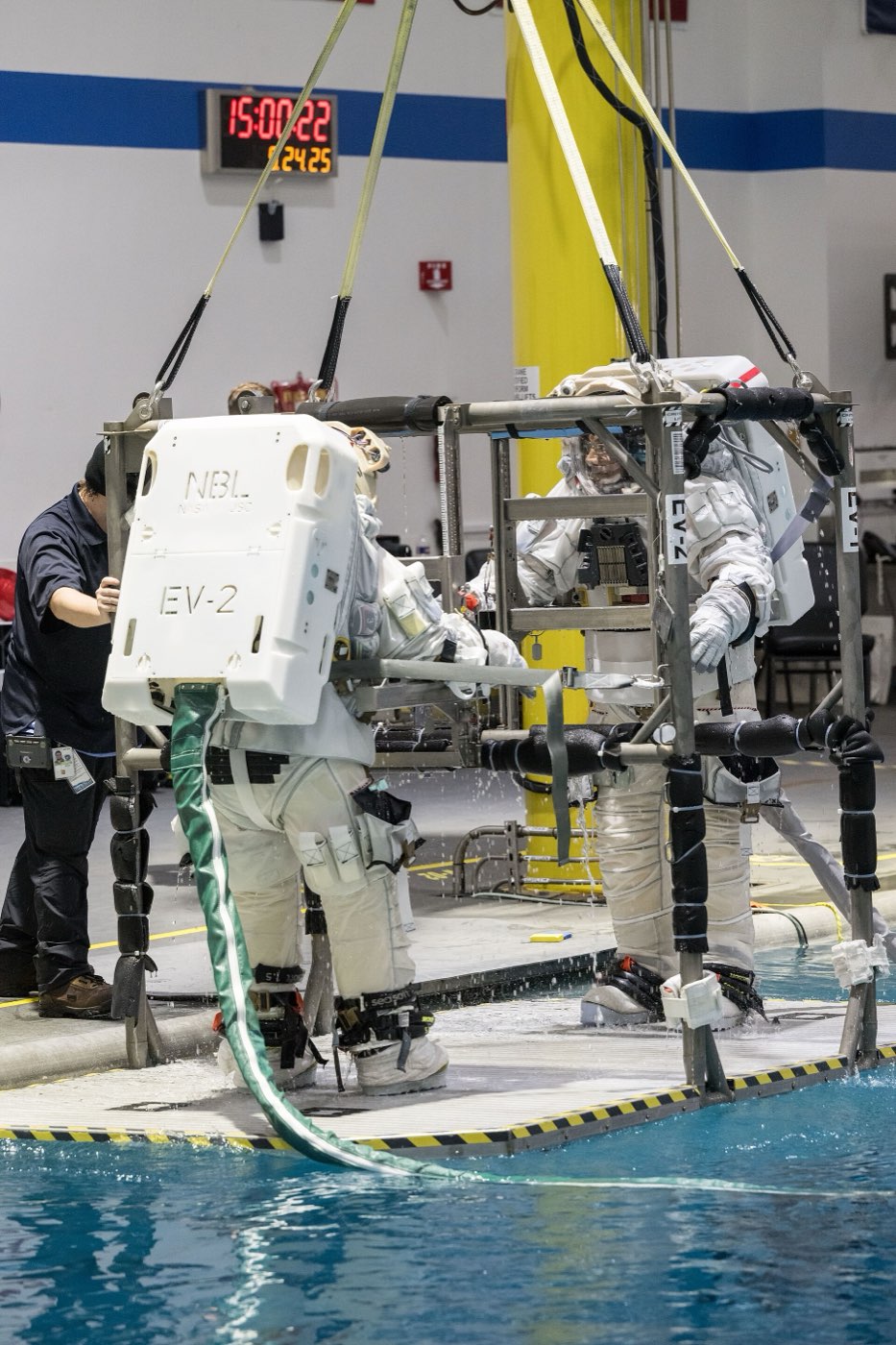
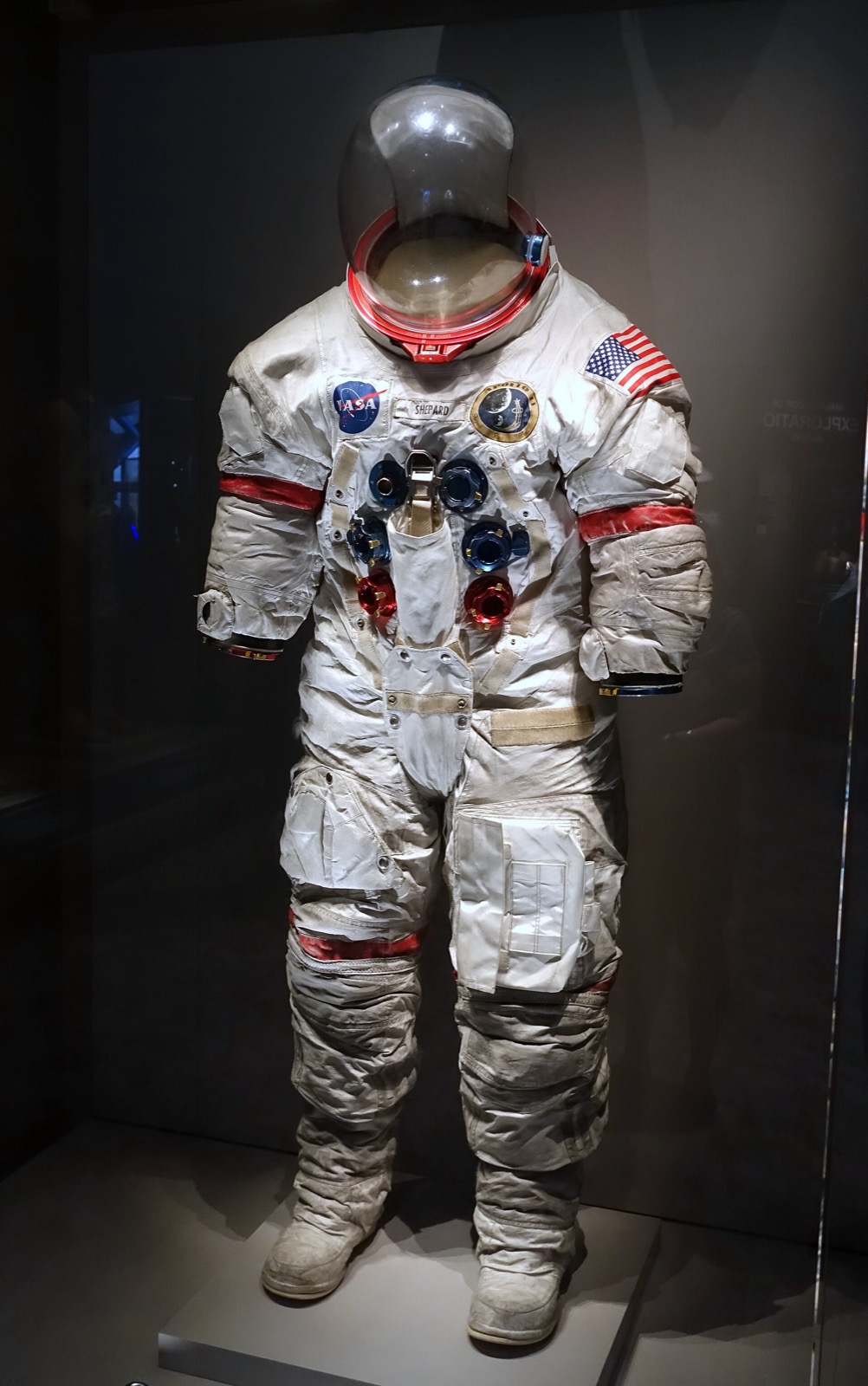
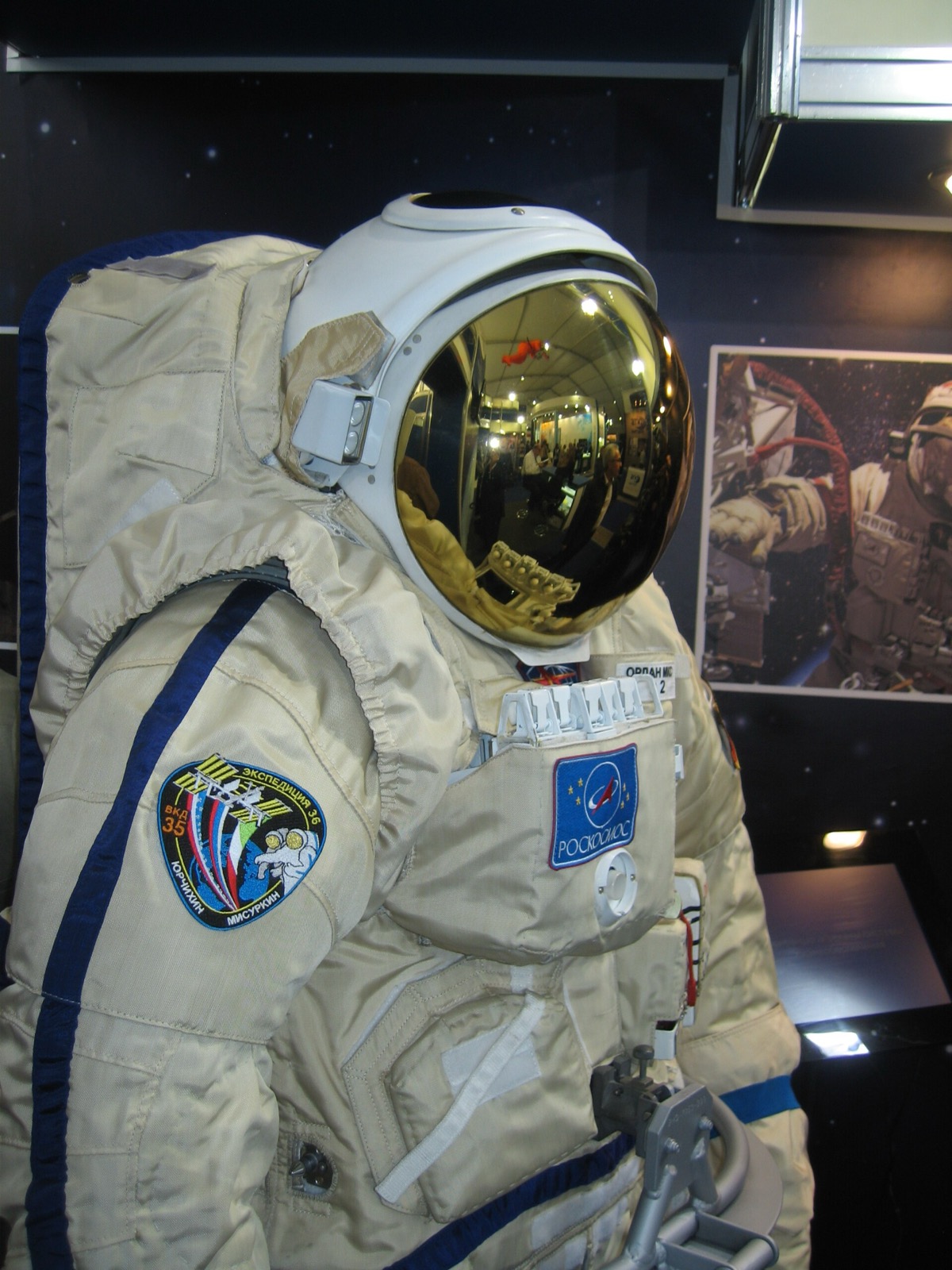
The Extravehicular Mobility Unit, or EMU, is the suit NASA astronauts wear for Space Shuttle and International Space Station spacewalks. Hamilton Sundstrand and ILC Dover built it. It has a hard torso and soft arms and legs, and a backpack of its own supplies oxygen and cooling water and removes carbon dioxide.
The suit's soft parts are built from layers of fabric and film. The outer cover is Ortho-Fabric, which resists abrasion and tears and protects against micrometeoroids, tiny fast-moving particles. Five layers of aluminised Mylar insulate beneath it. The hard upper torso is fibreglass, and the helmet is clear polycarbonate.
Application
The suit worn by NASA astronauts for Space Shuttle and International Space Station spacewalks. It combines a fibreglass hard upper torso, a polycarbonate helmet and fabric arms and legs with a backpack that supplies oxygen, cooling water and carbon dioxide removal.
Photos
How it is built
Thermal micrometeoroid garment
The thermal micrometeoroid garment, or TMG, is the suit's outer cover. Its fabric, called Ortho-Fabric, has an outer face of Gore-Tex and an inner face of Nomex and Kevlar. Beneath it lie five layers of aluminised Mylar and a neoprene-coated nylon liner.
Outer cover face (Ortho-Fabric)
Outer cover inner face (Ortho-Fabric)
Insulation (MLI)
TMG liner
Pressure layers and shielding
Under the TMG, the arms, lower torso and legs have a Dacron restraint layer and pressure bladders of urethane-coated nylon. About one eighth of an inch separates the TMG liner from the restraint layer. Together the TMG and restraint layers form a Whipple shield, a spaced barrier against fast-moving particles.
Restraint layer
Pressure bladder
Arm assemblies bladder
Lower torso and leg bladders
Hard torso and helmet
The hard upper torso, or HUT, is a fibreglass shell. It is the structural mounting point for the helmet, arms, lower torso and life support. The helmet bubble is clear polycarbonate, and the visor assembly adds polycarbonate, fibreglass, a polysulfone sun visor and stainless steel plates.
HUT shell
Helmet bubble
Protective visor
Sun visor
Shell attachment plates
Cooling garment
The liquid cooling and ventilation garment circulates cooling water through tubing near the skin. The tubing is ethylene vinyl acetate, woven through a nylon and spandex stretch fabric, with a nylon tricot liner. Vent ducts run in tunnels of nylon and spandex mesh covered with Teflon fabric.
Restraint (outer stretch fabric)
Liner
Cooling water tubing
Vent duct tunnels
Gloves and boots
The Phase VI glove has a urethane bladder, protected from abrasion by a two-layer Teflon liner. The palm of the glove's outer layer is a Vectran knit shaped in 3-D and coated with RTV 3145 silicone. The boots have a fibreglass sole stiffener.
Glove bladder
Glove bladder abrasion liner
Glove TMG palm
Glove TMG palm coating
Boot sole stiffener
Where the parts areNumber of parts we have listed in each group
Gloves (Phase VI) and boots8
Helmet and Extravehicular Visor Assembly7
Thermal Micrometeoroid Garment (TMG)4
Pressure garment (arms and lower torso)4
Liquid Cooling and Ventilation Garment (LCVG)4
Hard Upper Torso (HUT)1
Primary Life Support Subsystem (PLSS)1
What it is made of
Gore-Tex
A fibre of expanded Teflon, used on the outer face of the Ortho-Fabric cover.
Nomex and Kevlar
The inner face of the Ortho-Fabric cover, woven as a ripstop.
Aluminised Mylar
Five layers of insulation in the outer cover, with a non-woven scrim, and more layers in the glove fingers.
Urethane-coated nylon
The pressure bladders of the arms, lower torso and legs, heat-sealed into pressure vessels.
Fibreglass
The hard upper torso shell, the front of the visor assembly shell, and the boot sole stiffener.
Polycarbonate
The clear helmet bubble, the back of the visor assembly shell and the protective visor.
The materials by familyHow many of the parts that name a material use each one
Polymers and foams13
Other8
Glass fibre4
Aluminium2
Stainless steel1
How it connects to other things
Its backpack, the Primary Life Support Subsystem, is made up of four circuits: oxygen, water supply, cooling and ventilation.
Clear polycarbonate. Here: Helmet bubble; EVVA shell (back portion) and more. There: Helmet; Double-pane primary helmet window with protective glass (Orlan-M design) and more.
Dacron. Here: Restraint layer. There: Load-bearing (restraint) layer of the soft shells (Orlan-M design).
Fiberglass. Here: HUT shell; EVVA shell (front portion) and more. There: Radiation heat shield spacer.
Stainless steel. Here: Shell attachment plates. There: Pintle tip, original; Flow-control valve bellows and more.
What we do not know
Public descriptions of the suit do not give its total mass, the date of its first flight or the materials inside the backpack. Also unnamed are the resin in the fibreglass, the grades of polycarbonate and stainless steel, and the layer of the cover between the Ortho-Fabric and the insulation.
The detailed data
What is written above is built from these numbers and quotes. Each row links to the page it was taken from. Get all of it as JSON, or ask our MCP server.
Features
Ortho-Fabric outer cover gives abrasion, tear and micrometeoroid protection with white thermal-control surface
TMG and restraint layers form a Whipple shield for arms, lower torso and legs
HUT provides the structural mounting interface for helmet, arms, lower torso and life support
LCVG circulates cooling water near the skin
Specifications
What
Value
Operating suit pressure
4.3 psid
EVA duration requirement
7 hours maximum (6 hours under worst-case solar exposure)
TMG insulation
5 layers of aluminized Mylar
Gap between TMG liner and restraint
about one eighth inch
Ortho-Fabric temperature range
−184.4 to 149 C
Materials in detail
Each material named in the sources: where it is used here, which other products use it, and its key numbers when its material page exists.
Urethane/nylon laminate
urethane-coated-nylon
Used in 4 partsPressure bladder · Arm assemblies bladder · Lower torso and leg bladders · +1 more
Material page coming soon
Clear polycarbonate
polycarbonate
Used in 3 partsHelmet bubble · EVVA shell (back portion) · Protective visor