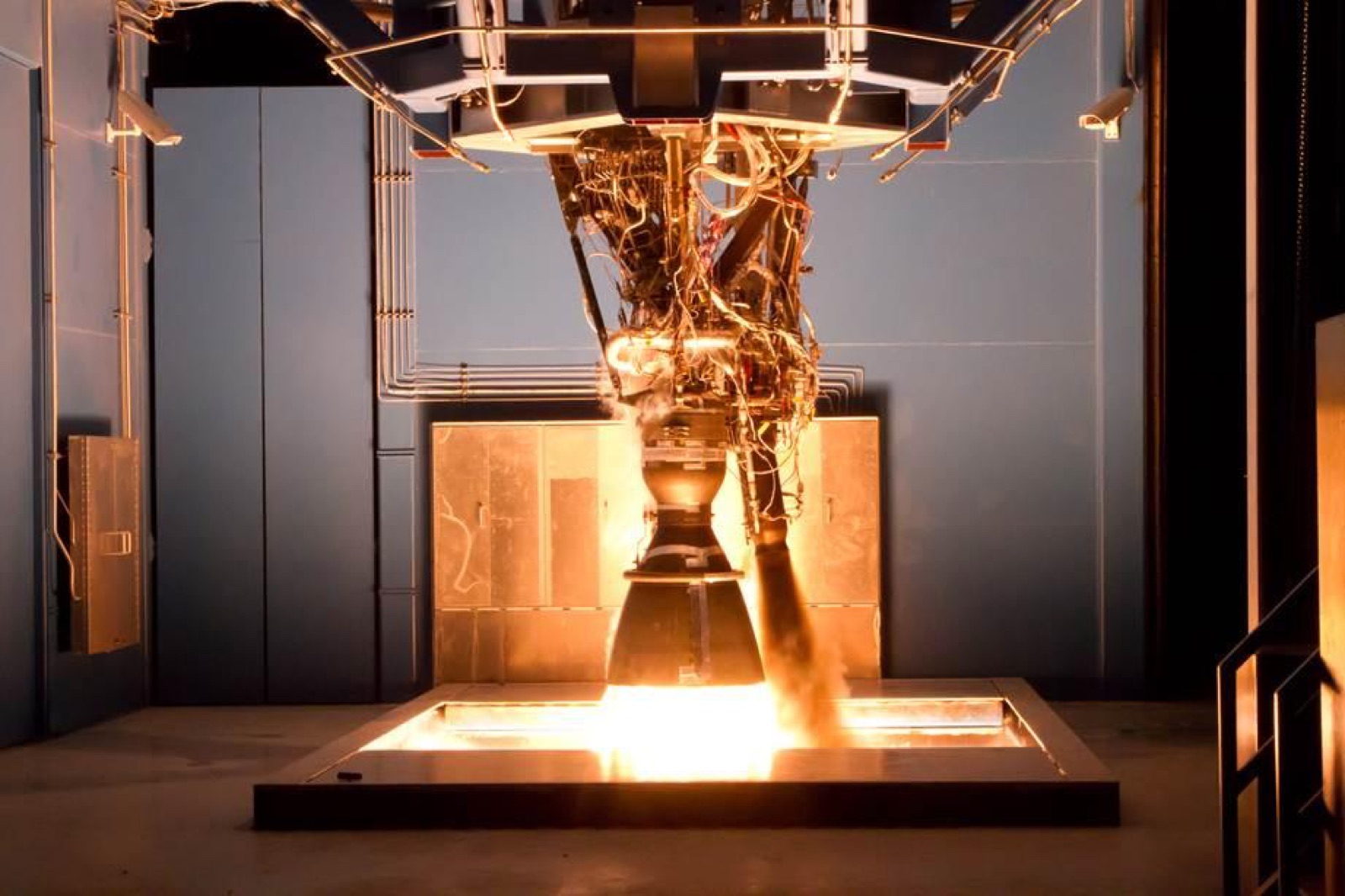
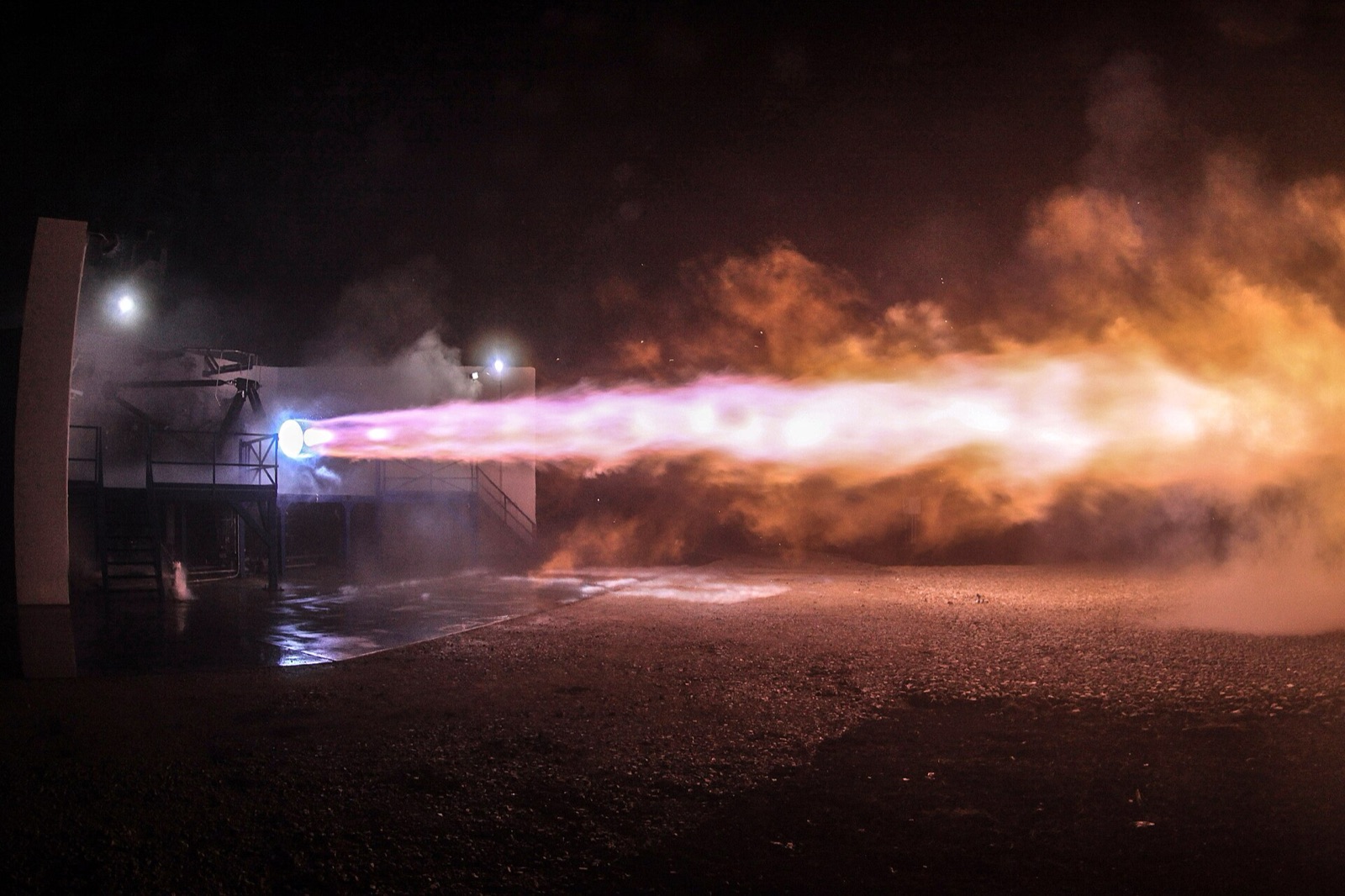
Thrust chamber
- Chamber and exit-cone forgings
- Ablative-lined case to 16:1
- Ablative liner
- Liner insulation layer
- Structural shield
TRW's throttleable, pintle-injector hypergolic engine that landed the Apollo Lunar Module; sources name a titanium case with a silica/phenolic ablative liner, a thin columbium C-103 nozzle extension and a stainless-steel, then columbium, pintle tip.
grumman-lunar-module-descent-engine TRW's throttleable, pintle-injector hypergolic engine that landed the Apollo Lunar Module; sources name a titanium case with a silica/phenolic ablative liner, a thin columbium C-103 nozzle extension and a stainless-steel, then columbium, pintle tip.
One LMDE sat in the central bay of each Lunar Module descent stage and slowed the vehicle from lunar orbit to a hover and landing, throttling down to about a tenth of its rated thrust. NASA Marshall says the pintle injector of SpaceX's Merlin 1D was first used in this Apollo-era engine.
No photos we are allowed to show yet. If you have a photo of this product and the right to share it, send it to us.
Used in Pintle tip, original and Flow-control valve bellows.
Used in Ablative-lined case to 16:1 and Structural shield.
Used in Flow-control valve elbow, original and Flow-control valve elbow, redesigned.
Used in Gimbal frame.
Used in Head-end attachment bolts (36).
Grumman / NASA
One engine in the descent stage; first in-flight burn on Apollo 5 (LM-1)
Designer and builder of the flight engine
Columbium nozzle extension and its coating
Electric throttle actuator
Gimbal actuators
North American Aviation
stainless steel. Here: Pintle tip, original; Flow-control valve bellows and more. There: Outer shell (heat shield structure); VHF scimitar antennas and more.
Titanium. Here: Ablative-lined case to 16:1; Structural shield and more. There: Helium tanks (2); Fuel tanks (2) and more.
columbium alloy. Here: Pintle tip, qualification version. There: SPS nozzle extension.
fiberglass wool. Here: Radiation heat shield spacer. There: Thruster outer wrap.
Grumman / NASA
Titanium. Here: Ablative-lined case to 16:1; Structural shield and more. There: Some brackets and fasteners (lunar module); Descent-stage hot-area structure and more.
7075-T73 aluminium alloy. Here: Gimbal frame. There: Outrigger truss members and landing-gear struts (redesigned); Gimbal ring and gimbal drive actuators.
titanium alloy 6Al-4V. Here: Chamber and exit-cone forgings. There: Combustion chamber case (titanium alloy).
NASA CubeSat Launch Initiative
Aluminium alloy 6061. Here: Flow-control valve elbow, original; Flow-control valve elbow, redesigned. There: CubeSat structure; CubeSat structure (template row 2, body type Box).
Copper. Here: Pintle tip, copper-slug version. There: Cabling, etc. (template row 14).
NASA Ames
Aluminium alloy 6061. Here: Flow-control valve elbow, original; Flow-control valve elbow, redesigned. There: EnduroSat 3U structure; ISISPACE 3U structure and more.
Copper. Here: Pintle tip, copper-slug version. There: Frangibolt actuator cylinder.
Rockwest Composites
Copper. Here: Pintle tip, copper-slug version. There: Copper traces in the skins.
fiberglass wool. Here: Radiation heat shield spacer. There: G10 fiberglass skins with integrated copper traces.
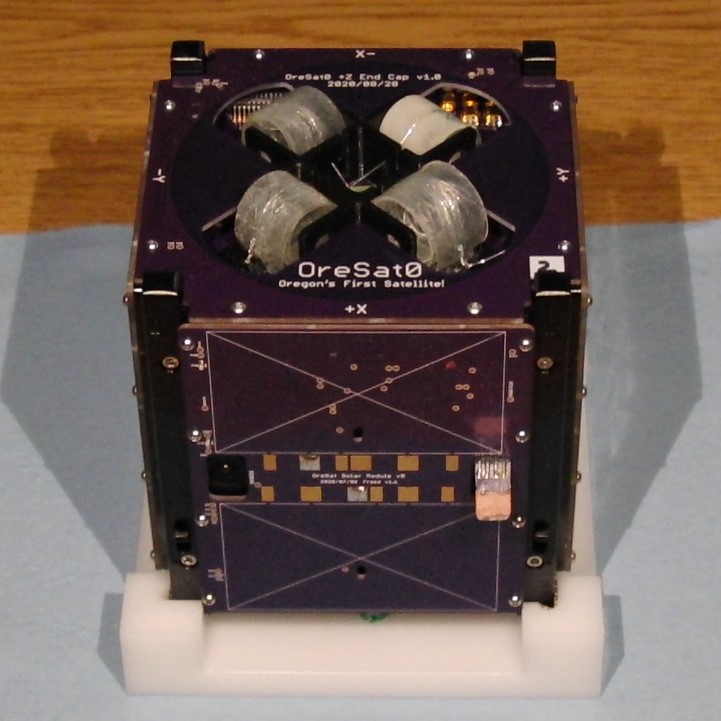
PSAS / Oregon State
Aluminium alloy 6061. Here: Flow-control valve elbow, original; Flow-control valve elbow, redesigned. There: 1U +X frame; Card wedge (card clamp) and more.
Copper. Here: Pintle tip, copper-slug version. There: Helical antenna (+Z end card); Outer copper foil and more.
No standards; the metal felt alloy, ball-valve and venturi alloys are not stated.
What is written above is built from these numbers and quotes. Each row links to the page it was taken from. Get all of it as JSON, or ask our MCP server.
| What | Value |
|---|---|
| Maximum thrust (vacuum, full throttle position) | 10,500 lbf |
| Maximum nominal thrust (introduction) | 9,850 lbf |
| Throttle range | 10:1 (minimum about 10 percent of rated thrust) |
| Minimum throttle point | 10 percent of rated thrust |
| Propellants | Aerozine 50 fuel and nitrogen tetroxide oxidizer, hypergolic |
| Specific impulse | 305 s (end of duty cycle) |
| Chamber pressure (full throttle position) | 103.4 psia |
| Ablative chamber area ratio | 16:1 |
| Nozzle extension area ratio | About 48:1 |
| Approximate weight | 394 lb |
| Ablative duty-cycle capability | 1,000 s |
| Engines per vehicle | 1 in the Lunar Module descent stage |
| Design selection | NASA selected the STL design as primary in December 1964 |
| First flight engine delivered | August 1966 |
| First flight | Apollo 5 (LM-1), Saturn IB, 22 January 1968; first descent burn cut short after 4 s |
| First flight date | 1968-01-22 |
Each material named in the sources: where it is used here, which other products use it, and its key numbers when its material page exists.
Used in 3 partsPintle tip, original · Flow-control valve bellows · Radiation heat shield foil
Used in 3 partsAblative-lined case to 16:1 · Structural shield · Exit-plane stiffening ring
Used in 2 partsFlow-control valve elbow, original · Flow-control valve elbow, redesigned
Used in 1 partGimbal frame
Used in 1 partHead-end attachment bolts (36)
Used in 1 partFuel
Used in 1 partNozzle extension coating
Used in 1 partPintle tip, qualification version
Used in 1 partNozzle extension skirt (16:1 to about 48:1)
Used in 1 partPintle tip, copper-slug version
Used in 1 partGimbal trunnion bearings
Used in 1 partRadiation heat shield spacer
Used in 1 partLiner insulation layer
Used in 1 partOxidizer
Used in 1 partAblative liner
Used in 1 partThrottle linkage pivot
Used in 1 partChamber and exit-cone forgings
Chamber, liner, nozzle extension, pintle tip, valve elbow, gimbal and heat-shield materials are stated in EngineHistory.org Part 9.42, NASA SP-2009-4545 and NASA TN D-7143. Venturi bodies, ball valves, injector sleeve and the helium and propellant plumbing are listed without a material.
| Part | Material | Finish and standard | Made by |
|---|---|---|---|
| Chamber and exit-cone forgings“machined from 6A1-4V titanium alloy forgings” | titanium alloy 6Al-4V (printed 6A1-4V in the source)titanium-6al-4v | — | Source says the engine chamber and exit cone portions |
| Ablative-lined case to 16:1“an ablative-lined titanium alloy case to the 16:1 area ratio” | titanium alloy (grade stated for the forgings only)titanium | — | — |
| Ablative liner“a high density, erosion-resistant silica cloth/phenolic material” | silica cloth / phenolic ablativesilica-phenolic-ablator | — | — |
| Liner insulation layer“we had a lightweight metal felt material as an insulator outside of that in the chamber” | metal felt (alloy not stated)metal-felt-insulation | — | — |
| Structural shield“that had a titanium structural shield around it” | titaniumtitanium | — | — |
| Head-end attachment bolts (36)“36 A-286 steel” | A-286 steela-286-steel | — | — |
| Exit-plane stiffening ring“an I-shaped titanium ring provided stiffness during handling, launch and boost” | titaniumtitanium | — | — |
| Fuel barrier cooling“We used a barrier coolant in the engine because it was ablatively lined.” | Not said | — | — |
| Part | Material | Finish and standard | Made by |
|---|---|---|---|
| Nozzle extension skirt (16:1 to about 48:1)“Columbium alloy C-103 was selected as the nozzle extension material” | Columbium alloy C-103niobium-c-103 | — | NASA TN D-7143 calls it a sheet-metal columbium-alloy skirt; The Wah Chang Company supplied it |
| Nozzle extension coating“An aluminide coating provided oxidation resistance and high emissivity.” | aluminide coatingaluminide-coating | — | — |
| Part | Material | Finish and standard | Made by |
|---|---|---|---|
| Pintle tip, original“The original injector pintle tip was made of stainless steel” | stainless steel (grade not stated)stainless-steel | — | Eroded because of inadequate cooling |
| Pintle tip, copper-slug version“copper slugs were incorporated in the pintle tip” | coppercopper | — | Phase A qualification design |
| Pintle tip, qualification version“used a columbium-alloy pintle tip” | columbium alloy (grade not stated)columbium-niobium | — | Phase B qualification; no erosion occurred |
| Variable-area sleeve“The injector has a sliding sleeve that controls both the oxidizer in the middle and the fuel coming down the outside.” | Not said | — | — |
| Injector face baffle“A Y-baffle arrangement was incorporated on the injector face to damp” | Not said | — | — |
| Part | Material | Finish and standard | Made by |
|---|---|---|---|
| Cavitating venturi flow-control valves (2)“The flow control valves were non-redundant cavitating venturis with movable pintle sleeves.” | Not said | — | — |
| Flow-control valve elbow, original“The original flow control valve (FCV) elbow was made of stamped 6061 aluminum sheet” | 6061 aluminiumaluminium-6061 | — | — |
| Flow-control valve elbow, redesigned“The new elbow consisted of two pieces machined from solid 6061 aluminum” | 6061 aluminiumaluminium-6061 | — | — |
| Flow-control valve bellows“stainless steel welded bellows” | stainless steel (grade not stated)stainless-steel | — | — |
| Propellant shutoff valves“The propellant shutoff valves were ball valves.” | Not said | — | NASA SP-2009-4545: quad ball valves on the fuel and oxidizer sides |
| Throttle actuator“built by Bendix Commercial Vehicle Systems” | Not said | — | Bendix Commercial Vehicle Systems |
| Throttle linkage pivot“a steel bushing and a steel pin, both coated with molybdenum disulfide with an inorganic binder” | steel coated with molybdenum disulfide (inorganic binder)molybdenum-disulfide-coating | — | — |
| Part | Material | Finish and standard | Made by |
|---|---|---|---|
| Gimbal frame“machined from 7075-T73 aluminum alloy” | 7075-T73 aluminium alloyaluminium-7075-t73 | — | — |
| Gimbal trunnion bearings“a spherical Fabroid bearing” | Fabroidfabroid | — | — |
| Gimbal actuators“built by Airesearch Mfg. Company of Los Angeles” | Not said | — | Airesearch Mfg. Company of Los Angeles |
| Radiation heat shield foil“stainless steel foil separated by fiberglass wool” | stainless steel foil (grade not stated)stainless-steel | — | — |
| Radiation heat shield spacer“stainless steel foil separated by fiberglass wool” | fiberglass woolfiberglass | — | — |
| Part | Material | Finish and standard | Made by |
|---|---|---|---|
| Fuel“storable hypergolic Aerozine 50 fuel and nitrogen tetroxide oxidizer” | Aerozine 50aerozine-50 | — | — |
| Oxidizer“storable hypergolic Aerozine 50 fuel and nitrogen tetroxide oxidizer” | nitrogen tetroxidedinitrogen-tetroxide | — | — |
No standards; the metal felt alloy, ball-valve and venturi alloys are not stated.
Maker credit: TRW (Space Technology Laboratories) for Grumman and NASA. Collected from public pages and documents, checked 4 Nov 2026.
Published · Updated