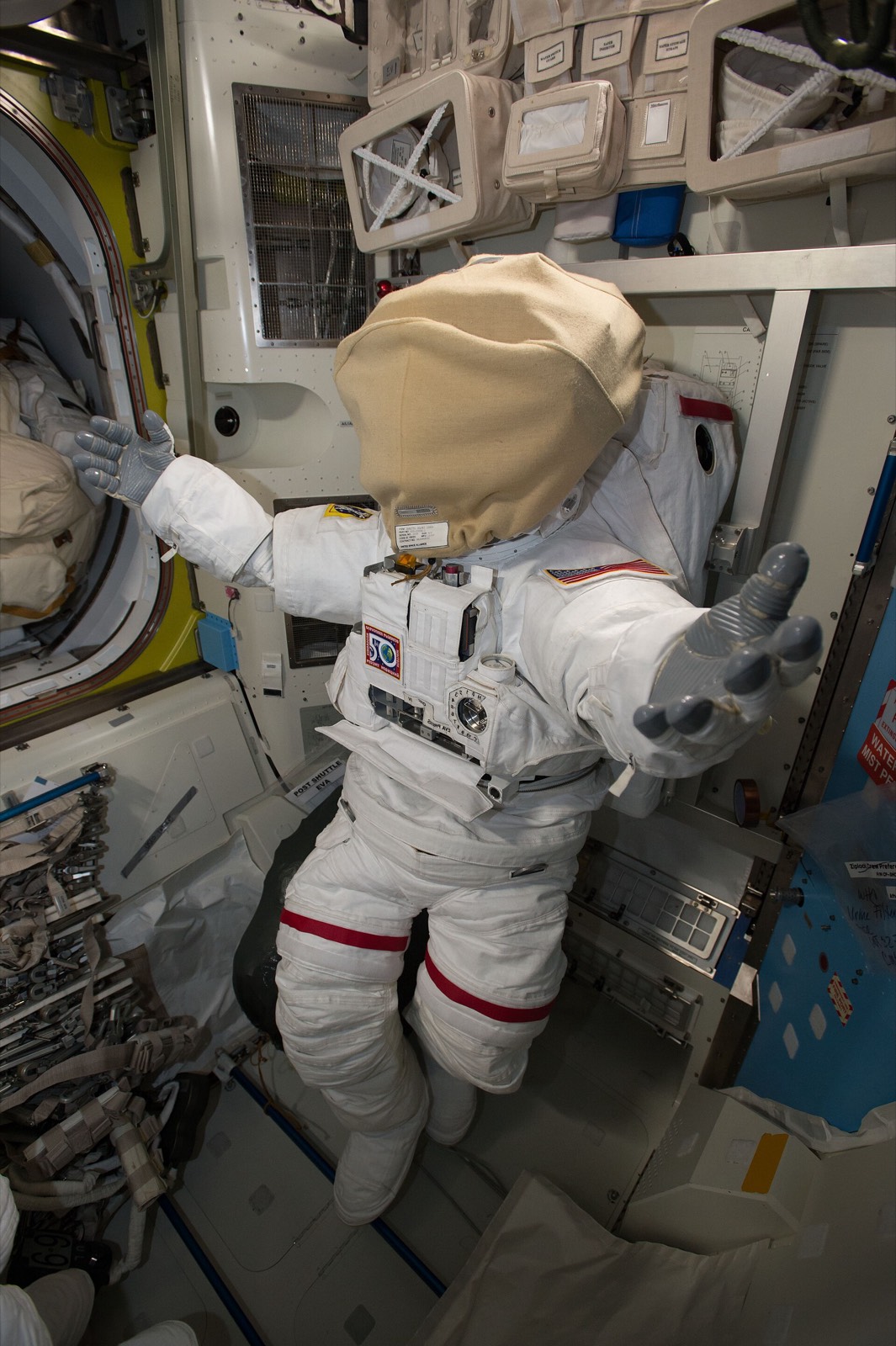
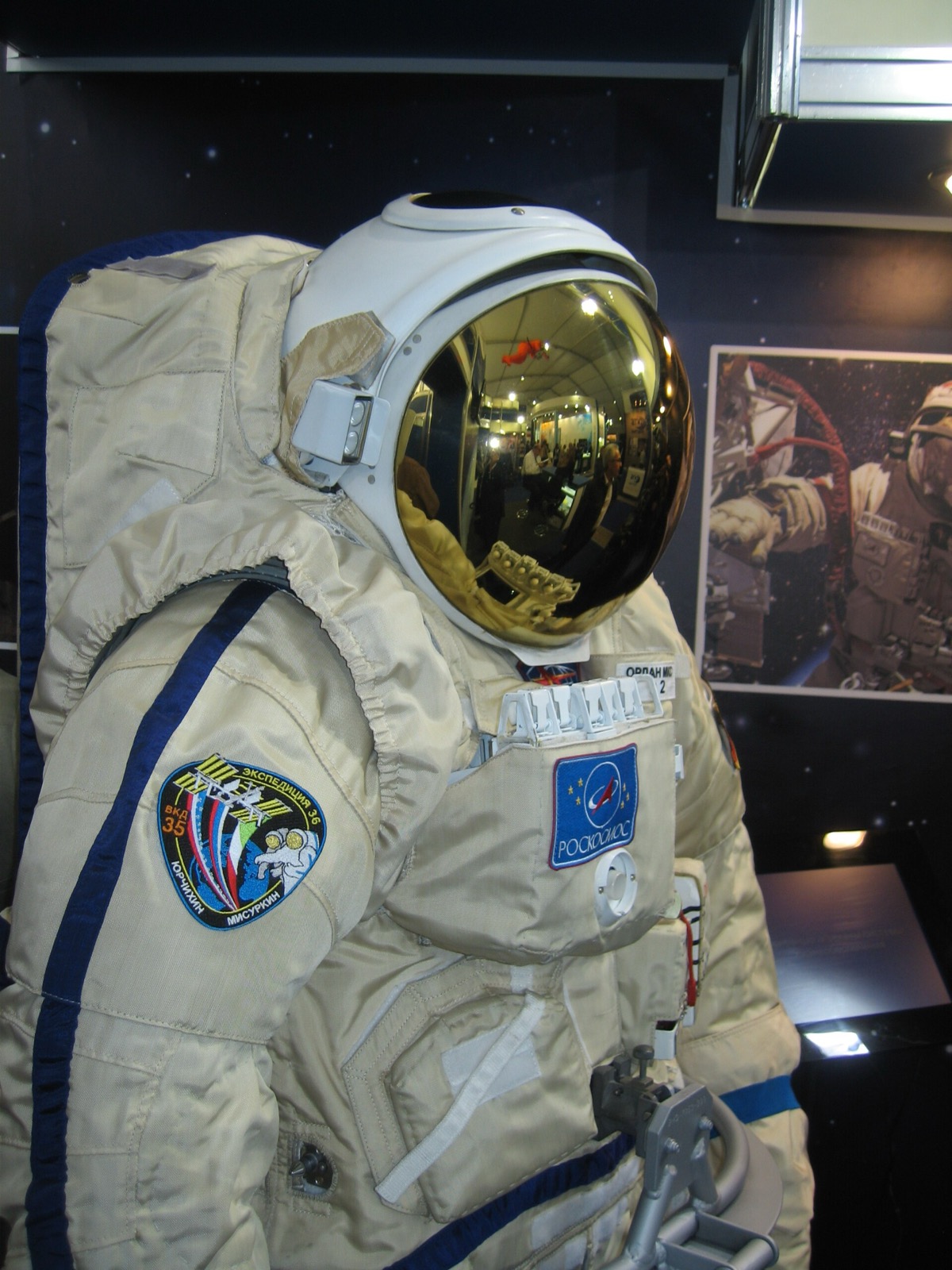
Orlan-MKS spacesuit on display at an exhibition, gold-visor helmet, Roscosmos patch and Expedition 36 sleeve patch
NPP Zvezda / Roscosmos

Orlan-MKS spacesuit

The Orlan-MKS is the Russian spacewalking suit used on the International Space Station since 2017.

Spacesuits
Product IDroscosmos-orlan-mks-spacesuit
Mass
110 kg (240 lb)
Operating pressure
400 hPa (5.8 psi); about 0.4 atm
Primary life support
7 hours
Service life
6 years; 15 to 20 EVAs
In service
ISS, since 2017

In short

The Orlan-MKS is a Russian spacesuit that cosmonauts wear for spacewalks at the International Space Station. NPP Zvezda and Roscosmos make it, and it has been in use there since 2017. The suit is semi-rigid, with a solid torso and flexible arms, and it carries its own life support in a backpack on the rear hatch.

The torso is a single hard shell, said to be an aluminium alloy. The pressure layer is polyurethane, which replaces rubber and, according to one report, makes the suit last longer. The outer fabric is phenylon, an aramid fibre.

Application

Used by cosmonauts for spacewalks on the International Space Station since 2017. The suit is self-contained, carrying its own life support in a rear hatch backpack, and is built for 15 to 20 EVAs.

How it is built

Hard torso and helmet

The hard upper torso, or cuirass, is a single shell said to be an aluminium alloy. The suit is entered through a rear hatch, which also carries the life support backpack. One blog reports that the helmet is impact-resistant polycarbonate.

  • Hard upper torso (cuirass)
  • Helmet

Pressure layer

In the new model, polyurethane pressure shells take the place of rubber ones. A Russian news report says this lengthens the suit's service life. The shells form the pressure bladder, the sleeves and the legs.

  • Pressure bladder, sleeves and legs

Outer fabric and heat control

The outer shell of the suit is phenylon, a fabric made from aramid, a family of strong synthetic fibres. For thermal insulation the suit has layers of aluminium foil and mineral fibres. Its thermal control system is fully automated, with a manual override.

  • Outer shell fabric
  • Thermal insulation
Where the parts areNumber of parts we have listed in each group
  • Pressure garment and structure12
  • Helmet, visor and lighting9
  • Power, communications, displays and controls9
  • Life support: cooling and water loop8
  • Gloves4
  • Life support: oxygen and pressure control4
  • Life support: ventilation and CO2 removal4
  • Thermal garment and outer cover3
  • Airlock and station interfaces3
  • Hard upper torso and helmet2

What it is made of

  • Aluminium alloy

    Said to be the single-piece hard upper torso. The alloy is not named.

  • Polycarbonate

    Reported by one blog as the helmet material, in a high-strength, impact-resistant form.

  • Polyurethane

    The pressure layer of the bladder, sleeves and legs, in place of rubber, to give a longer service life.

  • Phenylon aramid fabric

    Reported as the fabric of the suit's outer shell.

  • Aluminium foil and mineral fibres

    Layered thermal insulation. The description may cover the whole Orlan family rather than this model alone.

The materials by familyHow many of the parts that name a material use each one
  • Other15
  • Polymers and foams4
  • Aluminium3
  • Stainless steel2
  • Gold and silver1
  • Glass fibre1

How it connects to other things

Orlan is a family of Russian spacesuits, and the Orlan-MKS is a newer model of it. One change reported from earlier models is that polyurethane pressure shells replace rubber ones.

Used in

  • International Space Station, Russian segment EVA equipment (used from its airlocks)

    Suits live on the station and are discarded with Progress, not returned

Builds on

  • Orlan-M spacesuit

    Via the Orlan-MK, which can run as the earlier Orlan-M version

  • Orlan-DMA spacesuit

    Indirect: Orlan-M, base of the MK and MKS, was an Orlan-DMA modification

  • Krechet lunar spacesuit (semi-rigid concept)

    Semi-rigid Orlan family traces to the lunar programme suit

Replaces

  • Orlan-MK spacesuit

    Replaced the Orlan-MK on the ISS; new polyurethane shell and automatic cooling

Made or supplied by

  • NPP Zvezda (Tomilino, Moscow region)

    Designer and maker of the Orlan-MKS

Operated by

  • Roscosmos cosmonauts of the Russian ISS segment

    Used for Russian-segment spacewalks

Products that use the same materials

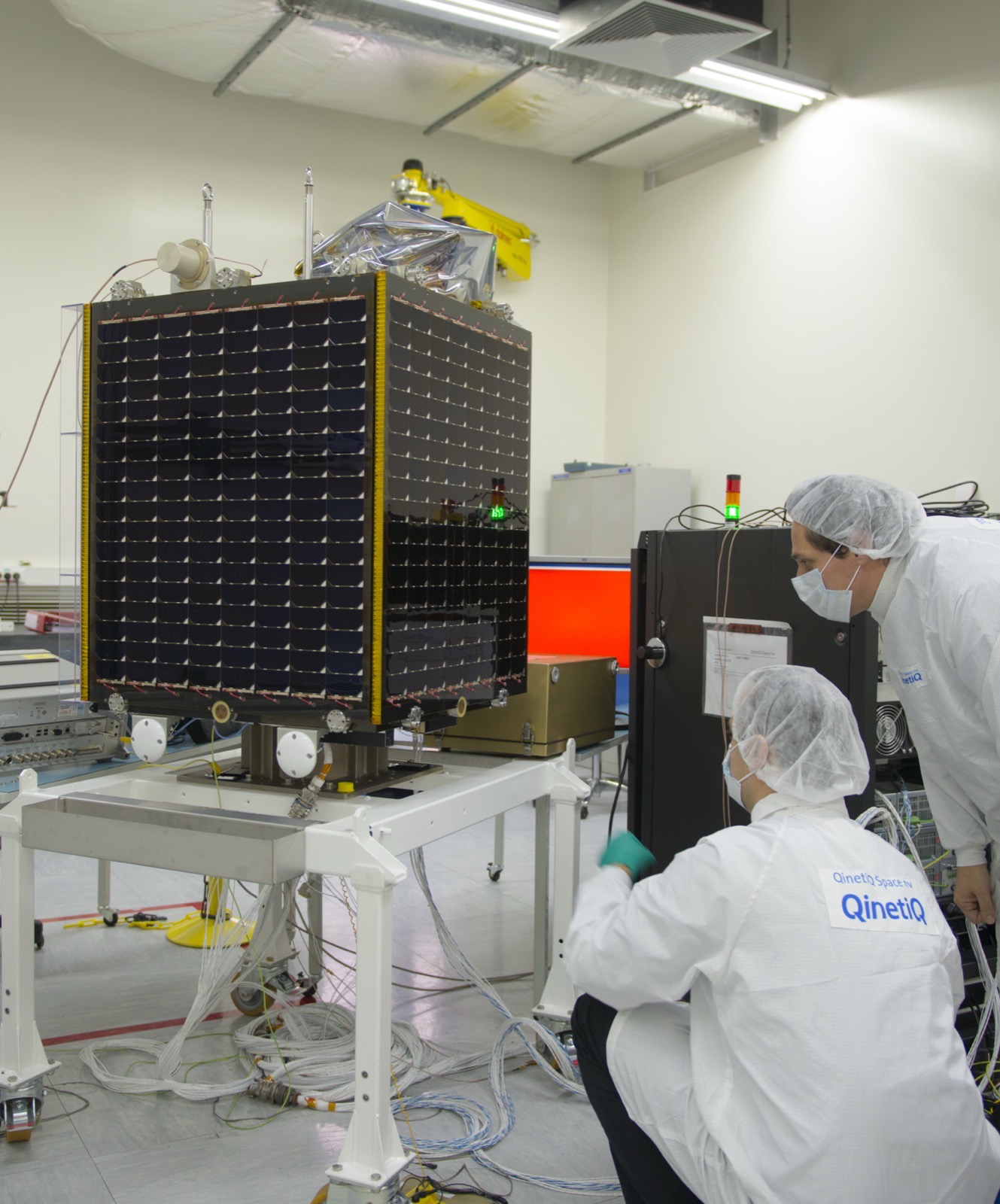
  • Lunar Reconnaissance Orbiter (LRO)

    NASA Goddard Space Flight Center

    AluminiumTempered steel wire frame and steel-ring wrist hingeMultilayer insulation
    Where each one is used

    Aluminium. Here: Hard upper torso (cuirass); Rigid backpack (satchel) shell. There: Primary structure (heating/cooling panel, edge members, fittings, brackets); Optical-bench heater aluminum tape and more.

    Tempered steel wire frame and steel-ring wrist hinge. Here: Glove palm frame and wrist hinge (Orlan-M design); Main and backup oxygen tanks (BK-3 units: tank, valve and two-stage reducing valve). There: Battery cell can.

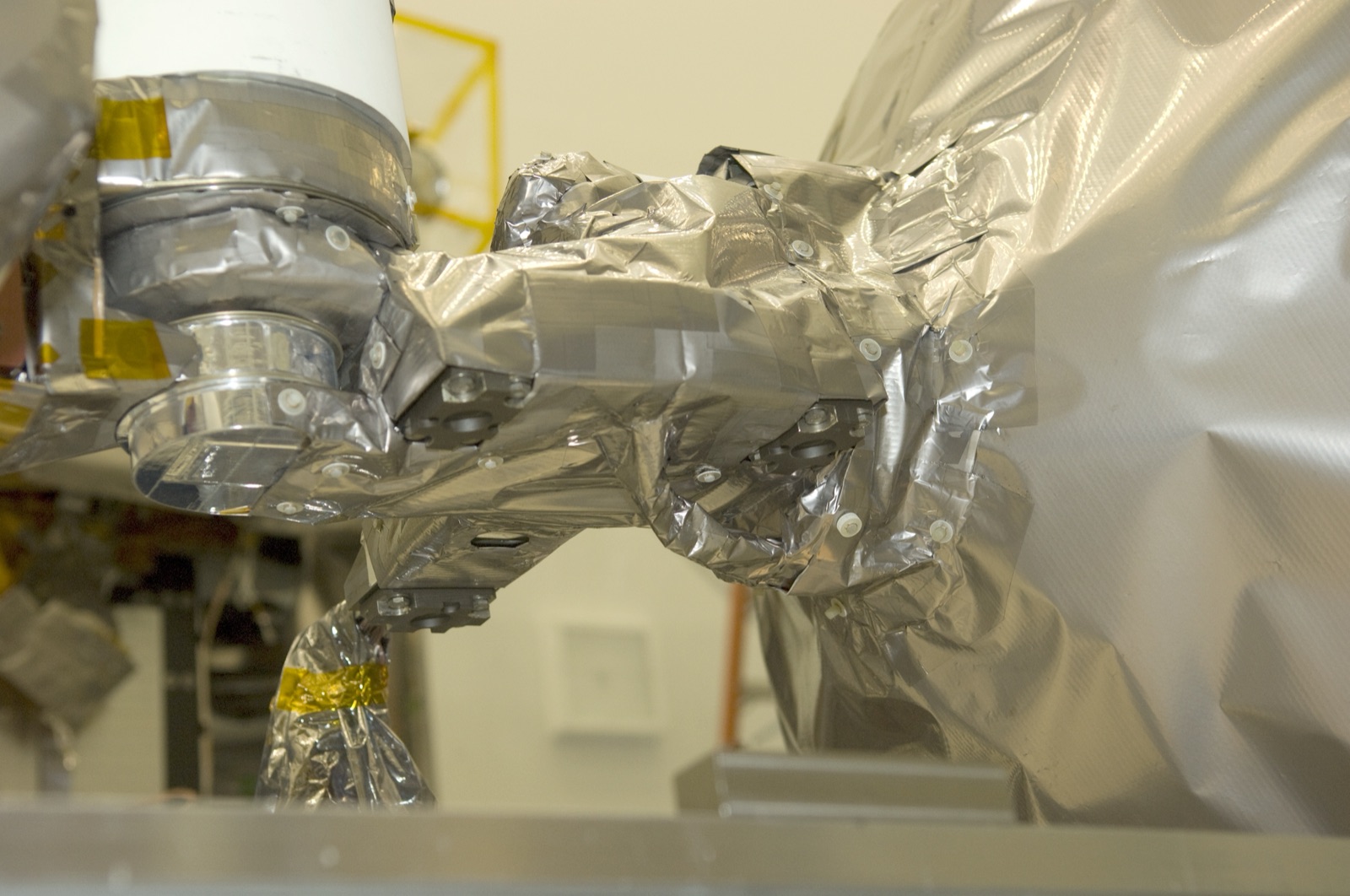
    Multilayer insulation. Here: Thermal insulation. There: High Gain Antenna multi-layer insulation and heaters.

  • Proba-V

    ESA

    AluminiumMultilayer insulation
    Where each one is used

    Aluminium. Here: Hard upper torso (cuirass); Rigid backpack (satchel) shell. There: Telescope (structure and mirrors, 3 telescopes).

    Multilayer insulation. Here: Thermal insulation. There: Instrument thermal wrap.

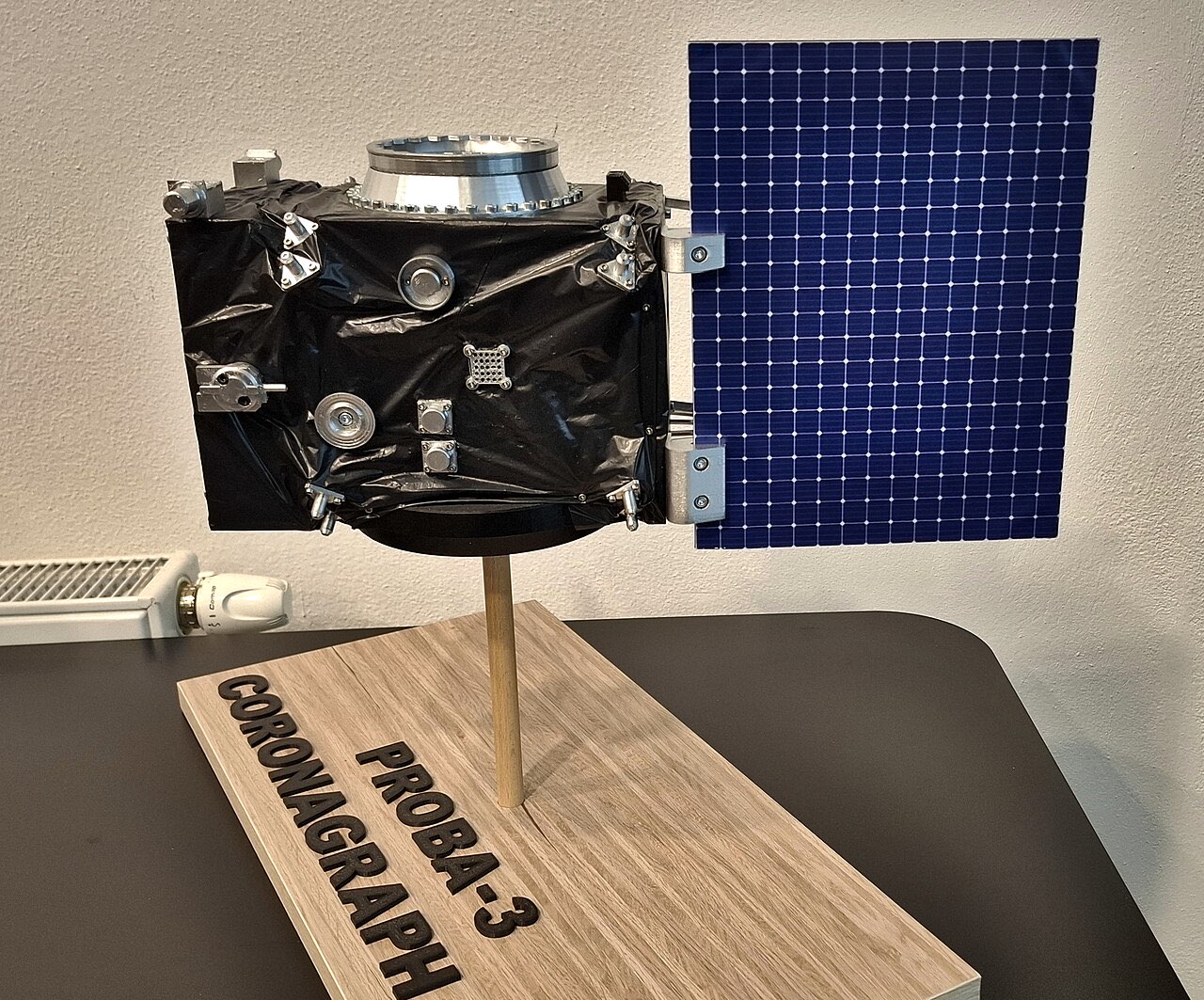
  • Proba-3 Coronagraph spacecraft

    ESA / Airbus

    AluminiumMultilayer insulation
    Where each one is used

    Aluminium. Here: Hard upper torso (cuirass); Rigid backpack (satchel) shell. There: Main structure tube; Equipment box (EQB) and more.

    Multilayer insulation. Here: Thermal insulation. There: Outer thermal blanket (both spacecraft).

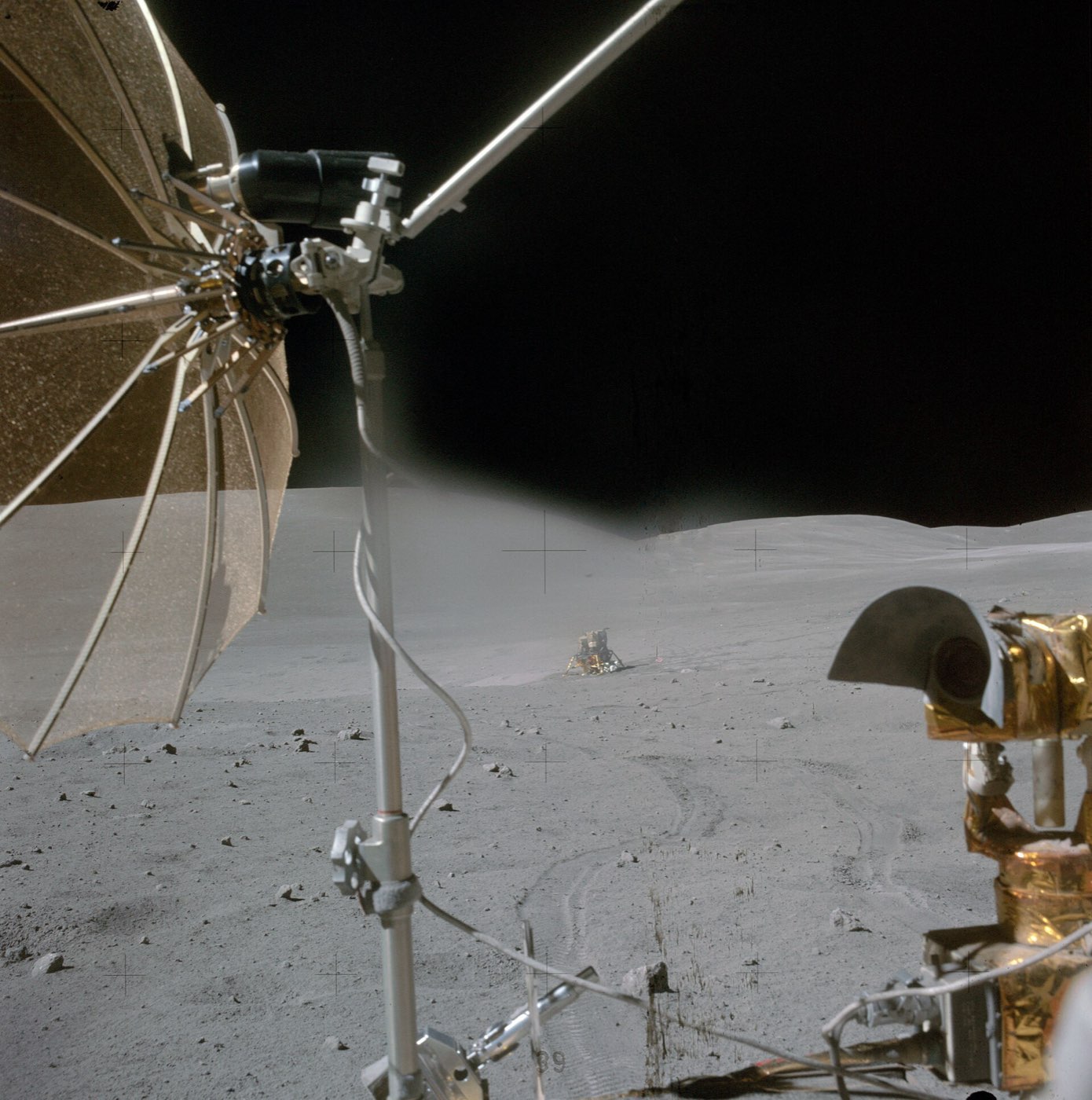
  • Apollo Lunar Module (LM)

    Grumman / NASA

    AluminiumVelcro and cord
    Where each one is used

    Aluminium. Here: Hard upper torso (cuirass); Rigid backpack (satchel) shell. There: Cabin front-face, RCS cluster trusses, decks and bulkheads; Micrometeoroid shield and more.

    Velcro and cord. Here: Cord and velcro fastened covers for body, sleeves, legs, backpack and consoles (Orlan-M design). There: Crew compartment deck Velcro pile.

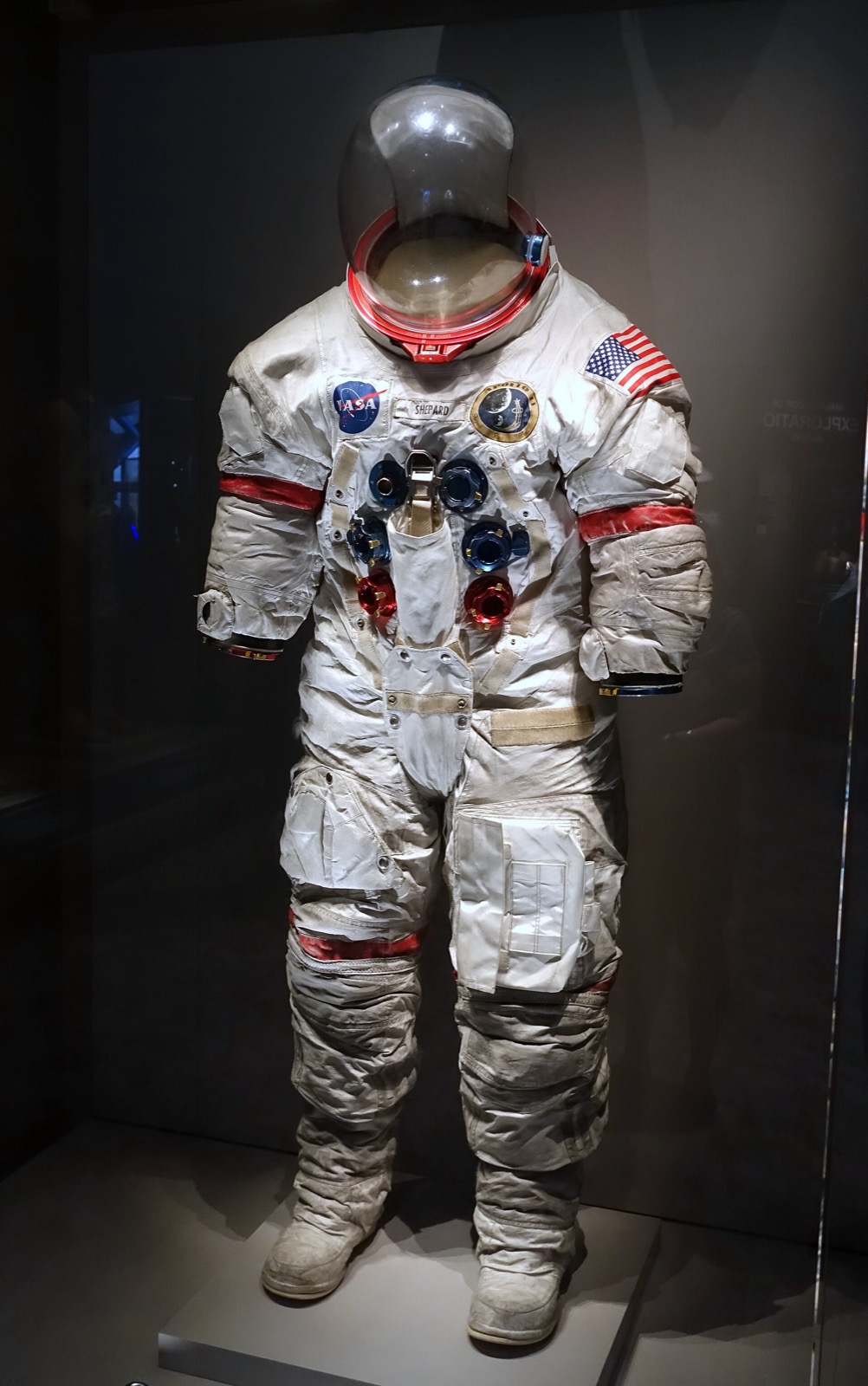
  • Apollo A7L spacesuit

    ILC Industries

    AluminiumCotton knit
    Where each one is used

    Aluminium. Here: Hard upper torso (cuirass); Rigid backpack (satchel) shell. There: Connectors, neck ring and wrist locking rings.

    Cotton knit. Here: Cotton underwear-coveralls and absorbent shorts (Orlan-M design). There: Constant Wear Garment (undergarment).

  • Apollo Command and Service Module

    North American Aviation

    AluminiumTempered steel wire frame and steel-ring wrist hinge
    Where each one is used

    Aluminium. Here: Hard upper torso (cuirass); Rigid backpack (satchel) shell. There: Radial beams; Crushable ribs (x4) and more.

    Tempered steel wire frame and steel-ring wrist hinge. Here: Glove palm frame and wrist hinge (Orlan-M design); Main and backup oxygen tanks (BK-3 units: tank, valve and two-stage reducing valve). There: Crew couch frames (x3); Couch shock-attenuating struts (x8).

What we do not know

Public descriptions come from a blog and from news and magazine articles, not from NPP Zvezda or Roscosmos, and some may describe the Orlan suits in general rather than this model. The restraint layer, visor, boots and gloves have no published materials.

The detailed data

What is written above is built from these numbers and quotes. Each row links to the page it was taken from. Get all of it as JSON, or ask our MCP server.

Features

  • Semi-rigid suit with a solid torso and flexible arms, rear hatch entry
  • Fully automated thermal control system with manual override
  • Polyurethane pressure shells replace rubber to extend service life

Specifications

WhatValue
Mass110 kg (240 lb)
Mass (Roscosmos-linked press)about 110 kg
Operating pressure400 hPa (5.8 psi); about 0.4 atm
Primary life support7 hours
Service life6 years; 15 to 20 EVAs
In serviceISS, since 2017
Cosmonaut height range165 to 190 cm
Heat removal capacityAverage 300 kcal/h; maximum 600 kcal/h
EVA length quoted by RussianSpaceWebUp to nine hours
Backup pressure layerDropped on the MKS because the polyurethane layer resists failure
Polyurethane layer originReportedly bought in Belgium (supplier not named)
Hermetic shell temperature range (No. 6)-150 C to +120 C
ASTR water inlet and gas temperature rangesWater 5 to 30 C; suit gas held at 5 to 20 C
ASTR first useEVAs 43, 44, 45 and 46 from the Russian segment
Peak body heat outputUp to 800 W during hard work
Self-entry time (Orlan-M manual)2 to 3 minutes without assistance
Cuirass alloy named for the Orlan familyAMg-3 aluminium alloy (family-level statement, not MKS-specific)
DeliveriesNo. 6 on Progress MS-30 (28 Feb 2025); No. 7 on Progress MS-32 (11 Sep 2025); No. 8 on Progress MS-34 (April 2026)
Fleet ruleThree suits kept on the station: two main and one reserve
Replacement price (July 2021)About 370 million rubles
Possible future upgradesJet-propelled rescue system and helmet-projected display (Zvezda, 2018)

Materials in detail

Each material named in the sources: where it is used here, which other products use it, and its key numbers when its material page exists.

  • Polycarbonate (bisphenol-A)

    Used in 3 partsHelmet · Double-pane primary helmet window with protective glass (Orlan-M design) · Top helmet window (Orlan-M design)

    Be tough
    55 J puncture energy at 23 °C
    Let light through
    89 % luminous transmittance
    Stay stiff
    2400 MPa tensile modulus
    Also in 1 other product
  • Aluminium

    Used in 2 partsHard upper torso (cuirass) · Rigid backpack (satchel) shell

    Weight
    2.7 g/cm3
    Electrical conduction
    2.6458 µΩ·cm
    Heat conduction
    220 W/(m·K)
    Also in 33 other products
  • Kapron fabric (Russian polyamide fibre; named only 'kapron' in the manual)

    kapron-fabric

    Used in 2 partsKapron inner liner with ventilation-pipe casings (Orlan-M design) · Safety tethers with hooks

    Material page coming soon
  • Polyvinyl chloride exhaust pipes

    polyvinyl-chloride

    Used in 2 partsVentilation duct network (helmet manifold, exhaust pipes, ventilation insoles) (Orlan-M design) · Liquid cooling garment KVO-M (blue; black on suits No. 6 and 7)

    Material page coming soon
  • Tempered steel wire frame and steel-ring wrist hinge (grade not stated)

    steel-grade-unstated

    Used in 2 partsGlove palm frame and wrist hinge (Orlan-M design) · Main and backup oxygen tanks (BK-3 units: tank, valve and two-stage reducing valve)

    Material page coming soon
  • Multilayer insulation (MLI) blanket, aluminized Mylar and Kapton

    Used in 1 partThermal insulation

    Radiative shielding
    0.03 typical, 0.05 maximum
    Temperature under heating
    110 °C at 15 min
    Continuous temperature range
    93 °C (Mylar) and 288 °C (Kapton)
  • Cermet (metal-ceramic) porous element

    cermet-porous-sublimator-element

    Used in 1 partHeat exchanger-sublimator with porous cermet plate

    Material page coming soon
  • Cotton knit

    cotton

    Used in 1 partCotton underwear-coveralls and absorbent shorts (Orlan-M design)

    Also in 1 other product
    Material page coming soon
  • Gold

    Used in 1 partMovable light filter (sun visor)

    Weight and heat
    19.3 g/cm3
    Electrical conduction
    4.5e7 S/m
    Heat conduction and expansion
    320 W/(m K)
    Also in 1 other product
  • Lavsan fabric (the Sokol page of the same source equates Lavsan with Dacron)

    dacron-polyester

    Used in 1 partLoad-bearing (restraint) layer of the soft shells (Orlan-M design)

    Also in 1 other product
    Material page coming soon
  • Lithium hydroxide CO2 absorber with a kupramite contaminant layer (Orlan-M)

    lithium-hydroxide-co2-absorber

    Used in 1 partLithium-hydroxide absorbent cartridge LP-9 with dust filters and contaminant layer

    Material page coming soon
  • Metallised polyethylene phthalate film screens with kapron net spacers

    metallised-pet-film

    Used in 1 partVacuum-screen thermal insulation package per the Orlan-M manual

    Material page coming soon
  • Natural leather soles and lining; phenylon outer layer

    natural-leather

    Used in 1 partBoots (Orlan-M design)

    Material page coming soon
  • Natural rubber main shell, about 0.6 mm (Orlan-M)

    natural-rubber

    Used in 1 partGlove main and reserve pressure shells (Orlan-M design)

    Material page coming soon
  • Phenylon (aramid) fabric

    phenylon-aramid-fabric

    Used in 1 partOuter shell fabric

    Material page coming soon
  • Plexiglass

    plexiglass

    Used in 1 partPlexiglass protective casing over the metal helmet and light filter (Orlan-M design)

    Material page coming soon
  • Polyurethane

    polyurethane-pressure-bladder

    Used in 1 partPressure bladder, sleeves and legs

    Material page coming soon
  • Polyvinyl formal porous capillary material

    polyvinyl-formal

    Used in 1 partMoisture collector and cermet moisture separator (Orlan-M design)

    Material page coming soon
  • Rubberized fabric tank shell (Orlan-M); polyethylene foam filter element

    rubberized-fabric

    Used in 1 partSoft water tank with pressure reducer RT-3M and FOR-3 filter (sublimator feed)

    Material page coming soon
  • Velcro and cord

    velcro

    Used in 1 partCord and velcro fastened covers for body, sleeves, legs, backpack and consoles (Orlan-M design)

    Material page coming soon

Every part we have

Torso, pressure layer, outer fabric and insulation materials come from secondary or popular sources; no manufacturer datasheet found. Components, suppliers and links were added from public sources. A material is left blank where no source states it.

Material IDs

aluminiumpolycarbonatepolyurethane-pressure-bladderphenylon-aramid-fabricmultilayer-insulation-mlidacron-polyesterkapron-fabricgoldplexiglassnatural-rubbersteel-grade-unstatednatural-leathercottonmetallised-pet-filmvelcrolithium-hydroxide-co2-absorberpolyvinyl-formalpolyvinyl-chloridecermet-porous-sublimator-elementrubberized-fabric
Hard upper torso and helmet2
PartMaterialFinish and standardMade by
Hard upper torso (cuirass)“a single, lightweight, and extremely strong shell made of an aluminum alloy” Aluminium alloy (alloy not named)aluminium — —
Helmet“made of high-strength, impact-resistant polycarbonate” Polycarbonate (per secondary source)polycarbonate — —
Pressure layer1
Outer garment and thermal protection2
PartMaterialFinish and standardMade by
Outer shell fabric“Внешняя оболочка скафандра — ткань фенилон” Phenylon (aramid) fabricphenylon-aramid-fabric — Description given for Orlan generally; popular magazine
Thermal insulation“многослойная экранно-вакуумная теплозащита, состоящая из алюминиевой фольги и минеральных волокон” Aluminium foil and mineral fibresmultilayer-insulation-mli — —
Pressure garment and structure12
PartMaterialFinish and standardMade by
Rear entry hatch with backpack closure mechanism (Orlan-M design)Rear hatch the cosmonaut enters through; the occupant can pull the backpack shut alone, and Orlan-MKS still uses a rear hatch“The backpack closure device allows a cosmonaut in the spacesuit to independently pull the backpack against the entry hatch and subsequently to close it.” Not said — —
Primary and reserve elastic pressurization hoses at the backpack-to-torso seal (Orlan-M design)Inflatable seals around the entry hatch; an outer reserve hose backs up the inner primary hose“the interior (primary) hose is backed up by an exterior (reserve) one” Not said — —
Onboard mounting ring, central pin and wedge brackets (Orlan-M design)Fixings that secure the suit on board the station and in the airlock“The lower portion of the body has a load-bearing element, a ring, to secure the spacesuit onboard the station.” Not said — —
Rigid backpack (satchel) shellAluminium backpack shell that also gives radiation shielding for the organs, per NPP Zvezda's general director“The Orlans have a rigid cuirass and a rigid satchel, made of aluminum with a thickness of more than 1 mm.” Aluminium, over 1 mm thick (alloy not stated)aluminium — —
Soft arm shells (sleeves) with length-adjustment bands (Orlan-M design; removable sleeves planned for MKS)Pressurised arms; the stiffer polyurethane MKS sleeves fold on short-armed users, so Zvezda plans removable sleeves in individual sizes“One of them is to make sleeves easily removable, which makes it possible to put sleeves with individual sizes for a particular cosmonaut.” Not said — —
Soft leg shells bolted to the torso flange (Orlan-M design)Pressurised legs whose length is set at the body, hip and ankle; replaceable when damaged“A rigid flange is installed on the upper edge of the leg shell” Not said — —
Load-bearing (restraint) layer of the soft shells (Orlan-M design)Outer fabric layer that takes the load from internal pressure and holds the soft sections to shape“The exterior layer of the shell, which absorbs loads from the interior delta pressure, is made of lavsan and is called the load-bearing element.” Lavsan fabric (the Sokol page of the same source equates Lavsan with Dacron)dacron-polyester — —
Kapron inner liner with ventilation-pipe casings (Orlan-M design)Liner inside the pressure shells that guides the ventilation pipes“A lining made from kapron fabric is attached to the inside of the pressurized shells.” Kapron fabric (Russian polyamide fibre; named only 'kapron' in the manual)kapron-fabric — —
Pressurised bearings and soft hinges at shoulder, elbow and wrist (Orlan-M design)Rotating sealed joints and folded hinges that keep the arms mobile under pressure“the spacesuit is equipped with pressurized bearings and soft joints” Not said — —
Hip, knee and ankle soft hinges with ankle pressurised bearings (Orlan-M design)Leg joints; the ankle bearings also let the body rotate about its axis“The spacesuit hip hinge is a bellows-type corrugated hinge.” Not said — —
Pressure relief (safety) valve PK-0.45 (Orlan-M design)Vents oxygen when suit pressure rises above 0.42 kgf/cm2; on the right side of the Orlan-MK“When the spacesuit pressure exceeds a value greater than 0.42 kgf/cm2, the ПК-0.45 safety valve is automatically triggered” Not said — —
Removable delta-pressure indicator (Orlan-M design)Indicator on the torso showing suit overpressure“Removable spacesuit delta pressure indicator (УДСК)” Not said — —
Helmet, visor and lighting9
PartMaterialFinish and standardMade by
Double-pane primary helmet window with protective glass (Orlan-M design)Two sealed panes with a dry-nitrogen gap, plus a separate protective glass that keeps the inner pane warm and un-misted“the window is made of two pressurized windows connected along the contour with a separation of around 8 mm” Polycarbonate, about 3 mmpolycarbonate — —
Movable light filter (sun visor)Raisable filter that protects eyes and face from solar radiation; gold-coated on the Orlan-MK“The spacesuit visor has a movable light filter which protects the cosmonaut's eyes and face from solar radiation.” Gold coating on the light filter (Orlan-MK, general article)gold — —
Top helmet window (Orlan-M design)Extra window in the top of the helmet that widens the upward field of view“The top part of the helmet has an additional window manufactured just like the primary window.” Polycarbonatepolycarbonate — —
Plexiglass protective casing over the metal helmet and light filter (Orlan-M design)Guards the open filter and helmet shell against contact with sharp objects“are protected from contacts with sharp object contacts by a special plexiglass casing” Plexiglassplexiglass — —
Ventilation collector inside the helmet (Orlan-M design)Directs air along the visor to dry, warm or cool it and to ventilate the breathing zone“a ventilation collector is located in the respiration area inside the helmet” Not said — —
Helmet lights (x2)Lights on the helmet shell for work in the shaded part of the orbit; LED lamps since 2007“From then, a different type of light with 42 diode lamps in each light was used.” Not said — —
Video recording system with on-camera lights (Orlan-MKS No. 6 and 7)Records the spacewalk from the suit“Attached to the suit are a video recording system, on-camera lights, and a light filter” Not said — —
Valsalva ear-clearing device inside the helmet (Orlan-MK)Pad inside the helmet that lets the wearer pinch the nose to clear the ears during pressure changes“Внутри шлема встроена «Вальсальва» — устройство для продувки ушей при изменениях давления в скафандре” Not said — —
Sleeve mirrors (Orlan-MKS)Mirrors on the sleeves for reading controls and instruments that cannot be seen directly“Mirrors help monitor the position of controls and instruments, as it is impossible to see oneself from inside the suit.” Not said — —
Gloves4
PartMaterialFinish and standardMade by
Pressure gloves GP-10 with removable glove connector (Orlan-M design)Removable pressure gloves, made in two finger-length sizes, locked to the sleeve wrist bearing with four locking rings“The ГП-10 gloves are made in two sizes depending upon the length of the fingers.” Not said — —
Glove main and reserve pressure shells (Orlan-M design)Dipped natural-rubber main shell with a rubberised-fabric reserve shell that engages when the main shell fails“The reserve (internal) pressurized shell is made from rubberized fabric and automatically engages when the main shell malfunctions.” Natural rubber main shell, about 0.6 mm (Orlan-M)natural-rubber — —
Glove palm frame and wrist hinge (Orlan-M design)Steel wire palm frame and steel-ring wrist hinge that give wrist bending and a concave palm“The frame is made of tempered steel wire” Tempered steel wire frame and steel-ring wrist hinge (grade not stated)steel-grade-unstated — —
Protective outer glove with rubber fingertip caps (Orlan-M design)Thermal and abrasion cover with vacuum-screen insulation, phenylon shell and gripping rubber on fingertips and palm“There are rubber caps at the finger tips of the protective shell to improve the tactile feel.” Not said — —
Boots and under-garments2
PartMaterialFinish and standardMade by
Boots (Orlan-M design)Boot covers that protect the restraint layer and hold the foot at the work place“The soles are made of two layers of natural leather with thickness of 4 mm each.” Natural leather soles and lining; phenylon outer layernatural-leather — —
Cotton underwear-coveralls and absorbent shorts (Orlan-M design)Worn under the water-cooling garment; the shorts hold about 300 ml of urine“The underwear-coveralls are made of a cotton knitted fabric.” Cotton knitcotton — —
Thermal garment and outer cover3
PartMaterialFinish and standardMade by
Vacuum-screen thermal insulation package per the Orlan-M manualReflective screens under the phenylon cover; this manual names metallised polyester film, whereas the catalog's existing row cites foil and mineral fibres from a general article“Vacuum-screen thermal insulation (VSTI) which constitutes a package of thin layers of metallized polyethylene phthalate film with a high reflective capacity.” Metallised polyethylene phthalate film screens with kapron net spacersmetallised-pet-film — —
Cord and velcro fastened covers for body, sleeves, legs, backpack and consoles (Orlan-M design)Outer-garment pieces tied and velcroed onto the suit“All the parts are secured to the spacesuit by cord and velcro fasteners.” Velcro and cordvelcro — —
Radio-fabric antenna layer in the outer garmentTwo sheets of radio fabric between the restraint shell and the insulation form the suit antenna“The antenna consists of two sheets of radio fabric separated by a dielectric with two power assemblies.” Not said — —
Life support: oxygen and pressure control4
PartMaterialFinish and standardMade by
Main and backup oxygen tanks (BK-3 units: tank, valve and two-stage reducing valve)Two gaseous-oxygen units in the backpack; the manual describes 2-litre tanks at up to 420 kgf/cm2“Operational pressure in the main and backup oxygen tanks” Steel alloy housing with fiberglass braiding (Orlan-M)steel-grade-unstated — —
Suit pressure regulators (RDS, main and backup, aneroid) (Orlan-M design)Automatically start and stop oxygen feed as suit pressure falls and rises“The РДС spacesuit pressure regulator is intended for automatic spacesuit oxygen feed activation and deactivation depending on the absolute pressure in the spacesuit.” Not said — —
Oxygen injector assembly (Orlan-M design)Oxygen jet that circulates gas if the fan or power fails and raises oxygen flow after a leak“The injector assembly creates gas circulation in the spacesuit when there is a fan malfunction or cutoff of electric power” Not said — —
Pneumohydraulic control console (PGPU-1M) with emergency oxygen feedChest console for tank switching, regulator and injector modes, water-temperature valve and the manual emergency oxygen feed“spacesuit pneumohydraulic control console (ПГПУ-1М, Пневмогидропульт управления) with emergency oxygen hose” Not said — —
Life support: ventilation and CO2 removal4
PartMaterialFinish and standardMade by
Lithium-hydroxide absorbent cartridge LP-9 with dust filters and contaminant layerRemoves CO2 and trace contaminants from the circulating oxygen; the MKS thermal controller reads the CO2 difference across the cartridge“Carbon dioxide absorption occurs by means of the chemical reaction of the lithium hydroxide with the carbon dioxide.” Lithium hydroxide CO2 absorber with a kupramite contaminant layer (Orlan-M)lithium-hydroxide-co2-absorber — —
Ventilation fans (main and backup, brushless motors)Circulate suit gas through the absorber and sublimator; the backup starts automatically if the main fails“The system uses two fans, a main and a backup.” Not said — —
Moisture collector and cermet moisture separator (Orlan-M design)Captures sweat condensate from the gas and feeds it to the sublimator as coolant“The moisture collector is made of a porous capillary material (polyvinyl formal)” Polyvinyl formal porous capillary materialpolyvinyl-formal — —
Ventilation duct network (helmet manifold, exhaust pipes, ventilation insoles) (Orlan-M design)Delivers all ventilation gas to the helmet and draws it back from the arms, legs and insoles“polyvinyl chloride pipes which run to the upper extremities, to the wrist pressurized bearings, to the legs, and to the ventilation insoles” Polyvinyl chloride exhaust pipespolyvinyl-chloride — —
Life support: cooling and water loop8
PartMaterialFinish and standardMade by
Heat exchanger-sublimator with porous cermet plateRejects body and gas heat to vacuum by freezing and subliming water in a porous plate at the rear of the suit“The basic element of the heat exchanger-sublimator is the porous element made by rolling or baking of cermet powder.” Cermet (metal-ceramic) porous elementcermet-porous-sublimator-element — —
Soft water tank with pressure reducer RT-3M and FOR-3 filter (sublimator feed)Holds the distilled water that is sublimated for cooling and meters it at a constant 0.21 kgf/cm2“The soft water tank stores the reserve of distilled water used as the coolant in the spacesuit thermal control system.” Rubberized fabric tank shell (Orlan-M); polyethylene foam filter elementrubberized-fabric — —
Water circulation pumps (main and backup, centrifugal)Circulate cooling water through the garment; the pumps sit in the backpack“В ранце находятся насосы.” Not said — —
Hydraulic accumulator with centrifugal gas-bubble separator (Orlan-M design)Keeps the water loop under positive pressure and removes gas bubbles“The hydraulic accumulator with separator maintains positive pressure in the water cooling system” Not said — —
Manual water-temperature valve (hydraulic regulator), kept as override on the MKSSeven-position warm/cold handle that routes water through or around the sublimator heat exchanger“В окончательной схеме водяного контура охлаждения СК «Орлан-МКС» оставлена возможность перехода на ручное регулирование в любой момент ВКД.” Not said — —
ASTR automatic thermal-control valves (x2: heat-exchanger line normally closed, bypass normally open)Two solenoid valves that route water to or around the sublimator according to the wearer's estimated energy use“Исполнительными агрегатами являются два электромагнитных клапана” Not said — —
ASTR electronic control unit (Orlan-MKS)Runs the stored program that drives the ASTR valves; in the 2012 test suit it sat outside the suit“Есть еще электронный блок управления, агрегат, который управляет этими клапанами” Not said — —
Liquid cooling garment KVO-M (blue; black on suits No. 6 and 7)Mesh coverall with water tubes worn under the suit to carry body heat to the backpack“The water-cooled suit (KBO) is a heat-exchange device intended for direct removal of heat from the operator’s body.” Welded polyvinyl chloride pipes (2x1 mm) in elastic woven mesh coverallspolyvinyl-chloride — —
Power, communications, displays and controls9
PartMaterialFinish and standardMade by
Independent power supply 825M1 (27 V) in the radio-telemetry unit (Orlan-M design)Battery pack for fans, pumps, radio and telemetry when the suit is off the umbilical; chemistry not stated in the source“Power supply 825M1 in the radio telemetry unit (БРТА) is an independent source.” Not said — —
Radio-telemetry unit BRTA at the bottom of the backpack (Orlan-M design)Removable unit on the unpressurised backpack base holding radio, telemetry and the independent power supply; replaced by a computer in the Orlan-MK“provided by the radio telemetry equipment unit (БРТА), which is attached to the unpressurized portion on the bottom of the backpack” Not said — —
Onboard computer with 50-parameter self-test (Orlan-MKS)Tests the suit by 50 parameters and reports faults and recommended actions“Тестирование работы скафандра компьютером идет по 50 параметрам” Not said — —
Enlarged colour LCD display (Orlan-MKS; Russian-made display from suit No. 6)Chest display of suit status and fault advice; larger than on the Orlan-MK“An enlarged color display with increased viewing and informational capacity” Not said — —
Electrical control console PO-5M (Orlan-MKS; PO-4MT on the Orlan-M)Panel of switches for power, fans, pumps, radio and lights, with the ASTR controls and the new display on the MKS“Пульт управления электроагрегатами СК «Орлан-МКС» ПО-5М с новыми органами управления системой автоматического регулирования АСТР и новым дисплеем” Not said — —
Caution and warning: helmet-visor LEDs and audible alarmAudio alarms backed up by visual indicators for leaks, low oxygen and low ventilation“Audio emergency signaling in the spacesuit is backed up by a visual system.” Not said — —
Korona-M radio set (main and backup half-sets) and antenna-feeder deviceTwo-way voice link with the other cosmonaut and the core module“radio set supports radio communications in both simplex and duplex modes and consists of the main and backup half-sets” Not said — —
ShL-10 headset with emergency tone generatorsCosmonaut headset; the radio set sends emergency tones to it“an emergency signal is sent to the headset by the radio set audio generators” Not said — —
Telemetry and medical monitoring: Tranzit set, Beta-08 amplifier, IK-0702M measurement systemSends physiological and suit-system data; the IK-0702M tracks 8 independent channels including CO2 and gas flow“The ИК-0702 measurement system monitors the spacesuit independent life support system operating parameters over 8 mutually independent channels.” Not said — —
Tethers and rescue2
PartMaterialFinish and standardMade by
Safety tethers with hooksKeep the cosmonaut attached to the outside of the station; the Orlan-MKS reports three tether springhooks“Safety is ensured by three safety tether springhooks.” Kapron bands (Orlan-M)kapron-fabric — —
Attachment fixtures for USK self-rescue device and SAFER (Orlan-M design)Torso fixtures to carry a cosmonaut self-rescue unit“On the cuirass are fixtures for attachment of the USK, Cosmonaut Self-Rescue Device” Not said — —
Airlock and station interfaces3
PartMaterialFinish and standardMade by
Integrated umbilical connector OPK-19M (oxygen, water and vent lines)Single connector that links the suit to station oxygen and cooling in the airlock before the EVA“Integrated spacesuit umbilical connector (OPK-19M, объединенный разъем коммуникации скафандра)” Not said — —
Electrical umbilicals (20 m and 2.5 m) for station power and dataBayonet-connected cables that power the suit from station systems near the airlock“The 20 m and 2.5 m electrical umbilicals are used to connect the spacesuit to the onboard cable network of orbital installations.” Not said — —
BSS-4 onboard spacesuit support panel with control unit and oxygen hosesAirlock-side panel that gives suits oxygen, pressure and cooling and adapts Russian suits to joint-airlock systems“The onboard life support system (БСС-4) resolves the compatibility issue of Russian and American spacesuits when connecting them to airlock compartment systems.” Not said — —

What the sources leave out

No NPP Zvezda or Roscosmos primary document with layer materials was reachable. The aluminium-alloy torso claim comes from a single blog (newspaceeconomy.ca) and a general Russian article that does not name the suit; alloy not named. The phenylon fabric and foil/mineral-fibre insulation quotes come from a Vokrug Sveta article that may describe the Orlan family generally. Polycarbonate helmet is from the blog only. Restraint layer, visor, boots, gloves not sourced. Wikipedia lists 110 kg for MKS. More detail: No NPP Zvezda or Roscosmos engineering drawing or bill of materials for the Orlan-MKS itself is public. Most component detail comes from the 1998 Orlan-M cosmonaut training manual (Star City, English translation), the Orlan-MK press articles and a few MKS-specific items (ASTR thermal control papers, NPP Zvezda page, TASS and RussianSpaceWeb); rows are tagged Orlan-M, Orlan-MK or MKS accordingly, and the MKS may differ in detail (for example the MKS reportedly dropped the backup pressure layer, and gloves and shells moved from rubber to polyurethane). Not found: battery chemistry and maker, camera and display makers (the display is only called Russian-made), glove heaters (none described), the polyurethane supplier (only 'Belgium'), the structure of the MKS pressure layer beyond 'polyurethane', and any supplier of the radio, pumps, fans or valves. The Pozdnyakov TASS interviews were read only through English translations on suzymchale.com. The Roscosmos 2012 page copy had broken text encoding, so the Vesti.ru copy of the same story was used. No source gave a fit with the NASA EMU as an 'alternative' relation type, so none was added. Some quoted secondary sources (RussianSpaceWeb, Naked Science, 1ru) are press articles, not engineering documents; newspaceeconomy.ca was not used for new rows because it states lithium-ion batteries and Kevlar layers that no primary source confirms.
Where this comes from

14 pages from 11 websites

More space products

Collected from public pages and documents, checked 4 Nov 2026.

Published · Updated