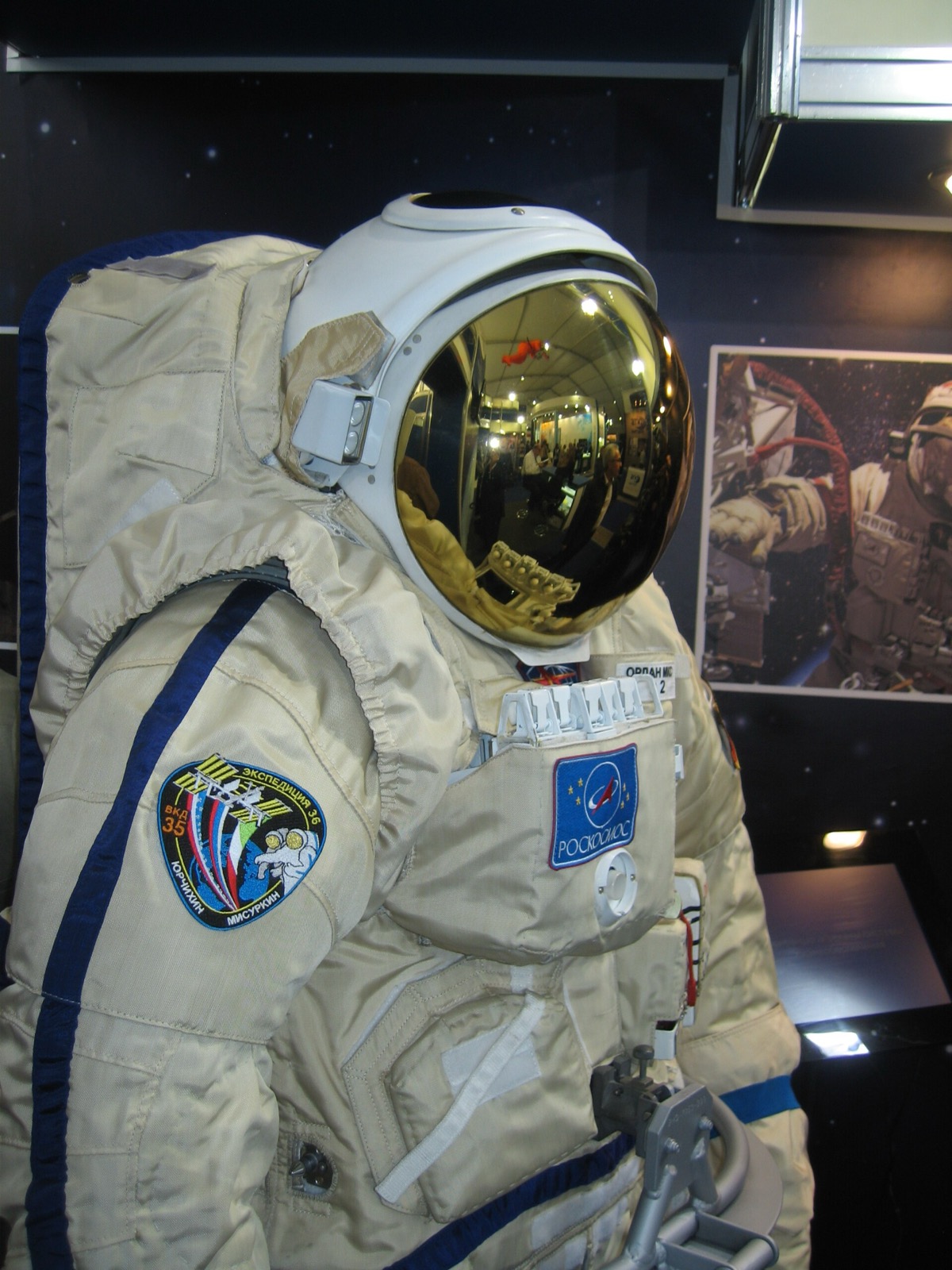
The Axiom Extravehicular Mobility Unit, or AxEMU, is the spacesuit Axiom Space is building for NASA's Artemis III mission. Astronauts will wear it to walk on the lunar surface, in the dusty, extreme-temperature south polar region. It is made under a NASA commercial services contract and derives from NASA's own xEMU suit.
The outer layer is a white material that reflects heat and protects against lunar dust. Axiom Space developed its design and materials jointly with Prada. The joints mix soft and hard parts to give a wider range of motion.
Application
Planned moonwalking suit for astronauts on the lunar surface during NASA's Artemis III mission, under a NASA commercial services contract. It is designed for the dusty, extreme-temperature south polar region.
Photos
How it is built
Outer layer
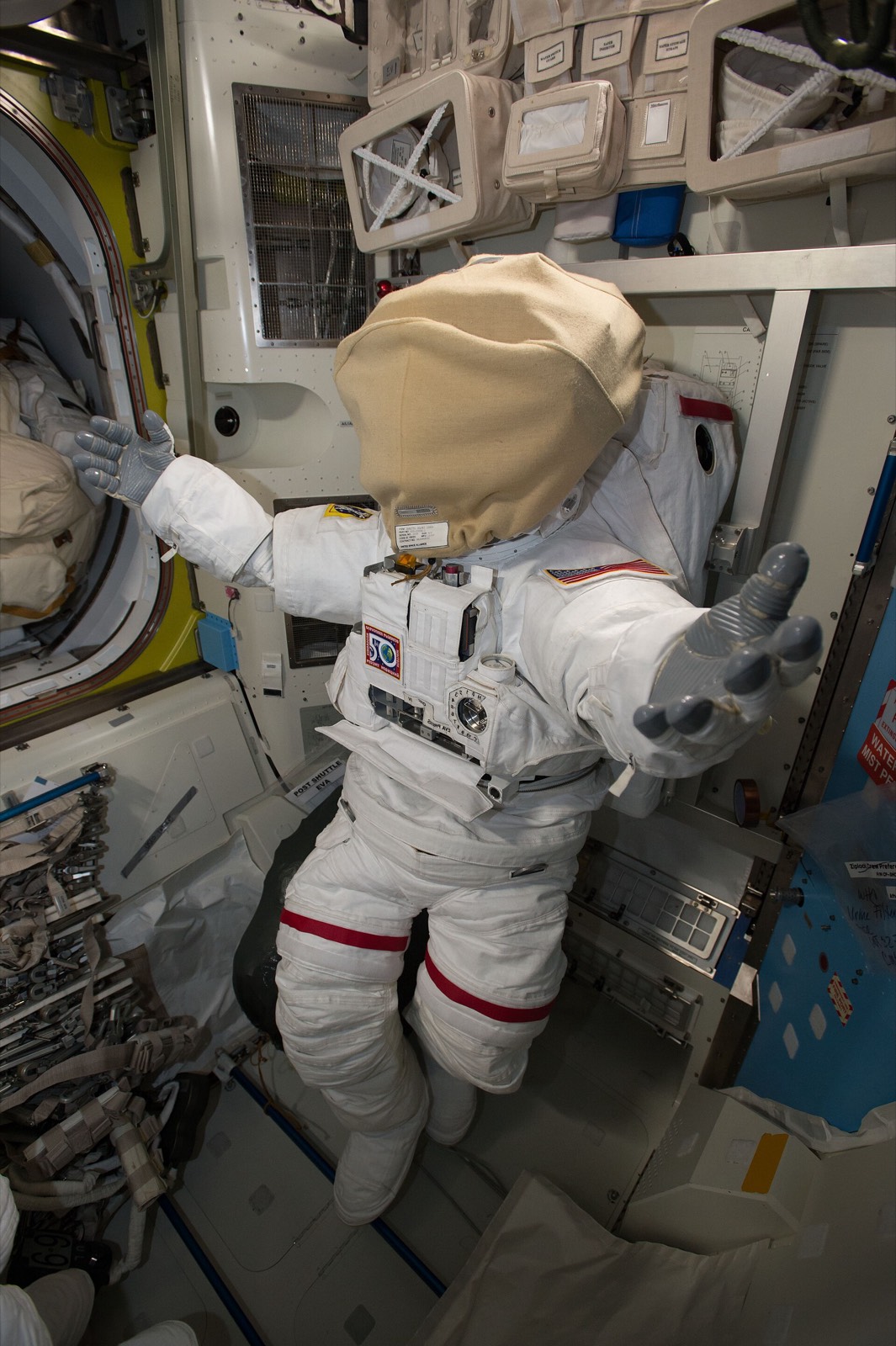
The suit's outer layer for the Moon is a white material that reflects heat and protects the astronauts from extreme high temperatures and lunar dust. Its design and materials were developed jointly with Prada. A dark cover seen on display versions is for display only.
Outer layer, lunar-surface suit
Outer layer, display version
Joints
The mobility joints combine soft and hard sections to give a greater range of motion. They belong to a design that builds on NASA's xEMU suit, with more flexibility and more protection.
Mobility joints
Backup systems and fit
The suit has multiple redundant systems, which are duplicated so that one can cover for another, and an onboard diagnostic system. It is sized to fit at least 90% of U.S. men and women.
Where the parts areNumber of parts we have listed in each group
Portable life support system (PLSS)8
Pressure garment and joints8
Vehicle, lander and surface interfaces8
Helmet, visor, lights and camera4
Cooling garment and in-suit supplies3
Communications, displays and avionics3
Outer layer2
Joints1
How it connects to other things
The AxEMU grows out of NASA's xEMU design. Axiom Space is developing it under a NASA commercial services contract for Artemis III. A prototype was first shown on 15 March 2023 at Space Center Houston, and the flight design was unveiled on 16 October 2024.
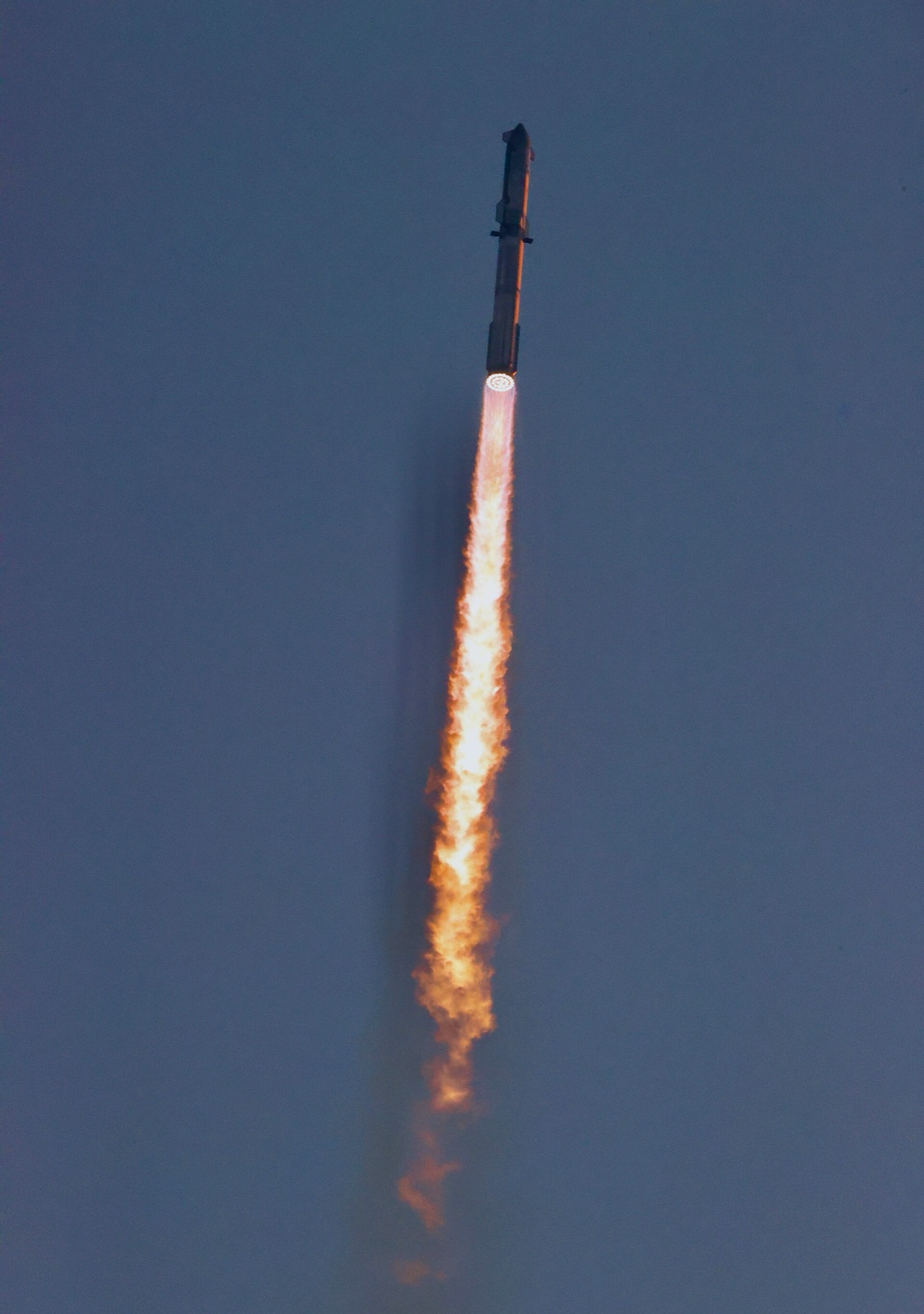
Planned lunar-lander ride; suit-lander integration tested on Starship development hardware; not flown. 2026 plans move the first lunar landing to Artemis IV
Indirect, via xEMU: NASA built the xEMU to advance the technologies of the current EMU
Built on
Exploration Extravehicular Mobility Unit (xEMU)
AxEMU builds on NASA's xEMU design and data
Made or supplied by
Prada
Outer layer (2024) and the liquid cooling and ventilation garment (2026), designed with Axiom
Oakley (EssilorLuxottica)
Visor system and secondary bubble optics
Nokia (Bell Labs)
4G/LTE device modules for the PLSS
GU Energy Labs
In-suit nutrition system
KBR
Named industry team member on the Axiom xEVAS contract; role not stated
Air-Lock
Named industry team member on the Axiom xEVAS contract; role not stated
Paragon Space Development Corporation
Named industry team member on the Axiom xEVAS contract; role not stated
Sophic Synergistics
Named industry team member on the Axiom xEVAS contract; role not stated
A-P-T Research
Named industry team member on the Axiom xEVAS contract; role not stated
David Clark Company
NASA xEMU xPGS and boots work; also an Axiom xEVAS team member, role for AxEMU not stated
Final Frontier Design
NASA xEMU boots and hip and waist joints (2020 contracts); not confirmed for AxEMU
Operated by
NASA Artemis programme
NASA Artemis astronauts are to wear the suits
What we do not know
Public pages from Axiom Space, NASA and Prada name no materials for the suit. They do not give its layers, mass, working pressure or how long a spacewalk can last.
The detailed data
What is written above is built from these numbers and quotes. Each row links to the page it was taken from. Get all of it as JSON, or ask our MCP server.
Features
Builds on NASA's xEMU design with more flexibility and protection
Features for the dusty lunar surface
Soft and hard joints
Redundant systems and onboard diagnostics
Outer layer developed jointly with Prada
Specifications
What
Value
First reveal (prototype)
15 March 2023, Space Center Houston
Flight design unveiled
16 October 2024
Sizing
fits at least 90% of U.S. men and women
EVA duration
Up to 8 hours
Cold exposure
At least 2 hours in permanently shadowed regions
Crewed pressurised test time (Nov 2025)
Over 700 hours
Crewed pressurised test time (Feb 2026)
Over 850 hours
Contractor technical review
Passed a contractor-led technical review (Feb 2026)
Planned suit fleet: qualification suits
Two qualification suits (mobility and life-support focused)
Planned suit fleet: flight suits
One ISS demo suit and two Artemis 4 flight suits
First lunar-surface use
Artemis IV, 2028
In-space test
Planned 2027 on the ISS or Artemis 3
First task order
$228 million, 7 September 2022
xEVAS contract ceiling
$3.5 billion through 2034 for all task orders
Prada partnership announced
4 October 2023
Oakley partnership announced
11 July 2025
LCVG unveiled
7 June 2026
xEMU mass estimate (May 2020)
183.6 kg (404.8 lb) for one xEMU
xEMU mass allocation for HLS
177.1 kg (390.4 lb)
xEMU end items and vendors
92 distinct end items from 27 contractors and vendors
xEMU entry (ConOps)
Rear-entry suit
xEMU EVA length (ConOps)
Up to 8 hours (6 +/- 2 hours)
xEMU planned informatics
Heads-up display type capability planned for a later phase
Every part we have
No material is named in public Axiom or NASA pages read; only a white outer layer for heat and dust is described. Components, suppliers and links were added from public sources. A material is left blank where no source states it.
Oxygen supply (xEMU xPLSS design basis)Gives the astronaut breathing oxygen; xEMU ConOps also lists a secondary oxygen supply worth about an hour“provides the astronaut with oxygen”
Oxygen circulation fan (xEMU xPLSS design basis)Fan that circulates oxygen through the suit and helps hold body temperature“incorporating a fan to circulate oxygen”
Space-to-Space Exploration EMU Radio (xEMU design basis)Suit radio; a function was added so non-critical avionics failures cannot cause critical communications failures“Space-to-Space Exploration EMU Radio”
Supplier: Astrolab (rover); Axiom Space (interfaces)
What the sources leave out
No specific materials, layers, mass, pressure or EVA duration found on Axiom (axiomspace.com), NASA or Prada pages read. Space.com article text could not be read in full. Collins Aerospace not covered. Photos not included. More detail: No AxEMU materials, layer stack, mass, operating pressure or battery data are public: Axiom and NASA pages name no fabrics, metals or cell chemistry, and Prada's 'specialized fibers' are not identified. Rows tagged 'xEMU design basis' come from NASA's 2021 OIG report IG-21-025 and the 2020 xEVA concept-of-operations slides and describe NASA's xEMU, which the AxEMU builds on; whether each detail carries over to the AxEMU is not stated, so treat them as design basis, not as confirmed AxEMU hardware. The per-component vendor chart in the OIG report (Figure 9) is an image, so only the vendors named in its text (Final Frontier Design, David Clark) are used; the 27 xEMU contractors and any AxEMU subcontractor roles (KBR, Air-Lock, Paragon, Sophic Synergistics, A-P-T Research, Arrow) are not published. Collins Aerospace is not an AxEMU supplier: it was an xEVAS awardee for the ISS suit and left that work in June 2024 (SpaceNews). Mission timing changed: older Axiom pages say Artemis III lunar landing, while Axiom's 2026 pages and Q&A say the first lunar-surface use is Artemis IV in 2028 and a 2027 flight test is planned on the ISS or Artemis 3; the Starship relation is therefore a planned lander ride only. No source ties the AxEMU lineage to the Apollo A7L, and NASA's xEVA concept of operations says the suits launch separately from the Orion crew on a cargo vehicle, Gateway module or lander, so no Orion relation is given. Not read: the New York Times June 2026 article (403), NASA's 2019 xEMU feature (old URL gone), the full Reddit AMA, and NASA technical papers on the xPLSS and pressure garment (none located before the shared web-search budget ran out). No source states glove heaters, a restraint or bladder layer, a helmet shell material or a drink bag for the AxEMU.