Up to seven passengers, four crew on NASA missions
Pressurised volume
9.3 m3 (330 cu ft)
Windows
Three
Parachutes
six (two drogues and four mains)
Launch vehicle
Falcon 9 from Launch Complex 39A
First crewed flight
Demo-2, 30 May to 2 August 2020
In short
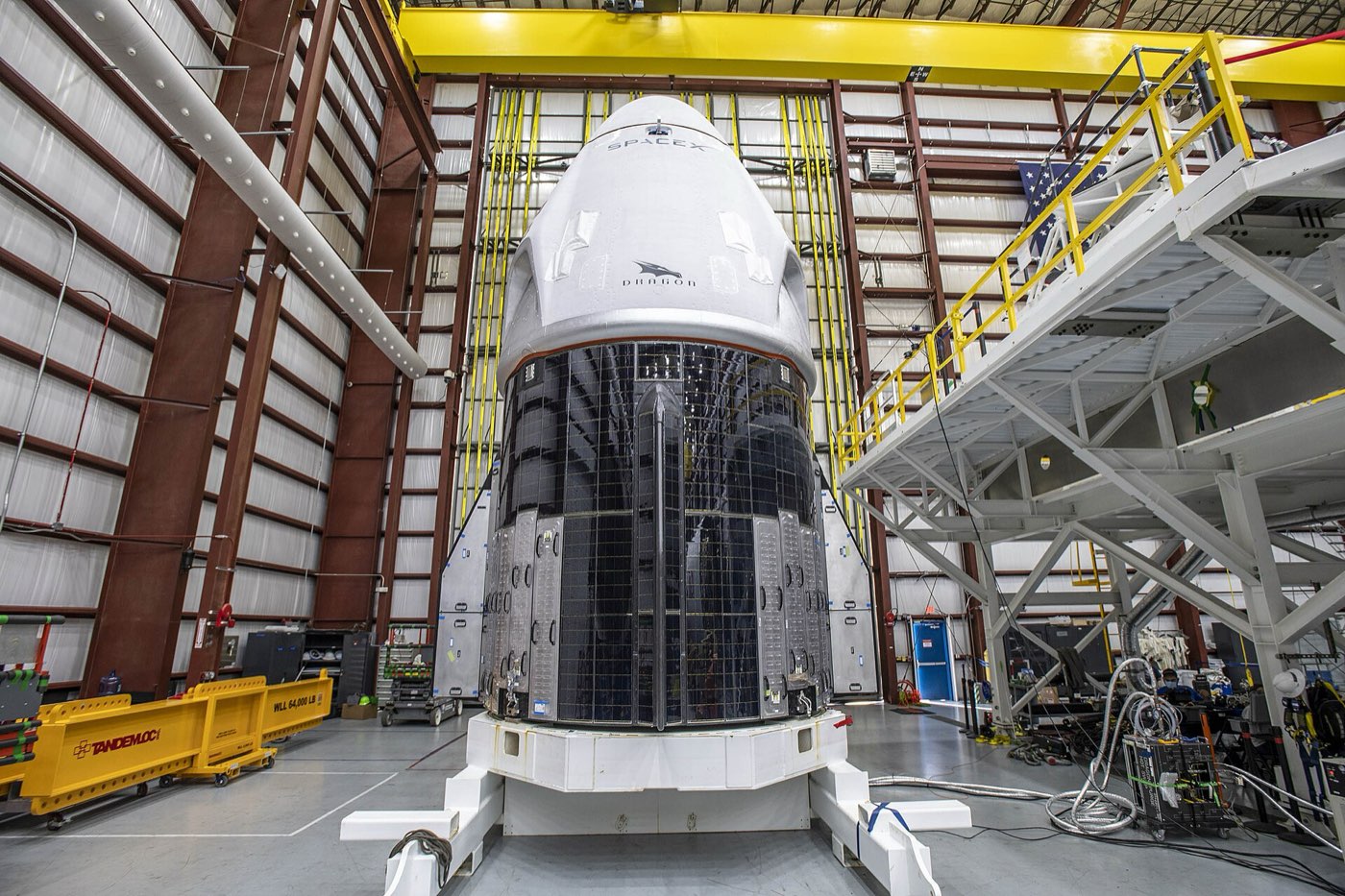
Crew Dragon is a reusable capsule built by SpaceX. Launched on a Falcon 9 rocket, it flies NASA and private astronauts to the International Space Station and back. It can seat up to seven people, but NASA missions carry up to four. On the return trip it comes down on parachutes and splashes down at sea.
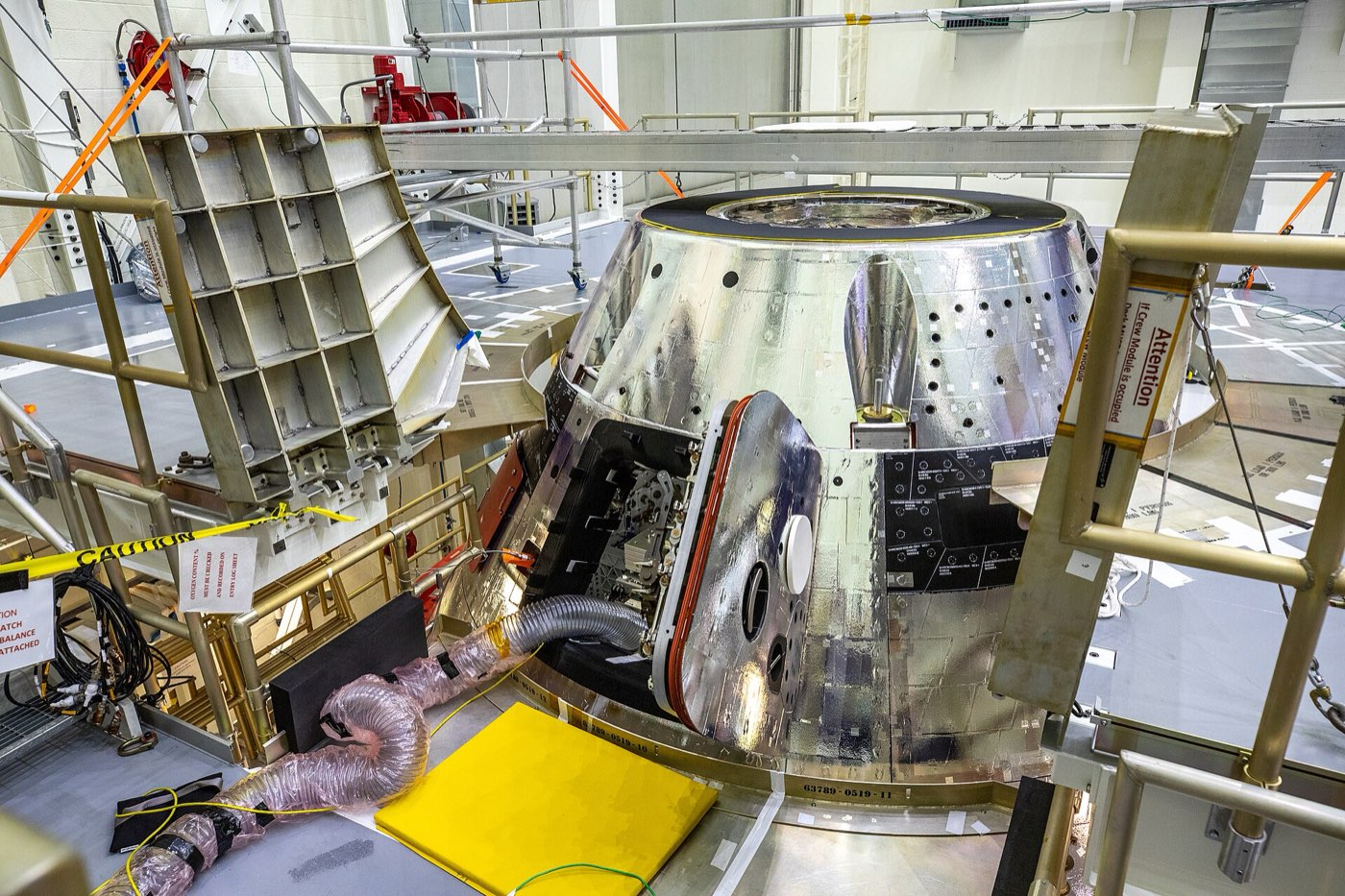
The heat shield is made of blocks of PICA-X, which is carbon felt soaked in phenolic resin, a hard plastic. It is ablative, meaning it is designed to wear away as it heats up. The eight launch-escape engines have chambers 3D printed in Inconel, a high-performance superalloy.
Application
Crew Dragon flies NASA and private astronauts to and from the International Space Station on Falcon 9. Its ablative heat shield and printed launch escape engines are the main materials stories.
Photos
How it is built
Capsule and nose cone
The capsule carries the crew and pressurised cargo. Its nose cone opens once the capsule is in orbit and is stowed again before re-entry. There are three windows, and hatches at the front and in the side.
Pressurised section
Nose cone
Windows (three)
Forward hatch
Side hatch
Trunk and power
The trunk is Dragon's second main section, and it is not pressurised. One half holds a solar array that powers the spacecraft, the other a radiator that gets rid of heat. The launch escape fins are part of it as well.
Trunk (unpressurised service module)
Trunk solar array
Trunk radiator
Launch escape fins
Heat shield and backshell
The heat shield blocks are bonded to the structure, and the gaps between them are filled. The backshell, the cover over the rest of the capsule, is a light silicone foam that comes either moulded or as blocks. The foam is a proprietary SpaceX ablative material.
Heat shield
Backshell
Thrusters and escape engines
Draco thrusters near the base of the capsule handle manoeuvring in orbit. More sit under the nose cone, next to the guidance sensors. For emergencies during launch, eight SuperDraco engines are built into the side walls, and the launch escape system is armed before liftoff.
Draco thrusters at the base of the capsule
Draco thrusters under the nose cone
Guidance, Navigation and Control (GNC) sensors under the nose cone
SuperDraco engines (x8)
Launch escape system (armed before launch)
Parachutes and recovery
Six parachutes bring the capsule down. Two drogue parachutes open first, then four main ones. After splashdown, a recovery ship lifts the capsule out of the water with a crane and sets it on the main deck.
Drogue parachutes
Main parachutes (four)
Recovery ship with crane
Where the parts areNumber of parts we have listed in each group
Capsule6
Crew systems6
Trunk4
Propulsion4
Avionics and docking4
Recovery3
Thermal protection2
Launch escape2
Launch escape propulsion1
Ground systems1
What it is made of
PICA-X
The heat shield, as blocks of carbon felt soaked in phenolic resin and bonded to the structure.
Silicone foam
The backshell, in a light foam that is SpaceX's own ablative material.
Inconel
The chambers of the eight SuperDraco launch-escape engines, which are 3D printed.
How it connects to other things
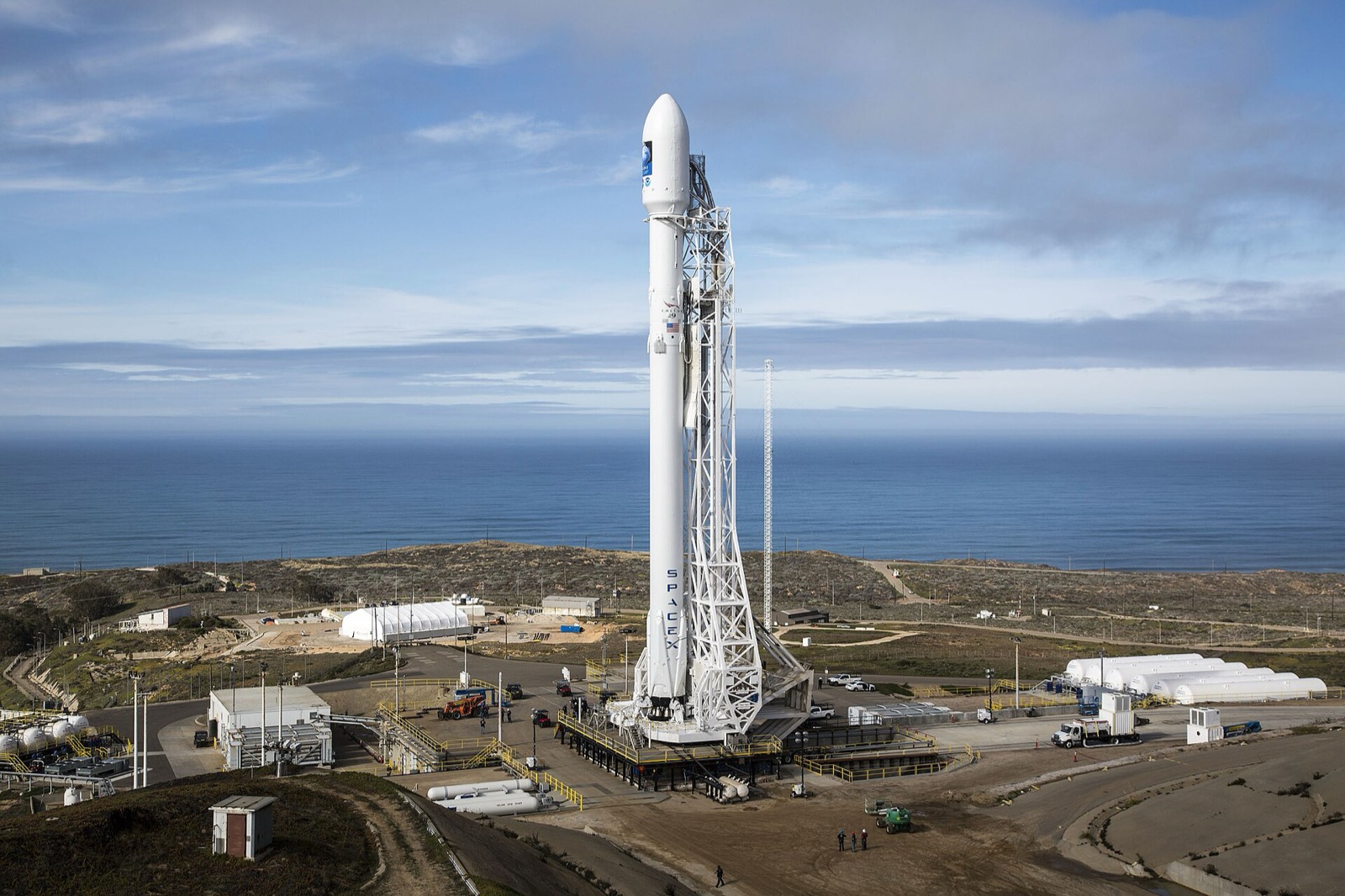
Crew Dragon launches on top of a Falcon 9 rocket from Launch Complex 39A at NASA's Kennedy Space Center in Florida. It is built on SpaceX's cargo Dragon, which the company designed with people in mind. For launch escape it uses SuperDraco engines, and for manoeuvring in orbit it uses Draco thrusters. NASA's Commercial Crew Program orders its flights to the station as crew rotation missions. The first crewed flight was Demo-2 in 2020.
SpaceX designed its cargo Dragon with people in mind
Operated by
NASA Commercial Crew Program
crew-rotation flights to the International Space Station
What we do not know
SpaceX has not published what the pressure vessel, trunk, nose cone, tanks, parachutes or windows are made of. Materials are known only for the heat shield, the backshell and the escape-engine chambers, and the Inconel alloy is not named. Published counts of the Draco thrusters differ.
The detailed data
What is written above is built from these numbers and quotes. Each row links to the page it was taken from. Get all of it as JSON, or ask our MCP server.
Features
Capsule has a pressurised section, service section and nose cone; unpressurised trunk carries solar array and radiator
Draco thrusters provide orbital maneuvering
Heat shield is blocks of phenolic-impregnated carbon felt
Specifications
What
Value
Crew capacity
Up to seven passengers, four crew on NASA missions
Launch escape engines
Eight SuperDraco engines, 120,000 lb total axial thrust
SuperDraco thrust
16,000 lb each
First crewed flight
Demo-2, 30 May to 2 August 2020
Windows
Three
Launch vehicle
Falcon 9 from Launch Complex 39A
Cabin temperature range
65 to 80 degrees Fahrenheit
Splashdown sites supported
seven
Launch abort total thrust
up to 120,000 lbf axial
Parachute count
six (two drogues and four mains)
Pressurised volume
9.3 m3 (330 cu ft)
Materials in detail
Each material named in the sources: where it is used here, which other products use it, and its key numbers when its material page exists.
Inconel (alloy not stated)
inconel
Used in 1 partSuperDraco engine chamber (eight engines)
Only the heat shield, backshell and SuperDraco chambers have a stated material; the pressure vessel, trunk, tanks and nose cone are not stated. Components, suppliers and links were added from public sources. A material is left blank where no source states it.
No standards or grades. Pressure vessel, trunk structure, tank, window and parachute materials not found. More detail: SpaceX has not published a Crew Dragon bill of materials; the pressure vessel, trunk structure, propellant tanks, window glass, seats, parachute fabric, solar cells and radiator have no stated materials or suppliers in any readable source. Wikipedia says the propellant tanks are composite-overwrapped titanium spheres, but that was not confirmed from a primary page and is not listed. Draco thruster count differs by source and vehicle (Wikipedia: sixteen on Dragon 2; an older NASA kit for the first Dragon: eighteen), so the count is attached to the Wikipedia statement only. The NASA press kit is the Crew-2 edition and describes the Dragon in general terms. NASA's Dragon callout graphic gives labels only. SuperDraco quotes come from the 2014 qualification-test announcement as reposted by the National Space Society. Quotes from the NASA press kit and the NASA callout graphics were machine-checked against the PDF text; quotes from Wikipedia and nss.org came through a text extractor and were not machine-checked. More detail: SpaceX has not published a Crew Dragon bill of materials; the pressure vessel, trunk structure, propellant tanks, window glass, seats, parachute fabric, solar cells and radiator have no stated materials or suppliers in any readable source. Wikipedia says the propellant tanks are composite-overwrapped titanium spheres, but that was not confirmed from a primary page and is not listed. Draco thruster count differs by source and vehicle (Wikipedia: sixteen on Dragon 2; an older NASA kit for the first Dragon: eighteen), so the count is attached to the Wikipedia statement only. The NASA press kit is the Crew-2 edition and describes the Dragon in general terms. NASA's Dragon callout graphic gives labels only. SuperDraco quotes come from the 2014 qualification-test announcement as reposted by the National Space Society. Quotes from the NASA press kit and the NASA callout graphics were machine-checked against the PDF text; quotes from Wikipedia and nss.org came through a text extractor and were re-checked in a second fetch pass but not against a saved copy of the page.