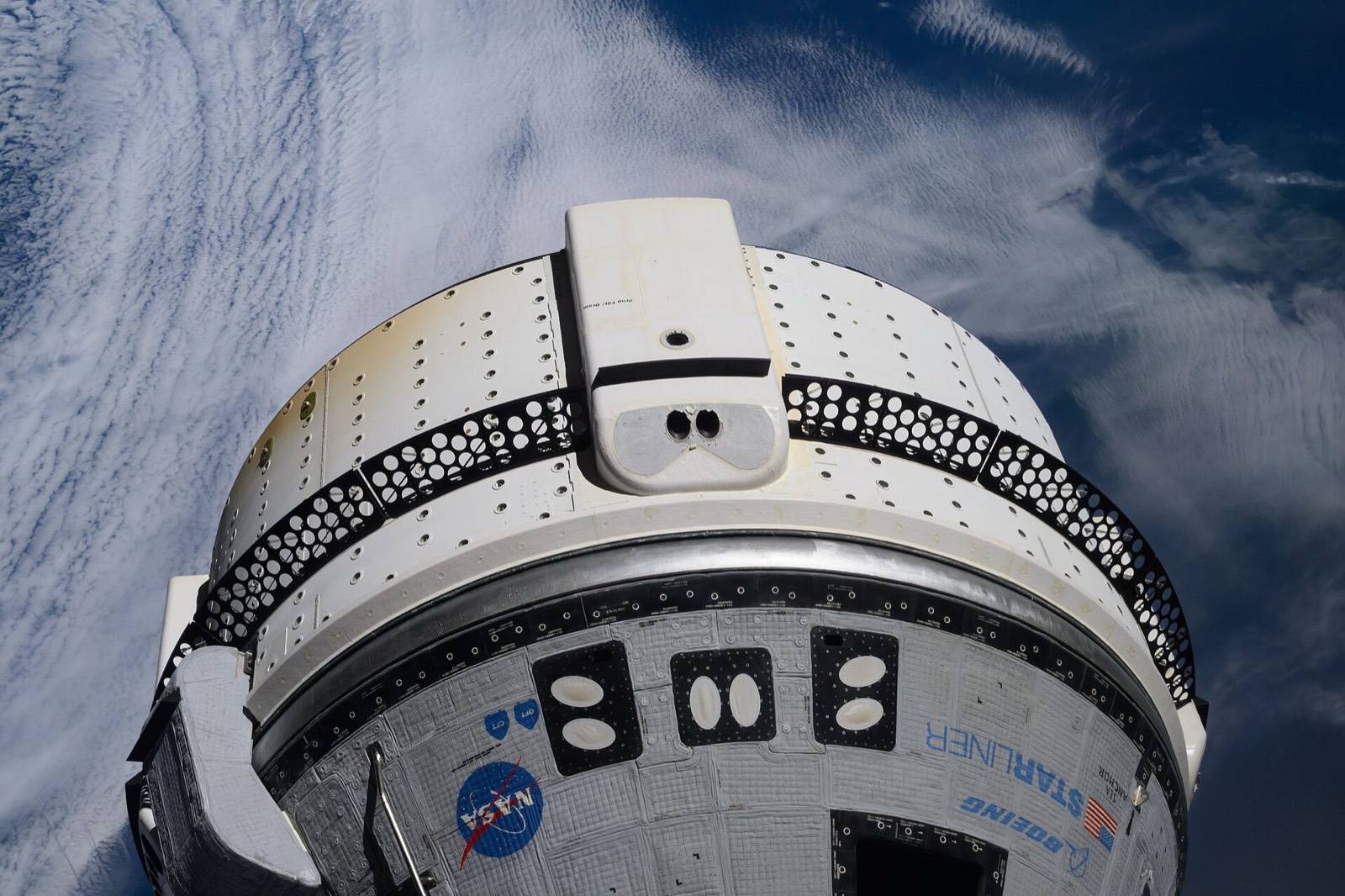
Boeing Starliner (Crew Flight Test) crew module and service module close up in orbit with Earth cloud layer behind, Boeing
Boeing

CST-100 Starliner

Starliner is Boeing's reusable capsule for flying astronauts to the International Space Station.

Crewed vehicles
Product IDboeing-starliner
Crew
Up to seven passengers, four astronauts on NASA missions
Reuse
Up to 10 flights
Height, crew and service module
16.5 ft (5 m)
Diameter
15 ft (4.6 m)
Weight
14,690 lb (6,663 kg)
Re-entry plasma temperature
3,000 F (1,649 C) at 400,000 ft

In short

Starliner is a reusable crew capsule built by Boeing. It launches on a United Launch Alliance Atlas V rocket and carries astronauts to the International Space Station. It is designed for up to seven passengers, or a mix of crew and cargo, and NASA missions fly four astronauts. It lands on the ground under parachutes, cushioned by airbags.

NASA and Boeing both say the main structure has no welds. Two aluminium domes are spun into shape and bolted together. The heat shield is an ablator, a material meant to wear away as it heats up, made of silicone resin packed by hand into a honeycomb. Boeing designed the capsule to fly up to 10 times.

Application

Starliner is Boeing’s commercial crew spacecraft, launched on ULA Atlas V to carry astronauts to the International Space Station. It is designed to land on land and be reused.

How it is built

Pressure vessel domes

The crew module's pressure vessel is two aluminium domes, one upper and one lower. Each was spin formed, a weldless process that shapes metal on a rotating form, then machined with a honeycomb pattern. The two are bolted together, with 216 bolts on the structural test article.

  • Pressure vessel domes (upper and lower)
  • Main structure joints

Heat shields

The re-entry heat shield is the Boeing Lightweight Ablator, silicone resin hand-packed into honeycomb and cured, and it is easy to replace. A forward shield is jettisoned after re-entry, once it has protected the parachutes. The base shield drops away before landing so the airbags can inflate.

  • Re-entry heat shield
  • Forward heat shield (jettisoned during descent)
  • Base heat shield (drops away before landing)

Engines on the service module

The service module carries four launch abort engines, each giving 40,000 pounds of thrust. Another 20 engines handle manoeuvring and attitude control, which means pointing the spacecraft. There are also 28 reaction control thrusters, each giving 85 pounds of thrust.

  • Launch abort engines (x4, RS-88)
  • Orbital Maneuvering and Attitude Control (OMAC) engines (x20)
  • Service module reaction control system (RCS) thrusters (x28)
  • Service module propellant and pressurant tanks (4 fuel, 4 oxidizer, 2 pressurant)
  • Doghouses (x4)

Parachutes and airbags

Pilot parachutes and two drogue parachutes deploy first, followed by three main parachutes. Six primary airbags then inflate to absorb the shock of touchdown on the ground.

  • Pilot parachutes
  • Drogue parachutes (x2)
  • Main parachutes (x3)
  • Landing airbags (x6 primary)

Inside the cabin

Engineers scan each astronaut's back and 3D print an insert that fits into the seat. The crew use tablets and wireless internet, with backup manual controls for the pilot. The Boeing Blue launch-and-entry suit is about 20% lighter than earlier ascent and entry suits.

  • Crew seats with custom 3D-printed back inserts
  • Tablet and wireless crew interfaces
  • Backup manual flight controls
  • Boeing Blue launch-and-entry spacesuit
Where the parts areNumber of parts we have listed in each group
  • Service module propulsion8
  • Docking system6
  • Landing system6
  • Crew accommodations5
  • Avionics and navigation4
  • Power3
  • Launch vehicle interface3
  • Crew module structure2
  • Crew module propulsion2
  • Thermal protection1

What it is made of

  • Aluminium

    The two domes of the crew module's pressure vessel, shaped by spin forming instead of welding.

  • Boeing Lightweight Ablator

    The re-entry heat shield: silicone resin hand-packed into a honeycomb and cured.

  • Teflon

    Oxidiser-side valve seats and spring-loaded flange seals in the thrusters. A NASA report describes the seat Teflon squeezing out of place and restricting flow.

The materials by familyHow many of the parts that name a material use each one
  • Polymers and foams3
  • Aluminium1

How it connects to other things

Starliner launches on a United Launch Alliance Atlas V from Space Launch Complex 41. The crew flight test lifted off in June 2024 with two NASA astronauts, but the capsule landed uncrewed that September in New Mexico. Aerojet Rocketdyne supplies its abort engines and thrusters, its subsidiary ARDÉ the tanks, and Spectrolab the solar cells. NASA says an uncrewed Starliner-1 could fly in December 2026 or January 2027.

Engines

  • RS-88 engine

    Four on the service module, 40,000 lbf each; pusher abort

  • OMAC engine (Aerojet Rocketdyne)

    Twenty orbital maneuvering and attitude control engines on the service module

Carries

  • Service module RCS thruster (Aerojet Rocketdyne)

    Twenty-eight 85 lbf reaction control engines on the service module

  • MR-104J thruster

    Twelve crew module re-entry thrusters

  • NASA Docking System Block 1

    Docking mechanism used on Starliner

  • Boeing Blue spacesuit

    Crew launch-and-entry suit

Carried by

  • Atlas V

    United Launch Alliance

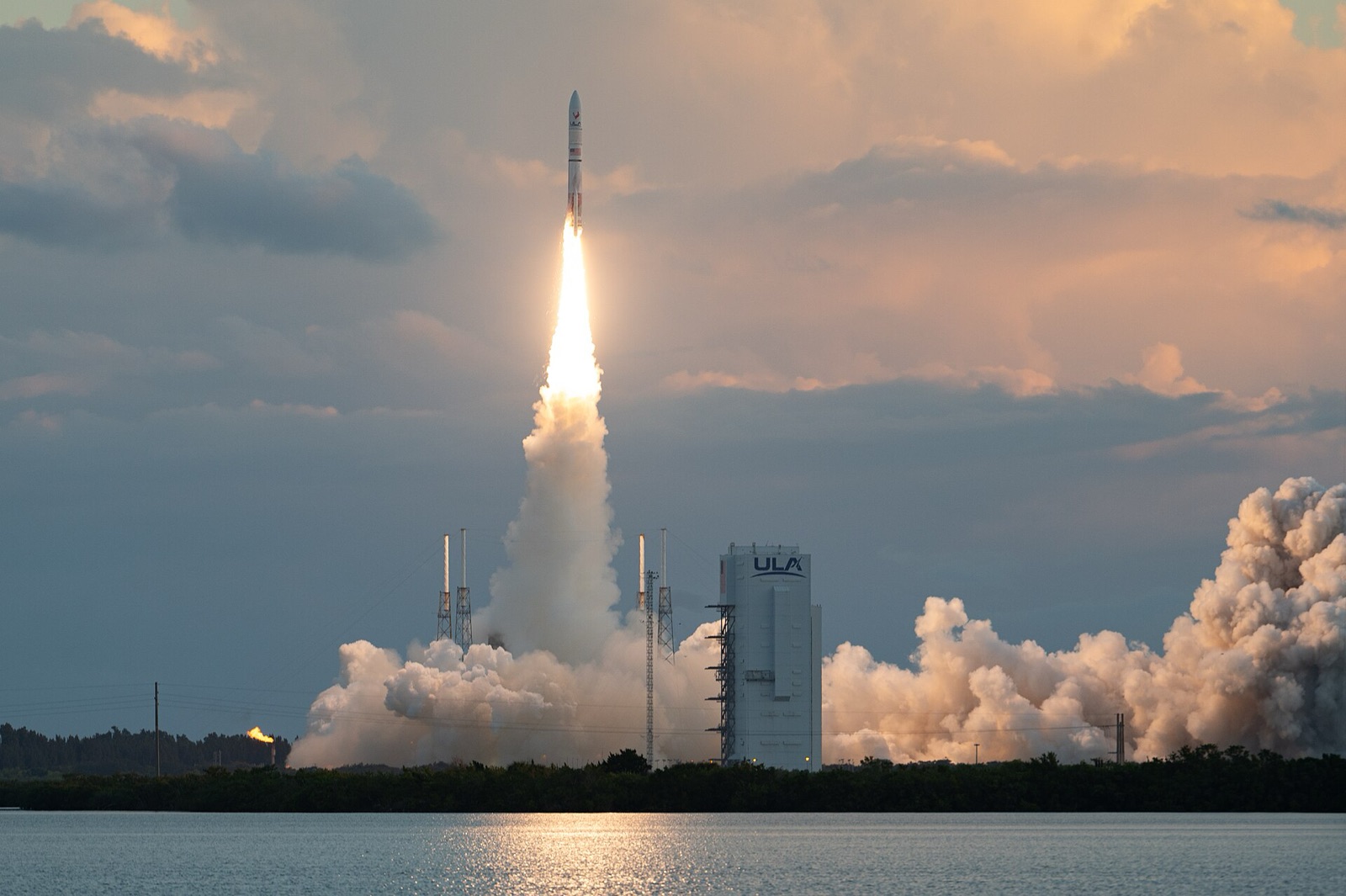
    Atlas V N22 launches the capsule

Launched on

  • Atlas V

    United Launch Alliance

    Starliner flies on the Atlas V Starliner configuration from SLC-41

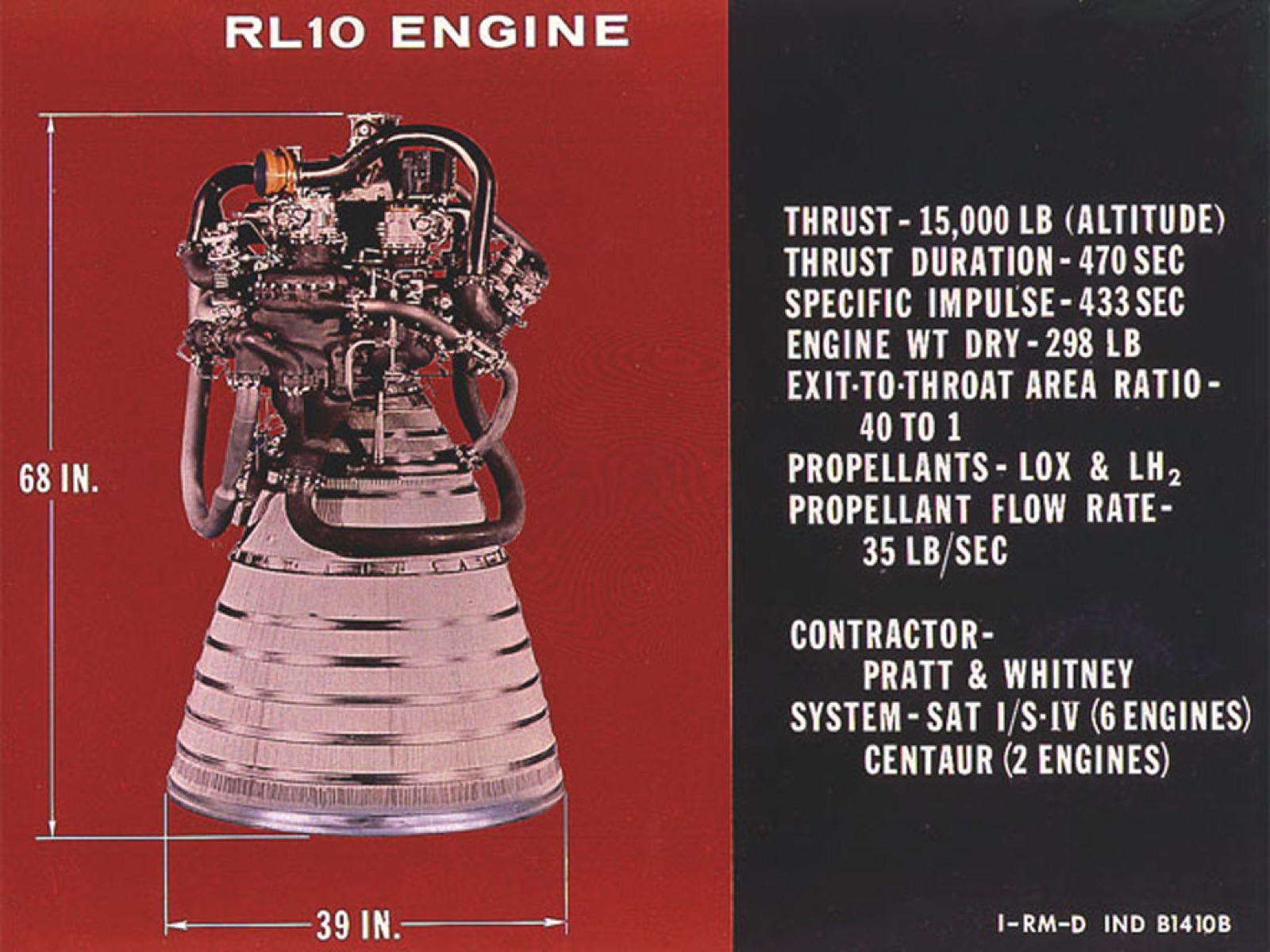
  • RL10 engine

    Aerojet Rocketdyne

    Upper-stage engines of the Atlas V that lifts Starliner; launcher engine, not carried by the capsule

  • RD-180 engine

    NPO Energomash

    First-stage engine of the Atlas V that lifts Starliner; launcher engine, not carried by the capsule

  • AJ-60A solid rocket booster (Aerojet Rocketdyne)

    Two strap-on solid boosters on the Starliner Atlas V; launcher motors, not carried by the capsule

  • Vulcan Centaur

    United Launch Alliance

    NASA plans to certify Vulcan for Starliner after the final Atlas V flight (announced 28 Sep 2026); not yet flown

Made or supplied by

  • Aerojet Rocketdyne

    Service module propulsion, crew module thrusters and Atlas V solid boosters and RL10 engines

  • ARDÉ (Aerojet Rocketdyne subsidiary)

    Service module and crew module propellant, pressurant and pressure-control tanks

  • Spectrolab

    Solar cells on the service module

  • ILC Dover

    Landing airbag system

  • HDT Airborne Systems (Airborne Systems)

    Parachute system, as named in the 2012 drop-test release

  • Moog

    Linear actuator subsystem of the NASA Docking System

  • Spincraft

    Spin-forming of the pressure vessel domes (weldless spin forming)

  • Janicki Industries

    Machining of the lower pressure vessel domes

  • Major Tool & Machine

    Machining of the upper pressure vessel domes

  • United Launch Alliance

    Launch vehicle adapter, aeroskirt and emergency detection system for the Starliner Atlas V

Operated by

  • NASA Commercial Crew Program (customer)

    Boeing flies Starliner under a NASA Commercial Crew Transportation Capability contract

Products that use the same materials

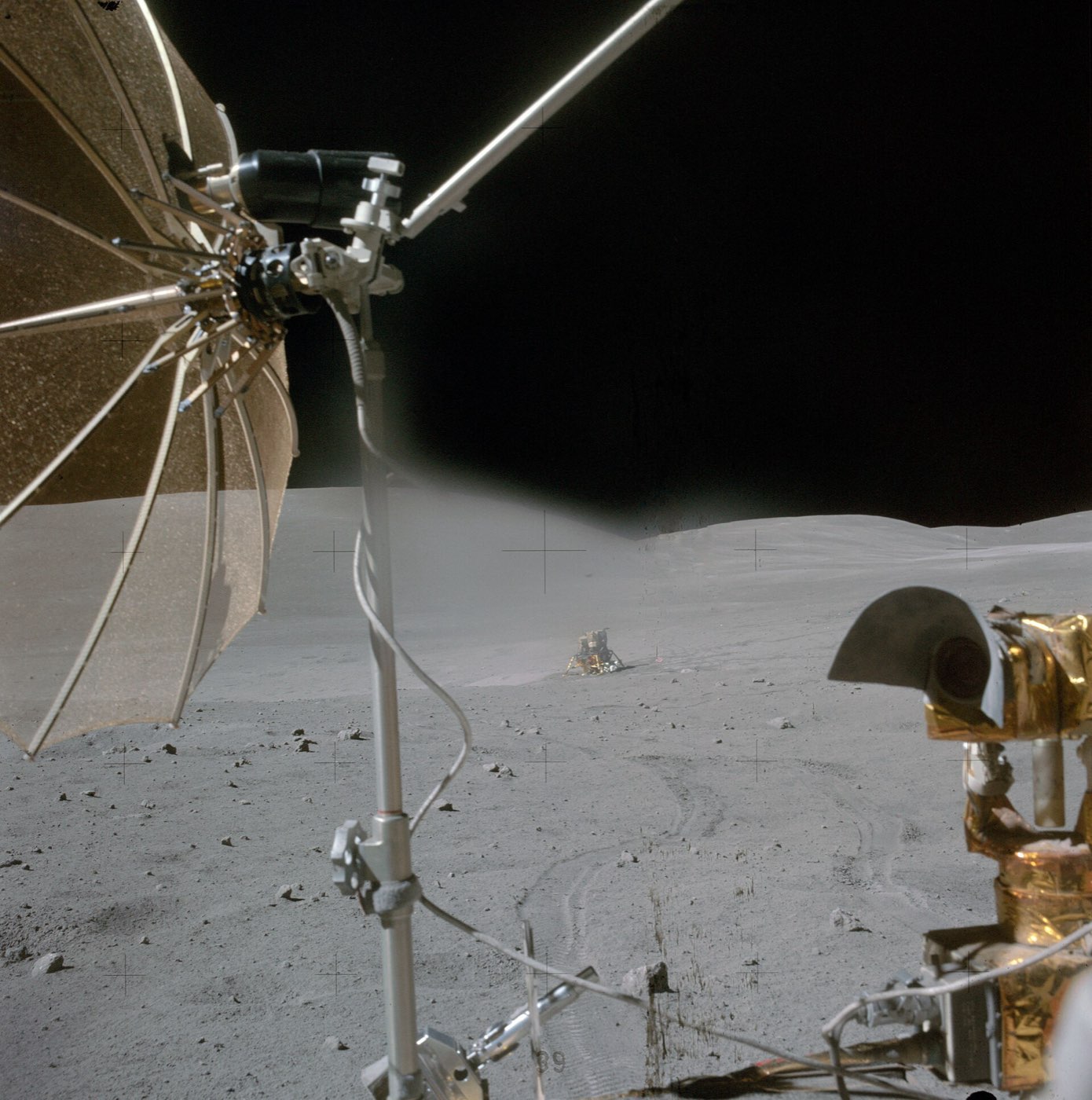
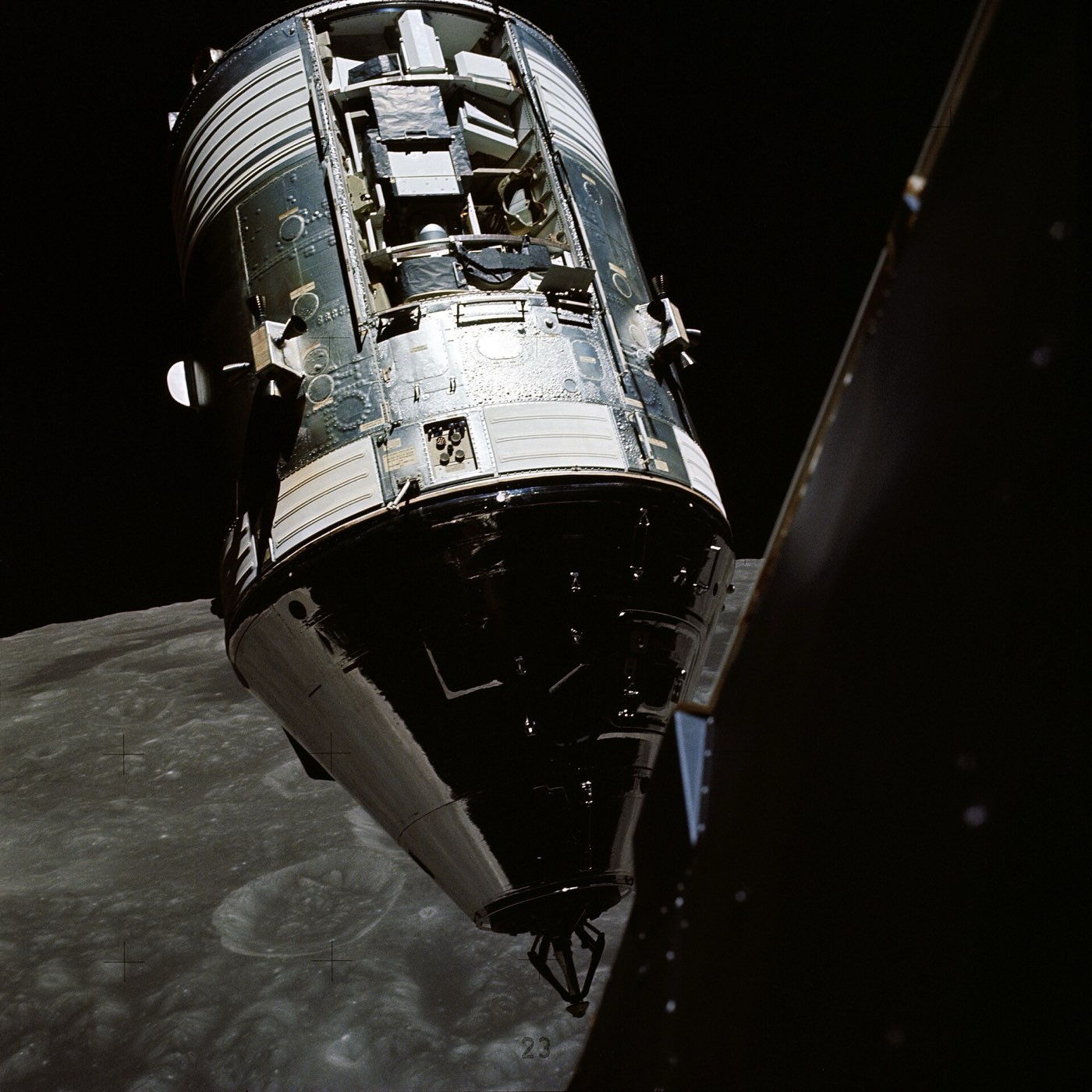
  • Apollo Lunar Module (LM)

    Grumman / NASA

    Teflon poppet seatAluminium
    Where each one is used

    Teflon poppet seat. Here: RCS and OMAC thruster valves (dual poppet valves, Teflon poppet seat on the oxidizer side); Spring-energized Teflon seal at the RCS and OMAC thruster flanges. There: Inner window seal jacket.

    Aluminium. Here: Pressure vessel domes (upper and lower). There: Cabin front-face, RCS cluster trusses, decks and bulkheads; Micrometeoroid shield and more.

  • RL10 engine

    Aerojet Rocketdyne

    Teflon poppet seatAluminium
    Where each one is used

    Teflon poppet seat. Here: RCS and OMAC thruster valves (dual poppet valves, Teflon poppet seat on the oxidizer side); Spring-energized Teflon seal at the RCS and OMAC thruster flanges. There: Duct flange seals (Teflon-coated conical washers).

    Aluminium. Here: Pressure vessel domes (upper and lower). There: Fuel pump inducer, impellers and body; Turbine blades, disks and hub and more.

  • F-1 engine

    Rocketdyne, Division of North American Aviation

    Teflon poppet seatAluminium
    Where each one is used

    Teflon poppet seat. Here: RCS and OMAC thruster valves (dual poppet valves, Teflon poppet seat on the oxidizer side); Spring-energized Teflon seal at the RCS and OMAC thruster flanges. There: Main oxidizer valve poppet seal; Main fuel valve poppet seal.

    Aluminium. Here: Pressure vessel domes (upper and lower). There: High-pressure propellant ducts.

What we do not know

Boeing has not published the alloy of the domes or the materials of the service module structure, tanks, airbags and parachutes. The heat shield's make-up is known only from a NASA slide. Published thrust figures for the 20 manoeuvring engines differ.

The detailed data

What is written above is built from these numbers and quotes. Each row links to the page it was taken from. Get all of it as JSON, or ask our MCP server.

Features

  • Landing on land with parachutes and airbags
  • Weldless main structure and replaceable heat shielding to speed turnaround
  • Heat shield ablator is filled silicone resin hand-packed into honeycomb

Specifications

WhatValue
Crew capacityUp to seven passengers, four astronauts on NASA missions
ReuseUp to 10 flights
Launch abort enginesFour engines, 40,000 lb thrust each
Orbital maneuvering and attitude control engines20 engines, 1,400 lb thrust each
Reaction control engines28 engines, 85 lb thrust each
Dome fastening (structural test article)216 bolts
Height (crew module plus service module)16.5 ft (5 m)
Diameter15 ft (4.6 m)
Weight14,690 lb (6,663 kg)
Solar powerover 2,900 W
Re-entry plasma temperature3,000 F (1,649 C) at 400,000 ft
Cabin temperature kept behind the heat shieldabout 70 F (21 C)
Cargo to ISS on NASA missionsabout 220 lb of time-critical research
SuppliersMore than 425 suppliers in 37 states
Crew Flight Test launch5 June 2024, 10:52 a.m. EDT, SLC-41
First orbital flight test launch20 December 2019
Second orbital flight test launch19 May 2022
Crew Flight Test returnLanded uncrewed 7 Sept 2024 at White Sands, New Mexico
Atlas V Starliner stack heightabout 172 ft (52.4 m)
Next flightUncrewed Starliner-1 possible December 2026 or January 2027; crewed Starliner-2 targeted by 2028

Materials in detail

Each material named in the sources: where it is used here, which other products use it, and its key numbers when its material page exists.

  • Teflon poppet seat (grade not stated)

    teflon-ptfe

    Used in 2 partsRCS and OMAC thruster valves (dual poppet valves, Teflon poppet seat on the oxidizer side) · Spring-energized Teflon seal at the RCS and OMAC thruster flanges

    Also in 4 other products
    Material page coming soon
  • Aluminium

    Used in 1 partPressure vessel domes (upper and lower)

    Weight
    2.7 g/cm3
    Electrical conduction
    2.6458 µΩ·cm
    Heat conduction
    220 W/(m·K)
    Also in 33 other products
  • Boeing Lightweight Ablator (filled silicone resin in honeycomb)

    boeing-lightweight-ablator

    Used in 1 partRe-entry heat shield

    Material page coming soon

Every part we have

Only the aluminium pressure vessel domes and the ablator heat shield have a stated material. Components, suppliers and links were added from public sources. A material is left blank where no source states it.

Material IDs

aluminiumboeing-lightweight-ablatorteflon-ptfe
Crew module structure2
PartMaterialFinish and standardMade by
Pressure vessel domes (upper and lower)“The rather distinctive, olive colored aluminum domes are manufactured using a weldless spin forming process by Spincraft” aluminum (alloy not stated)aluminium — Spincraft (forming), Janicki Industries and Major Tool & Machine (machining)
Main structure joints“Starliner has a weldless structure, which eliminates the structural risk of traditional welds” Not said — —
Thermal protection1
PartMaterialFinish and standardMade by
Re-entry heat shield“Starliner’s brand new heat shield technology, called the Boeing Lightweight Ablator” Boeing Lightweight Ablator (filled silicone resin in honeycomb)boeing-lightweight-ablator — —
Docking system6
PartMaterialFinish and standardMade by
NASA Docking System Block 1 (NDSB1)Electromechanical docking mechanism that mates Starliner with the ISS docking adapters“The NDSB1 will be used on the Boeing CST-100 Starliner within NASA's Commercial Crew Program” Not said — —
Soft Capture System ring with three petals and capture latchesRing whose petals and latches make the first connection to the mating vehicle“The SCS Ring includes three petals which align and mate with corresponding petals on the mating docking ring.” Not said — —
Linear Actuator System (soft-capture ring actuators)Moves the soft capture ring during lunge, capture and load attenuation“Moog was selected a supplier partner to collaborate with the NDS team and develop the entire linear actuator subsystem.” Not said — Supplier: Moog
Hard Capture System (HCS)Makes the structural connection that supports pressurization and crew transfer“The HCS performs the Hard Capture function” Not said — —
Docking hatchHatch at the docking port, delivered with the lower dome of the pressure vessel“closely following the arrival of the lower dome and docking hatch in early May” Not said — —
Nosecone with hinged re-entry coverProtects the docking port; the re-entry cover shields it during atmospheric entry“adding a hinged re-entry cover below its expendable nosecone” Not said — —
Avionics and navigation4
PartMaterialFinish and standardMade by
Vision-based, Electro-optical Sensor Tracking Assembly (VESTA)Navigation and docking sensor that determines position and orientation relative to the stars“navigation and docking system called the Vision-based, Electro-optical Sensor Tracking Assembly, or VESTA” Not said — —
Star tracker camerasCameras that first see the station as a bright point against fixed stars during rendezvous“the vehicle's star tracker cameras will first see the orbiting lab” Not said — —
Flight Management Computer (FMC)Computes the velocity or attitude change needed and selects the thrusters to fire“algorithms within the flight management computer (FMC) determine the changes needed in velocity or attitude” Not said — —
Integrated Propulsion Controller (IPC)Works with the FMC to read thruster chamber-pressure measurements and check thruster status“The Integrated Propulsion Controller (IPC) and the Flight Management Computer (FMC) use these measurements” Not said — —
Landing system6
PartMaterialFinish and standardMade by
Forward heat shield (jettisoned during descent)Protects the parachute system during re-entry, then is jettisoned“forward heat shield will be jettisoned after re-entry, having completed its work protecting the parachute system” Not said — —
Pilot parachutesDeployed first in the descent sequence, before the drogues and mains“deploy pilot and drogue parachutes” Not said — Supplier: HDT Airborne Systems (named as parachute system designer and integrator in a 2012 Boeing drop-test release)
Drogue parachutes (x2)Slow and stabilise the capsule before the main parachutes open“HDT Airborne Systems designed, fabricated and integrated the parachute system, which included the two drogue parachutes” Not said — Supplier: HDT Airborne Systems (2012 drop-test release)
Main parachutes (x3)Final descent parachutes“The three main parachutes are then deployed and inflated” Not said — Supplier: HDT Airborne Systems (2012 drop-test release)
Base heat shield (drops away before landing)Separates under parachutes so the airbags can inflate“the spacecraft's base heat shield will drop away, allowing the air bag system to inflate prior to a soft landing” Not said — —
Landing airbags (x6 primary)Cushion touchdown on land“ILC Dover designed and fabricated the landing air bag system.” Not said — Supplier: ILC Dover
Crew module structure and thermal1
PartMaterialFinish and standardMade by
Crew module back shellOuter thermal protection shell on the sides and top of the capsule“Starliner technicians install back shells on the Orbital Flight Test-2 crew module” Not said — —
Crew module propulsion2
PartMaterialFinish and standardMade by
Crew module reaction control thrusters (x12, MR-104J)Orient the capsule during atmospheric re-entry after the service module separates“features 12 Aerojet Rocketdyne MR-104J engines to properly orient the spacecraft during atmospheric re-entry” Not said — Supplier: Aerojet Rocketdyne
Crew module pressure control subsystem tanks (x8)Store nitrogen, oxygen and nitrox“Eight pressure control subsystem tanks to store nitrogen, oxygen and nitrox” Not said — Supplier: ARDÉ (Aerojet Rocketdyne subsidiary)
Service module propulsion8
PartMaterialFinish and standardMade by
Launch abort engines (x4, RS-88)Pusher abort system that carries the crew module away from a failing rocket from the pad to orbit“The service module contains Starliner's four launch abort engines to be used during an unlikely abort scenario.” Not said — Supplier: Aerojet Rocketdyne
Orbital Maneuvering and Attitude Control (OMAC) engines (x20)Orbit insertion burn after separation from the rocket, deorbit burn, abort attitude control and stage separation“Twenty orbital maneuvering and attitude control engines, providing 1,500 pounds of thrust each, are used for abort, maneuvering and stage separation.” Not said — Supplier: Aerojet Rocketdyne
Service module reaction control system (RCS) thrusters (x28)Attitude control, fine docking manoeuvres and ISS reboost“28 reaction control system engines, which provide 85 pounds of thrust each to enable on-orbit maneuvering and International Space Station reboost” Not said — Supplier: Aerojet Rocketdyne
Doghouses (x4)Enclosures around the service module holding RCS and OMAC thruster clusters and shared feed lines and valves“Four protective enclosures known as "doghouses" are mounted around the perimeter of Starliner's service module.” Not said — —
Helium manifolds (two per doghouse)Helium pressurant system that drives the thruster valves“the system had evolved to two helium manifolds per doghouse” Not said — —
RCS and OMAC thruster valves (dual poppet valves, Teflon poppet seat on the oxidizer side)Solenoid-pilot helium opens one NTO and one MMH poppet valve to fire each thruster“Teflon poppet extrusion in oxidizer valves, restricting flow” Teflon poppet seat (grade not stated)teflon-ptfe — —
Spring-energized Teflon seal at the RCS and OMAC thruster flangesSeals the propellant side of the thruster flange next to helium O-rings“The Teflon seal, which is spring energized for both the RCS and OMACs” Teflon seal (grade not stated)teflon-ptfe — —
Service module propellant and pressurant tanks (4 fuel, 4 oxidizer, 2 pressurant)Hold the hypergolic propellants and helium pressurant for the service module engines“ARDÉ provides 4 fuel, 4 oxidizer and 2 pressurant service module tanks.” Not said — Supplier: ARDÉ (Aerojet Rocketdyne subsidiary)
Power3
PartMaterialFinish and standardMade by
Multi-junction solar cells (more than 3,500 per spacecraft)Convert sunlight into spacecraft power during flight and while docked“Spectrolab is supplying the more than 3,500 of it super-efficient compound semi-based, multi-junction solar cells for each spacecraft.” Not said — Supplier: Spectrolab
Micro-meteoroid debris shield carrying the solar cells (bottom of service module)Debris shield on the service module base that also hosts the solar cells“solar cells will be incorporated into its micro-meteoroid debris shield located at the bottom of the spacecraft's service module” Not said — —
Crew module batteriesCrew module electrical storage; scheduled for replacement ahead of crewed flights“installation of new crew module thrusters, batteries, and minor modifications to the parachute system” Not said — —
Crew accommodations5
PartMaterialFinish and standardMade by
Crew seats with custom 3D-printed back insertsSeat structure adjusts to each astronaut through a scanned, 3D-printed insert“the engineers scan the astronauts' backs, and build a 3D-printed insert which is placed into the structure of the seat” Not said — —
Tablet and wireless crew interfacesCrew interfaces over wireless internet and tablet technology“Starliner also has wireless internet and tablet technology for crew interfaces.” Not said — —
Backup manual flight controlsPilot controls available alongside the autonomous flight mode“backup manual controls for the pilot” Not said — —
Powered cargo accommodationsCrew module supplies electrical power to cargo“it can carry up to four powered payloads or three payloads and an ISS laptop” Not said — —
Boeing Blue launch-and-entry spacesuitIntravehicular suit with integrated helmet and visor, touchscreen gloves and integrated shoe“Boeing Blue spacesuit is about 20% lighter than previous ascent and entry suits” Not said — Supplier: Boeing
Launch vehicle interface3
PartMaterialFinish and standardMade by
Launch vehicle adapter (LVA)Truss and metallic ring that attach Starliner to the Atlas V Centaur upper stage“The LVA uses a truss structure and metallic ring to attach the spacecraft to the Centaur upper stage” Not said — Supplier: United Launch Alliance
Aeroskirt (70 inches long)Extends Starliner's aerodynamic surface; jettisoned after booster stage separation“ULA also designed a 70-inch-long aeroskirt to extend Starliner's aerodynamic surface” Not said — Supplier: United Launch Alliance
Emergency Detection System (EDS)Monitors rocket health and signals an abort command so Starliner can escape“provides a capability to take action by signaling an abort command so the Starliner can escape” Not said — Supplier: United Launch Alliance

What the sources leave out

No alloy grades. Service module, airbags, parachutes, windows and tank materials not found. More detail: No public source found for: flight computer, display, seat, window, hatch-seal, battery and life-support (ECLSS) suppliers; radiator and umbilical hardware; materials of the service module structure, propellant tanks, back shell, crew module thruster bodies and thruster chambers. The only materials stated are the Teflon poppet seats and flange seals in the thruster valves (NASA investigation report) and the composite-overwrapped pressurant vessels (type of composite not stated). Thrust of the 20 OMAC engines is 1,500 lbf in Boeing and Aerojet releases but 1,400 lbf in the NASA press kit. Parachute and airbag suppliers are named only in a 2012 drop-test release (HDT Airborne Systems, ILC Dover); current flight suppliers are not confirmed. The NASA blog posts on the airbag tests and the Aerojet MR-104J and RS-88 originals returned errors, so syndicated copies were used. More detail: No public source found for: flight computer, display, seat, window, hatch-seal, battery and life-support (ECLSS) suppliers; radiator and umbilical hardware; materials of the service module structure, propellant tanks, back shell, crew module thruster bodies and thruster chambers. The only materials stated are the Teflon poppet seats and flange seals in the thruster valves (NASA investigation report) and the composite-overwrapped pressurant vessels (type of composite not stated). Thrust of the 20 OMAC engines is 1,500 lbf in Boeing and Aerojet releases but 1,400 lbf in the NASA press kit. Parachute and airbag suppliers are named only in a 2012 drop-test release (HDT Airborne Systems, ILC Dover); current flight suppliers are not confirmed. The NASA blog posts on the airbag tests and the Aerojet MR-104J and RS-88 originals returned errors, so syndicated copies were used.
Where this comes from

19 pages from 13 websites

More space products

Collected from public pages and documents, checked 4 Nov 2026.

Published · Updated