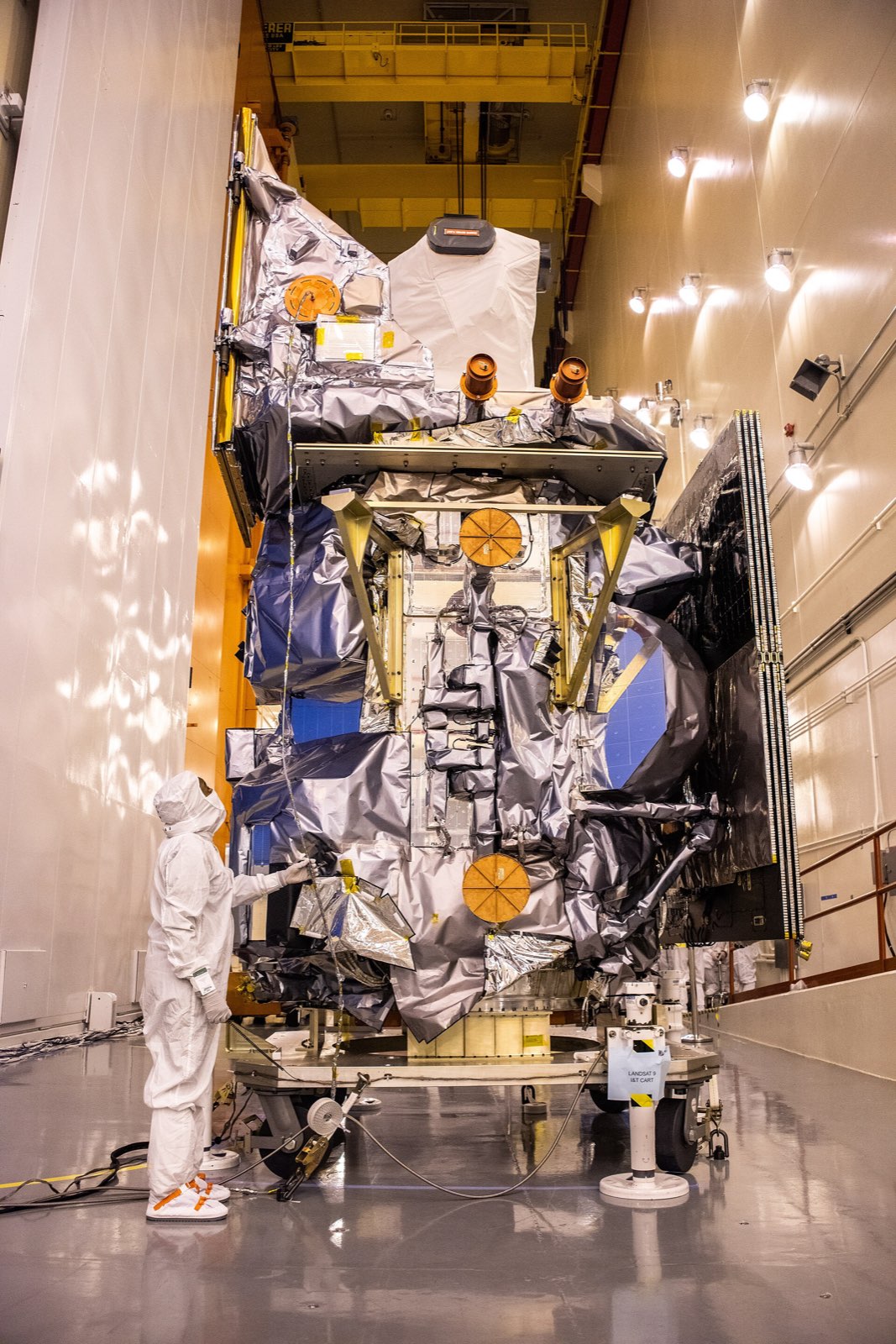
Landsat 9 continues a 50-year series of satellite images of Earth's land. Northrop Grumman designed and built the spacecraft for NASA and the US Geological Survey (USGS). The images are used to monitor agriculture, water and land use, and they are free through USGS.
The satellite has two instruments. OLI-2 uses silicon detectors for visible and near-infrared light and mercury-cadmium-telluride detectors for shortwave infrared. TIRS-2 picks up thermal light with quantum well detectors, which a two-stage cooler holds at 43 kelvin.
Application
Earth-observation satellite that continues the 50-year Landsat record of land imagery. It images the land in visible, infrared and thermal bands for agriculture, water and land-use monitoring. Data are free through USGS.
Photos
How it is built
The OLI-2 imager
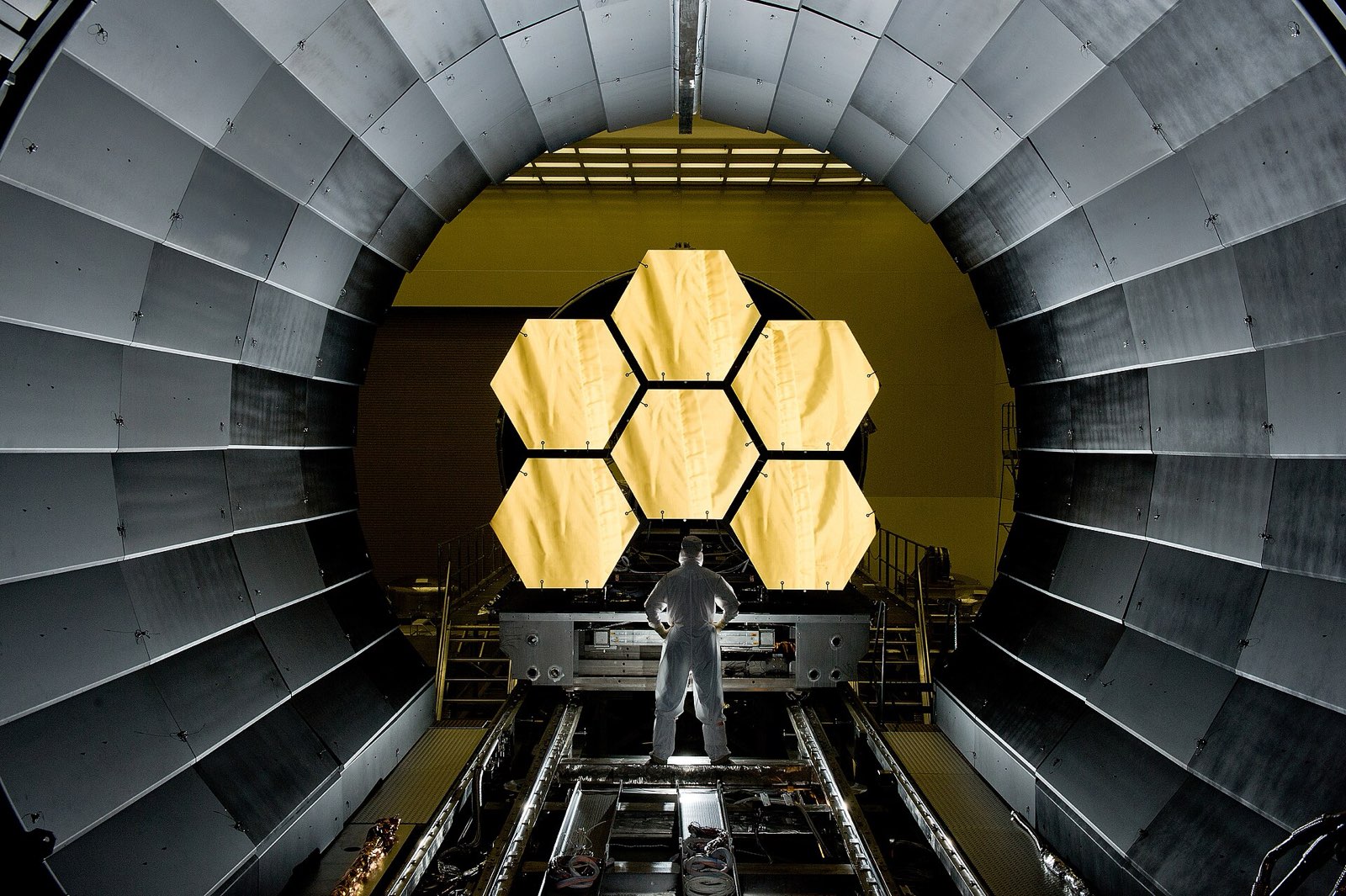
OLI-2 has a four-mirror telescope and a focal plane of 14 sensor chip assemblies. Silicon PIN detectors cover visible and near-infrared light, and mercury-cadmium-telluride detectors cover shortwave infrared. In all, 70,672 operating detectors must be calibrated.
Visible and near-infrared detectors
Shortwave infrared detectors
OLI-2 four-mirror anastigmat telescope
OLI-2 focal plane (14 sensor chip assemblies)
The TIRS-2 thermal sensor
TIRS-2 focuses thermal radiation through a telescope of four lens elements onto three arrays of quantum well detectors. A two-stage mechanical cryocooler keeps the focal plane at 43 K. Two radiators handle the heat: one for the cooler, the other holding the telescope at 185 K.
TIRS-2 four-element refractive telescope
TIRS-2 QWIP focal plane (three arrays)
TIRS-2 two-stage mechanical cryocooler
TIRS-2 cryocooler radiator and telescope radiator
Power and data
The instruments sit on an optical bench at the forward end of the spacecraft. A deployable sun-tracking solar array charges a 125 amp-hour nickel-hydrogen battery. A solid-state recorder stores 3.14 terabits of data until it is sent down by X-band radio.
Instrument optical bench
Deployable sun-tracking solar array (9 x 0.4 m)
Nickel-hydrogen battery (125 Ah)
Solid-state data recorder (SSR)
Earth-coverage X-band antenna
Propulsion module
The hydrazine propulsion module has rocket engine modules, with thrusters, mounted around its outside. An inner ring supports the propellant tank, and an outer ring is the launch vehicle adapter. The design life is five years, but the satellite carries fuel for up to ten.
Where the parts areNumber of parts we have listed in each group
TIRS-2 (NASA Goddard)10
Spacecraft bus (Northrop Grumman LEOStar-3)6
OLI-2 (Ball Aerospace)6
Propulsion5
OLI-2 instrument detectors2
Electrical power2
Communications2
TIRS-2 instrument1
Thermal control1
What it is made of
Silicon PIN
The detectors in OLI-2 that sense visible and near-infrared light.
Mercury-cadmium-telluride
The detectors in OLI-2 that sense shortwave infrared light.
Nickel-hydrogen cells
The 125 amp-hour battery that the solar array charges.
How it connects to other things
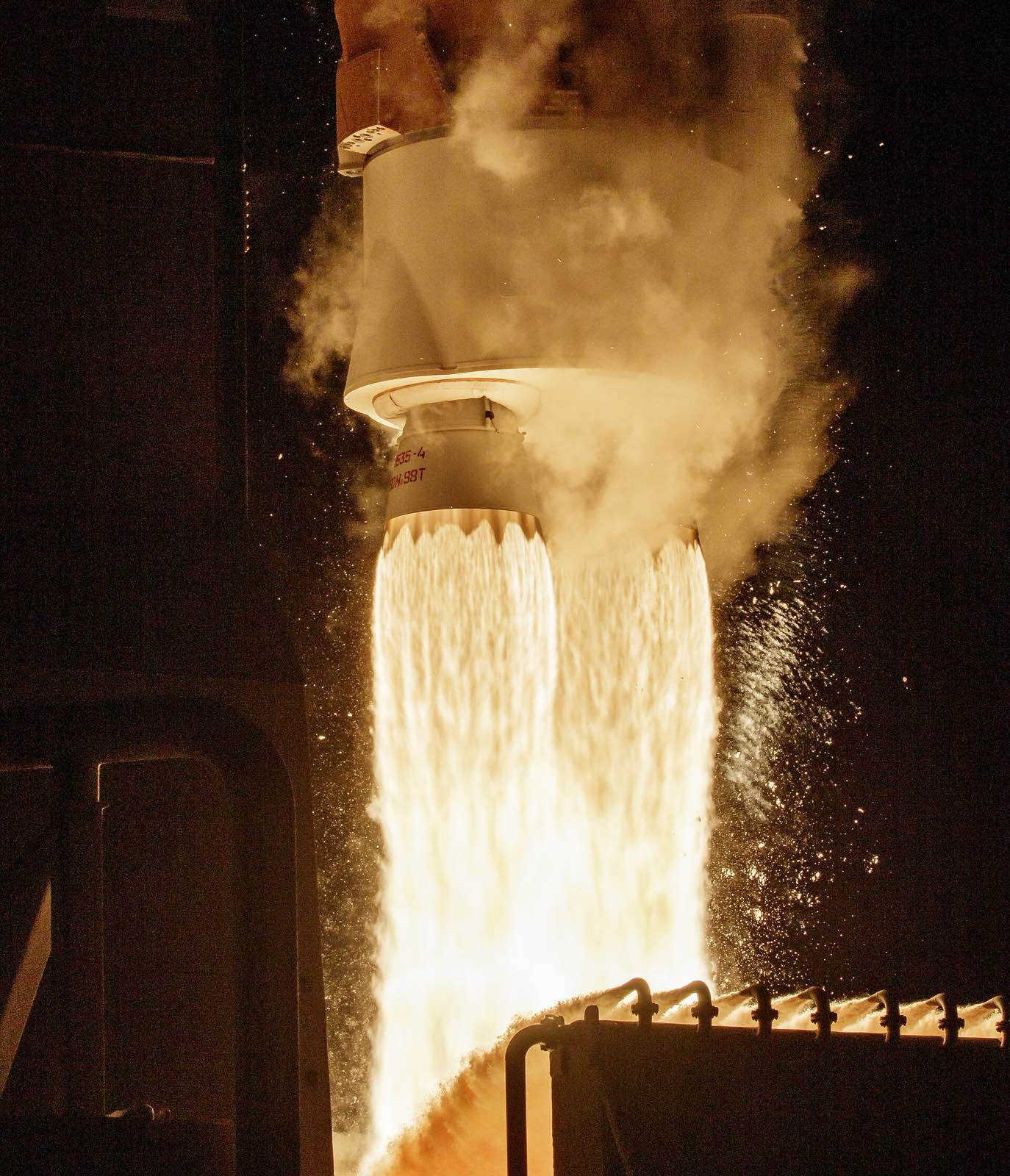
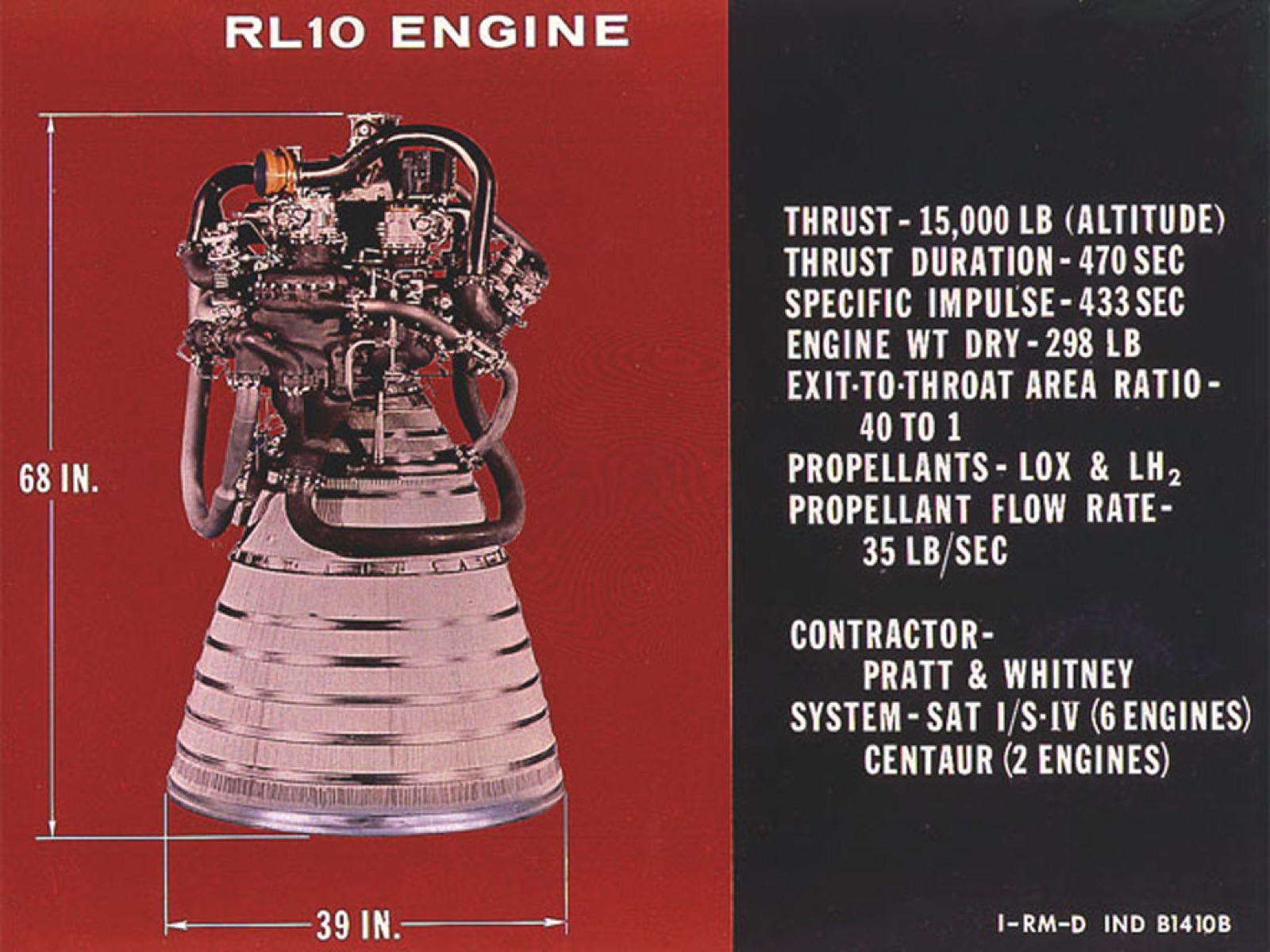
An Atlas V 401 launched Landsat 9 from Vandenberg on 27 September 2021, with CubeSats riding on an adapter ring beneath it. The booster's RD-180 engine comes from NPO Energomash, and the Centaur upper stage's RL10C-1 from Aerojet Rocketdyne. Northrop Grumman built the spacecraft on the LEOStar-3 platform it also used for Landsat 8. Ball Aerospace built OLI-2, a copy of Landsat 8's imager, and NASA Goddard built TIRS-2.
Carries
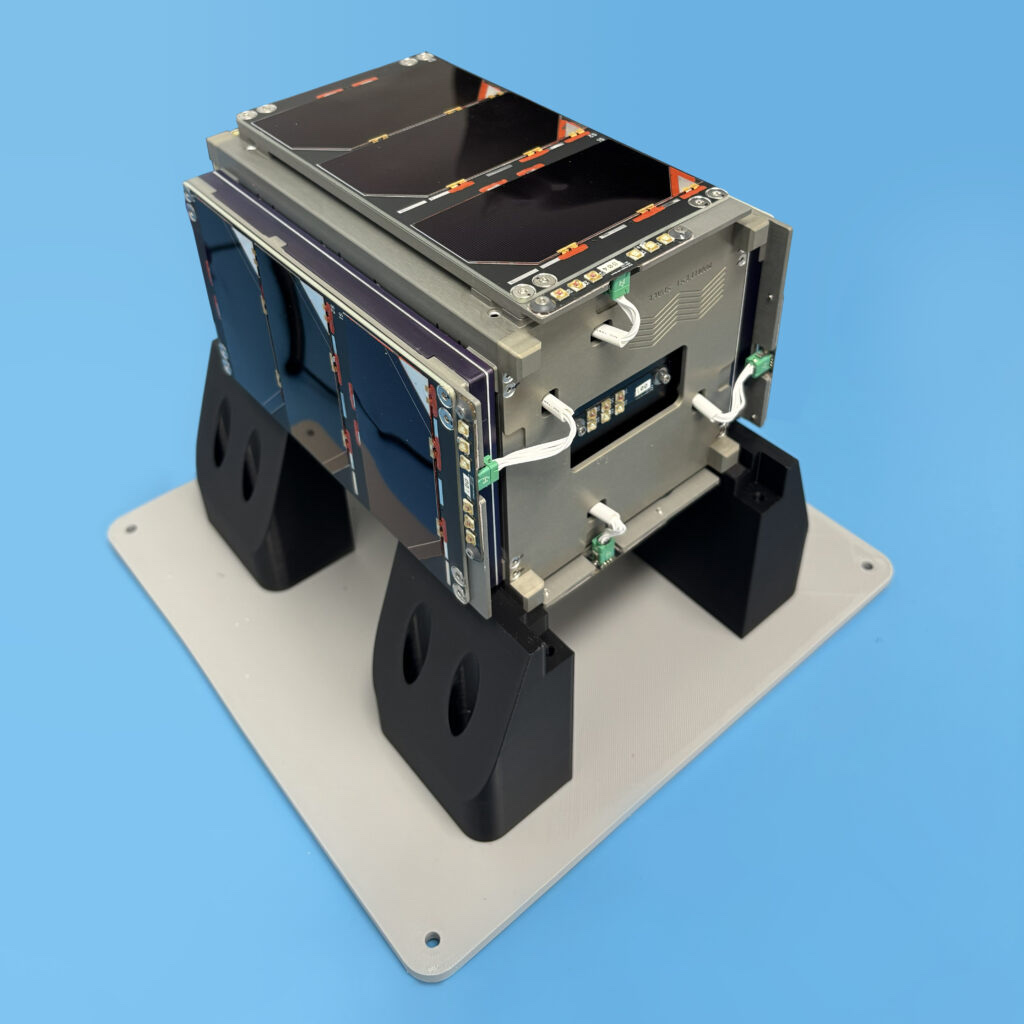
Landsat 9 ESPA Flight System (rideshare CubeSats such as CUTE and CuPID)
secondary-payload adapter ring flown under Landsat 9
The makers name the detector materials but little else. They do not say what the spacecraft body, panels and tanks are made of, which solar cells the array uses, or what the mirrors and lenses in the two instruments are made from. The semiconductor in the thermal detectors is also not named.
The detailed data
What is written above is built from these numbers and quotes. Each row links to the page it was taken from. Get all of it as JSON, or ask our MCP server.
Features
Carries OLI-2 and TIRS-2 instruments for land imaging
Built on the LEOStar-3 platform
Specifications
What
Value
Launch
27 September 2021, Atlas V 401
Mass
5,975 lb (2,710 kg)
Size at launch
4.6 m tall, 3 m deep, 3 m long
Orbit altitude
705 km (438 mi)
Design life
5 years, with 10 years of consumables
Spacecraft without instruments
about 3 m high, 2.4 x 2.4 m across, 2071 kg fully fuelled
Only instrument detector materials are stated; the bus and structure materials are not published on the pages found. Components, suppliers and links were added from public sources. A material is left blank where no source states it.
Spacecraft bus structure, panels, solar array cells, thermal blankets, radiators, propellant and tank materials are not stated on the NASA or Northrop Grumman pages read; no primary materials list was found. TIRS-2 QWIP semiconductor (GaAs reported elsewhere) and telescope optics materials were not confirmed on a page read. A NASA review slide mentions a graphite-epoxy material change but without detail, so it is not used. More detail: Not published on the pages read: the bus structure material and panel construction, solar cell type and array maker, battery maker, star tracker, SIRU, reaction wheel and thruster makers and counts, propellant tank material, transmitter and antenna makers, thermal blanket and radiator coatings, OLI-2 mirror and substrate materials, TIRS-2 lens materials and the QWIP semiconductor. The handbook gives the Ni-H2 battery and 3.14 Tb recorder; NASA gives no detail on the command and data handling or thermal hardware. Landsat 9 has no spacecraft engine in the catalog; its hydrazine thruster count is not stated on the pages read. Atlas V engines (RD-180, RL10C-1) are launch-vehicle engines, not spacecraft engines. More detail: Not published on the pages read: the bus structure material and panel construction, solar cell type and array maker, battery maker, star tracker, SIRU, reaction wheel and thruster makers and counts, propellant tank material, transmitter and antenna makers, thermal blanket and radiator coatings, OLI-2 mirror and substrate materials, TIRS-2 lens materials and the QWIP semiconductor. The handbook gives the Ni-H2 battery and 3.14 Tb recorder; NASA gives no detail on the command and data handling or thermal hardware. Landsat 9 has no spacecraft engine in the catalog; its hydrazine thruster count is not stated on the pages read. Atlas V engines (RD-180, RL10C-1) are launch-vehicle engines, not spacecraft engines.