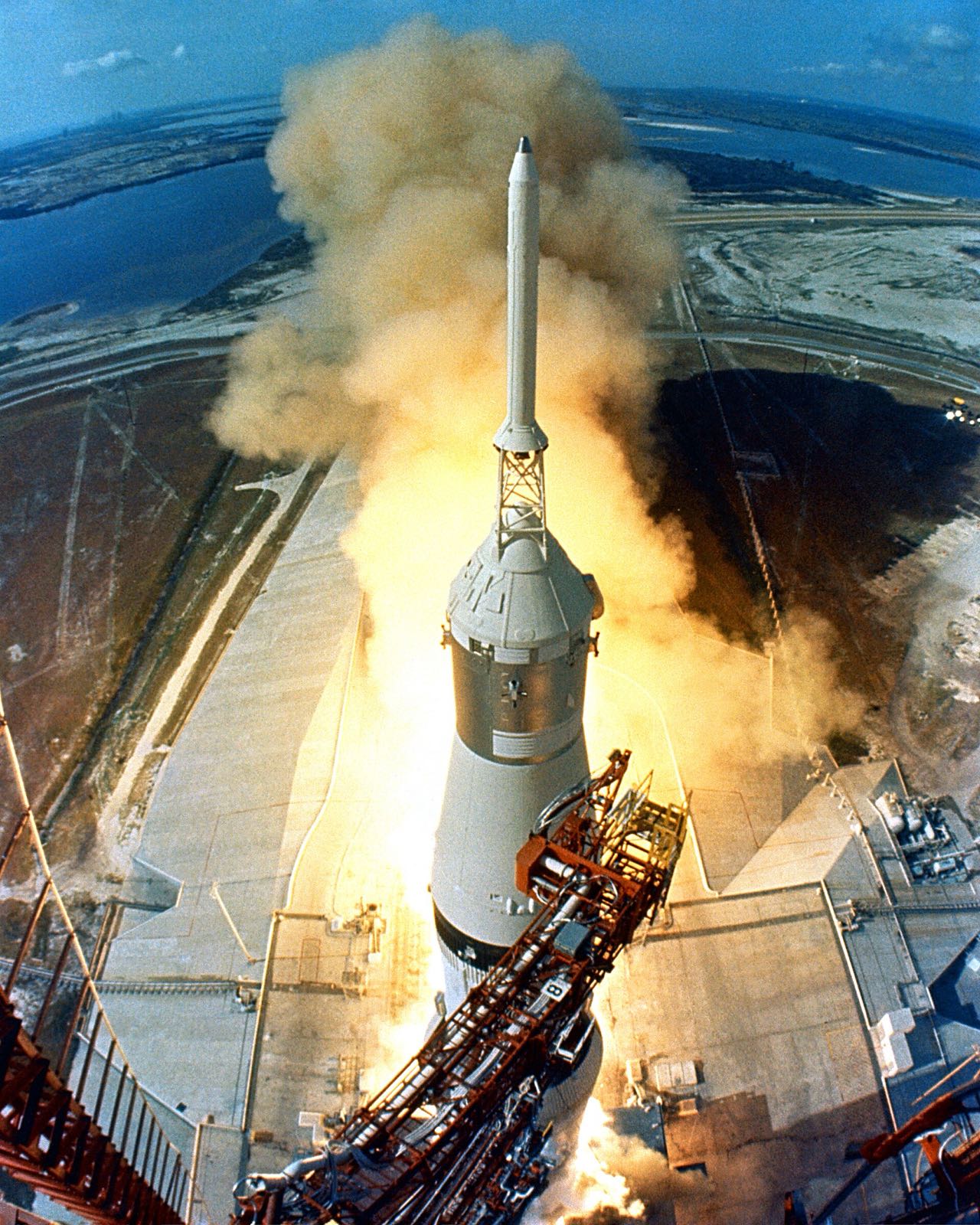
The hull
Destiny's hull is a pressurised aluminium cylinder, 8.5 m long and 4.3 m across. A waffle pattern on the outside of the hull gives it extra strength.
- Module hull
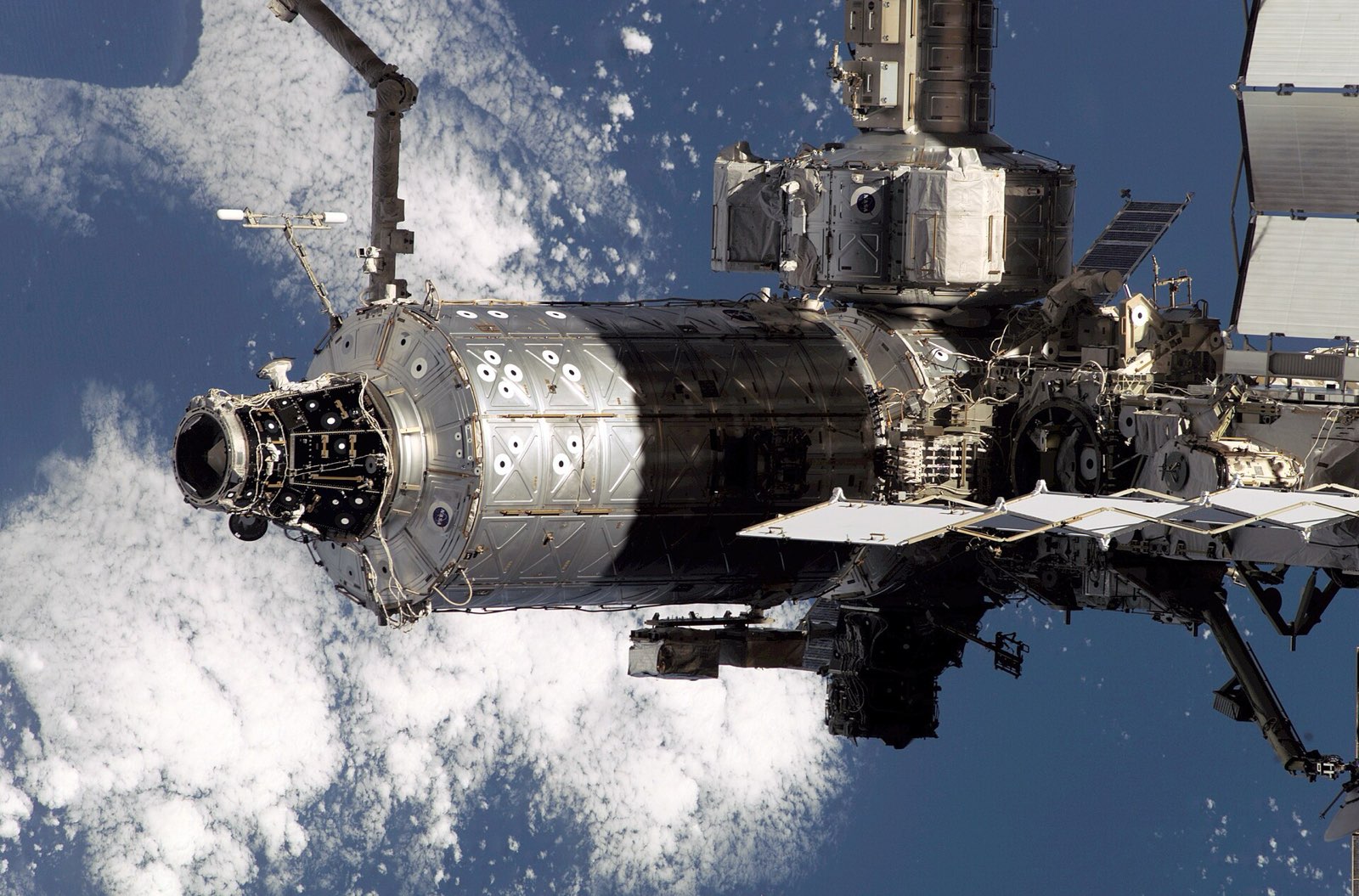
Destiny is the US laboratory of the International Space Station, an aluminium cylinder wrapped in a debris shield.
nasa-iss-destiny-module Destiny was the first permanent US research module on the International Space Station and has been in orbit since 2001. Boeing built it at the Marshall Space Flight Center. Astronauts run research in microgravity, the near-weightless conditions of orbit, and use its system racks for power, cooling and air control.
The hull is aluminium, with a waffle pattern on the outside for extra strength. Debris protection comes in two layers. An insulated blanket made of material similar to that in bulletproof vests covers the hull, and a thin aluminium shield covers the blanket.
The US laboratory of the International Space Station, in orbit since 2001. Astronauts run research in microgravity and use its system racks for power, cooling and air control. It is the main US science module of the station.
Destiny's hull is a pressurised aluminium cylinder, 8.5 m long and 4.3 m across. A waffle pattern on the outside of the hull gives it extra strength.
An insulated blanket covers the outside of the module. It is made of a material similar to that used in bulletproof vests. A thin aluminium debris shield covers the blanket.
The module weighs 32,000 lb (14,515 kg). It has room for 24 equipment racks, 13 for science and 11 for systems, and each rack weighs about 1,200 lb. There is one window, measuring 50.9 cm (20 in).
The hull, with a waffle pattern on the outside for extra strength, and the thin outer debris shield.
Space Shuttle Atlantis launched Destiny on mission STS-98 on 7 February 2001. Boeing built the module at the Marshall Space Flight Center. Destiny is the main US science module of the International Space Station, and its racks hold the research and life-support equipment.
Second U.S. module launched to the station; berthed to Unity's forward port in 2001
Sealed glovebox rack in the lab
Freezer rack in the lab (MELFI-3 listed under Destiny Racks)
Rack at the nadir science window, delivered on STS-131
EXPRESS Racks 1, 2, 6 and 7 listed under Destiny Racks in 2015
Fluid physics rack listed under Destiny Racks
Combustion rack listed under Destiny Racks
Materials science rack listed under Destiny Racks
First science rack in the lab, delivered on STS-102
Launched 7 Feb 2001 from KSC Pad 39A; installed by the shuttle robotic arm
Aerojet Rocketdyne
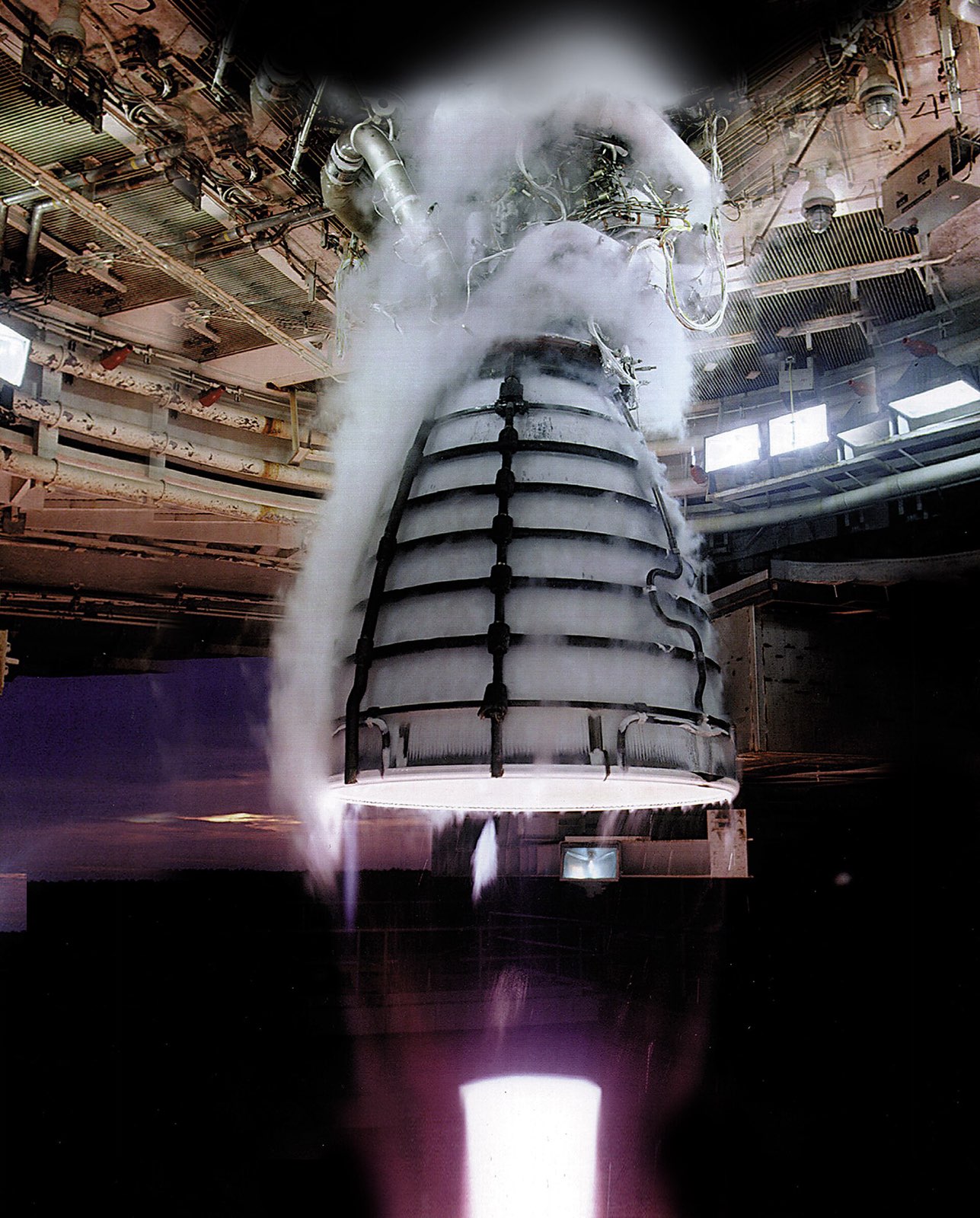
Main engines of the orbiter that lifted Destiny; launcher engine, not carried by the vehicle
Identity link: RS-25 is the former Space Shuttle Main Engine; launcher engine, not carried by the vehicle
Aerojet Rocketdyne
Space Shuttle orbital maneuvering system engine, two on the orbiter; aerojet OMS engine, 6,000 lbf, MMH/NTO; used for orbit insertion and deorbit; launcher engine, not carried by the vehicle
Two boosters, set BI-105PF; about 3,300,000 lb thrust each at sea level; motor segments refurbished by Thiokol; launcher motors, not carried by the vehicle
Built the laboratory module, begun in 1995 at NASA Marshall Space Flight Center
Internal thermal control system, developed jointly with Boeing
Manufacturer of the Carbon Dioxide Removal Assembly and its filters
Glass for the nadir science window panes
Polished the window panes
Anti-reflection, UV-blocking and electro-conductive coatings on the window panes
Destiny's activation moved ISS operations from Moscow to Houston
Controls payload operations and resource allocation for lab experiments
NASA
Aluminium. Here: Module hull; Module material (physical description) and more. There: Sunshield layer coating (all 5 layers).
graphite composite shell. Here: International Standard Payload Racks (ISPR) with graphite composite shell. There: Backplane structure.
NASA Goddard Space Flight Center
Aluminium. Here: Module hull; Module material (physical description) and more. There: Primary structure (heating/cooling panel, edge members, fittings, brackets); Optical-bench heater aluminum tape and more.
graphite composite shell. Here: International Standard Payload Racks (ISPR) with graphite composite shell. There: Instrument optical bench; Solar array wing (three panels, 10.7 m2).
NASA / Johns Hopkins APL
Aluminium. Here: Module hull; Module material (physical description) and more. There: Radiator fins.
Water. Here: Low Temperature Loop (LTL), water loop; Moderate Temperature Loop (MTL), water loop. There: Coolant.
NASA
Aluminium. Here: Module hull; Module material (physical description) and more. There: S-IVB forward skirt, aft skirt, thrust structure and aft interstage.
aluminium alloy 2219-T87. Here: Shield standoff and pressure wall behind the stuffed Whipple blanket. There: Fuel tank barrel skin.
Which aluminium alloy forms the hull is not stated. The fibre in the debris blanket is described only as similar to bulletproof-vest material. The window glass, the shell of the racks and the bolts are not described either.
What is written above is built from these numbers and quotes. Each row links to the page it was taken from. Get all of it as JSON, or ask our MCP server.
| What | Value |
|---|---|
| Mass | 32,000 lb (14,515 kg) |
| Length | 8.5 m (28 ft) |
| Diameter | 4.3 m (14 ft) |
| Launch | 7 February 2001, STS-98, Space Shuttle Atlantis |
| Rack capacity | 24 racks (13 science, 11 system) |
| Rack mass | About 1,200 lb each |
| Windows | One, 50.9 cm (20 in) |
| Length with attached Common Berthing Mechanism | 9.2 m (30.2 ft) |
| Mass with all racks and outfitting | 24,023 kg (52,962 lb) |
| Mass (STS-98 press kit figure) | 31,000 lb (the NASA page and Boeing release give 32,000 lb) |
| Cost (STS-98 press kit) | About US$1.4 billion |
| Cost (Andrews Space summary) | US$1.38 billion |
| Pressurised volume | About 106 m3 (3,750 ft3) |
| Habitable volume added to the station | 3,800 ft3, an increase of 41 percent |
| Window clear diameter (eoPortal; entry has 50.9 cm from Boeing/NASA) | 50.8 cm |
| Systems racks at launch | Five (NASA history article: designed for 10 systems and 13 research racks; guides say 11 system racks) |
| Racks delivered on STS-102 (March 2001) | Six systems racks, three resupply stowage racks, four stowage platforms and the first science rack |
| Stuffed Whipple shield ballistic limit | Stops a 13 mm aluminum sphere at 7 km/s |
| Station size after Destiny | About 112 tons; 171 ft long, 90 ft high, 240 ft wide |
| Role in the station | First of six planned research modules and command and control center for the whole complex |
| Construction start | 1995, Marshall Space Flight Center, Huntsville |
| Arrival at Kennedy Space Center | November 1998 |
| Naming ceremony | 30 November 1998 |
| Turned over to NASA for pre-launch work | August 2000 |
| Launch pad | Kennedy Space Center Launch Pad 39A |
| Atlantis plus payload liftoff weight | 254,694 lb |
| Shuttle liftoff weight on STS-98 | 4,520,235 lb |
| Berthing position, aft | Aft port berthed to the forward port of Unity (Node 1) |
| Berthing position, forward | Forward port later carries Node 2 (Harmony), moved there by the station arm |
| Installation spacewalks | Three; the first lasted 7 h 33 min |
| Berthing to Unity | Latched 10 Feb 2001; automatic bolts then tightened (time zone not stated) |
Each material named in the sources: where it is used here, which other products use it, and its key numbers when its material page exists.
Used in 8 partsModule hull · Module material (physical description) · Outer debris shield · +5 more
Used in 2 partsLow Temperature Loop (LTL), water loop · Moderate Temperature Loop (MTL), water loop
Used in 1 partShield standoff and pressure wall behind the stuffed Whipple blanket
Used in 1 partEarly External Active Thermal Control System (EEATCS) loops and P6 radiators
Used in 1 partInternational Standard Payload Racks (ISPR) with graphite composite shell
Used in 1 partStuffed Whipple shield: Kevlar fabric layers (x6)
Used in 1 partStuffed Whipple shield: Nextel ceramic-fabric layers (x6)
Hull and outer debris shield are named as aluminum; the debris blanket fibre, alloy and window glass are not. Components, suppliers and links were added from public sources. A material is left blank where no source states it.
| Part | Material | Finish and standard | Made by |
|---|---|---|---|
| Module hull“an exterior waffle pattern in the aluminum hull of the lab module provides extra strength” | aluminum (alloy not stated)aluminium | — | Boeing, Marshall Space Flight Center |
| Module material (physical description)“Material: Aluminum” | aluminumaluminium | — | — |
| Part | Material | Finish and standard | Made by |
|---|---|---|---|
| Insulated debris shield blanket“An insulated debris shield blanket, made of material similar to that used in bulletproof vests, covers the exterior.” | Not said | — | — |
| Outer debris shield“This blanket is covered by a thin aluminum debris shield” | aluminum (thin)aluminium | — | — |
| Part | Material | Finish and standard | Made by |
|---|---|---|---|
| Cylindrical sections (x3)Three cylindrical segments that make up the pressurised aluminum shell“three cylindrical sections and two endcones that contain the hatch openings” | aluminum (alloy not stated for the sections)aluminium | — | Supplier: Boeing |
| Forward endcone with hatch opening (x1)Conical end closure at the forward port; its hatch was the main shuttle access until Node 2 arrived“The forward hatch will be used as the main access to the orbiter on future missions until Node 2 arrives.” | aluminum (alloy not stated)aluminium | — | Supplier: Boeing |
| Aft endcone with hatch opening (x1)Conical end closure at the aft port; hatch leads to Unity and the interface heat exchangers sit on it“The aft hatch (hatch to Unity) will be opened and will remain open” | aluminum (alloy not stated)aluminium | — | Supplier: Boeing |
| Exterior waffle stiffening patternWaffle-pattern relief on the outside of the aluminum hull that adds strength“an exterior waffle pattern in the aluminum hull of the lab module provides extra strength” | aluminum (hull alloy not stated)aluminium | — | Supplier: Boeing |
| Corner standoffs for utilities and plumbing (x4)Corner structures inside the shell forming raceways for ducting, piping and wiring to the racks“Four standoffs provide raceways for module utilities” | Not said | — | — |
| Rack bays and rack locations (24 locations in six full rack bays)Structural bays that carry the racks on the port, starboard, overhead and deck faces“This module contains twenty-four rack locations within six full rack bays.” | Not said | — | — |
| Part | Material | Finish and standard | Made by |
|---|---|---|---|
| Passive Common Berthing Mechanism (aft port) with berthing bolts and latchesPassive half of the aft joint; Unity's active mechanism latches to it and bolts draw the two modules tight“The PCBM on Destiny is located in the laboratory's aft port.” | Not said | — | — |
| Active Common Berthing Mechanism (forward port)Active half of the forward berthing joint; first mated to PMA-2, later to Node 2 (Harmony)“The ACBM is in the forward port of the laboratory.” | Not said | — | — |
| Hatches (x2) with windows and pressure interlockOne hatch per berthing port, openable from either side; an interlock stops opening against negative pressure“Each of the two berthing ports on Destiny contains a hatch.” | Not said | — | — |
| Vestibule jumpers and grounding straps (Unity to Destiny)Connect piping and wiring across the vestibule; grounding straps tie the two berthing mechanisms together“Jumpers in the vestibule, the area between Unity and Destiny, connect the piping and wiring between the two.” | Not said | — | — |
| Truss mounting interface on top of the labStructural mount for the station truss, which sits on top of the lab“the truss is mounted atop the U.S. Lab” | Not said | — | — |
| Z1-to-lab umbilical trayCarries P6 solar-array power and fluid umbilicals from the Z1 truss into the lab“Power is brought to the Destiny from the P6 array through the Z1/laboratory umbilical tray.” | Not said | — | — |
| Part | Material | Finish and standard | Made by |
|---|---|---|---|
| Power Data Grapple Fixture (PDGF) on the lab exteriorAttachment point giving the station robotic arm power and data; install scheduled for STS-98 spacewalk 2“remove the laboratory Power Data Grapple Fixture (PDGF) from the orbiter sidewall and install the PDGF on Destiny” | Not said | — | — |
| Robotic workstation racks (x2)Crew stations that control the station's Canadian robotic arm and its four cameras“Two are robotic workstation racks for control of the station's Canadian robotic arm and its four cameras” | Not said | — | — |
| Part | Material | Finish and standard | Made by |
|---|---|---|---|
| Stuffed Whipple shield: Nextel ceramic-fabric layers (x6)Ceramic fabric layers in the intermediate bumper that break up and slow impacting particles“For the ISS US Laboratory module, the intermediate bumper is composed of several ceramic fabric layers” | Nextel 312 AF 62 ceramic fabric (alumina-boria-silica fibres)nextel-312-af-62 | — | — |
| Stuffed Whipple shield: Kevlar fabric layers (x6)Aramid fabric backing of the intermediate blanket that slows the debris cloud“6 layers of Kevlar® 29 style 710 with total mass per unit area of 0.132 g/cm2” | Kevlar 29 style 710 fabrickevlar-29-style-710 | — | — |
| Shield standoff and pressure wall behind the stuffed Whipple blanketGap and rear wall that stop what the bumper layers let through (ESA table row 'NASA Lab Module')“6 Nextel 312 AF 62/ 6 Kevlar 710 0.48 cm Al 2219 T87 2.67 11.4” | aluminium alloy 2219-T87 (rear wall per the ESA table row 'NASA Lab Module')aluminium-2219-t87 | — | — |
| Insulation blanket, replaceable shield panels and shell heatersInsulation blanket against temperature extremes; shell heaters for survival and condensation control“It is covered with an insulation blanket to protect the module from the harsh temperatures of outer space.” | Not said | — | — |
| Part | Material | Finish and standard | Made by |
|---|---|---|---|
| Nadir science window assembly (four panes)Earth-facing optical-quality window in an open rack bay, used mainly for Earth observation“The window is made up of an assembly of four separate panes” | Not said | — | Supplier: Corning (glass); Zygo (polishing); Optical Coating Laboratory (coatings) |
| Outer replaceable debris paneOutermost pane protecting the window from small debris; replaceable on a spacewalk“The outermost pane is a replaceable debris pane a little more than 1.0 cm thick.” | Not said | — | — |
| Primary and secondary pressure panes (x2)Two middle panes that keep the laboratory module pressurised“The two middle panes serve as the primary and secondary pressure windows” | Not said | — | — |
| Inner multi-layer scratch pane with integral heaterInner pane that takes bumps and carries a condensation heater; removed after WORF arrived“The scratch pane has an integral heater element to prevent condensation from forming on the pressure panes” | Not said | — | — |
| External window shutter (aluminum cover with gearbox)Metal cover that shields the window from micrometeoroids and debris; opened and closed by the crew“window shutter to protect the window from potential micrometeoroid and orbital debris strikes” | aluminum (shutter cover)aluminium | — | — |
| Window Observational Research Facility (WORF) rackRack at the nadir window that gives cameras and sensors a stable mount with power, command, data and cooling“The Window Observational Research Facility (WORF) was delivered to the ISS in April 2010 on the STS-131 mission of Space Shuttle Discovery.” | Not said | — | — |
| Part | Material | Finish and standard | Made by |
|---|---|---|---|
| Low Temperature Loop (LTL), water loopWater loop at about 4 C for equipment needing low temperatures such as the cabin air assemblies“The U.S. Laboratory contains two independent loops, a Low Temperature Loop (LTL) and a Moderate Temperature Loop (MTL).” | water (coolant; purity not stated)water | — | Supplier: Boeing and Honeywell Engines & Systems (ITCS developed jointly) |
| Moderate Temperature Loop (MTL), water loopWater loop at about 17 C that cools most systems equipment such as avionics and payload experiments“The MTL nominally operates at 63° F (17° C) and provides most of the cooling for systems equipment” | water (coolant; purity not stated)water | — | Supplier: Boeing and Honeywell Engines & Systems (ITCS developed jointly) |
| Pump package assemblies (one per loop)Pump, gas trap, filter and accumulator that circulate and condition the water coolant“The PPA is made up of the pump assembly, gas trap and filter assembly.” | Not said | — | Supplier: Boeing and Honeywell Engines & Systems (ITCS developed jointly) |
| ITCS flow-control hardware (SFCA, mixing valves, loop crossover, pump bypass)Set coolant pressure, blend flows, and let one pump serve both loops or coolant bypass an idle pump“This assembly provides for proper coolant pressure at various locations in the ITCS and for pump isolation capability.” | Not said | — | Supplier: Boeing and Honeywell Engines & Systems (ITCS developed jointly) |
| Rack flow control assemblies (RFCA)Modulate coolant flow to each rack that needs active cooling“Each rack that requires active coolant flow modulation is provided with an RFCA.” | Not said | — | Supplier: Boeing and Honeywell Engines & Systems (ITCS developed jointly) |
| Cold plates (eight sizes)Plates that take waste heat from equipment into the water loops“The ISS ITCS utilizes eight different sizes of cold plates” | Not said | — | Supplier: Boeing and Honeywell Engines & Systems (ITCS developed jointly) |
| Heat exchangers: interface (IFHX), payload/regenerative and SPCUPass lab-loop heat to the external ammonia loops; isolate payloads; take suit-loop heat“The Interface Heat Exchanger (IFHX) units accomplish heat transfer from the IATCS water coolant loops to the external ammonia coolant loops.” | Not said | — | — |
| Early External Active Thermal Control System (EEATCS) loops and P6 radiatorsTemporary ammonia loops sending the lab's heat to P6 radiators until the permanent system started“Interface Heat Exchanger (IFHX) located on the Laboratory module's aft endcone to the radiators located on truss segment P6” | anhydrous ammonia (working fluid)anhydrous-ammonia | — | — |
| Thermal control system racks (x2)Two launch-installed racks that circulate chilled water to cool other racks and the cabin air“There are two thermal control system racks that circulate chilled water to cool other racks and the cabin air.” | Not said | — | — |
| Part | Material | Finish and standard | Made by |
|---|---|---|---|
| Atmosphere revitalization (AR) rackRack for carbon dioxide removal, trace contaminant control and cabin-air monitoring“The atmosphere revitalization (AR) rack provides for carbon dioxide removal, trace contaminant control, and monitoring of the cabin air.” | Not said | — | — |
| Carbon Dioxide Removal Assembly (CDRA)Sorbent-bed system that removes carbon dioxide from the cabin air“One CDRA system resides in the ISS U.S. Destiny Laboratory module.” | Not said | — | Supplier: Honeywell International |
| Trace contaminant control subassembly (TCCS)Removes chemical trace contaminants from the cabin air“TCCS will remain in the US Lab AR Rack.” | Not said | — | — |
| Major Constituent Analyzer (MCA)Analyzer that monitors the major constituents of the cabin air“Sample Delivery System lines launched in the Destiny and Unity are connected to the major constituent analyzer in Destiny” | Not said | — | — |
| Common Cabin Air Assembly (CCAA) racks (x2)Temperature and humidity control: air circulation, cooling and water-vapour condensation“one of the two Common Cabin Air Assembly (CCAA) racks located in the US Lab” | Not said | — | — |
| Pressure control assembly, vent relief assembly and equalization valvesAtmosphere control and supply hardware that holds and equalises cabin pressure“The atmosphere control and supply subsystem contains the pressure control assembly, vent relief assembly, and manual pressure equalization valves and gas lines.” | Not said | — | — |
| Smoke detectors and fire detection and suppression equipmentDetects combustion products and provides fire suppression“The standard fire detection and suppression equipment is launched with Destiny” | Not said | — | — |
| Water recovery hardware and vent systemsCondensate tank, water vent assembly, wastewater tank and vacuum vent that handle water removed from the air“as are the water recovery and management condensate tank, water vent assembly and waste and fuel cell water lines” | Not said | — | — |
| Oxygen Generation System (OGS) rackElectrolysis rack making crew oxygen; in the lab 2007 to 2010 and again since 2022“activated in U.S. Lab in July 2007, moved to Node 3 in 2010 and relocated back to U.S. Lab in September 2022” | Not said | — | — |
| Part | Material | Finish and standard | Made by |
|---|---|---|---|
| Avionics racks (x2 at launch)Racks housing equipment for communications, ECLSS, thermal control, data handling and power control“The two avionics racks house equipment controlling the Communications and Tracking” | Not said | — | — |
| Multiplexer/demultiplexer computers (MDMs, 11 added with the lab)Computers that control U.S. on-orbit segment systems including payloads“The Command and Data Handling system gains 11 MDMs with the arrival of the lab.” | Not said | — | — |
| Guidance, navigation and control computers (attitude control)Lab computers that run station attitude control using the control moment gyros on Z1“Two computers in the "Destiny" lab will be dedicated to keeping the space station in proper orientation” | Not said | — | — |
| Communications and tracking equipment (audio, video distribution, S-band, UHF, Ku-band)Internal audio, video distribution and radio equipment for station communications“The audio system comes online and the hardware for Ku-band, UHF and the video distribution system are delivered” | Not said | — | — |
| Lab systems software (over 300,000 lines of code)Software that monitors and controls atmosphere, thermal conditioning, fire detection and payload services“Software containing over 300,000 lines of code will monitor and control the atmospheric and thermal conditioning, fire detection” | Not said | — | — |
| Part | Material | Finish and standard | Made by |
|---|---|---|---|
| DC-to-DC converter units (DDCUs, two in the lab)Convert primary solar-array power to secondary power for lab systems and payloads“The power is brought to two DC-to-DC converter units in the laboratory” | Not said | — | — |
| Power distribution racks with DDCUs and remote power control modules (RPCMs)Two racks delivered on STS-102 that distribute power to laboratory payloads“Of the six systems racks, two racks contain power distribution equipment to support laboratory payloads.” | Not said | — | — |
| Part | Material | Finish and standard | Made by |
|---|---|---|---|
| Interior lights and emergency egress lighting batteriesLaboratory interior lighting and battery-backed emergency egress lighting“followed by activation of the laboratory's interior lights” | Not said | — | — |
| Part | Material | Finish and standard | Made by |
|---|---|---|---|
| International Standard Payload Racks (ISPR) with graphite composite shellRemovable rack structure that holds system hardware and payloads“Made with a graphite composite shell, racks inside the International Space Station lab weigh around 1,200 pounds (544 kilograms) each.” | graphite composite shell (resin not stated)graphite-composite | — | — |
| Active Rack Isolation System (ARIS)Active damping that isolates a payload rack from vibration (Destiny rack position not stated)“The ARIS is designed to isolate payload racks from vibration.” | Not said | — | Supplier: Boeing |
| Part | Material | Finish and standard | Made by |
|---|---|---|---|
| EXPRESS Racks (1, 2, 6 and 7 listed for Destiny)Sub-rack-sized experiments with standard power, data, cooling and gas utilities“Sub-rack-sized experiments with standard utilities such as power, data, cooling, and gases.” | Not said | — | — |
| Fluids Integrated Rack (FIR)Fluid physics research facility for many kinds of microgravity experiments“A complementary fluid physics research facility designed to accommodate a wide variety of microgravity experiments.” | Not said | — | — |
| Combustion Integrated Rack (CIR)Facility for sustained, systematic combustion experiments in microgravity“Used to perform sustained, systematic combustion experiments in microgravity.” | Not said | — | — |
| Materials Science Research Rack-1 (MSRR-1)Rack for studies of many types of materials“Accommodates studies of many different types of materials.” | Not said | — | — |
| Microgravity Science Glovebox (MSG)Sealed glovebox for small science and technology experiments“The Microgravity Science Glovebox provides a sealed environment for conducting science and technology experiments.” | Not said | — | — |
| Minus Eighty-Degree Laboratory Freezer for ISS (MELFI-3 listed for Destiny)Refrigerator/freezer for biological and life science samples“The Minus Eighty-Degree Laboratory Freezer for ISS (MELFI) provides refrigerated storage and fast-freezing of biological and life science samples.” | Not said | — | — |
| Human Research Facility (HRF) rackFirst science rack in the lab for human life science investigations“The HRF rack will be used to conduct human life science investigations.” | Not said | — | — |
| Part | Material | Finish and standard | Made by |
|---|---|---|---|
| Crew sleep compartment and exercise equipmentHabitation hardware placed in the lab“A third sleep compartment is located in the U.S. Lab” | Not said | — | — |
Aluminum alloy and temper of the hull, blanket fibre (only described as similar to bulletproof-vest material), window glass, rack shell material and bolts are not stated in the NASA or Boeing pages read. The Boeing release gives 16-ton and 32,000 lb in different places; the 32,000 lb figure agrees with the NASA page. More detail: Not published in the sources read: any NTRS or Boeing paper on the pressure-shell structure itself (no source found for hull alloy, wall thickness of the cylinders or isogrid depth); alloy and temper of Destiny's hull sections (the only alloy found is Al 2219-T87 for a 0.48 cm pressure wall, and Al 6061 0.19 cm for the bumper, in an ESA table row labelled 'NASA Lab Module'; NASA decks give generic ISS alloys); the glass type of the window panes (Corning glass, Zygo polishing and Optical Coating Lab coatings are named, fused silica is not); Boeing and NASA call the debris layer 'material similar to bulletproof vests' while the Nextel/Kevlar stack comes from NASA/DuPont and ESA papers; suppliers of the racks (ISPR), ARIS rack position in the lab, MDMs, DDCUs, RPCMs, CCAA, MCA, TCCS, fire detection, lighting, EXPRESS/FIR/CIR/MSRR/MSG/HRF/MELFI/WORF hardware; Sabatier hardware is planned only for the OGS rack, not installed in Destiny. Rack counts differ: 24 (13 science, 11 system) in NASA/Boeing guides, 23 in the STS-98 press kit, 24 locations in six full bays in a 2024 NASA paper, and the Destiny rack list changes over time (five EXPRESS racks in 2008, EXPRESS 1, 2, 6, 7 in 2015). Destiny has two berthing ports (aft passive CBM to Unity, forward active CBM, now mated to Harmony); the truss mounts on top and the window faces nadir, so there are no zenith or nadir CBM ports. The brief's relation types have no 'berthed to', so the Unity and Harmony adjacency is kept in the CBM component rows instead of relations. The STS-98 press kit lists SSME units 2052, 2044 and 2047 but no RS-25 text, so the RS-25 identity comes from NASA's SLS guide; the AJ10-190 name comes from an Aerojet Rocketdyne data sheet (Wayback copy). Several NASA pages exist only as Wayback copies (Elements and Systems guide PDFs, 2007 Destiny page, Boeing 2008 page, Andrews page, 1997 standoff image page, OMS reference, Aerojet data sheet). The shared web-search budget ran out before more searches could be made for a CBM design paper, rack makers and hatch seal materials. Wikipedia and the mirror site shuttlepresskit.com were not used as sources.
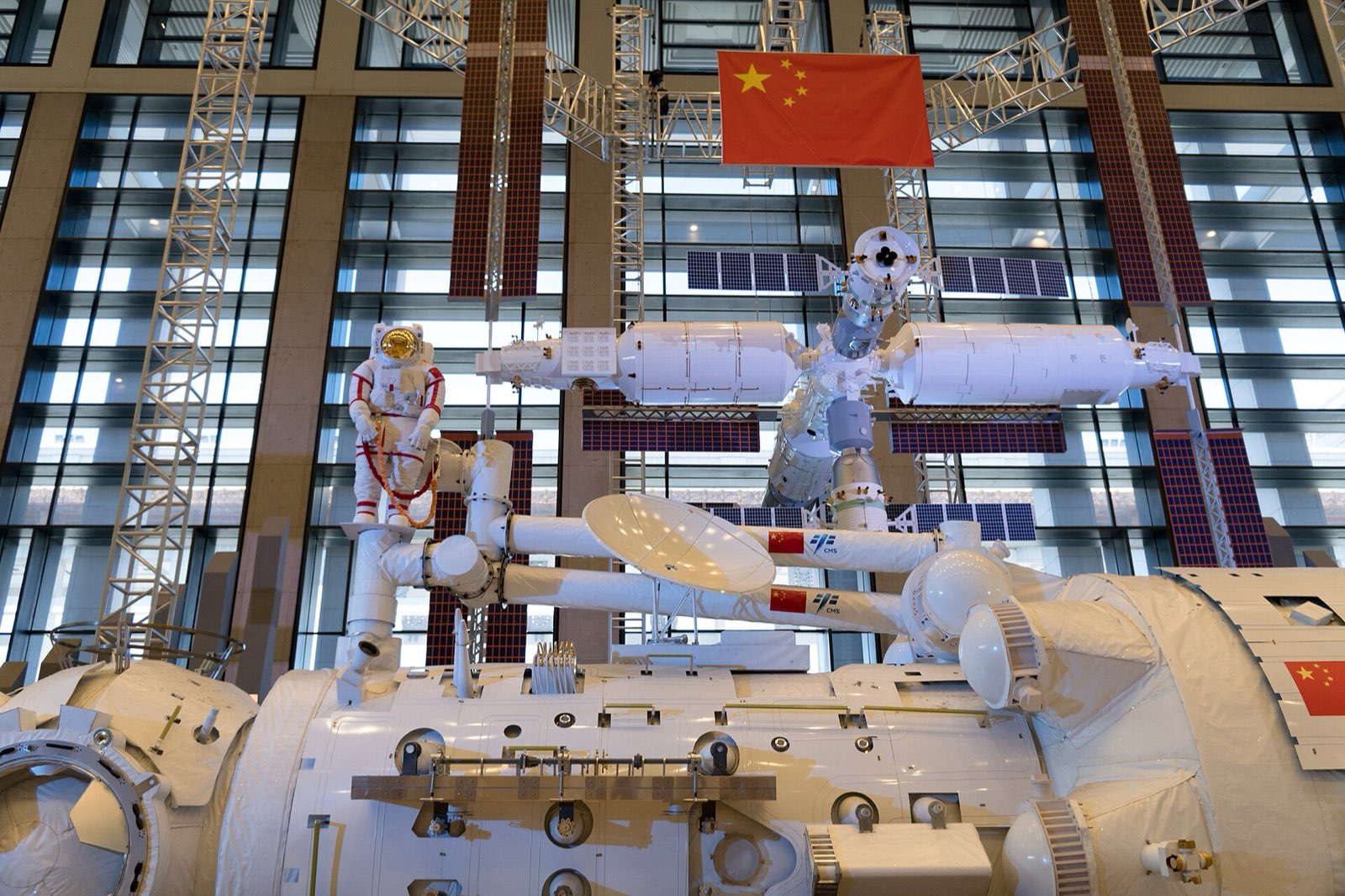 Museum mockup
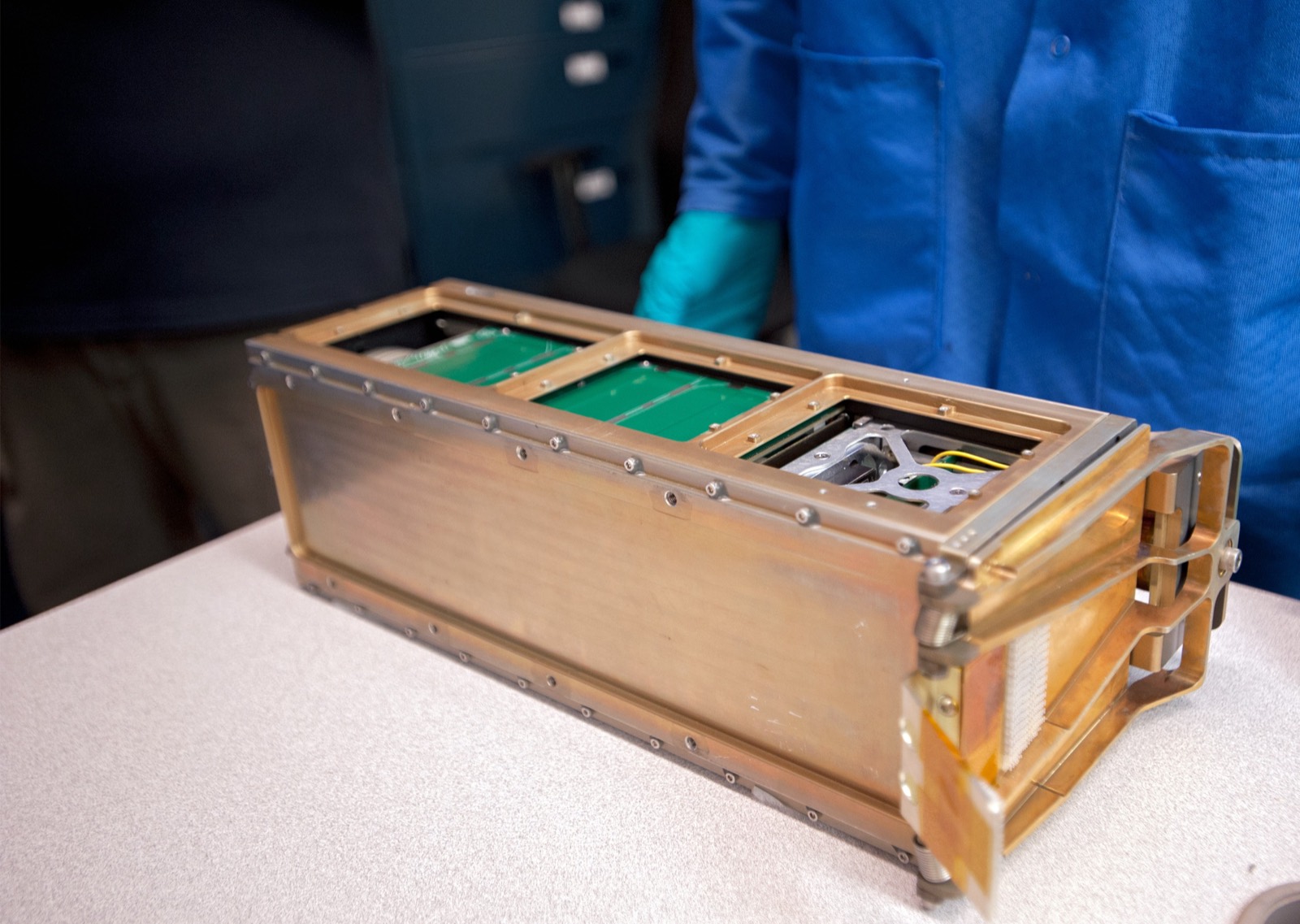 CubeSats in a P-POD dispenser
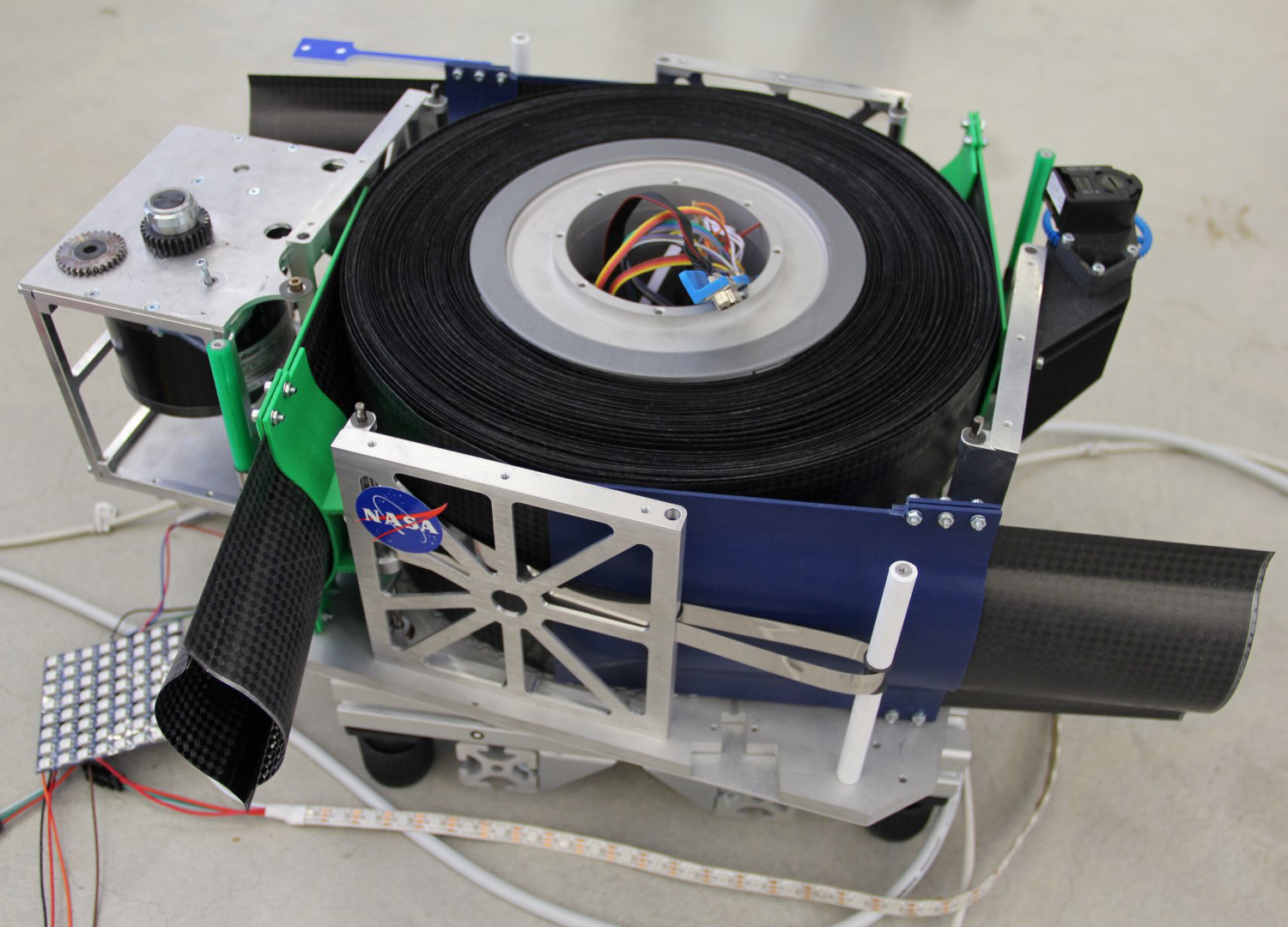 NASA Deployable Composite Boom
Collected from public pages and documents, checked 4 Nov 2026.
Published · Updated