NASA Artemis $2B Funding Request: What It Buys
Published
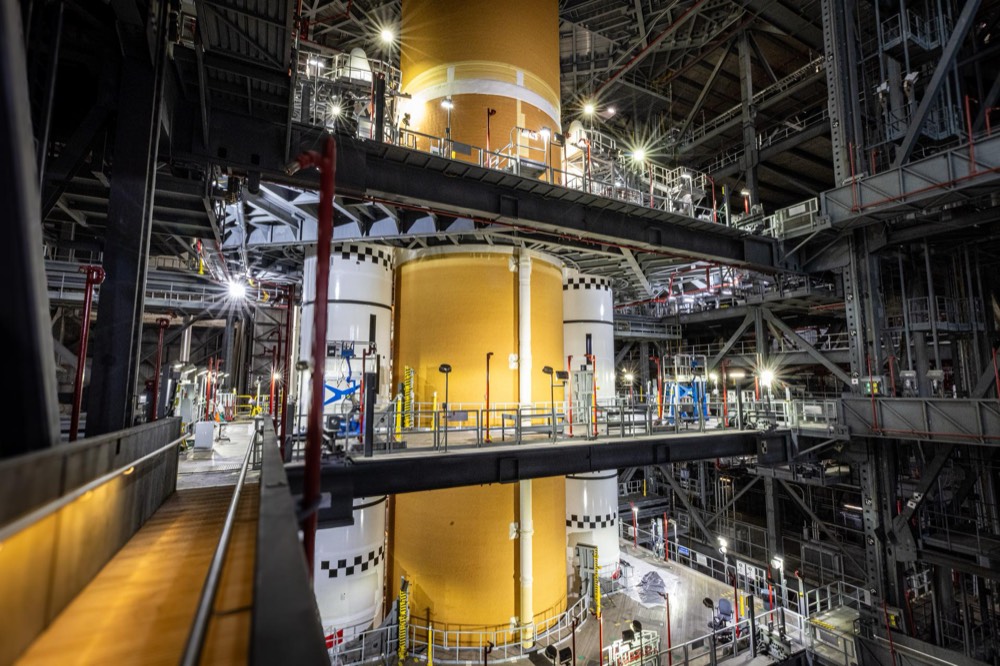
The White House has asked Congress to let NASA run Artemis at an annual rate of $9.783 billion while the government operates on a stopgap budget, $2 billion more than the $7.783 billion enacted for fiscal 2026. The request went to Capitol Hill on 23 November 2026 in a list of budget exceptions, called anomalies, for a new continuing resolution. Its stated purpose is in-house manufacturing at NASA, in suits, thrusters, Space Launch System hardware, habitats and astronaut safety systems. The current stopgap expires on 11 December.
Key facts
Request: a $2 billion "higher rate for operations" anomaly for the Artemis program, sent by the White House on 23 November 2026. Numbers: $7,783 million enacted for fiscal 2026, $9,783 million as the rate with the anomaly, an increase of 25.7 percent. Purpose: supply-chain acceleration through in-house manufacturing and modernization in suits, thrusters, SLS-related hardware, habitats and safety systems for astronauts. Deadline: the current continuing resolution ends on 11 December 2026; Congress returns from its Thanksgiving recess on 30 November. Undecided: none of the 12 fiscal 2027 appropriations bills has cleared Congress, and the list gives no end date for the new resolution. Same list: $5 billion for Golden Dome and larger increases for submarines, with more Department of War items still to come.
What the $2 billion is for, in the document's words
The list is specific about method and silent on the split. It asks for money "to meet the schedule for Artemis acceleration activities", including supply-chain acceleration through in-house manufacturing and modernization of NASA's own capabilities in suits, thrusters, SLS-related hardware, habitats and safety systems for astronauts. It says NASA must build and retain the ability to make "complex low-rate components and major assemblies", partly to "offload supply chains for other national priorities", and to modernize its development and production techniques as its production rate rises. Without the money, it says, activities would be delayed and miss a "required operational need date"; it does not say what that date is, and it does not divide the $2 billion among suits, thrusters, SLS hardware and habitats.
A rate, not a cheque
A continuing resolution funds an agency at last year's rate, and an anomaly raises that rate for one line. NASA would not receive $2 billion at once. The White House list gives no end date for the new resolution, though trade reports describe it as running notionally through 31 March. On that assumption, from 12 December to 31 March is 110 days, and the extra authority would come to about $600 million (our arithmetic: $2 billion times 110 over 365).
Against the April budget request, the picture is mixed. That request put $8.5 billion behind Artemis and Mars-focused capabilities, inside an $18.8 billion request for the whole agency, down from the $24.4 billion Congress provided for 2026. The Artemis rate with the anomaly, $9.783 billion, would sit above the $8.5 billion figure, although the two numbers may not cover identical accounts. The document adds that the extra topline is needed to do this "without jeopardizing other priorities" in the National Space Policy, which reads as an intent to add money on top of NASA's other lines rather than move it from science. Those lines stay at their 2026 rates while a stopgap runs.
Separate money exists too. NASA's April summary counts $1.8 billion of mandatory funding from the 2025 reconciliation law for up to two more SLS flights after Artemis III and for the lunar Gateway, which the agency says it will redirect toward lunar base camp work.
What NASA says it can already build itself
In a 4 November update NASA said it redesigned, built and tested a critical fuel-line component in-house in five months, at roughly a tenth of an outside vendor's estimate, and that Artemis III hardware processing times had been cut by about half. Artemis program manager Jeremy Parsons described the aim as "rebuilding our core competencies" instead of outsourcing expertise. Those are NASA's own figures and have not been audited.
NASA's October readiness chart lists what is in the pipeline. The Artemis III core stage is at Kennedy with its boosters stacked and four RS-25 engines installed. The Artemis IV engines are complete and in storage. The Sortie spacesuit, a lighter design NASA says halves the mass of the larger suit, goes through qualification builds in the third quarter of 2027 and has a first system due in the first half of 2028. A stretched Centaur V upper stage for Artemis V completes production in the second half of 2028. The anomaly text names the same categories: suits and SLS-related hardware.
The list it sits on, and the schedule it protects
Defense dominates the list. The biggest increases are for submarines, $8.4 billion for the Virginia class and $8.1 billion for the Columbia class, followed by Golden Dome at $5 billion, which has no fiscal 2026 funding line, and $3.4 billion for military health. The list's header says more Department of War anomalies are forthcoming. Among civil items, NASA's $2 billion sits beside a $2.3 billion wildfire-suppression increase, and the FAA's operations anomaly lists "higher demand for commercial space activities" among its reasons.
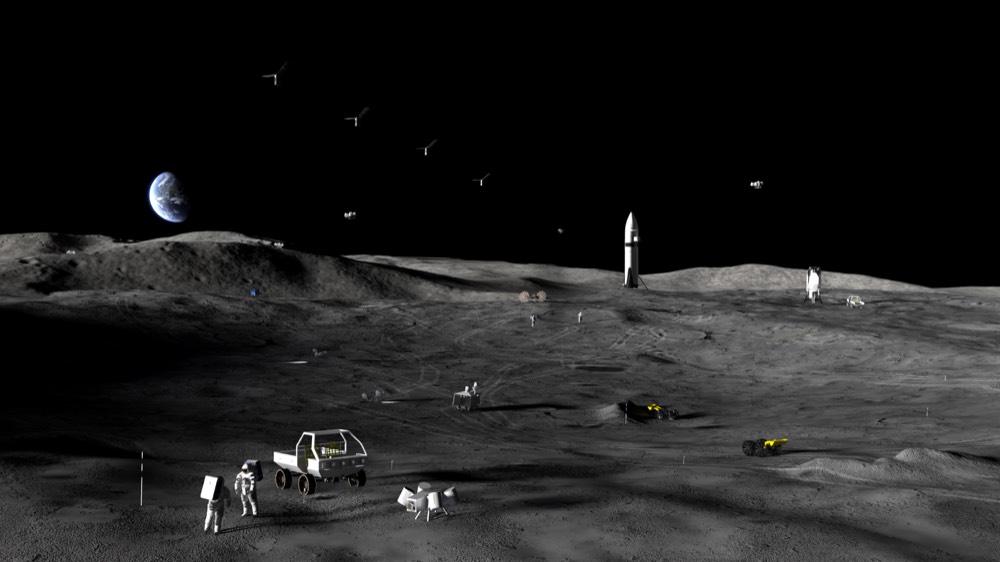
The schedule is the one NASA has been defending. Artemis II flew in April 2026, a crewed trip of nearly 10 days around the Moon. Artemis III is planned for 2027 as a 14-day Earth-orbit mission to test docking between Orion and test versions of the Blue Origin and SpaceX landers. Artemis IV, in 2028, is the first landing, and Artemis V the second landing in the same year. NASA Administrator Jared Isaacman has said the campaign must move "with urgency" while strategic competitors pursue a presence beyond Earth.
The next fixed dates are Congress's return on 30 November and the 11 December expiry. Whether Congress passes another continuing resolution at all, how long it would run, and whether the NASA anomaly survives in it are all undecided.