Progress MS-36 Launch Kept Quiet by Roscosmos
Published
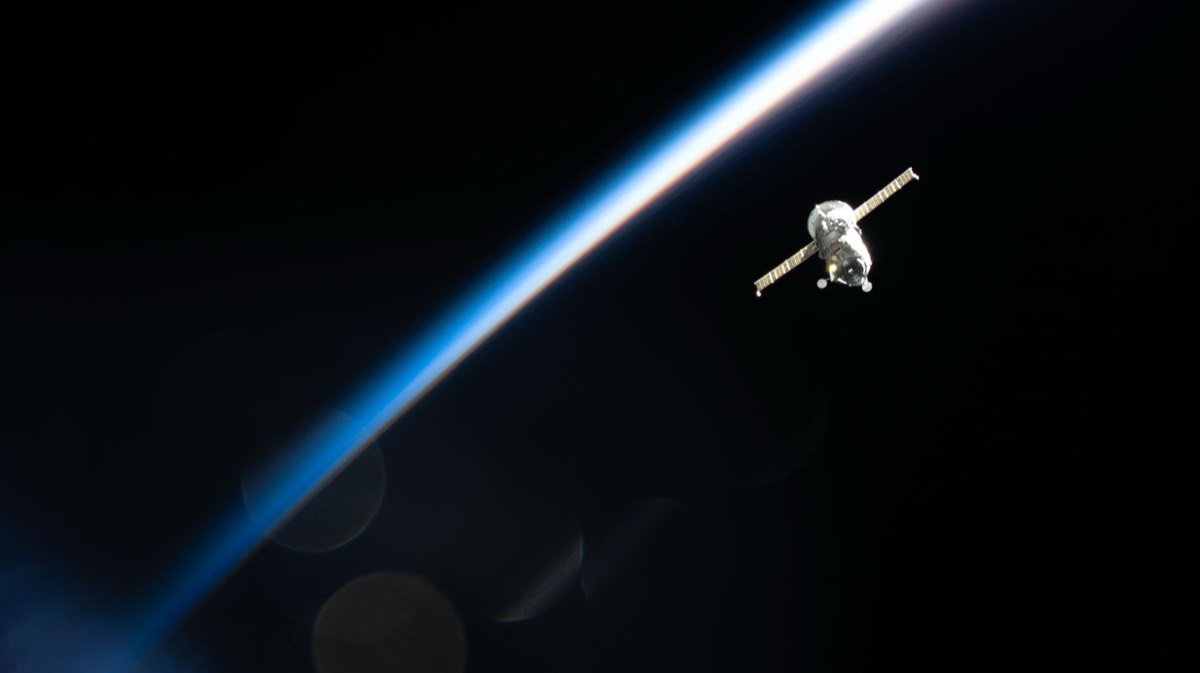
Progress MS-36, a Russian cargo ship carrying 2,427 kilograms of supplies, lifted off from Baikonur at 13:17:46 Moscow Time on 24 November 2026 (10:17:46 UTC) and is due to dock with the International Space Station on 26 November. Neither Roscosmos nor NASA had published the launch time by Monday, a break from September, when NASA announced and covered the previous flight, Progress MS-35 (NASA's Progress 96).
Key facts
Mission: Progress MS-36, ISS flight 97P, a Roscosmos cargo ship. Launch: 24 November 2026, 13:17:46 Moscow Time (10:17:46 UTC), Soyuz-2.1b rocket, Site 31, Pad 6, Baikonur Cosmodrome, Kazakhstan. Initial orbit: 240.0 by 193.1 kilometres, inclined 51.67 degrees. Docking: automated, planned for 26 November at 15:11 Moscow Time (12:11 UTC) at the zenith port of the Poisk module. Cargo: 2,427 kilograms in total, including 750 kilograms of propellant, 420 kilograms of water and 51 kilograms of oxygen. Station context: the first Progress flight since NASA and Roscosmos agreed to decommission the leaking PrK tunnel on the Zvezda module.
The ascent in numbers
The four first-stage boosters separated 1 minute 58 seconds after liftoff at about 43 kilometres. The second stage separated at 13:22:31 and the fairing halves at 13:22:39, around 165 kilometres up. At 13:26:59, about nine minutes into the flight, the third stage released the ship into its planned orbit. The station was projected to be in a 414 by 440 kilometre orbit at that moment, so the ship spends two days catching up. The flight is logged as a success. The later steps, a Kurs rendezvous-system test and the extension of the docking drogue, were scheduled for the first hours after launch.
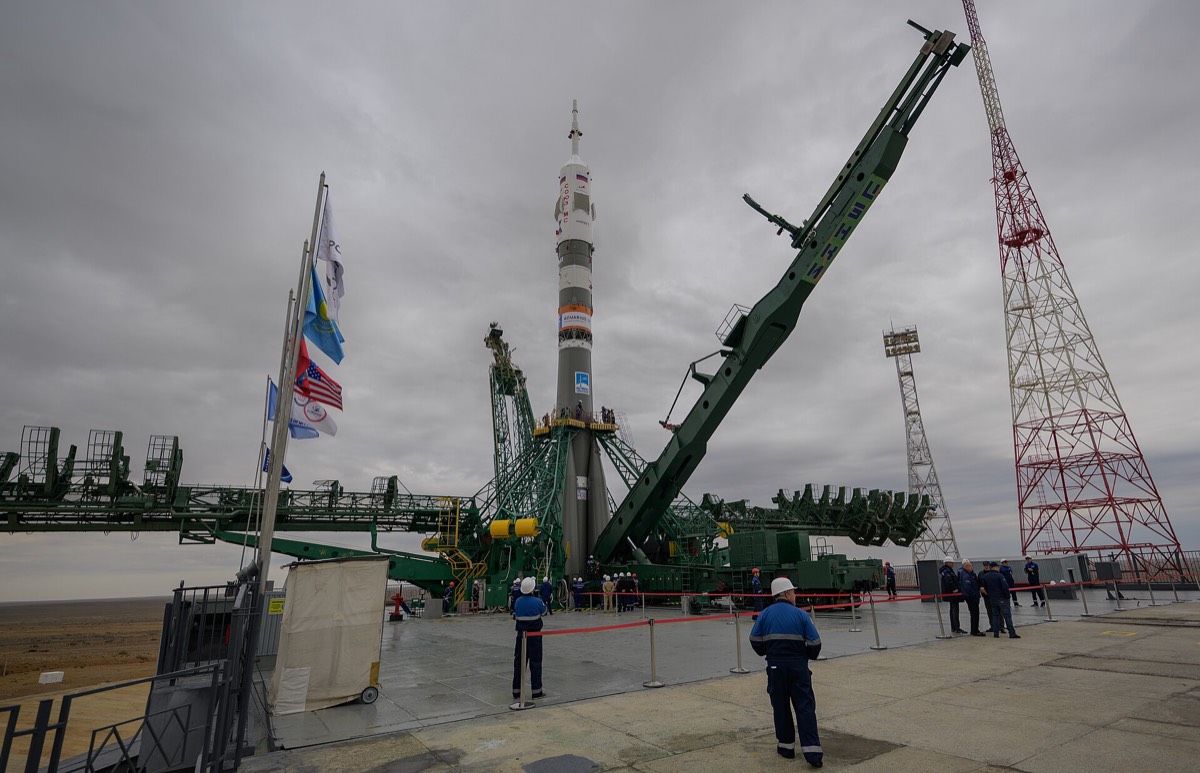
The pressurised compartment holds 1,206 kilograms: 327 kilograms of maintenance materials and consumables, 303 kilograms of science equipment, 261 kilograms of food, 247 kilograms of clothing and hygiene items, 41 kilograms of medical equipment and 27 kilograms of crew-support items. The refuelling section carries the other 1,221 kilograms. A Teledroid robot, reported to be a helper for spacewalkers, and a mounting platform for the outside of the Nauka module are also on board. MS-36 is the fourth and last Russian resupply flight of 2026.
What changed since the September launch
On 3 September NASA published an advisory for Progress MS-35. It gave the launch as 9:33 a.m. EDT on 16 September, live coverage from 9:15 a.m. and docking at 9:46 a.m. on 19 September at Poisk's space-facing port. The advisory also said NASA would add coverage times once Roscosmos released the launch details.
For MS-36 there was no advisory, and the launch was not on NASA's live-event schedule on Monday. When a reporter asked at that day's NASA space station briefing for the date and time, Gaurang Patel, operations integration manager for NASA's Low Earth Orbit Program, answered that questions about the vehicle should go to Roscosmos. Roscosmos had gone quiet earlier: after the rocket reached Baikonur by 2 June and the ship on 10 June, it largely stopped giving timely updates on testing, fuelling, integration and the rollout to the pad, says the independent Russian space analyst Anatoly Zak. The Soyuz launch from Vostochny on 14 November followed the same pattern, with no precise time announced and confirmation only after liftoff.
The launch time was revised twice: from 08:03 to 13:13, then to 13:17:46 Moscow Time. The flight itself had slipped from 17 August to 9 September, and then to 24 November after a service platform collapsed at Site 31 in November 2025.
The Plesetsk precedent: vaguer warnings
The clearest earlier case is Plesetsk, Russia's northern military spaceport. On 11 April Roscosmos director general Dmitry Bakanov told President Vladimir Putin that "serious inbound attempts" had been made on the cosmodrome on 23 March, the day the first 16 satellites of the Rassvet broadband constellation launched. Officials in the nearby town of Mirny had warned of a drone threat between 22 and 25 March. Russian officials did not say who sent the drones.
The public airspace warnings then widened. Daily windows grew to as much as 10 hours across as many as 14 days. A February Soyuz left on the fourth day of a 10-day warning, and the Rassvet launch flew more than six hours into a 10-hour window on the fifth day of a nine-day warning. Two launches in April, on the 16th and 23rd, were covered by overlapping notices that made them look like one. Bart Hendrickx of Ghent University, an expert on Russia's space program, says the policy followed the 25 December 2025 attack on Plesetsk and is unlikely to be a coincidence.
Neither agency has said why MS-36 was handled this way. One explanation put forward by Western space journalists is that the Plesetsk secrecy has spread to other launch sites. Neither agency has confirmed it.
Why the ship will use two docking ports
MS-36 is the first Progress to split its two jobs between two ports. After docking at Poisk on 26 November it will be unloaded there, then move to the aft port of the PrK compartment on Zvezda, where its engines line up with the station's main axis for orbit-raising burns. The hatches between the ship and PrK stay closed. Zak expects such redockings to become routine on later Progress flights.
PrK is the pressurised tunnel that has leaked since 2019. By early June 2026 it had about 16 cracks. NASA officials speaking on background in June said Russian crews planned to drill into it and then saw off a load-bearing bracket, and that NASA moved Crew-12 (Jessica Meir, Jack Hathaway, Sophie Adenot and Andrey Fedyaev) and Chris Williams into the Crew Dragon Freedom as a safe haven on 5 June. Roscosmos backed off, and NASA's own statement said it strongly supported that decision. The same officials said Russia then told NASA it would decommission PrK for cargo, which is the change MS-36 is built around.
What is still unknown
Which agency chose the low-profile launch is not on the public record. Whether NASA will broadcast the docking on 26 November is also unknown. The next real test is Soyuz MS-30 in March 2027, which is due to carry three people, among them NASA astronaut Deniz Burnham; keeping a crewed launch under wraps would be much harder.
Launch details and the discussion thread for this flight are on our Progress MS-36 launch page.