Mars Rover Perseverance and Odyssey Paused by Faults
Published
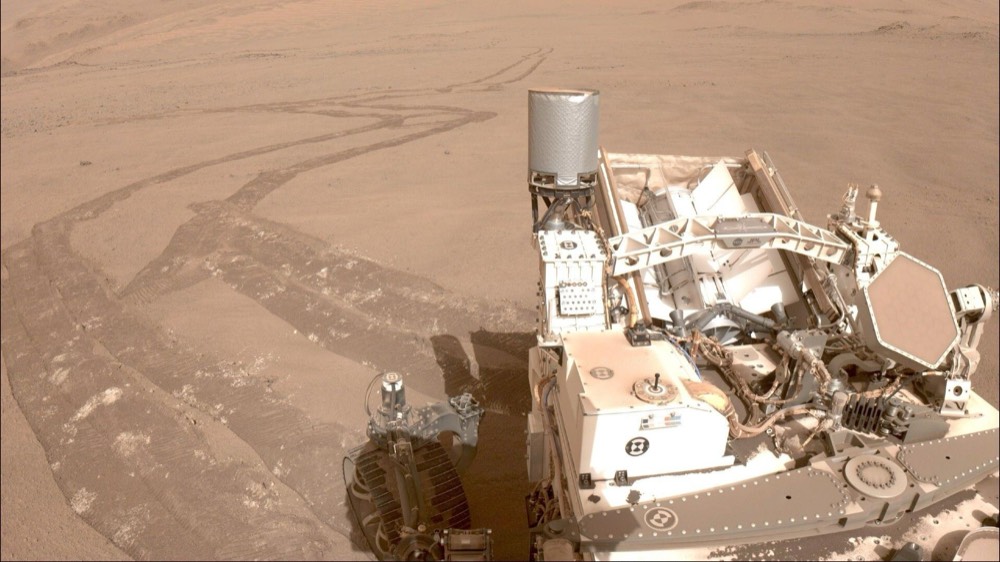
Two of NASA's Mars missions are on pause at the same time. According to NASA's update of 19 November, the Perseverance rover has stopped science work because of trouble with its two UHF radios, and the 25-year-old Mars Odyssey orbiter has a reaction wheel that stopped spinning. NASA says it hopes both are back to work by the end of November.
The two problems are not connected, as far as NASA has said. But they land on the same small group of machines that explore Mars, so it is worth looking at each one closely.
What went wrong on Perseverance
On 30 October, when the rover powered up for the day, its main UHF radio did not send the usual "heartbeat" ping to the rover's main computer, according to NASA. The computer listens for that ping all the time. Each time it hears one, it resets a counter. This time it counted 25 missed heartbeats, about 100 seconds of silence, according to project manager Steven Lee of NASA's Jet Propulsion Laboratory.
That was enough to trigger the rover's built-in fault protection. The software switched off the silent radio, swapped to the backup radio, and put the rover into safe mode, where every non-essential system is shut down. In other words, the rover did what it was designed to do.
The team brought Perseverance out of safe mode and looked at the diagnostic data. That is when they found a second problem. The backup UHF radio was sending at only about half of its expected power, NASA says. Engineers have now stopped using both radios until they understand what went wrong and decide whether one or both are safe to use again.
NASA has not said what caused either fault. It has not said whether the two are related. The update only says the team is evaluating possible causes.
Why science has stopped
The UHF radios are how the rover sends large amounts of data to orbiters, which then pass it on to Earth. Without them, Perseverance is talking to Earth directly through its high-gain antenna, using X-band radio. That works, but at a much lower data rate, as Space.com explains in its report on the update.
NASA's reasoning is that the thin link should be kept for diagnostic data, so science and instrument operations are paused. That includes the cameras. The rover is not taking new pictures right now, and Space.com notes that fans have noticed the mission's raw image page has gone quiet.
The rover itself is described as stable and in contact with the team. NASA says the team is "hopeful" it can return to science by the end of November, and that it will share more when it knows more. That is a hope, not a promise.
The timing is a little unlucky. Space.com reports that Perseverance set an off-world driving distance record on 11 October. Less than three weeks later, the radio trouble began.
Odyssey loses another reaction wheel
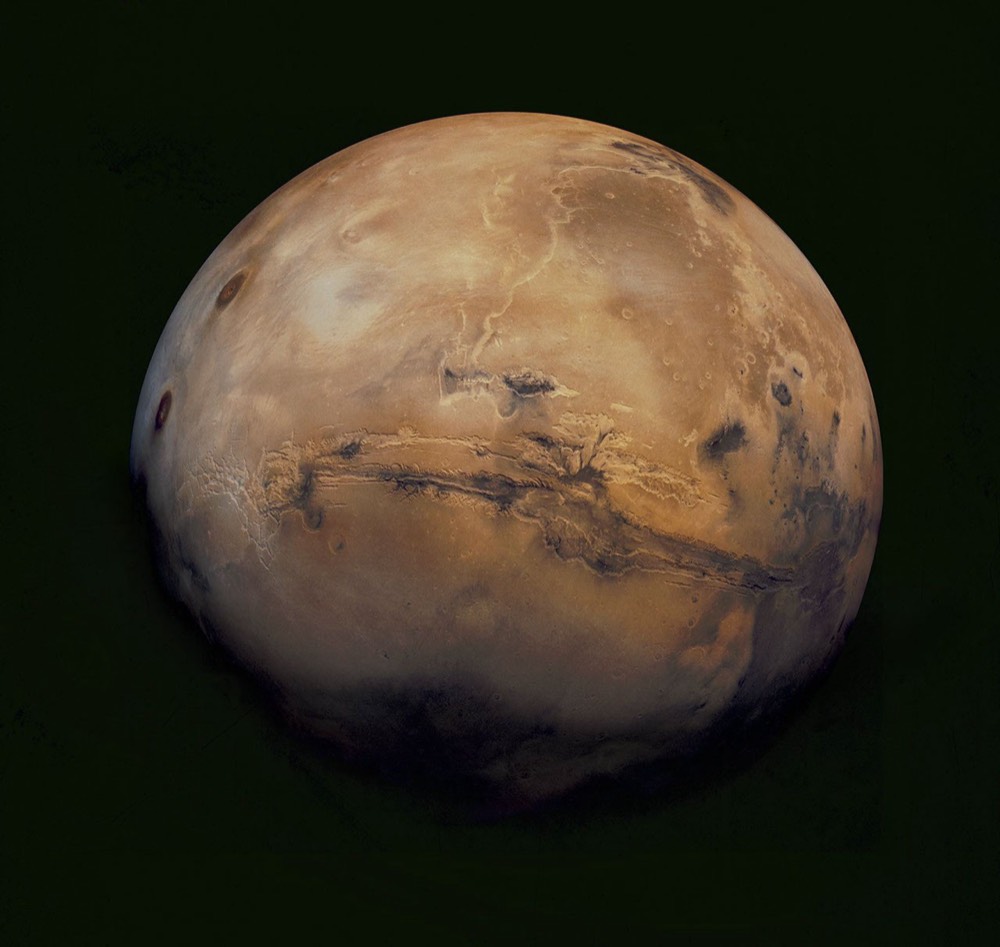
The second problem is on an orbiter that has been working far longer than anyone planned. Mars Odyssey launched in April 2001 and reached Mars orbit in October 2001. It was designed for a mission of a little over two and a half years. NASA says it has now operated around Mars longer than any other mission.
Between 4 and 6 November, Odyssey was in safe mode. Engineers found that one of its four reaction wheels had stopped spinning. These wheels speed up or slow down to turn the spacecraft, so it can point its solar panels at the Sun or its instruments at the ground. One of the four wheels already failed in 2013, and at least three are needed to orient the spacecraft this way.
If the wheels cannot be used, Odyssey has to rely on its hydrazine thrusters to hold its position. NASA's estimate is that the orbiter has only enough fuel for that for one to two months, after 25 years in orbit. The team is still working to refine that estimate.
There is a little good news. During one test, the stuck wheel did move when commanded, according to NASA. Further tests will show whether it is recoverable. Odyssey is out of safe mode, but its science instruments are offline, and so is its job as a relay for other missions. NASA's goal is to have it back for both during the last week of November.
Why this matters beyond two machines
Odyssey is not only a science orbiter. It has long helped relay data from NASA's surface missions back to Earth, including the first post-landing pictures from Phoenix and the Spirit, Opportunity and Curiosity rovers, according to NASA. It also made the first global maps of the composition of the Martian surface, and those maps have helped pick landing sites and find buried ice that future astronauts might use.
That is why the two stories connect in a practical way. Perseverance is leaning on direct-to-Earth radio at the same time as one of its relay orbiters is out of service. Whether that makes the recovery slower is not something NASA has said, and I do not want to guess.
I think the bigger lesson is how well the fault protection worked on Perseverance. A silent radio was caught within about 100 seconds, with no human in the loop, and the machine moved to a safe state by itself. And Odyssey, 25 years in, is still being kept alive by a team that knows exactly how many weeks of fuel it has left in the worst case.
What is still unknown
Several things are not answered yet. NASA has not named a cause for the Perseverance radio faults, or said whether one radio can be trusted again. It has not said whether the Odyssey wheel can be brought back, or when the next update is due beyond "the last week of November". Everything depends on those tests.
If you follow the rover's raw images, expect the feed to stay quiet for a while. If the wheel on Odyssey cannot be fixed, the clock on the orbiter's useful life becomes very short.
Which would worry you more, a rover that cannot use its radios, or an orbiter that may be running out of fuel for steering? Tell us what you think in the comments.
Sources: NASA Science, Mars blog and Space.com.