ISS crew 3D print human cells and tissue in orbit
Published
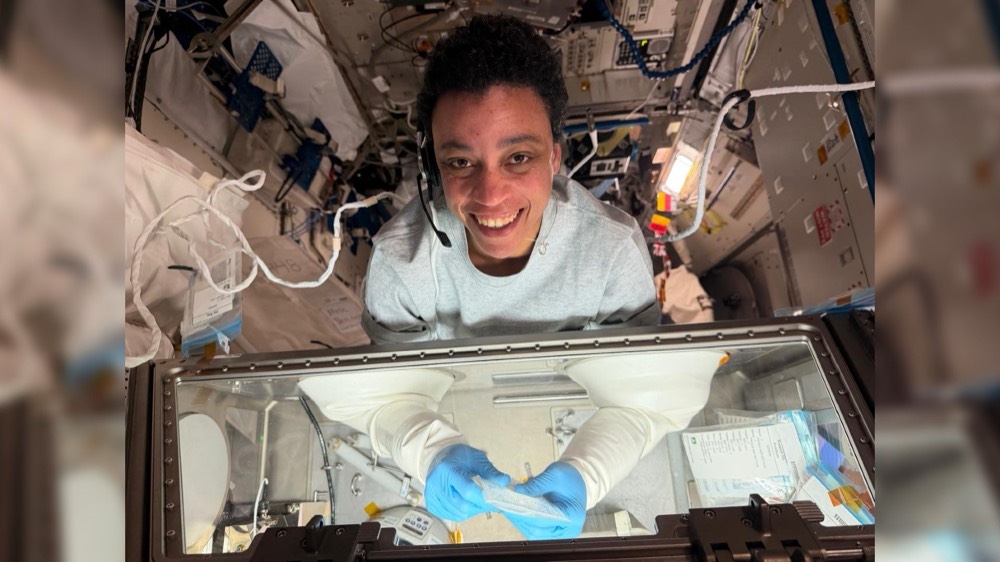
Astronauts on the International Space Station are 3D printing human cells and tissue, according to Space.com. NASA astronaut Jessica Watkins, who commands Crew-13, is working on an experiment called InSPA-Auxilium Bioprinter-Cell Printing. A snapshot taken by her crewmate Anil Menon shows her inside the Life Sciences Glovebox, mixing living cells with a bioink and loading it into a cartridge.
Watkins wrote that the experiment uses microgravity to print human liver, kidney and cartilage tissue, and that the station is a research lab for biology, medicine and engineering. Space.com's report relies on her post and the photo NASA shared, not on published results from this run.
The goal is to explore 3D printing of human cartilage tissue in microgravity, and eventually to help future patients in space and on Earth. That is a long-term aim, not a product yet.
Why it matters: printing tissue needs a stable setting, and the station is one of very few places where that can be tested in this way. Still, the article does not say when, or whether, any printed tissue will be used.
Would you trust a 3D printed organ that was made in orbit?