NASA's Webb catches a star merger in Andromeda
Published
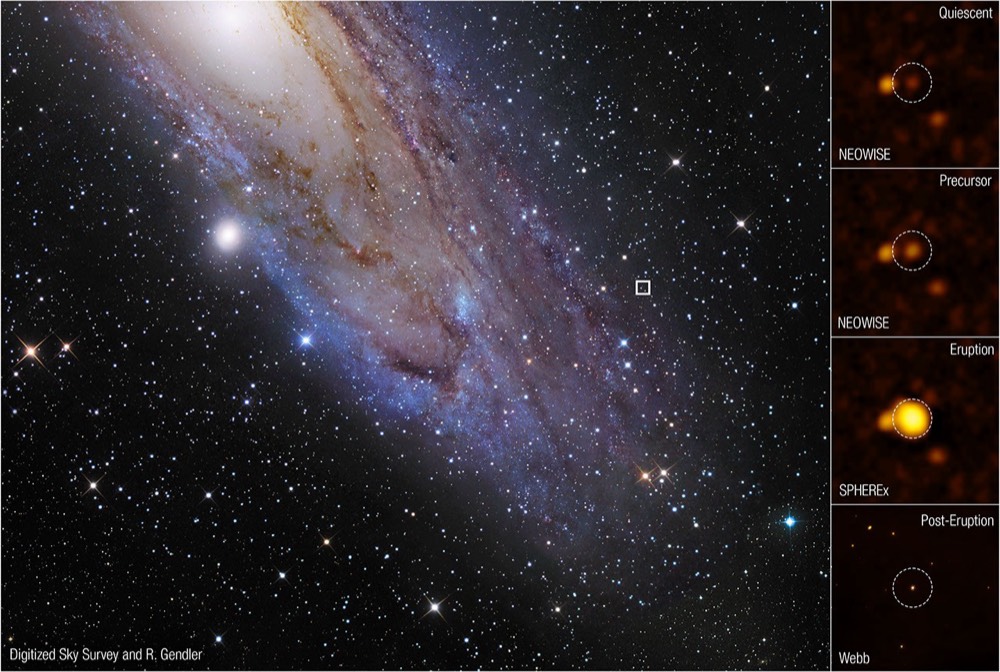
A star slightly less massive than the Sun has merged with a much larger, puffy star in the Andromeda galaxy. NASA's James Webb Space Telescope watched the aftermath. According to NASA, the smaller star spiralled into the giant, and the two became one after about seven orbits, roughly seven years. The surviving star is nicknamed Bao.
The team first noticed something unusual in 2023 and kept watching. The system erupted in 2025. Webb observed it only 47 days after the eruption peaked, the earliest follow-up of this kind, the researchers say. Lead author Viraj Karambelkar of Columbia University calls the timing "absolutely mind-blowing". The paper appears in Nature.
Why it matters: mergers like this are hard to predict, so most are only studied after the fact. A record of the system before, during and after the merger gives astronomers a real test for their models. NASA says the data helped rebuild the whole sequence.
Would you rather watch a star merger happen in real time, or only see the result afterwards?
Sources: NASA Science