Webb's dust map hints at a star's final hours
Published
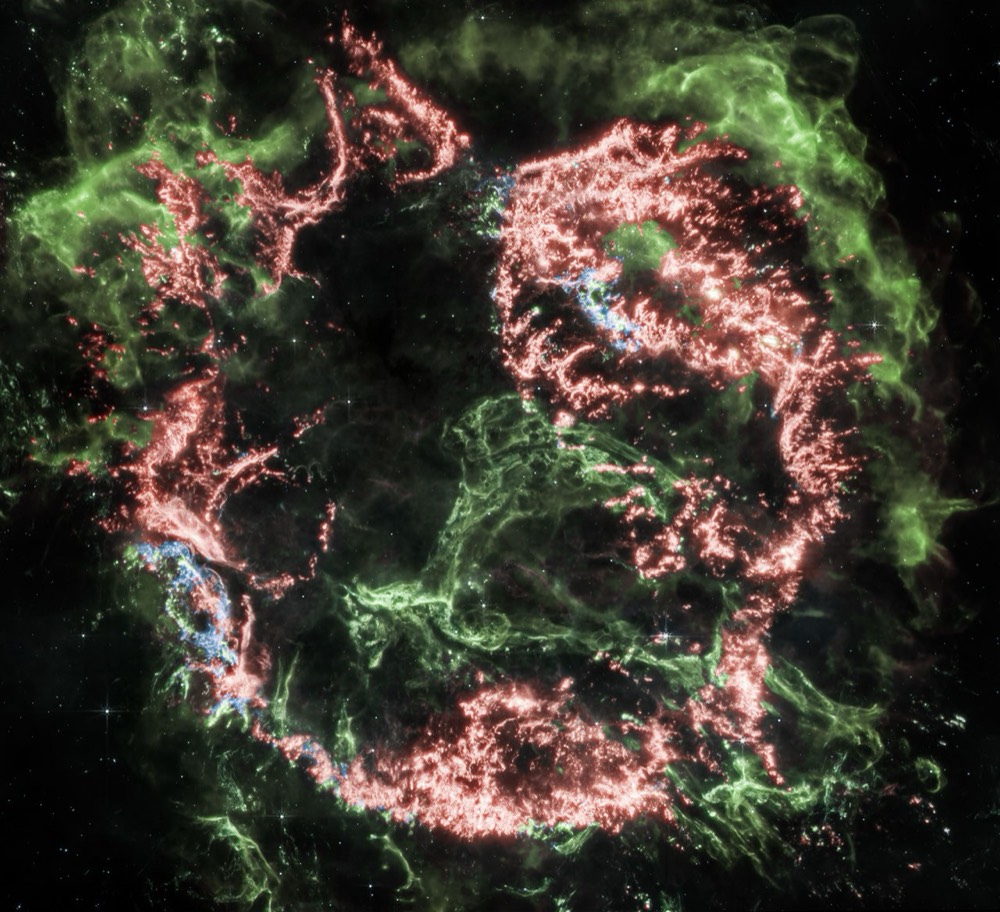
NASA's James Webb Space Telescope has mapped the dust in Cassiopeia A, the remains of a massive star that exploded long ago. The team says the dust carries a record of what happened inside the star just before it died.
According to NASA, the layers inside the star mixed together, or merged, shortly before the explosion. Lead author Tea Temim says material churning inside the star can make these shells merge. NASA says this may have happened only hours before the star collapsed.
Webb resolved individual dust clumps, each about the size of the Solar System. Some clumps held mostly silica dust, and others were dominated by carbon dust. A region Webb found first, rich in magnesium silicates, came from material the star shed before it exploded, not from the blast itself.
Dan Milisavljevic of Purdue University, a co-author, says the work ties the explosion back to the star's makeup hundreds of years later. The team used data from the retired Spitzer Space Telescope to pick the regions Webb would study.
Why it matters: a supernova spreads elements into space. Knowing how the star was built helps explain which elements it released and how they later reach new stars and planets.
Would you want more Webb time spent on stars that have already exploded?
Sources: NASA Science