Hydra's ceramic 3D printer repairs its own defects
Published
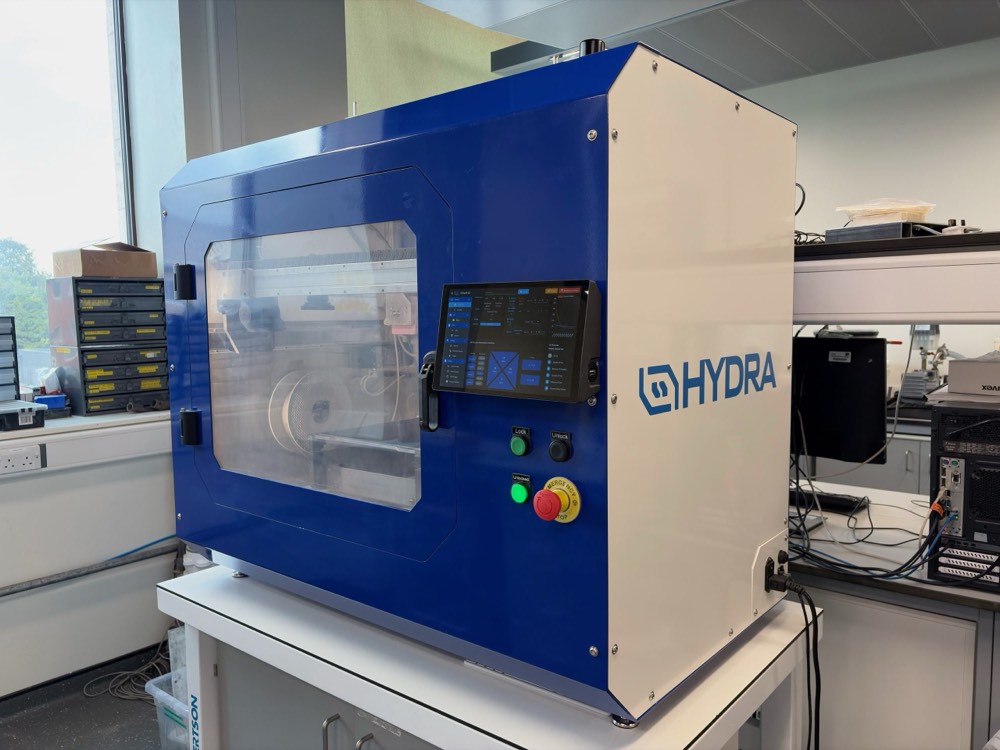
Hydra Manufacturing, a University of Leeds spin-out, has built a ceramic 3D printer that can fix a fault while it prints. The company sold its first machine a week after it was incorporated, according to 3D Printing Industry.
The machine is called the Ceramic Hybrid Additive Manufacturing Platform, or CHAMP. It combines paste deposition, drying, machining and inspection in one unit. Chief executive Louis Masters started the work during his doctorate, when he needed photos of printing faults to teach a camera system to spot them. He says he labelled thousands of images by hand.
The Leeds machine carries a milling spindle next to its extruder. If a layer comes up short, it cuts back to the layer below, rewinds the print instructions and prints the layer again before the next one covers the flaw. In tests published in the journal Additive Manufacturing, CT scans showed 68% less void content in reworked specimens than in uncorrected ones.
Masters told 3D Printing Industry that most printers cannot do anything about a defect once it has happened. That is his view, and the 68% figure comes from lab specimens, not production parts. He also says a customer's own material is where the next sale starts.
What is not yet known is how the repair step performs across different ceramic pastes and part sizes over long production runs. The article does not report those tests.
I think the idea is sound: ceramics are hard to print without flaws, so a printer that repairs its own layers could matter where a hidden defect is costly. Would you trust a printer to fix its own mistakes?