Floating Titanium: 3D-Printed Lattice Beats Steel
Published
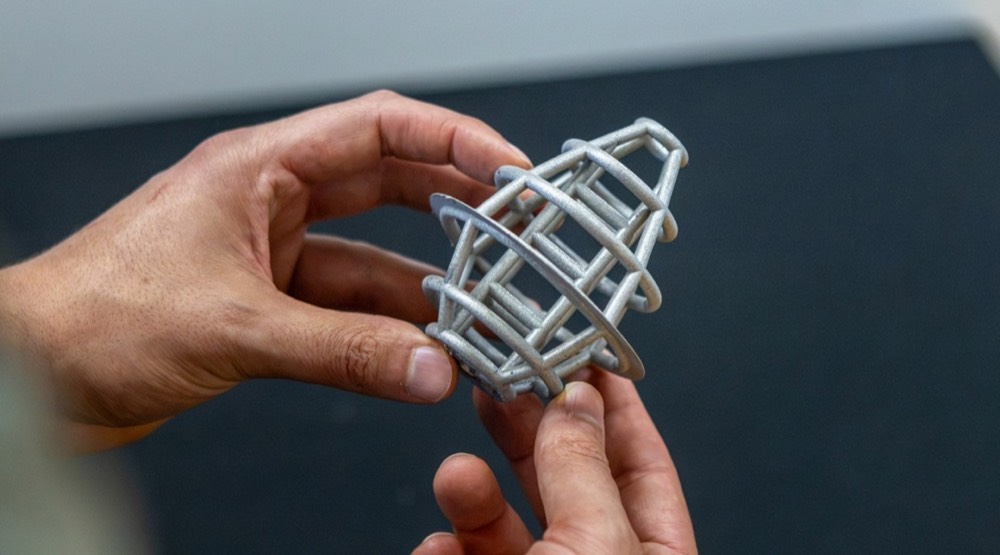
Engineers at RMIT University in Australia have 3D-printed a titanium structure that floats. The trick is a lattice of hollow titanium struts filled with polyurethane foam, and the team says it is 70% stronger than stainless steel or high-density polyethylene (HDPE) of similar overall density.
The work was reported by Advanced Science News and published in the journal Advanced Materials in 2026. I could read the news report, not the full paper, so the numbers below are the ones the researchers gave in that report.
Why titanium normally sinks
Titanium is strong, light for a metal and resists corrosion, which is why it is used in aircraft, spacecraft and marine equipment. But solid titanium is far denser than water, so a block of it sinks.
The obvious fix is to make a lattice: a 3D frame of thin struts with lots of empty space. Advanced Science News says metallic lattices can have densities below one-tenth that of water. But a normal open lattice lets water flow into its gaps, and once the gaps fill, the buoyancy is gone. As lead researcher Jordan Noronha put it, the open, interconnected spaces let water in and the structure sinks.
What the RMIT team did
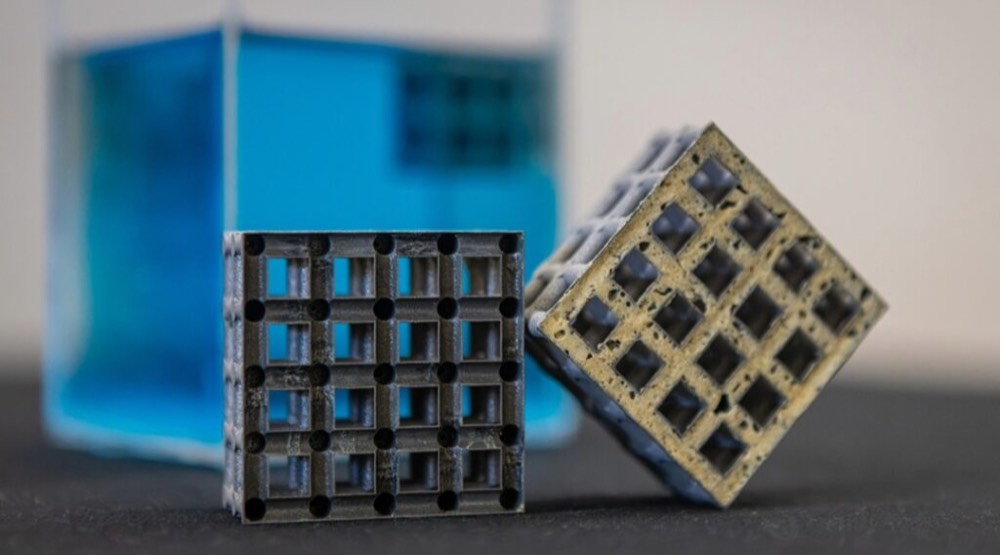
The team 3D-printed the titanium as a lattice of hollow, interconnected struts, then filled only the hollow struts with polyurethane foam. Water can still flow through the outside openings of the lattice, so it stays an open structure. But the foam-filled channels inside the struts stay sealed.
Noronha explains that tiny sealed cells in the foam trap gas and keep water out of the hollow struts. The foam acts as a distributed barrier, so one crack does not flood the whole structure. That is different from a conventional hollow marine structure, which can fill with water quickly after it cracks.
A new design rule: skeletal density
Ordinary density calculations count the empty spaces in a lattice, so they cannot predict whether an open structure will float. The team proposed a measure it calls skeletal density. It counts only the parts that keep water out: the titanium walls and the sealed, foam-filled channels.
Noronha describes the result as a simple rule for engineers. If the skeletal density is lower than that of the surrounding liquid, the structure floats, even if water flows through all its external openings. I think this is the most reusable part of the work, because a design rule can be applied to other lattices and other fillers.
What was tested
According to the report, the researchers tested the material in several ways:
- **Strength:** the lattice was 70% stronger than stainless steel or HDPE with a similar overall density. Both are widely used in marine infrastructure. - **Floating time:** it stayed buoyant in freshwater for more than two months. - **Seawater:** in a short corrosion test with natural seawater from a Melbourne port, the lattice lost only 0.15% of its mass and less than 1% of its strength after two weeks. - **Damage:** it kept floating after the engineers cracked it, broke it at key connection points and fractured a whole lattice layer. It sank only after being severely crushed and compacted. - **A demonstration buoy:** a small 3D-printed buoy stayed stable in a turbulent seawater tank without a sealed casing, a protective coating or an extra flotation system.
How much to read into it
These are promising results from a small-scale study, and the researchers say so themselves. Two weeks in seawater is a short corrosion test, and two months in freshwater is not the same as years in the ocean. The report does not give the lattice's actual density or compare cost.
The next step, according to the team, is to scale the structure up and test it over much longer periods in realistic marine and deep-sea conditions. Those tests will decide whether it can handle real marine infrastructure such as buoys and floating sensors.
Beyond floating
Professor Ma Qian, from RMIT's Centre for Additive Manufacturing, says the same principle could go further. By changing the material inside the titanium framework, the team could tailor a similar structure for energy absorption, thermal management or vibration control.
That connects to a wider trend in 3D printing: printing a shape that a casting or machining process could not make, and then using the empty space for a second material. Here the second material is foam. In other designs it could be something that absorbs impacts or carries heat.
Is there a space angle?
The report is about marine equipment, not spaceflight, so I will not force one. Weight is a cost in aerospace too, and strong, light lattice structures are of interest there. But this work was designed and tested for water, and nothing in the report says it has been tried for space hardware.
Would you trust a printed titanium lattice with a foam core in the sea, and what would you want to see tested first?
Sources: Advanced Science News, and the paper's DOI page at Wiley Online Library (not read).