Vulcan Failure: 40 Amazon Leo Satellites Lost
Published
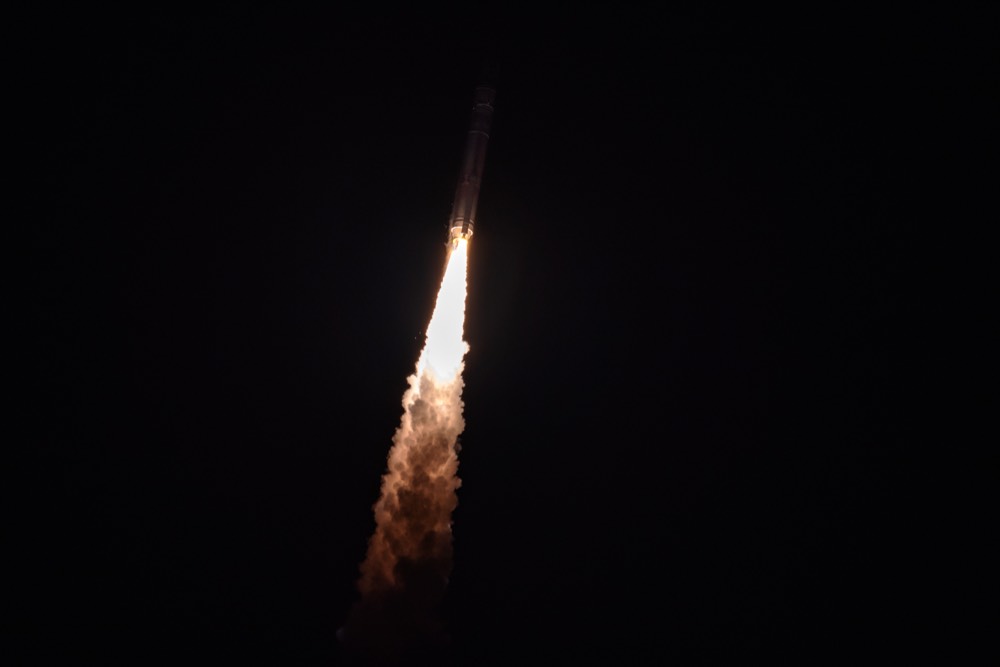
United Launch Alliance's Vulcan rocket failed to reach orbit on 15 November 2026, and the 40 Amazon Leo satellites on board were lost. It is the first total mission failure in ULA's history, and it lands on three customers at once: Amazon, the US Space Force and NASA.
What happened on launch day
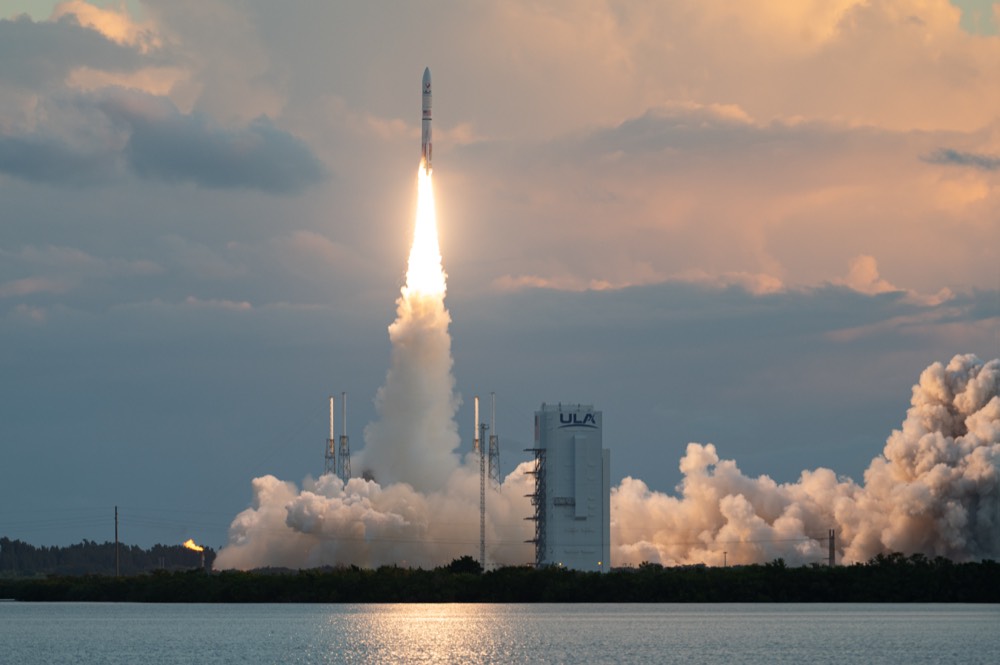
Vulcan lifted off from Space Launch Complex 41 at Cape Canaveral at 12:40 pm Eastern time (17:40 UTC), after a few days of delays. SpacePolicyOnline reports that Friday's attempt was scrubbed by a pump failure at a gaseous nitrogen plant, and Saturday's was postponed because of a network communication issue between ground equipment and the rocket. On Sunday the liftoff slipped to the end of its 29-minute window because of oscillations in a liquid hydrogen pressure relief valve.
Everything looked normal at first. According to Ars Technica, the six solid rocket boosters appeared to perform well in the first two minutes and were jettisoned on time. That matters, because the two earlier Vulcan problems were both with those boosters.
About ten minutes into the flight, ULA says, the vehicle "suffered an anomaly" and failed to deliver the Amazon mission to orbit. The company posted that statement on X at 1:30 pm Eastern. It also said it did not yet have any specific data to explain what occurred.
What the live data seemed to show
ULA has not said what failed, so what follows is reporting, not confirmed cause. Ars Technica says multiple sources told it the problem was in the booster stage, not in the Centaur V upper stage or the solid boosters. It could not tell whether the trouble came from the two methane-burning BE-4 engines, from the parts that feed them, or from something else.
Ars also describes what the rocket's own telemetry animation showed on the ULA broadcast. The two BE-4 engines, built by Blue Origin, were supposed to shut down just shy of five minutes into the flight. They kept firing for at least 30 seconds longer. Ars says an overburn like that could mean the stage was underperforming and ran longer to compensate. That is an interpretation, not a finding.
After engine shutdown the animation showed the rocket starting to spin. The spin continued as the Centaur upper stage separated a few seconds later. The launch commentator confirmed ignition of the Centaur's two RL10 engines, and the animation showed them steering in an apparent attempt to correct the course. ULA ended the broadcast a few minutes later without explaining, and then declared the launch a failure on social media.
A first for ULA
ULA was formed in 2006 by combining the rocket divisions of Boeing and Lockheed Martin. SpacePolicyOnline notes that its Atlas V rockets still have a 100 percent mission success record, and that the Delta IV Medium flew 29 times without failure. The one earlier blemish was the first Delta IV Heavy flight in 2004, which delivered its payload but to a lower orbit than planned. That counts as a partial failure, and it predates ULA's founding by two years. So this is the first total failure since ULA existed.
Vulcan itself has had a bumpy record. This was only its fifth launch since the first flight in January 2024. SpacePolicyOnline says only the first and third flights went as planned. On the second flight in 2024 and the fourth in 2026, nozzles on the Northrop Grumman solid boosters malfunctioned. The core stage made up for it both times and the payloads reached their intended destinations, but each case brought a review that took months.
What it means for Amazon
This was the first of 38 Vulcan launches Amazon bought in 2022 for its Amazon Leo broadband network, which is meant to compete with SpaceX's Starlink. Ars reports that Amazon has 37 more Vulcan launches reserved, each meant to carry 40 or more satellites.
Ars puts the constellation at 396 satellites today, out of a planned 3,292 in the first generation. Amazon officials told Ars in October that they have enough satellites to start initial commercial service by the end of the year. Ars adds that Amazon recently said it had built its 1,000th satellite, so more than half of its satellites are waiting on the ground.
Amazon's own statement was calm. It said there is risk with any launch, especially inaugural missions like this one, and that it believes ULA will learn from the failure. The satellites are a loss, but Ars argues the bigger issue for Amazon is that its main launch provider will probably be grounded for an unknown time.
Amazon does have other rockets. Ars says it has 10 more Falcon 9 launches booked with SpaceX, and that the fourth of its 24 Ariane 6 launches is due later this month from French Guiana. Blue Origin's New Glenn is still recovering from a ground-test explosion in May that took its launch pad offline until at least the end of this year.
The Space Force and NASA
Vulcan is under contract to launch roughly half of the US military's national security space missions over the next few years, according to Ars. SpacePolicyOnline says the Space Force was already cautious about putting its most valuable satellites on Vulcan after the booster problems, and had moved several launches to SpaceX. Ars expects more of those swaps now.
The catch, as Ars points out, is that SpaceX has said Falcon 9 and Falcon Heavy will not be around much longer, because it is moving to Starship. SpaceX has not said when it plans to certify Starship for national security launches, and Ars says that process would take years. The Space Force added Blue Origin's New Glenn as a third option in 2025, but New Glenn has its own backlog.
NASA has a stake too. Ars reports that the agency recently chose a version of ULA's Centaur upper stage for future flights of the Space Launch System, to replace a more expensive Boeing design that has not flown. NASA wants to rule out any Centaur V problem before crewed lunar flights start using it, as soon as 2028. In a reply to ULA's statement, the NASA administrator said the agency is available to help with the investigation.
The BE-4 question
The same BE-4 engine design is on Blue Origin's New Glenn. Ars says investigators traced that May explosion to a faulty valve on one of the booster's BE-4 engines, and that New Glenn is hoped to return to flight early next year. If Sunday's failure turns out to involve a BE-4, both of the rockets Amazon needs could be delayed together. Ars says that could also push back Blue Origin's lunar lander test flights for NASA.
That is a big "if". Nobody has said the engines were at fault, and ULA says it does not yet know what happened.
What we do not know
- The cause of the anomaly, and which part of the rocket it started in. - How long Vulcan will be grounded. Ars says the failure is expected to ground it for an indefinite period. - Whether the Centaur V stage had any role. - What happened to the satellites after the failure. Ars Technica says they fell back to Earth minutes after liftoff; ULA has not detailed their fate.
I think the most useful thing to watch is not the timeline but the cause. A solid booster issue, which Vulcan has had before, would be a known problem family. A problem in the main booster stage is a different matter, because it could affect more than one company's rocket. ULA has promised to share the investigation with its customers, and we will follow up when it says more.
What do you think matters most in the next few months: Vulcan getting back to flight quickly, or the cause being found properly, even if it takes longer?
Sources: SpacePolicyOnline, Ars Technica, The Verge.