Comet 220P/McNaught's outburst: 250x brighter
Published
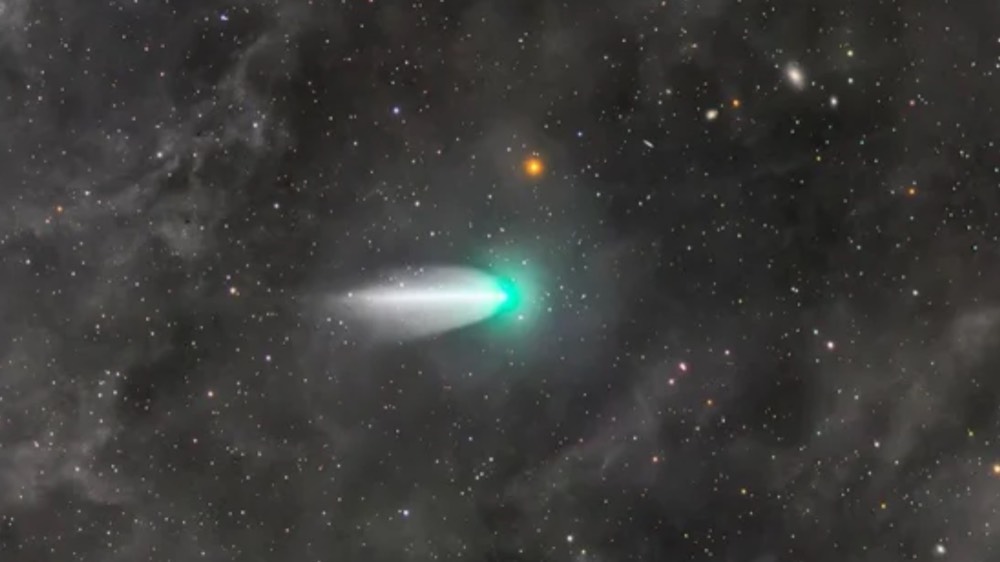
Comet 220P/McNaught suddenly brightened about 250 times in June, according to Space.com. Gas under its surface pushed off a section of crust and sent a cloud of dust into space.
The comet was faint, about magnitude +17, on 31 May. Within 14 hours it had reached about +11, and by 2 June it was bright enough to see in 10x50 binoculars from a dark site. Amateur astronomers and astrophotographers chased it.
Models based on the outburst suggest the comet released between tens and hundreds of billions of pounds of dust. Josep M. Trigo-Rodriguez of the Institute of Space Studies of Catalonia says the comet "detached localized parts of its crust". A second outburst began at the end of July.
Why it matters: outbursts like this show how the ice inside a comet behaves when the Sun heats it. The comet is a Jupiter-family comet, a group that starts in the Kuiper Belt.
Easy question: have you ever seen a comet with your own eyes?
Sources: Space.com