Starship Ship Catch: What Flight 15 Proved
Published
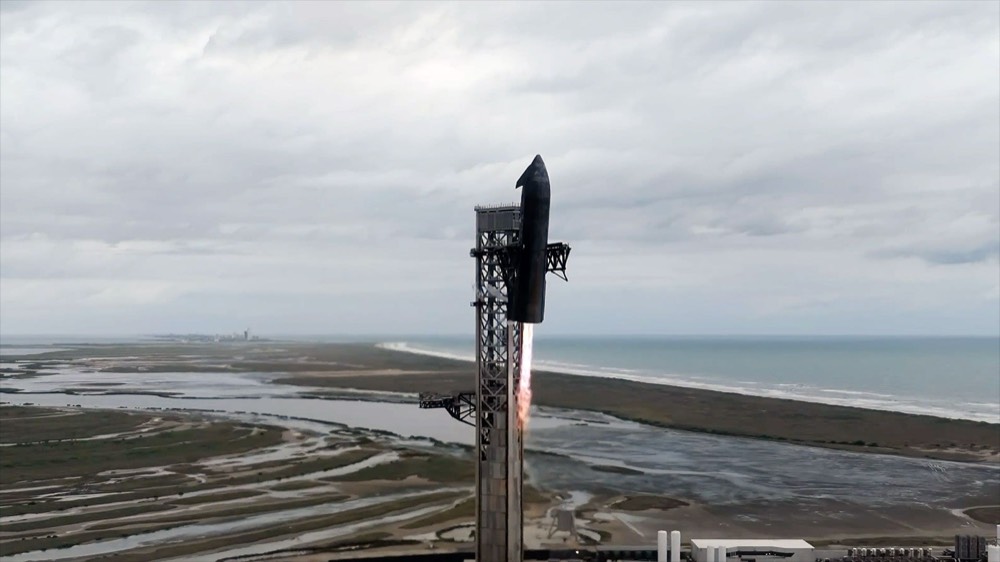
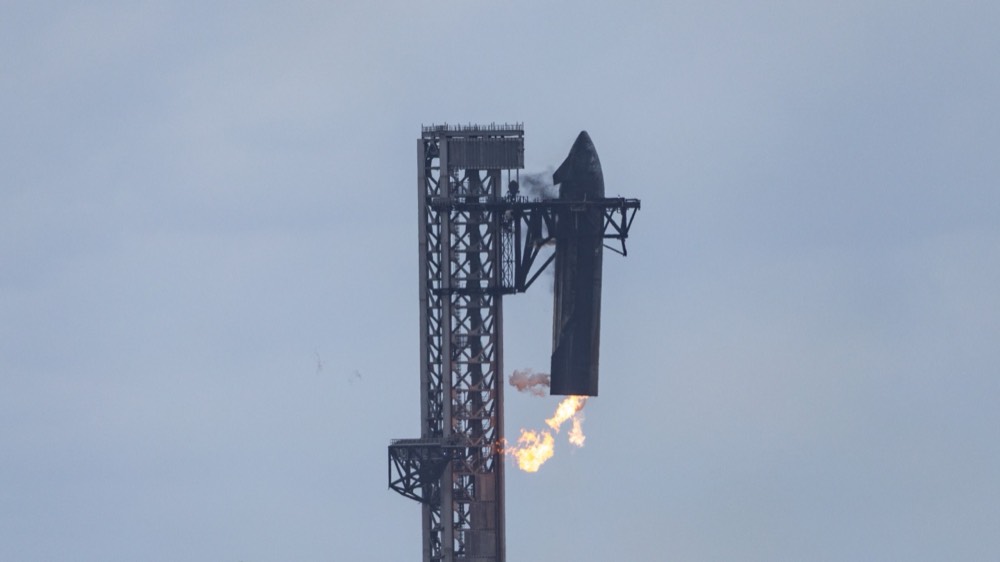
SpaceX caught a Starship upper stage with its launch tower on Saturday, 14 November, after the vehicle had flown 14 orbits. It is the first time anyone has brought a ship back from orbit and caught it in the air, and it happened at Starbase in South Texas at 4:20 p.m. Eastern time, about 22.5 hours after liftoff, according to Space.com.
The other half of the plan did not work. The Super Heavy booster was meant to be caught too, which would have been the first full recovery of an orbital rocket. It was not. This post goes through what happened, what is still unclear, and what has to be shown before any of this counts as routine.
What happened on Flight 15
Flight 15 lifted off from Starbase at 5:47 p.m. Eastern on Friday, 13 November, according to Payload. The ship, Ship 42, reached orbit and deployed 26 next-generation Starlink V3 satellites. Space.com says Flight 14 on 28 September did the same with 26 satellites, so these 52 are the first members of the V3 network. Payload reports that SpaceX made contact with every satellite from this flight and that all have begun raising their orbits.
Some of those satellites also photographed the ship's heat shield. Space.com says the images, combined with ground cameras, showed Ship 42 in good shape for its landing attempt. That check matters, because the heat shield is the part of the vehicle most likely to decide whether it can be flown again quickly.
The ship then stayed in orbit for most of a day. Payload says it relit a single Raptor engine to leave orbit and flew back toward the Texas coast. It made a final swoop over the Gulf of Mexico, broke through the clouds, and lit three Raptors to flip upright and slow down. Then it moved sideways into the tower's two arms.
SpaceX's Dan Huot ended the livestream with the line that is already being quoted everywhere: "We caught a Starship, and now everything changes." That is the company's own framing, and it is fair to read it as a statement of hope as much as of fact.
The catch itself
Ars Technica's writer was at Starbase and described the final seconds. The ship came out of the cloud deck late, flew horizontally until the last moment, and then eased toward the tower. The margins were tight. By his account, the ship rests on two small pegs, each sticking out only about a foot, and those pegs are all the arms have to hold.
SpacePolicyOnline adds a small coincidence: the catch happened at 4:20 p.m. Eastern, which was 3:20 p.m. in Texas, and the vehicle was Ship 42. Payload and SpacePolicyOnline both note the Hitchhiker's Guide jokes. "Don't Panic" was written on the side of the ship, and Payload says the vehicle carried a heat-shield tile signed and installed by the YouTuber MrBeast. These are fun details, but they do not change the engineering.
Why catching the ship is harder than catching the booster
SpaceX had already caught Super Heavy boosters on three earlier flights. SpacePolicyOnline lists them as Flights 5, 7 and 8. A booster separates a couple of minutes after launch and comes straight back. Space.com explains the difference well: the upper stage flies higher, farther and faster, and on Flight 15 it came back from orbit, so it carries far more energy into the atmosphere.
That energy has to go somewhere. It goes into the heat shield, and then into the question of whether the vehicle can be inspected and flown again without months of work. Catching the ship does not answer that question. It only means the ship is now back in one piece for engineers to look at.
SpacePolicyOnline also notes that the NASA Space Shuttle is the closest comparison. The shuttle landed on a runway and its heat shield needed painstaking refurbishment, according to Ars Technica. SpaceX says the double catch is meant to make inspection and reflight quicker.
The booster did not come home
This is the part where sources differ in small ways. Space.com says Booster 22 diverted to a splashdown in the Gulf of Mexico after a low-fuel alarm. SpacePolicyOnline says the guidance, navigation and control system decided the booster was not in the correct position and automatically sent it to the Gulf. Both agree on the outcome and both say SpaceX is still investigating the root cause.
I would not read much into the difference yet. The company has not published a full explanation, and a low-fuel alarm and a position check could easily be two views of the same problem. What we know is that the booster was not caught, so the double catch remains undone.
That matters because SpaceX says a double catch will be standard on operational missions. According to Space.com, the company wants it for quick inspection, refurbishment and reflight. One of two catches is a big step. It is not yet the thing the company says it needs.
What SpaceX wants to do with it
The business case rests on very high launch rates. Space.com reports that Elon Musk has said SpaceX is targeting 10,000 Starship launches a year by 2030, which works out to more than one every hour. That is a goal stated by the company's CEO, and nobody has shown it is achievable.
The reason for the number is satellites. Space.com says SpaceX wants its Starlink V3 network to reach 100,000 satellites, and that Musk has described an AI data-centre constellation called Starmind with a million spacecraft. The current Starlink network has about 11,000 satellites, according to the same report.
On the SpaceX earnings call, as Payload reports it, President and COO Gwynne Shotwell said the company aims to refly the second stage by early next year and ramp its launch cadence as it makes progress toward rapid reusability. That is a goal with a rough date, not a commitment.
Ars Technica adds some context on production. The writer says SpaceX can currently build a ship every three weeks at its Texas factory, which was sized to build one every three days, and that five Starships are in an advanced state of development with parts for a dozen more. Those are the writer's figures from his visit, not a number SpaceX has published.
Reuse is still unproven
Space.com is careful on one point, and so should we be. SpaceX has reflown Super Heavy boosters, but with gaps of several months. Booster 14 flew on Flight 7 in January 2025 and again on Flight 9 in May. Booster 15 flew on Flight 8 and Flight 11, in March and October 2025. Nobody has reflown a ship, because until now nobody had caught one.
So the honest summary is this. The catch is real and impressive, but rapid reuse has not been shown for either stage. The next questions are practical. How does Ship 42's heat shield look after a full orbital return? How long does inspection take? Does the company really fly this ship again, as Musk said before the flight it wanted to do with both stages?
The Moon and Mars part
Starship is also NASA's chosen lander for crewed Moon missions. Space.com says the current plan has Ship landing astronauts near the lunar south pole on Artemis IV, targeted for 2028, and that SpaceX is on track to finish a full-scale crew cabin prototype, called Cabin 1, by the end of the year, according to a NASA presentation last month.
There is another hurdle. SpacePolicyOnline points out that the version for the Moon needs in-orbit refuelling, and that SpaceX has not yet demonstrated moving cryogenic propellant between ships in space. Space.com adds that the number of tanker flights needed per mission is unclear: outside experts have floated as many as 22, while Musk has cited six to eight.
SpacePolicyOnline also reports that Artemis III next year will test docking between the Orion capsule and a standard Starship, without the crew going inside, and will test the same with Blue Origin's lander. NASA Administrator Jared Isaacman congratulated SpaceX on social media after the catch.
What I think
I think the catch is a real engineering result, and the reaction from the people who watched it in person says that too. A ship that flew for a day and then settled onto a pair of arms by two small pegs is not a trick.
I also think it is worth keeping the next set of questions in view. A single catch is a demonstration. Reuse is a record of turnaround times, repair costs and failures, and that record does not exist yet. We will learn a lot from the next few flights, and from whether Ship 42 flies again.
What do you think matters most from here: a clean booster catch, a quick reflight of this ship, or the refuelling test?
Sources: Space.com, Space.com, what's next, Payload, SpacePolicyOnline, Ars Technica.