Euclid finds 31 quasars from the early universe
Published
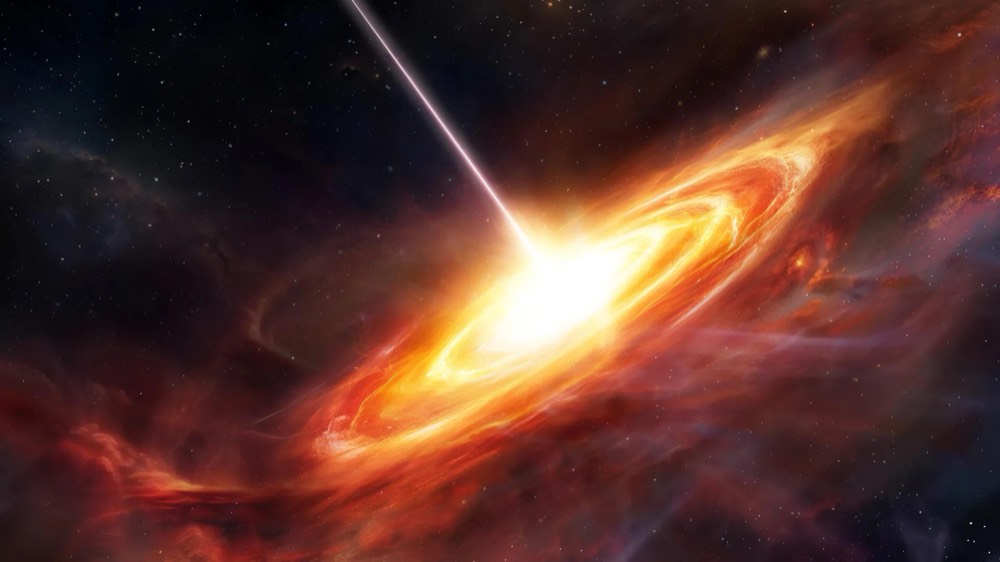
ESA's Euclid space telescope has found 31 very ancient quasars. Two of them are the earliest ever observed, according to ESA, as reported by ScienceDaily.
A quasar is a galaxy centre where a supermassive black hole pulls in gas and shines hundreds or thousands of times brighter than the rest of its galaxy. ESA says the two record objects were already as bright as a trillion Suns when the universe was only 670 million years old, about 5% of its present age.
These are hard to find. Their light is very faint after such a long journey, and nearby stars can look similar. Euclid surveys very large areas of sky, which is how it gathered so many in one study.
ESA says the objects show a time when the first galaxies were still taking shape. Euclid launched in 2023, and this is one of its first big catalogues of early quasars.
Why it matters: quasars this old help astronomers test how the first black holes and galaxies grew together.
Easy question: does it surprise you that a black hole could outshine a whole galaxy so early in time?
Sources: ESA, ScienceDaily