Cygnus NG-25: launch 29 November, capture 1 December
Published

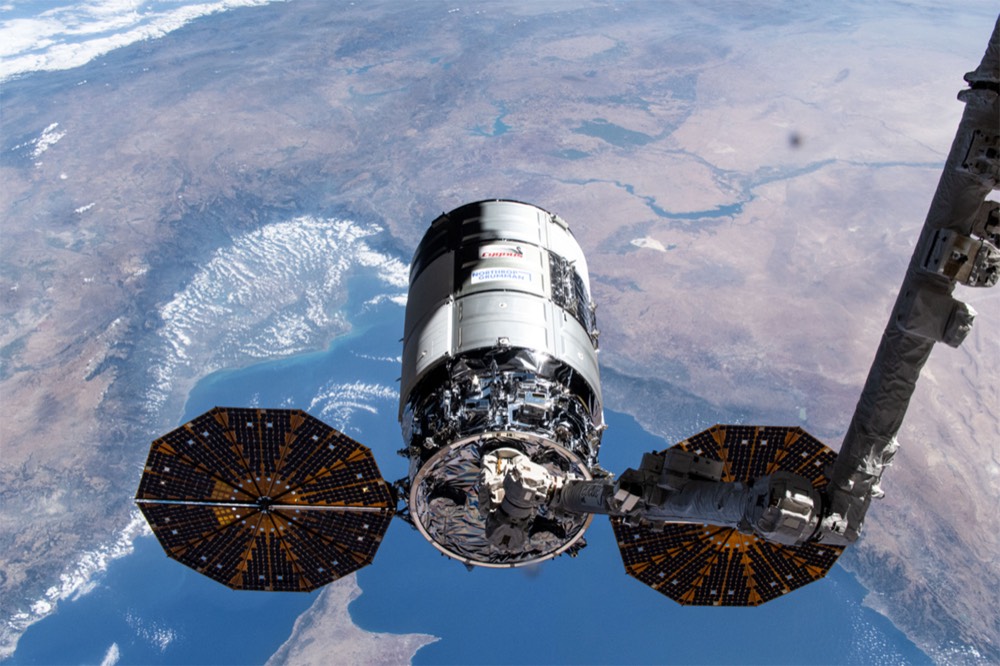
NASA’s Northrop Grumman Commercial Resupply Services 25 mission, also called NG-25, is set to launch on a SpaceX Falcon 9 from Space Launch Complex 40 at Cape Canaveral no earlier than 10:47 a.m. Eastern time on Sunday 29 November 2026. That is 15:47 UTC. The Cygnus XL spacecraft carries about 11,000 pounds of science and supplies to the International Space Station. NASA plans to capture it with the station’s robotic arm on Tuesday 1 December.
NASA’s live coverage starts no earlier than 10 a.m. Eastern on launch day, which is 15:00 UTC.
Key facts
Mission: NASA’s Northrop Grumman Commercial Resupply Services 25, known as CRS-25 or NG-25.
Spacecraft: Cygnus XL, named the S.S. James “Jim” A. Lovell.
Launch vehicle: SpaceX Falcon 9.
Launch site: Space Launch Complex 40, Cape Canaveral Space Force Station, Florida.
Launch time: no earlier than 10:47 a.m. Eastern, Sunday 29 November 2026 (15:47 UTC).
Cargo: about 11,000 pounds, which is roughly 5,000 kilograms, of science investigations, crew supplies and hardware.
Arrival at the station: about two days after launch, Northrop Grumman says.
Capture: Tuesday 1 December, using the Canadarm2 robotic arm.
Installation: the Unity module’s Earth-facing port.
Stay: until May 2027, then departure with several thousand pounds of disposal items and unneeded cargo.
Crew or payload
The cargo is science and supplies. NASA highlights experiments on improving drug delivery for cancer and osteoarthritis, predicting how cancer spreads, treatments for muscle loss, radiation sensing, and food production for future long missions.
Two astronauts already aboard the station are assigned to capture the spacecraft. NASA says Jessica Watkins and Luke Delaney will use Canadarm2 to take hold of the Cygnus XL. Ground controllers then install it on the Unity module.
The company’s mission factsheet adds that the spacecraft carries an artwork light sculpture by Tony Oursler inside its pressurized cargo module, flown with Thales Alenia Space Italy and Luci d’Artista. The Cygnus XL has a launch mass of 10,500 kg and a pressurized volume of 38 cubic metres, and it can stay berthed for up to 200 days.
The spacecraft is named after James Lovell, who flew four missions, including Apollo 8 and Apollo 13. Northrop Grumman says each Cygnus is named for a person who contributed to human spaceflight.
Northrop Grumman also says the mission includes precision reboost services, which help keep the station in its orbit.
Flight plan
Times are in UTC. Times NASA or Northrop Grumman gave are marked as published. Anything else is either not published or an expectation, and the list says which.
15:00 on 29 November: NASA launch coverage begins. Published by NASA, no earlier than 10 a.m. Eastern.
15:47 on 29 November: target launch time, no earlier than. Published by NASA and Northrop Grumman.
Launch day, time not published: first stage flight, separation and the Cygnus spacecraft’s release from the rocket.
About 1 December: arrival at the station, expected about two days after launch. This is a company expectation, not a fixed time.
Tuesday 1 December, time not published: capture by Canadarm2, with Jessica Watkins and Luke Delaney operating the arm.
After capture, time not published: installation on the Unity module’s Earth-facing port, then cargo unloading.
May 2027: planned departure from the station with disposal cargo.
Vehicle and its record
NASA describes its commercial resupply partnership with private American companies as a way to change how the agency does business and to build a strong commercial space industry. CRS-25 is one of those missions.
At the prelaunch media call on Monday 23 November, the speakers were Gaurang Patel, operations integration manager for NASA’s Low Earth Orbit Program; Jennifer Buchli, the program’s chief scientist; Dave Schiller, Northrop Grumman’s vice president for civil space and sciences; and Jared Metter, SpaceX’s director of flight reliability. The three partners gave the same no-earlier-than target in their advisory.
The Cygnus XL is the larger version of Northrop Grumman’s Cygnus cargo ship. The previous mission, NG-24, launched on Saturday 11 April 2026 on a Cygnus XL atop a Falcon 9 from the same pad, Space Launch Complex 40.
Northrop Grumman says it has delivered more than 169,000 pounds of supplies, experiments and equipment to the station since 2013.
We did not check the Falcon 9 flight count for this post. Treat the rocket’s record as unverified here.
What could go wrong
The time is a no-earlier-than target. NASA, Northrop Grumman and SpaceX all use that wording, so the launch can move from the target because of weather, range issues or technical checks.
The capture depends on the crew and the arm working on the planned day. A slip in launch moves capture by the same amount.
Not yet published: the Falcon 9 booster recovery plan, the launch abort plan and the full cargo list beyond the highlights NASA gives.
How to watch
NASA’s live launch and docking coverage streams on NASA’s website and on NASA+. NASA says blog updates begin no earlier than 10 a.m. Eastern on 29 November, as countdown milestones occur. Prelaunch updates are on NASA’s space station blog.
NASA’s coverage advisory, published 18 November, lists every place to watch.
Our launch page will carry live notes: Cygnus CRS-2 NG-25 launch page.