NASA JOINS: Robotic Welding on the Space Station
Published
NASA has published details of JOINS, a demonstration meant to weld metal with a robot inside the International Space Station. JOINS stands for JOining Demonstrations IN-Space, and NASA's technology page says it will test whether robotic systems can weld materials and assemble large structures directly in space.
The experiment is due to launch to the station in November 2026 on Northrop Grumman's Cygnus XL, according to NASA's JOINS page. The actual demonstration is estimated for March 2027. The page was last updated on 22 November.
What JOINS will actually do
The test will weld two kinds of metal, aluminum and stainless steel, using two different methods, NASA says. Onboard cameras will watch the work and send data back to Earth. Months later, the physical test pieces will come back to Earth for in-person inspection and further study.
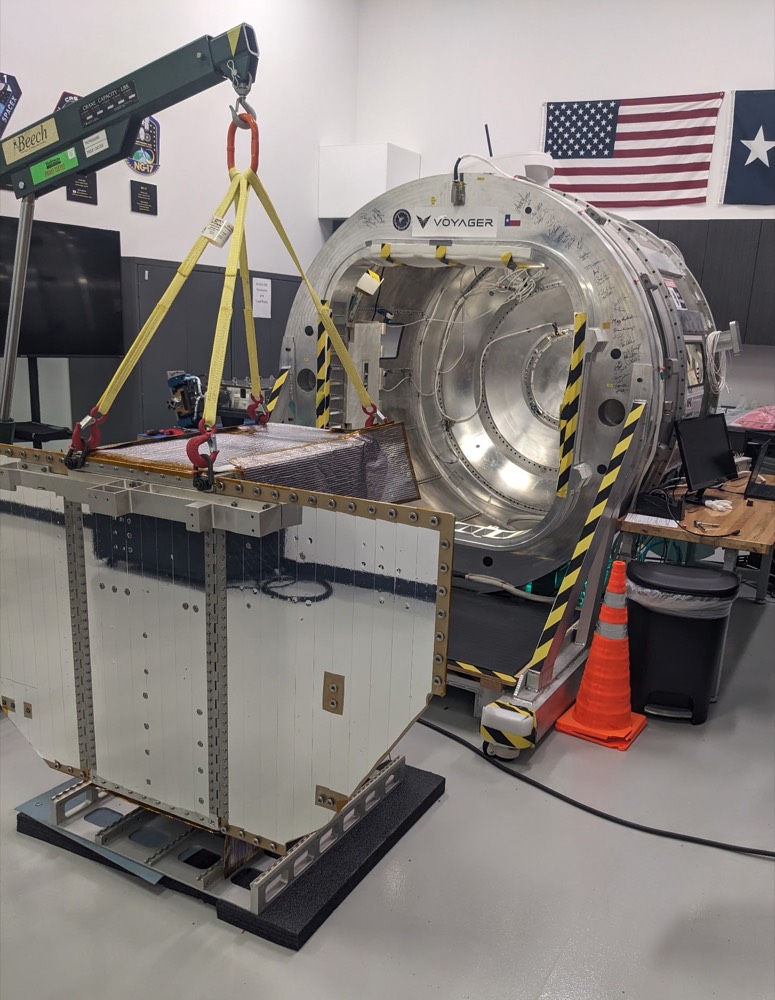
The demonstrations will happen inside the real Bishop Airlock on the station, according to NASA's captions for Lockheed Martin photos of the payload entering a mockup of that airlock in Houston. Lockheed Martin is the lead organization, and the award came through NASA's Tipping Point mechanism. NASA's Research and Technology Mission Directorate is the responsible directorate. The stated objective is short and clear: demonstrate robotic welding in exposed space.
The two welding methods
NASA describes both methods in plain terms, and they are worth understanding because they behave very differently.
Laser beam welding uses a high-precision laser to melt the material so it fuses together. NASA says it works well for small, thin or detailed parts, and when you want to limit how much heat reaches the surrounding material.
Friction stir welding is different. A rotating tool stirs the metals together without melting them. The friction produces enough heat to soften the metal but not turn it into liquid. NASA says this can give stronger joints and reduce problems such as cracking or warping that can happen when some metals melt and then solidify again.
I find that second point the most interesting. Melting metal in space brings its own risks, because a liquid pool behaves differently without gravity and in a vacuum. A method that never melts the metal avoids part of that problem, although NASA does not claim that it removes every difficulty, and the demonstration is there to find out.
Why space changes the problem
You can test welding on Earth, and companies have done so for decades. NASA's point is that space adds conditions that can change the result. According to the agency, vacuum, microgravity and extreme temperature swings can affect heat transfer, material behavior, robot operations and the welding process itself.
So the value of JOINS is not that welding is new. It is that nobody can be sure how a robotic weld performs in those conditions until someone tries it and looks at the pieces afterward. NASA says testing in space helps show feasibility, mature the readiness of the technology and build confidence for future missions.
Why build things in orbit at all
A rocket's fairing limits the size of what it can carry. NASA's page says in-space joining would let large structures be packed efficiently for launch and put together afterward, so that parts too large, complex or costly to fit in one launch vehicle become possible.
The examples NASA gives are large antennas, solar arrays, radiators, sunshades and optical systems for future exploration of the Moon and Mars. It also looks further ahead. NASA says in-space joining could eventually assemble infrastructure from materials found on the Moon, Mars, asteroids and other bodies, which would reduce the need to launch equipment and materials from Earth. That is a long-term possibility NASA describes, not something JOINS itself will show.
The ride to orbit
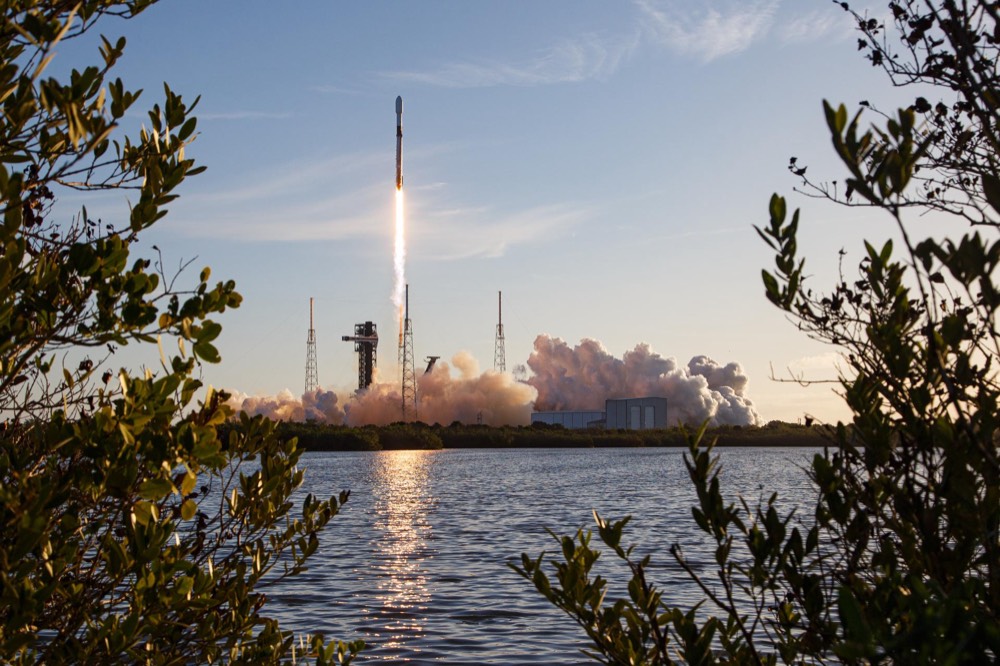
The Cygnus XL carrying JOINS is part of NASA's Northrop Grumman Commercial Resupply Services 25 mission, known as CRS-25. A NASA media advisory published on 18 November says NASA, Northrop Grumman and SpaceX are targeting no earlier than 10:47 a.m. EST on Sunday, 29 November, for launch on a Falcon 9 from Space Launch Complex 40 in Florida.
The advisory says the spacecraft carries about 11,000 pounds of cargo. Astronauts Jessica Watkins and Luke Delaney are due to capture it with the Canadarm2 robotic arm on Tuesday, 1 December. It is scheduled to stay at the station until May 2027. The advisory's list of research highlights covers drug delivery, cancer, muscle loss, radiation sensing and food production. It does not mention JOINS, so the link between the two comes from NASA's JOINS page.
What is not known
The NASA page does not say how large the weld samples are, who built the welding hardware, how many welds will be made or what a good result looks like. It also does not give any results, because the demonstration is months away. The March 2027 date is an estimate, and a launch slip would push it. I would treat both dates as plans.
There is also a limit on what a test like this proves. It works on two metals in one airlock. A large structure built in orbit would need much more: bigger joints, more complex geometry, inspection methods and long-term performance. A successful JOINS would be one early step, not a finished capability.
Why it matters
Most of what we know about structures in space is about things built on Earth, folded up and unfolded. Welding in orbit is a different approach, and it depends on materials behaving as expected in vacuum and microgravity. That is why this belongs in a conversation about materials as much as one about robots. The samples that come back are the real result: someone will cut them, look at the grain, and see how the metal joined.
If the welds look good, it gives future designers one more option for building bigger things beyond Earth. If they do not, that is useful too, because it tells engineers what to fix before a mission depends on it.
Would you trust a robot-welded joint on a spacecraft you were riding in, or would you want to see years of data first?
Sources: NASA JOINS page, NASA CRS-25 coverage advisory.