NASA Moon Plan: Starship Refuel Test Due in 2027
Published
NASA says its Moon landing plan now depends on a long-delayed test in the first quarter of 2027: two Starships docking in orbit and passing propellant from one to the other. The date comes from Steve Creech, who runs NASA's Human Landing System program, in an interview with Ars Technica published on Nov. 20.
Creech also explained why Artemis III, now a low-Earth orbit mission, tests more with Blue Origin's lander than with SpaceX's. Some big questions are still open, and he said so himself.
Why the catch matters
Ars reports that last weekend's first catch of a Starship at the launch tower cleared a major hurdle for NASA. A catch means the ship can be reused faster, which should help SpaceX deploy its newest Starlink satellites. NASA's own view, according to Ars, is that a higher launch rate leads to faster learning as SpaceX builds a deep-space version of Starship for crews.
SpaceX also plans to open a second Starship launch site at Kennedy Space Center in Florida early next year. A second factory is being built there, next to the existing production line at Starbase, Texas. With two sites, Ars says, SpaceX will have the pieces for the next step.
What Artemis III will now do
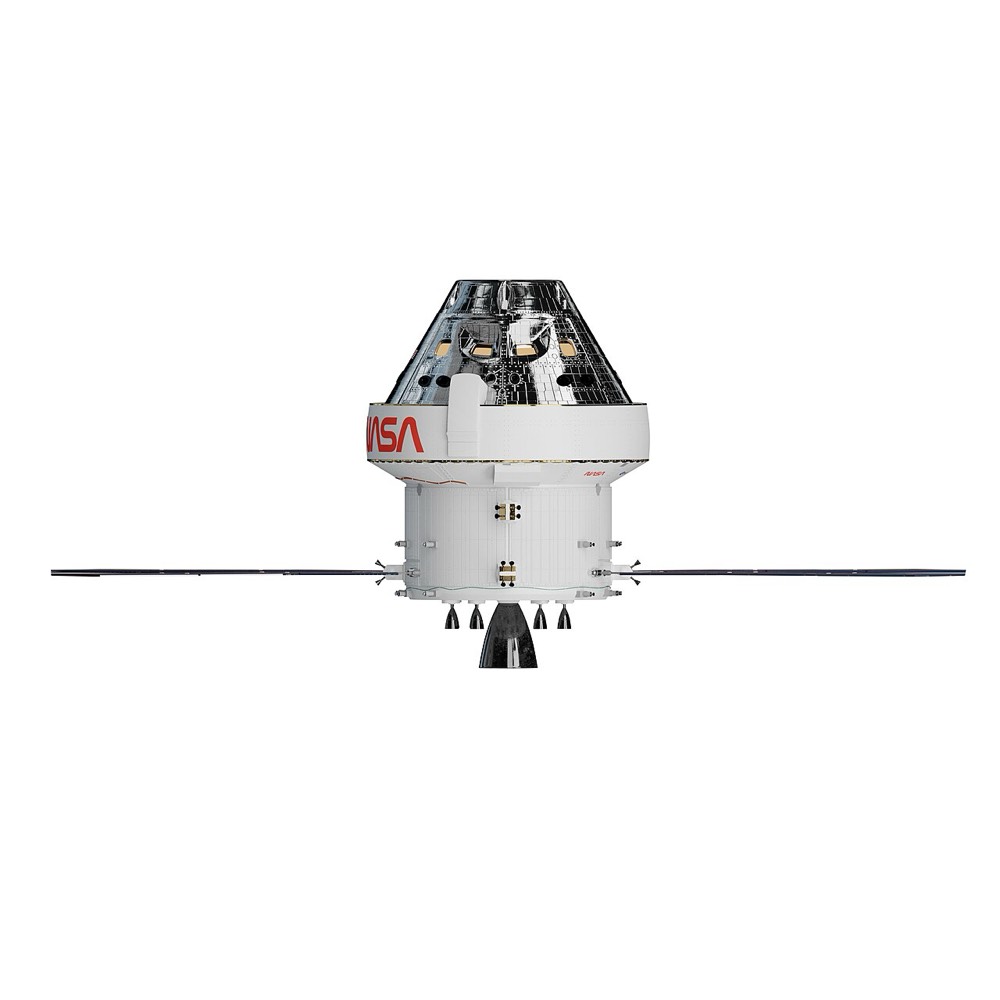
NASA changed the plan earlier this year. Artemis III is no longer a landing mission. A four-person crew will fly on a Space Launch System rocket and an Orion capsule into low-Earth orbit. Orion will first dock with Blue Origin's Blue Moon lander, which launches separately on a New Glenn rocket, for two days of tests. The astronauts will open the hatches and enter the lander's pressurized cabin to check its life support.
Then they return to Orion, undock, and set up a rendezvous with SpaceX's Starship in a slightly lower orbit. Orion stays attached to Starship for about two hours. The crew does not go inside it.
That means the first crewed lunar landing moves to Artemis IV, which NASA is targeting before the end of 2028.
Why Blue Origin gets the crew-cabin test
It looks lopsided. Creech gave Ars three reasons.
First, NASA wants SpaceX to stay focused on orbital refueling. Blue Origin's landing plans no longer require refueling in space. Second, SpaceX already has long experience with life support from its Dragon crew capsule. Blue Origin has flown only short suborbital trips, so its cabin has much more to prove.
Third, the two tests teach different things. On the Starship day, Starship controls the docked stack, which Creech called a huge vehicle to steer. On the Blue Moon day, Orion keeps control, to lower the risk. Blue Moon will have no main engine on this flight, only small thrusters.
NASA has not skipped Starship's cabin. It added a milestone to SpaceX's contract to test parts of the crew compartment on the ground, using a prototype called Cabin One at Starbase. For Blue Origin it added a new test of the three-engine setup, a hotfire in a vacuum chamber at NASA's In-Space Propulsion Facility in Ohio.
A simpler route to the Moon
The reworked plan also removes something that made the landers' job hard. The old design needed Orion to wait about 90 days in lunar orbit. Creech said that drove a lot of complexity for both landers.
SpaceX's answer is to meet Orion in Earth orbit and carry it to the Moon. According to Ars, Orion will link up with Starship in high-Earth orbit, and Starship will push it onward. Both companies now have a requirement of a four-day first stay on the surface, down from six and a half days.
Blue Origin's version needs four launches of its New Glenn rocket: one for the lander and three for transfer stages. A stretched Centaur upper stage for SLS should let Orion reach low lunar orbit. NASA has not said whether it will be ready for Artemis IV. If not, Ars says, Artemis IV could fly on the last upper stage NASA has in stock. NASA has also not decided which lander flies on Artemis IV.
The refueling test everything hangs on
The refueling demonstration has slipped about two years since late 2024. Creech told Ars it should happen in the first quarter of next year: two Starships, one launched from Florida and one from Texas, will dock and move what he called a meaningful amount of propellant.
It would be the first time one spacecraft hands over a large amount of cryogenic propellant to another in space. Here, that means methane and liquid oxygen. The results will show how much is lost to boil-off during the transfer.
That number matters because nobody agrees yet on how many tanker flights a lunar Starship needs. Ars says Elon Musk's low estimate is six to eight, which depends on future upgrades. NASA's own conservative planning figure is 20. A full Starship carries 1,600 metric tons of propellant. Today's Starship V3 is still well short of the 100 metric tons to low-Earth orbit that SpaceX is aiming for, and Ars notes there has been no recent update on the taller Starship V4, which Musk said in 2025 would fly in 2027.
What is still unknown
Several points are open. NASA has not settled where Starship meets Orion on a landing mission. A NASA graphic shown last month included a final tanking orbit before the docking, and Creech said that is still being worked out.
The uncrewed landing demonstrations are targeted for late 2027 or early 2028, Creech said, and they will not test everything a crew needs. Starship's elevator, which would lower astronauts about 15 stories to the surface, is not part of SpaceX's demo. Engineers will test it in a lab at Marshall Space Flight Center in Alabama instead. NASA also later added a requirement that each lander take off from the Moon during its uncrewed demo, though the details are left to the companies.
Even inside NASA there is debate. Creech said some of his people felt strongly about the current approach and others hold different views, and that the discussion will continue.
My take
I think the plan is more careful than it first looked. Splitting the tests between two companies spreads the risk. But it also means the whole schedule rests on one demonstration that has already slipped for two years. If the propellant transfer goes well in early 2027, a lot of doubt disappears. If it does not, the Artemis IV date of 2028 looks very hard.
Which of the two tests do you think is riskier: Starship's fuel transfer or Blue Origin's first crew cabin?
Sources: Ars Technica, NASA images via Wikimedia Commons.