Atomic-6 tests Space Armor to protect astronauts
Published
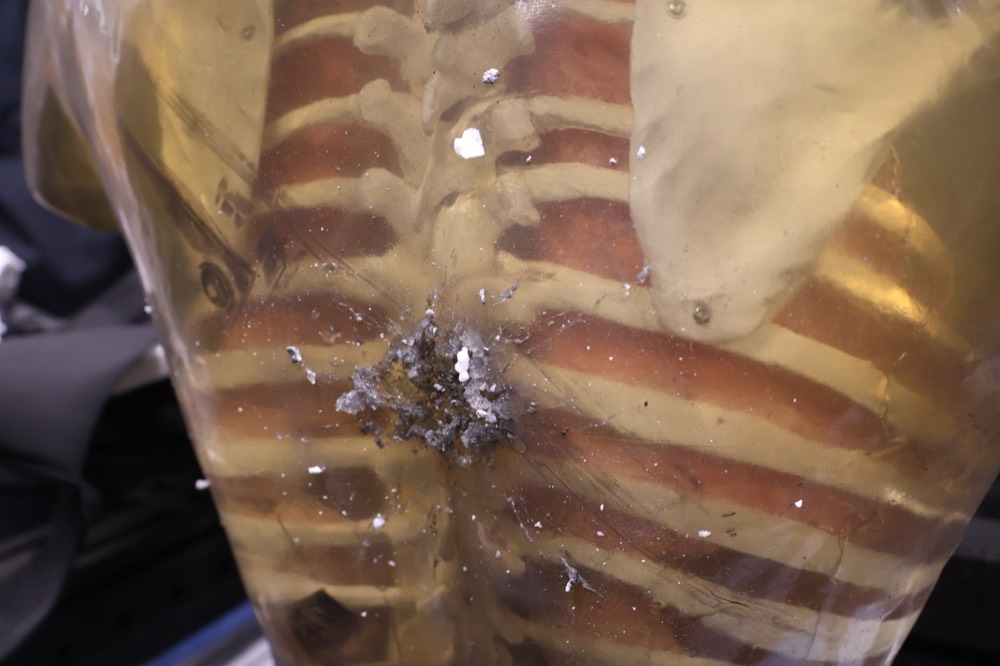
Atomic-6 says a thin armor tile stopped a small piece of debris from reaching a test torso. The startup released the results on November 20, according to Payload. It now wants to test the same idea for astronauts on spacewalks.
The shots were fired at Texas A&M University’s Hypervelocity Impact Laboratory. A 3 mm aluminum sphere flew at about 7.2 km/s, roughly 16,100 mph. In one shot, a Space Armor Lite tile sat in front of a ballistic torso. In the other, a 4 mm solid aluminum plate did. The tile showed no visible damage or bulge. The plate let the sphere through and left fragments inside the torso.
Atomic-6 says the plate stands in for current spacesuit protection. CEO Trevor Smith said the company wants to protect people as well as satellites. “I can’t think of a higher value asset than a human life,” he told Payload.
The company also says a stationary torso is not a spacesuit. The test does not show injuries, or whether a suit would hold pressure after an impact. Next, Atomic-6 plans tests with curved tiles and new impact angles. It is also in early talks with suit makers about where armor could fit without limiting movement.
According to the company, Space Armor Lite stops objects up to 3 mm across. The larger Space Armor Max is built for objects up to 12.5 mm, for human-rated spacecraft and habitats.
Why it matters: debris this small cannot be tracked or dodged, so protection has to be built in. Would you accept a heavier spacesuit if it meant better protection from debris?