Sand dunes reveal how fast alien winds blow
Published
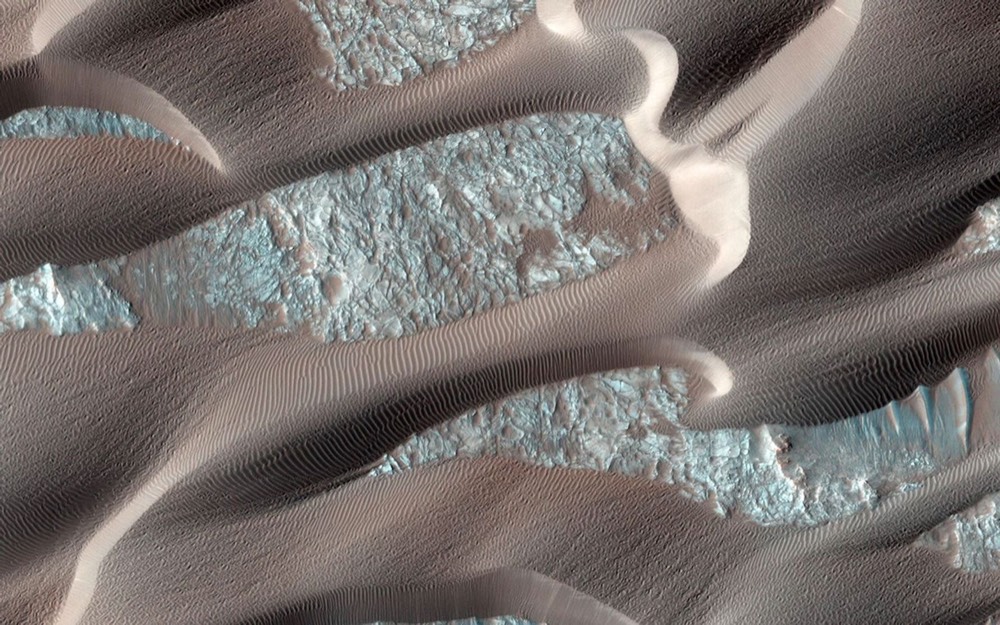
A new paper in the Proceedings of the National Academy of Sciences uses sand dunes to measure how fast wind blows on other worlds. Universe Today reports that researchers at Stanford collected wind speed data and grain size measurements from 24 dune fields around the world.
Until now, scientists mostly used dune direction as a weather vane. Dunes point the way the wind blows, but they do not show how fast it moves. Universe Today says the team wanted to know whether dune motion is driven by rare violent dust storms or by ordinary winds.
The team found that the most sand moved when the wind was just above the speed needed to start it moving. The article says this pattern held at every site on Earth, and also on a dune on Mars. For a dune made of 0.2 millimetre sand, the article gives about 26 kilometres per hour, measured 10 metres above the ground.
Dunes have also been seen on Venus, Titan and Comet 67P, so the method could apply there too. The article notes that Comet 67P's ripples were created by vapour flows, not wind.
Which world would you most want to measure first?